


Armand Hammer
Armand Hammer | |
|---|---|
 Hammer in 1982 | |
| Born | May 21, 1898 New York City, U.S. |
| Died | December 10, 1990 (aged 92) Los Angeles, California, U.S. |
| Alma mater | Columbia University (B.A., 1919; M.D., 1921) |
| Occupation | Business magnate |
| Spouses | Angela Carey Zevely (div. 1954)Frances Barrett Tolman
(m. 1956; died 1989) |
| Children | Julian Armand Hammer |
| Relatives |
|
Armand Hammer (May 21, 1898[1]: 16 – December 10, 1990) was an American business manager and owner. He spent decades with Occidental Petroleum in the mid 20th century.[2] Called "Lenin's chosen capitalist" by the press, he was also known for his art collection and his close ties to the Soviet Union.[3][4][5]
Hammer's business interests around the world and his "citizen diplomacy" helped him cultivate a wide network of friends and associates.
Early life
[edit]Armand Hammer was born in New York City to Rose (née Lipschitz) and Julius Hammer. Rose and Julius Hammer were Jewish emigrants from the Russian Empire, from Vitebsk (now in Belarus) and Odesa (now in Ukraine), respectively.[6][7][8] Julius Hammer came to the United States in 1875 and settled in the Bronx, where he ran a general medical practice and five drugstores.[9][10]
Following the Russian Revolution, a part of the Socialist Labor Party of America (SLP) under Julius' leadership split off to become a founding element of the Communist Party USA, which supported Vladimir Lenin and Bolshevism.[11] As the administrative head, commercial attaché, and financial advisor of the Ludwig Martens-led Russian Soviet Government Bureau, Julius Hammer was assigned to generate support for the Russian Soviet Government Bureau and funded the Soviet Russian Bureau by money laundering the proceeds from illegal sales of smuggled diamonds through his company Allied Drug, while his Allied Drug partner, Abraham A. Heller, headed the Soviet Bureau's commercial department.[12] Julius Hammer and Heller traveled extensively across the United States to stop the embargo of Soviet Russia and to increase United States trade with Soviet Russia and improve the image of Bolsheviks, whom American socialists despised overwhelmingly.[12] During the United States embargo against Soviet Russia, Julius Hammer used his Allied Drug and Chemical as a front to smuggle items and materials between the United States and Soviet Russia through Riga.[13] After the Lusk Committee supported the police raid of the Soviet Russian Government Bureau on June 12, 1919, Ludwig Martens escaped and went underground, often hiding at Hammer's home.[14][15] On December 18, 1920, Martens was deported; he was returned to Soviet Russia in January 1921.[14][15]

Hammer said originally that his father had named him after a character, Armand Duval, in La Dame aux Camélias, a novel by Alexandre Dumas. According to other sources, Hammer later was said to be named after the "arm and hammer" graphic symbol of the SLP, in which his father had a leadership role.[16] Late in his life, Hammer confirmed that the latter story contained the true origin of his given name.[1]: 16
Father's imprisonment
[edit]Due to his socialist and communist activities, Hammer's father Julius had been put under federal surveillance.[17] On July 5, 1919, federal agents witnessed Marie Oganesoff (the 33-year-old Russian wife of a former tsarist diplomat) entering Julius's medical office located in a wing of his Bronx home.[17] Oganesoff, "who had accumulated a life-threatening history of miscarriages, abortions, and poor health, was pregnant and wanted to terminate her pregnancy."[17] The surgical procedure took place in the midst of a great flu epidemic.[18] Six days after the abortion, Oganesoff died of pneumonia.[18] Four weeks after her death, a Bronx County grand jury indicted Julius Hammer for first-degree manslaughter.[17] The following summer, a criminal prosecutor convinced a jury that Julius Hammer had let his patient "die like a dog" and that the claims that she had actually died from complications due to influenza were mere attempts to cover up his crime.[17] In 1920, a judge sentenced Julius Hammer to three and a half years in Sing Sing prison.[17][19]
While most historians (such as Beverly Gage[20] and Nigel West[21]) state that Julius had performed the abortion, an opposing position has been put forward by author Edward Jay Epstein, who in his book Dossier: The Secret History of Armand Hammer puts forward the claim that it was Armand Hammer, then a medical student, rather than his father, who performed the abortion and his father Julius assumed the blame.[22] Epstein's claims come from interview comments made by Bettye Murphy, who had been Armand's mistress.[23] According to Murphy and Epstein's account, the legal strategy was that Julius did not deny that an abortion had been performed, but insisted that it had been medically necessary and that a licensed doctor, rather than a medical student, would be more convincing in presenting that argument.[24]
Allied Drug
[edit]After the Soviet Russian Government Bureau closed, Allied Drug's smuggling activities between the United States and Soviet Union ceased, which caused Allied Drug to gain enormous debts from storing large amounts of unpaid items in warehouses in New York and Riga.[13] In March 1921, Ludwig Martens sent a letter from Moscow through the Soviet mission in Tallinn to Julius Hammer, who was imprisoned at Sing Sing until 1924, granting his Allied Drug and Chemical concessions for trade with the Soviets and requested an Allied Drug representative to be present in the Soviet Union.[25]
When his father was imprisoned, Hammer and his brother took Allied Drug, the family business, to new heights, reselling equipment they had bought at depressed prices at the end of World War I. According to Hammer, his first business success was in 1919, manufacturing and selling a ginger extract, which legally contained high levels of alcohol. This was extremely popular during Prohibition, and the company had $1 million in sales that year.[citation needed]
Family envoy in Soviet Union
[edit]While Julius was imprisoned, he sent Armand Hammer, who could not speak any Russian, to the Soviet Union to look after the affairs of Allied Drug and Chemical.[22][26] Hammer traveled back and forth from the Soviet Union for the next 10 years.[22] In the meantime, Hammer graduated from Columbia College in 1919 and received his medical degree from the Columbia College of Physicians and Surgeons in 1921.[27][28]
In 1921, while waiting for his internship to begin at Bellevue Hospital, Hammer went to the Soviet Union for a trip that lasted until late 1930.[1]: 73 Although his career in medicine was cut short, he relished being referred to as "Dr. Hammer". Hammer's intentions in the 1921 trip have been debated ever since. He has claimed that he originally intended to recoup $150,000 in debts for drugs shipped during the Allied intervention, but was soon moved by a capitalistic and philanthropic interest in selling wheat to the then-starving Russians.[1]: 43 In his passport application, Hammer stated that he intended to visit only Western Europe.[29] J. Edgar Hoover in the Justice Department knew this was false, but Hammer was allowed to travel, anyway.[1]: 36 The 26-year-old Hoover, who was the Justice Department's expert on subversives, was tipped off that Armand Hammer was a courier for the COMINTERN and ensured that foreign intelligence agencies were notified of Armand Hammer's travels.[30] A skeptical U.S. government watched him through this trip and for the rest of his life.[31][32]
Career
[edit]Early Soviet ventures
[edit]First trip to Russia
[edit]After leaving Columbia Medical School, Hammer extended earlier entrepreneurial ventures with a successful business importing many goods from and exporting pharmaceuticals to the newly formed Soviet Union, together with his younger brother Victor. The blockade of Soviet Russia had ended for most items in February 1921, and on July 5, 1921, he departed New York on his first trip to Soviet Russia as Allied Drug's representative in Soviet Russia.[33] Prior to his departure, he visited Charles Recht, Lenin's United States attorney that supported Soviet Russia's best interests in the United States and whose law office was in the same building that the former Soviet Russian Government Bureau had occupied, and Recht gave Hammer a package to deliver to Ludwig Martens in Moscow.[34] During this first visit, Armand Hammer allowed the Cheka, the Soviet secret police who later became known as the KGB, to take control of Allied Drug and Chemical.[35]
Asbestos concession
[edit]During his time in Soviet Russia and later the Soviet Union, he perfected bribery and money-laundering techniques, which were exposed later in the 1960s and 1970s during which he tape-recorded his payoffs.[36] After returning to the United States, Hammer stated that Lenin had granted him an asbestos concession for 25 years to mine asbestos from the Urals in Soviet Russia.[37][38] According to Hammer, on his initial trip, he took $60,000 in medical supplies to aid in a typhus epidemic and made a deal with Lenin for furs, caviar, and jewelry expropriated by the Soviet state in exchange for a million bushels (27,216 tons) shipment of surplus American wheat.[38]
Lenin New Economic Policy
[edit]During Lenin's New Economic Policy, Armand Hammer became the mediator for 38 international companies in their dealings with the USSR.[39] Before Lenin's death, Hammer negotiated the import of Fordson tractors into the USSR, which served a major role in agricultural mechanization in the country.[40][39] Later, after Stalin came to power, additional deals were negotiated with Hammer as an American–Soviet negotiator.[39]
Hammer's move to Soviet Union
[edit]He moved to the USSR in the 1920s to oversee these operations, especially his large business manufacturing and exporting pens and pencils.[41][42] According to Alexander Barmine, who was assigned by the Central Committee to run the Mezhdunarodnaya Kniga company to compete with Hammer, the stationery concession to produce such items in the Soviet Union was actually granted to Julius Hammer.[43] Barmine states the party spent five million gold rubles on stationery supplies made in factories controlled by Julius Hammer and other concessionaires, making them rich.[44] Barmine further contends that the Soviets were eventually able to duplicate certain items such as typewriter parts and pens, and end those concessions, but were never able to match the quality of Hammer's pencils, so that concession became permanent.[45] Armand Hammer remained in the Soviet Union until 1930.[46]
Return to the United States
[edit]Back in the United States, Hammer was bequeathed a few Fabergé eggs by the Soviets between 1930 and 1933.[47][48] The authenticity of the artifacts was questioned.[49] According to Géza von Habsburg, Armand's brother Victor Hammer stated Stalin's trade commissar Anastas Mikoyan provided Fabergé hallmarking tools to Armand to sell fakes,[48][50] and Victor stated a 1938 New York sale he ran with Armand, which grossed several million dollars, consisted of both authentic and inauthentic items (called Fauxbergé by Habsburg), with commissions going back to Mikoyan.[48] Although certainly some fakes were produced, on close examination many of the so-called fake items turned out to actually be from various workshops, particularly that of Henrik Wigstrom, and had been appropriated by the Soviet government when they closed the Faberge company. As the items were either unfinished or not ready for retail sale, many were not hallmarked, so Hammer and his associates finished the work.[citation needed]
In his 1983 book, Red Carpet, author Joseph Finder discusses Hammer's "extensive involvement with Russia."[51] In Dossier: The Secret History of Armand Hammer, Edward Jay Epstein called Hammer "a virtual spy" for the Soviet Union.[52]
Oil company, Libya deals, and return to Soviet negotiation
[edit]After returning to the US, Hammer entered into a diverse array of business, art, cultural, and humanitarian endeavors, including investing in various U.S. oil-production efforts.
He gained enormous wealth through his United Distillers of America, which was a 1933 established firm known as the A. Hammer Cooperage Corporation until 1946, when it changed its name to United Distillers of America Ltd.[53] In early 1944, Hammer purchased American Distilling Co. and a former New Market, New Hampshire, rum distillery at which his American Distilling employee, Dr. Hanns G. Maister, began producing the first United States-made potato-based spirit, which was a vodka, and also produced a blended whiskey that was retailed through the cooperage's account with West Shore.[53] After a B-25 plane crashed into the north face of the 79th floor of the Empire State Building on a foggy Saturday July 28 in 1945, Hammer purchased the damaged 78th floor, refurbished it, and made it the headquarters of his United Distillers of America.[54][55]
His oil investments were later parlayed into control of Occidental Petroleum (Oxy) which he obtained in 1956.[32] Through his Occidental Petroleum and its stakes in Libya, Hammer was pivotal in breaking the tight grip that the major United States domestic producers had on the price of oil, and instead gave OPEC control over oil prices.[35] Arthur Andersen was Oxy's auditor.[56] National Geographic described Occidental chairman Hammer as "a pioneer in the synfuels boom."[57]
In 1973, Libya nationalized 51% of Oxy's holdings in Libya. In 1974, Armand Hammer announced a 35-year oil exploration agreement with Libya, the first such agreement signed by Libya after Muammar Gaddafi came to power in September 1969. By the 1974 deal, 81% of the oil extracted by Occidental Petroleum was going to the Libyan government, with only 19% retained by Occidental Petroleum. At the time, Oxy was the second largest producer of oil in Libya, and Libya was the company's only major source of crude. The Libyan government continually threatened the assets of the company, who would usually give in to Gaddafi's demands.[58]
Throughout his life Hammer continued personal and business dealings with the Soviet Union, despite the Cold War. In later years, he lobbied and traveled extensively at a great personal expense, working for peace between the United States and the Communist countries of the world, including ferrying physicians and supplies into the Soviet Union to help Chernobyl survivors.[59] In his book The Prize, Daniel Yergin writes that Hammer "ended up as a go-between for five Soviet General Secretaries and seven U.S. Presidents."[60]
Détente
[edit]Through Hammer's closeness to Yuri Andropov, Andropov assigned Mikhail Ilyich Bruk (Russian: Михаил Ильич Брук; 1923 Moscow – 2009 Jurmala) also called Mike or Michael Brook or Brooke, who was an English-Russian translator, as Hammer's personal ambassador and expediter and was present as Hammer's translator at all meetings between Armand Hammer and Soviet leaders in the Soviet Union beginning in 1964.[61][62][63] Bruk had been a technical translator at the first Pugwash conference called the Thinkers' Lodge held in July 1957.[64] According to Armand Hammer, "Mike's KGB."[64]
In early 1969, Armand Hammer obtained control of Eaton's Tower International[a] through which Hammer would have a controlling majority stake in Tower International in exchange for Hammer's Occidental Petroleum assuming the debts of Tower International and Eaton receiving 45% of any profits from Tower International's future projects.[65][66][b][c]
During Soviet times Armand Hammer also financed the World Trade Center Moscow, which opened in 1979 and became known as the Hammer Center.[70]
Trade deals between Nixon and Brezhnev
[edit]After Richard Nixon, as the first United States President to visit the Soviet Union, traveled to Moscow for a summit that ended on June 1, 1972, Hammer traveled to Moscow arriving July 14, 1972,[d] and, with Sargent Shriver as his legal advisor, negotiated the first trade agreement between the United States and the Soviet Union following Nixon's summit.[72] Six weeks prior to Nixon's departure, Hammer personally gave Maurice Stans, the finance chairman of Nixon's campaign fund, $46,000 in cash from a numbered bank account in Switzerland which Hammer used as his slush fund money.[73] Later, in September 1972 Hammer gave Nixon's campaign fund an additional $54,000 from the same Swiss bank account amounting to a total of $100,000 that Hammer donated to Nixon's campaign fund.[73] On July 18, 1972, Hammer returned to the United States through London and called Tim Babcock, Hammer's lobbyist for the Nixon administration, to have him arrange a meeting with Nixon through H. R. Haldeman, who was Nixon's chief of staff, in order to debrief the President about Hammer's trade deal which occurred on July 20, 1972.[74]
During détente in July 1972, Armand Hammer negotiated a twenty year agreement through Leonid Kostandov, who was a close friend of Hammer and was the Minister of the Chemical Industry in the USSR from October 1965 to 1980,[75][76][77][78] with Leonid Brezhnev of the Soviet Union that was signed by Hammer in April 1973 in which the Hammer-controlled firms Occidental Petroleum and Tower International would export to the Soviet Union, and later Russia, phosphate, which Occidental mined in northern Florida, in return for the Soviet Union, and later Russia, exporting from Odessa through Hammer's firms natural gas that would be converted into ammonia, potash, and urea.[79] This fertilizer deal was to continue until Hammer's 100th birthday in 1998.[80] JaxPort at the Port of Jacksonville in Jacksonville, Florida, was the United States port through which this trade occurred.[81] Nixon encouraged the Export–Import Bank to finance in part the deal, valued at $20 billion over 20 years,[82][83][84] and fund the Soviet construction of four ammonia plants in the greater Volga region, and a pipeline connecting them to the port at Odessa.[84]
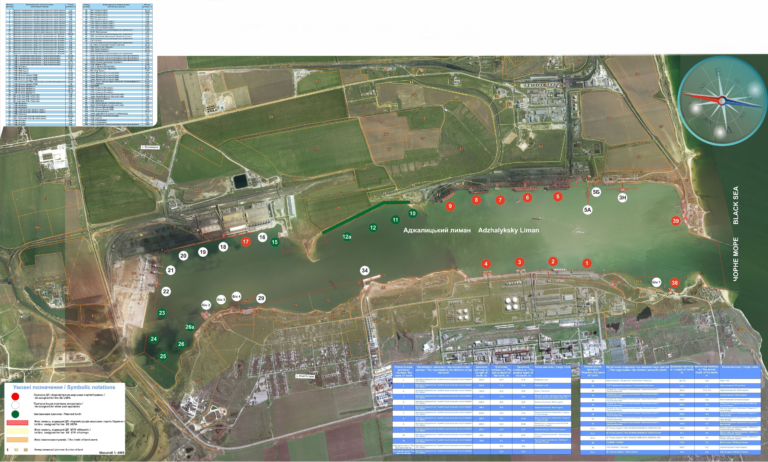
On July 27, 1978, the fertilizer deal began functioning in the Ukrainian SSR, Soviet Union, with the opening of the port and the Odessa plants near the former location of Grigorievka (Russian: Григорьевка, Ukrainian: Григорівка) at the seaport "Pivdenny" (Russian: Морской порт “Пивденный”, Ukrainian: Морський торговельний порт «Південний»), which is the deepest port in Ukraine servicing vessels with drafts up to 18.5 metres (61 ft).[38][85][86][87] Pivdenny is located at the Small Adzhalyk Estuary west of the 1974 established Yuzhne. The Port of Pivdenny was known as "Grigorievsky" (Russian: «Григорьевский») until 1978 and as the Port of Yuzhne from 1978 until April 17, 2019, when the port was renamed from the Russian word to the Ukrainian word for southern.[38][86][88]
Illegal financial support of Nixon's Watergate fund
[edit]Politically, Hammer was a Democrat; but according to the memoir of his lawyer Louis Nizer, he was also one of "many executives who contribute to both political parties [and] preferred no publicity about his dual gifts." In 1972, "under pressure" from various sources, Hammer donated an unusual amount to Nixon's second campaign: "He wished his substantial contribution to Nixon to be anonymous because he himself was a Democrat."[89] Hammer anonymously gave $46,000 to support Nixon before a 1971 law took effect on April 7, 1972, which banned political contributions both anonymous and through another person.[90] Later, in September 1972, Armand Hammer made an additional three illegal contributions totaling $54,000 to Richard Nixon's Watergate fund through friends of former Montana Governor Tim Babcock, who was Hammer's vice president of Occidental Petroleum,[73] after which both Hammer and Babcock pleaded guilty to charges involving illegal contributions.[90][91][92] Hammer received probation and a $3,000 fine.[89] In August 1989, US President George H. W. Bush pardoned Hammer for the illegal contributions to aid Nixon's re-election in 1972.[90][46]
Association with the Gore family
[edit]A 2003 interview with Aleksey Mitrofanov erroneously places the Hammer and Gore families close to each other in Europe.[93][94] Occidental's coal interests were represented for many years by attorney and former U.S. Senator Al Gore Sr., among others. Gore, who had a longtime close friendship with Hammer, became the head of the subsidiary Island Creek Coal Company, upon his election loss in the Senate in November 1970.[56][95] Much of Occidental's coal and phosphate production was in Tennessee, the state Gore represented in the Senate, and Gore owned shares in the company.[e] Former Vice President Al Gore Jr. received much criticism from environmentalists, when the shares passed to the estate after the death of Gore Sr., and Gore Jr. was a son and the executor of the estate.[96][97] Gore Jr. did not exercise control over the shares, which were eventually sold when the estate closed.[98][99]
Hammer was very fond of Gore Jr. and, in 1984, under Hammer's guidance, Gore Jr. sought Tennessee's Senate office previously held by Howard Baker. Hammer supposedly promised Gore Sr. that he could make his son the president of the United States. It was under Hammer's encouragement and support that Gore Jr. sought the Democratic Party presidential nomination in 1988.[100][101]
Stake in Arm & Hammer
[edit]In the 1980s Hammer owned a considerable amount of stock in Church & Dwight, the company that manufactures Arm & Hammer products; he also served on its board of directors. However, the Arm & Hammer company's brand name did not originate with Armand Hammer. It was in use 31 years before Hammer was born.[102] While Hammer and Occidental said that the Church & Dwight investment was a coincidence, Hammer acknowledged previously trying to buy the Arm & Hammer brand as a result of often being asked about it.[103][104]
President's Cancer Panel
[edit]In 1981, Hammer was appointed by US President Ronald Reagan to serve on the three-member President's Cancer Panel and he later served as chairman of the panel from 1984 to 1989.[105][106][107] As chairman of the panel, he announced a campaign to raise $1 billion a year to fight cancer.[108]
Other activities and pursuits
[edit]Hammer was a philanthropist, supporting causes related to education, medicine, and the arts. He was a collector of Impressionist and Post-Impressionist paintings. His personal donation forms the core of the permanent collection of the UCLA Hammer Museum in Los Angeles, California. Together with his brother Victor, he was the owner of the "Hammer Galleries" in New York City.[109][110][111] Hammer purchased Knoedler, the oldest art gallery in America, in 1971.[112] Hammer hired art historian John Richardson as director at Knoedler;[113] Richardson later wrote an unflattering portrait of him.[114]

Among his legacies is the Armand Hammer United World College of the American West (now generally called the UWC-USA, part of the United World Colleges), which he helped found in 1981, with the support of the then-Prince of Wales, Charles, who was president of United World Colleges International. Due to his closeness to the future Charles III, he was figuratively called a godfather to one of the Prince's children.[115][116] It has been reported that Charles intended to make Hammer Prince William's godfather but was forced to abandon these plans as Princess Diana disliked the idea.[117] In the 1980s, Hammer gave strong financial support to Prince Charles's projects of nearly 40 million pounds and free use of Hammer's Boeing 727.[118]
Together with his friends Harry and Rosa Strygler, he also supported several Jewish foundations, particularly those associated with the Holocaust. Hammer hungered for a Nobel Peace Prize, and he was repeatedly nominated for one, including by Menachem Begin,[119] but never won.
In 1986, Forbes magazine estimated his net worth at $200 million.[120]
Hammer made a guest appearance on a 1988 episode of The Cosby Show (as the grandfather of a friend of Theo Huxtable's who was suffering from cancer), saying that a cure for cancer was imminent.[121]
Hammer was leading Occidental in 1988 when its oil rig, Piper Alpha, exploded, killing 167 men. The Cullen Report highlighted failings in many areas on the platform.
As of 2016, he has been the subject of six biographies: in 1975 (Considine, authorized biography), 1985 (Bryson, coffee table book), Weinberg 1989, Blumay 1992, Epstein 1996, and Alef 2009; and two autobiographies (1932 and a bestseller in 1987). His art collection, The Armand Hammer Collection: Four Centuries of Masterpieces, published by the Armand Hammer Foundation in multiple editions, eventually became five centuries of masterpieces, sometimes in conjunction with museums where the collection was displayed.[122] and his philanthropic projects[123] were the subject of numerous publications.
Awards
[edit]In 1978, Hammer, as a non-citizen of the Soviet Union, received the Soviet Union's award the Order of Friendship of Peoples from Leonid Brezhnev because of his strong support of both the International Workers and Communist movement and the needs of the Soviet Union.[32][115] By the time of his death, Hammer had received other awards, including:
- Golden Plate Award of the American Academy of Achievement (1978)[124]
- US: National Medal of Arts (1987)
- France: Legion of Honor
- Italy: Grand Officer of the Order of Merit of the Italian Republic (August 1, 1981)[125]
- Sweden: Royal Order of the Polar Star
- Austria: Knight Commander's Cross
- Pakistan: Hilal-i-Quaid-Azam Peace Award
- Israel: Leadership Award
- Venezuela: Order of Andrés Bello[citation needed]
- Mexico: National Recognition Award
- Bulgaria: Jubilee Medal
- Belgium: Order of the Crown.[115]
- John Jay Award (1981) from Columbia College, his alma mater[126]
Personal life
[edit]
Hammer was the middle of three sons. He had close relationships, including in business, with his brothers, Harry and Victor Hammer, throughout their lives.
Hammer married three times. In 1927, Hammer married a Russian actress, Olga Vadimovna von Root, who was the daughter of a czarist general.[9][10] In 1943, he married Angela Zevely. In 1956, he married the wealthy widow Frances Barrett, and they remained married until her death in 1989.[127]
Hammer had one son, Julian Armand Hammer, by his first wife.[128][1]: 120 Hammer's grandson is businessman Michael Armand Hammer; his great-grandson is actor Armie Hammer.
Hammer died of bone marrow cancer in December 1990, aged 92 in Los Angeles. He is buried in Westwood Village Memorial Park Cemetery, across the street from the Occidental Petroleum headquarters on Wilshire Boulevard.
Publications
[edit]Articles
- "On a Vast China Market." Journal of International Affairs, vol. 39, no. 2: China in Transition (Winter 1986): 19–25. JSTOR 24356572.
Books
- The Quest of the Romanoff Treasure. William Farquhar Payson (1932). 241 pages.
- Hammer. Los Angeles: Perigee Books, 1988. Co-authored by Neil Lyndon.
- Reviewed by Tom Gainor, VP of Federal Reserve Bank of Minneapolis. "Hammer: Odyssey of an Entrepreneur", The Region, August 1987.[129]
See also
[edit]- Cyrus Eaton
- Fauxbergé
- List of people pardoned or granted clemency by the president of the United States
Notes
[edit]- ^ In 1954 during the United States' McCarthyism era and to affect the trading of sheet metal from Cyrus Eaton's Republic Steel in Cleveland for chrome ore primarily from the Kazakh SSR in the Soviet Union, Eaton's son Cyrus Eaton Jr., established the Canadian firm Tower International in Montreal to act as an intermediary because direct trade between the United States and the Soviet Union was unthinkable.[65]
- ^ Later, during the 1980s perestroika, Cyrus Eaton World Trade Ltd. contributed to the opening up of trade between the Soviet Union and Canada.[67]
- ^ In July 1972, Armand Hammer's financial wizard Dorman Commons, who was the chief financial officer at Hammer's Occidental Petroleum in Los Angeles, estimated that Tower International's International Trade Center project in Moscow would cost $100 million and would be a complete flop if détente failed.[68] On July 31, 1972, Commons voiced his thoughts with Hammer after which Hammer fired Commons effective August 1, 1972.[69]
- ^ During this trip which Mike Brook organized, Hammer was the first person to fly to the Soviet Union in a privately owned airplane, his Gulfstream jet, and did not go through the typical passport and customs checks.[71]
- ^ Occidental held large phosphate reserves near Jacksonville, Florida.[81]
References
[edit]- ^ a b c d e f Steve Weinberg (1990). Armand Hammer, The Untold Story. Random House Value Publishing. ISBN 9780517062821.
- ^ "History of Occidental Petroleum Corporation". FundingUniverse. Archived from the original on September 25, 2018. Retrieved August 31, 2014.
- ^ Epstein 1996, p. 9.
- ^ "Lenin's capitalist friend". The Economist. No. 6558. London. May 3, 1969. p. 76.
- ^ "Deal-maker Armand Hammer Moscow's capitalist comrade". Christian Science Monitor. July 3, 1980. ISSN 0882-7729. Archived from the original on January 19, 2021. Retrieved November 7, 2021.
- ^ "Hammer". highbeam.com. Archived from the original on October 22, 2012.
- ^ Epstein 1996, p. 34.
- ^ Bradford Matsen (2011). Death and Oil: The True Story of the Piper Alpha Disaster on the North Sea. Pantheon Books. p. 47. ISBN 9780307378811.
- ^ a b Considine, Bob (1975). The remarkable life of Dr. Armand Hammer. Harper & Row. pp. 75. ISBN 0-06-010836-3.
- ^ a b "Reaches Into Her Gypsy Songbag For Tunes To Give To Posterity". Meriden Daily Journal. March 6, 1934. Archived from the original on February 4, 2021. Retrieved May 18, 2011.
- ^ Epstein 1996, pp. 40–41.
- ^ a b Epstein 1996, p. 40.
- ^ a b Epstein 1996, p. 41.
- ^ a b Epstein 1996, p. 42.
- ^ a b "Ludwig Christian Alexander Karl Martens - Людвиг Карлович Мартенс" [Ludwig Christian Alexander Karl Martens - Ludwig Karlovich Martens]. pseudology.org (in Russian). Archived from the original on June 20, 2021. Retrieved August 13, 2021.
- ^ Epstein 1996, p. 35.
- ^ a b c d e f Bradford Matsen (2011). Death and Oil: The True Story of the Piper Alpha Disaster on the North Sea. Pantheon Books. ISBN 9780307378811.
- ^ a b John N. Ingham (1983). Biographical Dictionary of American Business Leaders. Vol. 2. Greenwood Publishing Group, Incorporated.
- ^ Katherine A.S. Siegel (1996). Loans and Legitimacy: The Evolution of Soviet-American Relations, 1919–1933. University Press of Kentucky.
- ^ Beverly Gage (2008). The Day Wall Street Exploded: A Story of America in Its First Age of Terror. Oxford Press.
- ^ Nigel West (2007). Historical Dictionary of Cold War Counterintelligence. Scarecrow Press, Inc.
- ^ a b c Joseph E. Persico (October 13, 1996). "The Last Tycoon". The New York Times. Archived from the original on November 20, 2016. Retrieved February 5, 2017.
- ^ Rachel Verdon (2012). Murder by Madness 9/11: The Government & the Goon Squad. CreateSpace Publishing.
- ^ Edward Jay Epstein. "Dossier: The Secret History of Armand Hammer". Archived from the original on March 16, 2015.
- ^ Epstein 1996, pp. 42–43.
- ^ Epstein 1996, p. 43.
- ^ "The Riddle of Armand Hammer". The New York Times. November 29, 1981. ISSN 0362-4331. Archived from the original on December 17, 2021. Retrieved May 2, 2022.
- ^ Columbia College today. New York: Office of Alumni Affairs and Development, Columbia College, Columbia University. 1988.
- ^ Epstein 1996, p. 45.
- ^ Epstein 1996, pp. 22, 49–50.
- ^ Epstein 1996, p. 22.
- ^ a b c Hastedt, Glenn P., ed. (2011). Spies, Wiretaps, and Secret Operations; An Encyclopedia of American Espionage: Hammer, Armand (May 21, 1898–December 10, 1990). ABC-Clio. pp. 354–355. ISBN 978-1851098088.
- ^ Epstein 1996, p. 48, 50.
- ^ Epstein 1996, p. 48.
- ^ a b Persico, Joseph E. (October 13, 1996). "The Last Tycoon". The New York Times. Archived from the original on August 15, 2021. Retrieved August 13, 2021.
- ^ Epstein 1996, pp. 249–258.
- ^ Epstein 1996, p. 257.
- ^ a b c d "Самый-самый порт Пивденный: от Хаммера до наших дней" [The most-most port of Pivdenny: from Hammer to the present day]. "Юкрейниан Шиппинг Мегазин" (USM) website (in Russian). June 11, 2021. Archived from the original on August 19, 2021. Retrieved August 17, 2021.
- ^ a b c "Deal-maker Armand Hammer Moscow's capitalist comrade". Christian Science Monitor. July 3, 1980. ISSN 0882-7729. Retrieved January 28, 2022.
- ^ Flanigan, James (December 7, 1988). "Soviets Failing a Lesson Taught by Henry Ford". Los Angeles Times. Retrieved January 28, 2022.
- ^ "Deal-maker Armand Hammer Moscow's capitalist comrade". Christian Science Monitor. July 3, 1980. ISSN 0882-7729. Archived from the original on January 19, 2021. Retrieved November 7, 2021.
- ^ "THE RIDDLE OF ARMAND HAMMER". The New York Times. November 29, 1981. ISSN 0362-4331. Archived from the original on December 17, 2021. Retrieved November 7, 2021.
- ^ Barmine, Alexander (1945). One Who Survived. New York: G.P. Putnam's Sons. pp. 331.
- ^ Barmine, Alexander (1945). One Who Survived. New York: G.P. Putnam's Sons. pp. 157.
- ^ Barmine, Alexander (1945). One Who Survived. New York: G.P. Putnam's Sons. pp. 158.
- ^ a b Andrews, Robert M. (August 15, 1989). "Armand Hammer, Elated Over Bush Pardon, Usually Gets What He Wants". APnews.com. Associated Press. Archived from the original on August 1, 2022. Retrieved August 13, 2021.
- ^ "Faberge Eggs - the fate of the eggs". PBS.org. Archived from the original on May 25, 2012. Retrieved November 9, 2021.
- ^ a b c "Faberge show exposes market in fakes". UPI. Archived from the original on November 8, 2021. Retrieved November 9, 2021.
- ^ Blumenthal, Ralph (October 14, 1996). "Armand Hammer's Maze of Skulduggery". The New York Times. ISSN 0362-4331. Archived from the original on October 6, 2018. Retrieved November 9, 2021.
- ^ Epstein 1996, p. 138.
- ^ "What's New on the Corporate Bookshelf". The New York Times. July 31, 1983. Archived from the original on July 27, 2018. Retrieved July 27, 2018.
- ^ "A Virtual Spy: DOSSIER: The Secret History of Armand Hammer. By Edward J. Epstein (Random House, 1996, 418 pp.)". Los Angeles Times. October 27, 1996. Archived from the original on December 17, 2014. Retrieved October 28, 2014.
- ^ a b "UNITED DISTILLERS (OF AMERICA), LTD. v. COMMISSIONER". leagle.com. March 9, 1959. Archived from the original on August 1, 2022. Retrieved August 13, 2021.
- ^ "Army Pushes Bomber Crash Investigation: 5 of 13 Dead Remain Unidentified as Empire State Bldg. Reopens". Brooklyn Eagle. July 30, 1945. pp. 1–2. Archived from the original on August 15, 2021. Retrieved July 30, 2021.
- ^ Fenton, James (March 14, 2008). "Restoration and removal: James Fenton on moving rooms around the world". The Guardian. Archived from the original on August 15, 2021. Retrieved August 13, 2021.
- ^ a b Epstein 1996, p. 233.
- ^ Canby, Thomas Y. (February 1981). "Synfuels: Fill 'er up! With what?". National Geographic (special report on energy): 80.
- ^ "Occidental-Libya Exploration Pact Set". The New York Times. February 8, 1974. ISSN 0362-4331. Archived from the original on October 11, 2022. Retrieved February 3, 2022.
- ^ Higginbotham, Adam (February 4, 2020). Midnight in Chernobyl: The Untold Story of the World's Greatest Nuclear Disaster (First Simon & Schuster trade paperback ed.). New York: Simon & Schuster. ISBN 978-1-5011-3463-0. OCLC 1105942734.
- ^ Yergin, Daniel. The Prize, page 557. Simon & Schuster, 1991
- ^ Epstein 1996, pp. 265–268.
- ^ Ольбик (Olbik), Александр Степанович (Alexander Stepanovich) (October 13, 2011). "БЫЛ ЛИ АРМАНД ХАММЕР АГЕНТОМ КГБ?" [WAS ARMAND HAMMER A KGB AGENT?] (in Russian). Archived from the original on August 15, 2021. Retrieved August 13, 2021.
The article is near the end of the list of excerpts from the 2006 book Ностальгические хроники (Nostalgic Chronicles) by Александр Степанович Ольбик (Alexander Stepanovich Olbik).
- ^ "Париж Хемингуэя и не только..." [Hemingway's Paris and more ...]. Форумы inFrance - Франция по-русски website. 2009. p. 17. Archived from the original on August 15, 2021. Retrieved August 13, 2021.
See the entry at 11/15/2009, 10:42 pm by Camilio at the bottom of the page.
- ^ a b Epstein 1996, p. 266.
- ^ a b Demont, John (November 13, 1989). "Forging a Really Big Deal: A Tycoon's Son Makes His Mark". Maclean's. Archived from the original on November 26, 2020. Retrieved August 17, 2021.
- ^ Epstein 1996, pp. 263–265.
- ^ Chisholm, Patricia; Newman, Peter C. (November 13, 1989). "To Russia with Cash". Maclean's. Archived from the original on November 24, 2020. Retrieved August 17, 2021.
- ^ Epstein 1996, pp. 271–273.
- ^ Epstein 1996, p. 273.
- ^ "World Trade Center Set To Expand". The Moscow Times. May 17, 2005. Archived from the original on August 3, 2022. Retrieved August 3, 2022.
- ^ Epstein 1996, pp. 266–267.
- ^ Epstein 1996, p. 268.
- ^ a b c Epstein 1996, p. 270.
- ^ Epstein 1996, pp. 270–271.
- ^ "Leonid Kostandov". Great Soviet Encyclopedia. 1979. Archived from the original on January 17, 2021. Retrieved November 26, 2024.
- ^ "Deputy Premier Leonid Kostandov died Wednesday of a heart attack". United Press International. Moscow. September 5, 1984. Archived from the original on November 26, 2024. Retrieved November 26, 2024.
- ^ "Leonid Kostandov, 68; Soviet Deputy Premier". The New York Times. Reuters. September 6, 1984. Archived from the original on November 26, 2024. Retrieved November 26, 2024.
- ^ Philip Hanson (2010). "The Soviet Union's acquisition of Western technology after Stalin: Some thoughts on people". In Sari Autio-Sarasmo; Katalin Miklóssy (eds.). Reassessing Cold War Europe. London; New York: Routledge. p. 28. ISBN 978-1-136-89835-8. Retrieved November 26, 2024.
- ^ Epstein 1996, pp. 267–276.
- ^ Epstein 1996, p. 267.
- ^ a b Cristy, Matt (March 31, 1997). "Phosphate treasure draws little interest". Jacksonville Business Journal. Jacksonville, Florida. Archived from the original on November 7, 2002. Retrieved August 17, 2021.
- ^ Smith, Hedrick (June 29, 1974). "OCCIDENTAL SIGNS DEAL WITH SOVIET". The New York Times. ISSN 0362-4331. Retrieved December 6, 2021.
- ^ "THE RIDDLE OF ARMAND HAMMER". The New York Times. November 29, 1981. ISSN 0362-4331. Retrieved December 6, 2021.
- ^ a b Rich, Spencer (October 4, 1979). "Soviets Dumping Ammonia, ITC Says". Washington Post. ISSN 0190-8286. Retrieved December 7, 2021.
- ^ "Aerial view of the Port of Pivdenny". USM.media. June 11, 2021. Archived from the original on August 19, 2021. Retrieved August 19, 2021.
This picture is from the article Самый-самый порт Пивденный: от Хаммера до наших дней (The most-most port of Pivdenny: from Hammer to the present day) in the Ukrainian Shipping Magazine (USM).
- ^ a b Мячина, Анна (Myachina, Anna) (October 17, 2015). "10 интересных фактов о порте "Южный"" [10 interesting facts about the port "Yuzhny"]. Одесская жизнь (odessa1.com) (in Russian). Archived from the original on August 19, 2021. Retrieved August 19, 2021.
{{cite news}}: CS1 maint: multiple names: authors list (link) - ^ "Hammer Exhibit Opens at Odessa Fine Art Museum". Los Angeles Times. September 3, 1986. Archived from the original on August 19, 2021. Retrieved August 17, 2021.
- ^ "Уряд змінив назву одеського порту "Южний"" [The government changed the name of the Odessa port "Southern"]. Українська правда (pravda.com) (in Ukrainian). April 17, 2019. Archived from the original on April 17, 2019. Retrieved August 19, 2021.
- ^ a b Nizer, Lois (1978). Reflections without Mirrors. Doubleday. p. 432. ISBN 9780385126700.
- ^ a b c Rampe, David (August 15, 1989). "Armand Hammer Pardoned by Bush". The New York Times. Archived from the original on March 14, 2021. Retrieved August 13, 2021.
- ^ Ripley, Anthony (December 11, 1974). "Guilt Admitted by a Nixon Donor". The New York Times. Archived from the original on August 15, 2021. Retrieved August 13, 2021.
- ^ Oelsner, Lesley (October 2, 1975). "Hammer Enters Plea In Nixon Fund Case". The New York Times. Archived from the original on August 15, 2021. Retrieved August 13, 2021.
- ^ АРХИПОВ, Андрей (ARKHIPOV, Andrey) (July 8, 2003). "Альберт Гор и его семья много лет служили СССР" [Albert Gore and his family served the USSR for many years]. "Стрингер" (stringer-agency.ru) (in Russian). Archived from the original on August 6, 2003. Retrieved August 21, 2021.
{{cite news}}: CS1 maint: multiple names: authors list (link) - ^ Reitwiesner, William Addams. "Ancestry of Al Gore". wargs.com. Archived from the original on October 23, 2018. Retrieved August 21, 2021.
- ^ Babcock, Charles R. (August 15, 1992). "Gore Getting $20,000 a Year for Mineral Rights on Farm". the Washington Post. Archived from the original on November 10, 2021. Retrieved August 21, 2021.
- ^ "Gore's Oil Money". The Nation. Archived from the original on July 1, 2009. Retrieved October 20, 2007.
- ^ Frantz, Douglas (March 19, 2000). "THE 2000 CAMPAIGN: THE VICE PRESIDENT; Gore Family's Ties to Oil Company Magnate Reap Big Rewards, and a Few Problems". The New York Times. Archived from the original on February 24, 2018. Retrieved October 20, 2007.
- ^ "Campaigner's finances Where the presidential hopefuls have invested their fortunes may reveal something about the character of each". The Boston Globe. Archived from the original on October 15, 2007. Retrieved October 20, 2007.
- ^ "Gore may be flawed, but message is sincere". USA Today. August 16, 2006. Archived from the original on April 3, 2007. Retrieved October 20, 2007.
- ^ Epstein 1996.
- ^ Neil Lyndon. Hammer.
Like his father before him, Al Gore Jr.'s political career was lavishly sponsored by Hammer from the moment it began until Hammer died, only two years before Gore Clinton race for the White House in 1992.
- ^ "The Straight Dope: Did tycoon Armand Hammer have anything to do with Arm & Hammer baking soda?". straightdope.com. May 21, 1982. Archived from the original on August 18, 2020. Retrieved December 14, 2009.
- ^ "Armand Hammer buys into Arm & Hammer". UPI. Archived from the original on January 14, 2021. Retrieved August 8, 2020.
- ^ "Armand Hammer to Own Pinch of Arm & Hammer". The Washington Post. September 23, 1986. Archived from the original on November 6, 2020. Retrieved August 8, 2020.
- ^ "Appointment of Armand Hammer as a Member of the President's Cancer Panel, and Designation as Chairman". presidency.ucsb.edu. The American Presidency Project, University of California, Santa Barbara. Archived from the original on January 21, 2021. Retrieved August 8, 2020.
- ^ "Designation of Armand Hammer To Be Chairman of the President's Cancer Panel". presidency.ucsb.edu. The American Presidency Project, University of California, Santa Barbara. Archived from the original on November 2, 2020. Retrieved August 8, 2020.
- ^ Ap (June 24, 1984). "Cancer Panel Chief Named". The New York Times. ISSN 0362-4331. Archived from the original on October 31, 2020. Retrieved August 8, 2020.
- ^ Kolata, Gina (March 2, 1988). "Hammer Begins a Drive to Raise $1 Billion a Year to Fight Cancer". The New York Times. ISSN 0362-4331. Archived from the original on November 1, 2020. Retrieved August 8, 2020.
- ^ Hammer, Victor J. (1976). Elizabeth Charleston. New York: S & R Hayden. p. 8.
- ^ "The Armand Hammer Collection". UCLA. Archived from the original on July 3, 2008. Retrieved September 27, 2008.
- ^ "Hammer Icons". Time. August 16, 1937. Archived from the original on September 17, 2008. Retrieved September 27, 2008.
- ^ Landi, Ann (December 1, 1996). "150 Years of Helping Shape a Nation's Taste". The New York Times. Archived from the original on August 19, 2016. Retrieved February 5, 2017.
- ^ "Knoedler Kasmin Limited Records". oac.cdlib.org. Retrieved November 7, 2023.
- ^ "John Richardson's "Sacred monsters, sacred masters", a vision of the idiosyncratic personalities that left their mark on the art world". The Art Newspaper - International art news and events. June 30, 2002. Retrieved November 7, 2023.
- ^ a b c Epstein 1996, p. 8.
- ^ "Why Is Princess Diana In The New 'House Of Hammer' Doc About Armie Hammer?". Bustle. September 2, 2022. Retrieved March 14, 2023.
- ^ Holden, Anthony (March 8, 2003). "Bad heir day". The Guardian. Archived from the original on August 15, 2021. Retrieved August 13, 2021.
- ^ "It's time to clean up your act Charles". The Herald. Glasgow. March 10, 2003. Archived from the original on August 15, 2021. Retrieved August 13, 2021.
- ^ Donald Woutat (June 7, 1987). "The Unfinished Business of Armand Hammer; After A Lifetime in the Public Eye, He Still Worries About His Place in History". Los Angeles Times Magazine. p. 8.
- ^ "Forbes 400 Members In Trouble With The Law". Forbes. Excerpted All the Money in the World. September 14, 2007. Archived from the original on November 20, 2016. Retrieved August 24, 2017.
{{cite web}}: CS1 maint: others (link) - ^ O'Connor, John J. (January 21, 1988). "TV Reviews; An Update On 'The Cosby Show'". The New York Times. Archived from the original on May 31, 2013. Retrieved March 31, 2010.
- ^ Honore Daumier 1808–1879: The Armand Hammer Daumier Collection Incorporating a Collection from George Longstreet, 1981
- ^ Theodore Lockwood (1997). Dreams & Promises: The Story of the Armand Hammer United World College : A Critical Analysis.
- ^ "Golden Plate Awardees of the American Academy of Achievement". achievement.org. American Academy of Achievement. Archived from the original on December 15, 2016. Retrieved August 1, 2020.
- ^ "Hammer, Dott. Armand". quirinale.it (in Italian). Retrieved November 27, 2022.
- ^ "John Jay Awards". Columbia College Alumni Association. December 14, 2016. Archived from the original on December 26, 2018. Retrieved May 2, 2022.
- ^ Peter Flint (December 19, 1989). "Frances Hammer, A Painter, Was 87; Wife of Industrialist". The New York Times.
- ^ "Miss Mobley Has Nuptials In Oklahoma". The New York Times. January 13, 1985. Archived from the original on March 26, 2010. Retrieved March 31, 2010.
- ^ "Federal Reserve Bank of Minneapolis-The Region-Book Review: Hammer: Odyssey of an Entrepreneur (August 1987)". The Region. August 1987. Archived from the original on July 24, 2008. Retrieved May 18, 2016.
Bibliography
[edit]- Epstein, Edward Jay (1996). Dossier : the secret history of Armand Hammer (1st ed.). New York: Random House. ISBN 978-0679448020.
Further reading
[edit]Biographical profiles
- Ingham, John N. Biographical Dictionary of American Business Leaders, Vol. 2: H–M. Greenwood Press (1983): 533–536. ISBN 0313239088.
- Tycoons and Entrepreneurs. New York: Macmillan Library Reference USA (1998): 87–92. ISBN 978-0028649825.
Books
- Cosidine, Bob The Remarkable Life of Dr. Armand Hammer. New York: Harper & Row, 1975. ISBN 0060108363. 287 pages.
- Bryson, John. The World of Armand Hammer. Abrams, 1985. ISBN 978-0810910935. 255 pages.
- Weinberg, Steve. Armand Hammer: The Untold Story. Boston: Little, Brown, 1989. ISBN 978-0316928397. 501 pages.
- Blumay, Carl. Dark Side of Power: The Real Armand Hammer. New York: Simon & Schuster (November 1992). ISBN 978-0671700539. 494 pages.
- Epstein, Edward Jay. Dossier: The Secret History of Armand Hammer. New York: Random House (1996). ISBN 978-0679448020. 418 pages.
- C-SPAN Booknotes interview with author Edward Jay Epstein (January 5, 1997).
Catalogs
- Denver Art Museum. The Armand Hammer Collection: Four Centuries of Masterpieces. An exhibition catalog (February 18 – April 9, 1978).
Novels
- Triantafyllou, Soti. To Ergostassio ton Molivion [The Pencil Factory] (in Greek). Patakis (2000).
External links
[edit]


- 1898 births
- 1990 deaths
- American art collectors
- American chief executives of energy companies
- American people of Russian-Jewish descent
- Businesspeople from Los Angeles
- Businesspeople from Manhattan
- Columbia University Vagelos College of Physicians and Surgeons alumni
- Deaths from bone cancer in California
- Deaths from multiple myeloma in California
- Hammer family
- Hammer Museum
- Jewish art collectors
- Museum founders
- People from Bel Air, Los Angeles
- People in the petroleum industry
- Philanthropists from California
- People pardoned by George H. W. Bush
- 20th-century American businesspeople
- American expatriates in the Soviet Union
- American people of Ukrainian-Jewish descent
- Burials at Westwood Village Memorial Park Cemetery
- Columbia College (New York) alumni
- Jews from California
- Jews from New York (state)
- Philanthropists from New York (state)
- Recipients of the Order of Friendship of Peoples
- Recipients of the Order of the Crown (Belgium)
- United States National Medal of Arts recipients