


King's Sutton
| King's Sutton | |
|---|---|
.png) King's Sutton's central crossroads and village green in 2009 | |
.svg)  King's Sutton Location within Northamptonshire | |
| Population | 2,069 (2001 census)[1] 2,112 (2011 Census)[2] |
| OS grid reference | SP4936 |
| • London | 62 miles (100 km) |
| Civil parish |
|
| Unitary authority | |
| Ceremonial county | |
| Region | |
| Country | England |
| Sovereign state | United Kingdom |
| Post town | Banbury |
| Postcode district | OX17 |
| Dialling code | 01295 |
| Police | Northamptonshire |
| Fire | Northamptonshire |
| Ambulance | East Midlands |
| UK Parliament | |
| Website | King’s Sutton Parish Council website |
King's Sutton is a village and civil parish in West Northamptonshire, Northamptonshire, England in the valley of the River Cherwell. The village is about 4.1 miles (6.6 km) south-east of Banbury, Oxfordshire.
The parish includes the hamlets of Astrop contiguous with eastern end of King's Sutton and Upper Astrop about 1 mile (1.6 km) north-east, in the same area as the shrunken villages of Great and Little Purston.
History[edit]
Early history[edit]
The village toponym means the King's south estate.[3]
Blacklands, in the parish 0.5 miles (800 m) north of the village, is the site of a Roman town.[4][5] Coins from the 4th century AD have been recovered from the site.[6]
The infant Saint Rumwold (or Rumwald, Rumbold or Rumbald) is said to have lived and died at King's Sutton in 662. Rumwold is said to have lived for only three days but professed his faith continuously during his life.
The English Civil War[edit]
The English Civil War helped develop Banbury’s then arms industry. The Royalist garrison was constantly at work early in 1645 digging saltpetre in King's Sutton and making gunpowder out of it in a house specially built near Banbury. Just over 10 years earlier a government saltpetreman had operated at Banbury for a year, having moved there from the then small market town of Coventry, before moving on to Hook Norton a short while afterwards. King's Sutton was a local centre for saltpetre excavation and digging at the time.[7]
Parish church[edit]
The oldest parts of the Church of England parish church of Saints Peter and Paul are the Norman font[6] and largely Norman chancel. The north aisle was added in the 13th century and the south aisle early in the 14th century.[6] The bell tower and most of the windows are Decorated Gothic. The spire was added to the tower probably late in the 14th century, raising the steeple to a height of 198 feet (60 m).[8] Sir Nikolaus Pevsner considered it "one of the finest, if not the finest, spire in this county of spires".[8] The south porch, north aisle, west window and very fine east window of the chancel are Perpendicular Gothic.[8]
Ss. Peter & Paul parish is now part of a single Church of England benefice with the adjacent parish of Newbottle and Charlton.[9]

Other notable buildings[edit]
The Court House was built in about 1500, partly of stone and partly timber-framed.[6] It was altered in the 16th and 18th centuries.[6]
The manor house was built in the middle of the 17th century.[6]
Astrop House[edit]
.jpg)
Astrop house is a Grade II* listed country manor about 1 mile (1.6 km) north-east of the village. It is constructed of limestone ashlar in two storeys with a 7-bay frontage [10][11]
It was built c.1740 for Sir John Willes, Chief Justice of the Court of Common Pleas.[12] Sir John Soane added wings for the Revd. William Shippen Willes, which were extended in the 19th century and demolished in 1961.[13] William Wilkinson added the Keeper's lodge, pheasantry and a cottage in 1868.[14] Lancelot "Capability" Brown laid out the grounds.[15]
Astrop was the site of a famous Spa[13] discovered in the 17th century. All that now remains is a small well known as St. Rumbald's Well, south of the house in a valley (see "History" section).
Transport[edit]
The Oxford and Rugby Railway between Oxford and Banbury was built between 1845 and 1850, passing through the west of King's Sutton parish between the village and the River Cherwell. The Great Western Railway had taken the line over by the time it opened, and in 1872 the GWR opened King's Sutton railway station for the village.[16] Chiltern Railways trains to London Marylebone, Birmingham Snow Hill, Great Western Railway (train operating company) services to Oxford and Didcot Parkway now serve the station.
.png)
Governance[edit]
The village has a parish council with 15 members.[17]
Heritage Trust[edit]
King's Sutton Heritage Trust Fund was formed in December 2005 with a Mission Statement which reads 'To promote, protect and enhance the history, facilities, structures, and amenities of the village of King's Sutton and the surrounding area for the benefit of its inhabitants.[18]
Notable residents[edit]
- Olga Kevelos, motorcycle racer, was landlady of The Three Tuns in King's Sutton for a number of years.[19]
- Arthur Halestrap, one of the last surviving British soldiers of the First World War, lived and died in the village.
Amenities[edit]
.png)
Kings Sutton Primary School is in Richmond Street.[20] It celebrated its centenary in 2008. Its last Ofsted report was in 2010 and gave the school grade 2, stating: "This is a good school. The new headteacher provides focused leadership so that all the staff are supporting the good quality of education for the pupils."[21] The school used to be in Astrop Road and those premises are now a private house. Kings Sutton has also a pre-school.
King's Sutton has two public houses: The Butchers Arms (Hook Norton Brewery), and The White Horse.
There is a lawn tennis club.[22]
See also[edit]
References[edit]
- ^ "Area: Kings Sutton CP (Parish): Parish Headcounts". Neighbourhood Statistics. Office for National Statistics.
- ^ "Civil Parish population 2011". Neighbourhood Statistics. Office for National Statistics. Retrieved 5 July 2016.
- ^ King′s Sutton Heritage Trust Site
- ^ Deegan & Foard, 2008, pages 118-119
- ^ Council for British Archaeology: South Midlands Region: Bedfordshire, Buckinghamshire, Northamptonshire & Oxfordshire Archived 11 September 2011 at the Wayback Machine
- ^ a b c d e f Pevsner & Cherry, 1973, page 279
- ^ Crossley, 1972, pages 49-71
- ^ a b c Pevsner & Cherry, 1973, page 278
- ^ Archbishops' Council (2010). "St Peter & St Paul, King's Sutton". A Church Near You. Church of England. Retrieved 25 March 2011.
- ^ "Astrop House, King's Sutton". British Listed Buildings. Retrieved 12 April 2013.
- ^ [1] Picture of house
- ^ Pevsner & Cherry, 1973, page 95
- ^ a b Pevsner & Cherry, 1973, page 96
- ^ Pevsner & Cherry, 1973, page 529
- ^ Stroud, Dorothy (1975). Capability Brown. Faber & Faber. p. 216. ISBN 9780571102679.
- ^ Compton, 1976, page 117
- ^ King’s Sutton Parish Council
- ^ King's Sutton Heritage Trust Archived 2 October 2009 at the Wayback Machine
- ^ Northampton Chronicle & Echo, 2009
- ^ Kings Sutton Primary School website
- ^ 2010 OFSTED report, accessed 20 January 2011 Archived 8 May 2009 at the Wayback Machine
- ^ King's Sutton Lawn Tennis Club
Further reading[edit]
- Compton, Hugh J. (1976). The Oxford Canal. Newton Abbot: David & Charles. p. 117. ISBN 0-7153-7238-6.
- Crossley, Alan (ed.); Colvin, Christina; Cooper, Janet; Cooper, N.H.; Harvey, P.D.A.; Hollings, Marjory; Hook, Judith; Jessup, Mary; Lobel, Mary D.; Mason, J.F.A.; Trinder, B.S.; Turner, Hilary (1972). A History of the County of Oxford, Volume 10. Victoria County History. pp. 49–71.
{{cite book}}:|first1=has generic name (help) - Deegan, Alison; Foard, Glenn (2008). Mapping Ancient Landscapes in Northamptonshire. English Heritage. pp. 118–119. ISBN 978-1-905624-42-3.
- Grogarty, Paul (31 May 2003). "England: Adapting to life in the slow lane". Daily Telegraph. London. Retrieved 10 November 2009.
- Lambert, Angela (6 July 1992). "The truth about the 'Idle Women' of the canals". The Independent on Sunday. London. Retrieved 8 November 2009.
- "Wartime boatwoman, Olga Kevelos has died". Northampton Chronicle & Echo. Johnston Press. 7 November 2009. Retrieved 8 November 2009.
- Pevsner, Nikolaus; Cherry, Bridget (revision) (1973) [1961]. Northamptonshire. The Buildings of England. Harmondsworth: Penguin Books. pp. 95–6, 278–9, 529. ISBN 0-14-071022-1.
- TP-Jamieson, Susan (26 January 2003). "History of Fast Women". The Times Online. London: News International. Retrieved 8 November 2009.
Gallery[edit]
-
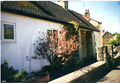 King's Sutton in 2000.
 -
 King's Sutton in 2000.
 -
 King's Sutton in 2009.
 -
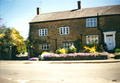 King's Sutton in 2000.
 -
 King's Sutton in 2009.
 -
 King's Sutton in 2001.

.png)
.png)
.png)
.png)
.png)
External links[edit]
 Media related to Kings Sutton at Wikimedia Commons