


Persicaria pensylvanica
| Persicaria pensylvanica | |
|---|---|

| |
Scientific classification 
| |
| Kingdom: | Plantae |
| Clade: | Tracheophytes |
| Clade: | Angiosperms |
| Clade: | Eudicots |
| Order: | Caryophyllales |
| Family: | Polygonaceae |
| Genus: | Persicaria |
| Species: | P. pensylvanica
|
| Binomial name | |
| Persicaria pensylvanica | |
| Synonyms[1] | |
| |
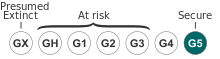
Persicaria pensylvanica (syn. Polygonum pensylvanicum[1]) is a species of flowering plant in the buckwheat family, Polygonaceae. It is native to parts of North America, where it is widespread in Canada and the United States.[2] It has also been noted as an introduced species in parts of Europe and South America.[3] Common names include Pennsylvania smartweed and pinkweed.[2]
Description[edit]
Pennsylvania smartweed is a variable annual herb reaching 10 cm (3.9 in) to 2 m (6.6 ft) tall. The upright, ribbed stems are branching or unbranched. The lance-shaped leaves have a short petiole and a blade about 4–17 cm (1.6–6.7 in) long, sometimes up to 23 cm (9 in). The blade may be marked with a dark blotch. The brownish ochrea at the base is up to 2 cm (0.79 in). The inflorescences grow at the top of the stem and from the leaf axils. The flowers have five pinkish or greenish tepals each a few millimeters long.[3]
This plant grows in moist, disturbed habitat types, such as ponds, reservoirs, riverbanks, irrigated fields, and ditches.[3]
Ecology[edit]
This plant is an important part of the habitat for waterfowl and other birds, which use it for food and cover. At least 50 species of birds have been observed feeding on the seeds, including ducks, geese, rails, bobwhites, mourning dove, and ring-necked pheasant. The seeds and other parts are eaten by mammals such as the white-footed mouse, muskrat, raccoon, and fox squirrel.[4]
Traditional native American medicine[edit]
Native Americans have various uses for the plant. The Chippewa use it for epilepsy.[5][6] The Iroquois use it for horse colic.[5][7] The Menominee take a leaf infusion for hemorrhage of blood from the mouth and post-partum healing.[5][8] The Meskwaki use it on bleeding hemorrhoids.[5][9]
Notes[edit]
- ^ a b c "Persicaria pensylvanica (L.) M.Gómez". Plants of the World Online. Royal Botanic Gardens, Kew. Retrieved 2019-03-01.
- ^ a b "Persicaria pensylvanica". Germplasm Resources Information Network. Agricultural Research Service, United States Department of Agriculture. Retrieved 4 January 2018.
- ^ a b c Persicaria pensylvanica. Flora of North America.
- ^ Polygonum pensylvanicum L. Plant Fact Sheet. USDA NRCS.
- ^ a b c d Polygonum pensylvanicum Native American Ethnobotany. University of Michigan, Dearborn.
- ^ Gilmore, Melvin R. 1933 Some Chippewa Uses of Plants. Ann Arbor. University of Michigan Press (p. 129)
- ^ Herrick, James William 1977 Iroquois Medical Botany. State University of New York, Albany, PhD Thesis (p. 314)
- ^ Smith, Huron H. 1923 Ethnobotany of the Menomini Indians. Bulletin of the Public Museum of the City of Milwaukee 4:1-174 (p. 47)
- ^ Smith, Huron H. 1928 Ethnobotany of the Meskwaki Indians. Bulletin of the Public Museum of the City of Milwaukee 4:175-326 (p. 236,237)
External links[edit]


- Polygonum pensylvanicum. United States Department of Agriculture plants profile
- Polygonum pensylvanicum. Freckmann Herbarium, University of Wisconsin, Stevens Point.
- photo of herbarium specimen at Missouri Botanical Garden, collected in Missouri in 1893