


Dioecy
Dioecy (/daɪˈiːsi/ dy-EE-see;[1] from Ancient Greek διοικία dioikía 'two households'; adj. dioecious, /daɪˈiːʃ(i)əs/ dy-EE-sh(ee-)əs[2][3]) is a characteristic of certain species that have distinct unisexual individuals, each producing either male or female gametes, either directly (in animals) or indirectly (in seed plants). Dioecious reproduction is biparental reproduction. Dioecy has costs, since only the female part of the population directly produces offspring. It is one method for excluding self-fertilization and promoting allogamy (outcrossing), and thus tends to reduce the expression of recessive deleterious mutations present in a population. Plants have several other methods of preventing self-fertilization including, for example, dichogamy, herkogamy, and self-incompatibility.
In zoology[edit]

In zoology, dioecy means that an animal is either male or female, in which case the synonym gonochory is more often used.[5][page needed] For example, most animal species are gonochoric, almost all vertebrate species are gonochoric, and all bird and mammal species are gonochoric.[6] Dioecy may also describe colonies within a species, such as the colonies of Siphonophorae (Portuguese man-of-war), which may be either dioecious or monoecious.[7]
In botany[edit]
Land plants (embryophytes) differ from animals in that their life cycle involves alternation of generations. In animals, typically an individual produces gametes of one kind, either sperm or egg cells. The gametes have half the number of chromosomes of the individual producing them, so are haploid. Without further dividing, a sperm and an egg cell fuse to form a zygote that develops into a new individual. In land plants, by contrast, one generation – the sporophyte generation – consists of individuals that produce haploid spores rather than haploid gametes. Spores do not fuse, but germinate by dividing repeatedly by mitosis to give rise to haploid multicellular individuals, the gametophytes, which produce gametes. A male gamete and a female gamete then fuse to produce a new diploid sporophyte.[8]

In bryophytes (mosses, liverworts and hornworts), the gametophytes are fully independent plants.[9] Seed plant gametophytes are dependent on the sporophyte and develop within the spores, a condition known as endospory. In flowering plants, the male gametophytes develop within pollen grains produced by the sporophyte's stamens, and the female gametophytes develop within ovules produced by the sporophyte's carpels.[8]
The sporophyte generation of a seed plant is called "monoecious" when each sporophyte plant has both kinds of spore-producing organ but in separate flowers or cones. For example, a single flowering plant of a monoecious species has both functional stamens and carpels, in separate flowers.[10]
The sporophyte generation of seed plants is called "dioecious" when each sporophyte plant has only one kind of spore-producing organ, all of whose spores give rise either to male gametophytes, which produce only male gametes (sperm), or to female gametophytes, which produce only female gametes (egg cells). For example, a single flowering plant sporophyte of a fully dioecious species like holly has either flowers with functional stamens producing pollen containing male gametes (staminate or 'male' flowers), or flowers with functional carpels producing female gametes (carpellate or 'female' flowers), but not both.[10][11] (See Plant reproductive morphology for further details, including more complex cases, such as gynodioecy and androdioecy.)
-
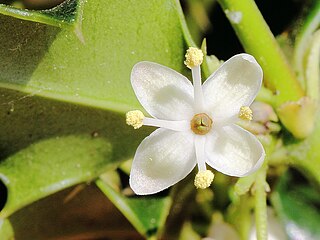 In dioecious holly, some plants only have 'male' flowers with functional stamens that produce pollen.
 -
 Other holly plants only have 'female' flowers that produce ovules.
 -
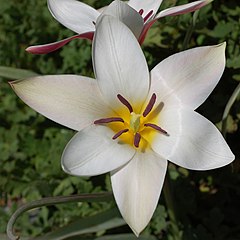 Each monoecious tulip flower has both pollen-producing stamens and carpels containing ovules.


Slightly different terms, dioicous and monoicous, may be used for the gametophyte generation, although dioecious and monoecious are also used.[12][13] A dioicous gametophyte either produces only male gametes (sperm) or produces only female gametes (egg cells). About 60% of liverworts are dioicous.[14]: 52
Dioecy occurs in a wide variety of plant groups. Examples of dioecious plant species include ginkgos, willows, cannabis and African teak. As its specific name implies, the perennial stinging nettle Urtica dioica is dioecious,[15]: 305 while the annual nettle Urtica urens is monoecious.[15]: 305 Dioecious flora are predominant in tropical environments.[16]
About 65% of gymnosperm species are dioecious,[17] but almost all conifers are monoecious.[18] In gymnosperms, the sexual systems dioecy and monoecy are strongly correlated with the mode of pollen dispersal, monoecious species are predominantly wind dispersed (anemophily) and dioecious species animal-dispersed (zoophily).[19]
About 6 percent of flowering plant species are entirely dioecious and about 7% of angiosperm genera contain some dioecious species.[20] Dioecy is more common in woody plants,[21] and heterotrophic species.[22] In most dioecious plants, whether male or female gametophytes are produced is determined genetically, but in some cases it can be determined by the environment, as in Arisaema species.[23]
Certain algae are dioecious.[clarification needed][24] Dioecy is prevalent in the brown algae (Phaeophyceae) and may have been the ancestral state in that group.[25]
Evolution of dioecy[edit]
In plants, dioecy has evolved independently multiple times[26] generally either from hermaphroditic species or from monoecious species. A previously untested hypothesis is that this reduces inbreeding;[27] dioecy has been shown to be associated with increased genetic diversity and greater protection against deleterious mutations.[28] Regardless of the evolutionary pathway the intermediate states need to have fitness advantages compared to cosexual flowers in order to survive.[29]
Dioecy evolves due to male or female sterility,[30] although it is unlikely that mutations for male and female sterility occurred at the same time.[31] In angiosperms unisexual flowers evolve from bisexual ones.[32] Dioecy occurs in almost half of plant families, but only in a minority of genera, suggesting recent evolution.[33] For 160 families that have dioecious species, dioecy is thought to have evolved more than 100 times.[34]
In the family Caricaceae, dioecy is likely the ancestral sexual system.[35]
From monoecy[edit]
Dioecious flowering plants can evolve from monoecious ancestors that have flowers containing both functional stamens and functional carpels.[36] Some authors argue monoecy and dioecy are related.[37]
In the genus Sagittaria, since there is a distribution of sexual systems, it has been postulated that dioecy evolved from monoecy[38] through gynodioecy mainly from mutations that resulted in male sterility.[39]: 478 However, since the ancestral state is unclear, more work is needed to clarify the evolution of dioecy via monoecy.[39]: 478
From hermaphroditism[edit]
Dioecy usually evolves from hermaphroditism through gynodioecy but may also evolve through androdioecy,[40] through distyly[41] or through heterostyly.[28] In the Asteraceae, dioecy may have evolved independently from hermaphroditism at least 5 or 9 times. The reverse transition, from dioecy back to hermaphroditism has also been observed, both in Asteraceae and in bryophytes, with a frequency about half of that for the forward transition.[42]
In Silene, since there is no monoecy, it is suggested that dioecy evolved through gynodioecy.[43]
In mycology[edit]
 | This section relies largely or entirely upon a single source. (June 2021) |
Very few dioecious fungi have been discovered.[44]
Monoecy and dioecy in fungi refer to the donor and recipient roles in mating, where a nucleus is transferred from one haploid hypha to another, and the two nuclei then present in the same cell merge by karyogamy to form a zygote.[45] The definition avoids reference to male and female reproductive structures, which are rare in fungi.[45] An individual of a dioecious fungal species not only requires a partner for mating, but performs only one of the roles in nuclear transfer, as either the donor or the recipient. A monoecious fungal species can perform both roles, but may not be self-compatible.[45]
Adaptive benefit[edit]
Dioecy has the demographic disadvantage compared with hermaphroditism that only about half of reproductive adults are able to produce offspring. Dioecious species must therefore have fitness advantages to compensate for this cost through increased survival, growth, or reproduction. Dioecy excludes self-fertilization and promotes allogamy (outcrossing), and thus tends to reduce the expression of recessive deleterious mutations present in a population.[46] In trees, compensation is realized mainly through increased seed production by females. This in turn is facilitated by a lower contribution of reproduction to population growth, which results in no demonstrable net costs of having males in the population compared to being hermaphroditic.[47] Dioecy may also accelerate or retard lineage diversification in angiosperms. Dioecious lineages are more diversified in certain genera, but less in others. An analysis suggested that dioecy neither consistently places a strong brake on diversification, nor strongly drives it.[48]
See also[edit]
- Gonochorism
- Hermaphrodite
- Plant reproductive morphology
- Self-incompatibility in plants
- Sexual dimorphism
- Trioecy
References[edit]
- ^ "dioecy". Lexico UK English Dictionary. Oxford University Press. Archived from the original on December 21, 2021.
- ^ "dioecious". Lexico UK English Dictionary UK English Dictionary. Oxford University Press. Archived from the original on April 12, 2021.
- ^ "diœcious, adj". Oxford English Dictionary online. Oxford University Press. Retrieved 2021-12-21.
- ^ "Animal Diversity Web". Retrieved 27 April 2014.
- ^ Kliman, Richard (2016). Encyclopedia of Evolutionary Biology. Academic Press. ISBN 978-0-12-800426-5. Archived from the original on May 6, 2021. Alternative archive URL
- ^ David, J.R. (2001). "Evolution and development: some insights from evolutionary theory". Anais da Academia Brasileira de Ciências. 73 (3): 385–395. doi:10.1590/s0001-37652001000300008. PMID 11600899.
- ^ Dunn, C.W.; Pugh, P.R.; Haddock, S.H.D. (2005). "Molecular Phylogenetics of the Siphonophora (Cnidaria), with Implications for the Evolution of Functional Specialization". Systematic Biology. 54 (6): 916–935. doi:10.1080/10635150500354837. PMID 16338764.
- ^ a b Mauseth (2014), pp. 204–205.
- ^ Mauseth (2014), p. 487.
- ^ a b Mauseth (2014), p. 218.
- ^ Hickey, M. & King, C. (2001). The Cambridge Illustrated Glossary of Botanical Terms. Cambridge University Press.
- ^ Lepp, Heino (2007). "Case studies : -oicy : Dioicous, dioecious, monoicous and monoecious". Australian Bryophytes. Australian National Botanic Gardens and Australian National Herbarium. Retrieved 2021-06-21.
- ^ Stearn, W.T. (1992). Botanical Latin: History, grammar, syntax, terminology and vocabulary, Fourth edition. David and Charles.
- ^ Vanderpoorten A, Goffinet B (2009). "Liverworts". Introduction to bryophytes. Cambridge, UK: Cambridge University Press. ISBN 978-0-521-70073-3.
- ^ a b Stace, C. A. (2019). New Flora of the British Isles (Fourth ed.). Middlewood Green, Suffolk, U.K.: C & M Floristics. ISBN 978-1-5272-2630-2.
- ^ Tandon, Rajesh; Shivanna, K. R.; Koul, Monika (2020-08-07). Reproductive Ecology of Flowering Plants: Patterns and Processes. Springer Nature. p. 179. ISBN 978-981-15-4210-7.
- ^ Walas, Łukasz; Mandryk, Wojciech; Thomas, Peter A.; Tyrała-Wierucka, Żanna; Iszkuło, Grzegorz (2018-09-01). "Sexual systems in gymnosperms: A review". Basic and Applied Ecology. 31: 1–9. doi:10.1016/j.baae.2018.05.009. ISSN 1439-1791. S2CID 90740232.
- ^ Walas Ł, Mandryk W, Thomas PA, Tyrała-Wierucka Ż, Iszkuło G (2018). "Sexual systems in gymnosperms: A review" (PDF). Basic and Applied Ecology. 31: 1–9. doi:10.1016/j.baae.2018.05.009. S2CID 90740232.
- ^ Givnish, TJ (1980). "Ecological constraints on the evolution of breeding systems in seed plants: dioecy and dispersal in gymnosperms". Evolution. 34 (5): 959–972. doi:10.1111/j.1558-5646.1980.tb04034.x. PMID 28581147.
- ^ Renner, S. S.; R. E. Ricklefs (1995). "Dioecy and its correlates in the flowering plants". American Journal of Botany. 82 (5): 596–606. doi:10.2307/2445418. JSTOR 2445418.
- ^ Matallana, G.; Wendt, T.; Araujo, D.S.D.; Scarano, F.R. (2005), "High abundance of dioecious plants in a tropical coastal vegetation", American Journal of Botany, 92 (9): 1513–1519, doi:10.3732/ajb.92.9.1513, PMID 21646169
- ^ Nickrent D.L., Musselman L.J. (2004). "Introduction to Parasitic Flowering Plants". The Plant Health Instructor. doi:10.1094/PHI-I-2004-0330-01. Archived from the original on 2016-10-05. Retrieved 2017-01-10.
- ^ Fusco, Giuseppe; Minelli, Alessandro (2019-10-10). The Biology of Reproduction. Cambridge University Press. p. 329. ISBN 978-1-108-49985-9.
- ^ Maggs, C.A. and Hommersand, M.H. 1993. Seaweeds of the British Isles Volume 1 Rhodophyta Part 3A Ceramiales. The Natural History Museum, London. ISBN 0-11-310045-0
- ^ LuthringerR, Cormier A, Ahmed S, Peters AF, Cock JM, Coelho, SM (2014). "Sexual dimorphism in the brown algae". Perspectives in Phycology. 1 (1): 11–25. doi:10.1127/2198-011X/2014/0002.
- ^ Bachtrog, Doris; Mank, Judith E.; Peichel, Catherine L.; Kirkpatrick, Mark; Otto, Sarah P.; Ashman, Tia-Lynn; Hahn, Matthew W.; Kitano, Jun; Mayrose, Itay; Ming, Ray; Perrin, Nicolas (2014-07-01). "Sex Determination: Why So Many Ways of Doing It?". PLOS Biology. 12 (7): e1001899. doi:10.1371/journal.pbio.1001899. ISSN 1544-9173. PMC 4077654. PMID 24983465.
- ^ Sarkar, Sutanu; Banerjee, Joydeep; Gantait, Saikat (2017-05-29). "Sex-oriented research on dioecious crops of Indian subcontinent: an updated review". 3 Biotech. 7 (2): 93. doi:10.1007/s13205-017-0723-8. ISSN 2190-5738. PMC 5447520. PMID 28555429.
- ^ a b Muyle, Aline; Martin, Hélène; Zemp, Niklaus; Mollion, Maéva; Gallina, Sophie; Tavares, Raquel; Silva, Alexandre; Bataillon, Thomas; Widmer, Alex; Glémin, Sylvain; Touzet, Pascal (2021-03-01). "Dioecy Is Associated with High Genetic Diversity and Adaptation Rates in the Plant Genus Silene". Molecular Biology and Evolution. 38 (3): 805–818. doi:10.1093/molbev/msaa229. ISSN 0737-4038. PMC 7947750. PMID 32926156.
- ^ Cruzan, Mitchell B. (2018-09-11). Evolutionary Biology: A Plant Perspective. Oxford University Press. p. 377. ISBN 978-0-19-088268-6.
- ^ Atwell, Brian James; Kriedemann, Paul E.; Turnbull, Colin G. N. (1999). Plants in Action: Adaptation in Nature, Performance in Cultivation. Macmillan Education AU. p. 249. ISBN 978-0-7329-4439-1.
- ^ Karasawa, Marines Marli Gniech (2015-11-23). Reproductive Diversity of Plants: An Evolutionary Perspective and Genetic Basis. Springer. p. 31. ISBN 978-3-319-21254-8.
- ^ Núñez-Farfán, Juan; Valverde, Pedro Luis (2020-07-30). Evolutionary Ecology of Plant-Herbivore Interaction. Springer Nature. p. 177. ISBN 978-3-030-46012-9.
- ^ Reeve, Eric C. R. (2014-01-14). Encyclopedia of Genetics. Routledge. p. 616. ISBN 978-1-134-26350-9.
- ^ Ainsworth, Charles (2000-08-01). "Boys and Girls Come Out to Play: The Molecular Biology of Dioecious Plants". Annals of Botany. 86 (2): 211–221. doi:10.1006/anbo.2000.1201. ISSN 0305-7364. S2CID 85039623.
- ^ Mitra, Sisir (2020-09-01). The Papaya: Botany, Production and Uses. CABI. p. 161. ISBN 978-1-78924-190-7.
- ^ K. S. Bawa (1980). "Evolution of Dioecy in Flowering Plants". Annual Review of Ecology and Systematics. 11: 15–39. doi:10.1146/annurev.es.11.110180.000311. JSTOR 2096901.
- ^ Batygina, T. B. (2019-04-23). Embryology of Flowering Plants: Terminology and Concepts, Vol. 3: Reproductive Systems. CRC Press. p. 43. ISBN 978-1-4398-4436-6.
- ^ Wilson, Karen L.; Morrison, David A. (2000-05-19). Monocots: Systematics and Evolution: Systematics and Evolution. Csiro Publishing. p. 264. ISBN 978-0-643-09929-6.
- ^ a b Encyclopedia of Evolutionary Biology. Vol. 2. Academic Press. 2016-04-14. ISBN 978-0-12-800426-5.
- ^ Perry, Laura E.; Pannell, John R.; Dorken, Marcel E. (2012-04-19). "Two's Company, Three's a Crowd: Experimental Evaluation of the Evolutionary Maintenance of Trioecy in Mercurialis annua (Euphorbiaceae)". PLOS ONE. 7 (4): e35597. Bibcode:2012PLoSO...735597P. doi:10.1371/journal.pone.0035597. ISSN 1932-6203. PMC 3330815. PMID 22532862.
- ^ Leonard, Janet L. (2019-05-21). Transitions Between Sexual Systems: Understanding the Mechanisms of, and Pathways Between, Dioecy, Hermaphroditism and Other Sexual Systems. Springer. p. 91. ISBN 978-3-319-94139-4.
- ^ Landry, Christian R.; Aubin-Horth, Nadia (2013-11-25). Ecological Genomics: Ecology and the Evolution of Genes and Genomes. Springer Science & Business Media. p. 9. ISBN 978-94-007-7347-9.
- ^ Casimiro-Soriguer, Inés; Buide, Maria L.; Narbona, Eduardo (2015-01-01). "Diversity of sexual systems within different lineages of the genus Silene". AoB Plants. 7 (plv037): plv037. doi:10.1093/aobpla/plv037. ISSN 2041-2851. PMC 4433491. PMID 25862920.
- ^ Gupta, Rajni. A Textbook of Fungi. APH Publishing. p. 77. ISBN 978-81-7648-737-5.
- ^ a b c Esser, K. (1971). "Breeding systems in fungi and their significance for genetic recombination". Molecular and General Genetics. 110 (1): 86–100. doi:10.1007/bf00276051. PMID 5102399. S2CID 11353336.
- ^ Charlesworth D, Willis JH (2009). "The genetics of inbreeding depression". Nat. Rev. Genet. 10 (11): 783–96. doi:10.1038/nrg2664. PMID 19834483. S2CID 771357.
- ^ Bruijning, Marjolein; Visser, Marco D.; Muller-Landau, Helene C.; Wright, S. Joseph; Comita, Liza S.; Hubbell, Stephen P.; de Kroon, Hans; Jongejans, Eelke (2017). "Surviving in a Cosexual World: A Cost-Benefit Analysis of Dioecy in Tropical Trees". The American Naturalist. 189 (3): 297–314. doi:10.1086/690137. hdl:2066/168955. ISSN 0003-0147. PMID 28221824. S2CID 6839285.
- ^ Sabath, Niv; Goldberg, Emma E.; Glick, Lior; Einhorn, Moshe; Ashman, Tia-Lynn; Ming, Ray; Otto, Sarah P.; Vamosi, Jana C.; Mayrose, Itay (2016). "Dioecy does not consistently accelerate or slow lineage diversification across multiple genera of angiosperms". New Phytologist. 209 (3): 1290–1300. doi:10.1111/nph.13696. PMID 26467174.
Bibliography[edit]
- Beentje, Henk (2010). The Kew Plant Glossary. Richmond, Surrey: Royal Botanic Gardens, Kew. ISBN 978-1-84246-422-9.
- Mauseth, James D. (2014). Botany : An Introduction to Plant Biology (5th ed.). Sudbury, MA: Jones and Bartlett Learning. ISBN 978-1-4496-6580-7.