Dead cat bounce

In finance, a dead cat bounce is a small, brief recovery in the price of a declining stock.[1] Derived from the idea that "even a dead cat will bounce if it falls from a great height",[2] the phrase is also popularly applied to any case where a subject experiences a brief resurgence during or following a severe decline. This may also be known as a "sucker rally".[3]
History[edit]
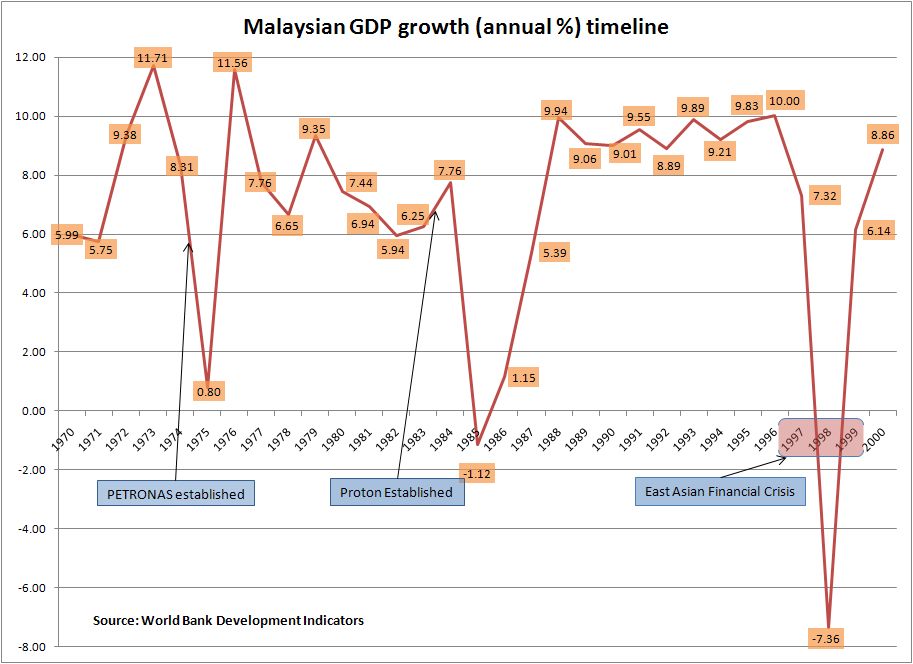
The earliest citation of the phrase in the news media dates to December 1985 when the Singaporean and Malaysian stock markets bounced back after a hard fall during the recession of that year. Journalists Chris Sherwell and Wong Sulong of the London-based Financial Times were quoted as saying the market rise was "what we call a dead cat bounce".[4] Both the Singaporean and Malaysian economies continued to fall[5][6] after the quote, although both economies recovered in the following years.
The phrase was used again the following year about falling oil prices. In the San Jose Mercury News, Raymond F. DeVoe Jr. proposed that "Beware the Dead Cat Bounce" be printed on bumper stickers and followed up with a graphic explanation.[7] This quote was referenced throughout the 1990s and became widely used in the 2000s.[8]
"This applies to stocks or commodities that have gone into free-fall descent and then rallied briefly. If you threw a dead cat off a 50-story building, it might bounce when it hit the sidewalk. But don't confuse that bounce with renewed life. It is still a dead cat. The spot oil price has recovered from under $10 a barrel to over $13 -- but that also should not be confused with renewed life."
— Raymond F. DeVoe Jr., San Jose Mercury News, 28 April 1986[9]
The phrase is also used in political circles for a candidate or policy that shows a small positive bounce in approval after a hard and fast decline.[10]
Variations and usage[edit]

The standard usage of the term refers to a short rise in the price of a stock that has suffered a fall. In other instances, the term is used exclusively to refer to securities or stocks that are considered to be of low value. First, the securities have poor past performance. Second, the decline is "correct" in that the underlying business is weak (e.g. declining sales or shaky financials). Along with this, it is doubtful that the security will recover with better conditions (overall market or economy).
Some variations on the definition of the term include:
- A stock in a severe decline has a sharp bounce off the lows.[11]
- A small upward price movement in a bear market after which the market continues to fall.[12][2]
Technical analysis[edit]
A "dead cat bounce" price pattern may be used as a part of the technical analysis method of stock trading. Technical analysis describes a dead cat bounce as a continuation pattern in which a reversal of the current decline occurs followed by a significant price recovery. The price fails to continue upward and instead falls again downwards, often surpassing the previous low.[13] This phenomenon can be difficult to identify at the time of occurrence, and like market peaks and troughs, it is usually only with hindsight that the pattern is able to be recognised.[14]
Behavioural finance perspective[edit]
The phenomenon known as a dead cat bounce can be illustrated partly by the irrational and emotional behaviour of the market participants or traders. According to this theory, investors can sometimes not be rational or objective in their timing of the market; however, they are influenced by cognitive biases and emotions influencing and leading to herd behaviour, overreaction and underreaction. A dead cat bounce might prey on some of the following investor biases:[15]
Anchoring[edit]
Anchoring occurs from relying too much on a fixed reference point rather than adjusting expectations based on updated information. For example, a high or low occurred previously instead of looking at the macro-environmental factors. Some investors might take this information to mean that the stock/commodity is over or undervalued after a sharp decline and hope for a quick rebound in the form of a V-bottom.
Confirmation bias[edit]
Confirmation bias is the tendency to interpret information that confirms an individual’s pre-existing beliefs or hypotheses and ignore/dismiss significant contradictory evidence. This leads to investors selectively choosing what information they believe as long as it supports their optimistic outlook for the chosen stock. Thus, they downplay the crucial negative information as rumour or unimportant.
Overconfidence[edit]
Overconfidence results from overestimating one's ability or knowledge of a particular stock or macro-environment and underestimating the associated uncertainty and risks. Overconfidence results in investors not diversifying, taking on too much risk or refusing to sell stocks at a stop-loss level.
These biases, either by themselves or in combination, can create a feedback loop in which the market is amplified in volatility and unpredictability as larger and larger amounts of investors react to the same signals and sentiments. The dead cat bounce is a prime example of a rebound fuelled by traders and speculators who bet on their optimistic views rather than the intrinsic or actual value of the stock. This results in a false sense of recovery as the stock begins to rally, and the subsequent drop in value reflects the actual supply and demand dynamics of the stock value.
To counteract these biases, implement a disciplined and evidence-based approach to investing, look at a longer time frame, or diversify in an index fund. These methods rely more on an objective set of criteria, such as the price-to-earnings ratio, the dividend yield, or the market capitalisation, to assess the relative attractiveness of a stock or market rather than trading based on emotion. Furthermore, they emphasise how important it is to diversify, be patient, and have a longer-term perspective which can reduce the impact and importance of short-term fluctuations and noise. By understanding the psychological traps that can lead to a dead cat bounce, investors can make achieving their financial goals more likely and avoid costly errors.
Causes[edit]
The causes behind a dead cat bounce are largely the result of these effects. It is often a combination of these effects which result in the dead cat bounce phenomenon.
Technical factors[edit]
Technical factors, such as a short position from many firms, can help in the formation of a dead cat bounce. As many investors buy back their shares to close a short position, the stock receives a temporary increase in demand, driving up the price of the stock. Additionally, if the stock has an established history of a stable, continuous and periodic fluctuation between a support price and a resistance price, a low stock price may result in investors buying shares under the belief that the stock price is still following the same trend. This has the same effect as the short covering where the price receives a short boost.
News and events[edit]
Positive news with relevancy to the stock can provide a temporary boost of investor sentiment. This can be the result of a partnership agreement or a new product. In turn, this provides a short boost to the demand for the stock even though the underlying cause of the decline in price has not changed.
Market sentiment[edit]
The market sentiment refers to the attitude of investors towards a market. Should many stocks within the same financial market show a positive trend, then the entire financial market may be favored by investors. A "bullish" market refers to a market which is predicted to undergo a positive price movement. Should an entire market experience an increase in demand, even stocks with a falling price can be positively benefited.
Market manipulation[edit]
Tactics used by market manipulators may be used to temporarily inflate prices in an effort of personal gain. Tactics such as a spreading false rumors or engaging in a pump-and-dump will result in a short-lived increase in price.
See also[edit]
References[edit]
- ^ "Definition of dead-cat bounce | Dictionary.com". www.dictionary.com. Retrieved 30 April 2022.
- ^ a b Chen, James. "Dead Cat Bounce". Investopedia.
- ^ Mitchell, Cory. "Sucker Rally Definition". Investopedia.
- ^ Chris Sherwell, "Singapore stock market stages modest recovery after steep fall", Financial Times, December 7, 1985, quoted in Word Spy Archived 2014-10-05 at the Wayback Machine
- ^ "Malaysian GDP growth timeline". Malaysian Developmentalist.
- ^ "Singapore GDP Per Capita". MultPL. Archived from the original on 17 February 2022. Retrieved 2 February 2018.
- ^ "Raymond DeVoe Jr, longtime financial writer who coined phrase 'dead cat bounce,' dies at 85". Bangor Daily News. 30 September 2014. Retrieved 30 April 2022.
- ^ "etymology - From the "Baghdad bounce" to the "dead-cat bounce"". English Language & Usage Stack Exchange.
- ^ "Low oil prices likely to limit energy stocks". San Jose Mercury News. Associated Press. 28 April 1986. Retrieved 30 April 2022.(subscription required)
- ^ "Speaking Politics phrase of the week: 'dead-cat bounce'". Christian Science Monitor. 31 October 2016.
- ^ "* Dead Cat Bounce (Stock market) - Definition,meaning - Online Encyclopedia". en.mimi.hu.
- ^ Martin, Gary. "'Dead cat bounce' - the meaning and origin of this phrase". Phrasefinder.
- ^ "Traders Log web site". Archived from the original on 2013-12-14. Retrieved 2009-10-14.
- ^ "Dead Cat Bounce". Investopedia.
- ^ "The Dead Cat Bounce of Investing". Investopedia.