


Tsukiji Station
H11 Tsukiji Station 築地駅 | |||||||||||
|---|---|---|---|---|---|---|---|---|---|---|---|
 Exit1, August 2019 | |||||||||||
| General information | |||||||||||
| Location | 3-15-1 Tsukiji, Chūō, Tokyo (東京都中央区築地3-15-1) Japan | ||||||||||
| Operated by |  Tokyo Metro Tokyo Metro | ||||||||||
| Line(s) | H Hibiya Line | ||||||||||
| Connections | Y20 Shintomichō | ||||||||||
| Construction | |||||||||||
| Structure type | Underground | ||||||||||
| Other information | |||||||||||
| Station code | H-11 | ||||||||||
| History | |||||||||||
| Opened | 28 February 1963 | ||||||||||
| Services | |||||||||||
| |||||||||||
Tsukiji Station (築地駅, Tsukiji-eki) is a subway station on the Tokyo Metro Hibiya Line in Tsukiji, Chūō, Tokyo, Japan, operated by the Tokyo subway operator Tokyo Metro.
Lines[edit]
Tsukiji Station is served by the Hibiya Line, and is numbered H-11. It is located 10.7 km from the starting point of the line at Kita-Senju.[1]
Station layout[edit]
Tsukiji station has a simple side platform arrangement with two tracks. Platform 1 serves southbound trains to Ginza, whilst platform 2 serves northbound trains to Ueno and Kita-Senju.
Access to the station is provided by two sets of entrances and exits, with a total of four points of entry in total. Exits 1 and 2 are on opposite sides of Route 50 at the southern end of the station near the fish market. Exits 3 and 4 are also on opposite sides of the same road but at the northern end of the station.
Platforms[edit]
| 1 | H Hibiya Line | for Ginza, Roppongi, and Naka-Meguro |
| 2 | H Hibiya Line | for Ueno, Kita-Senju TS Tobu Skytree Line for Tōbu-Dōbutsu-Kōen TN Tobu Nikko Line for Minami-Kurihashi |
-
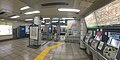 Ticketing machines
 -
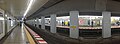 Platforms


History[edit]
Tsukiji Station opened on 28 February 1963.[1]
The station facilities were inherited by Tokyo Metro after the privatization of the Teito Rapid Transit Authority (TRTA) in 2004.[2]
Surrounding area[edit]

- Shintomichō Station (
 Tokyo Metro Yurakucho Line) (approximately 2 minutes' walk)

The station is located in the Tsukiji neighbourhood of Chūō, Tokyo. Only a few blocks south of the station (about 150 m) lies Tsukiji fish market, the largest seafood market in the world.[3] On the eastern side of the station is the Tsukiji Hongan-ji, a pilgrimage site for Buddhists worldwide.
References[edit]
- ^ a b Terada, Hirokazu (19 January 2013). データブック日本の私鉄 [Databook: Japan's Private Railways]. Japan: Neko Publishing. p. 215. ISBN 978-4-7770-1336-4.
- ^ "「営団地下鉄」から「東京メトロ」へ" [From "Teito Rapid Transit Authority" to "Tokyo Metro"]. Tokyo Metro Online (in Japanese). 2006-07-08. Archived from the original on 16 May 2012. Retrieved 29 May 2022.
- ^ Guide to sightseeing Tokyo Metro Retrieved 18 January 2009
External links[edit]

- Tokyo Metro station information (in Japanese)
| International | |
|---|---|
| National | |
