


Darwin, California
Darwin | |
|---|---|
 Darwin, California | |
 Location in Inyo County and the state of California | |
  Darwin Location in the United States | |
| Coordinates: 36°16′08″N 117°35′20″W / 36.26889°N 117.58889°W | |
| Country |  United States United States |
| State |  California California |
| County | Inyo |
| Area | |
| • Total | 1.34 sq mi (3.48 km2) |
| • Land | 1.34 sq mi (3.48 km2) |
| • Water | 0.00 sq mi (0.00 km2) 0% |
| Elevation | 4,846 ft (1,477 m) |
| Population (2020) | |
| • Total | 36 |
| • Density | 26.77/sq mi (10.33/km2) |
| Time zone | UTC-8 (Pacific (PST)) |
| • Summer (DST) | UTC-7 (PDT) |
| ZIP code | 93522 |
| Area codes | 442/760 |
| FIPS code | 06-18030 |
| GNIS feature ID | 2408642[2] |


Darwin is an unincorporated mining community and Census-designated place in Inyo County, California, United States. It is located 22 miles (35 km) southeast of Keeler.[3] The population was 43 at the 2010 census, down from 54 at the 2000 census.
History
[edit]The town is named after Darwin French (1822–1902), a local rancher, miner, and explorer.
According to Erwin Gudde, French of Fort Tejon was with a party of prospectors in the area during the fall of 1850. French also led a party into Death Valley in 1860 to search for the mythical Gunsight Lode via the local wash, lending his first name to the wash, canyon, and future town.[4]
Silver and lead discovery at the place led to the founding of a settlement in 1874.[3][5] A post office opened in 1875, closed for a time in 1902, and remains open.[6] The town prospered when Eichbaum Toll Road opened in 1926, opening Death Valley from the west. When Death Valley became a National Monument in 1933, it was decided to buy the toll road to allow free access to the new park. In 1937, a new cutoff bypassed Darwin, isolating the town.[7]
The town was the subject of a 2011 documentary film Darwin. In April 2012, BBC News featured a video of local residents describing their wishes to replace dial-up Internet access with broadband.[8]
Geography
[edit]According to the United States Census Bureau, the CDP has a total area of 1.3 square miles (3.4 km2), all of it land. The census definition of the area was created by the Census Bureau for statistical purposes and may not precisely correspond to local understanding of the area with the same name.
Demographics
[edit]| Census | Pop. | Note | %± |
|---|---|---|---|
| 2020 | 36 | — | |
| U.S. Decennial Census[9] | |||
For statistical purposes, the United States Census Bureau has defined Darwin as a census-designated place (CDP).
2010
[edit]At the 2010 census, Darwin had a population of 43. The population density was 32.0 inhabitants per square mile (12.4/km2). The racial makeup of Darwin was 38 (88%) white, 0 (0%) black, 2 (5%) Native American, 1 (2%) Asian American, 1 (2%) Pacific Islander, 0 (0%) from other races, and 1 (2%) from two or more races. Hispanic or Latino of any race were 2 people (5%).[10]
The whole population lived in households, no one lived in non-institutionalized group quarters and no one was institutionalized.
There were 28 households; 0 (0%) had children under the age of 18 living in them, 11 (39%) were opposite-sex married couples living together, 0 (0%) had a female householder with no husband present, and 1 (4%) had a male householder with no wife present. There were 1 (4%) unmarried opposite-sex partnerships and 0 (0%) same-sex married couples or partnerships. 14 households (50%) were made up of individuals, and 9 (32%) had someone living alone who was 65 or older. The average household size was 1.5. There were 12 families (43% of households); the average family size was 2.1.
The age distribution was 0 people (0%) under the age of 18, 0 people (0%) aged 18 to 24, 2 people (5%) aged 25 to 44, 20 people (47%) aged 45 to 64, and 21 people (49%) who were 65 or older. The median age was 63.5 years. For every 100 females, there were 168.8 males. For every 100 females age 18 and over, there were 168.8 males.
There were 46 housing units, at an average density of 34.2 per square mile (13.2/km2), of which 28 were occupied, of which 24 (86%) were owner-occupied and 4 (14%) were occupied by renters. The homeowner vacancy rate was 4%; the rental vacancy rate was 0%. 37 people (86% of the population) lived in owner-occupied housing units, and 6 people (14%) lived in rental housing units.
2000
[edit]At the 2000 census, there were 54 people, 36 households, and 14 families in the CDP. The population density was 39.3 inhabitants per square mile (15.2/km2). There were 54 housing units at an average density of 39.3 per square mile (15.2/km2). The racial makeup of the CDP was 91% White, 2% Black or African American, 4% Native American, and 4% from two or more races. 6% of the population were Hispanic or Latino of any race.[11] Of the 36 households, 8% had children under the age of 18 living with them, 22% were married couples living together, 14% had a female householder with no husband present, and 6% were non-families. 56% of households were one person, and 8% were one person aged 65 or older. The average household size was 1.5, and the average family size was 2.0.
The age distribution was 6% under the age of 18, 2% from 18 to 24, 17% from 25 to 44, 59% from 45 to 64, and 17% 65 or older. The median age was 53 years. For every 100 females, there were 145.5 males. For every 100 females age 18 and over, there were 142.9 males.
The median household income was $13,333, and the median family income was $15,000. Males had a median income of under $2500 versus $36,250 for females. The per capita income for the CDP was $11,048. There were 33% of families and 38% of the population living below the poverty line, including 100% of under eighteens and none of those over 64.
Government
[edit]In the state legislature, Darwin is in the 8th Senate District, represented by Democrat Angelique Ashby,[12] and the 26th Assembly District, represented by Democrat Evan Low.[13]
Federally, Darwin is in California's 8th congressional district, represented by Democrat John Garamendi.[14]
See also
[edit]References
[edit]- ^ "2020 U.S. Gazetteer Files". United States Census Bureau. Retrieved October 30, 2021.
- ^ a b U.S. Geological Survey Geographic Names Information System: Darwin, California
- ^ a b Durham, David L. (1998). California's Geographic Names: A Gazetteer of Historic and Modern Names of the State. Clovis, Calif.: Word Dancer Press. p. 1158. ISBN 1-884995-14-4.
- ^ Gudde, Erwin G. (1998). California place names : the origin and etymology of current geographical names (4th ed., rev. and enl. ed.). Berkeley: University of California Press. p. 102. ISBN 0520213165.
- ^ Palazzo, Robert P. (1996). Darwin, California.
- ^ Palazzo, Robert P. (2005). Inyo County Post Offices and Postmasters 1866-1966.
- ^ Minnigerodee, Fitzhugh L. (October 24, 1937). "Road Joins 'Extremes'". The New York Times. p. 8.
- ^ "Darwin, the town trapped by dial-up internet". BBC News. April 2, 2012. Retrieved April 3, 2012.
- ^ "Census of Population and Housing". Census.gov. Retrieved June 4, 2016.
- ^ "2010 Census Interactive Population Search: CA - Darwin CDP". U.S. Census Bureau. Archived from the original on July 15, 2014. Retrieved July 12, 2014.
- ^ "U.S. Census website". United States Census Bureau. Retrieved January 31, 2008.
- ^ "Senators". State of California. Retrieved April 11, 2013.
- ^ "Members Assembly". State of California. Retrieved April 11, 2013.
- ^ "California's 8th Congressional District - Representatives & District Map". Civic Impulse, LLC. Retrieved April 11, 2013.
Further reading
[edit]
- Palazzo, Robert P. Darwin, California, Lake Grove, OR: Western Places, 1996. The history of the boom and bust of this mining town from 1874 to 1878.
- Palazzo, Robert P. "Post Offices and Postmasters of Inyo County, California 1866-1966", Fernley, NV: MacDonald, 2005.
Municipalities and communities of Inyo County, California, United States | ||
|---|---|---|
| City | 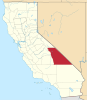 | |
| CDPs | ||
| Unincorporated communities | ||
| Indian reservations | ||
| Ghost towns | ||
| Other | ||
| International | |
|---|---|
| National | |
