Glebionis coronaria
| Garland chrysanthemum | |
|---|---|

| |
Scientific classification 
| |
| Kingdom: | Plantae |
| Clade: | Tracheophytes |
| Clade: | Angiosperms |
| Clade: | Eudicots |
| Clade: | Asterids |
| Order: | Asterales |
| Family: | Asteraceae |
| Genus: | Glebionis |
| Species: | G. coronaria
|
| Binomial name | |
| Glebionis coronaria (L.) Cass. ex Spach
| |
| Synonyms[1][2] | |
|
List
| |

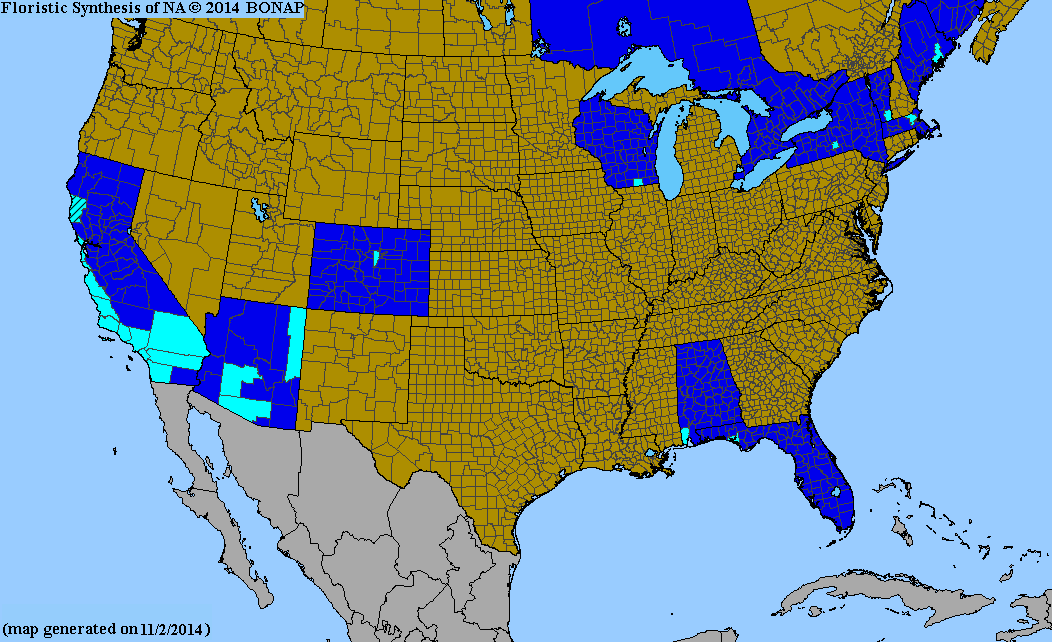
Glebionis coronaria, formerly called Chrysanthemum coronarium, is a species of flowering plant in the family Asteraceae. It is native to the Mediterranean region.[3] It is cultivated and naturalized in East Asia and in scattered locations in North America.[4][5]
Glebionis coronaria is used as a leaf vegetable. English language common names include garland chrysanthemum,[6] chrysanthemum greens,[6] edible chrysanthemum, crowndaisy chrysanthemum,[7] chop suey greens,[6] crown daisy,[6] and Japanese greens.[6]
Glebionis coronaria has been hybridized with related Argyranthemum species to create cultivars of garden marguerites.[8]
Characteristics[edit]
A leafy herb, the garland chrysanthemum is an annual plant. It has yellow ray florets grouped in small flower heads and aromatic, bipinnately lobed leaves. Its seeds are ribbed and winged cypselae.[9] The vegetable grows very well in mild or slightly cold climates, but will go quickly into premature flowering in warm summer conditions. Seeds are sown in early spring and fall.[citation needed]
"The plant is rich in minerals and vitamins with potassium concentrations at 610 mg/100 g and carotene at 3.4 g/100 g in edible portions. In addition, the plant contains various antioxidants (in stem, leaf, and root tissues) that have potential long-term benefits for human health, although toxic (dioxin) properties have also been observed. Extracts from C. coronarium var. spatiosum have been shown to inhibit growth of Lactobacillus casei, a beneficial human intestinal bacterium."[10]
Culinary uses[edit]
| Nutritional value per 100 g (3.5 oz) | |
|---|---|
| Energy | 99 kJ (24 kcal) |
3.02 g | |
| Dietary fiber | 3 g |
0.56 g | |
3.36 g | |
| Vitamins | Quantity %DV† |
| Vitamin A equiv. | 13% 116 μg13% 1380 μg3834 μg |
| Thiamine (B1) | 11% 0.13 mg |
| Riboflavin (B2) | 11% 0.144 mg |
| Niacin (B3) | 3% 0.531 mg |
| Pantothenic acid (B5) | 4% 0.221 mg |
| Vitamin B6 | 10% 0.176 mg |
| Folate (B9) | 44% 177 μg |
| Vitamin C | 2% 1.4 mg |
| Vitamin K | 292% 350 μg |
| Minerals | Quantity %DV† |
| Calcium | 9% 117 mg |
| Iron | 13% 2.29 mg |
| Magnesium | 8% 32 mg |
| Manganese | 41% 0.943 mg |
| Sodium | 5% 118 mg |
| Zinc | 6% 0.71 mg |
| †Percentages estimated using US recommendations for adults,[11] except for potassium, which is estimated based on expert recommendation from the National Academies.[12] | |
The plant's greens are used in many Asian cuisines.
In Korean cuisine, the plant is called ssukgat (쑥갓) and is used as an ingredient in various soups and stews, as well as a side dish (namul).
In Chinese cuisine, it is called tong ho choy in Cantonese, and tóng hāo cài (茼蒿菜) in Mandarin. It is used as an ingredient for stir-fries, stews, casseroles, and hotpots.[13]
In Japanese cuisine, it is called shungiku (春菊 "spring chrysanthemum"), and is used in nabemono, mixed into rice, or drizzled with soy sauce and sesame seeds as a side dish.
In Vietnamese cuisine, the greens are known as cải cúc or tần ô, and are used in soup (canh) or as a side dish accompanying various noodle soups. In a hotpot, it is added at the last moment to the pot to avoid overcooking.[citation needed]
In Crete, a variety of the species called mantilida (μαντηλίδα) has its tender shoots eaten raw or steamed by the locals (see Greek cuisine).[citation needed]
-
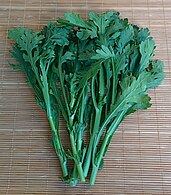 Edible crown daisy leaves
 -
 Korean ssukgat-namul (seasoned crown daisy side dish)
 -
 Korean maeuntang (spicy fish soup) with crown daisy
 -


.jpg)

Gallery[edit]
-
 Crown daisy flower (Israel)
 -
 Crown daisies in blossom (Israel)
 -
 Habit
Habit -
 All-yellow form
 -
 As a vegetable
 -
 Field of Crown daisies
 -
 Crown daisies in blossom (Israel)
 -
 Leaves of G. coronaria 'Oasis'


References[edit]
- ^ "Glebionis coronaria (L.) Cass. ex Spach". World Flora Online. The World Flora Online Consortium. 2022. Retrieved 13 November 2022.
- ^ "Glebionis coronaria (L.) Cass. ex Spach". Plant of the World Online. Royal Botanic Gardens, Kew. 2022. Retrieved 13 November 2022.
- ^ Altervista Flora Italiana, Glebionis coronaria (L.) Spach includes photos and European distribution map
- ^ "Glebionis coronaria (Linnaeus) Cassini ex Spach, 1841. 茼蒿 tong hao". Flora of China. eFloras. n.d. p. 653, 772.
- ^ Biota of North America Program 2014 county distribution map
- ^ a b c d e "Glebionis coronaria". Germplasm Resources Information Network. Agricultural Research Service, United States Department of Agriculture. Retrieved 30 July 2014.
- ^ "쑥갓" [crowndaisy chrysanthemum]. Korea Biodiversity Information System (in Korean). Korea National Arboretum. Retrieved 7 December 2016.
- ^ Flores, Anita; Shaw, Julian & Watson, John (2018), "Unpicking a daisy chain", The Plantsman, New Series, 17 (4): 238–243
- ^ "Glebionis coronaria (Linnaeus) Cassini ex Spach, 1841. Crown daisy, garland chrysanthemum". Flora of North America. eFloras. n.d. p. 555.
- ^ Teixeira da Silva, Jaime A.; Yonekura, Lina; Kaganda, Joyceline; Mookdasanit, Juta; Nhut, Duong T.; Afach, Ghanwa (2005). "Important secondary metabolites and essential oils of species within the Anthemideae (Asteraceae)". Journal of Herbs, Spices & Medicinal Plants. 11 (1): 1–4. doi:10.1300/J044v11n01_01. S2CID 84752321.
- ^ United States Food and Drug Administration (2024). "Daily Value on the Nutrition and Supplement Facts Labels". Retrieved 2024-03-28.
- ^ National Academies of Sciences, Engineering, and Medicine; Health and Medicine Division; Food and Nutrition Board; Committee to Review the Dietary Reference Intakes for Sodium and Potassium (2019). Oria, Maria; Harrison, Meghan; Stallings, Virginia A. (eds.). Dietary Reference Intakes for Sodium and Potassium. The National Academies Collection: Reports funded by National Institutes of Health. Washington, DC: National Academies Press (US). ISBN 978-0-309-48834-1. PMID 30844154.
- ^ "How to Find, Choose, & Use Garland Chrysanthemum". Diversivore. n.d. Retrieved 22 September 2020.