


Earth Impact Database
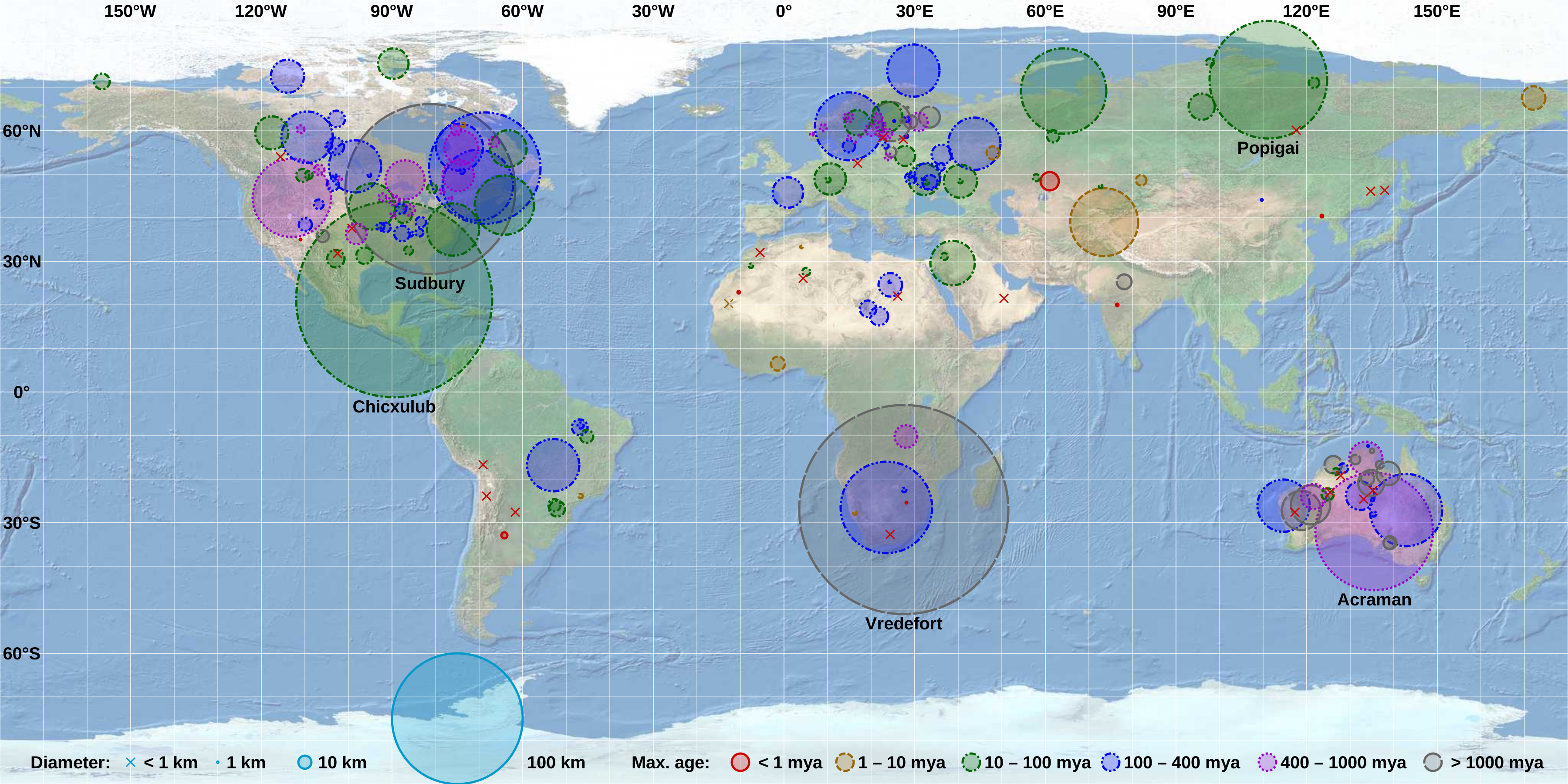
The Earth Impact Database is a database of confirmed impact structures or craters on Earth. It was initiated in 1955 by the Dominion Observatory, Ottawa, under the direction of Carlyle S. Beals. Since 2001, it has been maintained as a not-for-profit source of information at the Planetary and Space Science Centre at the University of New Brunswick, Canada.[1]
As of April 2019[update], the database lists 190 confirmed impact sites.[1]
Other lists are wider in scope by including more than just confirmed sites, such as probable, possible, suspected and rejected or discredited impact sites on their lists. These are used for screening and tracking study of possible impact sites. Sites will appear first in these lists while under study and may be incorporated into UNB's Earth Impact Database after confirmation and collection of enough information about the site to satisfy the database's strict entry criteria.[2]
A previous list was maintained by the Impact Field Studies Group at the University of Tennessee, Knoxville. The Catalogue of the Earth's Impact structures is maintained at the Siberian Center for Global Catastrophes.[3]
See also[edit]
References[edit]
- ^ a b "Earth Impact Database". University of New Brunswick. Retrieved 1 April 2019.
- ^ Rajmon, D. (March 13–17, 2006). "Suspected Earth Impact Sites" (PDF). Lunar and Planetary Institute. Retrieved 2008-09-24.
- ^ "Catalogue of the Earth's Impact structures". Siberian Center for Global Catastrophes, Russian Academy of Sciences, Siberian division. Archived from the original on 2009-07-16. Retrieved 2009-08-12.
External links[edit]
- "Earth Impact Database". Planetary and Space Science Centre (PASSC).
- "The meteor impact crater Google Maps viewer". Scaredy Cat Films.
- O'Dale, Charles. "My Amateur Impact Crater/Structure Explorations". RASC. Archived from the original on 2010-04-10. Retrieved 2013-02-03.


