


Richard H. Frenkiel
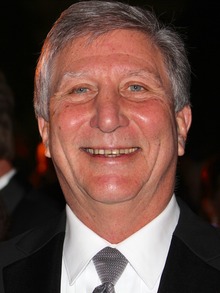
Richard H. Frenkiel (born March 4, 1943[1] in Brooklyn, New York)[2] is an American engineer, known for his significant role in the early development of cellular telephone networks.
Professional career[edit]
Frenkiel earned a bachelor's degree in mechanical engineering at Tufts University and a master's degree at Rutgers University in 1965.[2] Beginning in 1963, he worked for Bell Labs where he first designed recorded announcement machines.[3] In late 1965, he was invited to get involved in the early planning of cellular telephone systems and was paired with Philip T. Porter, a cellular pioneer. They focused on cell geometry, vehicle locating and handoff, and overall system architecture, leading to an early system proposal.[4] With Porter and Joel S. Engel, he was an author of the "High Capacity Mobile Telephone System Feasibility Studies and System Plan" which was filed with the FCC in 1971 and became an important cellular text.[5][2]
From 1971 to 1973, Frenkiel worked at AT&T Corporate Headquarters, where he became a primary interface with the FCC on Cellular issues. In 1973, he returned to Bell Labs, where he managed a group of mobile phone system engineers. Their focus was on vehicle-locating techniques, maximizing channel efficiency, and methods of splitting cells to include additional towers for high volume areas.[6] His "underlaid cell" concept greatly reduced the cost and logistic complexity of cell splitting [2] and became AT&T's most sought-after patent in cross-licensing agreements.[citation needed]
For five years Frenkiel was head of the Mobile Systems Engineering Dept. at Bell Labs during the transition from experimental systems to commercial service. His department developed interface specifications for nationwide compatibility among cellular companies. He also served on the Electronic Industries Alliance Committee which proposed rules for cellular systems that were adopted by the FCC. After the FCC allocated new frequencies in 1968 for mobile phones, Frenkiel's engineering team developed specifications for cellular networks and its parametrization (1971). This was the basis for AMPS.[7]
Frenkiel transferred to the AT&T Information Systems Labs in 1983, where he became head of cordless telephone development. He led the development of the 5000 series of cordless telephones, which achieved a much higher level of quality and performance than previous cordless telephones. He was also responsible for the early manufacture of those products in Singapore, pioneering the outsourcing of manufacturing within AT&T.[5]
In 1994, Frenkiel was a co-recipient, along with Joel S. Engel, of the National Medal of Technology for their contributions to the creation of cellular systems.[2] He has also received the Alexander Graham Bell Medal (1987) [2] and the Achievement Award of the Industrial Research Institute (1992). He has been elected to the National Academy of Engineering and is a Fellow of the IEEE.
In 1994 Frenkiel returned to Rutgers University where he became a Visiting Professor of Electrical and Computer Engineering, and Director for Strategic Planning at WINLAB at Rutgers.[8] He also works as an industry consultant and writer, and was Mayor of Manalapan, New Jersey in 1999.[5] He currently teaches a course in Wireless Business Strategy at Rutgers University
Publications[edit]
- U.S. patent 4,144,411 -- Cellular radiotelephone system structured for flexible use of different cell sizes, filed September 22, 1976, issued March 13, 1979
See also[edit]
Awards[edit]
- IEEE Fellow (life fellow)[9]
- IEEE Alexander Graham Bell Medal 1987 With Joel S. Engel and William C. Jakes, Jr.[10]
- National Medal of Technology 1994 received from President Bill Clinton[2]
- Charles Stark Draper Prize 2013 With Joel S. Engel, Martin Cooper, Thomas Haug and Yoshihisa Okumura[5]
- Inductee into the Wireless Hall of Fame (2016).[11]
References[edit]
- ^ Paul, Connie. "Remembering The 20th Century: An Oral History of Monmouth County". Retrieved 29 November 2016.
- ^ a b c d e f g "Richard H. Frenkiel and Joel S. Engel: Cellular Technology". Lemelson-MIT. Massachusetts Institute of Technology. Archived from the original on November 30, 2016. Retrieved November 29, 2016.
Nevertheless, in 1987, Frenkiel and Engel were awarded the Alexander Graham Bell Medal of the IEEE 'for exceptional contributions to the advancement of telecommunications.' In 1994, the pair received National Medals of Technology from President Clinton.
- ^ Blesch, Carl (2012). "Cellular technology pioneer Richard Frenkiel: Cellular Pioneer Knew Technology Would Be Important, but Never Imagined Billions of Users, Mobile Internet Richard Frenkiel to be honored with School of Engineering's Alumni Lifetime Achievement Award". Rutgers School of Engineering. Rutgers University. Retrieved November 29, 2016.
His first job involved designing "recorded announcement" machines that told callers the time of day or gave them phone numbers.
- ^ Rupp, Markus; Schwarz, Stefan; Taranetz, Martin (2016). The Vienna LTE-Advanced Simulators: Up and Downlink, Link and System Level Simulation. Springer Science+Business Media. p. 251. ISBN 9789811006173.
- ^ a b c d "NAE awards - Draper Prize Winners: Richard H. Frenkiel". National Academy of Engineering. 2013. Retrieved November 29, 2016.
Citation: Pioneering contributions to the world's first cellular telephone networks, systems, and standards.
- ^ David Hochfelder, Joel Engel, an interview from IEEE History Center (September 30, 1999)
- ^ Pretz, Kathy (July 7, 2014). "Mobile Phone Mavericks: IEEE Fellows helped ring in the age of cellphones". The Institute: The IEEE News Source. Institute of Electrical and Electronics Engineers. Retrieved November 29, 2016.
Frenkiel invented a concept that simplified the process of adding smaller cells to a cellular network as more customers wanted service. The network tracked mobile telephones in cars and other vehicles and switched calls from cell to cell as the telephone moved through an area. In doing so, the engineers solved a number of complex problems, such as how cellular systems locate vehicles and how calls made from moving vehicles can be handed off from cell to cell.
- ^ Rutgers Director for Strategic Planning
- ^ "IEEE Fellows Directory - Member Profile: Richard Frenkiel, Life Fellow". ieee.org. Retrieved 30 November 2016.
For contributions to the theory and design of cellular mobile telecommunications. (1988)
- ^ "List of IEEE Alexander Graham Bell Medal recipients" (PDF). www.ieee.org. IEEE. Archived from the original (PDF) on 2016-11-30. Retrieved 30 November 2016.
- ^ Wireless History Foundation (2016). "Richard H. Frenkiel". Wireless Hall of Fame. Retrieved March 19, 2024.
External links[edit]
- IEEE Biography of Richard H. Frenkiel
- Inventor of the Week archive: Cellular Technology at the Wayback Machine (archived April 2, 2013)


- Scientists at Bell Labs
- American electrical engineers
- Tufts University School of Engineering alumni
- Rutgers University alumni
- National Medal of Technology recipients
- Draper Prize winners
- Fellow Members of the IEEE
- 1943 births
- Scientists from New York City
- Living people
- Members of the United States National Academy of Engineering