


Võru
 | You can help expand this article with text translated from the corresponding article in Estonian. (January 2023) Click [show] for important translation instructions.
|
Võru
Võro (Võro) | |
|---|---|
 Võru city centre | |
 Flag  Coat of arms | |
  Võru Location in Estonia | |
| Coordinates: 57°50′55″N 26°59′34″E / 57.848611111111°N 26.992777777778°E | |
| Country |  Estonia Estonia |
| County |  Võru County Võru County |
| Founded | 21 August 1784 |
| Government | |
| • Mayor | Kalvi Kõva |
| Area | |
| • Total | 14.01 km2 (5.41 sq mi) |
| Elevation | 84 m (276 ft) |
| Population (2021) | |
| • Total | 11,865 |
| • Rank | 12th |
| • Density | 8,467/km2 (21,930/sq mi) |
| Ethnicity | |
| • Estonians | 93% |
| • Russians | 5% |
| • other | 2% |
| Time zone | UTC+2 (EET) |
| • Summer (DST) | UTC+3 (EEST) |
| ISO 3166 code | EE-919 |
| Website | www |
Võru (Estonian: [ˈʋɤru]; Võro: Võro; German: Werro) is a town and a municipality in south-eastern Estonia. It is the capital of Võru County and the centre of Võru Parish.
History
[edit]Võru was founded on 21 August 1784, at the request of the Empress Catherine II of Russia, by the order of Riga Governor general count George Browne, on the site of the former Võru estate as the center of the new county.
From 1797 until today, Võru has been the administrative center of the surrounding region.
In 1827, the Võru Town Hospital was opened and Friedrich Reinhold Kreutzwald, who lived and worked as a doctor in Võru from 1833 to 1877, also wrote the Estonian national epic "Kalevipoeg" in Võru. The development of the town was facilitated by the Pskov-Riga railway completed in 1889, which enabled Võru to have a direct connection with Riga and St. Petersburg. As a result, trade was developed, a flour mill, a sawmill and a distillery were built. Võru became the center of the surrounding rural area.[1]
Geography and climate
[edit]The town is situated on the shore of Lake Tamula.
Võru has a humid continental climate (Dfb according to the Köppen climate classification) with warm summers and cold winters. Võru has one of the most continental climates in Estonia: both the temperatures of 35.6 °C (96.1 °F), which is the highest temperature ever recorded in the country and −43.4 °C (−46.1 °F), which is very close to the coldest temperature ever recorded in the country (after Jõgeva) are recorded here. [2] Precipitation is usually higher in early summer to late autumn, and lower in late winter to early spring.
| Climate data for Võru (normals 1991–2020, extremes 1868–present) | |||||||||||||
|---|---|---|---|---|---|---|---|---|---|---|---|---|---|
| Month | Jan | Feb | Mar | Apr | May | Jun | Jul | Aug | Sep | Oct | Nov | Dec | Year |
| Record high °C (°F) | 9.6 (49.3) |
12.9 (55.2) |
19.9 (67.8) |
26.9 (80.4) |
31.1 (88.0) |
33.8 (92.8) |
35.2 (95.4) |
35.6 (96.1) |
29.9 (85.8) |
22.2 (72.0) |
14.2 (57.6) |
11.7 (53.1) |
35.6 (96.1) |
| Mean daily maximum °C (°F) | −1.8 (28.8) |
−1.3 (29.7) |
3.7 (38.7) |
11.4 (52.5) |
17.6 (63.7) |
21.1 (70.0) |
23.6 (74.5) |
22.1 (71.8) |
16.5 (61.7) |
9.4 (48.9) |
3.4 (38.1) |
−0.1 (31.8) |
10.5 (50.9) |
| Daily mean °C (°F) | −4.2 (24.4) |
−4.5 (23.9) |
−0.4 (31.3) |
6.1 (43.0) |
11.9 (53.4) |
15.9 (60.6) |
18.4 (65.1) |
16.9 (62.4) |
11.9 (53.4) |
6.2 (43.2) |
1.3 (34.3) |
−2.1 (28.2) |
6.5 (43.7) |
| Mean daily minimum °C (°F) | −6.7 (19.9) |
−7.6 (18.3) |
−4.2 (24.4) |
1.2 (34.2) |
6.0 (42.8) |
10.7 (51.3) |
13.3 (55.9) |
12.1 (53.8) |
8.0 (46.4) |
3.3 (37.9) |
−0.8 (30.6) |
−4.3 (24.3) |
2.6 (36.7) |
| Record low °C (°F) | −43.4 (−46.1) |
−37.9 (−36.2) |
−30.2 (−22.4) |
−18.8 (−1.8) |
−9.4 (15.1) |
−1.0 (30.2) |
1.7 (35.1) |
1.0 (33.8) |
−5 (23) |
−14.4 (6.1) |
−21.9 (−7.4) |
−40.5 (−40.9) |
−43.4 (−46.1) |
| Average precipitation mm (inches) | 45 (1.8) |
36 (1.4) |
34 (1.3) |
35 (1.4) |
53 (2.1) |
83 (3.3) |
75 (3.0) |
79 (3.1) |
57 (2.2) |
64 (2.5) |
51 (2.0) |
45 (1.8) |
658 (25.9) |
| Average precipitation days (≥ 1.0 mm) | 11 | 9 | 9 | 7 | 8 | 10 | 10 | 11 | 11 | 11 | 12 | 12 | 119 |
| Average relative humidity (%) | 88 | 85 | 77 | 69 | 67 | 71 | 74 | 77 | 82 | 86 | 89 | 89 | 79 |
| Mean monthly sunshine hours | 29.3 | 60.5 | 136.6 | 194.8 | 271.8 | 261.1 | 276.1 | 237.4 | 150.8 | 75.2 | 27.3 | 17.3 | 1,738.2 |
| Source: Estonian Weather Service (precipitation days 1971–2000)[3][4][5][6][7][8] | |||||||||||||
Demographics
[edit]| Ethnicity | 1897[9] | 1922[10] | 1934[11] | 1941[12] | 1959[13] | 1970[14] | 1979[15] | 1989[15] | 2000[16] | 2011[17] | 2021[18] | |||||||||||
|---|---|---|---|---|---|---|---|---|---|---|---|---|---|---|---|---|---|---|---|---|---|---|
| amount | % | amount | % | amount | % | amount | % | amount | % | amount | % | amount | % | amount | % | amount | % | amount | % | amount | % | |
| Estonians | 2675 | 64.4 | 4480 | 88.3 | 4855 | 91.1 | 5250 | 97.1 | 8604 | 80.4 | 12307 | 79.9 | 13783 | 82.2 | 14985 | 85.6 | 13414 | 90.2 | 11651 | 92.0 | 11042 | 93.1 |
| Russians | 248 | 5.97 | 163 | 3.21 | 171 | 3.21 | 87 | 1.61 | - | - | 2277 | 14.8 | 2378 | 14.2 | 1934 | 11.1 | 1112 | 7.47 | 804 | 6.35 | 599 | 5.05 |
| Ukrainians | - | - | - | - | 0 | 0.00 | - | - | - | - | 312 | 2.03 | 261 | 1.56 | 249 | 1.42 | 99 | 0.67 | 64 | 0.51 | 51 | 0.43 |
| Belarusians | - | - | - | - | - | - | - | - | - | - | 112 | 0.73 | 96 | 0.57 | 90 | 0.51 | 44 | 0.30 | 30 | 0.24 | 22 | 0.19 |
| Finns | - | - | - | - | 3 | 0.06 | 1 | 0.02 | - | - | 91 | 0.59 | 77 | 0.46 | 81 | 0.46 | 61 | 0.41 | 40 | 0.32 | 27 | 0.23 |
| Jews | 258 | 6.21 | 118 | 2.33 | 96 | 1.80 | 0 | 0.00 | - | - | 20 | 0.13 | 10 | 0.06 | 12 | 0.07 | 6 | 0.04 | 4 | 0.03 | 4 | 0.03 |
| Latvians | 118 | 2.84 | - | - | 37 | 0.69 | 21 | 0.39 | - | - | 30 | 0.19 | 30 | 0.18 | 35 | 0.20 | 23 | 0.15 | 14 | 0.11 | 23 | 0.19 |
| Germans | 824 | 19.8 | 188 | 3.71 | 145 | 2.72 | - | - | - | - | - | - | 33 | 0.20 | 17 | 0.10 | 7 | 0.05 | 5 | 0.04 | 8 | 0.07 |
| Tatars | - | - | - | - | 0 | 0.00 | - | - | - | - | - | - | 19 | 0.11 | 12 | 0.07 | 6 | 0.04 | 1 | 0.01 | 0 | 0.00 |
| Poles | 20 | 0.48 | - | - | 11 | 0.21 | 9 | 0.17 | - | - | - | - | 18 | 0.11 | 22 | 0.13 | 8 | 0.05 | 6 | 0.05 | 3 | 0.03 |
| Lithuanians | - | - | - | - | 0 | 0.00 | 0 | 0.00 | - | - | 30 | 0.19 | 4 | 0.02 | 4 | 0.02 | 3 | 0.02 | 3 | 0.02 | 0 | 0.00 |
| unknown | 0 | 0.00 | 0 | 0.00 | 1 | 0.02 | 6 | 0.11 | 0 | 0.00 | 0 | 0.00 | 0 | 0.00 | 0 | 0.00 | 44 | 0.30 | 9 | 0.07 | 40 | 0.34 |
| other | 9 | 0.22 | 122 | 2.41 | 13 | 0.24 | 33 | 0.61 | 2096 | 19.6 | 219 | 1.42 | 58 | 0.35 | 55 | 0.31 | 52 | 0.35 | 36 | 0.28 | 43 | 0.36 |
| Total | 4152 | 100 | 5071 | 100 | 5332 | 100 | 5407 | 100 | 10700 | 100 | 15398 | 100 | 16767 | 100 | 17496 | 100 | 14879 | 100 | 12667 | 100 | 11865 | 99.9 |
Religion in Võru (2021) [1]
Culture
[edit]The Võru Folklore Festival is held annually in Võru in July since 1995.[19]
Friedrich Reinhold Kreutzwald, the author of the Estonian national epic "Kalevipoeg", lived in Võru from 1833 to 1877. Fr.R.Kreutzwald Memorial Museum and the Võro Institute are also located in Võru.
Sports
[edit]Võru is home to Võru Stadium, the home ground of II liiga football team Võru JK.
Transport
[edit]European route E263 is the main connection with the rest of Estonia. Other roads connect Võru with Põlva, Räpina, Antsla and Valga. The Valga–Pechory railway, which passes through Võru, is currently inactive. The Võru train station is unused as of 2001.
Military
[edit]Võru is home to Taara Army Base, headquarters of the Kuperjanov Infantry Battalion.[20]
Twin towns – sister cities
[edit] Alūksne, Latvia
 Bad Segeberg, Germany
 Chambray-lès-Tours, France
 Härryda, Sweden
 Iisalmi, Finland
 Joniškis, Lithuania
 Kaniv, Ukraine
- Laitila, Finland
- Landskrona, Sweden
 Pechorsky District, Russia
 Smolyan, Bulgaria
 Suwałki, Poland


Notable people
[edit]- Priit Aimla (born 1941) writer, poet, humorist and politician was born in Võru.
- Helmut Ajango (1931–2013), Estonian-American architect, was born in Võru.
- Moses Wolf Goldberg (1905–1964), Estonian-Jewish chemist, lived in Võru as a child.
- Sulev Iva (born 1969), Võro identity advocate, founder of Võro Institute.
- Meelis Kanep (born 1983), Estonian chess grandmaster, was born in Võru.
- Friedrich Reinhold Kreutzwald (1803–1882), Estonian writer and folklorist, the author of Estonian national epic Kalevipoeg, lived in Võru from 1833 to 1877.
- Ain Mäeots (born 1971), Estonian actor and director, was born in Võru.
- Innar Mäesalu (born 1970), Estonian politician
- Marianne Mikko (born 1961), Estonian politician.
- Hilje Murel (born 1975), Estonian actress, was born in Võru.
- Priit Narusk (born 1977), Estonian cross-country skier, was born in Võru.
- Erki Nool (born 1970), Estonian decathlete and politician, was born in Võru.
- Erki Pehk (born 1968), Estonian conductor, was born in Võru.
- Priidu Puusepp (1887–1972), Estonian educator and linguist, was born in Võru.
- Anti Saarepuu (born 1983), Estonian cross-country skier, was born in Võru.
- Leon Sibul (1932–2007), American electrical engineer, was born in Võru.
- Uku Suviste (born 1982), Estonian singer, was born in Võru.
- Kaija Udras (born 1986), Estonian cross-country skier, was born in Võru.
- Debora Vaarandi (1916–2007), Estonian poet, was born in Võru.
- Katrin Välbe (1904–1981), Estonian actress, was born in Võru.
- Kullar Viimne (born 1980), Estonian fillmaker, was born in Võru.
Gallery
[edit]-
 Fr.R.Kreutzwald street in Võru
 -
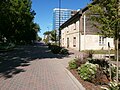 Tartu street near the beach
 -
 Tamula lake in Võru
 -
 MS Estonia memorial on the central square
 -
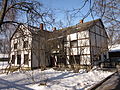
-
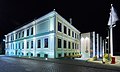 Võru Gymnasium
 -
 Monument to Friedrich Reinhold Kreutzwald
 -
 Võru county government building
 -
 Old fire station


See also
[edit]References
[edit]- ^ Pullat, R. (1984). Võru linna ajalugu.
- ^ "Õhutemperatuur |".
- ^ "Climate normals-Temperature". Estonian Weather Service. Retrieved 7 April 2021.
- ^ "Climate normals-Precipitation". Estonian Weather Service. Retrieved 7 April 2021.
- ^ "Climate normals-Humidity". Estonian Weather Service. Retrieved 7 April 2021.
- ^ "Climate normals-Sunshine". Estonian Weather Service. Retrieved 7 April 2021.
- ^ "Rekordid" (in Estonian). Estonian Weather Service. Retrieved 7 April 2021.
- ^ "Kliimanormid-Sademed, õhuniiskus" (in Estonian). Estonian Weather Service. Archived from the original on 22 February 2012. Retrieved 7 April 2021.
- ^ ПЕРВАЯ ВСЕОБЩАЯ ПЕРЕПИСЬ НАСЕЛЕНІЯ. РОССІЙСКОЙ ИМПЕРІИ 1897 г. XXІ. ЛИФЛЯНДСКАЯ ГУБЕРНІЯ [First General Population Census. Russian Empire, year 1897. XXI. Livonian Governorate.] (in Russian). St. Petersburg: Central Statistical Committee of the Ministry of Interior of the Russian Empire. 1905. pp. 2–3 (28).
- ^ 1922 a. üldrahvalugemise andmed. Vihk I ja II, Rahva demograafiline koosseis ja korteriolud Eestis (in Estonian and French). Tallinn: Riigi Statistika Keskbüroo. 1924. p. 33. ISBN 9789916103067.
- ^ Rahvastiku koostis ja korteriolud. 1.III 1934 rahvaloenduse andmed. Vihk II (in Estonian and French). Tallinn: Riigi Statistika Keskbüroo. 1935. pp. 47–53. hdl:10062/4439.
- ^ Eesti Statistika : kuukiri 1942-03/04 (in German and Estonian). Tallinn: Riigi Statistika Keskbüroo. 1942. pp. 66–67.
- ^ Katus, Kalev; Puur, Allan; Põldma, Asta (2003). Rahvastiku ühtlusarvutatud sündmus- ja loendusstatistika: Võrumaa 1965-1990. Sari C (in Estonian and English). Tallinn: Eesti Kõrgkoolidevaheline Demouuringute Keskus. pp. 31–32. ISBN 9985-820-76-2.
- ^ Население районов, городов и поселков городского типа Эстонской ССР : по данным Всесоюзной переписи населения на 15 января 1970 года (in Russian). Tallinn: Eesti NSV Statistika Keskvalitsus. 1972. p. 76.
- ^ a b Eesti Vabariigi maakondade, linnade ja alevite rahvastik. 1. osa, Rahvaarv rahvuse, perekonnaseisu, hariduse ja elatusallikate järgi : 1989. a. rahvaloenduse andmed (in Estonian). Tallinn: Eesti Vabariigi Riiklik Statistikaamet. 1990. pp. 31, 36. ISBN 978-9949-7193-2-7 – via Digar.
- ^ "RL222: RAHVASTIK ELUKOHA JA RAHVUSE JÄRGI". Estonian Statistical Database (in Estonian).
- ^ "RL0429: RAHVASTIK RAHVUSE, SOO, VANUSERÜHMA JA ELUKOHA JÄRGI, 31. DETSEMBER 2011". Estonian Statistical Database. Retrieved 4 February 2021.
- ^ "RL21429: Rahvastik Rahvuse, Soo, Vanuserühma Ja ELukoha (Haldusüksus) Järgi, 31. DETSEMBER 2021". Estonian Statistical Database (in Estonian).
- ^ "Ajalugu". MTÜ Võru Folkloorifestival. Retrieved 3 August 2016.
- ^ Ulc, Karol (January 17, 2017). "Russian Paratroopers Could Totally Mess Up the Baltic States". War is Boring. Archived from the original on January 18, 2017.
To give one example, the garrison of the Estonian Kuperjanov Infantry Battalion located in Võru is just 50 miles away from the Russian base in Pskov. The range of 9M528 rockets fired from the BM-30 Smerch is 55 miles.
- ^ "Võru sõpruslinnad". voru.ee (in Estonian). Võru linn. Retrieved 2021-04-02.
External links
[edit]


|  | |
Jaanilinn (Ivangorod) and Petseri (Pechory) were annexed by the Soviet Union in 1945 and are currently part of Russia. | ||
| Urban municipality |  | |
|---|---|---|
| Rural municipalities | ||
| International | |
|---|---|
| National | |
| Geographic | |
| Other | |