


House of Lippe
| House of Lippe | |
|---|---|
 | |
| Country | Principality of Lippe, Schaumburg-Lippe |
| Founded | 1123 |
| Founder | Bernhard I |
| Current head | Stephan, Prince of Lippe |
| Final ruler | Leopold IV |
| Titles | Lord, Count, Prince |
| Deposition | 1918 |
| Cadet branches | Lippe-Biesterfeld Lippe-Weissenfeld Schaumburg-Lippe |


The House of Lippe (German: Haus Lippe) is the former reigning house of a number of small German states, two of which existed until the German Revolution of 1918–19, the Principality of Lippe and the Principality of Schaumburg-Lippe.
Princess Beatrix of the Netherlands, former Queen of the Netherlands (1980–2013), is an agnatic member of this house.
History[edit]
The House of Lippe descends from Jodocus Herman, Lord of Lippe (died c. 1096), whose descendant Bernhard I was the founder of the state of Lippe in 1123. Born ca 1090. The family has produced several of the longest-reigning monarchs in Europe, including the longest reigning (for 82 years), Bernard VII, Lord of Lippe (d. 1511). In 1528, Simon V was elevated to the rank of a ruling count of the Holy Roman Empire.
In 1613, the House's territory was split into the counties of Lippe-Detmold, Lippe-Brake and Lippe-Alverdissen. In 1643, Count Philipp of Lippe-Alverdissen inherited half of the neighboring County of Schaumburg and founded the Schaumburg-Lippe line of the House of Lippe. The Brake branch extinguished in 1709, disputedly inherited by the main, Lippe-Detmold line. Alverdissen was bought back from Schaumburg-Lippe by Lippe-Detmold in 1812. In the 18th century, the cadet line of Lippe-Biesterfeld split from the Detmold branch, and shortly thereafter Lippe-Weissenfeld split from Lippe-Biesterfeld as a further cadet branch. Both, Biesterfeld and Weissenfeld were so-called paragiums (non-sovereign estates of a cadet-branch) within the County of Lippe. Both branches, owning only modest manor houses in the county, acquired other (non-sovereign) property by marriage and moved out of the county in the late 18th century, the Biesterfeld branch to the Rhineland, and the Weissenfeld branch to Saxony.
The counts of Lippe-Detmold were granted the title of Imperial prince in 1789, while the counts of Schaumburg-Lippe became in fact princes by entering the Confederation of the Rhine in 1807 and legally by becoming a member state of the German Confederation in 1815.
The Principality of Lippe existed until the end of the German monarchies in 1918. In 1905, with the death of Alexander, Prince of Lippe, the senior Lippe-Detmold branch of the family became extinct and Count Leopold of Lippe-Biesterfeld (head of the non-ruling junior branch line Lippe-Biesterfeld) succeeded him as Prince, after an Imperial court ruling, in fact against the wishes of Wilhelm II, German Emperor, who would have preferred his brother-in-law Prince Adolf of Schaumburg-Lippe to succeed. Leopold IV continued to rule until the German Revolution of 1918. During the revolution, the ruling Princes of Lippe and Schaumburg-Lippe were forced to abdicate, ending the family's 795-year rule. In 1928, Prince Leopold's three sons by his first wife signed up to the Nazi Party. The eldest, Prince Ernst, was reputedly the first German prince to do so.[1]
In 1937, Prince Bernhard of Lippe-Biesterfeld married Princess Juliana of the Netherlands. On the accession of their daughter Beatrix in 1980, the Netherlands Royal House officially remained known as the House of Orange-Nassau, although Beatrix and her sisters are agnatically members of the House of Lippe.
Stephan, Prince of Lippe (b. 1959) is the present senior of the House of Lippe. He still owns the estate and castle at Detmold, the former main residence of the principality. Alexander, Prince of Schaumburg-Lippe, head of the younger formerly sovereign branch, still resides at Bückeburg Palace.
States ruled by the House of Lippe[edit]
- Lippe (1123–1918), known as Lippe-Detmold from 1621
- Lippe-Brake (1621–1709)
- Schaumburg-Lippe (1643–1918)
Non-ruling cadet branches[edit]
- Lippe-Alverdissen (1613–1640 and 1681–1777)
- Lippe-Biesterfeld
- Lippe-Weissenfeld
Rulers of Lippe[edit]
Partitions of Lippe under Lippe rule[edit]
| County of Sternberg pledged by the Counts of Holstein (1400) |
|||||
| Lordship of Lippe (1123-1528) Lordship promoted to County of Lippe (1528-1613) | |||||
| County of Lippe-Sternberg (1559-1583) |
|||||
| County of Schauenburg-Lippe (1613-1787) Lippe-Alverdissen line from 1777 |
County of Lippe-Detmold (1613-1782) |
County of Lippe-Brake (1613-1709) | |||
| County of Lippe-Biesterfeld (1627-1905) |
|||||
| County of Lippe-Weissenfeld (1762-1916) County promoted to Principality of Lippe-Weissenfeld (1916-1918) |
|||||
| County of Lippe-Alverdissen (1681-1777) | |||||
| County promoted to Principality of Schaumburg-Lippe (1787-1918) |
County promoted to Principality of Lippe (1782-1918) Lippe-Biesterfeld line from 1905 | ||||
Table of rulers[edit]
| Ruler | Born | Reign | Death | Ruling part | Consort | Notes | |
|---|---|---|---|---|---|---|---|
| Bernard I | c.1090 | 1123-1158 | 1158 | Lordship of Lippe | Unknown at least one child |
First recorded lord of Lippe, and possible founder of the family. | |
| Herman I | ? | 1158-1167 | 1167 | Lordship of Lippe | Unknown at least two children |
Grandson of the previous lord. | |
| Bernard II |  |
1140 | 1167-1196 | 1224 | Lordship of Lippe | Heilwig of Are-Hochstaden (1150-1196) eleven children |
Brother of the previous. Also Lord of Rheda. Abdicated to become an abbot at the Latvian monastery of Daugavgrīva. Eventually he was appointed Bishop at Sēlija in 1218. |
| Herman II | 1175 | 1196-1229 | 25 December 1229 | Lordship of Lippe | Oda of Tecklenburg (1180-5 April 1221) seven children |
||
| Bernard III | 1194 | 1229-1265 | 1265 | Lordship of Lippe | Sophia of Cuijck-Arnsberg (1210-1245) c.1230 five children Sophie of Ravensberg-Vechta (1220-1285) 1248 four children |
||
| Bernard IV | c.1230 | 1265-1275 | June 1275 | Lordship of Lippe (at Horn) |
Agnes of Clèves (1232-1 August 1285) 1260 two children |
Sons of Bernard III, disputed the inheritance and briefly divided the lordship: Bernard kept Horn and the eastern part of the land; Herman received Lippstadt, Rheda and the western part. | |
| Herman III | 1233 | 1265-1274 | 3 October 1274 | Lordship of Lippe (at Lippstadt) |
Unmarried | ||
| Simon I | 1261 | 1274/75-1344 | 3 August 1344 | Lordship of Lippe | Adelaide of Waldeck 24 November 1276 eleven children |
Reunited the lordship, but it would be once more divided between his children. | |
| Simon II | c.1280/1300? | 1334 | 1334 | Lordship of Lippe | Unmarried | His situation is not very clear. Despite dying before his father, he is stated as co-ruling with his brothers below. | |
| Bernard V | c.1290 | 1344-1364 | 1364 | Lordship of Lippe (at Rheda) |
Richardis of the Mark 16 October 1344 four children |
Sons of Simon I, after the death of their brother Simon not long after their father, the surviving brothers briefly divided the lordship: Bernard kept Rheda and Otto received Lemgo, Rheda | |
| Otto | .jpg) |
1300 | 1344-1360 | January 1360 | Lordship of Lippe (at Lemgo) |
Irmgard of the Mark (c.1300-1 August 1362) 4 March 1323 five children | |
| Simon III | 1340 | 1360/64-1410 | 1410 | Lordship of Lippe | Irmgard of Hoya (1344-1422) 1362 ten children |
Reunited the lands of Lippe once more. | |
| Bernard VI | 1363 | 1410-1415 | 19 January 1415 | Lordship of Lippe | Margaret of Waldeck-Landau (1363-21 February 1395) 28 June 1393 no children Elisabeth of Mörs-Saarwerden 11 May 1403 four children |
||
| Simon IV | 1404 | 1415-1429 | 11 August 1429 | Lordship of Lippe | Margaret of Brunswick-Grubenhagen (1411-31 October 1456) 1426 five children |
||
| Regencies of Otto of Lippe (1429-1433) and Dietrich II, Archbishop of Cologne (1433-1446) | Holds the record of the longest rule in history. Lord since he was less than one year old, he became known as having been involved in many feuds. | ||||||
| Bernard VII the Bellicose |
.jpg) |
4 December 1428 | 1429-1511 | 2 April 1511 | Lordship of Lippe | Anna of Holstein-Pinneberg (1428-23 September 1495) 15 September 1443 seven children | |
| Simon V | .jpg) |
1471 | 1511-1536 | 17 September 1536 | Lordship of Lippe (until 1528) County of Lippe (from 1528) |
Walpurgis of Bronckhorst (d.21 December 1522) 27 March 1490 one child Magdalena of Mansfeld-Mittelort (c.1500-22 September 1540) 16 March 1524 Detmold four children |
During his rule, the Lordship was elevated to a County. |
| Regencies of Philip I, Landgrave of Hesse (1536-1547), Jobst II, Count of Hoya (1536-1545) and Adolphus XIII, Count of Holstein-Pinneberg (1536-1544) | Sons of Simon V, both were minors by the time their father died. Bernard kept Lippe and Herman Simon received the feudal land of Sternberg. Herman Simon would become regent of his nephew, Simon VI. | ||||||
| Bernard VIII | .jpg) |
6 December 1527 | 1536-1563 | 15 April 1563 | County of Lippe | Catherine of Waldeck-Eisenberg (1524-1583) 1550 five children | |
| Herman Simon | 1532 | 1532-1576 | 4 June 1576 | County of Lippe-Sternberg | Ursula of Spiegelberg-Pyrmont (1526-16 March 1583) 18 May 1558 Pyrmont two children | ||
| Regency of Herman Simon, Count of Lippe-Sternberg (1563-1576) | His marriage brought the county of Schaumburg (one of the last feuds of the counts of Holstein) into the family's domains. After Simon's death, the county entered into a more permanent division. | ||||||
| Simon VI | .jpg) |
15 April 1554 | 1563-1613 | 7 December 1613 | County of Lippe | Armgard, Countess of Rietberg 1578 no children Elisabeth of Holstein-Pinneberg 1585 ten children | |
| Regency of Ursula of Spiegelberg-Pyrmont (1576-1578) | His early and childless death brought Sternberg once again under Lippe control. | ||||||
| Philip | 5 October 1560 | 1576-1583 | 11 February 1583 | County of Lippe-Sternberg | Unmarried | ||
| Annexation to Lippe | |||||||
| Simon VII | 30 December 1587 | 1613-1627 | 26 March 1627 | County of Lippe-Detmold | Anna Catharina of Nassau-Wiesbaden-Idstein (4 December 1590 - 6 January 1622) 6 May 1607 Brake twelve children Maria Magdalena of Waldeck-Wildungen (27 April 1606 - 28 May 1671) 27 April 1623 three children |
Sons of Simon VI, divided the county once more. Simon kept his capital at Detmold; Otto received Brake, and Philip, Alverdissen. Following the annexation of the county of Schauenburg after the extinction of the House of Schauenburg in 1640 (the Lippes were heirs through the mother of the last count), Philip joined this new county to his inheritance. | |
| Otto |  |
21 September 1589 | 1613-1657 | 18 November 1657 | County of Lippe-Brake | Margaret of Nassau-Dillenburg (5 September 1606 - 30 January 1661) 30 October 1626 Dillenburg twelve children | |
| Philip I |  |
18 July 1601 | 1613-1681 | 10 April 1681 | County of Lippe-Alverdissen (until 1640) County of Schaumburg-Lippe (from 1640) |
Sophie of Hesse-Kassel 13 October 1644 Stadthagen ten children | |
| Regency of Christian, Count of Waldeck-Pyrmont (1627-1631) | Sons of Simon VII, and both minors. Simon Louis kept Detmold, under his step-grandfather, the Count of Waldeck-Pyrmont, and his half-brother received Biesterfeld, under his own mother's regency. | ||||||
| Simon Louis | 14 March 1610 | 1627-1636 | 8 August 1636 | County of Lippe-Detmold | Catherine of Waldeck-Wildungen (20 October 1612 - 24 November 1649) 19 June 1631 Wildungen three children | ||
| Regency of Maria Magdalena of Waldeck-Pyrmont (1627-1654) | |||||||
| Jobst Herman | 9 February 1625 | 1627-1678 | 6 July 1678 | Lordship of Lippe-Biesterfeld (at Schwalenberg until 1654; at Biesterfeld since 1654) |
Juliane Elisabeth of Sayn-Wittgenstein (4 October 1634 - 23 June 1689) 10 October 1654 Wittgenstein twenty children | ||
| Regencies of Christian, Count of Waldeck-Pyrmont (1636-1637) and Catherine of Waldeck-Wildungen (1637-1650) | Died with no descendants. The county fell to his uncle. | ||||||
| Simon Philip | 6 April 1632 | 1636-1650 | 19 June 1650 | County of Lippe-Detmold | Unmarried | ||
| John Bernard |  |
18 October 1613 | 1650-1652 | 10 June 1652 | County of Lippe-Detmold | Unmarried | Brother of Simon Louis, also had no descendants. |
| Herman Adolphus |  |
31 January 1616 | 1652-1666 | 10 October 1666 | County of Lippe-Detmold | Ernestina von Isenburg-Büdingen-Birstein (9 February 1614 - 5 December 1665) 1648 four children Amalia of Lippe-Brake (20 September 1629 - 19 August 1676) 27 February 1666 no children |
Brother of the previous. |
| Casimir |  |
22 July 1627 | 1657-1692 | 12 March 1700 | County of Lippe-Brake | Anna Amalia of Sayn-Wittgenstein-Homburg (6 December 1641 - 27 March 1685) 28 May 1663 Nymbrecht nine children |
In 1692, he abdicated to his eldest son. |
| Simon Henry |  |
13 March 1649 | 1666-1697 | 2 May 1697 | County of Lippe-Detmold | Amalia of Dohna-Vianen (2 February 1644 - 11 March 1700) 15 December 1666 The Hague sixteen children |
|
| Regency of Juliane Elisabeth of Sayn-Wittgenstein (1678-1689) | |||||||
| Rudolph Ferdinand | 17 March 1671 | 1678-1736 | 12 July 1736 | Lordship of Lippe-Biesterfeld | Juliana Louisa von Kunowitz (21 August 1671 - 21 October 1741) 22 February 1705 Halle eight children | ||
| Frederick Christian |  |
16 August 1655 | 1681-1728 | 13 June 1728 | County of Schaumburg-Lippe | Joanna Sophia of Hohenlohe-Langenburg 4 January 1691 Langenburg (annulled 1723) six children |
Sons of Philip I, divided their inheritance: Frederick Christian kept Schaumburg, and Philip Ernest received Alverdissen (the land of his father prior to the inheritance of the County of Schaumburg). |
| Philip Ernest I |  |
20 December 1659 | 1681-1723 | 27 November 1723 | County of Lippe-Alverdissen | Dorothea Amalia of Schleswig-Holstein-Sonderburg-Beck 31 December 1686 Beck seven children | |
| Rudolph | 10 May 1664 | 1692-1707 | 27 October 1707 | County of Lippe-Brake | Dorothea Elisabeth of Waldeck-Wildungen (6 July 1661 - 23 July 1702) 4 November 1691 Kleinern one child |
Left no surviving descendants. The county passed to his cousin. | |
| Frederick Adolphus |  |
2 September 1667 | 1697-1718 | 18 July 1718 | County of Lippe-Detmold | Joanna Elizabeth of Nassau-Dillenburg-Schaumburg (5 September 1663 - 8 February 1700) 16 June 1692 Schaumburg six children Amalia of Solms-Hohensolms (13 October 1678 - 14 February 1746) 8 June 1700 Hohensolms seven children |
|
| Louis Ferdinand | 27 September 1680 | 1707-1709 | 21 February 1709 | County of Lippe-Brake | Unmarried | Son of Frederick, a younger brother of Casimir. After his childless death Brake reverted to Lippe. | |
| Annexation to Lippe | |||||||
| Simon Henry Adolphus |  |
15 April 1554 | 1718-1734 | 7 December 1613 | County of Lippe-Detmold | Johanetta Wilhelmina of Nassau-Idstein (14 September 1700 - 2 June 1756)16 October 1719 Wiesbaden eleven children |
|
| Frederick Ernest | 20 December 1694 | 1723-1749 | 28 August 1749 | County of Lippe-Alverdissen | Elisabeth Philippine von Friesenhausen (19 August 1696 - 4 August 1764) 27 September 1722 Rebourg eleven children |
||
| Albert Wolfgang | .jpg) |
27 April 1699 | 1728-1748 | 24 September 1648 | County of Schaumburg-Lippe | Margarete Gertrud of Oeynhausen (9 April 1698 - 8 April 1726) 30 October 1721 London two children Charlotte Frederica of Nassau-Siegen (30 November 1702 - 22 July 1785) 26 April 1730 Varel no children |
|
| Regency of Johanetta Wilhelmina of Nassau-Idstein (1734-1747) | |||||||
| Simon Augustus | .jpg) |
12 June 1727 | 1734-1782 | 1 May 1782 | County of Lippe-Detmold | Polyxena Louise of Nassau-Weilburg (27 January 1733 - 27 September 1764) 24 August 1750 Kirchheimbolanden one child Maria Leopoldine of Anhalt-Dessau 28 September 1765 Dessau one child Casimire of Anhalt-Dessau 9 November 1769 Dessau one child Christine of Solms-Braunfels (30 August 1744 - 16 December 1823) 26 March 1780 Braunfels no children | |
| Frederick Charles Augustus | 20 January 1706 | 1736-1781 | 31 July 1781 | Lordship of Lippe-Biesterfeld (until 1762) County of Lippe-Biesterfeld (until 1762) |
Barbara Eleonora of Solms-Baruth (30 October 1707 - 16 June 1744) 7 May 1732 Baruth eight children |
Sons of Rudolph Ferdinand. Frederick Charles ascended after his father's death, and, during his rule, the Lordship was elevated to a County. In this same year (1762), he gave Weissenfelf to his brother Ferdinand Louis. | |
| Ferdinand I Louis | 22 August 1709 | 1762-1787 | 18 January 1787 | County of Lippe-Weissenfeld | Ernestine Henriette of Solms-Baruth (23 May 1712 - 17 November 1769) 2 November 1736 Baruth nine children | ||
| William | .jpg) |
9 January 1724 | 1748-1777 | 10 September 1777 | County of Schaumburg-Lippe | Maria Barbara Eleonore of Lippe-Biesterfeld 12 November 1765 Stadthagen two children |
Left no surviving descendants. The county passed to his cousin from the Alverdissen line. |
| Philip II Ernest II | 
|
5 July 1720 | 1749-1777 | 13 February 1787 | County of Lippe-Alverdissen | Ernestine Albertine of Saxe-Weimar 6 May 1756 Weimar four children Juliane of Hesse-Philippsthal 10 October 1780 Philippsthal four children |
After the death of the last male representative of the Schaumburg-Lippe line, he assumed the reins of this County, probably even merging his own with the recently acquired property. |
| 1777-1787 | County of Schaumburg-Lippe | ||||||
| Annexation to Schaumburg-Lippe | |||||||
| Charles Ernest Casimir | 2 November 1735 | 1781-1810 | 19 November 1810 | County of Lippe-Biesterfeld | Ferdinanda Henrietta Dorothea of Bentheim-Tecklenburg (24 August 1737 - 23 April 1779) 16 October 1769 Rheda five children |
||
| Regency of Louis Henry Adolph of Lippe-Detmold (1782-1789) | During his rule, the County was elevated to a Principality. | ||||||
| Leopold I |  |
2 December 1767 | 1782-1802 | 4 April 1802 | County of Lippe-Detmold (until 1789) Principality of Lippe (from 1789) |
Pauline Christine of Anhalt-Bernburg 2 January 1796 Ballenstedt two children | |
| Regency of Juliane of Hesse-Philippsthal (1787-1820) | During his rule, the County was elevated to a Principality. | ||||||
| George William |  |
20 December 1784 | 1787-1860 | 21 November 1860 | County of Schaumburg-Lippe (until 1807) Principality of Schaumburg-Lippe (from 1807) |
Ida of Waldeck-Pyrmont 23 June 1816 Arolsen nine children | |
| Frederick John Louis | 2 September 1737 | 1787-1791 | 14 May 1791 | County of Lippe-Weissenfeld | Maria Eleonora von Gersdorf (1 September 1752 - 3 December 1772) 21 February 1772 Milkel one child Wilhelmina von Hoenthal (19 February 1748 - 8 December 1789) 28 August 1775 Debernitz five children |
||
| Ferdinand II | 20 November 1772 | 1791-1846 | 21 June 1846 | County of Lippe-Weissenfeld | Eleonora Gustava von Thermo (19 October 1789 - 23 February 1868) 23 November 1804 Lipten seven children |
||
| Regency of Pauline Christine of Anhalt-Bernburg (1802-1820) | |||||||
| Leopold II |  |
6 November 1796 | 1802-1851 | 1 January 1851 | Principality of Lippe | Emilia Frederica of Schwarzburg-Sondershausen (23 April 1800 - 2 April 1867) 23 April 1820 Arnstadt nine children | |
| William Ernest |  |
15 April 1777 | 1810-1840 | 8 January 1840 | County of Lippe-Biesterfeld | Dorothea Christina Modesta von Umru (29 April 1781 - 29 September 1854) 26 July 1803 Bayreuth nine children |
|
| Julius | 2 April 1812 | 1840-1884 | 17 May 1884 | County of Lippe-Biesterfeld | Adelaide Clotilda Augusta of Kastell-Kastell (18 June 1818 - 11 July 1900) 30 April 1839 Kastell fourteen children |
||
| Gustav | 21 August 1805 | 1846-1882 | 17 June 1882 | County of Lippe-Weissenfeld | Ida of Lippe-Weissenfeld (16 January 1819 - 18 March 1878) 21 August 1848 Niedergurig seven children |
||
| Leopold III | _zur_Lippe,_in_Uniform,_leicht_nach_links.jpg) |
1 September 1821 | 1851-1875 | 8 December 1875 | Principality of Lippe | Elisabeth of Schwarzburg-Rudolstadt (1 October 1833 - 27 November 1896) 17 April 1852 Rudolstadt no children |
Left no descendants. The principality fell to his brother. |
| Adolphus I |  |
1 August 1817 | 1860-1893 | 8 May 1893 | Principality of Schaumburg-Lippe | Hermine of Waldeck-Pyrmont 25 October 1844 Arolsen three children |
|
| Woldemar |  |
18 April 1824 | 1875-1895 | 20 March 1895 | Principality of Lippe | Sophie of Baden 9 November 1858 Karlsruhe no children |
Left no descendants. The principality fell to his brother. |
| Ferdinand III | 6 October 1844 | 1882-1900 | 11 April 1900 | County of Lippe-Weissenfeld | Margarete von Winterfeld (17 September 1858 - 11 July 1903) no children |
Left no children. The county passed to his cousin, Clemens. | |
| Ernest |  |
9 June 1842 | 1884-1904 | 26 September 1904 | County of Lippe-Biesterfeld | Karoline of Wartensleben 16 September 1869 Neudorf six children |
Held regency to the Principality of Lippe due to the mental illness of his relative and actual prince, Alexander. |
| George | .jpg) |
10 October 1846 | 1893-1911 | 29 April 1911 | Principality of Schaumburg-Lippe | Marie Anne of Saxe-Altenburg 16 April 1882 Altenburg nine children |
|
| Regencies of Ernest, Count of Lippe-Biesterfeld (1895-1904) and Leopold, Count of Lippe-Biesterfeld (1904-1905) | Had a mental illness, so he never fully assumed he reins of the principality, which was assumed by his cousin from the Lippe-Biesterfeld line. After his death, his regent became the new prince. | ||||||
| Alexander |  |
16 January 1831 | 1895-1905 | 13 January 1905 | Principality of Lippe | Unmarried | |
| Clemens | 15 July 1860 | 1900-1918 | 29 April 1920 | County of Lippe-Weissenfeld (until 1916) Principality of Lippe-Weissenfeld (from 1916) |
Friederike von Carlowitz 7 January 1901 Proschwitz two children |
Grandson of Christian, a brother of Ferdinand II. In 1918, he abdicated following the dissolution of the monarchy. | |
| Leopold IV | 
|
30 May 1871 | 1904-1905 | 30 December 1949 | County of Lippe-Biesterfeld | Bertha of Hesse-Philippsthal-Barchfeld (25 October 1874 - 19 February 1919) 16 August 1901 Rotenburg five children Anna of Ysenburg and Büdingen 16 April 1922 Büdingen one child |
From the Lippe-Biesterfeld line. After the death of the last male representative of the Lippe-Detmold line, he assumed the reins of the Principality of Lippe, probably even merging his own county with the recently acquired principality. In 1918, he abdicated following the dissolution of the monarchy. In addition to being pro Nazis, both his eldest sons (Ernst and Chlodwig) had contracted unequal marriages. So in 1947, when Leopold wrote his will, Armin, his youngest son and only child with his second wife, would succeed him as head of the House of Lippe. One of Leopold's nephews, Bernhard, became the consort of Queen Juliana of the Netherlands. |
| 1905-1918 | Principality of Lippe | ||||||
| Annexation to Lippe | |||||||
| Adolphus II |  |
23 February 1883 | 1911-1918 | 26 March 1936 | Principality of Schaumburg-Lippe | Ellen Bischoff-Korthaus (6 November 1894 - 26 March 1936) 10 January 1920 Berlin no children |
In 1918, he abdicated following the dissolution of the monarchy. Died in a plane crash. |
See also[edit]
Castles of the House of Lippe[edit]
-
 Detmold Castle
 -
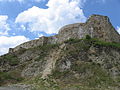 Falkenburg Castle, Detmold
 -
 Brake Castle, Lemgo
 -
 Blomberg Castle
 -
 Varenholz Castle, Kalletal
 -
 Schwalenberg Castle
 -
 Sternberg Castle, Extertal
 -
 Horn Castle
 -
 Alverdissen Castle, Barntrup
 -
 Schieder House, Schieder-Schwalenberg
 -
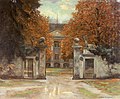 Lopshorn hunting castle, Augustdorf
 -
 Lippehof in Lemgo
 -
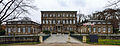 The New Palace at Detmold
.jpg)
.JPG)


.jpg)

.jpg)

.jpg)


References[edit]
External links[edit]
- Marek, Miroslav. "Genealogy of the House of Lippe". Genealogy.EU.
- Regnal chronology of Lippe
| International | |
|---|---|
| National | |
| People | |
