


Not Fade Away (song)
 | This article needs additional citations for verification. (August 2016) |
| "Not Fade Away" | ||||
|---|---|---|---|---|
 | ||||
| Single by the Crickets | ||||
| from the album The "Chirping" Crickets | ||||
| A-side | "Oh, Boy!" | |||
| Released | October 27, 1957 | |||
| Recorded | Clovis, New Mexico, August 1957[1] | |||
| Genre | ||||
| Length | 2:21 | |||
| Label | Brunswick[1] | |||
| Songwriter(s) |
| |||
| Producer(s) | Norman Petty[1][2] | |||
| The Crickets singles chronology | ||||
| ||||
"Not Fade Away" is a song credited to Buddy Holly (originally under his first and middle names, Charles Hardin) and Norman Petty (although Petty's co-writing credit is likely to have been a formality[3]) and first recorded by Holly and his band, the Crickets.[2]
Original song
[edit]Holly and the Crickets recorded the song in Clovis, New Mexico, on May 27, 1957, the same day the song "Everyday" was recorded.[1] The rhythmic pattern of "Not Fade Away" is a variant of the Bo Diddley beat, with the second stress occurring on the second rather than third beat of the first measure, which was an update of the "hambone" rhythm, or patted juba from West Africa. Jerry Allison, the drummer for the Crickets, pounded out the beat on a cardboard box.[3] Allison, Holly's best friend, wrote some of the lyrics, though his name never appeared in the songwriting credits. Joe Mauldin played the double bass on this recording. It is likely that the backing vocalists were Holly, Allison, and Niki Sullivan, but this is not known for certain.[1]
"Not Fade Away" was originally released as the B-side of the hit single "Oh, Boy!" and was included on the album The "Chirping" Crickets (1957). The Crickets' recording never charted as a single. In 2004, this song was ranked number 107 on Rolling Stone's list of "The 500 Greatest Songs of All Time".
Personnel
[edit]Buddy Holly and the Crickets
- Buddy Holly – lead vocals, lead guitar, backing vocals
- Jerry Allison – drums, card-box percussion
- Joe B. Mauldin – contrabass
- Niki Sullivan – rhythm guitar, backing vocals
The Rolling Stones version
[edit]| "Not Fade Away" | ||||
|---|---|---|---|---|
 US picture sleeve | ||||
| Single by the Rolling Stones | ||||
| B-side |
| |||
| Released |
| |||
| Recorded | January 10, 1964 | |||
| Studio | Olympic, London | |||
| Genre | Rock and roll, blues rock | |||
| Length | 1:50 | |||
| Label | ||||
| Songwriter(s) |
| |||
| Producer(s) | Andrew Loog Oldham | |||
| Rolling Stones UK singles chronology | ||||
| ||||
| Rolling Stones US singles chronology | ||||
| ||||
In 1964, the Rolling Stones' cover of "Not Fade Away" was a major hit in the United Kingdom. It was the A-side of the band's first US single.[4]
The Rolling Stones' version of "Not Fade Away" was one of their first hits. Recorded in January 1964 and released by Decca Records on February 21, 1964, with "Little by Little" as the B-side, it was their first Top 10 hit in the United Kingdom, reaching number three.[5] London Records released the song in the US on March 6, 1964, as the band's first single there, with "I Wanna Be Your Man" as the B-side.[6] The single reached number 48 on the U.S. Billboard Hot 100 singles chart.[7] It also reached number 44 on the Cash Box pop singles chart in the U.S. and number 33 in Australia based on the Kent Music Report.[8] "Not Fade Away" was not on the UK version of their debut album, The Rolling Stones, but was the opening track of the US version, released a month later as England's Newest Hitmakers. Cash Box described it as "a wild, freewheeling full-sounding pounder that can take off in no time flat."[9] It was a mainstay of the band's concerts in their early years, usually opening the shows. It was revived as the opening song in the band's Voodoo Lounge Tour, in 1994 and 1995.
Personnel
[edit]According to authors Philippe Margotin and Jean-Michel Guesdon,[10] except where noted:
- Mick Jagger – double tracked lead vocal, hand claps, tambourine, maracas[note 1]
- Keith Richards – twelve-string acoustic guitar, lead guitar
- Brian Jones – harmonica
- Bill Wyman – bass
- Charlie Watts – drums
Charts
[edit]| Chart (1964) | Peak position |
|---|---|
| Australia (Kent Music Report)[8] | 33 |
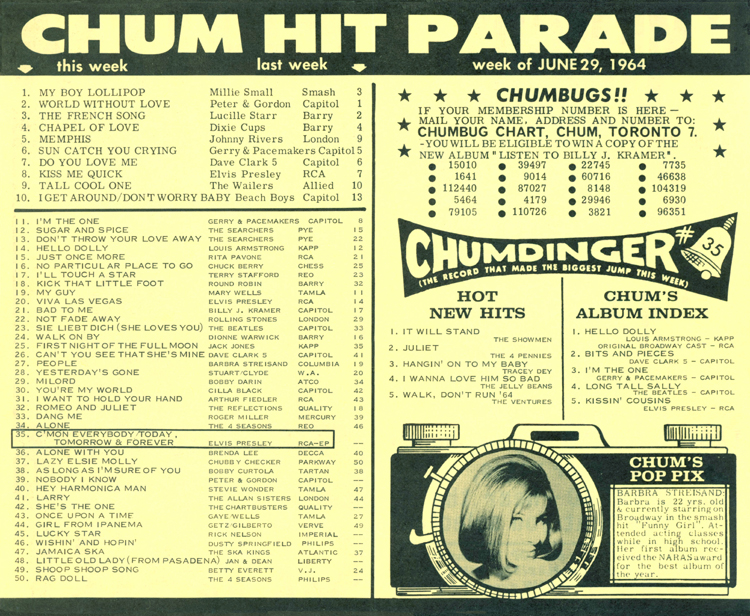
| Canada (CHUM Chart)[15] | 22 |
| Ireland (IRMA)[16] | 5 |
| Sweden (Kvällstoppen)[17] | 17 |
| UK Singles (OCC)[18] | 3 |
| US Billboard Hot 100[19] | 48 |
| US Cash Box Top 100[20] | 44 |
| US Record World Top 100[21] | 58 |
Other cover versions
[edit]- The song is closely associated with the Grateful Dead as one of their signature tunes—one which the band transformed from Holly's 1950s boy/girl romanticism to one reflecting the 1960s’ more spiritual universal love. Their 1971 recording of the song is included on the eponymous second live album. The Dead first performed it on June 19, 1968 at the Carousel Ballroom, San Francisco, California, and subsequently performed it more than 600 more times before the group disbanded in 1995, following the death of lead guitarist Jerry Garcia. The surviving members (except Tom Constanten and Donna Jean Godchaux) reunited and played the song for the last time all together as Fare Thee Well: Celebrating 50 Years of the Grateful Dead it was the last song of the second set (VC before the encores) on the last night of Fare Thee Well: Celebrating 50 Years of the Grateful Dead[22] Versions of the song are included on the Skull and Roses AKA Grateful Dead (1971) and Rare Cuts and Oddities 1966 albums. The song continued to be played by later iterations of the band, including The Other Ones, The Dead, and most recently Dead & Company.[23]
- Rush recorded a version of "Not Fade Away" as their debut single in 1973, which peaked at number 88 in Canada.[citation needed] The single was released on the band's own Moon Records label, and is considered a rare collector's item today, as it has never been reissued on any format.
- Tanya Tucker included a funky, rock-and-roll version of "Not Fade Away" on her album, TNT (1978). Tucker's cover of this song peaked at number 70 on the U.S. Billboard pop singles chart in 1979.[24]
- John Scofield included the song in his 2022 solo album.[25]
- Florence and the Machine recorded a version of the song in 2010.[26]
- Stevie Nicks contributed a cover of "Not Fade Away" for the tribute album, Listen to Me: Buddy Holly released in September 2011.
Explanatory notes
[edit]- ^ In a July 1964 issue of Rolling Stones Monthly, the Stones' manager and producer Andrew Loog Oldham stated that American producer Phil Spector played maracas on the track.[11] Wyman later disputed this account, suggesting Oldham created the story to increase the song's publicity.[12] While Spector was present at some of the band's sessions, including on 28 January and 4 February 1964,[13] they recorded "Not Fade Away" on 10 January 1964.[13][14] Both Margotin & Guesdon and authors Andy Babiuk & Greg Prevost write Jagger contributed maracas.[13][14]
References
[edit]- ^ a b c d e Buddy Holly: Greatest Hits. Liner notes. 1995. MCA Records.
- ^ a b Norman Petty interviewed on the Pop Chronicles (1969)
- ^ a b The Real Buddy Holly Story (DVD). White Star Studios. 1987.
- ^ "Song artist 5 - The Rolling Stones". Tsort.info. 2007-10-08. Retrieved 2016-08-29.
- ^ "Gloucestershire - People - Brian Jones (1942-1969)". BBC. Retrieved 2016-08-29.
- ^ Babiuk & Prevost 2013, p. 101.
- ^ Carr, Roy (1976). The Rolling Stones, an Illustrated Record. London: New English Library.
- ^ a b Kent, David. (2005). Australian chart book (1940-1969). Turramurra, N.S.W.: Australian Chart Book. ISBN 0-646-44439-5. OCLC 62561852.
- ^ "CashBox Record Reviews" (PDF). Cash Box. April 4, 1964. p. 16. Retrieved 2022-01-12.
- ^ Margotin & Guesdon 2016, pp. 50–51.
- ^ Babiuk & Prevost 2013, pp. 96, 652.
- ^ Wyman & Havers 2002, p. 99, quoted in Babiuk & Prevost 2013, p. 96.
- ^ a b c Margotin & Guesdon 2016, p. 51.
- ^ a b Babiuk & Prevost 2013, p. 96.
- ^ "CHUM Hit Parade - June 29, 1964".
- ^ "The Irish Charts – Search Results – Not Fade Away". Irish Singles Chart. Retrieved 18 June 2016.
- ^ Hallberg, Eric (193). Eric Hallberg presenterar Kvällstoppen i P 3: Sveriges radios topplista över veckans 20 mest sålda skivor 10. 7. 1962 - 19. 8. 1975. Drift Musik. ISBN 9163021404.
- ^ "Rolling Stones: Artist Chart History". Official Charts Company. Retrieved 18 June 2016.
- ^ "The Rolling Stones Chart History (Hot 100)". Billboard. Retrieved 18 June 2016.
- ^ "Cash Box Top 100 7/04/64". Tropicalglen.com. Retrieved 27 April 2021.
- ^ "100 Top Pops - Record World" (PDF). Record World: 5. July 11, 1964.
- ^ Guarino, Mark (6 July 2015). "'Grateful Dead: final concerts unite fans and band as legends fade away". The Guardian. Retrieved September 23, 2019.
- ^ "Dead & Company > Tour Statistics". setlist.fm. Retrieved September 23, 2019.
- ^ "Tanya Tucker - Not Fade Away". 45cat.com. Retrieved 27 April 2021.
- ^ Jurek, Thom (2022). "John Scofield: John Scofield". AllMusic. Retrieved 6 July 2022.
- ^ "The Life of a Song: 'Not Fade Away'". Financial Times. 5 December 2016.
Sources
[edit]- Babiuk, Andy; Prevost, Greg (2013). Rolling Stones Gear: All the Stones' Instruments from Stage to Studio. Milwaukee: Backbeat Books. ISBN 978-1-61713-092-2.
- Margotin, Philippe; Guesdon, Jean-Michel (2016). The Rolling Stones All the Songs: The Story Behind Every Track. New York: Black Dog & Leventhal Publishers. ISBN 978-0-316-31774-0.
- Wyman, Bill; Havers, Richard (2002). Rolling with the Stones. New York: DK. ISBN 978-0-7894-9998-1.
| Singles |
|
|---|---|
| Studio albums | |
| Compilation albums | |
| Tribute albums | |
| Related articles | |


- 1957 songs
- 1957 singles
- 1964 singles
- 1973 singles
- 2007 singles
- Buddy Holly songs
- The Rolling Stones songs
- Dick and Dee Dee songs
- Decca Records singles
- London Records singles
- Grateful Dead songs
- Sheryl Crow songs
- Rush (band) songs
- Songs written by Buddy Holly
- Song recordings produced by Andrew Loog Oldham
- Songs written by Norman Petty
- Brunswick Records singles
- The Crickets songs