


Dhaka College
ঢাকা কলেজ | |
 Logo of Dhaka College | |
Other name | DC |
|---|---|
Former names |
|
| Motto | Know Thyself |
| Type | Public Men's college |
| Established | 20 November 1841 |
| Accreditation | Dhaka Education Board |
| Affiliation | University of Dhaka |
| Principal | Professor AKM Elias |
Academic staff | 200+ |
Administrative staff | 150+ |
| Students | 25000+ |
| Location | , 1205 , 23°44′07.5″N 90°22′59.5″E / 23.735417°N 90.383194°E |
| Campus | City, 18.57 acres (7.52 ha) |
| Colors | |
| Nickname | DCians |
| Website | dhakacollege.edu.bd |
Dhaka College (Bengali: ঢাকা কলেজ), also known as DC, is a public educational institution of Bangladesh located in Dhanmondi, Dhaka. It is one of the oldest educational institutions in the subcontinent. It offers honours and master's programs which are affiliated with the University of Dhaka.[1][2][3] It also has higher secondary certificate (hsc).
History
[edit]The East India Company and British rule were closely related to the spread of modern education in the subcontinent. In 1780, during the Company rule, the rulers established the Calcutta Madrasah (now Aliah University), and 1791, they established the Sanskrit College in Varanasi for Indians, and the Fort William College in 1800 for the employees of the East India Company.
Following the passage of the 'Charter Act 1813', the East India Company was instructed by the British government to focus on the education of Indians. The act was the foundation of modern Indian education. Hindu College (now Presidency University) was established in 1817.
Various debates were held about the means and methods of spreading education in India. In 1835, a member of the British Parliament, Lord Macaulay, proposed in the 'Minute on Education' that India's education should be in the English language and in the light of European knowledge. As a result, the Governor General of India Lord Bentinck gave the 'English Education Act' effect. The 'General Committee of Public Instruction'. the then government agency responsible for the country's education system, in a report submitted on 20 April 1835 to Lord Bentinck, recommended to establish schools in major cities under the Bengal Presidency to teach English literature and science. They also recommended to allocate money from the government fund for establishing such schools wherever possible and to start the program from Dhaka and Patna.
The proposal was approved on June 24, 1835. The first government school in the whole of Bengal was established in Dhaka on July 15, 1835 by Dr. James Taylor Wise, Civil Surgeon of Dhaka, in a hired house of East India Company. The school was known as 'Dhaka English Seminary'. A local Committee of Public Instruction was formed by Dr. Wise with the help of District Magistrate Mr. Grant to conduct the administrative and academic affairs of the school. The school building was built partly out of public donations on the grounds of an English factory. With this school, Dhaka became an important center for the spread of modern education. The school created an unprecedented impact on the socio-economic arena of Dhaka city. Learners of this region were introduced to the western modern art, science and philosophy of the west for the first time.
Later, Lord Auckland, the Governor General of India, presented his famous Minute on Education in 1839, following which the General Committee of Public Instruction proposed the establishment of a college in Dhaka to the Governor General in 1840. The proposal was approved on July 18, 1841. On November 20, 1841, Dacca Central College was established. Cambridge University student and Hindu College (now Presidency University) teacher J. Ireland was appointed the first Principal.

Dhaka College, one of the main educational institutions of the subcontinent, started its journey with 3 rooms on the second floor of the English Seminary School (now Dhaka Collegiate School) building. The local 'Public Education Committee' bought the land for the college building. Colonel Garstin designed the building. On November 20, 1841, Daniel Wilson, Bishop of Calcutta, laid the foundation stone of the college at Sadarghat. The construction of the building was completed in 1844 and on May 25, 1844 the students started their education in the new building. In the first graduating class there were both Muslim and Hindu students, as well as a number of foreign students, mainly from Armenia and Portugal. Since its inception, Dhaka College has been an important educational institution in Bangladesh for leading the cultural, social and intellectual activities of East Bengal.
It was renamed as Dacca College in 1846.
In 1854, due to 'Education Dispatch' of Sir Charles Wood, discipline and coordination was established in Indian modern education. Due to the new educational policy, since 1854 the meritorious students of Dhaka College got the opportunity to study medicine in Calcutta Medical College, the only medical college in the subcontinent that time.
After the establishment of Calcutta University in 1857, Dhaka College was affiliated to it. In the first year, 4 students were sent from Dhaka College to appear in the BA examination, although one student appeared in the examination named Deenanath Sen.
In 1873, the College was relocated to a spacious building to the east of Victoria Park to accommodate the increased number of students and the physics and chemistry laboratories. In 1875, a separate science building was established and science classes were opened in Dhaka College. Dhaka College became the heart of modern education in East Bengal by providing higher education in philosophy, history, literature, mathematics, law and science - which continued until the establishment of Dhaka University in 1921.

However, there was no dormitory in Dhaka College until 1880. Though a dormitory was built in 1874, it did not last long. Subsequently, the first dormitory named Rajchandra Hindu Student Hostel was constructed at Shridas Lane, Bangla Bazar for Dhaka College in 1880 with a completely private grant subject to the permission of the government.
In 1903 new infrastructure plans were made for Dhaka College and in 1904 land was acquired and construction work started. On February 19, 1904, Lord Curzon inaugurated the construction of Curzon Hall. At a government meeting on May 27, 1904, it was decided to build a modern dormitory for Dhaka College. In 1908, construction of Curzon Hall was completed and Dhaka College was shifted to Curzon Hall and some adhering buildings at Ramna area after the partition of Bengal. The road on the east of Curzon Hall was named as College Road when Dhaka College was here. In March 1908, the construction of Dhaka Hall (now Shahidullah Hall) was completed. Dhaka College transformed into a full-fledged residential college here in a beautiful natural setting with a separate science building, Dhaka Hall (now Shahidullah Hall) for students and four residential buildings for professors.
With the beginning of the World War I in 1914, its adverse impact on Dhaka College resulted in declination of academic activities and other development works. Even, there were chances of the college buildings being taken over by the military. In July 1920, another college named Dacca Intermediate College was founded comprising the intermediate classes of Dhaka College for strategical reasons. On August 20, 1920, the new college was moved to the then Engineering School (now BUET) campus. Only the remaining BA, BSc, MA and MSc classes were accommodated in Curzon Hall.
On July 1, 1921, the University of Dhaka was established. Dhaka College has a glorious contribution and sacrifice for the establishment of the University of Dhaka. A section of Dhaka College was merged with the newly created university. In fact, all the movable and immovable properties of Dhaka College, students, teachers, staffs, employees, books, library, science rooms and various buildings were brought under the university so that the university could start its academic activities on July 15, 1921. A large amount of college land and campus, hostels and other infrastructures, scientific equipment and various scholarships allotted to meritorious students were also handed over to the university.
On the other hand, Dhaka College was shifted to the Residence of Lieutenant Governor (Old High Court Building) and the Engineering School (now BUET) building was made the student hostel of the college. The Engineering School (now BUET) was moved to Secretariat building. In 1943, the High Court College building had to be vacated to rehabilitate the wounded soldiers of World War II. The armed forced occupied the building and used it as a tent. Then the college was shifted temporarily to Islamic Intermediate College (now Kabi Nazrul Govt. College) located in Luxmibazar. Shortly afterwards, the official and academic activities of the college were conducted in a rusty old private building of late Khan Bahadur Abdul Hai located in Siddiq Bazar, adjacent to Fulbaria Station. Apart from this, a few houses were rented and used as college hostel.
In 1955, the journey of Dhaka College was started anew with new infrastructures in the present campus at Dhanmondi with a land area of 24 acres. In 1972, undergraduate courses on some subjects were reopened.
In 1982, the English spelling of the city was officially changed from Dacca to Dhaka. As a consequence the college was named Dhaka College.
During the Ershad period, the college had to relinquish about 6 acres of land. At present, the college is situated on 18.57 acres.
The Intermediate courses were discontinued in 1996 and resumed in 2010.
Affiliations
[edit]| University | From | To | Notes |
|---|---|---|---|
| University of Calcutta | July 18, 1857 | July 1, 1921 | [4] |
| University of Dhaka | July 1, 1921 | October 20, 1992 | |
| National University, Bangladesh | October 21, 1992 | February 15, 2017 | |
| University of Dhaka | February 16, 2017 | Present | [5][6] |
Academics
[edit]Dhaka College offers two years of Higher Secondary, four years of Honours and one year of Master's courses in various disciplines.[7]
Higher Secondary course
[edit]The college offers higher secondary courses according to the curriculum of National Curriculum and Textbook Board in three different disciplines. After two years of course, Higher Secondary Certificate examination is held under Dhaka Education Board.
| Group | # |
|---|---|
| Science | 900 |
| Business Studies | 150 |
| Humanities | 150 |
Undergraduate and Graduate program
[edit]Undergraduate (Honours) and postgraduate (Master's) programs are running in 19 departments. A noncredit course for post graduate students in Information and Communication Technology (ICT) was started from 1 August 2010.
Faculty
[edit]Dhaka College consists of 20 departments under 4 faculties. There are 200+ teachers in these departments. Many of them hold PhD, MPhil and other higher degrees.
Faculty of Arts
- Arabic and Islamic Studies
- Bengali
- English
- History
- Islamic History and Culture
- Philosophy
- Political Science
- Economics
- Sociology
Faculty of Science
Faculty of Business Studies
Co-curricular and extracurricular
[edit]BNCC
[edit]The activities of the corps first started in Dhaka College under the Indian Territorial Force Act 1920. On March 23, 1979, the then UOTC, BCC and JCC together started the journey under the name of Bangladesh National Cadet Corps (BNCC). Bravo Company of 1-BNCC Battalion under Ramna Regiment is headquartered at Dhaka College Platoon. Now, Dhaka College Platoon is in Alpha Company, 1 BNCC Battalion. Cadets are preliminarily selected through written test, physical test and interview and other co-curricular activities from among intermediate and honours students following cadet admission policy every year. Then, the Adjutant of 1-BNCC Battalion himself selects the qualified and smart cadets from among the initially selected ones. Selected cadets receive regular weekly training. This training is attended by platoon captains, other PUOs, military instructors and senior cadets. The Principal and Vice-Principal of the college directly supervise the weekly training program and give orders, advice, guidance and encouragement to make the program more dynamic and accelerated. Dhaka College BNCC group became the best during National Education Week in 2017, 2018, 2022 and 2023.
Rover Scout
[edit]Dhaka College Rover Scout Group was reorganized in 1972 after the Liberation War. Then the unit number was 5. This co-educational program continues till date. At present, there are 130 rover squires, 60 in member stage, 20 in training stage and 12 in service stage.
Organizations
[edit]Dhaka College Science Club
[edit]Dhaka College Science Club (DCSC), established in 1996, is a pioneering institution dedicated to fostering scientific curiosity and exploration. With over two decades of nurturing young minds, the club has become a hub for students to engage in various scientific disciplines. Through activities such as lectures and experiments, DCSC empowers members to develop critical thinking skills and a profound appreciation for science.[8]
DCSC is recognized as the most prominent and active club at Dhaka College, operating under the motto "Spread the knowledge of science to the utmost." The club aims to enlighten students with scientific knowledge. Additionally, DCSC supports student-led science projects and seeks to satisfy inquisitive minds by providing insights into the unknown and unseen aspects of science.[9][10][11]
Dhaka College Debating Society
[edit]Dhaka College Debating Society (DCDS) officially began its journey on January 10, 2010, with the slogan "Let all obstacles burn in the fire of dissent, let reason be the guide." The organization works to develop students intellectual pursuits and refined debating skills, aiming to create individuals who are socially and personally acceptable.
Since its inception, DCDS has organized various inter-college and inter-university debate competitions on different occasions for higher secondary and undergraduate levels. In 2020, Dhaka College achieved the honor of becoming the champion in the first inter-college debate competition organized by Bangladesh Television. DCDS's successes include multiple championships in the UCB Public Parliament debate, as well as several runner-up titles in numerous competitions.[12][13]
Source:[14]
- Dhaka College Cultural Club
- Dhaka College English Language Club
- Dhaka College Business Club
- Red Crescent Youth
- Badhan Dhaka College Unit
- Dhaka College Journalist Association
- Dhaka College Adventure Club
- Dhaka College Music School
- Bangladesh Open Science Organization
- Dhaka College Nature Study Club
- Dhaka College Natyamancha
- Charon Sanskritik Kendra
- Green Voice Dhaka College
- Biggan Andolon Mancha
- Dhaka College Abritti Sangsad
Facilities
[edit]Library
[edit]
The library of Dhaka College was established in 1841, the same year the college was founded. With the increase in the number of students and the introduction of new programs, the development of physical infrastructure became essential. In 1876, Acting Principal A. Eubiasc mentioned in a letter to the government that the college needed new classrooms, a library, a hall room, a chemical laboratory, and a large room for physical sciences. In 1904, "Curzon Hall" was constructed with funding from the prince of Bhawal, which was used as a library. In 1908, Dhaka Law College was relocated to Curzon Hall. From 1908 to 1921, the library's collection grew to around 8,000 books.[15]
In 2013-14, with the assistance of Dhaka College alumnus Md. Mozammel Haque Bhuiyan, a modern library named ‘Maruf-Sharmin Smriti Library’ was established. However, the library has not seen any development over time. Despite an increase in the number of students, the seating capacity and other facilities have not been expanded.[16] The current college library houses 50,000 books, along with a well-furnished reading room. The library provides academic support to over 200 students every day. Dhaka College Central Library's librarian, Parimal Kumar Biswas, mentioned that students can study in the library from 8 AM to 4 PM, five days a week.[17] [18]
Laboratory
[edit]- Physics Lab
- Chemistry Lab
- Botany Lab
- Zoology Lab
- Computer Lab
Academic buildings
[edit]- Main Building
- Botany Building
- ICT Building
- Lt. Sheikh Jamal Academic Building
Others
[edit]- Cafeteria
- Mosque
- Medical Center
- Gymnasium
- Central Playground
- Hall Playground
- Lawn Tennis Court
- Basketball Court
- Pond
- Flower garden
- Shaheed Minar
- Principal's residence
- Residential building for Teachers
Notable alumni
[edit]Notable faculty
[edit]Gallery
[edit]-
 Akhtarujjaman Elias Hall, Dhaka College
 -
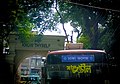 "Shongkhocil Bus" of Dhaka College
 -
 Cafeteria of Dhaka College
 -
 Football team of Dhaka College in 1946


References
[edit]- ^ "NU ranks top 5 colleges in the country". The Daily Star. 14 May 2016. Archived from the original on 19 July 2017. Retrieved 28 May 2017.
- ^ "NU ranks top 5 colleges". New Age. 15 May 2016. Archived from the original on 30 May 2017. Retrieved 28 May 2017.
- ^ "Rajshahi College achieves first, Eden College 2nd, Dhaka College 3rd". The New Nation. 15 May 2016. Archived from the original on 16 October 2017. Retrieved 28 May 2017.
- ^ "180 Years of Knowledge Based Honor and Glory of Dhaka College". Daily Asian Age. 24 November 2021. Archived from the original on 7 December 2021. Retrieved 28 January 2021.
- ^ "Dhaka College, six other govt colleges go under Dhaka University". bdnews24.com. 16 February 2017. Archived from the original on 17 February 2017. Retrieved 16 February 2017.
- ^ "Seven colleges affiliated to Dhaka University". NTV. 16 February 2017. Archived from the original on 1 March 2017. Retrieved 4 March 2017.
- ^ "Dhaka College | Know Thyself". Archived from the original on 13 June 2021. Retrieved 15 March 2021.
- ^ "Events". DCSC. Retrieved 1 October 2024.
- ^ "Dhaka Collece Science Club (DCSC)". Retrieved 1 October 2024.
- ^ "Dhaka College Science Club (DCSC) - Sports Events | AllEvents". allevents.in. Retrieved 1 October 2024.
- ^ "7th DCSC National Science Exposition 2020 in Dhaka". Bangladesh. 11 January 2020. Retrieved 1 October 2024.
- ^ "ঢাকা কলেজের যত ক্লাব-সংগঠন". AsianTvNewsportal: Best Newspaper online portal in bangladesh. AsianTV (in Bengali). Retrieved 1 October 2024.
- ^ https://www.khaborerkagoj.com/amp/campus/793394
- ^ খান, তারিকুর রহমান (4 October 2021). "১৮০ বছরের ঢাকা কলেজ". Prothomalo (in Bengali). Archived from the original on 3 October 2023. Retrieved 28 September 2023.
- ^ "উনিশ শতকে কলেজ শিক্ষা উন্নয়নে ঢাকা কলেজ গ্রন্থাগারের ভূমিকা". Librarian Voice. 12 August 2021. ISSN 2710-0103. Retrieved 1 October 2024.
- ^ https://www.deltatimes24.com/details.php?id=118280
- ^ https://www.dhakapost.com/campus/200639
- ^ "Library". Dhaka College. Archived from the original on 31 May 2016. Retrieved 19 May 2016.