


Gjilan
Gjilan | |
|---|---|
City and municipality | |
From the top to bottom-right, View over Gjilan, Gjilan Regional Museum, The Clocktower, Xhamia e Derëmahallës, Statue of Idriz Seferi | |
 Flag  Seal | |
  Gjilan  Gjilan | |
| Coordinates: 42°27′53″N 21°28′1″E / 42.46472°N 21.46694°E | |
| Country | Kosovo |
| District | Gjilan |
| Government | |
| • Type | Mayor–council |
| • Mayor | Alban Hyseni (Vetëvendosje) |
| • Council | Gjilan Municipal Council |
| Area | |
| • Municipality[1] | 391.84 km2 (151.29 sq mi) |
| • Rank | 10th in Kosovo |
| Population (2011[2]) | |
| • Municipality[1] | 90,178 |
| • Rank | 6th in Kosovo |
| • Urban | 54,239 |
| • Rural | 35,939 |
| • Ethnicity | |
| Demonym(s) | Albanian: Gjilanas (m), Gjilanase (f) |
| Time zone | UTC+1 (CET) |
| • Summer (DST) | UTC+2 (CEST) |
| Postal code | 60000 |
| Area code | +383 (0) 28 |
| Vehicle registration | 06 |
| Website | kk.rks-gov.net/gjilan/ |


Gjilan[a] or Gnjilane (Serbian Cyrillic: Гњилане) is the sixth most populous city in Kosovo and it serves as both a municipality and the administrative center of the Gjilan District. The municipality has a population of 90,178 with approximately 54,239 inhabitants residing in the urban area. It is located in the east of Kosovo, in the region of Anamorava, and is well connected with the capital city of Kosovo, Pristina, as well as other surrounding cities such as Ferizaj, Kamenica, Preševo and Bujanovac.
Name[edit]
The etymology of Gjilan is disputed. Albanian sources claim that the town (initially a village) obtained its name from Bahti Beg Gjinolli of Gjinaj clan that ruled the region of Vushtrri (Llap and Drenica), and populated this area in the 18th century (around 1750).[citation needed] However, there is no definite evidence to support this claim and in fact no one can confirm who the first real inhabitants were or when they first settled. On the other hand, Serbian sources claim that the origin of the city's name comes from the Serbian word "gnjio" (rotten).[3]
History[edit]


In 1342, a place called Morava was visited by Serbian King Stefan Dušan (later Emperor, r. 1331–1355).[4] A fort was built nearby in the 14th century. Gornja Morava ("Upper Morava") was known simply as Morava under Ottoman rule, and it extended west of the Upper Žegra–Budriga–Cernica line, thus Gjilan stayed in the oblast (province) of Topanica, whose provincial seat was Novo Brdo.[5] In the 1455 defter (Ottoman tax registry), Gjilan was inhabited by Serbs, and the priest Božidar served the town.[6] There were 41 households.[7] Haji Kalfa (first half of the 17th century) mentions Morava being 17 days from Constantinople.[4] Gornja Morava and Izmornik were organized into the Sanjak of Viçitrina up until the 18th century.[8] Gjilan became a kadiluk around 1780, and 20–25 years later a large village.[9]
The exact year of establishment of Gjilan to this day is not exactly determined. In the 17th century, Evlia Çelebija mentions Gjilan, but named Morava, as a cadillac within the Sanjak of Viçitrina. Among other things, Evlia Çelebija writes that "Seventeen days the road from Constantinople (today's Istanbul) to Novo Brdo passes through Vranje, Kriva Reka (Egridere) of Morava (Gjilan)". There is a tradition in the people that Gjilan as a settlement was formed around 1750, and as an urban center – in 1772. Gjilan as a town developed in addition to the extinction of Novo Brdo, which in the Middle Ages was one of the cities and the largest commercial, economic and mining centers in the Balkans. The feudal family "Gjinaj" in the second half of the nineteenth century transferred their headquarters from Novo Brdo and built their own houses in the place where Gjilani is now located.[10]
Modern history[edit]
In 1999, Camp Monteith was established outside the city as a base of operations for KFOR during Operation Joint Guardian, on the site of a destroyed Serbian military base which was handed over to the Kosovo Protection Corps in 2007 after the U.S. Military downsized their number of troops. Gjilan has also served as the regional headquarters of the UNMIK International Police task force from 1999.
In the aftermath of the Kosovo War, the town's Kosovo Serb civilians were abducted, tortured and killed by members of the Kosovo Liberation Army's "Gnjilane Group". They kidnapped 159 Serb civilians and killed between 51 and 80 of them from June to October 1999.[11][12]
Geography[edit]
Gjilan is located in the southeastern part of Kosovo, the region of Anamorava. Its geographic position makes it possible to make good connections with other centers of Kosovo and the region. Around the town of Gjilan lis the Hill of Martyrs (Popovica), Gllama, Dheu i Bardhë, the area of Malisheva (Gjilan), Zabeli of Sahit Agës and Bregu i Thatë. There are three small rivers, Mirusha, Banja and Stanishori, which join and flow to Binačka Morava, west of the Uglara village.
Gjilan is 46 km from Pristina, 27 km from Kamenica, 22 km from Vitia, and 25 km from Novo Brdo. The municipalities of the region are bordered in the southeast by Preševo (33 km) and Kumanovo (53 km), and in the east by Bujanovac (40 km).[13]
The Gjilan area is defined by the Morava River, which collects all the small rivers, with an average monthly flow rate of 6.7 cubic meters/second. In the southeast it is surrounded by the mountains of Karadak.[13]
Climate[edit]
Gjilan has a Humid subtropical climate (Cfa) as of the Köppen climate classification with an average annual temperature of 10.9 °C (51.6 °F).[14] The warmest month in Gjilan is August with an average temperature of 22.1 °C (71.8 °F), while the coldest month is January with an average temperature of −0.5 °C (31.1 °F).[14]
Economy[edit]
As of 2018 there were 4,100 registered private businesses in the municipality employing some 6,900 people.[15]
Prior to 1999, Gjilan was an important industrial centre in Kosovo. Still in operation are the radiator factory and tobacco factory, which has been recently privatized. The new city business incubator, supported by the European Agency for Reconstruction, was inaugurated in the summer of 2007.
Infrastructure[edit]
Education[edit]
Education in Gjilan includes pre-school, primary and secondary education, and a public university (Kadri Zeka). As of 2018, there were 12,370 students in 29 primary schools, of which 12,023 were ethnic Albanians and 347 members of ethnic minorities (Serbs, Roma and Turks). There were nine secondary schools with 5,650 students of which 5,449 were Albanians and the rest minority groups.[15]
Demography[edit]

| Year | Pop. | ±% p.a. |
|---|---|---|
| 1953 | 48,748 | — |
| 1961 | 52,415 | +0.91% |
| 1971 | 67,893 | +2.62% |
| 1981 | 84,085 | +2.16% |
| 1991 | 103,675 | +2.12% |
| 2011 | 90,178 | −0.69% |
| 2016 est. | 80,525 | −2.24% |
| Source: Division of Kosovo | ||
The population of Gjilan has always been mixed, but with a predominant majority of Albanians in both periods during Turkish and Serbian-Yugoslav rule. According to the 2011 census, the Municipality of Gjilan has 90,178 inhabitants. Albanians – 87,814, Serbs – 624, Turks – 978, Bosniaks – 121, Roma – 361, Ashkali – 15, Gorani – 69, Egyptians – 1, others – 95. They preferred not to respond – 35 people. In the city live 54,239 inhabitants, while in rural areas – 35,939. Division of population by gender: male – 45,354, female – 44,824.[16] Based on the population estimates from the Kosovo Agency of Statistics in 2016, the municipality has 81,447 inhabitants.
The vast majority of the population is Albanian, followed by Serbs, and a small number of minorities. There are among others, 978 Turks or 1% of the municipal population. The recorded number of Serbs has decreased due to partial census boycott[17] and the creation of the Serb-majority municipality of Parteš.
The ethnic composition of the municipality:
| Ethnic composition | |||||||||||||
| Year/population | Albanians | % | Serbs | % | Roma | % | Others | % | Total | ||||
|---|---|---|---|---|---|---|---|---|---|---|---|---|---|
| 2011 | 87,814 | 97.45 | 624 | 0.7 | 361 | 0.4 | 1,379 | 1.52 | 90,178 | ||||
| Source: Yugoslav population censuses for data through 1991,and Kosovo 2011 census. | |||||||||||||
Albanian, Serbian and Turkish are all official languages in the municipality.[18]
Culture[edit]

Flaka e Janarit[edit]
Flaka e Janarit is a cultural event that starts on January 11 in Gjilan with a symbolic opening of the flame, to keep up with various cultural activities to 31 January of each year. It gathers thousands of artists and art lovers from all the Albanian territories, who for three consecutive weeks transform the city into a cultural metropolis. The nation's martyrs are honored through values of art by this event, which began before the 10th anniversary of the assassination of writer, activist and patriot Jusuf Gërvalla, along with Kadri Zeka and Bardhosh Gërvalla. It was exactly the tenth anniversary without these three martyrs of freedom and from coincidence of these murders in a same date on 11 January, this event got this name "Flaka e Janarit".[19]
There are 41 mosques in Gjilan.[20]
Sports[edit]
Gjilan is home to the basketball club KB Drita, the football clubs SC Gjilani and FC Drita and the volleyball club KV Drita, male and female competition the most successful club in Gjilan's history. It also has the football club which is in the 2nd league KF Bashkimi from Koretin, a village in Gjilan.
Gjilan hosts the biggest derby in Kosovo, the Kosovo Derby, between FC Drita and SC Gjilani. Both of the clubs are from the city, which draw thousands of viewers inside the Gjilan City Stadium.
Gallery[edit]
-
 Town center, 1913
 -
 1925
1925 -
 House of Zekirja Abdullahu
 -
 Monastery of St. Nicholas, Straža, Gjilan
 -
 Main Street
 -
 City Theater
 -
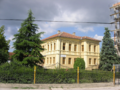 Conservatory
 -
 Clock Tower
 -
 Big Mosque
 -
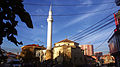 Oldest Mosque of 1606
 -
 Dunav Church


Notable people[edit]
- Idriz Seferi (b.1847), Albanian patriot
- Mulla Idriz Gjilani (b.1901), Albanian patriot
- Zoran Antić (b. 1975), Serbian footballer
- Faton Bislimi (b. 1983), Kosovan author
- Nijazi Ramadani (b. 1964), Kosovan poetry writer
- Albert Bunjaku (b. 1983), Kosovan footballer
- Daut Dauti (b. 1960) Kosovan author
- Dragan Dimić, Serbian footballer
- Bajram Haliti (b. 1955), Romani writer
- Shpëtim Hasani (b. 1982), Kosovan footballer
- Lutfi Haziri (b. 1969), Kosovan politician
- Genta Ismajli (b. 1985), Kosovan singer
- Ismet Munishi (b. 1974), Kosovan footballer
- Aljmir Murati (b. 1985), Swiss footballer
- Zenun Pajaziti (b. 1966), Kosovan politician
- Xherdan Shaqiri (b. 1991), Swiss footballer
- Jahi Jahiu, (b. 1959), Kosovan artist
- Mira Stupica (b. 1923), Serbian actress
- Goran Svilanović (b. 1963), Serbian politician
- Faton Toski (b. 1987), Kosovan footballer
- Agim Ramadani (b. 1963), KLA commander
- Abdullah Tahiri (b. 1956), KLA commander
- Antun Marković (b. 1992), Croatian footballer
- Lirim Hajrullahu (b. 1990), Canadian CFL kicker
- Đorđe Martinović (b. 1929), farmer
Twin towns – sister cities[edit]
Gjilan is twinned with:
 Kumanovo, North Macedonia[21]
 Nazilli, Turkey[22]
 Sarandë, Albania[23]
 Sioux City, United States[24]
- Yıldırım, Turkey[25]


See also[edit]
Notes[edit]
- ^ Albanian definite form: Gjilani, IPA-sq
References[edit]
- ^ "Komisioni për majten e territorit të Republikës së Kosovës" (PDF) (in Albanian). Prime Minister Office of Kosovo. p. 52. Archived from the original (PDF) on 22 September 2020. Retrieved 2 October 2021.
- ^ 2011 Kosovo Census results
- ^ "Архивирана копија". Archived from the original on 10 April 2016. Retrieved 28 December 2018.
- ^ a b Kostić 1922, p. 126
"ГЊИЛАНЕ. ИЛИ. ГИЉАНЕ. У 14. веку помиње се неко место Морава, где се 1342. год бакио краљ Душан. Хаџи Калфа (прва половина 17. века) помиње неко место Мораву, на 17 дана од Цариграда. Јањева, Новог Брда и Кача- ..." Gnjilane or Giljane. In 14th century some place Morava was mentioned, where king Dusan rested in 1342. Haji Kalfa (first half of the 17th century) mentioned some place Morava, on 17 days (distance) from Istanbul. Janjeva, Novo Brdo and Kaca-..."
- ^ Urošević/Macura 1987, p. 10
"Горња Морава се под турском управом звала само Морава, а протезала се западно од линије с. Жегра–Будрига–Церница, тако да је Гњилане остајало у области Топонице, чије је обласно средиште било Ново Брдо." "Upper Morava under Ottoman rule was called just Morava. It was located Western of the line s. Žegra–Budriga–Cernica, so Gnjilane was in area of Toponica, which regional center was Novo Brdo."
- ^ Kalezić 2002, p. 448
"Из турског дефтера (1455) види се да је насељено Србима и да је у њему служио свештеник Божидар. Старо Гњилане налазило се у Петиковиди (Петковици) предграђу данашњег насеља које је подигнуто на месту" "From the Ottoman Defter (1455) it is seen that it was inhabited by Serbs and that in it the priest Bozidar served. Old Gnjilane was located in Petikovida (Petkovica) suburb of today's settlement which was created in that place"
- ^ Hamid Hadžibegić; Adem Handžić; Ešref Kovačević (1972). Oblast Brankovića – Opširni katastarski popis iz 1455. Sarajevo, Socialist Federal Republic of Yugoslavia: Orijentalni institut Sarajevo.
- ^ Urošević/Macura 1987, p. 11
- ^ Cvijić 1930, p. 38
"Гњилане је дакле могло постати тек после овог кадије, око 1780 године, тако да је после 20–25 година, на крају 18 века, могло бити велико село – варошица. При доласку Џинића у новобрдски" "So, Gnjilane was founded only after this kadi, around the year 1780, so it was after 20–25 years, at the end of 18th century, a large village – varošica"
- ^ "The history". Gjilan municipality. Retrieved 31 March 2018.
- ^ "Serbia arrests 10 on charges of 1999 killings". The New York Times. 26 November 2008.
- ^ "Ex-KLAs sent to prison for 101 years". B92.net. 21 January 2011.
- ^ a b "Geographical position". Municipality of Gjilan - Official Website. Municipality of Gjilan. Retrieved 31 March 2018.
- ^ a b "Climate: Prizren". Climate-Data. Archived from the original on 3 October 2021. Retrieved 3 October 2021.
- ^ a b "Municipality Profile 2018: Gjilan/Gnjilane" (PDF). osce.org. Organization for Security and Co-operation in Europe.
- ^ "Population Number". Gjilan. Retrieved 11 October 2018.
- ^ "ECMI: Minority figures in Kosovo census to be used with reservations". ECMI.
- ^ OSCE Archived 2019-03-27 at the Wayback Machine Implementation of the Law on the Use of Languages by Kosovo Municipalities
- ^ Rrustemi, Sabit (2001). Cultural Literary Magazine "Agmia". Vol. 5. pp. 85–86.
{{cite magazine}}: Missing or empty|title=(help) - ^ "MUNICIPAL PROFILE". OSCE. Retrieved 23 April 2018.
- ^ "Haziri e Damianovski vlerësojnë se Gjilani e Kumanova janë shembulli më i mirë i bashkëpunimit ndërkufitar" (in Albanian). Gjilan. 2020-11-12. Retrieved 2023-08-11.
- ^ "Korça dhe Gjilani mund të binjakëzohen". yildirim.bel.tr (in Albanian). Albanian Post. 2022-01-18. Retrieved 2022-04-26.
- ^ "Binjakezime". bashkiasarande.gov.al (in Albanian). Sarandë. Retrieved 2022-04-26.
- ^ "Sister Cities". sioux-city.org. City of Sioux City. Retrieved 2022-04-26.
- ^ "Yıldırım Belediyesi 2020–2024 Stratejik Planı" (PDF). yildirim.bel.tr (in Turkish). Yıldırım. p. 10. Retrieved 2022-04-26.
Sources[edit]
- Kalezić, Dimitrije M. (2002). A – Z. Savremena administracija. ISBN 9788638706716.
- Urošević, Atanasije; Macura, Miloš (1987). Etnički procesi na Kosovu tokom turske vladavine [Ethnic Processes in Kosovo during Turkish Rule]. Srpska akademija nauka i umetnosti. ISBN 8670250152.
External links[edit]
 Definitions from Wiktionary
 Media from Commons
 News from Wikinews
 Quotations from Wikiquote
 Texts from Wikisource
 Textbooks from Wikibooks
 Resources from Wikiversity
 Travel information from Wikivoyage


- Municipality of Gjilan – Official Website
| District of Ferizaj |  | |
|---|---|---|
| District of Gjakova | ||
| District of Gjilan | ||
| District of Mitrovica | ||
| District of Peja | ||
| District of Pristina | ||
| District of Prizren | ||
| International | |
|---|---|
| National | |
