


Yauco, Puerto Rico
Yauco
Municipio Autónomo de Yauco | |
|---|---|
From top, left to right: Fernando Pacheco Square; Teatro Ideal; Nuestra Señora del Rosario Church; and Casona Césari in Yauco Pueblo | |
 Flag  Coat of arms | |
| Nicknames: | |
| Anthem: "Pueblo de gestas gloriosas" | |
 Map of Puerto Rico highlighting Yauco Municipality | |
| Coordinates: 18°2′13″N 66°51′1″W / 18.03694°N 66.85028°W | |
| Sovereign state |  United States United States |
| Commonwealth |  Puerto Rico Puerto Rico |
| Founded | February 29, 1756 |
| Barrios | |
| Government | |
| • Mayor | Angel Luis "Luigi" Torres Ortíz (PNP) |
| • Senatorial dist. | 5 – Ponce |
| • Representative dist. | 21,23 |
| Area | |
| • Municipality | 68.8 sq mi (178.1 km2) |
| • Land | 68.1 sq mi (176.5 km2) |
| • Water | 0.6 sq mi (1.6 km2) |
| Population (2020)[1] | |
| • Municipality | 34,172 |
| • Rank | 36th in Puerto Rico |
| • Density | 500/sq mi (190/km2) |
| • Metro | 86,142 |
| Demonym | Yaucanos |
| Time zone | UTC-4 (AST) |
| ZIP Code | 00698 |
| Area code | 787/939 |
| Major routes |     |
| Website | www |


Yauco (Spanish pronunciation: [ˈʝawko]) is a town and municipality in southern Puerto Rico. Although the downtown is inland, the municipality stretches to a southern coast facing the Caribbean Sea. Yauco is located south of Maricao, Lares and Adjuntas; east of Sabana Grande and Guánica; and west of Guayanilla. The municipality consists of 20 barrios and Yauco Pueblo (the downtown and administrative center of the municipality). It is both a principal town of the Yauco Metropolitan Statistical Area and the Ponce-Yauco-Coamo Combined Statistical Area.
It was founded by Fernando Pacheco on February 29, 1756, and developed for commodity crops of tobacco, sugar cane, and coffee. Yauco became a center for Corsican immigration to Puerto Rico in the 19th century due to its geographical similarity to their homeland. Corsicans have contributed to many areas of life in Yauco, particularly to its coffee industry. This has played a role in the town's nicknames of El Pueblo del Café (Town of Coffee), and residents of the municipality are often referred to as Los Corsos (The Corsicans).
Etymology and nicknames[edit]
Yauco was named after the Yauco River, which itself comes from the Taíno word coayuco, meaning "cassava plantation" (also where the word yucca comes from).[2] The city has numerous nicknames such as Pueblo del Café ("coffee town"), due to the high number of coffee plantations in the area, and Pueblo de los Corsos ("Town of Corsicans"), after the large number of Corsican immigrants who settled in the town and who were later influential to the area's coffee industry. It is also popularly known as La Capital Taína ("the Taíno capital") after the native peoples of Puerto Rico who also lived in the area.[3]
History[edit]
The Taino natives considered the area of Yauco the capital of Boriken and was governed by Agüeybana, the most powerful Taíno cacique (chief) in the island. All the other caciques were subject to and had to obey Agüeybaná, although they governed their own tribes. Upon Agüeybaná's death in 1510, his nephew, Güeybaná (also known as Agüeybaná II), became the most powerful cacique in the island. Agüeybaná II doubted the "godly" status the Spaniards were rumored to have. He came up with a plan to test these doubts: he and Urayoán (cacique of Añasco) sent some of their tribe members to lure a Spaniard named Diego Salcedo into a river and drown him. They watched over Salcedo's body to ensure that he did not revive. Salcedo's death convinced Agüeybaná II and the rest of the Taíno that the Spaniards were not gods. They rebelled against the Spanish in 1511 but were defeated.[4][5]
In 1755, the Spanish settlers of the region built a small chapel and named it Nuestra Señora del Santísimo Rosario (Our Lady of the Holy Rosary). The settlers sent Fernando Pacheco as their representative to the Spanish Government, to request the establishment of a municipality, since they had satisfied one of the requirements for the establishment of a municipality, namely, to establish a place of worship. On February 29, 1756, the King of Spain granted the settlers their request and the town of Yauco was founded. Fernando Pacheco was named First Lieutenant of War of the new town.[6]
From the mid-19th to the early 20th century, hundreds of Corsican, Italian, French, Portuguese, Irish, Scots, and German immigrants arrived in Puerto Rico, attracted by the Spanish Crown's offer of free land to Catholic white European settlers. They settled mostly in the south-central region.
19th century Corsican immigration[edit]
The island of Puerto Rico is somewhat similar in geography to the island of Corsica and appealed to many Corsican immigrants. Corsica was part of the Republic of Genoa for centuries until 1768.

Corsicans descend from a combination of ancient Corsi people from northeastern Sardinia and people who came over later from northern and central Italy (including Tuscans, Etruscans, Ligurians, and Romans) along with, to a lesser extent, Greeks and Carthaginians. Corsica has been part of France since 1768 but retains a distinct Italian culture. It was ruled by the Republic of Genoa from 1284 to 1755, when it became a self-proclaimed independent Italian-speaking Republic. In 1768, Genoa officially ceded its out of control colony to Louis XV of France as part of a pledge for debts, and in 1769 France forcibly annexed it.
Hundreds of Corsicans and their families immigrated to Puerto Rico from as early as 1830, and their numbers peaked in the 1850s, after European unrest following the Revolutions of 1848, and environmental problems of lengthy drought. The Corsicans tended to settle in the mountainous southwestern region of the island, and Yauco attracted the majority of them.[7] As noted, the three main crops were coffee, sugar cane and tobacco. The new settlers first worked on the farms, and some saved money in order to own and operate their own grocery stores. They began to specialize in cultivation of coffee as a commodity crop.

Coffee was first cultivated in the Rancheras and Diego Hernández sectors; it was expanded to the Aguas Blancas, Frailes and Rubias sectors. The Mariani family adapted a cotton gin in the 1860s to use in mechanical de-husking of coffee. This improved the appearance of Puerto Rico's coffee beans and helped it stand out in the international coffee market.[8] By the 1860s the Corsican settlers were the leaders of the coffee industry in Puerto Rico, and seven out of ten coffee plantations were owned by Corsicans.[9]
Intentona de Yauco[edit]

The pro-independence movement raised the second and last major revolt here against Spanish colonial rule in Puerto Rico, known as the Intentona de Yauco (the attempted Coup of Yauco). The revolt, which occurred on March 26, 1897, was organized by Antonio Mattei Lluberas, Mateo Mercado and Fidel Vélez. They were supported by leaders of El Grito de Lares, the first major independence attempt, who were in exile in New York City as members of the Puerto Rican Revolutionary Committee. During this uprising, Vélez raised for the first time what became the current flag of Puerto Rico on local soil. Local Spanish authorities had heard rumors of the revolt and acted swiftly to suppress it.[10]
Spanish–American War[edit]
.jpg)
In 1898, upon the outbreak of the Spanish–American War, Guánica was a small barrio within the municipality of Yauco. It had 60 houses in all and was defended only by eleven members of the 4th Volante de Yauco, a Puerto Rican militia unit, under the command of Lieutenant Enrique Méndez López. When the convoy with General Nelson A. Miles, approached the barrio, Guánica lighthouse keeper Robustiano Rivera immediately alerted its residents. Nearly all the residents abandoned their homes and joined Rivera to go to Yauco, where he broke the news of the invading forces to the town's mayor. Only Agustín Barrenechea, Vicente Ferrer, Juan María Morciglio, Simón Mejil, Salvador Muñoz, Cornelio Serrano and Pascual Elena stayed to welcome the invaders.[11]

The first skirmish between Spanish/Puerto Rican and American armed forces was fought in that barrio between the Puerto Rican militia and twenty-eight sailors and Marines, under the command of Lieutenants H. P. Huse and Wood. They had come from the USS Gloucester on rafts and landed on the beach, where Lt. Méndez López and his men opened fire on the Americans. During the small battle which followed, the Americans returned fire with a machine gun and the Gloucester began to bombard the Spanish position. Lt. Méndez López and three of his men were wounded, and the militia unit retreated to the town of Yauco.
This was also the site of the first major land battle in Puerto Rico during the war between Spanish/Puerto Rican and American armed forces. On July 26, 1898, Spanish forces and Puerto Rican volunteers, led by Captain Salvador Meca and Lieutenant Colonel Francisco Puig, fought against American forces led by Brigadier General George A. Garretson. The Spanish forces engaged the 6th Massachusetts in a firefight at the Hacienda Desideria, owned by Antonio Mariani, in what became known as the Battle of Yauco of the Puerto Rico Campaign. The casualties of Puig's forces were two officers and three soldiers wounded and two soldiers dead. The Spanish forces were ordered to retreat.[12]
Hurricane Maria[edit]
Significant rainfall from Hurricane Maria, on September 20, 2017, triggered numerous landslides in Yauco, leaving entire communities cut-off.[13][14] The Yauco River caused flooding that decimated entire neighborhoods.[15]
Earthquakes in 2019 and 2020[edit]
Multiple residences and structures in Yauco were damaged in a series of earthquakes with increasing magnitude that started on December 28, 2019 and culminating with a 6.4-magnitude earthquake that struck the island in the morning hours of January 7, 2020.[16] More than thirty-two residences collapsed and hundreds were structurally unsound after the earthquake struck near Yauco. To aid residents who were left without power or homeless, the National Guard was mobilized. A center for emergency operations was set up in the municipality's auditorium parking area, with air-conditioned tarps and tents for evacuated hospital patients and with food being cooked by World Central Kitchen.[17]
Geography[edit]
Yauco is a mountainous municipality located in the Cordillera Central and bisected by the Río Yauco. Other rivers in the municipality are the Río Chiquito, Duey Loco and Río Naranjo. Hills in the area include Mount Membrillo, the highest point in the municipality and 9th highest peak in the island at 3,579 feet (1,090 m) of elevation,[18] the Rodadero Peak[19] and the Curet Hill.[20][21]
Barrios[edit]


Like all municipalities of Puerto Rico, Yauco is subdivided into barrios. The municipal buildings, central square and large Catholic church are located in a barrio referred to as "el pueblo".[22][23][24]
Sectors[edit]
Barrios (which are like minor civil divisions)[25] and subbarrios,[26] are further subdivided into smaller areas called sectores (sectors in English). The types of sectores may vary, from normally sector to urbanización to reparto to barriada to residencial, among others.[27][28][29]
Special Communities[edit]
Comunidades Especiales de Puerto Rico (Special Communities of Puerto Rico) are marginalized communities whose citizens are experiencing a certain amount of social exclusion. A map shows these communities occur in nearly every municipality of the commonwealth. Of the 742 places that were on the list in 2014, the following barrios, communities, sectors, or neighborhoods were in Yauco: Diego Hernández, Frailes, Ranchera, Sector Primitivo Irizarry in Quebradas, El Pozo, Sector Cantera, Pueblo Norte (El Cerro), and Río Prieto.[30][31]
Demographics[edit]
| Census | Pop. | Note | %± |
|---|---|---|---|
| 1900 | 27,119 | — | |
| 1910 | 31,504 | 16.2% | |
| 1920 | 25,848 | −18.0% | |
| 1930 | 27,787 | 7.5% | |
| 1940 | 30,533 | 9.9% | |
| 1950 | 33,708 | 10.4% | |
| 1960 | 34,780 | 3.2% | |
| 1970 | 35,103 | 0.9% | |
| 1980 | 37,742 | 7.5% | |
| 1990 | 42,058 | 11.4% | |
| 2000 | 46,384 | 10.3% | |
| 2010 | 42,043 | −9.4% | |
| 2020 | 34,172 | −18.7% | |
| U.S. Decennial Census[32] 1899 (shown as 1900)[33] 1910–1930[34] 1930-1950[35] 1960–2000[36] 2010[23] 2020[37] | |||
According to the United States Census Bureau the population of Yauco in the year 2000 was 46,384 persons, decreasing to 42,043 persons in 2010, a net loss of 4,341 people or 9.36% of its population. The urban zone accounted for 17,186 of its inhabitants in the 2010 census.[39] The 2020 census indicated the population was 34,172 a decline of 18.7% from the 2010 census.[40]
Tourism[edit]


Following Hurricane Maria, in order to lift up their spirits, Yauco's artists worked on "Yaucromatic", a project to paint colorful murals in Cerro de Yauco in Yauco barrio-pueblo.[41]
Landmarks and places of interest[edit]
There are 2 beaches in Yauco, including Playa Ballenas.[42] Some of the places of interest in Yauco include:
At Yauco Pueblo (the historic downtown):
- Cesari House, historic house from 1893.
- Chalet Amill, Beax Arts-style house from 1914.
- Cuesta Los Judios (Spanish for "ascent of the Jews"), next to Reparto La Esperanza it has a length of 0.21 kilometres.
- Filardi House, Beaux Arts-style house from 1916.
- Franceschi Antongiorgi House, Beaux Arts-style house from 1907.
- González Vivaldi House, Criollo-style house from 1880.
- Logia Masónica Hijos de la Luz, the historic masonic lodge from 1894.
- Negroni Mansion, also known as the Agostini House, a Classical Revival-style house designed by Miguel Briganti Pinti.
- Nuestra Señora del Rosario Church and City Hall at Plaza Fernando Pacheco.
- Nuestra Señora del Rosario Hermitage Ruins, just outside the city center, today a museum and ruins.
- Santísimo Rosario School, a school located in a historic building.
- Teatro Ideal, a historic theater which was inaugurated on April 24, 1920.[43]
- Yaucromatic painted houses and murals.
Elsewhere in Yauco:
- Apiturismo honey production farm dedicated to agritourism.
- Atolladora Beach, shared with Guayanilla.
- Guilarte State Forest, shared with Adjuntas, Guayanilla and Peñuelas.
- Hacienda Mireia, also known as Hacienda La Juanita, a historic plantation, is a 50-acre coffee farm.[44]
- Lake Luchetti, a reservoir and wildlife refuge named after engineer Antonio S. Luchetti.
- Mario "Ñato" Ramírez Torres Municipal Stadium
- Mount Membrillo, the highest mountain in the municipality and 9th tallest in Puerto Rico.
- Pico Rodadero, the second highest mountain in the municipality.
- Raúl "Pipote" Oliveras Vera Coliseum
- Susúa State Forest, shared with Sabana Grande.
- Tozza Castle, replica of a small castle in Corsica, built by the Gilormini family.
- Volkyland Museum, dedicated to the Volkswagen Beetle or Bug.[45]
To stimulate local tourism, the Puerto Rico Tourism Company launched the Voy Turistiendo ("I'm Touring") campaign, with a passport book and website. The Yauco page lists the murals at Yaucromatic, the view from the top of a mountain in Sierra Alta called Pico Rodadero, the Refugio de Vida Silvestre del Embalse Luccieti,[46] and (for agritourism) a honey production farm in barrio Diego Hernandez called Apiturismo,[47] as places of interest.[48][49]
Economy[edit]
Yauco's main crops are coffee, plantains, oranges and tobacco. Yauco coffees are a revived specialty origin that, at best, display the qualities that made Jamaica Blue Mountain famous: A deep, vibrant, yet restrained acidity and balanced, gently rich flavor. However, this potentially finest of Caribbean coffees is often marred by inconsistency.[50] Coffee production and sales from Yauco reached faraway places such as Europe in the 19th century and many non-Yauco coffee producers even tried to link their products to the city.[51] Cafe Yaucono is a well-known Puerto Rican coffee brand that is named after Yauco.
Yauco also produces textiles and other light manufactured materials.
Sartorius pharmaceuticals, located in Yauco, expanded their current operations there in mid 2019.[52]
Culture[edit]
Festivals and events[edit]
Yauco celebrates its patron saint festival in October. The Fiestas Patronales de Nuestra Virgen del Rosario is a religious and cultural celebration that generally features parades, games, artisans, amusement rides, regional food, and live entertainment.[21]
Other festivals and events celebrated in Yauco include:
- Coffee Festival – February
- Christmas Festival - December
- Festival Internacional de las Culturas – December[53]
DNA Ancestry Tests[edit]
Recent genealogical DNA-based testing, which look at specific locations of a person's genome, in order to find or verify ancestral genealogical relationships or to estimate the ethnic mixture of an individual, have found significant Portuguese, Spanish, Native American, Corsican, Irish, Scottish, Germanic European, Italian, North African, West African and European Jewish DNA presence in individuals who are descendants from inhabitants who were born within the geographical area of Yauco and other parts of southwestern Puerto Rico.[54]
These ethnicities have significantly influenced the local culture, to include food, art, some words used in the language, customs, beliefs, and music.
Government[edit]
In 2019, Angel Luis Torres is the mayor of Yauco.[16]
Abel Nazario Quiñones of the New Progressive Party had held the office of Mayor of Yauco since 2000. He succeeded Pedro Jaime Torres by winning the 2000 general election and retained his seat in both 2004 and 2008.[55][56][57] Nazario took a 50% pay cut which was reversed in 2005, yet his current annual wage of $36,000 is the lowest for any of the 78 Puerto Rican mayors, despite Yauco not being the least-populated municipality or the one with the lowest budget.[58]
Yauco belongs to the Puerto Rico Senatorial district V, which is represented by two Senators. In 2012, Ramón Ruiz and Martín Vargas Morales, from the Popular Democratic Party, were elected as District Senators.[59]
Transportation[edit]

Interstate Highway PRI-2 goes through Yauco. The interstate highway is designated as such because it receives up to 90% of its funding from the US Interstate Highway System.
In 2019, there were 40 bridges in Yauco.[60] A bridge that goes over Yauco River suffered damages during 2017 Hurricane Maria.[15] A bridge that carries PR-359 would have to be demolished due to damages caused by the 2019–2020 Puerto Rico earthquakes.[61]
Symbols[edit]
The municipio has an official flag and coat of arms.[62]
Flag[edit]
The flag of Yauco consists of two horizontal stripes of equal width, black the superior and gold the inferior one. The municipal coat of arms is in the center.[63]
Coat of arms[edit]
The coat of arms of Yauco is quartered by a central cross representing Christendom. In a silver field a gold and black boiler, with seven necks and heads of black serpents in each handle, three to the right hand, confronted with four to the left-hand side. Bordered by a checkered band in gold and black. The second and third quarters, in a field of gold, two coffee plant flowers of five leaves of silver and four red. The coffee plant flower and the coffee grains represent their cultivation in the Yauco municipality. The border of the Arms represents the beads of the rosary. The four-tower crown represents its town status.[63]
Notable people[edit]
The following is a list of people born in Yauco.
- Elmer Román (born 1972) - 26th Secretary of State of Puerto Rico and 2nd Secretary of Public Safety of Puerto Rico
- Johnny Albino (1919–2011) – bolero vocalist
- Benny Ayala (born 1951) – 1983 World Series-winning left fielder for the Baltimore Orioles
- Carmelo Filardi - cartoonist who published El Mundo in 1927
- Harry Fraticelli (born 1944) - singer and musician
- Mihiel Gilormini (1918–1988) – airman of World War II. Founded the Puerto Rico Air National Guard
- Francisco Lluch Mora (1924–2006) – poet and history professor
- Antonio Mattei Lluberas (1857–1908) – leader of the Intentona de Yauco against Spanish rule
- Héctor Andrés Negroni (born 1938) – first Puerto Rican graduate of the United States Air Force Academy
- Mike Perez (born 1964) – 1990s Major League Baseball pitcher
- Francisco Rojas Tollinchi (1911–1965) – poet and journalist.[64]
- José Semidei Rodríguez (1868–1958) – soldier in the Cuban Liberation Army in the Cuban War of Independence, later Cuban diplomat.[65]
- Ray Suarez – alderman in the 31st ward of Chicago, Illinois since 1991
Gallery[edit]
-
 Street in downtown Yauco
 -
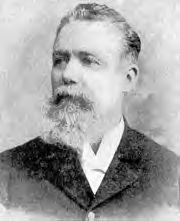 Antonio Mattei Lluberas, leader of the Intentona de Yauco
 -
 Brigadier General José Semidei Rodríguez, Cuban freedom fighter and diplomat
 -
 Brig. Gen. Mihiel Gilormini
 -
 Colonel Héctor Andrés Negroni, U.S. Air Force
 -
 Central plaza in Yauco
 -
 Gaby's restaurant in Yauco
 -
 Catholic church in Yauco
 -
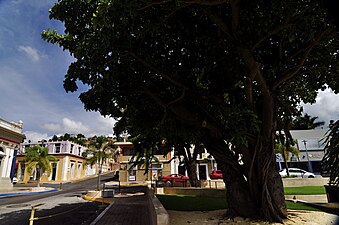 Central plaza in Yauco
 -
 Houses on a hillside, view from Yauco barrio-pueblo

.jpg)


See also[edit]


- List of Puerto Ricans
- Corsican immigration to Puerto Rico
- Battle of Yauco
- Intentona de Yauco
- History of Puerto Rico
- Did you know-Puerto Rico?
References[edit]
- ^ "PUERTO RICO: 2020 Census". The United States Census Bureau. Retrieved 25 August 2021.
- ^ Yauco, Puerto Rico Archived September 23, 2012, at the Wayback Machine. Welcome.topuertorico.org.
- ^ "Yauco, Puerto Rico - Land of Coffee". BoricuaOnline.com. 27 January 2017. Retrieved 10 October 2021.
- ^ "LA REBELIÓN DEL CACIQUE AGUEYBANA II". Archived from the original on February 6, 2012. Retrieved May 16, 2010.
- ^ "Land Tenure Development In Puerto Rico" (PDF). Archived from the original (PDF) on September 13, 2006. Retrieved May 16, 2010.
- ^ "historia de Yauco". Archived from the original on March 14, 2010. Retrieved May 16, 2010.
- ^ "A Little History of Coffee and Agriculture in Puerto Rico". Archived from the original on July 4, 2008. Retrieved August 2, 2009.
- ^ "Café Yauco Selecto". Archived from the original on May 9, 2008. Retrieved October 4, 2008.
- ^ "Corsican immigration to Puerto Rico". Archived from the original on 11 February 2007. Retrieved 31 July 2007.
- ^ "Historia militar de Puerto Rico"; by Héctor Andrés Negroni (Author); Publisher: Sociedad Estatal Quinto Centenario (1992); Language: Spanish; ISBN 84-7844-138-7; ISBN 978-84-7844-138-9
- ^ "El desembarco en Guánica". 1898 La Guerra Hispano Americana en Puerto Rico (in Spanish). Archived from the original on April 21, 2010. Retrieved August 2, 2008.
- ^ "Battle of Yauco". Archived from the original on July 24, 2008. Retrieved July 30, 2008.
- ^ "Preliminary Locations of Landslide Impacts from Hurricane Maria, Puerto Rico". USGS Landslide Hazards Program. USGS. Archived from the original on 3 March 2019. Retrieved 3 March 2019.
- ^ "Preliminary Locations of Landslide Impacts from Hurricane Maria, Puerto Rico" (PDF). USGS Landslide Hazards Program. USGS. Archived (PDF) from the original on 3 March 2019. Retrieved 3 March 2019.
- ^ a b "María, un nombre que no vamos a olvidar. [Maria, a name we'll never forget.]". El Nuevo Día (in Spanish). Archived from the original on 22 August 2020. Retrieved 10 March 2020.
- ^ a b "Colapsan al menos ocho viviendas en Yauco por fuerte sismo". El Nuevo Dia. 7 January 2020. Archived from the original on 22 August 2020. Retrieved 7 January 2020.
- ^ "Alcalde de Yauco actualiza información de daños en su municipio". www.wapa.tv (in Spanish). Archived from the original on 2 March 2020. Retrieved 8 January 2020.
- ^ "Monte Membrillo (1611543)". www.usgs.gov/. Retrieved 11 September 2021.
- ^ "Pico Rodadero (1611663)". www.usgs.gov/. Retrieved 11 September 2021.
- ^ "Cerro Curet (1609943)". www.usgs.gov/. Retrieved 11 September 2021.
- ^ a b "Yauco Municipality". enciclopediapr.org. Fundación Puertorriqueña de las Humanidades (FPH). Archived from the original on 27 March 2019. Retrieved 20 March 2019.
- ^ Gwillim Law (20 May 2015). Administrative Subdivisions of Countries: A Comprehensive World Reference, 1900 through 1998. McFarland. p. 300. ISBN 978-1-4766-0447-3. Retrieved 25 December 2018.
- ^ a b Puerto Rico:2010:population and housing unit counts.pdf (PDF). U.S. Dept. of Commerce Economics and Statistics Administration U.S. Census Bureau. 2010. Archived (PDF) from the original on 20 February 2017. Retrieved 26 December 2018.
- ^ "Map of Yauco at the Wayback Machine" (PDF). Archived from the original (PDF) on 24 March 2018. Retrieved 29 December 2018.
- ^ "US Census Barrio-Pueblo definition". factfinder.com. US Census. Archived from the original on 13 May 2017. Retrieved 5 January 2019.
- ^ "P.L. 94-171 VTD/SLD Reference Map (2010 Census): Yauco Municipio, PR" (PDF). www2.census.gov. U.S. DEPARTMENT OF COMMERCE Economics and Statistics Administration U.S. Census Bureau. Archived (PDF) from the original on 22 August 2020. Retrieved 22 August 2020.
- ^ "Agencia: Oficina del Coordinador General para el Financiamiento Socioeconómico y la Autogestión (Proposed 2016 Budget)". Puerto Rico Budgets (in Spanish). Archived from the original on 28 June 2019. Retrieved 28 June 2019.
- ^ Rivera Quintero, Marcia (2014), El vuelo de la esperanza: Proyecto de las Comunidades Especiales Puerto Rico, 1997-2004 (first ed.), San Juan, Puerto Rico Fundación Sila M. Calderón, ISBN 978-0-9820806-1-0
- ^ "Leyes del 2001". Lex Juris Puerto Rico (in Spanish). Archived from the original on 14 September 2018. Retrieved 24 June 2020.
- ^ Rivera Quintero, Marcia (2014), El vuelo de la esperanza:Proyecto de las Comunidades Especiales Puerto Rico, 1997–2004 (1st ed.), San Juan, Puerto Rico Fundación Sila M. Calderón, p. 273, ISBN 978-0-9820806-1-0
- ^ "Comunidades Especiales de Puerto Rico" (in Spanish). 8 August 2011. Archived from the original on 24 June 2019. Retrieved 24 June 2019.
- ^ "U.S. Decennial Census". United States Census Bureau. Archived from the original on 26 April 2015. Retrieved 21 September 2017.
- ^ "Report of the Census of Porto Rico 1899". War Department Office Director Census of Porto Rico. Archived from the original on 16 July 2017. Retrieved 21 September 2017.
- ^ "Table 3-Population of Municipalities: 1930 1920 and 1910" (PDF). United States Census Bureau. Archived (PDF) from the original on 17 August 2017. Retrieved 21 September 2017.
- ^ "Table 4-Area and Population of Municipalities Urban and Rural: 1930 to 1950" (PDF). United States Census Bureau. Archived (PDF) from the original on 30 August 2015. Retrieved 21 September 2014.
- ^ "Table 2 Population and Housing Units: 1960 to 2000" (PDF). United States Census Bureau. Archived (PDF) from the original on 24 July 2017. Retrieved 21 September 2017.
- ^ "PUERTO RICO: 2020 Census". The United States Census Bureau. Retrieved 25 August 2021.
- ^ "Population and Housing Unit Estimates". United States Census Bureau. Archived from the original on 27 December 1996. Retrieved 21 September 2017.
- ^ "U.S. Census website". United States Census Bureau. Archived from the original on December 27, 1996. Retrieved September 17, 2012.
- ^ "Census of Population and Housing, 2000 [United States]: Summary File 4, Puerto Rico". ICPSR Data Holdings. 28 April 2004. doi:10.3886/icpsr13563.v1. Retrieved 31 August 2021.
- ^ "Yaucromatic2: A Riot of Colors in Yauco". Archived from the original on 5 July 2019. Retrieved 5 July 2019.
- ^ "Las 1,200 playas de Puerto Rico [The 1200 beaches of Puerto Rico]". Primera Hora (in Spanish). 14 April 2017. Archived from the original on 12 December 2019. Retrieved 13 December 2019.
- ^ "Los Cascos Urbanos Hablan: Yauco (2/3)". PBS LearningMedia (in Spanish). 10 February 2021. Retrieved 7 March 2023.
- ^ "2. LIVING ROOM - Hacienda Cafetalera Santa Clara, House, Km 19,PR Rte. 372, Hacienda La Juanita, Yauco Municipio, PR". Library of Congress. Archived from the original on 22 August 2020. Retrieved 31 July 2019.
- ^ "Volkylandia Volkswagen Museum (Yauco) - 2021 All You Need to Know BEFORE You Go (With Photos)". Archived from the original on November 5, 2015. Retrieved August 22, 2015.
- ^ "Refugio de Vida Silvestre Embalse Lucchetti". Discover Puerto Rico (in Spanish). Retrieved 26 November 2023.
- ^ "Apiturismo PR". Apiturismo PR. 6 February 2023. Retrieved 26 November 2023.
- ^ Pasaporte: Voy Turisteando (in Spanish). Compañia de Turismo de Puerto Rico. 2021.
- ^ "Somos Puerto Rico: disfruta de un café junto a Hermes Croatto desde la plaza pública de Yauco". El Nuevo Día (in Spanish). 26 August 2021. Retrieved 26 August 2021.
- ^ "Yauco, Yauco Selecto, Puerto Rico Yauco". Archived from the original on September 22, 2010. Retrieved September 8, 2010.
- ^ Pumarada, Luis. "Contexto histórico del café en Puerto Rico: 1736-1969".
- ^ "Gobernador inaugura expansión de empresa alemana en Puerto Rico". 18 June 2019. Archived from the original on 19 June 2019. Retrieved 1 July 2019.
- ^ Guzmán, Sandra Torres (3 December 2014). "Vuelve a Yauco el Festival de las Culturas". La Perla del Sur (in Spanish). Archived from the original on 19 July 2020. Retrieved 19 July 2020.
- ^ Genealogical DNA test
- ^ Elecciones Generales 2000: Alcalde de Yauco Archived August 13, 2014, at the Wayback Machine on CEEPUR
- ^ Elecciones Generales 2004: Alcalde de Yauco Archived August 12, 2014, at the Wayback Machine on CEEPUR
- ^ Elecciones Generales 2008: Alcalde de Yauco Archived August 14, 2014, at the Wayback Machine on CEEPUR
- ^ Alcaldes con unos sueldos de envidia Archived March 25, 2010, at the Wayback Machine from Primera Hora
- ^ Elecciones Generales 2012: Escrutinio General Archived December 3, 2012, at the Wayback Machine on CEEPUR
- ^ "Yauco Bridges". National Bridge Inventory Data. US Dept. of Transportation. Archived from the original on 20 February 2019. Retrieved 19 February 2019.
- ^ Marrero, Juan. "Demolerán puente en Yauco afectado por los temblores". Metro. Archived from the original on 6 March 2020. Retrieved 10 March 2020.
- ^ "Ley Núm. 70 de 2006 -Ley para disponer la oficialidad de la bandera y el escudo de los setenta y ocho (78) municipios". LexJuris de Puerto Rico (in Spanish). Retrieved 15 June 2021.
- ^ a b "Yauco". LexJuris (Leyes y Jurisprudencia) de Puerto Rico (in Spanish). 19 February 2020. Archived from the original on 19 February 2020. Retrieved 17 September 2020.
- ^ "JUSTIPRECIACIÓN DE LA OBRADE FRANCISCO ROJAS TOLLINCHI"; by Ada Hilda Martínez de Alicea; Dept. Estudios Hispánicos Pontificia Universidad Católica de PR.
- ^ "Historia militar de Puerto Rico"; by Héctor Andrés Negroni (Author); Page 476; Publisher: Sociedad Estatal Quinto Centenario (1992); Language: Spanish; ISBN 84-7844-138-7; ISBN 978-84-7844-138-9
External links[edit]
Places adjacent to Yauco, Puerto Rico | |
|---|---|


| Authority control databases: Geographic |
|---|
