Americas

From Wikipedia, the free encyclopedia
  (Redirected from Western Continent)
Jump to: navigation, search
The Americas
Americas (orthographic projection).svg
Area 42,549,000 km2, 16,428,000 mi2
Population 911,000,000 (July 2008 est.)
Pop. density 21/km2 (55/sq mi)
Demonym American[1] (but see usage)
Countries 35
Languages Spanish, English, Portuguese,
French, Quechua, Haitian Creole, Guaraní, Aymara, Dutch and many others
Time Zones UTC-10 to UTC

The Americas, or America,[2][3][4] are lands in the Western Hemisphere that are also known as the New World. Comprising the continents of North America and South America,[5] along with their associated islands, they cover 8.3% of the Earth's total surface area (28.4% of its land area). The topography is dominated by the American Cordillera, a long chain of mountains that run the length of the west coast. The flatter eastern side of the Americas is dominated by large river basins, such as the Amazon, Mississippi, and La Plata. Extending 14,000 km (8,699 mi) in a north-south orientation, the climate and ecology varies strongly across the Americas, from arctic tundra of Northern Canada, Greenland, and Alaska, to the tropical rain forests in Central America and South America. When the continents joined 3 million years ago, the Great American Interchange resulted in many species being spread across the Americas, such as the cougar, porcupine, opossums, armadillos and hummingbirds.

Humans first settled the Americas from Asia between 40,000 BCE and 15,000 BCE. A second migration of Na-Dene speakers followed later from Asia. The subsequent migration of the Inuit into the neoarctic around 3500 BCE completed what is generally regarded as the settlement by the Indigenous peoples of the Americas. The first European discovery of and settlement in the Americas was by the Norse explorer Leif Ericson. However the colonization never became permanent and was later abandoned. The voyages of Christopher Columbus from 1492 to 1502 resulted in permanent contact with European (and subsequently, other Old World) powers, which led to the Columbian exchange. Diseases introduced from Europe and Africa devastated the Indigenous peoples, and the European powers colonised the Americas.[6] Mass emigration from Europe, including large numbers of indentured servants, and forced immigration of African slaves largely replaced the Indigenous Peoples. Beginning with the American Revolution in 1776 and Haitian Revolution in 1791, the European powers began to decolonise the Americas. Currently, almost all of the population of the Americas resides in independent countries; however, the legacy of the colonisation and settlement by Europeans is that the Americas share many common cultural traits, most notably the predominant adherence to Christianity and use of Indo-European languages; primarily Spanish, English, and Portuguese. More than 900 million people live in the Americas (about 13.5% of the human population), the most populous countries being the United States, Brazil, and Mexico, the most populous cities being Mexico City, São Paulo, and New York City.

Contents

Etymology and naming[edit]

World map of Waldseemüller (Germany, 1507), which first used the name America (in the lower-left section, over South America)

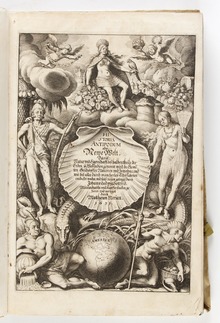
The earliest known use of the name America dates to April 25, 1507, where it was applied to what is now known as South America. It appears on a small globe map with twelve time zones, together with the largest wall map made to date, both created by the German cartographer Martin Waldseemüller in Saint-Dié-des-Vosges in France. These were the first maps to show the Americas as a land mass separate from Asia. An accompanying book, Cosmographiae Introductio, anonymous but apparently written by Waldseemüller's collaborator Matthias Ringmann,[7] states, "I do not see what right any one would have to object to calling this part [that is, the South American mainland], after Americus who discovered it and who is a man of intelligence, Amerigen, that is, the Land of Americus, or America: since both Europa and Asia got their names from women". Americus Vespucius is the Latinized version of the Florentine explorer Amerigo Vespucci's name, and America is the feminine form of Americus. Amerigen is explained as Amerigo plus gen, the accusative case of the Greek word for 'earth', and meaning 'land of Amerigo'.[7] (See etymology.) Amerigo itself is an Italian form of the medieval Latin Emericus (see also Saint Emeric of Hungary), which through the German form Heinrich (in English, Henry) derived from the Germanic name Haimirich.[8]

Vespucci was apparently unaware of the use of his name to refer to the new landmass, as Waldseemüller's maps did not reach Spain until a few years after his death.[7] Ringmann may have been misled into crediting Vespucci by the widely published Soderini Letter, a sensationalized version of one of Vespucci's actual letters reporting on the mapping of the South American coast, which glamorized his discoveries and implied that he had recognized that South America was a continent separate from Asia; in fact, it is not known what Vespucci believed on this count, and he may have died believing what Columbus had, that they had reached the East Indies in Asia rather than a new continent.[9] Spain officially refused to accept the name America for two centuries, saying that Columbus should get credit, and Waldseemüller's later maps, after Ringmann's death, did not include it; however, usage was established when Gerardus Mercator applied the name to the entire New World in his 1538 world map. Acceptance may have been aided by the "natural poetic counterpart" that the name America made with Asia, Africa, and Europa.[7]

In modern English, North and South America are generally considered separate continents, and taken together are called the Americas in the plural, parallel to similar situations such as the Carolinas. When conceived as a unitary continent, the form is generally the continent of America in the singular. However, without a clarifying context, singular America almost invariably refers to the United States of America.[10]

Geography[edit]

Extent[edit]

The northernmost point of the Americas is Kaffeklubben Island, which is the most northerly point of land on Earth.[11] The southernmost point is the islands of Southern Thule, although they are sometimes considered part of Antarctica.[12] The mainland of the Americas is the world's longest north-to-south landmass. The distance between its two polar extremities, the Boothia Peninsula in northern Canada and Cape Froward in Chilean Patagonia, is roughly 14,000 km (8,700 mi).[13] The mainland's most westerly point is the end of the Seward Peninsula in Alaska; Attu Island, further off the Alaskan coast to the west, is considered the westernmost point of the Americas. Ponta do Seixas in northeastern Brazil forms the easternmost extremity of the mainland,[13] while Nordostrundingen, in Greenland, is the most easterly point of the continental shelf.

Geology[edit]

South America broke off from the west of the supercontinent Gondwana around 135 million years ago, forming its own continent.[14] Around 15 million years ago, the collision of the Caribbean Plate and the Pacific Plate resulted in the emergence of a series of volcanoes along the border that created a number of islands. The gaps in the archipelago of Central America filled in with material eroded off North America and South America, plus new land created by continued volcanism. By 3 million years ago, the continents of North America and South America were linked by the Isthmus of Panama, thereby forming the single landmass of the Americas.[15]

Topography[edit]

Aconcagua, the highest peak in the Americas

The geography of the western Americas is dominated by the American cordillera, with the Andes running along the west coast of South America[16] and the Rocky Mountains and other North American Cordillera ranges running along the western side of North America.[17] The 2,300-kilometer-long (1,400 mi) Appalachian Mountains run along the east coast of North America from Alabama to Newfoundland.[18] North of the Appalachians, the Arctic Cordillera runs along the eastern coast of Canada.[19]

The ranges with the highest peaks are the Andes and Rocky Mountain ranges. Although high peaks exist in the Sierra Nevada and the Cascade Range, on average there are not as many reaching a height greater than 14,000 feet. In North America, the greatest number of fourteeners are in the United States, and more specifically in the U.S. state of Colorado. The highest peaks of the Americas are located in the Andes, with Aconcagua of Argentina being the highest; in North America Mount McKinley (Denali) in the U.S. state of Alaska is the tallest.

Between its coastal mountain ranges, North America has vast flat areas. The Interior Plains spread over much of the continent, with low relief.[20] The Canadian Shield covers almost 5 million km² of North America and is generally quite flat.[21] Similarly, the north-east of South America is covered by the flat Amazon Basin.[22] The Brazilian Highlands on the east coast are fairly smooth but show some variations in landform, while farther south the Gran Chaco and Pampas are broad lowlands.[23]

Hydrology[edit]

Mississippi River Delta

With coastal mountains and interior plains, the Americas have several large river basins that drain the continents. The largest river basin in North America is that of the Mississippi, covering the second largest watershed on the planet.[24] The Mississippi-Missouri river system drains most of 31 states of the U.S., most of the Great Plains, and large areas between the Rocky and Appalachian mountains. This river is the fourth longest in the world and tenth most powerful in the world.

In North America, to the east of the Appalachian Mountains, there are no major rivers but rather a series of rivers and streams that flow east with their terminus in the Atlantic Ocean, such as the Hudson River, Saint John River, and Savannah River. A similar instance arises with central Canadian rivers that drain into Hudson Bay; the largest being the Churchill River. On the west coast of North America, the main rivers are the Colorado River, Columbia River, Yukon River, Fraser River, and Sacramento River.

The Colorado River drains much of the Southern Rockies and parts of the Great Basin and Range Province. The river flows approximately 1,450 miles (2,330 km) into the Gulf of California,[25] during which over time it has carved out natural phenomena such as the Grand Canyon and created phenomena such as the Salton Sea. The Columbia is a large river, 1,243 miles (2,000 km) long, in central western North America and is the most powerful river on the West Coast of the Americas. In the far northwest of North America, the Yukon drains much of the Alaskan peninsula and flows 1,980 miles (3,190 km)[26] from parts of Yukon and the Northwest Territory to the Pacific. Draining to the Arctic Ocean in North America, the Mackenzie River drains waters from the great lakes of Canada. This river is the largest in Canada and drains 1,805,200 square kilometres (697,000 sq mi).[27]

The largest river basin in South America is that of the Amazon, which has the highest volume flow of any river on Earth.[28] The second largest watershed of South America is that of the Paraná River, which covers about 2.5 million km².[29]

Climate[edit]

The climate of the Americas varies significantly from region to region. Tropical rainforest climate occurs in the latitudes of the Amazon, American Cloud forests, Florida and Darien Gap. In the Rocky Mountains and Andes, a similar climate is observed. Often the higher altitudes of these mountains are snow capped.

Southeastern North America is well known for its occurrence of tornadoes and hurricanes, of which the vast majority of tornadoes occur in the United States' Tornado Alley.[30] Often parts of the Caribbean are exposed to the violent effects of hurricanes. These weather systems are formed by the collision of dry, cool air from Canada and wet, warm air from the Atlantic.

Demography[edit]

Population[edit]

The total population of the Americas is about 859,000,000 people and is divided as follows:[citation needed]

  • North America: 2001 with 495 million and in 2002 with 501 million (includes Central America and the Caribbean)
  • South America: 2001 with 352 million and in 2002 with 357 million

Largest urban centers[edit]

There are three urban centers that each hold titles for being the largest population area based on the three main demographic concepts:[31]

A city proper is the locality with legally fixed boundaries and an administratively recognized urban status that is usually characterized by some form of local government.[32][33][34][35][36]
An urban area is characterized by higher population density and vast human features in comparison to areas surrounding it. Urban areas may be cities, towns or conurbations, but the term is not commonly extended to rural settlements such as villages and hamlets. Urban areas are created and further developed by the process of urbanization and do not include large swaths or rural land, as do metropolitan areas.
Unlike an urban area, a metropolitan area includes not only the urban area, but also satellite cities plus intervening rural land that is socio-economically connected to the urban core city, typically by employment ties through commuting, with the urban core city being the primary labor market.

In accordance with these definitions, the three largest population centers in the Americas are: Mexico City, anchor to the largest metropolitan area in the Americas; New York City, anchor to the largest urban area in the Americas; and São Paulo, the largest city proper in the Americas. All three cities maintain Alpha classification and large scale influence.

Urban Centers within the Americas
São Paulo – Largest city proper in the Americas (11,244,369) 
New York City – Largest urban area in the Americas (20,710,000) 
Mexico City – Largest metropolitan area in the Americas (20,450,000) 
Country City City proper population Urban area population[37] Metro area population
 Mexico Mexico City 8,873,017 19,565,000 20,450,000
 United States New York City 8,175,133 20,710,000 18,897,109
 Brazil São Paulo 11,244,369 20,395,000 19,889,559

Ethnology[edit]

The population of the Americas is made up of the descendants of four large ethnic groups and their combinations.

The majority of the population live in Latin America, named for its predominant cultures, rooted in Latin Europe (including the two dominant languages, Spanish and Portuguese, both Romance languages), more specifically in the Iberian nations of Portugal and Spain (hence the use of the term Ibero-America as a synonym). Latin America is typically contrasted with Anglo-America, where English, a Germanic language, is prevalent, and which comprises Canada (with the exception of francophone Canada rooted in Latin Europe (France)—see Québec and Acadia) and the United States. Both countries are located in North America, with cultures deriving predominantly from Anglo-Saxon and Germanic roots.

Religion[edit]

The most prevalent faiths in the Americas are as follows:

  • Christianity (North America: 85 percent; South America: 93 percent)[38]
    • Roman Catholicism (practiced by 88 percent of the Mexican population;[39] approximately 74 percent of the population of Brazil, whose Roman Catholic population of 182 million is the greatest of any nation's;[40] approximately 24 percent of the United States' population;[41] and more than 40 percent of all of Canadians)[42]
    • Protestantism (practiced mostly in the United States, where half of the population are Protestant, and Canada, with slightly more than a quarter of the population; there is a growing contingent of Evangelical and Pentecostal movements in predominantly Catholic Latin America)[43]
    • Eastern Orthodoxy (found mostly in the United States and Canada—1 percent of the U.S. citizenry; this Christian group is growing faster than many other Christian groups in Canada and now represents roughly 3 percent of the Canadian population)[citation needed]
    • Non-denominational Christians and other Christians (some 1,000 different Christian denominations and sects practiced in the Americas)
  • Irreligion (includes atheists and agnostics, as well as those who profess some form of spirituality but do not identify themselves as members of any organized religion)
  • Islam (practiced by 2 percent of Canadians [580,000 persons][44] and 0.6 percent of the U.S. population [1,820,000 persons[41]]). Together, Muslims constitute about 1 percent of the North American population and 0.3 percent of all Latin Americans. Argentina has the largest Muslim population in Latin America with up to 600,000 persons, or 1.9 percent of the population)[45]
  • Judaism (practiced by 2 percent of North Americans—approximately 2.5 percent of the U.S. population and 1.2 percent of Canadians[46]—and 0.23 percent of Latin Americans—Argentina has the largest Jewish population in Latin America with 200,000 members)[47]

Other faiths include Sikhism; Buddhism; Hinduism; Bahá'í; a wide variety of indigenous religions, many of which can be categorized as animistic; new age religions and many African and African-derived religions. Syncretic faiths can also be found throughout the continent.

Languages[edit]

Languages spoken in the Americas

Various languages are spoken in the Americas. Some are of European origin, others are spoken by indigenous peoples or are the mixture of various idioms like the different creoles.

The dominant language of Latin America is Spanish, though the largest nation in Latin America, Brazil, speaks Portuguese. Small enclaves of French-, Dutch- and English-speaking regions also exist in Latin America, notably in French Guiana, Suriname, and Belize and Guyana respectively, and Haitian Creole, of French origin, is dominant in the nation of Haiti. Native languages are more prominent in Latin America than in Anglo-America, with Nahuatl, Quechua, Aymara and Guaraní as the most common. Various other native languages are spoken with less frequency across both Anglo-America and Latin America. Creole languages other than Haitian Creole are also spoken in parts of Latin America.

The dominant language of Anglo-America is English. French is also official in Canada, where it is the predominant language in Quebec and an official language in New Brunswick along with English. It is also an important language in the US state of Louisiana, and in parts of New Hampshire, Maine, and Vermont. Spanish has kept an ongoing presence in the Southwestern United States, which formed part of the Viceroyalty of New Spain, especially in California and New Mexico, where a distinct variety of Spanish spoken since the 17th century has survived. It has more recently become widely spoken in other parts of the United States due to heavy immigration from Latin America. High levels of immigration in general have brought great linguistic diversity to Anglo-America, with over 300 languages known to be spoken in the United States alone, but most languages are spoken only in small enclaves and by relatively small immigrant groups.

The nations of Guyana, Suriname, and Belize are generally considered[by whom?] not to fall into either Anglo-America or Latin America due to lingual differences with Latin America, geographic differences with Anglo-America, and cultural and historical differences with both regions; English is the primary language of Guyana and Belize, and Dutch is the official and written language of Suriname.

Most of the non-native languages have, to different degrees, evolved differently from the mother country, but are usually still mutually intelligible. Some have combined, however, which has even resulted in completely new languages, such as Papiamento, which is a combination of Portuguese, Spanish, Dutch (representing the respective colonizers), native Arawak, various African languages, and, more recently English. Portuñol, a mixture of Portuguese and Spanish, is spoken in the border regions of Brazil and neighboring Spanish-speaking countries.[48] More specifically, Riverense Portuñol is spoken by around 100,000 people in the border regions of Brazil and Uruguay. Due to immigration, there are many communities where other languages are spoken from all parts of the world—especially in the United States, Brazil, Argentina and Canada, four very important destinations for immigrants— and half of the population of Uruguay is thought to be of Italian descent.

Terminology[edit]

Subdivisions of the Americas
Map Legend
LocationNSAm.png
  North America (NA)
  South America (SA)
  May be included in
       either NA or SA
LocationNSAm2.png
  North America (NA)
  May be included in NA
  Central America
  Caribbean
  South America
LocationNSAm3.png
  North America (NA)
  May be included in NA

       Northern America

  Middle America (MA)
  Caribbean (may be
        included in MA)
  South America (SA)
  May be included
        in MA or SA
LocationNSAngloLatin.png
  Anglo-America (A-A)
  May be included in A-A
  Latin America (LA)
  May be included in LA

America or Americas[edit]

Some uses of the English word America in a hemispherical sense remain, or are translated from other languages as such, as in the names of international organizations.[49] For instance, the Association of National Olympic Committees (ANOC) in Paris maintains a single continental association for "America", represented by one of the five Olympic rings.[50]

Speakers of English generally refer to the landmasses of North America and South America as the Western Hemisphere, the New World, or the Americas, to U.S. citizens as Americans and to the United States as America.[41][51] This sense of America, in modern usage, is used almost exclusively to refer to the United States of America,[4][52] use in English of this sense has caused offense to some from Canada or Latin America[53] who avoid this usage, preferring constructed terms in their languages derived from "United States" or even "North America".[54][55][56] In Canada, its southern neighbor is often referred to as "the United States", "the U.S.A.", or (informally) "the States," while citizens are generally referred to as Americans.[55] English dictionaries and compendiums differ regarding usage and rendition.[57][58][59]

American[edit]

English usage[edit]

People who are not connected with the United States rarely call themselves American, but the word is sometimes used by Latin Americans when they are speaking English because they also consider themselves American, and feel that using the term solely for the United States misappropriates it.[60][verification needed] When using the word as a demonym, the English-speaking world uses American primarily to refer to a citizen or national of the United States of America. For instance, Canadians abroad typically resent being referred to as Americans,[55] but some have protested the use of American as a national demonym.[61]

Spanish usage[edit]

The Spanish American colonies at their maximum extent (after the Peace of Paris, 1783)

In Spanish, América is a single continent composed of the subcontinents of Sudamérica and Norteamérica, the land bridge of Centroamérica, and the islands of the Antillas. Americano/a in Spanish refers to a person from América in a similar way that europeo or europea refers to a person from Europa. The terms sudamericano/a, centroamericano/a, antillano/a and norteamericano/a can be used to more specifically refer to the location where a person may live.

Citizens of the United States of America are normally referred to by the term estadounidense (rough literal translation: "United Statesian") instead of americano or americana[citation needed], and the country's name itself is often translated as Estados Unidos de Norteamérica (United States of North America). Also, the term norteamericano (North American) may refer to a citizen of the United States. This term is primarily used to refer to citizens of the United States, rarely those of other North American countries.[62]

Portuguese usage[edit]

In Portuguese, the word americano refers to the whole of the America. But, in Brazil and Portugal, it is widely used to refer to the citizens of the United States. The least ambiguous terms, estadunidense (used in Brazil, something like "United Statesian" or "estadounidense" in Spanish), and "ianque"—the Portuguese version of "Yankee"—are rarely used. América, however, is rarely used as synonym for the country, and almost never in print and in more formal environments, where the country is called either Estados Unidos da América (i.e. United States of America) or simply Estados Unidos (i.e. United States). There is some difference between the usage of these words in Portugal and in Brazil, with the Portuguese being more prone to apply the term América to the country.

French usage[edit]

In French, as in English, the word américain can be confusing as it can be used to refer either to the United States, or to the Americas.

The noun Amérique sometimes refers to the whole as one continent, and sometimes two continents, southern and northern; the United States is generally referred to as les États-Unis d'Amérique, les États-Unis, or les USA. In Quebec, the United States are sometimes called les États or even simply les states in daily informal conversation. However, the use of Amérique to refer to the United States does still have some currency in France.

The adjective américain is most often used for things relating to the United States; however, it may also be used for things relating to the Americas. Books by United States authors translated from English are often described as "traduit de l'américain".

Things relating to the United States can be referred to without ambiguity by the words états-unien, étasunien, or étatsunien, although this usage is rare.

Dutch usage[edit]

In Dutch, the word Amerika mostly refers to the United States. Although the United States is equally often referred to as de Verenigde Staten or de VS, Amerika relatively rarely refers to the Americas, but it is the only commonly used Dutch word for the Americas. This often leads to ambiguity; and to stress that something concerns the Americas as a whole, Dutch uses a combination, namely Noord- en Zuid-Amerika (North and South America).

Latin America is generally referred to as Latijns Amerika or Midden-Amerika for Central America.

The adjective Amerikaans is most often used for things or people relating to the United States. There are no alternative words to distinguish between things relating to the United States or to the Americas. Dutch uses the local alternative for things relating to elsewhere in the Americas, such as Argentijns for Argentine, etc.

Politics[edit]

Countries and territories[edit]

CIA political map of the Americas in Lambert azimuthal equal-area projection

There are 35 sovereign states in the Americas, as well as an autonomous country of Denmark, three overseas departments of France, three overseas collectivities of France,[63] eight overseas territories of the United Kingdom, three constituent countries of the Netherlands, three public bodies of the Netherlands, and two unincorporated territories of the United States.[64]

Country or territory Area
(km²)[65]
Population
(2008 est.)[66]
Population density
(per km²)
Languages (official in bold) Capital
 Anguilla (UK) 700191000000000000091 700415000000000000015,000 7002164800000000000164.8 English The Valley
 Antigua and Barbuda 7002442000000000000442 700488000000000000088,000 7002199100000000000199.1 Creole,[67] English St. John's
 Argentina 70062766890000000002,766,890 700740482000000000040,482,000 700114300000000000014.3 Spanish Buenos Aires
 Aruba (Neth.) 7002180000000000000180 7005107000000000000107,000 7002594400000000000594.4 Papiamentu, Spanish,[68] Dutch Oranjestad
 Bahamas, The 700413943000000000013,943 7005342000000000000342,000 700124500000000000024.5 Creole,[69] English Nassau
 Barbados 7002430000000000000430 7005256000000000000256,000 7002595290000000000595.3 Bajan,[70] English Bridgetown
 Belize 700422966000000000022,966 7005307000000000000307,000 700113400000000000013.4 Spanish, Kriol, English[71] Belmopan
 Bermuda (UK) 700154000000000000054 700465000000000000065,000 70031203700000000001,203.7 English Hamilton
 Bolivia 70061098580000000001,098,580 70069863000000000009,863,000 70008400000000000008.4 Spanish, Quechua, Aymara, 35 additional indigenous languages La Paz and Sucre [72]
 Bonaire (Neth.) 7002294000000000000294 700412093000000000012,093[73] 700141100000000000041.1 Papiamentu, Spanish, Dutch[74] Kralendijk
 Brazil 70068514877000000008,514,877 7008191241714000000191,241,714 700122000000000000022.0 Portuguese Brasília
 British Virgin Islands (UK) 7002151000000000000151 700423000000000000023,000 7002152300000000000152.3 English Road Town
 Canada 70069984670000000009,984,670 700733573000000000033,573,000 70003400000000000003.4 English, French Ottawa
 Cayman Islands (UK) 7002264000000000000264 700456000000000000056,000 7002212100000000000212.1 English George Town
 Chile[75] 7005756950000000000756,950 700716928873000000016,928,873 700122000000000000022 Spanish Santiago
 Colombia 70061138910000000001,138,910 700745928970000000045,928,970 700140000000000000040 Spanish Bogotá
 Costa Rica 700451100000000000051,100 70064579000000000004,579,000 700189600000000000089.6 Spanish San José
 Cuba 7005109886000000000109,886 700711204000000000011,204,000 7002102000000000000102.0 Spanish Havana
 Curaçao (Neth.) 7002444000000000000444 7005140794000000000140,794 7002317100000000000317.1 Papiamentu, Dutch[74] Willemstad
 Dominica 7002751000000000000751 700467000000000000067,000 700189200000000000089.2 French Patois, English[76] Roseau
 Dominican Republic 700448671000000000048,671 700710090000000000010,090,000 7002207300000000000207.3 Spanish Santo Domingo
 Ecuador 7005283560000000000283,560 700714573101000000014,573,101 700153800000000000053.8 Spanish, Quechua[77] Quito
 El Salvador 700421041000000000021,041 70066163000000000006,163,000 7002293000000000000293.0 Spanish San Salvador
 Falkland Islands (United Kingdom)[78] 700412173000000000012,173 70033140000000000003,140[79] 69992600000000000000.26 English Port Stanley
 French Guiana (France) 700491000000000000091,000 7005221500000000000221,500[80] 70002700000000000002.7 French Cayenne
 Greenland (Den.) 70062166086000000002,166,086 700457000000000000057,000 69982600000000000000.026 Greenlandic, Danish Nuuk (Godthåb)
 Grenada 7002344000000000000344 7005104000000000000104,000 7002302300000000000302.3 English St. George's
 Guadeloupe (Fr.) 70031628000000000001,628 7005401784000000000401,784[81] 7002246700000000000246.7 French Basse-Terre
 Guatemala 7005108889000000000108,889 700714027000000000014,027,000 7002128800000000000128.8 Spanish, Garifuna and 23 Mayan languages Guatemala City
 Guyana 7005214999000000000214,999 7005772298000000000772,298 70003500000000000003.5 English Georgetown
 Haiti 700427750000000000027,750 700710033000000000010,033,000 7002361500000000000361.5 Creole, French Port-au-Prince
 Honduras 7005112492000000000112,492 70067466000000000007,466,000 700166400000000000066.4 Spanish Tegucigalpa
 Jamaica 700410991000000000010,991 70062719000000000002,719,000 7002247400000000000247.4 Patois, English Kingston
 Martinique (Fr.) 70031128000000000001,128 7005397693000000000397,693[82] 7002352600000000000352.6 Patois,[83] French Fort-de-France
 Mexico 70061964375000000001,964,375 7008112322757000000112,322,757 700157100000000000057.1 Spanish Mexico City
 Montserrat (UK) 7002102000000000000102 70036000000000000006,000 700158800000000000058.8 Creole English, English[84] Plymouth; Brades[85]
 Navassa Island (USA) 70005000000000000005[86] 50000000000000000000[87] 50000000000000000000.0 No  —
 Nicaragua 7005130373000000000130,373 70065743000000000005,743,000 700144100000000000044.1 Spanish Managua
 Panama 700475417000000000075,417 70063454000000000003,454,000 700145800000000000045.8 Spanish Panama City
 Paraguay 7005406750000000000406,750 70066831306000000006,831,306 700115600000000000015.6 Guaraní, Spanish Asunción
 Peru 70061285220000000001,285,220 700729132013000000029,132,013 700122000000000000022 Spanish, Quechua, Aymara Lima
 Puerto Rico (USA) 70038870000000000008,870 70063982000000000003,982,000 7002448900000000000448.9 Spanish, English San Juan
 Saba (Neth.) 700113000000000000013 70031537000000000001,537[73] 7002118200000000000118.2 English, Dutch The Bottom
 Saint Barthélemy (Fr.) 700121000000000000021[86] 70037448000000000007,448[87] 7002354700000000000354.7 French Gustavia
 Saint Kitts and Nevis 7002261000000000000261 700452000000000000052,000 7002199200000000000199.2 English Basseterre
 Saint Lucia 7002539000000000000539 7005172000000000000172,000 7002319100000000000319.1 English, French Creole Castries
 Saint Martin (Fr.) 700154000000000000054[86] 700429820000000000029,820[87] 7002552200000000000552.2 French Marigot
Flag of Saint-Pierre and Miquelon.svg Saint Pierre and Miquelon (Fr.) 7002242000000000000242 70036000000000000006,000 700124800000000000024.8 French Saint-Pierre
 Saint Vincent and the Grenadines 7002389000000000000389 7005109000000000000109,000 7002280200000000000280.2 English Kingstown
 Sint Eustatius (Neth.) 700121000000000000021 70032739000000000002,739[73] 7002130400000000000130.4 Dutch, English Oranjestad
 Sint Maarten (Neth.) 700134000000000000034 700440009000000000040,009[73] 70031176700000000001,176.7 English, Spanish, Dutch Philipsburg
South Georgia and the South Sandwich Islands South Georgia and
South Sandwich Islands
(United Kingdom)
[88]
70033093000000000003,093 700120000000000000020 69981000000000000000.01 English Grytviken
 Suriname 7005163270000000000163,270 7005472000000000000472,000 70003000000000000003 Dutch, Hindi-Urdu, Srana, Javanese, English Creole[89] Paramaribo
 Trinidad and Tobago 70035130000000000005,130 70061339000000000001,339,000 7002261000000000000261.0 English Port of Spain
 Turks and Caicos Islands (UK) 7002948000000000000948 700433000000000000033,000 700134800999990000034.8 Creole English, English[90] Cockburn Town
 United States[note 1] 70069629091000000009,629,091 7008311630000000000311,630,000 700132700000000000032.7 English, Spanish Washington, D.C.
 United States Virgin Islands (USA) 7002347000000000000347 7005110000000000000110,000 7002317000000000000317.0 English, Spanish Charlotte Amalie
 Uruguay 7005176220000000000176,220 70063477780000000003,477,780 700119400999990000019.4 Spanish Montevideo
 Venezuela 7005916445000000000916,445 700726814843000000026,814,843 700130200000000000030.2 Spanish Caracas
Total 700742320985000000042,320,985 7008928076232000000928,076,232 700121900000000000021.9

Multinational organizations in the Americas[edit]

See also[edit]

Notes[edit]

  1. ^ Includes the US state of Hawaii, which is distant from the North American landmass in the Pacific Ocean and therefore more commonly associated with the other territories of Oceania.

References[edit]

  1. ^ "American". Oxford English Dictionary (3rd ed.). Oxford University Press. September 2005. 
  2. ^ See for example: america – Definition from the Merriam-Webster Online Dictionary. Retrieved on January 27, 2008; "dictionary.reference.com america". Dictionary.com. The American Heritage Dictionary of the English Language, Fourth Edition. Houghton Mifflin Company, 2004. Accessed: January 27, 2008.
  3. ^ Marjorie Fee and Janice MacAlpine, Oxford Guide to Canadian English Usage (2008) page 36 says "In Canada, American is used almost exclusively in reference to the United States and its citizens." Others, including The New Zealand Oxford Dictionary, The Canadian Oxford Dictionary, The Australian Oxford Dictionary and The Concise Oxford English Dictionary all specify both the Americas and the United States in their definition of "American".
  4. ^ a b "America." The Oxford Companion to the English Language (ISBN 0-19-214183-X). McArthur, Tom, ed., 1992. New York: Oxford University Press, p. 33: "[16c: from the feminine of Americus, the Latinized first name of the explorer Amerigo Vespucci (1454–1512). The name America first appeared on a map in 1507 by the German cartographer Martin Waldseemüller, referring to the area now called Brazil]. Since the 16c, a name of the western hemisphere, often in the plural Americas and more or less synonymous with the New World. Since the 18c, a name of the United States of America. The second sense is now primary in English: ... However, the term is open to uncertainties: ..."
  5. ^ "Continent". Encyclopaedia Britannica. Retrieved 31 October 2012. 
  6. ^ [examiner.com/article/apocalypic-mysterious-plague-killed-millions-of-native-americans-the-1500s Examiner, 2012]
  7. ^ a b c d Toby Lester, December (2009). "Putting America on the Map". Smithsonian 40: 9. 
  8. ^ "Amerigo – meaning of Amerigo name". Thinkbabynames.com. Archived from the original on July 12, 2010. Retrieved July 27, 2010. 
  9. ^ "UK | Magazine | The map that changed the world". BBC News. October 28, 2009. Retrieved July 27, 2010. 
  10. ^ "America, the Americas, continent of America (text search)". Oxford English Dictionary (3rd ed.). Oxford University Press. September 2005. 
  11. ^ Charles Burress (June 17, 2004). "Romancing the north Berkeley explorer may have stepped on ancient Thule". San Francisco Chronicle. 
  12. ^ "South Georgia and the South Sandwich Islands, Antarctica – Travel". 
  13. ^ a b "America". The World Book Encyclopedia 1. World Book, Inc. 2006. p. 407. ISBN 0-7166-0106-0. 
  14. ^ Brian C. Story (September 28, 1995). "The role of mantle plumes in continental breakup: case histories from Gondwanaland". Nature 377 (6547): 301–309. doi:10.1038/377301a0. 
  15. ^ "Land bridge: How did the formation of a sliver of land result in major changes in biodiversity". Public Broadcasting Corporation. 
  16. ^ "Andes Mountain Range". 
  17. ^ "Rocky Mountains". 
  18. ^ "Appalachian Mountains". Ohio History Central. 
  19. ^ "Arctic Cordillera". 
  20. ^ "Interior Plains Region". 
  21. ^ "Natural History of Quebec". 
  22. ^ "Strategy". Amazon Conservation Association. 
  23. ^ "South America images". 
  24. ^ "Mississippi River". 
  25. ^ Kammerer, J.C. "Largest Rivers in the United States". United States Geological Survey. Retrieved July 2, 2010. 
  26. ^ "Yukoninfo.com". Yukoninfo.com. Retrieved January 30, 2012. 
  27. ^ Mackenzie River. (2006). In Encyclopædia Britannica. Retrieved September 12, 2006, from Encyclopædia Britannica Premium Service
  28. ^ "Greatest Places: Notes: Amazonia". 
  29. ^ "Great Rivers Partnership – Paraguay-Parana". 
  30. ^ Sid Perkins (May 11, 2002). "Tornado Alley, USA". Science News. pp. 296–298. Archived from the original on August 25, 2006. Retrieved May 29, 2011. 
  31. ^ David E. Bloom, David Canning, Günther Fink, Tarun Khanna, Patrick Salyer. "Urban Settlement". Working Paper No. 2010/12. Helsinki: World Institute for Development Economics Research. Archived from the original on June 13, 2011. Retrieved May 29, 2011. 
  32. ^ klaus kästle (August 31, 2009). "United States most populated cities". Nationsonline.org. Archived from the original on July 22, 2010. Retrieved July 26, 2010. 
  33. ^ "World Urbanization Prospects: The 2007 Revision Population Database". United Nations. Archived from the original on August 22, 2010. Retrieved July 26, 2010. 
  34. ^ "United Nations Statistics Division – Demographic and Social Statistics". Millenniumindicators.un.org. Retrieved July 26, 2010. 
  35. ^ Demographic Yearbook 2005, Volume 57. United Nations. 2008. p. 756. ISBN 92-1-051099-2. Retrieved July 19, 2010. 
  36. ^ United Nations. Dept. of Economic and Social Affairs (2002). Demographic yearbook, 2000. United Nations Publications, 2002. p. 23. ISBN 92-1-051091-7. 
  37. ^ "Demographia World Urban Areas & Population Projections: 7th Annual Edition". April 2011. Archived from the original on June 04 2011. Retrieved May 26, 2011. 
  38. ^ "CBC Montreal – Religion". CBC News. [dead link]
  39. ^ [1][dead link]
  40. ^ International Religious Freedom Report, U.S. Department of State. Retrieved on June 8, 2008.
  41. ^ a b c "United States". CIA World Factbook. Central Intelligence Agency. November 16, 2010. Retrieved November 30, 2010. 
  42. ^ "The Daily, Tuesday, May 13, 2003. Census of Population: Income of individuals, families and households; religion". Statcan.ca. May 13, 2003. Retrieved October 5, 2010. 
  43. ^ "The World Today – Catholics faced with rise in Protestantism". Australia: ABC. April 19, 2005. Retrieved October 5, 2010. 
  44. ^ "Population by religion, by province and territory (2001 Census)". 0.statcan.ca. January 25, 2005. Retrieved October 5, 2010. 
  45. ^ "Argentina". International Religious Freedom Report. U.S. Department of State. 2006. Archived from the original on August 30, 2009. Retrieved September 1, 2009. 
  46. ^ "Canadian Jewry Today: Portrait of a Community in the Process of Change – Ira Robinson". Jcpa.org. Retrieved October 5, 2010. 
  47. ^ Naomi Segal. "First Planeload of Jews Fleeing Argentina Arrives in Israel". Ujc.org. Retrieved October 5, 2010. 
  48. ^ Lipski, John M.; (Ed. Timothy L. Face and Carol A. Klee) (2006). "Too Close for Comfort? The Genesis of "Portuñol/Portunhol"". Selected Proceedings of the 8th Hispanic Linguistics Symposium: 1–22. ISBN 978-1-57473-408-9. Retrieved November 26, 2010. 
  49. ^ Reader's Digest Oxford Complete Wordfinder. 1993. (ISBN 0-276-42101-9) New York, USA: Reader's Digest Association; p. 45.
  50. ^ The Olympic symbols. International Olympic Committee. 2002. Lausanne: Olympic Museum and Studies Centre. The five rings of the Olympic flag represent the five inhabited, participating continents: (Africa, America, Asia, Europe, and Oceania).
  51. ^ Burchfield, R. W. 2004. Fowler's Modern English Usage. (ISBN 0-19-861021-1) Oxford, UK: Oxford University Press; p. 48.
  52. ^ Marjorie Fee and Janice MacAlpine, Oxford Guide to Canadian English Usage (2008) page 36 says "In Canada, American is used almost exclusively in reference to the United States and its citizens." Likewise, The New Zealand Oxford Dictionary, The Canadian Oxford Dictionary, The Australian Oxford Dictionary and The Concise Oxford English Dictionary all specify the USA in their definition of "America".
  53. ^ "America." Microsoft Encarta Dictionary. 2007. Microsoft. Archived October 31, 2009.
  54. ^ "American." The Oxford Companion to the English Language (ISBN 0-19-214183-X); McArthur, Tom, ed., 1992. New York: Oxford University Press, p. 35.
  55. ^ a b c "America." Oxford Guide to Canadian English Usage. (ISBN 0-19-541619-8) Fee, Margery and McAlpine, J., ed., 1997. Toronto: Oxford University Press; p. 36.
  56. ^ "Estados Unidos". Diccionario panhispánico de dudas (in Spanish). Real Academia Española. October 2005. Retrieved November 30, 2010. 
  57. ^ "America – Definition from the Merriam-Webster Online Dictionary". M-w.com. August 13, 2010. Retrieved October 5, 2010. 
  58. ^ "America - Definitions from Dictionary.com". Dictionary.reference.com. Retrieved October 5, 2010. 
  59. ^ "America – Definition of America at". Yourdictionary.com. July 20, 2010. Archived from the original on July 12, 2010. Retrieved July 27, 2010. 
  60. ^ Mencken, H. L. (December 1947). "Names for Americans". American Speech (American Speech) 22 (4): 241–256. doi:10.2307/486658. JSTOR 486658. 
  61. ^ de Ford, Miriam Allen (April 1927). "On the difficulty of indicating nativity in the United States". American Speech: 315. 
  62. ^ "Diccionario Panhispánico de Dudas:Norteamérica" (in (Spanish)). Buscon.rae.es. Retrieved October 5, 2010. 
  63. ^ "Les Collectivités". Ministère des Outre-Mer. Retrieved 2012-08-30. 
  64. ^ "Composition of macro geographical (continental) regions, geographical sub-regions, and selected economic and other groupings". United Nations Department of Economic and Social Affairs. 20 September 2011. Retrieved 2012-08-30. 
  65. ^ Unless otherwise noted, land area figures are taken from Demographic Yearbook—Table 3: Population by sex, rate of population increase, surface area and density (PDF). United Nations Statistics Division. 2008. Retrieved 14 October 2010. 
  66. ^ Unless otherwise noted, population estimates are taken from Department of Economic and Social Affairs Population Division (2009). World Population Prospects, Table A.1 (PDF). 2008 revision. United Nations. Retrieved 12 March 2009. 
  67. ^ Sara Louise Kras (2008). Antigua and Barbuda. Marshall Cavendish. p. 95. ISBN 0-7614-2570-5. 
  68. ^ "Aruba Census 2010 Languages spoken in the household". Central Bureau of Statistics. 
  69. ^ Paul M. Lewis (2009). "Languages of Bahamas". Dallas: Ethnologue. 
  70. ^ Paul M. Lewis, ed. (2009). "Languages of Barbados". Dallas: Ethnologue: Languages of the World. 
  71. ^ "Belize 2000 Housing and Population Census". Belize Central Statistical Office. 2000. Retrieved 2011-06-24. 
  72. ^ La Paz is the administrative capital of Bolivia;
  73. ^ a b c d Population estimates are taken from the Central Bureau of Statistics Netherlands Antilles. "Statistical information: Population". Government of the Netherlands Antilles. Retrieved 14 October 2010. 
  74. ^ a b "Households by the most spoken language in the household Population and Housing Census 2001". Central Bureau of Statistics. 
  75. ^ Includes Easter Island in the Pacific Ocean, a Chilean territory frequently reckoned in Oceania. Santiago is the administrative capital of Chile; Valparaíso is the site of legislative meetings.
  76. ^ Paul M. Lewis, M. Paul, ed. (2009). "Languages of Dominica". Dallas: Ethnologue: Languages of the World. Retrieved 2012-08-30. 
  77. ^ David Levinson (1998). Ethnic Groups Worldwide: A Ready Reference Handbook. Greenwood Publishing Group. p. 347. ISBN 1-57356-019-7. 
  78. ^ Claimed by Argentina.
  79. ^ "Falkland Islands: July 2008 population estimate". Cia.gov. Retrieved 2012-05-21. 
  80. ^ (Jan. 2009) (French) INSEE, Government of France. "Population des régions au 1er janvier". Retrieved 2009-01-20. 
  81. ^ "Insee - Populations légales 2008 - 971-Guadeloupe". Insee.fr. Retrieved 31 October 2011. 
  82. ^ "Insee - Populations légales 2008 - 972-Martinique". Insee.fr. Retrieved 31 October 2011. 
  83. ^ Paul M. Lewis, ed. (2009). "Languages of Martinique". Dallas: Ethnologue. 
  84. ^ "Languages of Montserrat". Dallas: Ethnologue. 2009.  Unknown parameter |edit= ignored (help)
  85. ^ Due to ongoing activity of the Soufriere Hills volcano beginning in July 1995, much of Plymouth was destroyed and government offices were relocated to Brades. Plymouth remains the de jure capital.
  86. ^ a b c Land area figures taken from "The World Factbook: 2010 edition". Government of the United States, Central Intelligence Agency. Retrieved 14 October 2010. 
  87. ^ a b c These population estimates are for 2010, and are taken from "The World Factbook: 2010 edition". Government of the United States, Central Intelligence Agency. Retrieved 14 October 2010. 
  88. ^ Claimed by Argentina; the South Georgia and the South Sandwich Islands in the South Atlantic Ocean are commonly associated with Antarctica (due to proximity) and have no permanent population, only hosting a periodic contingent of about 100 researchers and visitors.
  89. ^ Lewis, Paul (2009). "Languages of Suriname". Dallas, Texas: Ethnologue. 
  90. ^ Lewis, M. Paul (2009). "Languages of Turks and Caicos Islands". Ethnologue: Languages of the World, Sixteenth edition. Dallas: SIL International. 

Further reading[edit]

External links[edit]

Coordinates: 19°00′N 96°00′W / 19.000°N 96.000°W / 19.000; -96.000