


Azadirachta indica
| Neem | |
|---|---|
_in_Hyderabad_W_IMG_6976.jpg)
| |
| Flowers and leaves | |
Scientific classification 
| |
| Kingdom: | Plantae |
| Clade: | Tracheophytes |
| Clade: | Angiosperms |
| Clade: | Eudicots |
| Clade: | Rosids |
| Order: | Sapindales |
| Family: | Meliaceae |
| Genus: | Azadirachta |
| Species: | A. indica
|
| Binomial name | |
| Azadirachta indica | |
| Synonyms[2] | |
|
List
| |
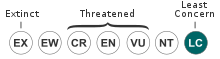
Azadirachta indica, commonly known as neem, margosa, nimtree or Indian lilac,[3] is a tree in the mahogany family Meliaceae. It is one of two species in the genus Azadirachta. It is native to the Indian subcontinent and to parts of Southeast Asia, but is naturalized and grown around the world in tropical and subtropical areas. Its fruits and seeds are the source of neem oil. Nim is a Hindustani noun derived from Sanskrit nimba (निंब).[4][5][6]
Description[edit]
 | This section needs additional citations for verification. (May 2019) |
Margosa is a fast-growing tree that can reach a height of 15–20 metres (49–66 ft), and rarely 35–40 m (115–131 ft). It is evergreen, shedding many of its leaves during the dry winter months. The branches are wide and spreading. The fairly dense crown is roundish and may reach a diameter of 20–25 m (66–82 ft). The opposite, pinnate leaves are 20–40 cm (8–16 in) long, with 20 to 30 medium to dark green leaflets about 3–8 cm (1+1⁄4–3+1⁄4 in) long.[7] The terminal leaflet often is missing. The petioles are short.
White and fragrant flowers are arranged in more-or-less drooping axillary panicles which are up to 25 cm (10 in) long. The inflorescences, which branch up to the third degree, bear from 250 to 300 flowers. An individual flower is 5–6 mm (3⁄16–1⁄4 in) long and 8–11 mm (5⁄16–7⁄16 in) wide. Protandrous, bisexual flowers and male flowers exist on the same individual tree.
The fruit is a smooth (glabrous), olive-like drupe which varies in shape from elongate oval to nearly roundish, and when ripe is 14–28 mm (1⁄2–1+1⁄8 in) by 10–15 mm (3⁄8–5⁄8 in). The fruit skin (exocarp) is thin and the bitter-sweet pulp (mesocarp) is yellowish-white and very fibrous. The mesocarp is 3–5 mm (1⁄8–1⁄4 in) thick. The white, hard inner shell (endocarp) of the fruit encloses one, rarely two, or three, elongated seeds (kernels) having a brown seed coat.

The margosa tree[8] is similar in appearance to its relative, the chinaberry or bakain, Melia azedarach,[9] with which it may be confused. Melia azedarach also has toothed leaflets and similar looking fruit. One difference is that margosa leaves are pinnate but chinaberry leaves are twice- and thrice-pinnate.
Taxonomy[edit]
The name Azadirachta indica was first published by Adrien-Henri de Jussieu in 1830.[10] In 1753, Carl Linnaeus had described two species, Melia azedarach and Melia azadirachta.[11] De Jussieu considered Melia azadirachta to be sufficiently different from Melia azedarach to be placed in a new genus.[12] For both his species, Linnaeus referred to the name 'azedarach',[11] which is derived from the French 'azédarac', which in turn is from the Persian 'āzād dirakht' (ازادرخت), meaning 'free or noble tree'.[13] The Persian name of the tree, azad darakhat-e-hind, meaning 'the free tree of India, implies that it is free from disease and insect problems.[14]
Distribution[edit]
Azadirachta indica is considered to be native to the Indian region and Bangladesh in the Indian subcontinent and to Cambodia, Laos, Myanmar, Thailand and Vietnam in Indochina. It has been widely introduced elsewhere in tropical and subtropical regions, from South America to Indonesia.[2]
Ecology[edit]
The margosa tree is noted for its drought resistance. Normally it thrives in areas with sub-arid to sub-humid conditions, with an annual rainfall of 400–1,200 mm (16–47 in). It can grow in regions with an annual rainfall below 400 mm, but in such cases it depends largely on ground water levels. Margosa can grow in many different types of soil, but it thrives best on well drained deep and sandy soils. It is a typical tropical to subtropical tree and exists at annual mean temperatures of 21–32 °C (70–90 °F). It can tolerate high to very high temperatures and does not tolerate temperature below 5 °C (41 °F). Margosa is one of a very few shade-giving trees that thrive in drought-prone areas e.g. the dry coastal, southern districts of India and Pakistan. The trees are not at all delicate about water quality and thrive on the merest trickle of water, whatever the quality. In India and tropical countries where the Indian diaspora has reached, it is very common to see margosa trees used for shade lining streets, around temples, schools and other such public buildings or in most people's back yards. In very dry areas the trees are planted on large tracts of land.
Weed status[edit]
Margosa is considered as a weed in many areas, including some parts of the Middle East, most of Sub-Saharan Africa including West Africa and Indian Ocean states, and some parts of Australia. Ecologically, it survives well in similar environments to its own, but its weed potential has not been fully assessed.[15]
In April 2015, A. indica was declared a class B and C weed in the Northern Territory, Australia, meaning its growth and spread must be controlled and plants or propagules are not allowed to be brought into the NT. It is illegal to buy, sell, or transport the plants or seeds. Its declaration as a weed came in response to its invasion of waterways in the "Top End" of the territory.[16]
After being introduced into Australia, possibly in the 1940s, A. indica was originally planted in the Northern Territory to provide shade for cattle. Trial plantations were established between the 1960s and 1980s in Darwin, Queensland, and Western Australia, but the Australian margosa industry did not prove viable. The tree has now spread into the savanna, particularly around waterways, and naturalised populations exist in several areas.[17]
Phytochemicals[edit]
Margosa fruit, seeds, leaves, stems, and bark contain diverse phytochemicals, some of which were first discovered in azadirachta seed extracts, such as azadirachtin established in the 1960s as an insect antifeedant, growth disruptor, and insecticide.[18][19] The yield of azadirachtin from crushing 2 kg of seeds is about 5 g.[18]
In addition to azadirachtin and related limonoids, the seed oil contains glycerides, diverse polyphenols, nimbolide, triterpenes, and beta-sitosterol.[18][20] The yellow, bitter oil has a garlic-like odor and contains about 2% of limonoid compounds.[18] The leaves contain quercetin, catechins, carotenes, and vitamin C.[18]
Uses[edit]


.jpg)

Margosa leaves are dried in India and placed in cupboards to prevent insects eating the clothes, and also in tins where rice and wheat is stored.[19] The flowers are also used in many Indian festivals like Ugadi. See below: #Association with Hindu festivals in India.
Culinary[edit]
|
The tender shoots and flowers of the margosa tree are eaten as a vegetable in India. A soup-like dish called vēppam pū cāṟu (வேப்பம் பூ சாறு) in Tamil (translated as "margosa flower rasam") made of the flower of neem is prepared in Tamil Nadu. In Bengal, young margosa leaves are fried in oil with tiny pieces of aubergine (brinjal). The dish is called nim bēgun bhājā (নিম বেগুন ভাজা) and is the first item during a Bengali meal, which acts as an appetizer. It is eaten with rice.
Margosa is used in parts of mainland Southeast Asia, particularly in Cambodia, Laos (where it is called kadao [ກະເດົາ]), Thailand (where it is known as sadao [สะเดา [sàʔ daw] or satao สะเตา [sàʔ taw]]), Myanmar (where it is known as ta.ma [တမာ]) and Vietnam (where it is known as sầu đâu and is used to cook the salad gỏi sầu đâu). Even if lightly cooked, the flavour is quite bitter, and the food is not consumed by all inhabitants of these nations. In Myanmar, young margosa leaves and flower buds are boiled with tamarind fruit to soften its bitterness and eaten as a vegetable. Pickled margosa leaves are also eaten with tomato and fish paste sauce in Myanmar.
Traditional medicine[edit]
Products made from margosa trees have been used in the traditional medicine of India for centuries,[19][18] for treating skin troubles and rheumatism,[21] but there is insufficient clinical evidence to indicate any benefits of using margosa for medicinal purposes.[18] In adults, no specific doses have been established, and short-term use of margosa appears to be safe, while long-term use may harm the kidneys or liver; in small children, margosa oil is toxic and can lead to death.[18] Margosa may also cause miscarriages, infertility, and low blood sugar.[18]
In Southern India and the Middle-East, neem twigs are often used as a teeth-cleaning twig.[citation needed]
Pest and disease control[edit]
Margosa is a key ingredient in non-pesticidal management (NPM), providing a natural alternative to synthetic pesticides. Margosa seeds are ground into powder that is soaked overnight in water and sprayed on the crop. To be effective, it must be applied repeatedly, at least every ten days. Margosa does not directly kill insects. It acts as an anti-feedant, repellent, and egg-laying deterrent and thus protects the crop from damage. The insects starve and die within a few days. Margosa also suppresses the subsequent hatching of their eggs. Margosa-based fertilizers have been effective against southern armyworm. Margosa cake may be used as a fertilizer.[22]
Margosa oil has been shown to avert termite attack as an ecofriendly and economical agent.[23]
Margosa oil for polymeric resins[edit]
Applications of margosa oil in the preparation of polymeric resins have been documented in recent reports. The synthesis of various alkyd resins from margosa oil is reported using a monoglyceride (MG) route and their utilization for the preparation of PU coatings.[24] The alkyds are prepared from reaction of conventional divalent acid materials like phthalic and maleic anhydrides with MG of margosa oil.
Other uses[edit]
- Tree: the margosa tree is of great importance for its anti-desertification properties and possibly as a good carbon dioxide sink. It is also used for maintaining soil fertility.[25][26]
- Fertilizer: neem extract is added to fertilizers (urea) as a nitrification inhibitor.[27]
- Animal feed: margosa leaves can be occasionally used as forage for ruminants and rabbits.[28]
- Teeth cleaning: margosa has traditionally been used as a type of teeth-cleaning twig.[29]
Toxicity[edit]
According to the American Journal of Neuroradiology, margosa oil has the ability to cause some forms of toxic encephalopathy and ophthalmopathy if consumed in quantities exceeding 150ml (5.07 us fluid ounces).[30]
Genome and transcriptomes[edit]
Margosa genome and transcriptomes from various organs have been sequenced.[31][32][33] Expressed sequence tags were identified by generation of subtractive hybridization libraries of margosa fruit, leaf, fruit mesocarp, and fruit endocarp.[34][35]
Cultural and social impact[edit]

The name Nimai ('born under a neem tree'), of the Bhakti movement Vaishnava saint and Chaitanya Mahaprabhu (believed to be an incarnation of Radha Krishna in Gaudiya Vaishnavism and ISKCON) is due to his birth under a neem tree.
In 1995, the European Patent Office (EPO) granted a patent on an anti-fungal product derived from margosa to the United States Department of Agriculture and W. R. Grace and Company.[36] The Indian government challenged the patent when it was granted, claiming that the process for which the patent had been granted had been in use in India for more than 2,000 years. In 2000, the EPO ruled in India's favour, but W. R. Grace appealed, claiming that prior art about the product had never been published. On 8 March 2005, that appeal was lost and the EPO revoked the Neem patent.[36]
Biotechnology[edit]
The biopesticide produced by extraction from the tree seeds contains limonoid triterpenes.[18] Currently, the extraction process has disadvantages such as contamination with fungi and heterogeneity in the content of limonoids due to genetic, climatic, and geographical variations.[37][38] To overcome these problems, production of limonoids from plant cell suspension and hairy root cultures in bioreactors has been studied,[39][40] including the development of a two-stage bioreactor process that enhances growth and production of limonoids with cell suspension cultures of A. indica.[41]
Gallery[edit]
-
 Flowers
 -
 Unripe fruit
 -
 Neem tree in a banana farm in India
 -
 Neem tree farm
 -
 Twigs for sale
 -
 Fruit drying for oil extraction
 -
 Cleaning teeth by chewing stick
 -
 Native of Chhattisgarh with Neem branches and leaves for Hareli Festival
 -
 A tree in Gambia
 -
 A tree in Bangladesh
_in_Hyderabad_W_IMG_7006.jpg)


See also[edit]
- Azadirachtin
- Ayurveda
- Arid Forest Research Institute (AFRI)
- Neem cake
- Neem oil
- Babool (brand) of toothpaste
- Teeth cleaning twig (datun)
References[edit]
- ^ Barstow, M.; Deepu, S. (2018). "Azadirachta indica". IUCN Red List of Threatened Species. 2018: e.T61793521A61793525. doi:10.2305/IUCN.UK.2018-1.RLTS.T61793521A61793525.en. Retrieved 19 November 2021.
- ^ a b c "Azadirachta indica A.Juss". Plants of the World Online. Board of Trustees of the Royal Botanic Gardens, Kew. 2017. Retrieved 19 November 2020.
- ^ "Azadirachta indica". Germplasm Resources Information Network. Agricultural Research Service, United States Department of Agriculture. Retrieved 9 June 2017.
- ^ Compact Oxford English Dictionary (2013), Neem, page 679, Third Edition 2008 reprinted with corrections 2013, Oxford University Press.
- ^ Henry Yule and A. C. Burnell (1996), Hobson-Jobson, Neem, page 622, The Anglo-Indian Dictionary, Wordsworth Reference. (This work was first published in 1886)
- ^ Encarta World English Dictionary (1999), Neem, page 1210, St. Martin's Press, New York.
- ^ "Neem | Azadirachta indica". Plants For A Future. Retrieved 25 October 2023.
- ^ saikia, Curtingle (2 January 2023). "How to Use Neem- Uses and benefits - prakasti.com". Prakasti. Retrieved 11 January 2023.
- ^ The Tree. National Academies Press (US). 1992.
- ^ "Azadirachta indica A.Juss." The International Plant Names Index. Retrieved 26 March 2023.
- ^ a b Linnaeus, C. (1753), "Melia", Species Plantarum, vol. 1, Stockholm: Laurentius Salvius, pp. 384–385, retrieved 26 March 2023
- ^ de Jussieu, A. (1830). "Mémoire sur le groupe des Méliacées". Mémoires du Muséum d'histoire naturelle. 19: 153–304. Retrieved 26 March 2023. p. 221
- ^ "azedarach". Merriam-Webster Dictionary. Retrieved 26 March 2023.
- ^ K. K. Singh, ed. (2009). Neem A Treatise. I.K. International Publishing House, India. p. 3. ISBN 9788189866006.
- ^ Plant Risk Assessment, Neem Tree, Azadirachta indica (PDF). Biosecurity Queensland. 2008. Retrieved 24 January 2014.
- ^ Neem has been declared: what you need to know (PDF), Department of Land Resource Management, 2015, archived from the original (PDF) on 24 March 2015, retrieved 17 March 2015
- ^ Neem Azadirachta indica (PDF), Department of Land Resource Management, 2015, archived from the original (PDF) on 24 March 2015, retrieved 17 March 2015
- ^ a b c d e f g h i j "Neem". Drugs.com. 13 August 2020. Retrieved 21 September 2020.
- ^ a b c Anna Horsbrugh Porter (17 April 2006). "Neem: India's tree of life". BBC News.
- ^ "Nimbolide". PubChem, US National Library of Medicine. 6 March 2021. Retrieved 10 March 2021.
- ^ Tejesvi, M.V.; Tamhankar, S.A.; Kini, K.R; Rao, V.S.; Prakash, H.S. (2009). "Phylogenetic analysis of endophytic Pestalotiopsis species from ethnopharmaceutically important medicinal trees". Fungal Diversity. 38: 167–183.
- ^ "Neem Cake Fertilizer, Uses, Application, Benefits | Agri Farming". www.agrifarming.in. 9 August 2020.
- ^ YashRoy, R.C.; Gupta, P.K. (2000). "Neem-seed oil inhibits growth of termite surface-tunnels". Indian Journal of Toxicology. 7 (1): 49–50.
- ^ Chaudhari, Ashok; Kulkarni, Ravindra; Mahulikar, Pramod; Sohn, Daewon; Gite, Vikas (2015). "Development of PU Coatings from Neem Oil Based Alkyds Prepared by the Monoglyceride Route". Journal of the American Oil Chemists' Society. 92 (5): 733–741. doi:10.1007/s11746-015-2642-3. S2CID 96641587.
- ^ Schroeder, Paul (1992). "Carbon storage potential of short rotation tropical tree plantations". Forest Ecology and Management. 50 (1–2): 31–41. doi:10.1016/0378-1127(92)90312-W.
- ^ Puhan, Sukumar, et al. "Mahua (Madhuca indica) seed oil: a source of renewable energy in India." (2005).
- ^ Heinrich W. Scherer; Konrad Mengel; Heinrich Dittmar; Manfred Drach; Ralf Vosskamp; Martin E. Trenkel; Reinhold Gutser; Günter Steffens; Vilmos Czikkely; Titus Niedermaier; Reinhardt Hähndel; Hans Prün; Karl-Heinz Ullrich; Hermann Mühlfeld; Wilfried Werner; Günter Kluge; Friedrich Kuhlmann; Hugo Steinhauser; Walter Brändlein; Karl-Friedrich Kummer (2007), "Fertilizers", Ullmann's Encyclopedia of Industrial Chemistry (7th ed.), Wiley, doi:10.1002/14356007.a10_323.pub2, ISBN 978-3527306732
- ^ Heuzé V., Tran G., Archimède H., Bastianelli D., Lebas F., 2015. Neem (Azadirachta indica). Feedipedia, a programme by Institut national de la recherche agronomique, CIRAD, AFZ and FAO. Last updated on 2 October 2015
- ^ "Different Strokes for Different Folks: A History of the Toothbrush – Page 4 – Virtual Dental Museum". dentalmuseum.pacific.edu. Retrieved 8 July 2021.
- ^ M.V. Bhaskara; S.J. Pramoda; M.U. Jeevikaa; P.K. Chandana; G. Shetteppa (6 May 2010). "Letters: MR Imaging Findings of Neem Oil Poisoning". American Journal of Neuroradiology. 31 (7): E60–E61. doi:10.3174/ajnr.A2146. PMC 7965469. PMID 20448012.
- ^ Krishnan, N; Swetansu Pattnaik; S. A. Deepak; et al. (25 December 2011). "De novo sequencing and assembly of Azadirachta indica fruit transcriptome" (PDF). Current Science. 101 (12): 1553–1561.
- ^ Krishnan, N; Swetansu Pattnaik; Prachi Jain; et al. (9 September 2012). "A Draft of the Genome and Four Transcriptomes of a Medicinal and Pesticidal Angiosperm Azadirachta indica". BMC Genomics. 13 (464): 464. doi:10.1186/1471-2164-13-464. PMC 3507787. PMID 22958331.
- ^ Krishnan, N; Prachi Jain; Prachi Jain; Arun K Hariharan; Binay Panda (20 April 2016). "An Improved Genome Assembly of Azadirachta indica A. Juss". G3. 6 (7): 1835–1840. doi:10.1534/g3.116.030056. PMC 4938638. PMID 27172223.
- ^ Narnoliya, Lokesh K.; Rajakani, Raja; Sangwan, Neelam S.; Gupta, Vikrant; Sangwan, Rajender S. (2014). "Comparative transcripts profiling of fruit mesocarp and endocarp relevant to secondary metabolism by suppression subtractive hybridization in Azadirachta indica (neem)". Molecular Biology Reports. 41 (5): 3147–3162. doi:10.1007/s11033-014-3174-x. PMID 24477588. S2CID 16605633.
- ^ Rajakani, Raja; Narnoliya, Lokesh; Sangwan, Neelam S.; Sangwan, Rajender S.; Gupta, Vikrant (2014). "Subtractive transcriptomes of fruit and leaf reveal differential representation of transcripts in Azadirachta indica". Tree Genetics & Genomes. 10 (5): 1331–1351. doi:10.1007/s11295-014-0764-7. S2CID 11857916.
- ^ a b "India wins landmark patent battle". BBC News. 9 March 2005. Retrieved 2 October 2009.
- ^ Sidhu, O. P.; Kumar, Vishal; Behl, Hari M. (15 January 2003). "Variability in Neem (Azadirachta indica) with Respect to Azadirachtin Content". Journal of Agricultural and Food Chemistry. 51 (4): 910–915. doi:10.1021/jf025994m. PMID 12568548.
- ^ Prakash, Gunjan; Bhojwani, Sant S.; Srivastava, Ashok K. (1 August 2002). "Production of azadirachtin from plant tissue culture: State of the art and future prospects". Biotechnology and Bioprocess Engineering. 7 (4): 185–193. doi:10.1007/BF02932968. ISSN 1226-8372. S2CID 85845199.
- ^ Srivastava, Smita; Srivastava, Ashok K. (17 August 2013). "Production of the Biopesticide Azadirachtin by Hairy Root Cultivation of Azadirachta indica in Liquid-Phase Bioreactors". Applied Biochemistry and Biotechnology. 171 (6): 1351–1361. doi:10.1007/s12010-013-0432-7. ISSN 0273-2289. PMID 23955295. S2CID 36781838.
- ^ Prakash, Gunjan; Srivastava, Ashok K. (5 April 2008). "Production of Biopesticides in an in Situ Cell Retention Bioreactor". Applied Biochemistry and Biotechnology. 151 (2–3): 307–318. doi:10.1007/s12010-008-8191-6. ISSN 0273-2289. PMID 18392561. S2CID 35506559.
- ^ Vásquez-Rivera, Andrés; Chicaiza-Finley, Diego; Hoyos, Rodrigo A.; Orozco-Sánchez, Fernando (1 September 2015). "Production of Limonoids with Insect Antifeedant Activity in a Two-Stage Bioreactor Process with Cell Suspension Culture of Azadirachta indica". Applied Biochemistry and Biotechnology. 177 (2): 334–345. doi:10.1007/s12010-015-1745-5. ISSN 1559-0291. PMID 26234433. S2CID 207357717.
External links[edit]

- National Research Council (US) Panel on Neem (1992). Neem: A Tree For Solving Global Problems. National Research Council (US) Panel on Neem. doi:10.17226/1924. ISBN 978-0-309-04686-2. PMID 25121266. PDF Copy
- Invasiveness information from Pacific Island Ecosystems at Risk (PIER)
- Neem information from the Hawaiian Ecosystems at Risk project (HEAR)
- Caldecott, Todd (2006). Ayurveda: The Divine Science of Life. Elsevier/Mosby. ISBN 978-0-7234-3410-8. Archived from the original on 29 December 2010. Retrieved 15 January 2011. Contains a detailed monograph on Azadirachta indica (Neem; Nimba) as well as a discussion of health benefits and usage in clinical practice.
