


Peppermint
| Peppermint | |
|---|---|

| |
Scientific classification 
| |
| Kingdom: | Plantae |
| Clade: | Tracheophytes |
| Clade: | Angiosperms |
| Clade: | Eudicots |
| Clade: | Asterids |
| Order: | Lamiales |
| Family: | Lamiaceae |
| Genus: | Mentha |
| Species: | M. × piperita
|
| Binomial name | |
| Mentha × piperita | |
| Synonyms | |
|
List
| |
Peppermint (Mentha × piperita) is a hybrid species of mint, a cross between watermint and spearmint.[1] Indigenous to Europe and the Middle East,[2] the plant is now widely spread and cultivated in many regions of the world.[3] It is occasionally found in the wild with its parent species.[3][4]
Although the genus Mentha comprises more than 25 species, the one in most common use is peppermint.[5] While Western peppermint is derived from Mentha × piperita, Chinese peppermint, or bohe, is derived from the fresh leaves of M. haplocalyx.[6][7][8] M. × piperita and M. haplocalyx are both recognized as plant sources of menthol and menthone, and are among the oldest herbs used for both culinary and medicinal products.[5][9]
Botany[edit]


Peppermint was first identified in Hertfordshire, England, by a Dr. Eales, a discovery which John Ray published 1696 in the second edition of his book Synopsis Methodica Stirpium Britannicarum. He initially gave it the name Mentha spicis brevioribus et habitioribus, foliis Mentha fusca, sapore fervido piperis and later in his 1704 volume Historia Plantarum he called it Mentha palustris or Peper–Mint. The plant was then added to the London Pharmacopoeia under the name Mentha piperitis sapore in 1721.[10][11][12][13] It was given the name Mentha piperita in 1753 by Carl Linnaeus in his Species Plantarum Volume 2.[14] Linnaeus treated Peppermint as a species, but it is now universally agreed to be a hybrid between Mentha viridis and Mentha aquatica with Mentha viridis itself also being a hybrid between Mentha sylvestris and Mentha rotundifolis.[15][16] It is an herbaceous, rhizomatous, perennial plant that grows to be 30–90 cm (12–35 in) tall, with smooth stems, square in cross section. The rhizomes are wide-spreading and fleshy, and bear fibrous roots. The leaves can be 4–9 cm (1+1⁄2–3+1⁄2 in) long and 1.5–4 cm (1⁄2–1+1⁄2 in) broad. They are dark green with reddish veins, with an acute apex and coarsely toothed margins. The leaves and stems are usually slightly fuzzy. The flowers are purple, 6–8 mm (1⁄4–5⁄16 in) long, with a four-lobed corolla about 5 mm (3⁄16 in) diameter; they are produced in whorls (verticillasters) around the stem, forming thick, blunt spikes. Flowering season lasts from mid- to late summer. The chromosome number is variable, with 2n counts of 66, 72, 84, and 120 recorded.[17][18][19] Peppermint is a fast-growing plant; once it sprouts, it spreads very quickly.
Ecology[edit]
Peppermint typically occurs in moist habitats, including stream sides and drainage ditches. Being a hybrid, it is usually sterile, producing no seeds and reproducing only vegetatively, spreading by its runners.[4][19]
Outside of its native range, areas where peppermint was formerly grown for oil often have an abundance of feral plants, and it is considered invasive in Australia, the Galápagos Islands, New Zealand,[20] and the United States[21] in the Great Lakes region, noted since 1843.[22]
Cultivation[edit]

Peppermint generally grows best in moist, shaded locations, and expands by underground rhizomes. Young shoots are taken from old stocks and dibbled into the ground about 0.5 m (1.5 ft) apart. They grow quickly and cover the ground with runners if it is permanently moist. For the home gardener, it is often grown in containers to restrict rapid spreading. It grows best with a good supply of water, without being water-logged, and planted in areas with partial sun to shade.
The leaves and flowering tops are used; they are collected as soon as the flowers begin to open and can be dried. The wild form of the plant is less suitable for this purpose, with cultivated plants having been selected for more and better oil content. They may be allowed to lie and wilt a little before distillation, or they may be taken directly to the still.
Cultivars[edit]
Several cultivars have been selected for garden use:
- Mentha × piperita 'Candymint' has reddish stems.[23]
- Mentha × piperita 'Chocolate Mint'. Its flowers open from the bottom up; its flavour is reminiscent of the flavour in Andes Chocolate Mints, a popular confection.[24][25][26]
- Mentha × piperita 'Citrata' includes a number of varieties including Eau de Cologne mint,[27] grapefruit mint, lemon mint,[28] and orange mint. Its leaves are aromatic and hairless.
- Mentha × piperita 'Crispa' has wrinkled leaves.[29]
- Mentha × piperita 'Lavender Mint'[30]
- Mentha × piperita 'Lime Mint' has lime-scented foliage.[31][32]
- Mentha × piperita 'Variegata' has mottled green and pale yellow leaves.[33]
Commercial cultivars may include:
- Dulgo pole[34]
- Zefir[34]
- Bulgarian population #2[34]
- Clone 11-6-22[34]
- Clone 80-121-33[34]
- Mitcham Digne 38[35]
- Mitcham Ribecourt 19[35]
- 'Todd's Mitcham', a verticillium wilt-resistant cultivar produced from a breeding and test program of atomic gardening at Brookhaven National Laboratory from the mid-1950s[35][36]
- 'Refined Murray', also verticillium-resistant[36]
- 'Roberts Mitcham', also verticillium-resistant[36] and also the product of mutation breeding
Diseases[edit]
Verticillium wilt is a major constraint in peppermint cultivation. 'Todd's Mitcham', 'Refined Murray', 'Roberts Mitcham' (see above), and a few other cultivars have some degree of resistance.[36]
Production[edit]
| Country | Production (tonnes) |
|---|---|
 Morocco Morocco |
40,403 |
 Argentina Argentina |
6,991 |
 Mexico Mexico |
1,010 |
| World | 48,437 |
| Source: FAOSTAT of the United Nations[37] | |
In 2020, world production of peppermint was 48,437 tonnes, led by Morocco with 83% of the world total and Argentina with 14% (table).
In the United States, Oregon and Washington produce most of the country's peppermint,[38] the leaves of which are processed for the essential oil to produce flavorings mainly for chewing gum and toothpaste.[39]
Chemical constituents[edit]
Peppermint has a high menthol content. The essential oil also contains menthone and carboxyl esters, particularly menthyl acetate.[40] Dried peppermint typically has 0.3–0.4% of volatile oil containing menthol (7–48%), menthone (20–46%), menthyl acetate (3–10%), menthofuran (1–17%), and 1,8-cineol (3–6%). Peppermint oil also contains small amounts of many additional compounds, including limonene, pulegone, caryophyllene, and pinene.[41]
Peppermint contains terpenoids and flavonoids such as eriocitrin, hesperidin, and kaempferol 7-O-rutinoside.[42]
Oil[edit]
Peppermint oil has a high concentration of natural pesticides, mainly pulegone (found mainly in M. arvensis var. piperascens (cornmint, field mint, or Japanese mint),[43] and to a lesser extent (6,530 ppm) in Mentha × piperita subsp. notho[44]) and menthone.[45] It is known to repel some pest insects, including mosquitos, and has uses in organic gardening. It is also widely used to repel rodents.[46][47][48][49]
The chemical composition of the essential oil from peppermint (Mentha × piperita L.) was analyzed by GC/FID and GC-MS. The main constituents were menthol (40.7%) and menthone (23.4%). Further components were (±)-menthyl acetate, 1,8-cineole, limonene, beta-pinene, and beta-caryophyllene.[50]
Research and health effects[edit]
Peppermint oil is under preliminary research for its potential as a short-term treatment for irritable bowel syndrome,[51][52] and has supposed uses in traditional medicine for minor ailments.[53] Peppermint oil and leaves have a cooling effect when used topically for muscle pain, nerve pain, relief from itching, or as a fragrance.[53][54] High oral doses of peppermint oil (500 mg) can cause mucosal irritation and mimic heartburn.[53][54]
Peppermint roots bioaccumulate radium, so the plant may be effective for phytoremediation of radioactively contaminated soil.[55]
Culinary and other uses[edit]
Fresh or dried peppermint leaves are often used alone in peppermint tea or with other herbs in herbal teas (tisanes, infusions). Peppermint is used for flavouring ice cream, candy, fruit preserves, alcoholic beverages, chewing gum, toothpaste, and some shampoos, soaps, and skin care products.[38][39]
Menthol activates cold-sensitive TRPM8 receptors in the skin and mucosal tissues, and is the primary source of the cooling sensation that follows the topical application of peppermint oil.[56]
-
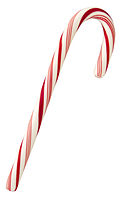 Candy canes are one of the most common peppermint-flavored candies
 -
 Mentha × piperita hybrid known as 'Chocolate Mint'
 -
 Freeze-dried leaves


Peppermint oil is also used in construction and plumbing to test for the tightness of pipes and disclose leaks by its odor.[57]
Safety[edit]
Medicinal uses of peppermint have not been approved as effective or safe by the US Food and Drug Administration.[58] With caution that the concentration of the peppermint constituent pulegone should not exceed 1% (140 mg), peppermint preparations are considered safe by the European Medicines Agency when used in topical formulations for adult subjects.[59][60] Diluted peppermint essential oil is safe for oral intake when only a few drops are used.[53][59]
Although peppermint is commonly available as a herbal supplement, no established, consistent manufacturing standards exist for it, and some peppermint products may be contaminated with toxic metals or other substituted compounds.[58] Skin rashes, irritation, or allergic reactions may result from applying peppermint oil to the skin,[58] and its use on the face or chest of young children may cause side effects if the oil menthol is inhaled.[53][59] A common side effect from oral intake of peppermint oil or capsules is heartburn.[58] Oral use of peppermint products may have adverse effects when used with iron supplements, cyclosporine, medicines for heart conditions or high blood pressure, or medicines to decrease stomach acid.[58]
Standardization[edit]
- ISO 676:1995—contains the information about the nomenclature of the variety and cultivars[61]
- ISO 5563:1984—a specification for its dried leaves of Mentha piperita Linnaeus[62]
- Peppermint oil—ISO 856:2006[63]
See also[edit]
References[edit]
- ^ Frampton, Alex (2011). The Complete Illustrated Book of Herbs. The Reader's Digest Association. OCLC 748502326. Archived on 6 April 2017.
- ^ "Peppermint". Botanical Online. Archived from the original on 19 March 2018. Retrieved 19 March 2018.
- ^ a b Euro+Med Plantbase Project: Mentha × piperitaArchived 9 March 2012 at the Wayback Machine
- ^ a b Flora of NW Europe: Mentha × piperita Archived 19 September 2009 at the Wayback Machine
- ^ a b Mimica-Dukic, N.; Bozin, B. (2008). "Mentha L. species (Lamiaceae) as promising sources of bioactive secondary metabolites". Current Pharmaceutical Design. 14 (29): 3141–50. doi:10.2174/138161208786404245. ISSN 1873-4286. PMID 19075696.
- ^ Dong, Wenjiang; Ni, Yongnian; Kokot, Serge (February 2015). "Differentiation of mint (Mentha haplocalyx Briq.) from different regions in China using gas and liquid chromatography". Journal of Separation Science. 38 (3): 402–9. doi:10.1002/jssc.201401130. ISSN 1615-9314. PMID 25431171.
- ^ "Mentha and Schizonepeta". ITM online. Archived from the original on 2018-12-26. Retrieved 2019-01-06.
- ^ Zhang, Feng; Lu, Yin; Qian, Wenhui; Pei, Zifan (2015), "Mentha haplocalyx Briq. 薄荷 (Bohe, Mint)", Dietary Chinese Herbs, Vienna: Springer, pp. 631–6, doi:10.1007/978-3-211-99448-1_72, ISBN 978-321199447-4
- ^ Bone, Kerry; Mills, Simon Y. (2013). Principles and practice of phytotherapy : modern herbal medicine (2nd ed.). Edinburgh: Churchill Livingstone. ISBN 978-0-44306992-5. OCLC 830314789.
- ^ Ray, John (1696). Synopsis Methodica Stirpium Britannicarum. p. 234.
- ^ Flückiger, Friedrich August (1874). Pharmacographia: A History of the Principal Drugs of Vegetable Origin, met with in Great Britain and British India. Macmillan. pp. 481–2.
- ^ Bacon, F. J. (1928). "The Botanical Origin of American Peppermint—Mentha Piperita L*". The Journal of the American Pharmaceutical Association (1912). 17 (11): 1094–1096. doi:10.1002/jps.3080171108. ISSN 0898-140X.
- ^ Porter, C. L. (1951). "The History of Mentha piperita and Its Economic Importance in Indiana". Proceedings of the Indiana Academy of Science. 61: 364–268.
- ^ Linnaeus, C. (1753). Species Plantarum 2: 576–577.
- ^ Harley, R. M. (1975). Mentha L. In: Stace, C. A., ed. Hybridization and the flora of the British Isles page 387.
- ^ Wong, Warren (1972). The Changes that Occur in Peppermint Oil During Aging, Including the Relationship Between Changes in Chemical Composition and Flavor Characteristics. Ph.D. dissertation. Rutgers. p. 10.
- ^ "Mentha x piperita - Peppermint - Flora of Northwest Europe". 2014. Archived from the original on 29 December 2014. Retrieved 29 December 2014.
- ^ Huxley, A., ed. (1992). New RHS Dictionary of Gardening. Macmillan. ISBN 0-333-47494-5.[page needed]
- ^ a b Blamey, M. & Grey-Wilson, C. (1989). Flora of Britain and Northern Europe. ISBN 0-340-40170-2[page needed]
- ^ Pacific Island Ecosystems at Risk: Mentha x piperita Archived 2022-01-19 at the Wayback Machine
- ^ USDA, NRCS (n.d.). "Mentha ×piperita L. (pro sp.) [aquatica × spicata]". The PLANTS Database (plants.usda.gov). Greensboro, North Carolina: National Plant Data Team. Retrieved 7 June 2022.
- ^ "List of invasive species in the Great Lakes Great Lakes United / Union Saint-Laurent Grands Lacs". Archived from the original on 2009-04-29. Retrieved 2009-02-07.
- ^ The Herbarist. Herb Society of America. 1997. p. 39. Archived from the original on 10 June 2016. Retrieved 24 July 2013.
- ^ "Mentha piperita cv. Chocolate Mint". Mountainvalleygrowers.com. Archived from the original on 2013-04-02. Retrieved 2013-07-24.
- ^ Dolf De Rovira (28 February 2008). Dictionary of Flavors. John Wiley & Sons. pp. 420–. ISBN 978-0-470-38484-8. Archived from the original on 27 April 2016. Retrieved 24 July 2013.
- ^ "Mentha x piperita 'Chocolate Mint' : peppermint". Hortiplex.gardenweb.com. 2007-09-12. Archived from the original on 2014-10-06. Retrieved 2013-07-24.
- ^ "Mentha x piperita 'Citrata' : eau de cologne mint". Hortiplex.gardenweb.com. 2007-09-12. Archived from the original on 2014-10-06. Retrieved 2013-07-24.
- ^ "Mentha x piperita var. citrata : lemon mint". Hortiplex.gardenweb.com. 2007-09-12. Archived from the original on 2014-07-28. Retrieved 2013-07-24.
- ^ "Mentha x piperita 'Crispa' : eau de cologne mint". Hortiplex.gardenweb.com. 2007-09-12. Archived from the original on 2014-10-06. Retrieved 2013-07-24.
- ^ "HortiPlex Plant Database: Info, Images and Links on Thousands of Plants". Hortiplex.gardenweb.com. Archived from the original on 2014-10-06. Retrieved 2013-07-24.
- ^ Harrowsmith Country Life. Camden House Pub. 1990. p. 48. Archived from the original on 5 May 2016. Retrieved 24 July 2013.
- ^ "Mentha x piperita 'Lime Mint' : eau de cologne mint". Hortiplex.gardenweb.com. 2007-09-12. Archived from the original on 2014-10-06. Retrieved 2013-07-24.
- ^ "Mentha x piperita 'Variegata' : variegated mint". Hortiplex.gardenweb.com. 2007-09-12. Archived from the original on 2014-10-06. Retrieved 2013-07-24.
- ^ a b c d e Stanev, S.; V. D. Zheljazkov. "Study on essential oil and free menthol accumulation in 19 cultivars, populations, and clones of peppermint (Mentha × piperita)". Archived from the original on 26 August 2009. Retrieved 6 June 2009.
- ^ a b c Jullien, Frédéric; Diemer, Florence; Colson, Monique; Faure, Olivier (1998). "An optimising protocol for protoplast regeneration of three peppermint cultivars ( Mentha x piperita)". Plant Cell, Tissue and Organ Culture. 54 (3): 153–9. doi:10.1023/A:1006185103897. S2CID 26626639.
- ^ a b c d Craker, Lyle E.; Gardner, Zoë; Etter, Selma C. (2003). "Herbs in American Fields: A Horticultural Perspective of Herb and Medicinal Plant Production in the United States, 1903 to 2003". HortScience. 38 (5). American Society for Horticultural Science: 977–983. doi:10.21273/hortsci.38.5.977. ISSN 0018-5345. S2CID 54203253.
- ^ "Peppermint production in 2020; Production/Crops/Production Quantity from Elements". UN Food and Agriculture Organization, Statistics Division (FAOSTAT). 2020. Retrieved 10 September 2022.
- ^ a b "Peppermint". Oregon State University, Corvallis; Extension Service. 2020. Archived from the original on 5 July 2020. Retrieved 6 July 2020.
- ^ a b Pihl, Kristi (24 September 2012). "Washington is No. 1 mint oil producer in U.S." Tri-City Herald. Archived from the original on 26 September 2017. Retrieved 26 September 2017.
- ^ Thomson Healthcare (2007). PDR for Herbal Medicines (4th ed.). Thomson. p. 640. ISBN 978-1-56363-678-3.
- ^ Leung, A. Y. (1980). Encyclopedia of Common Natural Ingredients used in food, drugs and cosmetics. New York: John Wiley & Sons. p. 231. ISBN 9780471049548.
- ^ Dolzhenko, Yuliya; Bertea, Cinzia M.; Occhipinti, Andrea; Bossi, Simone; Maffei, Massimo E. (2010). "UV-B modulates the interplay between terpenoids and flavonoids in peppermint (Mentha × piperita L.)". Journal of Photochemistry and Photobiology B: Biology. 100 (2): 67–75. doi:10.1016/j.jphotobiol.2010.05.003. hdl:2318/77560. PMID 20627615.
- ^ "Dr. Duke's Phytochemical and Ethnobotanical Databases at NAL". Dr. Duke's Phytochemical and Ethnobotanical Databases at NAL. Archived from the original on 2021-12-13. Retrieved 2021-12-13.
- ^ "Dr. Duke's Phytochemical and Ethnobotanical Databases at NAL". Dr. Duke's Phytochemical and Ethnobotanical Databases at NAL. Archived from the original on 2021-12-13. Retrieved 2021-12-13.
- ^ Robert Irving Krieger (2001). Handbook of Pesticide Toxicology: Principles. Academic Press. p. 823. ISBN 978-0-12-426260-7. Archived from the original on 9 October 2013. Retrieved 11 October 2010.
- ^ "Peppermint Oil = rat repelent". 21 May 2018. Archived from the original on 28 July 2020. Retrieved 1 June 2020.
- ^ Kumar, Sarita; Wahab, Naim; Warikoo, Radhika (April 2011). "Bioefficacy of Mentha piperita essential oil against dengue fever mosquito Aedes aegypti L". Asian Pacific Journal of Tropical Biomedicine. 1 (2): 85–8. doi:10.1016/S2221-1691(11)60001-4. PMC 3609176. PMID 23569733.
- ^ Garrett, Howard (2003). Dear Dirt Doctor: Questions Answered the Natural Way. University of Texas Press. p. 54. ISBN 9781477304143.
- ^ Singh, Bharat P. (2010). Industrial Crops and Uses. Centre for Agriculture and Biosciences International. p. 144. ISBN 9781845936167.
- ^ Schmidt, E.; Bail, S.; Buchbauer, G.; Stoilova, I.; Atanasova, T.; Stoyanova, A.; Krastanov, A.; Jirovetz, L. (2009). "Chemical composition, olfactory evaluation and antioxidant effects of essential oil from Mentha x piperita". Natural Product Communications. 4 (8): 1107–1112. doi:10.1177/1934578X0900400819. PMID 19768994. S2CID 22823187.
- ^ Khanna R, MacDonald JK, Levesque BG (July 2014). "Peppermint oil for the treatment of irritable bowel syndrome: a systematic review and meta-analysis". Journal of Clinical Gastroenterology. 48 (6): 505–12. doi:10.1097/MCG.0b013e3182a88357. PMID 24100754. S2CID 22520810.
- ^ Ruepert L, Quartero AO, de Wit NJ, van der Heijden GJ, Rubin G, Muris JW (August 2011). "Bulking agents, antispasmodics and antidepressants for the treatment of irritable bowel syndrome". Cochrane Database of Systematic Reviews. 8 (8): CD003460. doi:10.1002/14651858.CD003460.pub3. PMC 8745618. PMID 21833945.
- ^ a b c d e "Peppermint oil". National Center for Complementary and Integrative Health, US National Institutes of Health, Bethesda, MD. 2016. Archived from the original on 5 July 2015. Retrieved 13 July 2015.
- ^ a b Keifer, D.; Ulbricht, C.; Abrams, T.; Basch, E.; Giese, N.; Giles, M.; DeFranco Kirkwood, C.; Miranda, M.; Woods, J. (2007). "Peppermint (Mentha xpiperita): An evidence-based systematic review by the Natural Standard Research Collaboration". Journal of Herbal Pharmacotherapy. 7 (2): 91–143. doi:10.1080/j157v07n02_07. PMID 18285310. S2CID 72889915. Archived from the original on 2020-07-28. Retrieved 2019-02-19.
- ^ Popa, K.; Tykva, R.; Podracká, E.; Humelnicu, D. (3 June 2008). "226Ra translocation from soil to selected vegetation in the Crucea (Romania) uranium mining area". Journal of Radioanalytical and Nuclear Chemistry. 278 (1): 211. doi:10.1007/s10967-007-7171-6. S2CID 95563388.
- ^ R. Eccles (1994). "Menthol and Related Cooling Compounds". J. Pharm. Pharmacol. 46 (8): 618–630. doi:10.1111/j.2042-7158.1994.tb03871.x. PMID 7529306. S2CID 20568911.
- ^ M. G. Kains (1912). American Agriculturist (ed.). Culinary Herbs: Their Cultivation Harvesting Curing and Uses. Orange Judd Company. Archived from the original (English) on April 8, 2018.
- ^ a b c d e "Peppermint". Drugs.com. 2017. Archived from the original on 12 November 2017. Retrieved 11 November 2017.
- ^ a b c "Community Herbal Monograph on Mentha x piperita L., aetheroleum" (PDF). Committee on Herbal Medicinal Products, European Medicines Agency. 31 October 2007. Archived (PDF) from the original on 18 December 2017. Retrieved 11 November 2017.
- ^ Nair, B (2001). "Final report on the safety assessment of Mentha piperita (Peppermint) Oil, Mentha piperita (Peppermint) Leaf Extract, Mentha piperita (Peppermint) Leaf, and Mentha piperita (Peppermint) Leaf Water". International Journal of Toxicology. 20 Suppl 3 (4): 61–73. doi:10.1080/10915810152630747. PMID 11766133.
- ^ International Organization for Standardization. "ISO 676:1995 Spices and condiments -- Botanical nomenclature". Archived from the original on 6 June 2011. Retrieved 8 June 2009.
- ^ International Organization for Standardization. "ISO 5563:1984 Dried peppermint (Mentha piperita Linnaeus)—Specification". Archived from the original on 6 June 2011. Retrieved 7 June 2009.
- ^ International Organization for Standardization. "ISO 856:2008 Oil of peppermint (Mentha x piperita L.)". Archived from the original on 6 June 2011. Retrieved 7 June 2009.


