


Bene Israel
 Bene Israel wedding | |
| Regions with significant populations | |
 Israel Israel | 60,000[citation needed] |
 India India | >5,000[citation needed] |
| Languages | |
| Hebrew, Marathi,[1] English[2][3] | |
| Religion | |
| Judaism | |
| Related ethnic groups | |
| Cochin Jews and other Mizrahim | |
The Bene Israel (lit. 'Sons of Israel'), also referred to as the "Shanivar Teli" (lit. 'Saturday oil-presser')[4][5][6] or "Native Jew" caste,[7] are a community of Jews in India. It has been suggested[8] that they are the descendants of one of the Ten Lost Tribes via their ancestors who had settled there centuries ago. Starting in the second half of the 18th century,[9] after they were taught about normative Sephardi Judaism,[10][11] they migrated from villages in the Konkan region[12][9] where they had previously lived[13] to nearby cities throughout British India—primarily to Mumbai[8] where their first synagogue opened in 1796[9][14][15] but also to Pune, Ahmedabad, and Karachi (now in Pakistan),[16] where they gained prominent positions within the British colonial government and the Indian Army.
In the early part of the 20th century, many Bene Israel became active in the Indian film industry as actresses/actors, producers, and directors. With Indian independence in 1947 followed by the Israeli Declaration of Independence in 1948, many Bene Israel, including those who had arrived in India after their exodus from newly-independent Pakistan, soon immigrated to the State of Israel, the United States, as well as Canada, and other Commonwealth countries. Emigration from India (mostly to Israel but also to the UK, the US, Canada and Australia) reduced the approximate population there from a peak of 20,000 in 1951 to 16,000 in 1961 and 5,500 in 1971, after which the emigration greatly declined.[17]
History[edit]

The Bene Israel community believes that their ancestors fled Judea during the persecution under Antiochus Epiphanes and are descended from fourteen Jews, seven men and seven women, who came to India as the only survivors of a shipwreck[4][18] near the village of Navagaon on the coast about 20 miles (32 km) south of Mumbai[19] in 175 BCE.[20] There is no evidence for this and Tudor Parfitt considers it mythical, saying that it is identical to an origin story told by the Chitpavan Brahmins, that they descended from 14 foreigners, 7 men and 7 women, who died when their vessel was shipwrecked off the same coast, only to be revived by Parashurama, who then initiated them into Brahamic rites. The Bene Israel acknowledge the similarity and have a different interpretation of the shipwreck legend.[20] Some historians have thought their ancestors may have belonged to one of the Lost Tribes of Israel.[21][22] Genetic evidence as of 2005 suggests that the Bene Israel appear to carry a haplotype which points to a Middle Eastern origin, and Jews may have formed part of the founding group.[20] They gradually assimilated to the people around them, while retaining customs that are considered Jewish.[23] The medieval Jewish philosopher Maimonides may have been referring to the Bene Israel when he wrote in a letter:[24][4] "The Jews of India know nothing of the Torah, and of the laws nothing save the Sabbath and circumcision."[25]
At a point in history which is uncertain, an Indian Jew from Cochin named David Rahabi discovered the Bene Israel in their villages and recognized their vestigial Jewish customs.[26] Rahabi taught the people about normative Judaism. He trained some young men among them to be the religious preceptors of the community.[27] Known as Kajis, these men held a position that became hereditary, similar to the Cohanim. They became recognized as judges and settlers of disputes within the community.[28]
Bene Israel tradition places Rahabi's arrival at either 1000 or 1400, although some historians have dated his arrival to the 18th century. They suggest that the "David Rahabi" of Bene Israel folklore was a man named David Ezekiel Rahabi, who lived from 1694 to 1772, and resided in Cochin, then the center of the wealthy Malabar Jewish community.[29][30] Others suggest that the reference is to David Baruch Rahabi, who arrived in Bombay from Cochin in 1825.[31]
It is estimated that there were 6,000 Bene Israel in the 1830s; 10,000 at the turn of the 20th century; and in 1948—their peak in India—they numbered 20,000.[32] Since that time, most of the population has immigrated to Israel. In 2020, the Jewish population in Mumbai numbered about 3,500, out of which 99% were from the Bene Israel community.[33] Mumbai and surrounding regions like Raigad houses several synagogues, most of which belong to the Bene Israel community.
Under British colonial rule, many Bene Israel rose to prominence in India; they were less affected by discriminatory legislation and gained prominent positions within the colonial government and the Indian Army, at a higher rate overall than their non-Jewish counterparts.[23] Some of these enlistees with their families later immigrated to the British protectorate of Aden.[34] In the 19th century, the Bene Israel did however meet with hostility from the newly anglicized Baghdadi Jews who considered the Bene Israel to be "Indian". They also questioned the Jewishness of the community. In response, the Bene Israel educator and historian, Haeem Samuel Kehimkar, spearheaded the defence of the Jewishness of the Bene Israel in the late 1800s. In his writings, he tried to portray the Bene Israel as a totally foreign community in India. He also divided the community into two endogamous groups, white (gora) and black (kala). He claimed the whites had pure blood and the blacks were the progeny of Indian women and therefore impure.[35][36]
In the early twentieth century, numerous Bene Israel became leaders in the new film industry in India. In addition, men worked as producers and actors: Ezra Mir (alias Edwin Myers) (1903-1993) became the first chief of Films Division of India, and Solomon Moses was head of the Bombay Film Lab Pvt Ltd from the 1940s to 1990s.[37] Ennoch Isaac Satamkar was a film actor and assistant director to Mehboob Khan, a director of Hindi films.[38]
Given the relatively privileged position they had held under British colonial rule, many Bene Israel prepared to leave India at independence in 1947. They believed that nationalism and the emphasis on indigenous religions would mean fewer opportunities for them. Most immigrated to the state of Israel,[39] which was newly established in 1948 as a Jewish homeland.[40][41]
Gallery[edit]
-
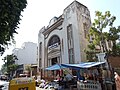
 Synagogue in Pen, India.
 -
-
-
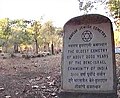 Bene Israel Cemetery, Mumbai.
 -
 Members of the Jewish community in Madhupura, Ahmedabad.
 -
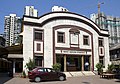 Magen Hassidim Synagogue, the largest Bene Israeli Synagogue in Mumbai
 -
 Inside the Shaare Rason Synagogue, Mumbai
 -
 Tiphearth Israel Synagogue, Mumbai


Life in Israel[edit]
Between 1948 and 1952, some 2,300 Bene Israel immigrated to Israel.[42] In India, the Bene Israel and other Jews lived in urban areas, however in Israel they were settled into development towns.[43] Members of the Bene Israel faced discrimination from other Jewish groups, including due to their darker skin colour.[44] Several rabbis refused to marry Bene Israel to other Jews, on grounds that they were not legitimate Jews under Orthodox law. Between 1952 and 1954, following sit-down protests and hunger strikes by Bene Israel demanding to be sent back to India, the Jewish Agency repatriated 337 members of the Bene Israel community to India, though most eventually returned to Israel years later.[45][46]
In 1962, authorities in Israel were accused of racism towards the Bene Israel.[47][48] In the case that caused the controversy, the Council of the Chief Rabbinate of Israel ruled that before registering a marriage between Indian Jews and Jews not belonging to that community, the registering rabbi should investigate the lineage of the Indian applicant for possible non-Jewish descent, and in case of doubt, require the applicant to perform conversion or immersion.[49][47][48] The discrimination may actually be related to the fact that some religious authorities believed that the Bene Israel were not fully Jewish because of inter-marriage during their long separation.[50] Between 1962 and 1964, the Bene Israel community staged protests against the religious policy. In 1964 the Israeli Rabbinate ruled that the Bene Israel are "full Jews in every respect".[39][51]
The Report of the High Level Commission on the Indian Diaspora (2012) reviewed life in Israel for the Bene Israel community. It noted that the city of Beersheba in Southern Israel has the largest community of Bene Israel, with a sizable one in Ramla. They have a new kind of transnational family.[52] Generally the Bene Israel have not been politically active and have been of modest means. They have not formed continuing economic connections to India and have limited political status in Israel. Jews of Indian origin are generally regarded as Sephardic; they have become well integrated religiously with the Sephardic community in Israel.[53] Abbink, on the other hand, states that the Bene Israel have become a distinct ethnic minority in Israel. The community despite being in Israel for many generations has maintained many of their traditions from India such as a form of Malida dedicated to the Jewish prophet Elijah as a thanksgiving ritual[10] and wedding rituals such as mehndi.[54] The prophet Elijah has become a kind of patron saint for Bene Israel. A ritual of thanksgiving dedicated to the Prophet Elijah is called Eliahu HaNabi (the Hebrew name for Elijah), and is performed at weddings and other celebratory events. The ceremony features a tray of flattened rice, grated coconut, raisins, spices, and fruit of two or more different kinds.[10] The ceremony is regarded as a boundary marker between the Bene Israel and other Jewish communities. The Community also observes Tashlich, the ceremony of taking a ritual bath at Rosh Hashanah[clarification needed]. The Bene Israel also like to attend their own synagogues to maintain group life. This is also seen in higher levels of endogamy compared to other Jewish groups.[50]
Religiously, the Bene Israel adopted the devotional singing style Kirtan from their Marathi Hindu neighbors. A popular Kirtan is one based on the Story of Joseph.[55] Their main traditional musical instruments are the Indian Harmonium and the Bulbul tarang.[56]
The Central Organisation of Indian Jews in Israel (COIJI) was founded by Noah Massil. The organization has twenty chapters around Israel. Maiboli, the newsletter for the Bene Israel community is edited by Noah Masil. There is also a website called Indian Jewish Community in Israel which coordinates various cultural activities organized by the community. The community in Israel opened the museum of Indian Jewish Heritage in the town of Dimona in 2012. The museum is currently run by volunteers. At present, the museum has a small collection of items donated by the community. It also holds cultural and cooking classes for all communities.[57]
Migration to other countries[edit]
Members of Bene Israel also settled in Britain[58] and North America, mostly in Canada.[59]
Notable people[edit]
- Reuben Dhondji Ashtumkar (1820–after 1877), Indian soldier who fought in the Indian Rebellion of 1857
- Joseph Ezekiel Rajpurkar (1834–1905), Indian writer and translator of Hebrew liturgical works into Marathi
- Rebecca Reuben Nowgaokar (1889-1957), writer and educator
- Jerusha Jhirad (1890–1984), the first female Indian Jewish physician[60]
- Ezra Mir alias Edwin Myers (1903–1993), noted in the Guinness Book of World Records as "the producer of the largest number of documentaries and short films".[37]
- David Abraham Cheulkar (1908–1982), actor who starred in Boot Polish (1954) and sang (on screen) "Nanhe Munne Bachche"[37]
- Firoza Begum (born as Susan Solomon), actor in the 1920s and 1930s[37]
- Reuben David (1912–89), zoologist, founder of Kankaria Zoo, Ahmedabad, Gujarat, father of Esther David
- Benjamin Abraham Samson (1916–2008), Indian Navy Admiral, father of Leela Samson
- Lila Erulkar (1921–2007), First Lady of Cyprus (1993–2003) and wife of Glafcos Clerides, president of the Republic of Cyprus
- Nissim Ezekiel (1924–2004), Indian poet[61]
- Fleur Ezekiel, model and 1959 Miss World India
- Ralph Sam Haeems (1940–2005), Indian-born British criminal defence solicitor
- Samson Kehimkar (d. 2007), Indian musician
- Esther David (1945–), Indian writer and critic, daughter of Reuben David
- Leela Samson (1951–), Indian dancer, choreographer, and actress; daughter of Benjamin Abraham Samson
- Isaac David Kehimkar (1957–), Indian lepidopterist, butterfly expert based in Navi Mumbai
- Liora Itzhak Pezarkar (1974–), Israeli singer of Indian origin.
- Eban Hyams (1981–), Indian-born Australian professional basketball player
- Madhura Naik (1984–), Indian actress
- Bensiyon Songavkar (1985–), Indian cricket, silver medalist at the 2009 Maccabiah Games
- Ezekiel Isaac Malekar, Indian rabbi
See also[edit]
References[edit]
- ^ Benjamin J. Israel, The Jews of India, Centre for Jewish and Inter-faith Studies, Jewish Welfare Association, New Delhi, 1982, p. 25: "What the mother tongue of the Bene Israel was when they came to India is unknown. But for centuries it has been Marathi"
- ^ Roland, Joan G. (2018). Jewish Communities of India: Identity in a Colonial Era. Routledge. ISBN 9781351309820.
- ^ "Bene Israel | people".
- ^ a b c Waldman, Yedael Y.; Biddanda, Arjun; Davidson, Natalie R.; Billing-Ross, Paul; Dubrovsky, Maya; Campbell, Christopher L.; Oddoux, Carole; Friedman, Eitan; Atzmon, Gil; Halperin, Eran; Ostrer, Harry; Keinan, Alon (24 March 2016). "The Genetics of Bene Israel from India Reveals Both Substantial Jewish and Indian Ancestry". PLOS ONE. 11 (3): e0152056. Bibcode:2016PLoSO..1152056W. doi:10.1371/journal.pone.0152056. PMC 4806850. PMID 27010569.
- ^ "India's Jewish connection : The Tribune India".
- ^ "BENI-ISRAEL - JewishEncyclopedia.com". jewishencyclopedia.com.
- ^ Fischel, Walter (1970). "Bombay in Jewish History in the Light of New Documents from the Indian Archives". Proceedings of the American Academy for Jewish Research. 38/39: 119–144. doi:10.2307/3622356. JSTOR 3622356.
- ^ a b Weil, Shalva. "Bombay (Present day Mumbai)". In Stillman, Norman A. (ed.). Encyclopedia of Jews in the Islamic World. doi:10.1163/1878-9781_ejiw_COM_0004450.
- ^ a b c "The Jewish Community of Mumbai". ANU Museum.
The foundation of a permanent Jewish settlement in Mumbai was laid in the second half of the 18th century by the Bene Israel who gradually moved from their villages in the Konkan region to Mumbai. Their first synagogue in Mumbai was built (1796) on the initiative of S.E. Divekar.
- ^ a b c Benjamin J. Israel, The Jews of India, Centre for Jewish and Inter-faith Studies, Jewish Welfare Association, New Delhi, 1982, p. 29: "While the present Orthodox Bene Israel ritual conforms to the Sephardi prayer books, there is one peculiarity which is unique to the Bene Israel,... the malida ceremony. On every occasion for thanksgiving a special home service is held, the central feature of which is the singing of a hymn... commemorating the prophet Elijah... followed by the recital of blessings over a concoction of parched rice, shredded coconut, raisins and spices... partaken of by all present, with fruit of at least two kinds.")
- ^ Solomon Grayzel, A History of the Jews, The Jewish Publication Society of America, Filadélfia, 1968, p. 744: "their Jewish religion has been entirely restored, and they observe it in orthodox fashion, according to the Spanish ritual"
- ^ Weil, Shalva (1981). The Jews from the Konkan: the Bene Israel Community of India. Tel-Aviv: Beth Hatefutsoth.
- ^ Benjamin J. Israel, The Jews of India, Centre for Jewish and Inter-faith Studies, Jewish Welfare Association, New Delhi, 1982, p. 21: "At the opening of the eighteenth century the Bene Israel were almost wholly concentrated in a small coastal strip of about 1,000 square miles slightly to the south of Bombay."
- ^ Madnick, Shulie (25 March 2021). "Why do the Jews of India call Passover 'The holiday of the covered clay pot with the sour liquid'?". The Forward.
- ^ Benjamin J. Israel, The Jews of India, Centre for Jewish and Inter-faith Studies, Jewish Welfare Association, New Delhi, 1982, p. 27
- ^ Weil, Shalva (2008). "The Jews of Pakistan". In Erlich, M. Avrum (ed.). Encyclopedia of the Jewish Diaspora. Santa Barbara, USA: ABC CLIO.
- ^ Benjamin J. Israel, The Jews of India, Centre for Jewish and Inter-faith Studies, Jewish Welfare Association, New Delhi, 1982, p. 11
- ^ "Bene Israel | Jewish Community, India & Migration | Britannica".
- ^ Benjamin J. Israel, The Jews of India, Centre for Jewish and Inter-faith Studies, Jewish Welfare Association, New Delhi, 1982, p. 16: "in the early years of the nineteenth century, the Bene Israel... believed that their ancestors came a long time ago by sea from somewhere in the 'north' and were shipwrecked off Navagaon... about 20 miles south of Bombay Island. According to the tradition, only seven men and seven women were saved from the shipwreck, and the later Bene Israel are the descendants of these seven couples.
- ^ a b c Parfitt, Tudor; Egorova, Yulia (June 2005). "Genetics, History, and Identity: The Case of the Bene Israel and the Lemba". Culture, Medicine and Psychiatry. 29 (2): 193–224. doi:10.1007/s11013-005-7425-4. PMID 16249950. S2CID 19691358.
- ^ Weil, Shalva (2013). "Jews of India and Ten Lost Tribes". In Patai, Raphael; Itzhak, Haya Bar (eds.). Jewish Folklore and Traditions: A Multicultural Encyclopedia. ABC-CLIO.
- ^ Neubauer, A. (1868). Géographie du Talmud (in French). Paris: Michel Lévy Frères. p. 386., who wrote: "The Bané Israel, a Jewish tribe in India, claim, we have said, to descend from the ten tribes; this tradition deserves serious examination." (End Quote)
- ^ a b Weil, Shalva (2009) [2002]. "Bene Israel Rites and Routines". In Weil, Shalva (ed.). India's Jewish Heritage: Ritual, Art and Life-Cycle (3rd ed.). Mumbai: Marg Publications. pp. 78–89.
- ^ Roland JG (1998) The Jewish communities of India: identity in a colonial era. 2nd ed. New Brunswick, New Jersey: Transaction Publishers
- ^ Benjamin J. Israel, The Jews of India, Centre for Jewish and Inter-faith Studies, Jewish Welfare Association, New Delhi, 1982, p. 15
- ^ Weil, Shalva (1994). "Yom Kippur: the Festival of Closing the Doors". In Goodman, Hananya (ed.). Between Jerusalem & Benares: Comparative Studies in Judaism & Hinduism. New York: State University of New York Press. pp. 85–100.
- ^ Weil, Shalva (1996). "Religious Leadership vs. Secular Authority: the Case of the Bene Israel". Eastern Anthropologist. 49 (3–4): 301–316. INIST 2465018.
- ^ Sohoni, Pushkar; Robbins, Kenneth X. (2017). Jewish Heritage of the Deccan: Mumbai, the northern Konkan, Pune. Mumbai: Deccan Heritage Foundation; Jaico. pp. 16–17. ISBN 978-93-86348-66-1.
- ^ "David Ezekiel Rahabi (Jewish-Indian leader)". Britannica Online Encyclopedia. Britannica.com. Retrieved 10 March 2013.
- ^ Shalva, Weil (2002). "Cochin Jews". In Ember, Carol R.; Ember, Melvin; Skoggard, Ian (eds.). Encyclopedia of World Cultures Supplement. New York: Macmillan Reference USA. pp. 78–80.
- ^ Haeem Samuel Kehimkar, The History of the Bene-Israel of India (ed. Immanuel Olsvanger), Tel-Aviv : The Dayag Press, Ltd.; London : G. Salby 1937, p. 66
- ^ Weil, Shalva. "The Bene Israel of India". The Museum of the Jewish People at Beit Hatfutsot.
- ^ Datta, Rangan (3 October 2020). "Inside the synagogues of Mumbai". Forbes India.
- ^ Saphir, Yaakov (1968). Even Sapir (in Hebrew). Vol. 1. Jerusalem. p. 217.
{{cite book}}: CS1 maint: location missing publisher (link) - ^ Numark, Mitch (2001). "Constructing a Jewish Nation in Colonial India: History, Narratives of Discent, and the Vocabulary of Modernity". Jewish Social Studies. 7 (2): 89–113. doi:10.2979/JSS.2001.7.2.89. S2CID 162334921. Project MUSE 18256.
- ^ Yulia Egorova (5 September 2018). Jews and Muslims in South Asia: Reflections on Difference, Religion, and Race. Oxford University Press. pp. 36–40. ISBN 978-0-19-985624-4.
- ^ a b c d Menon, Harish C. (14 December 2005). "Jews, the lost tribe of Indian Cinema". IndiaGlitz. Archived from the original on 19 May 2006.
- ^ Religion and Society. Christian Institute for the Study of Religion and Society, Vol. 38 - India. 1991. p. 53.
- ^ a b Weil, Shalva (2008). "Jews in India". In Erlich, M. Avrum (ed.). Encyclopaedia of the Jewish Diaspora. Santa Barbara, USA: ABC CLIO.
- ^ Roland, Joan G. (1989). Jews in British India: Identity in a Colonial Era. Hanover: University Press of New England. pp. 34–35.
- ^ Weil, Shalva (2005). "Motherland and Fatherland as Dichotomous Diasporas: the Case of the Bene Israel". In Anteby, Lisa; Berthomiere, William; Sheffer, Gabriel (eds.). Les Diasporas 2000 ans d'histoire. Rennes: Presses Universitaires de Rennes. pp. 91–99.
- ^ Weil, Shalva. (2000) India, The Larger Immigrations from Eastern Countries, Jerusalem: Ben-Zvi Institute and the Ministry of Education. (Hebrew)
- ^ Rajendra Madhukar Abhyankar (2008). West Asia and the Region: Defining India's Role. Academic Foundation. pp. 196–197. ISBN 978-81-7188-616-6.
- ^ "Israel's Indian Jews and their lives in the 'promised land'". BBC News. 19 January 2018. Retrieved 15 June 2022.
- ^ Weil, Shalva (2011). "Bene Israel". In Baskin, Judith (ed.). Cambridge Dictionary of Judaism and Jewish Culture. New York: Cambridge University Press.
- ^ Bryan K. Roby (4 December 2015). The Mizrahi Era of Rebellion: Israel's Forgotten Civil Rights Struggle 1948-1966. Syracuse University Press. pp. 116–120. ISBN 978-0-8156-5345-5.
- ^ a b Abramov, S. Zalman, Perpetual dilemma: Jewish religion in the Jewish State, Fairleigh Dickinson Univ Press, 1976, p. 277-278
- ^ a b Smooha, Sammy, Israel: pluralism and conflict, University of California Press, 1978, p. 400-401
- ^ Zieve, Tamara (12 August 2012). "This Week in History: Indian summer in the Knesset". The Jerusalem Post.
- ^ a b Abbink, Jon G. (2002). "Ethnic Trajectories in Israel. Comparing the 'Bené Israel' and 'Beta Israel' Communities, 1950-2000". Anthropos. 97 (1): 3–19. JSTOR 40465613.
- ^ Uzi Rebhun; Chaim Isaac Waxman (2004). Jews in Israel: Contemporary Social and Cultural Patterns. UPNE. pp. 230–231. ISBN 978-1-58465-327-1.
- ^ Weil, Shalva (2012). "The Bene Israel Indian Jewish Family in Transnational Context". Journal of Comparative Family Studies. 43 (1): 71–80. doi:10.3138/jcfs.43.1.71.
- ^ "Report of the High Level Commission on the Indian Diaspora" (PDF). Indian Diaspora. Archived from the original (PDF) on 11 October 2010. Retrieved 29 April 2010.
- ^ Manfred Hutter (17 July 2013). Between Mumbai and Manila: Judaism in Asia since the Founding of the State of Israel (Proceedings of the International Conference, held at the Department of Comparative Religion of the University of Bonn. May 30, to June 1, 2012). V&R Unipress. pp. 21–28, 31. ISBN 978-3-8470-0158-4.
- ^ Judith Cohen: Jüdische Musik. IV: Östliche Diaspora (14.–19. Jahrhundert). 3. Orientalische Gemeinden. b. Indien (Bene Israel, Cochin). In: MGG Online, November 2016
- ^ Moskovich, Rina Krut (1986). "The Role of Music in the Liturgy of Emigrant Jews from Bombay: The Morning Prayer for the Three Festivals". Asian Music. 17 (2): 88–107. doi:10.2307/833900. JSTOR 833900.
- ^ Emanuela Trevisan Semi; Dario Miccoli; Tudor Parfitt (5 December 2013). Memory and Ethnicity: Ethnic Museums in Israel and the Diaspora. Cambridge Scholars Publishing. p. 103. ISBN 978-1-4438-5466-5.
- ^ Weil, S. 1974 'Bene Israel in Britain', New Community 3(1-2): 87–91.
- ^ Henry, Michele (2 April 2015). "Passover a spicy affair for Toronto's Indian Jews | The Star". Toronto Star. Retrieved 3 June 2019.
- ^ "Bene Israel | Jewish Women's Archive". jwa.org. Retrieved 14 August 2019.
- ^ Joffe, Lawrence (9 March 2004). "Obituary: Nissim Ezekiel". The Guardian. London. Retrieved 26 September 2013.
Further reading[edit]
- David, Esther. The Book of Esther, Penguin Global, 2003
- Isenberg, Shirley Berry. India's Bene Israel: A Comprehensive Inquiry and Sourcebook, Berkeley: Judah L. Magnes Museum, 1988
- Lin-Sommer, Sam (1 March 2023). "The Woman Preserving the Endangered Cuisine of Indian Jews". Atlas Obscura.
- Meera Jacob. Shulamith (1975)
- Parfitt, Tudor. (1987) The Thirteenth Gate: Travels among the Lost Tribes of Israel, London: Weidenfeld & Nicolson.
- Shepard, Sadia. The Girl from Foreign: A Search for Shipwrecked Ancestors, Forgotten Histories, and a Sense of Home, Penguin Press, 2008
- Weil, Shalva. (2018) 'Indian Judaic Tradition' in Sushil Mittal and Gene Thursby (eds.) Religions in South Asia (new edition), New York and London: Routledge, Taylor and Francis Group, pp.186-205.
- Weil, Shalva. (ed.) (2019) The Baghdadi Jews in India: Maintaining Communities, Negotiating Identities and Creating Super-Diversity, London: Routledge.
External links[edit]

- Joseph Jacobs and Joseph Ezekiel, "Beni-Israel", Jewish Encyclopedia (1901–1906).
- "Interview with Sadia Shepard", Voices on Antisemitism, United States Holocaust Memorial Museum, 4 June 2009.
- "Bene Israel", Photo Gallery & Forum, Jews of India.
- September 2005, The Fletcher School of Law and Diplomacy, Tufts University.
- "The Indian Jewish community and synagogues in Israel", India Jews.
- "Yonati Ziv Yifatech", Bene Israel wedding hymn.
- Bene Israel History.
- The History of the Bene-Israel in India Archived 12 August 2014 at the Wayback Machine, by Haeem Samuel Kahimkar (1830-1909).
- The Bene Israel: A Family Portrait (1994), an Indian documentary film on the Bene Israel.