


List of cities in Afghanistan


Kabul
Herat
Jalalabad
Kandahar
Mazar-i-Sharif
Kunduz
Lashkargah
Puli Khumri
Farah
Ghazni
Maymana
Khost
Map of major cities as identified by governmental organizations[1]


The only city in Afghanistan with over 1 million people is its capital, Kabul. The rest are smaller cities and towns. According to the National Statistic and Information Authority of Afghanistan (NSIA), an estimated total number of people living inside Afghanistan was 32,225,560 in 2020. Of this, around 7.8 million were reported to be living in urban areas and the rest in rural or countryside.[2]
List[edit]
The chart below shows 18 cities of Afghanistan with a population over 70,000, by order of population.
| Name | Province | Population estimate (2015)[3] |
|---|---|---|
| Kabul | Kabul | 4,457,882 |
| Herat | Herat | 695,000 |
| Mazar-i-Sharif | Balkh | 595,000 |
| Kandahar | Kandahar | 543,000 |
| Jalalabad | Nangarhar | 356,685 |
| Lashkargah | Helmand | 280,381 |
| Kunduz | Kunduz | 268,893 |
| Taloqan | Takhar | 196,400 |
| Puli Khumri | Baghlan | 221,274 |
| Sheberghan | Jowzjan | 175,599 |
| Zaranj | Nimroz | 160,902 |
| Maymana | Faryab | 149,040 |
| Ghazni | Ghazni | 143,379 |
| Khost | Khost | 106,083 |
| Charikar | Parwan | 96,039 |
| Fayzabad | Badakhshan | 95,445 |
| Tarinkot | Uruzgan | 71,604 |
| Gardez | Paktia | 70,641 |
Ancient names[edit]
Ancient names of places or cities in Afghanistan:
| Current city and region | Ancient name |
|---|---|
| Kabul | Kophene,[4] Gaofū, Kābūrā |
| Ghazni | Ghaznīn, Ghazna |
| Balkh | Bakhlo, Bactra, Bokhdī |
| Bamyan | Bamikan[5] |
| Herat | Haraiva, Harī, Aria |
| Laghman | Lampaka[4] |
| Jalalabad | Adinapur[6] |
| Kandahar | Arachosia[4] |
| Lashkargah | Bost, Bust |
| Zaranj | Zranka, Zarangia, Drangiana |
| Kunduz | Drapsaka, Walwalij |
Gallery[edit]
- Images of smaller Afghan cities and towns
-
 Lashkargah, capital of Helmand Province in southern Afghanistan
 -
 Section of Ghazni, capital of Ghazni Province
 -
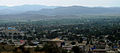 Khost, capital of Khost Province in the east of the country
 -
 Fayzabad, capital of Badakhshan Province of Afghanistan
 -
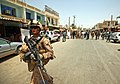 Zaranj, capital of Nimruz Province in southwestern Afghanistan
 -
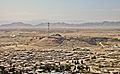 Qalat, the capital of Zabul Province in the south of the country
 -
 Asadabad, capital of Kunar Province in the east of the country


See also[edit]
- Provinces of Afghanistan
- Districts of Afghanistan
- List of places in Afghanistan
- Demography of Afghanistan
References[edit]
- ^ "STATE OF AFGHAN CITIES -2015 VOLUME ONE" (PDF). samuelhall.org. Ministry of Urban Development Affairs.
- ^ "NSIA Population Estimates 2019-20" (PDF). Archived from the original (PDF) on 2020-06-09.
- ^ "The State of Afghan Cities Report 2015". Archived from the original on 2015-10-31.
- ^ a b c The Ancient Geography of India by Alexander Cunningham.
- ^ "معنی بامیکان | لغتنامه دهخدا". Vajehyab.com.
- ^ Gazetteer of the Peshawar District 1897-98 Page 55
External links[edit]

Wikimedia Commons has media related to Cities in Afghanistan.
- Central Statistics Office of Afghanistan
- Photos of Afghan cities
- World Gazetteer: Afghanistan – map at archive.today (archived 2012-12-10)

