


Portal:Cornwall

  Cornwall (/ˈkɔːrnwɔːl, -wəl/; Cornish: Kernow; Cornish pronunciation: [ˈkɛrnɔʊ]; or [ˈkɛrnɔ]) is a ceremonial county in South West England. It is recognised by Cornish and Celtic political groups as one of the Celtic nations, and is the homeland of the Cornish people. The county is bordered by the Atlantic Ocean to the north and west, Devon to the east, and the English Channel to the south. The largest settlement is Falmouth, and the county town is the city of Truro. The county is rural, with an area of 1,375 square miles (3,562 km2) and population of 568,210. After Falmouth (23,061), the largest settlements are Penzance, Newquay, St Austell, and Truro. For local government purposes most of Cornwall is a unitary authority area, with the Isles of Scilly having a unique local authority. The Cornish nationalist movement disputes the constitutional status of Cornwall and seeks greater autonomy within the United Kingdom. Cornwall is the westernmost part of the South West Peninsula. Its coastline is characterised by steep cliffs and, to the south, several rias, including those at the mouths of the rivers Fal and Fowey. It includes the southernmost point on Great Britain, Lizard Point, and forms a large part of the Cornwall National Landscape. The national landscape also includes Bodmin Moor, an upland outcrop of the Cornubian batholith granite formation. The county contains many short rivers; the longest is the Tamar, which forms the border with Devon. (Full article...) Selected articleThe Tamar Bridge is a suspension bridge over the River Tamar between Saltash, Cornwall and Plymouth, Devon in southwest England. It is 335 metres (1,099 ft) long, running adjacent the Royal Albert Bridge, and part of the A38, a main road between the two counties. During the 20th century, there was increasing demand to replace or supplement the Saltash and Torpoint ferries, which could not cope with the rise in motor traffic. The Government refused to prioritise the project, so it was financed by Plymouth City Council and Cornwall County Council. Construction was undertaken by the Cleveland Bridge & Engineering Company and began in 1959. It was unofficially opened in October 1961, with a formal presentation by Queen Elizabeth The Queen Mother in April 1962. A reconstruction of the bridge began in 1999 after it was found to be unable to support a European Union requirement for goods vehicle weights. The work involved building two new parallel decks while the original construction was completely rebuilt. The project was completed in late 2001 and formally opened by Princess Anne in April 2002. The extra decks have remained in use, increasing the bridge's capacity. The bridge is tolled for eastbound travel, with a discount available via an electronic payment scheme. It has become a significant landmark in Plymouth, Saltash and the surrounding area, and used on several occasions for protests or to highlight the work of charities and fundraisers. (Full article...)Selected biographyDame Daphne du Maurier, Lady Browning, DBE (/duː ˈmɒrieɪ/; 13 May 1907 – 19 April 1989) was an English novelist, biographer and playwright. Her parents were actor-manager Sir Gerald du Maurier and his wife, actress Muriel Beaumont. Her grandfather was George du Maurier, a writer and cartoonist. Although du Maurier is classed as a romantic novelist, her stories have been described as "moody and resonant" with overtones of the paranormal. Her bestselling works were not at first taken seriously by critics, but they have since earned an enduring reputation for narrative craft. Many have been successfully adapted into films, including the novels Rebecca, Frenchman's Creek, My Cousin Rachel and Jamaica Inn, and the short stories "The Birds" and "Don't Look Now". Du Maurier spent much of her life in Cornwall, where most of her works are set. As her fame increased, she became more reclusive. (Full article...)
Did you know?
Selected quoteSelected picture
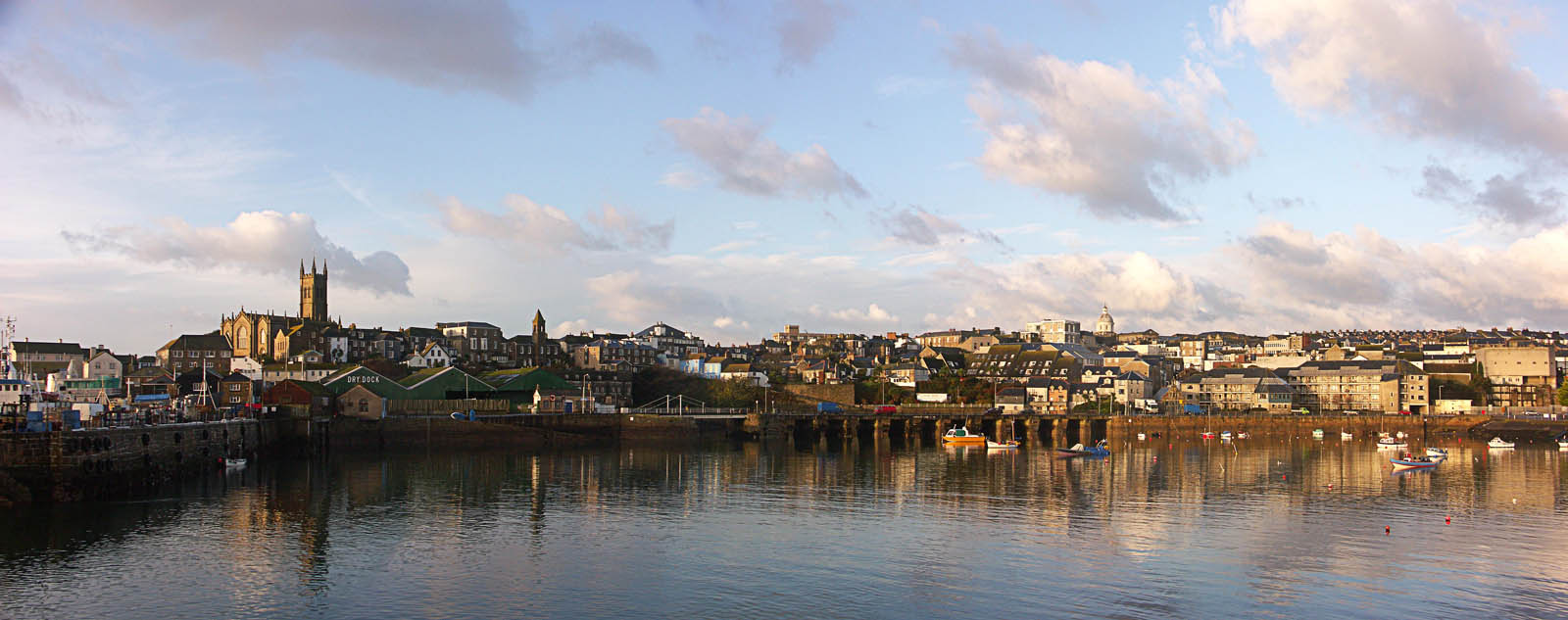
General imagesThe following are images from various Cornwall-related articles on Wikipedia.
WikiProjects
Related portalsTopicsHistory
Geography
Politics
Economy and demographics
Culture
Subcategories
 Select [►] to view subcategories
Recognised content
Featured articlesMain page featured articlesFeatured listsGood articles
Former good articlesIn the News articlesThings you can do'
Associated WikimediaThe following Wikimedia Foundation sister projects provide more on this subject:
Wikipedia in CornishDiscover Wikipedia using portals
| |||||||||||||||||||||||||||||||


_(14591082390).jpg)


_-_BL_Stowe_MS_944,_f_30v.jpg)


.jpg)


