


Third generation of video game consoles
 |
| Part of a series on the |
| History of video games |
|---|
In the history of video games, the third generation of video game consoles, commonly referred to as the 8-bit era, began on July 15, 1983, with the Japanese release of two systems: Nintendo's Family Computer (commonly abbreviated to Famicom) and Sega's SG-1000.[1][2] When the Famicom was released outside of Japan, it was remodeled and marketed as the Nintendo Entertainment System (NES). This generation marked the end of the video game crash of 1983, and a shift in the dominance of home video game manufacturers from the United States to Japan.[3] Handheld consoles were not a major part of this generation; the Game & Watch line from Nintendo (which started in 1980) and the Milton Bradley Microvision (which came out in 1979) that were sold at the time are both considered part of the previous generation due to hardware typical of the second generation.
Improvements in technology gave consoles of this generation improved graphical and sound capabilities, comparable to golden age arcade games. The number of simultaneous colors on screen and the palette size both increased which, along with larger resolutions, more sprites on screen, and more advanced scrolling and pseudo-3D effects, which allowed developers to create scenes with more detail and animation. Audio technology improved and gave consoles the ability to produce a greater variation and range of sound. A notable innovation of this generation was the inclusion of cartridges with on-board memory and batteries to allow users to save their progress in a game, with Nintendo's The Legend of Zelda introducing the technology to the worldwide market. This innovation allowed for much more expansive gaming worlds and in-depth storytelling, since users could now save their progress rather than having to start each gaming session at the beginning. By the next generation, the capability to save games became ubiquitous—at first saving on the game cartridge itself and, later, when the industry changed to read-only optical disks, on memory cards, hard disk drives, and eventually cloud storage.
The best-selling console of this generation was the NES/Famicom from Nintendo, followed by the Master System from Sega (the successor to the SG-1000), and the Atari 7800. Although the previous generation of consoles had also used 8-bit processors, it was at the end of the third generation that home consoles were first labeled and marketed by their "bits". This also came into fashion as fourth generation 16-bit systems like the Sega Genesis were marketed in order to differentiate between the generations. In Japan and North America, this generation was primarily dominated by the Famicom/NES, while the Master System dominated the Brazilian market, with the combined markets of Europe being more balanced in overall sales between the two main systems. The end of the third generation was marked by the emergence of 16-bit systems of the fourth generation and with the discontinuation of the Famicom on September 25, 2003. However, in some cases, the third generation still lives on as dedicated console units still use hardware from the Famicom specification, such as the VT02/VT03 and OneBus hardware.
Overview
[edit]1983–1984
[edit]The Japanese video game market was still a growing "wide open" market for video game consoles in 1983. Japan had a relatively small console market, where only 300,000 consoles had been sold up until 1983, compared to the millions that had been sold in the United States up until then. A number of Japanese manufacturers attempted to compete for the "wide open" Japanese console market with their own consoles.[4] The Epoch Cassette Vision, released in 1981, was the best-selling console in Japan at the time.[5] It was followed by the Bandai Arcadia (priced ¥19,800), a Japanese version of the Arcadia 2001 released in 1982, and the Atari 2800 (priced ¥24,800), a Japanese version of the Atari 2600 marketed in May 1983.[4]
The third generation of consoles began when two Japanese companies, Sega and Nintendo, decided to enter the console gaming market. On July 15, 1983, they both released new consoles in Japan, Sega's SG-1000 and Nintendo's Famicom.[6] Both companies previously had success as arcade game companies. Sega, one of Japan's largest arcade companies, was intending to compete in both the console and personal computer markets, with a home computer version called the SC-3000 released at the same time.[4] Meanwhile, Nintendo focused on making the Famicom more powerful than competing home systems so that it would be comparable to their Donkey Kong (1981) arcade video game hardware,[7] while at the same time selling it for cheaper than the Cassette Vision, selling the Famicom for ¥14,800 (about $150).[5] Nintendo unveiled the Famicom shortly before the Tokyo Toy Show in June 1983, becoming a sensation among toy show exhibitors, prior to Sega unveiling the SG-1000 at the Tokyo Toy Show.[8]
The Famicom went on to become very popular in Japan, where it quickly beat the Cassette Vision to become Japan's all-time best-selling console.[5] Sega would become Nintendo's main competitor for console sales during the era.[9] Sega's SG-1000, which preceded Sega's more commercially successful Master System, initially had little to distinguish itself from earlier consoles such as the ColecoVision and contemporary computers such as the MSX, although it was able to achieve advanced visual effects, including parallax scrolling in Orguss and sprite-scaling in Zoom 909.[1]
To enter the worldwide market, Nintendo approached the American company Atari, which had the majority share of the home video game market in North America, with a proposal for Atari to license the Famicom and distribute it.[10] An agreement was concluded, which was to be signed at the Consumer Electronics Show in July 1983.[11] At the same CES, however, Coleco exhibited its Coleco Adam home computer, which featured a version of Nintendo's Donkey Kong. At that time, Atari had exclusive rights to distribute Nintendo games on home computers, and Coleco had exclusive rights to distribute the game on consoles.[12] However, since Atari understood that Adam was a home computer, they postponed signing the agreement with Nintendo and asked the company to resolve the issue with rights.[13] The problem was resolved, but during this time, the video game crash of 1983 had occurred and Atari began to lose influence in the market. With this, Nintendo had no competitor left and the company eventually decided to enter the market on its own.[14]
1984–1986
[edit]Nintendo were initially discouraged after the crash, with Nintendo of America's market research being met with warnings to stay away from home consoles and US retailers refusing to stock game consoles. As a result, Nintendo instead introduced the Famicom to North America in the form of an arcade hardware, the Nintendo VS. System, in 1984. It became a major success in North American arcades, giving Nintendo the confidence to release the Famicom in North America as a video game console, for which there was growing interest due to Nintendo's positive reputation in the arcades.[5]
The company introduced a version of the Famicom in January 1985 at the Winter CES as the Nintendo Advanced Video System, short for NAVS. The gamepads were wireless and worked with it using an infrared port, and the bundle would also include a light gun. It was planned that the NAVS would be available in the spring of 1985.[15] However, this did not happen and the console was shown again at the summer CES in June of that year, as an updated version called the Nintendo Entertainment System.[16] The system was released in October 1985 as an experiment within New York City bounds with Super Mario Bros. game bundled. The experiment was successful and showed that people still wanted to play games despite the 1983 crisis. After that the system was released in all North America in February 1986 at a price of US$159.[17]
In 1985, Sega succeeded the SG-1000 with the Master System, which incorporated hardware scrolling, alongside an increased color palette, greater memory, pseudo-3D effects, and stereoscopic 3-D, gaining a clear hardware advantage over the NES. However, the NES continued to dominate the North American and Japanese markets, while the Master System had more success in the European and South American markets.[18]
The Family Computer (commonly abbreviated the Famicom) became popular in Japan during this era, crowding out the other consoles in this generation. The Famicom's Western counterpart, the Nintendo Entertainment System, dominated the gaming market in North America, thanks in part to its restrictive licensing agreements with developers. This marked a shift in the dominance of home video games from the United States to Japan, to the point that Computer Gaming World described the "Nintendo craze" as a "non-event" for American video game designers as "virtually all the work to date has been done in Japan."[3] The company had an estimated 65% of 1987 hardware sales in the console market; Atari Corporation had 24% (including the Atari 7800, 2600 Jr. and XEGS), Sega had 8%, and other companies had 3%.[9]
1986–present
[edit]The popularity of the Japanese consoles grew so quickly that in 1988 Epyx stated that, in contrast to a video game-hardware industry in 1984 that the company had described as "dead", the market for Nintendo cartridges was larger than for all home-computer software.[19] Nintendo sold seven million NES systems in 1988, almost as many as the number of units the Commodore 64 sold in its first five years.[20] In 1988, The Los Angeles Times reported that the rise of video game consoles had a positive impact on computer games, sales of which grew 37% during the first quarter of 1988.[21] In 1989, however, Compute! reported that Nintendo's popularity caused most computer-game companies to have poor sales during Christmas that year, resulting in serious financial problems for some,[22] and after more than a decade making computer games, in 1989 Epyx converted completely to console cartridges.[23] By 1990 30% of American households owned the NES, compared to 23% for all personal computers,[24] and peer pressure to have a console was so great that even the children of computer-game developers demanded them despite parents' refusal and the presence of state-of-the-art computers and software at home. As Computer Gaming World reported in 1992, "The kids who don't have access to videogames are as culturally isolated as the kids in our own generation whose parents refused to buy a TV".[25]
This era contributed many influential aspects to the history of the development of video games. The third generation saw the release of many of the first console role-playing video games (RPGs). Editing and censorship of video games was often used in localizing Japanese games to North America.[26] It was during this time that many successful video game franchises began, which went onto to becoming mainstays of the video game industry. Some examples are Super Mario Bros., Final Fantasy, The Legend of Zelda, Dragon Quest, Metroid, Mega Man, Metal Gear, Castlevania, Phantasy Star, Megami Tensei, Ninja Gaiden, and Bomberman.
In Europe during the late 1980s, the Master System had a stronger start than the Nintendo Entertainment System in some areas, with NES sales lagging behind the Master System in the United Kingdom.[27] By 1990, the Master System was the biggest-selling console in Europe, though the NES was beginning to have a fast-growing user base in the United Kingdom and this position had reversed by the end of the run of both consoles.[28]
The third generation also saw the beginning of the children's educational console market.[citation needed] Due to their reduced capacities, these systems typically were not labeled by their "bits" and were not marketed in competition with traditional video game consoles.
In North America, the Atari 7800 and Master System were discontinued in 1992, while the NES continued to be produced until 1995. In Europe, the Master System was discontinued in the late 1990s. However it has continued to sell in Brazil through to the present day. In Japan, Nintendo continued to repair Famicom systems until October 31, 2007.[29][30]
Home systems
[edit]SG-1000
[edit]On July 15, 1983, the SG-1000 was released in Japan, the first console to be created by Sega.[31] It was released alongside the Famicom, making them the first two consoles of the third generation. While it did not sell as well as other consoles of the generation, it was considered important to the development of Sega as a console manufacturer.[32]
Famicom/Nintendo Entertainment System
[edit]The Famicom, released on July 15, 1983, in Japan and in the North American region in October 1985 as the Nintendo Entertainment System (NES),[33]: 449 is an 8-bit cartridge-based console developed and marketed by Nintendo. It became the most popular console of the generation, selling over 60 million units. It was the first home system to feature a controller with a directional pad (designed by Gunpei Yokoi), which became an industry standard. While the NES was discontinued in North America on August 14, 1995, it was not until September 25, 2003, that the Famicom was discontinued in Japan.
Sega Mark III/Master System
[edit]The Sega Mark III was released on October 20, 1985, for the Japanese market and was the third iteration of the SG-1000.[34] The name was changed to the Master System and the design altered for release outside of Japan. It was designed to be more powerful than the NES in an attempt to give it an edge over the competition but despite good sales, it did not match the success of the NES, making it the second best selling console of the generation. This was the case in all regions apart from Brazil, where it continued to sell for years after the end of the generation.
Atari 7800
[edit]The Atari 7800 was released in May 1986[35] and was the successor to the Atari 5200.[36] It was the first console to be backward compatible without additional hardware. It was originally due for launch on May 21, 1984,[37] but due to the sale of the company the launch did not happen until two years later and, coupled with a small library of games, the console did not sell as well as the Master System or NES.[33]: 52
Comparison
[edit]| Name | SG-1000 | Nintendo Entertainment System/Famicom | Master System/Mark III | Atari 7800 | |
|---|---|---|---|---|---|
| Manufacturer | Sega | Nintendo | Sega | Atari Corporation | |
| Image(s) |  
|
  
|
  
|
 
| |
| Release date |
| ||||
| Launch prices | US$ | - |
|
US$140 (equivalent to $390 in 2023) | |
| GBP | - |
|
|||
| A$ | |||||
| JP¥ | JP¥15,000 (equivalent to ¥18,600 in 2019)[41] |
|
|
||
| Media | Type |
|
|
Cartridge | |
| Regional lockout | Unrestricted | Region locked | Region locked | Region locked | |
| Backward compatibility | N/A | N/A | Sega SG-1000 (Japanese systems only) | Atari 2600 | |
| Top-selling games | N/A |
|
|
Pole Position II (pack-in)[46] | |
| Accessories (retail) |
|
|
|
||
| CPU clock speed |
NEC 780C (Z80-derived) (3.58 MHz (3.55 MHz PAL)[48] |
Ricoh 2A03 (6502-derived) (1.79 MHz (1.66 MHz PAL))[49]: 149 |
Zilog Z80A (4 MHz) |
Custom 6502C (1.19 MHz or 1.79 MHz) | |
| GPU |
|
Ricoh PPU (Picture Processing Unit) | Yamaha YM2602 VDP (Video Display Processor) | ||
| Sound chip(s) |
|
Famicom Disk System: |
Japan only: |
Optional cartridge chip: | |
| Memory |
|
4.277 KB (4380 bytes) RAM Upgrades: |
24.031 KB (24,608 bytes) RAM |
4 KB RAM
| |
| Video | Resolution | 256×192[57] | 256×240[58] | 256×192, 256×224, 256×240 | 160×200 or 320×200 |
| Palette | 21 colors[48] | 54 colors[49]: 149 | 64 colors | 256 colors (16 hues, 16 luma) | |
| Colors on screen | 16 simultaneous (1 color per sprite) | 25 simultaneous (4 colors per sprite) | 32 simultaneous (16 colors per sprite) | 25 simultaneous (1, 4 or 12 colors per sprite) | |
| Sprites |
|
| |||
| Background | Tilemap playfield, 8×8 tiles | Tilemap playfield, 8×8 tiles | Tilemap playfield, 8×8 tiles, tile flipping[56] | N/A | |
| Scrolling | N/A | Smooth hardware scrolling, vertical/horizontal directions MMC chips: IRQ interrupt, diagonal scrolling, line scrolling, split‑screen scrolling |
Smooth hardware scrolling, vertical/horizontal/diagonal directions,[62] IRQ interrupt, line scrolling, split‑screen scrolling[61] | Coarse scrolling, vertical/horizontal directions | |
| Audio | Mono audio with:[63]
|
Mono audio with:[64]
Japan only upgrades:
|
Mono audio with:
Japan only:
|
Mono audio with:[60]: 121
Optional cartridge chip:
| |
Other consoles
[edit]-
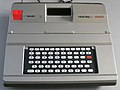 Videopac+ G7400 (1983)
 -
 My Vision (1983)
 -
 PV-1000 (1983)
 -
 Tomy Tutor
Pyūta Jr. was a console version released in 1983 -
 Super Cassette Vision (1984)
 -
 BBC Bridge Companion (1985)
 -
 Zemmix
Released in 1985 -
Halcyon (console)
Unreleased (Planned for 1985) -

-
 Family Computer Disk System (1986)
 -
LJN Video Art
Released in 1987 -
 Atari XEGS (1987)
 -
 Action Max (1987)
 -

-
 VTech Socrates (1988)
 -
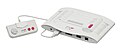 Amstrad GX4000 (1990)
 -
 Commodore 64 Games System (1990)
 -


Sales comparison
[edit]The NES/Famicom sold by far the most units of any third generation console, particularly in Japan and North America. In North America in 1989, between Nintendo and Sega, there was a 94% to 6% split in market share between the NES and the Master System, in Nintendo's favor.[65] The NES sold 1.1 million units in North America during 1986, much more than the Master System (125,000) and Atari 7800 (100,000) combined.[66] By 1990, Nintendo had a 93% North American market share, followed by Sega with a 3.8% share, NEC with 1.3% and Atari with 1.1% share.[67] Nintendo maintained its North American lead through 1991, when it had a market-share of 80% that year, much more than Atari (12%) and Sega (8%) combined.[68] This was due to Nintendo's strong lineup of both first-party titles (such as Super Mario Bros., Metroid, Duck Hunt, and The Legend of Zelda) and third-party titles along with Nintendo's strict licensing rules that required NES titles to be exclusive to the console for two years after release, putting a damper on third-party support for other consoles.[69]
In Europe, competition was much tougher for the NES, which was trailing behind the Master System up until 1990, despite the former's hegemony of the North American and Japanese markets.[28][27] NES sales began picking up from about 1990,[28] after which sales were more evenly split between the NES and Master System through 1994; the NES eventually overtook the Master System in Western Europe by a narrow margin, though the Master System maintained its lead in several markets such as the United Kingdom, Belgium and Spain.[70] In other regions, the Master System was the most successful console in Brazil,[71] South Korea,[72] and Australia,[73] while the Dendy (a Taiwanese Famiclone of the NES/Famicom) was the most successful in the former Soviet Union.[74]
| Console | Firm | Units sold worldwide | Japan | Americas | Other regions |
|---|---|---|---|---|---|
| Nintendo Entertainment System (Family Computer / Famicom / NES) |
Nintendo | 61.91 million (2009)[75][76] | 19.35 million (2009)[75] | 34 million (2009)[75] | 8.56 million (2009)[75] |
| Master System (including licensed Tectoy variants) |
Sega | 19.17 million (2016) | 1 million (1986)[77] | United States: 2 million (1992)[78] Brazil: 8 million (2016)[71] |
Western Europe: 6.8 million (1993)[70] South Korea: 720,000 (1994)[72] Australia: 650,000 (1994)[79] |
| Dendy (unlicenced Famiclone) |
Micro Genius | 6 million (1998) | — | — | Former USSR: 6 million (1998)[74] |
| Famicom Disk System | Nintendo | 4.5 million (1990) | 4.5 million (1990)[80] | — | — |
| Atari 7800 | Atari | 1 million (1988) | Unknown | 1 million (1988)[81] | Unknown |
| Sega SG-1000 | Sega | 400,000 (2007) | 400,000 (2007)[82] | — | Unknown |
| Super Cassette Vision | Epoch Co. | 300,000 (2007) | 300,000 (2007)[82] | — | Unknown |
| Atari XEGS | Atari | 130,000 (1989) | — | 100,000 (1987)[83] | France: 30,000 (1989)[84] |
Software
[edit]Milestone titles
[edit]- Alex Kidd in Miracle World (SMS) by Sega featured Sega's original mascot, Alex Kidd.[85]
- Castlevania (NES) by Konami is loosely based on Bram Stoker's Dracula, featuring Count Dracula as the main antagonist of the series. This game initiated the Castlevania series.
- Dragon Ball: Dragon Daihikyō (SCV) by Epoch was the first game based upon the now long-running manga and anime series, Dragon Ball.[86]
- Dragon Quest (NES) by Chunsoft and Enix introduced the Dragon Quest series in 1986.
- Final Fantasy (NES) by Square started the Final Fantasy series in 1987.
- The Legend of Zelda (NES) by Nintendo R&D4 and Nintendo initiated the Legend of Zelda series in 1986.
- Mega Man 2 (NES) by Capcom was the breakthrough title in Capcom's Mega Man series. The series had a number of additional hits on the NES, and later spawned several successful spin-off series.
- Metal Gear (MSX2) by Konami initiated the Metal Gear series in 1987. It was released for the MSX2 computer and remade on the NES shortly after.
- Metroid (NES) by R&D1 and Nintendo initiated the Metroid series in 1986.
- Ninja Gaiden (NES) by Tecmo initiated the Ninja Gaiden series in 1988, and was acclaimed for its extreme difficulty, high quality music, and for having one of the earliest uses of cutscenes in video games.[87]
- Phantasy Star (SMS) by Sega Consumer Development Division 2 and Sega is considered one of the benchmark role-playing video games,[88] and is among the first to use a science fiction setting, and to feature a female protagonist.[89]
- Super Mario Bros. (NES) by Nintendo R&D4 and Nintendo was bundled with the NES and became the best-selling video game of all time, a title it held until 2009.[90] Countless imitations of the game appeared over the course of the console generation.
- Super Mario Bros. 3 (NES) by Nintendo is widely considered the best sidescrolling platform game of the generation, as well as topping many "Best Game" lists for the NES.[91] Its jumping physics and world map segments, where players can choose their path, served as a formula for later 2D Mario games.
See also
[edit]

References
[edit]- ^ a b Fahs, Travis (April 21, 2009). "IGN Presents the History of SEGA: Coming Home". IGN. p. 2. Archived from the original on March 14, 2012. Retrieved March 27, 2011.
- ^ Mark J. P. Wolf (2008), The video game explosion: a history from PONG to Playstation and beyond, ABC-CLIO, p. 115, ISBN 978-0-313-33868-7, retrieved April 19, 2011
- ^ a b Daglow, Don L. (August 1988). "Over the River and Through the Woods: The Changing Role of Computer Game Designers". Computer Gaming World. No. 50. p. 18.
I'm sure you've noticed that I've made no reference to the Nintendo craze that has repeated the Atari and Mattel Phenomenon of 8 years ago. That's because for American game designers the Nintendo is a non-event: virtually all the work to date has been done in Japan. Only the future will tell if the design process ever crosses the Pacific as efficiently as the container ships and the letters of credit now do.
- ^ a b c "Overseas Readers Column: Sega Unveiled "SC-3000" The First Personal Computer" (PDF). Game Machine (in Japanese). No. 214. Amusement Press, Inc. June 15, 1983. p. 28. Archived (PDF) from the original on April 25, 2021. Retrieved April 25, 2021.
- ^ a b c d Horowitz, Ken (July 30, 2020). "Nintendo "VS." the World". Beyond Donkey Kong: A History of Nintendo Arcade Games. McFarland & Company. pp. 115–28. ISBN 978-1-4766-4176-8.
- ^ Plunkett, Luke (January 19, 2012). "The Story of Sega's First Console, Which Was Not The Master System". Kotaku. Archived from the original on March 6, 2017. Retrieved April 25, 2021.
- ^ "【任天堂「ファミコン」はこうして生まれた】 第6回:業務用ゲーム機の挫折をバネにファミコンの実現に挑む" [How the Famicom Was Born – Part 6: Making the Famicom a Reality]. Nikkei Electronics (in Japanese). Nikkei Business Publications. September 12, 1994. Archived from the original on October 6, 2008. Retrieved April 13, 2021.
- "Making the Famicom a Reality". GlitterBerri's Game Translations. March 28, 2012. Archived from the original on May 5, 2012.
- ^ "Overseas Readers Column: Atari, Sega Exhibited Its Home Video Games At The Tokyo Toy Show" (PDF). Game Machine (in Japanese). No. 217. Amusement Press, Inc. August 1, 1983. p. 30. Archived (PDF) from the original on May 20, 2021. Retrieved May 20, 2021.
- ^ a b Katz, Arnie; Kunkel, Bill; Worley, Joyce (August 1988). "Video Gaming World". Computer Gaming World. p. 44.
- ^ Herman 2007, p. 115, 2: "approached Atari with the opportunity to license the Famicom"
- ^ Herman 2007, p. 115, 3: "[..] final signings would be made at the CES [..]"
- ^ Herman 2007, p. 115.
- ^ Herman 2007, p. 116, 4: "Atari representatives told Nintendo to clear it up with Coleco"
- ^ Herman 2007, p. 116, 5: "[..] Atari was no longer the threat Nintendo feared [..]"
- ^ Herman 2007, p. 116, 6: "Its controllers used infrared [..] light gun was also going to be sold with the unit"
- ^ Herman 2007, p. 116.
- ^ Herman 2007, p. 116, 7: "The $159 system was released nationally in February 1986"
- ^ Travis Fahs (April 21, 2009). "IGN Presents the History of SEGA: World War". IGN. p. 3. Archived from the original on March 14, 2012. Retrieved May 21, 2011.
- ^ "The Nintendo Threat?". Computer Gaming World. June 1988. p. 50.
- ^ Ferrell, Keith (July 1989). "Just Kids' Play or Computer in Disguise?". Compute!. p. 28. Retrieved November 11, 2013.
- ^ Gellene, Denise (June 13, 1988). "The Joystick Lives: New Technology, Better Marketing Give Video Games a Second Life". The Los Angeles Times. p. 57. Archived from the original on September 13, 2021. Retrieved September 13, 2021.
- ^ Keizer, Gregg (July 1989). "Editorial License". Compute!. p. 4. Retrieved November 11, 2013.
- ^ Ferrell, Keith (December 1989). "Epyx Goes Diskless". Compute!. p. 6. Retrieved November 11, 2013.
- ^ "Fusion, Transfusion or Confusion / Future Directions In Computer Entertainment". Computer Gaming World. December 1990. p. 26. Archived from the original on January 10, 2020. Retrieved November 16, 2013.
- ^ Reeder, Sara (November 1992). "Why Edutainment Doesn't Make It In A Videogame World". Computer Gaming World. p. 130. Archived from the original on January 10, 2020. Retrieved July 5, 2014.
- ^ Altice, Nathan (2015). I Am Error: The Nintendo Family Computer / Entertainment System Platform. MIT Press. p. 115. ISBN 9780262028776. Archived from the original on February 9, 2023. Retrieved October 11, 2020.
- ^ a b "The rise and rise of Nintendo". New Computer Express. No. 39 (August 5, 1989). August 3, 1989. p. 2.
- ^ a b c "The Complete Machine Guide". Computer + Video Games: Complete Guide to Consoles. Vol. 4. November 1990. pp. 7–23.
- ^ 初代「ファミコン」など公式修理サポート終了. ITmedia News (in Japanese). ITmedia. October 16, 2007. Archived from the original on October 23, 2007. Retrieved January 20, 2008.
- ^ RyanDG (October 16, 2007). "Nintendo of Japan dropping Hardware support for the Famicom". Arcade Renaissance. Archived from the original on February 9, 2012. Retrieved January 20, 2008.
- ^ Pettus, Sam; Munoz, David; Williams, Kevin; Barroso, Ivan (December 20, 2013). Service Games: The Rise and Fall of SEGA: Enhanced Edition. Smashwords Edition. p. 12. ISBN 9781311080820. Archived from the original on February 9, 2023. Retrieved October 11, 2020.
- ^ Plunkett, Luke (January 19, 2017). "The Story of Sega's First Console, Which Was Not The Master System". Kotaku. Gizmodo Media Group. Archived from the original on March 6, 2017. Retrieved March 3, 2017.
- ^ a b Wolf, Mark J. P. (2012). Encyclopedia of Video Games: A-L. ABC-CLIO. ISBN 9780313379369. Archived from the original on February 9, 2023. Retrieved October 11, 2020.
- ^ a b "Mark III" (in Japanese). Sega Corporation. Archived from the original on July 16, 2014. Retrieved March 31, 2014.
- ^ Wardyga, Brian J. (August 6, 2018). The Video Games Textbook: History • Business • Technology. CRC Press. ISBN 9781351172349. Archived from the original on February 9, 2023. Retrieved September 27, 2020.
- ^ Sanger, David E. (May 22, 1984). "Atari Video Game Unit Introduced". The New York Times. ISSN 0362-4331. Archived from the original on November 23, 2019. Retrieved October 23, 2019.
- ^ Goldberg, Marty (2012). Atari, Inc. Carmel, New York: Syzygy Co. ISBN 978-0985597405.
- ^ Levin, Martin (November 20, 1985). "New components add some Zap to video games". San Bernardino County Sun. p. A-4.
- ^ "Video Robots - The Nintendo Entertainment System, now at Macy's". New York Times. November 17, 1985.
- ^ ACE Magazine- Master System Advert. November 1987. p. 85.
- ^ "SG-1000" (in Japanese). Sega Corporation. Archived from the original on July 16, 2014. Retrieved February 12, 2014.
- ^ Sendov, Blagovest; Stanchev, Ivan (May 17, 2014). Children in the Information Age: Opportunities for Creativity, Innovation and New Activities. Elsevier. p. 58. ISBN 9781483159027. Archived from the original on February 9, 2023. Retrieved September 27, 2020.
- ^ Linneman, John (July 27, 2019). "Revisiting the Famicom Disk System: mass storage on console in 1986". Eurogamer. Archived from the original on October 20, 2021. Retrieved October 27, 2019.
- ^ "Best-Selling Video Games". Guinness World Records. Archived from the original on March 17, 2006. Retrieved January 31, 2008.
- ^ "All Time Top 20 Best Selling Games". May 21, 2003. Archived from the original on February 21, 2006. Retrieved January 31, 2008.
- ^ "Pole Position II for Arcade (1983) - MobyGames". MobyGames (in German). Archived from the original on May 22, 2019. Retrieved March 29, 2016.
- ^ "-Sega Emulation Overview - another overview". Retrocopy.com. Archived from the original on April 23, 2010. Retrieved April 30, 2010.
- ^ a b c "SG-1000 data". Sega.jp (in Japanese). Archived from the original on December 3, 2013. Retrieved December 10, 2015.
- ^ a b c Loguidice, Bill; Barton, Matt (February 24, 2014). Vintage Game Consoles: An Inside Look at Apple, Atari, Commodore, Nintendo, and the Greatest Gaming Platforms of All Time. CRC Press. ISBN 9781135006518. Archived from the original on February 9, 2023. Retrieved September 27, 2020.
- ^ a b McAlpine, Kenneth B. (November 15, 2018). Bits and Pieces: A History of Chiptunes. Oxford University Press. ISBN 9780190496098. Archived from the original on February 9, 2023. Retrieved September 27, 2020.
- ^ a b Altice, Nathan (May 2015). I Am Error: The Nintendo Family Computer / Entertainment System Platform. MIT Press. p. 164. ISBN 9780262028776. Archived from the original on February 7, 2023. Retrieved September 27, 2020.
- ^ Maxim, Charles MacDonald (November 12, 2005). "SN76489 sightings". SMS Power!. Archived from the original on January 13, 2020. Retrieved February 14, 2018.
- ^ Amos, Evan (November 6, 2018). The Game Console: A Photographic History from Atari to Xbox. No Starch Press. p. 68. ISBN 9781593277727. Archived from the original on February 9, 2023. Retrieved September 27, 2020.
- ^ "NES Specifications". Problemkaputt.de. Archived from the original on January 13, 2020. Retrieved December 10, 2015.
- ^ "RAM - Development - SMS Power!". Smspower.org. Archived from the original on December 12, 2015. Retrieved December 10, 2015.
- ^ a b Charles MacDonald. "Sega Master System VDP documentation". Cgfm2.emuviews.com. Archived from the original on March 18, 2014. Retrieved July 5, 2011.
- ^ "Famitsu August 8, 2013". Sega Consumer 30th Anniversary Book. Famitsu (in Japanese). August 8, 2013. p. 12.
- ^ Espineli, Matt; Thang, Jimmy (July 15, 2019). "Evolution Of Nintendo's Consoles: Switch, Switch Lite, 3DS, Wii, SNES, And More". GameSpot. Archived from the original on November 11, 2019. Retrieved November 11, 2019.
- ^ a b Hugg, Steven (August 8, 2019). Making Games for the NES. Puzzling Plans LLC. p. 31. ISBN 978-1-07-595272-2. Archived from the original on February 9, 2023. Retrieved September 27, 2020.
- ^ a b Wardyga, Brian J. (August 6, 2018). The Video Games Textbook: History • Business • Technology. CRC Press. ISBN 978-1-351-17234-9. Archived from the original on February 9, 2023. Retrieved September 27, 2020.
- ^ a b "Sega Master System Technical Information". Smspower.org. Archived from the original on June 24, 2019. Retrieved September 26, 2014.
- ^ "Master System" マスターシステム 各種データ. Sega (in Japanese). Archived from the original on April 7, 2014. Retrieved December 10, 2015.
- ^ Altice, Nathan (May 2015). I Am Error: The Nintendo Family Computer / Entertainment System Platform. MIT Press. p. 253. ISBN 978-0-262-02877-6. Archived from the original on February 7, 2023. Retrieved September 27, 2020.
- ^ D'Argenio, Angelo (January 15, 2018). "Gaming Literacy: An introduction to NES sound and 8-bit sound illusions". Gamecrate. Archived from the original on December 25, 2019. Retrieved December 5, 2019.
- ^ "How Sonic Helped Sega to Win the Early 90s Console Wars". Kotaku UK. October 30, 2014. Archived from the original on August 13, 2017. Retrieved September 10, 2019.
- ^ "Comparing the New Videogame Systems" (PDF). Computer Entertainer. February 1987. p. 13. Archived (PDF) from the original on July 4, 2021. Retrieved May 29, 2021.
- ^ Ramirez, Anthony (December 8, 1990). "Waiting for the Zapping of Nintendo". The New York Times. Archived from the original on September 13, 2021. Retrieved September 13, 2021.
- ^ "COMPANY NEWS; Nintendo Suit by Atari Is Dismissed". The New York Times. May 16, 1992. Archived from the original on October 23, 2014. Retrieved January 7, 2019.
- ^ "The 25 Dumbest Moments in Gaming". GameSpy. June 13, 2003. Archived from the original on March 20, 2008. Retrieved August 30, 2018.
- ^ a b "Consoles: Active Installed Base Estimates". Screen Digest: 60. March 1995. Archived from the original on November 24, 2021. Retrieved May 19, 2021.
- ^ a b Azevedo, Théo (May 12, 2016). "Console em produção há mais tempo, Master System já vendeu 8 mi no Brasil" (in Portuguese). Universo Online. Archived from the original on April 24, 2019. Retrieved May 13, 2016.
Comercializado no Brasil desde setembro de 1989, o saudoso Master System já vendeu mais de 8 milhões de unidades no país, segundo a Tectoy.
- ^ a b 게임월드 [Game World] (in Korean). 1994.
- ^ Biggs, Tim (July 11, 2017). "Nintendo's NES launched 30 years ago this month in Australia, or did it?". The Sydney Morning Herald. Archived from the original on March 18, 2018. Retrieved November 23, 2021.
- ^ a b "Приставка Dendy: Как Виктор Савюк придумал первый в России поп-гаджет" [Dendy Prefix: How Viktor Savyuk Came Up With The First Pop-gadget In Russia]. The Firm's Secret (in Russian). August 9, 2016. Archived from the original on June 12, 2018. Retrieved October 9, 2021.
- ^ a b c d "Consolidated Sales Transition by Region" (PDF). Nintendo. Archived (PDF) from the original on April 27, 2016. Retrieved July 26, 2020.
- ^ "NES". Classic Systems. Nintendo. Archived from the original on August 4, 2007. Retrieved December 4, 2007.
- ^ Nihon Kōgyō Shinbunsha (1986). "Amusement". Business Japan. 31 (7–12). Nihon Kogyo Shimbun: 89. Archived from the original on February 7, 2023. Retrieved January 24, 2012.
- ^ Sheff, David (1993). Game Over (1st ed.). New York: Random House. p. 349. ISBN 0-679-40469-4. Archived from the original on February 9, 2023. Retrieved January 16, 2012.
- ^ "Statistics: Sega Hardware in Oz". Mega Zone. No. 45. November 1994. p. 23.
- ^ McFerran, Damien (November 20, 2010). "Feature: Slipped Disk - The History of the Famicom Disk System". Nintendo Life. Archived from the original on December 19, 2019. Retrieved January 20, 2020.
- ^ "Press Release: Axlon To Develop New Video Games For Atari; Bushnell Returns". Atari Corporation. June 1, 1988. Archived from the original on October 9, 2021. Retrieved October 9, 2021.
- ^ a b Kamada, Shun; Tanaka, Hidenori; Kanazawa, Masatake (2007). 2007 年度三田祭論文 〜 家庭用テレビゲーム産業と [2007 Mita Festival Paper: With the Home Video Game Industry] (PDF) (in Japanese). Keio University. p. 6. Archived from the original (PDF) on April 20, 2009.
- ^ "The Ever-Changing Atari Marketplace: Six Antic Years". Antic. Vol. 7, no. 1. May 1988. Archived from the original on December 12, 2018. Retrieved December 9, 2021.
- ^ "Guerre Dans Le Salon" [War in the Living Room]. Science & Vie Micro (in French). No. 67. December 1989. pp. 126–8. Archived from the original on December 8, 2021. Retrieved December 9, 2021.
- ^ Junior Sagster (June 2012). "Alex Kidd - O mascote "renegado" da Sega". Neo Tokyo (77). Editora Escala. ISSN 1809-1784.
- ^ "ラインナップ" ラインナップ ドラゴンボール ゲームポータルサイト バンダイナムコエンターテインメント公式サイト. Dragonball Game Portal (in Japanese). Bandai Namco Entertainment. Archived from the original on December 14, 2018. Retrieved October 23, 2019.
- ^ "Ninja Gaiden Review", GameSpot, archived from the original on January 8, 2022, retrieved January 8, 2022
- ^ Semrad, Steve (February 2, 2006). "The Greatest 200 Videogames of Their Time". 1UP.com. Archived from the original on January 18, 2014. Retrieved January 18, 2014.
- ^ Pettus, Sam; Munoz, David; Williams, Kevin; Barroso, Ivan (December 20, 2013). Service Games: The Rise and Fall of SEGA: Enhanced Edition. Smashwords Edition. p. 26. ISBN 9781311080820. Archived from the original on February 9, 2023. Retrieved September 27, 2020.
- ^ Iwata, Satoru (June 4, 2009). "Iwata Asks: Wii Sports Resort". Nintendo. p. 4. Archived from the original on July 25, 2015. Retrieved October 23, 2019.
As it's sold bundled with the Wii console outside Japan, I'm not quite sure if calling it "World Number One" is exactly the right way to describe it, but in any case it's surpassed the record set by Super Mario Bros., which was unbroken for over twenty years.
- ^ Gilbert, Henry\ (August 15, 2012). "Why Super Mario Bros 3 is one of the greatest games ever made". GamesRadar. Archived from the original on October 3, 2019. Retrieved October 23, 2019.


Bibliography
[edit]- Herman, Leonard (2007). P. J. Wolf, Mark (ed.). A New Generation Of Home Video Game Systems. Bloomsbury Academic. ISBN 9780313338687.
{{cite book}}:|work=ignored (help)
| ||||||||||||||||||||||||||||||||||||||||||||||||||||||||