


Yugoslavia national football team
| 1920–1992 | |||
|---|---|---|---|
   (1920–1941) and (1920–1941) and  (1945–1992) (1945–1992) | |||
| Nickname(s) | Plavi (The Blues) Brazilians of Europe[1] | ||
| Association | Football Association of Yugoslavia | ||
| Most caps | Dragan Džajić (85) | ||
| Top scorer | Stjepan Bobek (38) | ||
| Home stadium | Stadium Rajko Mitić, Belgrade | ||
| FIFA code | YUG | ||
| |||
| First international | |||
 Czechoslovakia 7–0 Kingdom of SCS Czechoslovakia 7–0 Kingdom of SCS (Antwerp, Belgium; 28 August 1920) | |||
| Last international | |||
 Netherlands 2–0 Yugoslavia Netherlands 2–0 Yugoslavia (Amsterdam, Netherlands; 25 March 1992)[a] | |||
| Biggest win | |||
Yugoslavia 10–0 Venezuela  (Curitiba, Brazil; 14 June 1972)[2][3] | |||
| Biggest defeat | |||
| Czechoslovakia 7–0 Kingdom of SCS (Antwerp, Belgium; 28 August 1920)  Uruguay 7–0 Kingdom of SCS Uruguay 7–0 Kingdom of SCS (Paris, France; 26 May 1924) Czechoslovakia 7–0 Kingdom of SCS (Prague, Czechoslovakia; 28 October 1925) | |||
| World Cup | |||
| Appearances | 8[a] (first in 1930) | ||
| Best result | Fourth place (1930, 1962) | ||
| European Championship | |||
| Appearances | 4[a] (first in 1960) | ||
| Best result |  Runners-up (1960, 1968) Runners-up (1960, 1968) | ||


The Yugoslavia national football team[b] represented Yugoslavia in international association football.
Although the team mainly represented the pre-war Kingdom of Yugoslavia and the post-war SFR Yugoslavia, various iterations of the state were formally constituted in football, including the:
- Kingdom of Serbs, Croats and Slovenes (1918–1929)
- Kingdom of Yugoslavia (1929–1945)
- Democratic Federal Yugoslavia (1945)
- Federal People's Republic of Yugoslavia (1945–1963)
- Socialist Federal Republic of Yugoslavia (1963–1992)
It enjoyed success in international competition, reaching the semi-finals[c] at the 1930 and 1962 FIFA World Cups. In 1992, during the Yugoslav wars, the team was suspended from international competition as part of the United Nations sanctions on Yugoslavia.
History[edit]


The first national team was in the kingdom that existed between the two world wars. The Football Federation of what was then the Kingdom of Serbs, Croats and Slovenes was founded in Zagreb in 1919 under the name Jugoslavenski nogometni savez (and admitted into FIFA), and the national team played its first international game at the Summer Olympics in Antwerp in 1920. The opponent was Czechoslovakia, and the historic starting eleven that represented Kingdom of SCS on its debut were: Dragutin Vrđuka, Vjekoslav Župančić, Jaroslav Šifer, Stanko Tavčar, Slavin Cindrić, Rudolf Rupec, Dragutin Vragović, Artur Dubravčić, Emil Perška, Ivan Granec, and Jovan Ružić. They lost by a huge margin 0–7, but nonetheless got their names in the history books.
1930 World Cup[edit]

In 1929, the country was renamed to Yugoslavia and the football association became Fudbalski savez Jugoslavije and ordered to move its headquarters from Zagreb to Belgrade. The national team participated at the 1930 FIFA World Cup, finishing in fourth place. In its first ever World Cup match in Montevideo's Parque Central, Yugoslavia managed a famous 2–1 win versus mighty Brazil, with the following starting eleven representing the country: Milovan Jakšić, Branislav Sekulić, Aleksandar Tirnanić, Milutin Ivković, Ivica Bek, Momčilo Đokić, Blagoje Marjanović, Milorad Arsenijević, Đorđe Vujadinović, Dragoslav Mihajlović, and Ljubiša Stefanović. The team was the youngest squad at the inaugural World Cup at an average age of just under 22 years old, and became quite popular among the Uruguayan public, who dubbed them "Los Ichachos". The national team consisted of players based in Serbian football clubs, while the Zagreb Subassociation forbid players from Croatian clubs, some of whom were regulars in the national team until then, to play in the World Cup due to the relocation of football association's headquarters from Zagreb to Belgrade.[4]
Post-World War II period[edit]
The federation and football overall was disrupted by World War II. After the war, a socialist federation was formed and the football federation reconstituted. It was one of the founding members of the UEFA in 1954.
Silver Medal at 1948 Summer Olympics[edit]
Yugoslavia began their football campaign by defeating Luxembourg 6–1, with five different players scoring the goals. In the quarter-finals and the semi-finals, they would take out Turkey and Great Britain by the same score of 3–1. In the final though, they would lose to Sweden.
Silver Medal at 1952 Summer Olympics[edit]
Having a team with many players from the 1948 generation, Yugoslavia was a formidable side at the 1952 Summer Olympics and finished as runners-up behind the famous "Golden Team" representing Hungary. Against the USSR, Yugoslavia was 5–1 up with 15 minutes of their first round match to go. The Yugoslavs, understandably, put their feet up. Arthur Ellis, the match referee, recorded what happened next in his book, The Final Whistle (London, 1963): "The USSR forced the most honourable draw ever recorded! [Vsevolod] Bobrov, their captain, scored a magnificent hat-trick. After the USSR had reduced the lead to 5–2, he, almost single-handed, took the score to 5–5, scoring his third in the last minute. For once, use of the word sensational was justified." Although Bobrov's early goal in their replay presaged a miraculous recovery, Yugoslavia recovered sufficiently to put out their opponents easily in the second half.
Later decades[edit]
In 1976, Yugoslavia organized the European Championship played in Belgrade and Zagreb. The national team participated in eight World Cups and four Euros, won the Olympic football tournament in 1960 at the Summer Games (they also finished second three times and third once), and developed a reputation for skillful and attacking football, leading them to be dubbed "the Brazilians of Europe".[5]
Dragan Džajić holds the record for the most national team caps at 85, between 1964 and 1979. The best scorer is Stjepan Bobek with 38 goals, between 1946 and 1956.
Dissolution and UN embargo[edit]
With the end of the Cold War, democratic principles were introduced to the country which brought about the end of Titoist rule. In the subsequent atmosphere, national tensions were heightened. At the Yugoslavia-Netherlands friendly in preparation for the 1990 World Cup, the Croatian crowd in Zagreb jeered the Yugoslav team and anthem and waved Dutch flags (owing to its resemblance to the Croatian tricolour). With the dissolution of Yugoslavia, the team split up and the remaining team of the Federal Republic of Yugoslavia (FRY) was banned from competing at Euro 92. The decision was made on 31 May 1992, just 10 days before the competition commenced.[6] They had finished top of their qualifying group, but were unable to play in the competition due to United Nations Security Council Resolution 757. Their place was taken by Denmark, who went on to win the competition.[7][8]
After the breakup of Yugoslavia, the FRY consisted of Montenegro and Serbia.[9][10]
In 1992, Yugoslavia had also been drawn as second seed in Group 5 of the European Zone in the qualifying tournament for the 1994 World Cup. FRY was barred from competing, rendering the group unusually weak.[11][12]
In 1994, when the boycott was lifted, the union of Serbia and Montenegro competed under the name "Yugoslavia", as the Federal Republic of Yugoslavia national football team. The Serbia and Montenegro national team continued under the name Yugoslavia until 2003 when the country and team were renamed Serbia and Montenegro.
The Serbia national football team inherited Yugoslavia's spot within FIFA and UEFA and is considered by both organisations as the only successor of Yugoslavia (and of Serbia and Montenegro).[13][14][15]
Youth teams[edit]
The under-21 team won the inaugural UEFA U-21 Championship in 1978.
The Yugoslav under-20 team won the FIFA World Youth Championship 1987.
Kits[edit]
      1930
|
 1950–1968
|
   1974
|
   1976
|
 1982
|
    1984
|
   1990
|
   1992
|
Competitive record[edit]
FIFA World Cup record[edit]
Champions Runners-up Third place Fourth place
| FIFA World Cup record | Qualification Record | |||||||||||||||
|---|---|---|---|---|---|---|---|---|---|---|---|---|---|---|---|---|
| Year | Round | Position | Pld | W | D | L | GF | GA | Squads | Pld | W | D | L | GF | GA | |
| 1930
|
Semi-finals[16][d] | 4th | 3 | 2 | 0 | 1 | 7 | 7 | Squad | Invited | ||||||
 1934 1934
|
Did not qualify | 2 | 0 | 1 | 1 | 3 | 4 | |||||||||
 1938 1938
|
2 | 1 | 0 | 1 | 1 | 4 | ||||||||||
 1950 1950
|
Group stage | 5th | 3 | 2 | 0 | 1 | 7 | 3 | Squad | 5 | 3 | 2 | 0 | 16 | 6 | |
 1954 1954
|
Quarter-final | 7th | 3 | 1 | 1 | 1 | 2 | 3 | Squad | 4 | 4 | 0 | 0 | 4 | 0 | |
 1958 1958
|
Quarter-final | 5th | 4 | 1 | 2 | 1 | 7 | 7 | Squad | 4 | 2 | 2 | 0 | 7 | 2 | |
 1962 1962
|
Fourth place | 4th | 6 | 3 | 0 | 3 | 10 | 7 | Squad | 4 | 3 | 1 | 0 | 11 | 4 | |
 1966 1966
|
Did not qualify | 6 | 3 | 1 | 2 | 10 | 8 | |||||||||
 1970 1970
|
6 | 3 | 1 | 2 | 19 | 7 | ||||||||||
 1974 1974
|
Second group stage | 7th | 6 | 1 | 2 | 3 | 12 | 7 | Squad | 5 | 3 | 2 | 0 | 8 | 4 | |
 1978 1978
|
Did not qualify | 4 | 1 | 0 | 3 | 6 | 8 | |||||||||
 1982 1982
|
Group stage | 16th | 3 | 1 | 1 | 1 | 2 | 2 | Squad | 8 | 6 | 1 | 1 | 22 | 7 | |
| 1986
|
Did not qualify | 8 | 3 | 2 | 3 | 7 | 8 | |||||||||
 1990 1990
|
Quarter-final | 5th | 5 | 3 | 1 | 1 | 8 | 6 | Squad | 8 | 6 | 2 | 0 | 16 | 6 | |
| Total | Fourth place | 8/14 | 33 | 14 | 7 | 12 | 55 | 42 | – | 66 | 38 | 15 | 13 | 130 | 68 | |
UEFA European Championship record[edit]
Champions Runners-up Third place Fourth place
| UEFA European Championship record | Qualification Record | |||||||||||||||
|---|---|---|---|---|---|---|---|---|---|---|---|---|---|---|---|---|
| Year | Round | Position | Pld | W | D | L | GF | GA | Squads | Pld | W | D | L | GF | GA | |
 1960 1960
|
Runners-up | 2nd | 2 | 1 | 0 | 1 | 6 | 6 | Squad | 4 | 2 | 1 | 1 | 9 | 4 | |
 1964 1964
|
Did not qualify | 4 | 2 | 1 | 1 | 6 | 5 | |||||||||
| 1968
|
Runners-up | 2nd | 3 | 1 | 1 | 1 | 2 | 3 | Squad | 6 | 4 | 1 | 1 | 14 | 5 | |
 1972 1972
|
1/4 playoffs | 8 | 3 | 4 | 1 | 7 | 5 | |||||||||
| 1976
|
Fourth place | 4th | 2 | 0 | 0 | 2 | 4 | 7 | Squad | 8 | 6 | 1 | 1 | 15 | 5 | |
| 1980
|
Did not qualify | 6 | 4 | 0 | 2 | 14 | 6 | |||||||||
 1984 1984
|
Group stage | 8th | 3 | 0 | 0 | 3 | 2 | 10 | Squad | 6 | 3 | 2 | 1 | 12 | 11 | |
| 1988
|
Did not qualify | 6 | 4 | 0 | 2 | 13 | 9 | |||||||||
| 1992
|
Banned after qualification[e] | 8 | 7 | 0 | 1 | 24 | 4 | |||||||||
| Total | Runners-up | 4/9 | 10 | 2 | 1 | 7 | 14 | 26 | – | 56 | 35 | 10 | 11 | 114 | 54 | |
- *Denotes draws including knockout matches decided on penalty kicks.
Mediterranean Games[edit]
Yugoslavia Olympic football team
Honours[edit]
Major[edit]


Other[edit]
Player statistics[edit]
Most capped players[edit]

| Rank | Name | Caps | Goals | Position | Career |
|---|---|---|---|---|---|
| 1 | Dragan Džajić | 85 | 23 | MF | 1964–1979 |
| 2 | Zlatko Vujović | 70 | 25 | FW | 1979–1990 |
| 3 | Branko Zebec | 65 | 17 | DF | 1951–1961 |
| 4 | Stjepan Bobek | 63 | 38 | FW | 1946–1956 |
| 5 | Faruk Hadžibegić | 61 | 6 | DF | 1982–1992 |
| Branko Stanković | 3 | DF | 1946–1956 | ||
| 7 | Ivica Horvat | 60 | 0 | DF | 1946–1956 |
| 8 | Vladimir Beara | 59 | 0 | GK | 1950–1959 |
| Rajko Mitić | 32 | FW | 1946–1957 | ||
| Bernard Vukas | 22 | MF | 1948–1957 |
Top goalscorers[edit]

| Rank | Name | Goals | Caps | Ratio | Career |
|---|---|---|---|---|---|
| 1 | Stjepan Bobek | 38 | 63 | 0.60 | 1946–1956 |
| 2 | Milan Galić | 37 | 51 | 0.73 | 1959–1965 |
| Blagoje Marjanović | 58 | 0.64 | 1926–1938 | ||
| 4 | Rajko Mitić | 32 | 59 | 0.54 | 1946–1957 |
| 5 | Dušan Bajević | 29 | 37 | 0.78 | 1970–1977 |
| 6 | Todor Veselinović | 28 | 37 | 0.76 | 1953–1961 |
| 7 | Borivoje Kostić | 26 | 33 | 0.79 | 1956–1964 |
| 8 | Zlatko Vujović | 25 | 70 | 0.36 | 1970–1977 |
| 9 | Dragan Džajić | 23 | 84 | 0.27 | 1964–1979 |
| 10 | Bernard Vukas | 22 | 59 | 0.37 | 1948–1958 |
Notable players[edit]
- Goalkeepers
-
 Vladimir Beara played 59 matches from 1950 to 1959
 -
 Milutin Šoškić played 50 matches from 1959 to 1966


- Defenders
-
 Milutin Ivković played for Yugoslavia from 1925 to 1934 and captained the team in 1930 FIFA World Cup
 -
 Milorad Arsenijević played for Yugoslavia from 1927 to 1934
 -
 Branko Stanković played for Yugoslavia from 1946 to 1956
 -
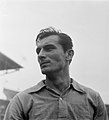 Branko Zebec played for Yugoslavia from 1951 to 1961 and captained the team in 1958 FIFA World Cup
 -
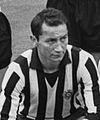 Fahrudin Jusufi played for Yugoslavia from 1959 to 1967
 -
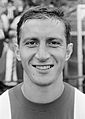 Velibor Vasović played for Yugoslavia from 1961 to 1966
.jpg)
.jpg)


.jpg)

- Midfielders
-
 Aleksandar Tirnanić played in the 1930 FIFA World Cup and managed the team from 1953 to 1960
 -
 Zlatko Čajkovski played 55 matches for the team from 1946 to 1955
 -
 Bernard Vukas played 59 matches for the team from 1948 to 1957
 -
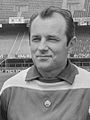 Vujadin Boškov played for the team from 1951 to 1958
 -
 Dragoslav Šekularac played for the team from 1956 to 1966
 -
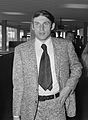 Dragan Džajić was considered by many to be the best player in history of Yugoslavia
 -
 Ilija Petković, explosive right winger played for the team from 1968 to 1974
 -
 Vladimir Petrović, creative midfielder played for the team from 1973 to 1982
 -
 Safet Sušić played for the team from 1977 to 1990
 -
 Dragan Stojković played from 1983 until breakup of Yugoslavia
 -
 Dejan Savićević played for the team from 1986 until breakup of Yugoslavia


.jpg)


- Forwards
-
 Rajko Mitić scored 32 goals on 59 matches between 1946 and 1957
 -
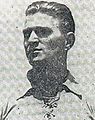 Stjepan Bobek is top goal scorer in the team's history with 38 goals
 -
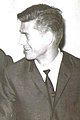 Miloš Milutinović scored 16 goals on 33 matches between 1953 and 1958
 -
 Bora Kostić scored 26 goals on 33 matches between 1956 and 1964
 -
 Dražan Jerković was a top goal scorer on 1962 FIFA World Cup
 -
 Milan Galić scored 37 goals on 51 matches between 1959 and 1965
 -
 Josip Skoblar, 1971 European Golden Shoe, winner scored 11 goals on 32 matches
 -
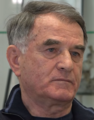 Dušan Bajević scored 29 goals on 37 matches between 1970 and 1977
 -
 Darko Pančev, 1991 European Golden Shoe winner, played for the team from 1984 until breakup of Yugoslavia
.jpg)


.png)

Head-to-head record[edit]
Positive Record Neutral Record Negative Record
| Opponents | Pld | W | D | L |
|---|---|---|---|---|
 Albania Albania |
5 | 4 | 1 | 0 |
 Algeria Algeria |
1 | 1 | 0 | 0 |
| Argentina |
6 | 2 | 1 | 3 |
 Australia Australia |
1 | 0 | 0 | 1 |
 Austria Austria |
17 | 8 | 4 | 5 |
| Belgium |
11 | 5 | 2 | 4 |
 Bolivia Bolivia |
2 | 1 | 1 | 0 |
 Brazil Brazil |
14 | 2 | 6 | 6 |
 Bulgaria Bulgaria |
28 | 17 | 5 | 6 |
| Chile |
1 | 0 | 0 | 1 |
 China China |
1 | 1 | 0 | 0 |
 Colombia Colombia |
3 | 3 | 0 | 0 |
 Cyprus Cyprus |
4 | 4 | 0 | 0 |
| Czechoslovakia |
31 | 9 | 4 | 18 |
 Denmark Denmark |
9 | 7 | 0 | 2 |
 East Germany East Germany |
7 | 3 | 2 | 2 |
 Ecuador Ecuador |
1 | 0 | 0 | 1 |
 Egypt Egypt |
5 | 4 | 0 | 1 |
| England |
14 | 4 | 5 | 5 |
 Ethiopia Ethiopia |
1 | 1 | 0 | 0 |
 Faroe Islands Faroe Islands |
2 | 2 | 0 | 0 |
 Finland Finland |
4 | 2 | 1 | 1 |
| France |
25 | 10 | 7 | 8 |
 Great Britain Great Britain |
1 | 1 | 0 | 0 |
 Greece Greece |
20 | 16 | 2 | 2 |
 Honduras Honduras |
1 | 1 | 0 | 0 |
 Hong Kong Hong Kong |
1 | 1 | 0 | 0 |
 Hungary Hungary |
29 | 5 | 9 | 15 |
 India India |
2 | 2 | 0 | 0 |
 Indonesia Indonesia |
3 | 3 | 0 | 0 |
 Iran Iran |
2 | 1 | 1 | 0 |
 Israel Israel |
9 | 6 | 1 | 2 |
| Italy |
18 | 4 | 6 | 8 |
 Japan Japan |
2 | 2 | 0 | 0 |
 Luxembourg Luxembourg |
9 | 8 | 1 | 0 |
| Mexico |
4 | 3 | 0 | 1 |
 Morocco Morocco |
3 | 3 | 0 | 0 |
| Netherlands |
7 | 3 | 1 | 3 |
 Northern Ireland Northern Ireland |
7 | 5 | 1 | 1 |
 Norway Norway |
12 | 9 | 1 | 2 |
 Paraguay Paraguay |
2 | 1 | 1 | 0 |
 Poland Poland |
19 | 6 | 4 | 9 |
 Portugal Portugal |
5 | 2 | 0 | 3 |
 Republic of Ireland Republic of Ireland |
2 | 1 | 0 | 1 |
 Romania Romania |
40 | 17 | 5 | 18 |
 Saar Saar |
1 | 1 | 0 | 0 |
 Scotland Scotland |
8 | 1 | 5 | 2 |
 South Korea South Korea |
3 | 3 | 0 | 0 |
 Soviet Union Soviet Union |
17 | 2 | 4 | 11 |
| Spain |
16 | 5 | 4 | 7 |
| Sweden |
11 | 5 | 2 | 4 |
| Switzerland |
9 | 5 | 2 | 2 |
 Tunisia Tunisia |
4 | 3 | 0 | 1 |
 Turkey Turkey |
11 | 7 | 3 | 1 |
 United Arab Emirates United Arab Emirates |
1 | 1 | 0 | 0 |
 United States United States |
1 | 1 | 0 | 0 |
| Uruguay |
5 | 2 | 0 | 3 |
 Venezuela Venezuela |
1 | 1 | 0 | 0 |
 Wales Wales |
7 | 4 | 3 | 0 |
| West Germany |
25 | 8 | 3 | 14 |
 Zaire Zaire |
1 | 1 | 0 | 0 |
Head coaches[edit]
See also[edit]
- List of Yugoslavia international footballers
- List of Yugoslavia national football team goalscorers
- Yugoslavia national football team results (1920–41)
- Yugoslavia national football team results (1946–69)
- Yugoslavia national football team results (1970–92)
- Yugoslavia national under-21 football team
- Yugoslavia national under-20 football team
Teams from successor states[edit]
- Bosnia and Herzegovina national football team (member of UEFA and FIFA since 1990s)
- Croatia national football team (member of UEFA and FIFA since 1990s)
- Slovenia national football team (member of UEFA and FIFA since 1990s)
- North Macedonia national football team (member of UEFA and FIFA since 1990s)
- Serbia and Montenegro national football team (considered successor of Yugoslavia by UEFA and FIFA), later:
- Montenegro national football team (member of UEFA and FIFA since 2006)
- Serbia national football team (considered successor of Serbia and Montenegro, as Serbia since 2008)
- Kosovo national football team (member of UEFA and FIFA since 2016)
Notes[edit]
- ^ a b c As of 1992 before the split of SFR Yugoslavia; for later data see FR Yugoslavia national football team.
- ^ Serbian: Фудбалска репрезентација Југославије, Fudbalska reprezentacija Jugoslavije; Croatian: Jugoslavenska nogometna reprezentacija; Slovene: Jugoslovanska nogometna reprezentanca; Macedonian: Фудбалска репрезентација на Југославија, romanized: Fudbalska reprezentacija na Jugoslavija
- ^ 1930 World Cup didn't feature a match for the third place. Retroactively, FIFA established rankings based on overall tournament record, placing Yugoslavia at the fourth place
- ^ Yugoslavia earned 4th place below the loser of the other semi-final, the United States, because of a lower goal difference (0 to the United States' +1). No third place match was played.
- ^ Suspended because of United Nations Security Council Resolution 757 during Yugoslav Wars. Yugoslavia was replaced by Denmark, who went on to win the tournament.
References[edit]
- ^ A farewell to Yugoslavia openDemocracy.net. Dejan Djokic; 10 April 2002
- ^ "Jugoslavija – Venecuela 10–0". Reprezentacija.rs (in Serbo-Croatian). 14 October 2009. Retrieved 25 February 2019.
- ^ "1974 FIFA World Cup Germany ™ – Matches – Yugoslavia-Zaire". FIFA.com. Archived from the original on 14 April 2015. Retrieved 25 February 2019.
- ^ History at Football Association of Serbia official website, Retrieved 17 May 2913 (in Serbian)
- ^ "90: 'The team was far better than the country' – The lost brilliance of Yugoslavia". 4 June 2014. Retrieved 22 November 2017.
- ^ "S/RES/757(1992) – e – S/RES/757(1992) -Desktop".
- ^ "Yugoslavia barred from European Championships". UPI. Retrieved 31 March 2022.
- ^ "Sports ban hits Yugoslavia - UPI Archives". UPI. Retrieved 7 January 2024.
- ^ "Yugoslavia and the breakup of its soccer team". Retrieved 22 November 2017.
- ^ Merrill, Austin (2 June 2010). "The Splintering of Yugoslavia and Its Soccer Team". The Hive. Retrieved 22 November 2017.
- ^ "Yugoslavia banned for 1994 World - UPI Archives". UPI. Retrieved 7 January 2024.
- ^ Lowe, Sid; @sidlowe (29 May 2020). "Slavisa Jokanovic: 'Euro 92 was taken away from us. We were better than Denmark'". The Guardian. ISSN 0261-3077. Retrieved 7 January 2024.
- ^ History at FSS official website, Retrieved 4 October 2012 (in Serbian)
- ^ Serbia at FIFA official website
- ^ News: Serbia at UEFA official website, published 1 January 2011, Retrieved 4 October 2012
- ^ "1930 FIFA World Cup Uruguay 1930". FIFA.com. Archived from the original on 5 February 2015. Retrieved 17 July 2018.
Bibliography[edit]
- Gigi Riva (2016). L'ultimo rigore di Faruk. Una storia di calcio e di guerra [The Faruk's last penalty. A story about football and war] (in Italian). Palermo: Sellerio. ISBN 978-8838935640.
External links[edit]
 Media related to Yugoslavia national association football team at Wikimedia Commons
- RSSSF – Yugoslavia men's national football team international matches 1920–1992 (in English)
- RSSSF – Yugoslavia men's national football team international matches + Serbia and Montenegro and Serbia (in English)
- Yugoslavia national football team web page (in Serbian)


Finalists | |||||||||||||||||||||||||||||||||||||||||||||||||||||||||||||||||||||||||||||||||||||||||||||||||||||||||||||||||||||||
|---|---|---|---|---|---|---|---|---|---|---|---|---|---|---|---|---|---|---|---|---|---|---|---|---|---|---|---|---|---|---|---|---|---|---|---|---|---|---|---|---|---|---|---|---|---|---|---|---|---|---|---|---|---|---|---|---|---|---|---|---|---|---|---|---|---|---|---|---|---|---|---|---|---|---|---|---|---|---|---|---|---|---|---|---|---|---|---|---|---|---|---|---|---|---|---|---|---|---|---|---|---|---|---|---|---|---|---|---|---|---|---|---|---|---|---|---|---|---|---|
| |||||||||||||||||||||||||||||||||||||||||||||||||||||||||||||||||||||||||||||||||||||||||||||||||||||||||||||||||||||||


| |||||||||||||||||||||