1992 Democratic Party presidential primaries
 | ||||||||||||||||||||||||||||||||||||||||||||||||||||||
4,201 delegates to the 1992 Democratic National Convention 2,101 (majority) votes needed to win | ||||||||||||||||||||||||||||||||||||||||||||||||||||||
|---|---|---|---|---|---|---|---|---|---|---|---|---|---|---|---|---|---|---|---|---|---|---|---|---|---|---|---|---|---|---|---|---|---|---|---|---|---|---|---|---|---|---|---|---|---|---|---|---|---|---|---|---|---|---|
| ||||||||||||||||||||||||||||||||||||||||||||||||||||||


Bill Clinton Jerry Brown Paul Tsongas Tom Harkin Bob Kerrey | ||||||||||||||||||||||||||||||||||||||||||||||||||||||
| ||||||||||||||||||||||||||||||||||||||||||||||||||||||


From February 10 to June 9, 1992, voters of the Democratic Party chose its nominee for president in the 1992 United States presidential election. Arkansas Governor Bill Clinton won the nomination through a series of primary elections and caucuses culminating in the 1992 Democratic National Convention held from July 13 to July 16, 1992, in New York City.
Background[edit]
Reforms[edit]
Although the McGovern–Fraser Commission had recommended proportionality as early as 1972, this primary was the first to adopt the proportional 15% rule, still in place today, as the standard throughout the country. Any candidate receiving greater than 15% of the vote in a given congressional district (or in the case of New Jersey, state legislative district) would receive a proportional share of the apportioned delegates for that district or state.[1]
Schedule and results[edit]
| Date
(daily totals) |
Total pledged
delegates |
Contest | Delegates won and popular vote | ||||
|---|---|---|---|---|---|---|---|
| Bill Clinton | Jerry Brown | Paul Tsongas | Tom Harkin | Bob Kerrey | |||
| February 10 | 49 | Iowa (caucus) |
76 (2.81%) |
51 (1.60%) |
128 (4.11%) |
49 2,314 (76.55%) |
72 (2.41%) |
| February 18 | 18 | New Hampshire | 9 41,540 (24.78%) |
13,659 (8.15%) |
9 55,663 (33.20%) |
17,063 (10.18%) |
18,584 (11.08%) |
| February 22 | 22 | Maine (caucus)[2][a] |
3 515 (15.13%) |
7 994 (30.77%) |
8 987 (29.31%) |
1 174 (4.99%) |
105 (3.01%) |
| February 25 | 15 | South Dakota[3] | 3 11,421 (19.10%) |
2,304 (3.86%) |
5,756 (9.62) |
5 15,153 (25.23%) |
7 23,974 (40.12%) |
| March 3 (380) |
47 | Colorado[4] | 14 64,470 (26.90%) |
18 69,073 (28.82%) |
15 61,360 (25.61%) |
5,866 (2.45%) |
29,572 (12.34%) |
| 76 | Georgia[4] | 54 259,907 (57.17%) |
36,808 (8.10%) |
22 109,148 (24.01%) |
9,479 (2.09%) |
22,033 (4.85%) | |
| 18 | Idaho (caucus) |
(11.56%) | (4.57%) | (28.76%) | (29.57%) | – | |
| 67 | Maryland | 29 189,905 (35.76%) |
46,480 (8.75%) |
38 230,490 (43.40%) |
32,899 (6.20%) |
27,035 (5.09) | |
| 78 | Minnesota (caucus) |
– | – | (19.2%) | (26.7%) | – | |
| 23 | Utah (caucus) |
? 5.780 (18.27%) |
? 8,971 (28.36%) |
? 10,582 (33.45%) |
1,274 (4.03%) |
3,447 (10.90%) | |
| 71 | Washington (caucus) |
561 (13.82%) |
? 784 (19.32%) |
? 1,299 (32.01%) |
305 (7.52%) |
249 (6.14%) | |
| March 7 | 41 | Arizona (caucus) |
10,607 (29.20%) |
9,990 (27.50%) |
? 12,496 (34.40%) |
2,761 (7.60%) |
– |
| 43 | South Carolina | ? 73,221 (62.90%) |
6,961 (5.98%) |
? 21,338 (18.33%) |
7,657 (6.58%) |
566 (0.49%) | |
| 13 | Wyoming (caucus) |
? 78 (28.57%) |
? 63 (23.08%) |
32 (11.72%) |
39 (14.29%) |
– | |
| March 8 | 17 | Nevada (caucus) |
? 355 (26.47%) |
? 467 (34.83%) |
264 (19.69%) |
6 (0.45%) |
13 (0.97%) |
| March 10 (Super Tuesday) (777) |
14 | Delaware (caucus) |
? 520 (20.78%) |
? 488 (19.50%) |
? 755 (30.16%) |
– | – |
| 148 | Florida | ? 554,861 (50.79%) |
133,156 (12.19%) |
? 379,572 (34.75%) |
13,302 (1.22%) |
11,557 (1.06%) | |
| 14 | Hawaii (caucus) |
? 1,552 (51.49%) |
410 (13.60%) |
431 (14.30%) |
383 (12.71%) |
12 (0.40%) | |
| 60 | Louisiana | ? 267,029 (69.46%) |
25,480 (6.63%) |
42,509 (11.06%) |
4,033 (1.05%) |
2,984 (0.78%) | |
| 94 | Massachusetts | 86,817 (10.95%) |
115,746 (14.60%) |
? 526,297 (66.38%) |
3,764 (0.48%) |
5,409 (0.68%) | |
| 39 | Mississippi | ? 139,893 (73.11%) |
18,396 (9.61%) |
15,538 (8.12%) |
2,509 (1.31%) |
1,660 (0.87%) | |
| 77 | Missouri | ? 10,148 (45.10%) |
1,282 (5.70%) |
2,295 (10.20%) |
– | – | |
| 45 | Oklahoma | ? 293,266 (70.47%) |
? 69,624 (16.69%) |
– | 14,015 (3.40%) |
13,252 (3.20%) | |
| 22 | Rhode Island | ? 10,762 (21.22%) |
? 9,541 (18.82%) |
? 26,825 (52.90%) |
319 (0.63%) |
469 (0.92%) | |
| 68 | Tennessee | ? 214,485 (67.35%) |
25,560 (8.02%) |
? 61,717 (19.38%) |
2,099 (0.66%) |
1,638 (0.51%) | |
| 196 | Texas | ? 972,235 (65.56%) |
118,869 (8.02%) |
? 285,224 (19.23%) |
19,618 (1.32%) |
20,298 (1.37%) | |
| March 17
(295) |
164 | Illinois | ? 776,829 (51.65%) |
220,346 (14.65%) |
? 387,891 (25.79%) |
30,710 (2.04%) |
10,916 (0.73%) |
| 131 | Michigan | ? 297,280 (50.73%) |
? 97,017 (16.56%) |
? 151,400 (25.84%) |
6,265 (1.07%) |
3,219 (0.55%) | |
| March 19 | ? | Democrats Abroad | ? (27.00%) |
– | ? (37.00%) |
(7.00%) |
– |
| 14 | North Dakota | ? (37%) |
(7.68%) |
(10.54%) |
(6.96%) |
(1.23%) | |
| March 24 | 53 | Connecticut | ? 61,698 (35.64%) |
? 64,472 (37.24%) |
? 33,811 (19.53%) |
1,919 (1.11%) |
1,169 (0.68%) |
| March 31 | 14 | Vermont (caucus) |
? 208 (17.20%) |
? 573 (47.40%) |
117 (9.68%) |
– | – |
| April 2 | 13 | Alaska (caucus)[5] |
? 340 (30.91%) |
? 364 (33.09%) |
14 (1.27%) |
– | – |
| April 5 | 51 | Puerto Rico[6] | 51 62,273 (95.86%) |
921 (1.42%) |
59 (0.09%) |
31 (0.05%) |
930 (1.43%) |
| April 7 | 36 | Kansas | ? 82,145 (51.26%) |
20,811 (12.99%) |
? 24,413 (15.23%) |
940 (0.59%) |
2,215 (1.38%) |
| 0 | Minnesota | 63,584 (31.14%) |
62,474 (30.60%) |
43,588 (21.35%) |
4,077 (2.00%) |
1,191 (0.58%) | |
| 244 | New York | ? 412,349 (40.92%) |
? 264,278 (26.23%) |
? 288,330 (28.61%) |
11,535 (1.15%) |
11,147 (1.11%) | |
| 82 | Wisconsin | ? 287,356 (37.19%) |
? 266,207 (34.46%) |
? 168,619 (21.83%) |
5,395 (0.70%) |
3,044 (0.39%) | |
| April 11 | 78 | Virginia (caucus)[7] |
? 1,820 (52.00%) |
420 (12.00%) |
– | – | – |
| April 28 | 169 | Pennsylvania[8] | ? 715,031 (56.48%) |
? 325,543 (25.72%) |
161,572 (12.76%) |
21,013 (1.66%) |
20,802 (1.64%) |
| May 5 | 77 | Indiana[9] | ? 301,905 (63.31%) |
? 102,379 (21.47%) |
58,215 (12.21%) |
– | 14,350 (3.01%) |
| 84 | North Carolina[10] | ? 443,498 (54.10%) |
71,984 (10.40%) |
57,589 (8.32%) |
5,891 (0.85%) |
6,216 (0.90%) | |
| 17 | Washington D.C.[11] | ? 45,685 (73.87%) |
57,589 (7.21%) |
71,984 (10.41%) |
– | – | |
| May 12 | 25 | Nebraska[12] | ? 68,562 (45.53%) |
? 31,673 (21.03%) |
10,707 (7.11%) |
4,239 (2.82%) |
– |
| 31 | West Virginia[13] | ? 227,815 (74.24%) |
36,505 (11.90%) |
21,271 (6.93%) |
2,774 (0.90%) |
3,152 (1.03%) | |
| May 19 | 47 | Oregon | (45.10%) | (31.18%) | (10.48%) | – | – |
| 0 | Washington | 62,171 (42.01%) | 34,111 (23.05%) | 18,981 (12.83%) | 1,858 (1.26%) | 1,489 (1.01%) | |
| May 26 | 0 | Idaho | 27,004 (48.99%) | 9,212 (16.71%) | – | – | – |
| 52 | Kentucky | (56.08%) | (8.29%) | (4.88%) | (1.93%) | (0.88%) | |
| May 27 | 36 | Arkansas | (68.05%) | (11.02%) | – | – | – |
| June 2 | 55 | Alabama | (68.22%) | (6.72%) | – | – | – |
| 348 | California | ? 1,359,112 (47.47%) |
? 1,150,460 (40.18%) |
212,522 (7.42%) | – | 33,935 (1.19%) | |
| 16 | Montana | (46.81%) | (18.48%) | (10.74%) | – | – | |
| 105 | New Jersey | (63.26%) | (19.76%) | (11.15%) | – | – | |
| 25 | New Mexico | (52.87%) | (16.92%) | (6.24%) | (1.78%) | – | |
| 151 | Ohio | (61.24%) | (18.94%) | (10.63%) | (2.44%) | (2.20%) | |
| June 9 | 0 | North Dakota | (14.52%) | – | – | – | – |
| Total pledged delegates | – | – | – | – | – | ||
Candidates[edit]
During the aftermath of the Gulf War, President George H. W. Bush's approval ratings were high. At one point after the successful performance by U.S. forces in Kuwait, President Bush had an 89% approval rating.[14]
As a result of Bush's high popularity, major high-profile Democratic candidates feared a high likelihood of defeat in the 1992 general election. This fear was "captured perfectly by Saturday Night Live in a skit called 'Campaign '92: The Race to Avoid Being the Guy Who Loses to Bush,'" in which each prospective major candidate "tried to top the other in explaining why they were unfit to run" for the presidency.[15][16][17]
Mario Cuomo and Jesse Jackson declined to seek the Democratic nomination for president, as did U.S. Senator and eventual Vice President Al Gore, whose son had been struck by a car and was undergoing extensive surgery and physical therapy.[18] However, Governors Bill Clinton and Jerry Brown and U.S. Senator Paul Tsongas opted to run for president.
Nominee[edit]
| Candidate | Most recent office | Home state | Campaign
Withdrawal date |
Popular
vote |
Contests won | Running mate | ||
|---|---|---|---|---|---|---|---|---|
| Bill Clinton | _(2).png)
|
Governor of Arkansas (1979–1981, 1983–1992) |
 Arkansas |
 (Campaign • Positions) Secured nomination: June 2, 1992 |
10,482,411 (52.01%) |
37 NY, NJ, PA, OH, WV, VA, NC, SC, GA, FL, MI, WI, IL, IN, KY, TN, AL, MS, LA, AR, NE, KS, OK, TX, NM, WY, MT, OR, CA, HI, DC, PR |
Al Gore | |
Withdrew during primaries or convention[edit]
| Candidate | Most recent office | Home state | Campaign
Withdrawal date |
Popular vote | Contests won | ||
|---|---|---|---|---|---|---|---|
| Jerry Brown | .jpg)
|
Governor of California (1975–1983, 2011–2019) |
 California |
 Withdrew at convention |
4,071,232 (20.20%) |
6 AK, CO, CT, ME, NV, VT | |
| Paul Tsongas | .jpg)
|
U.S. Senator from Massachusetts (1979–1985) |
 Massachusetts |
 Withdrew: March 19 |
3,656,010 (18.14%) |
9 AZ, DA, DE, MD, MA, NH, RI, UT, WA | |
| Bob Kerrey | 
|
U.S. Senator from Nebraska (1989–2001) |
 Nebraska |
 Withdrew: March 5 |
318,457 (1.58%) |
1 SD | |
| Tom Harkin | .jpg)
|
U.S. Senator from Iowa (1985–2015) |
 Iowa |
 (Campaign) Withdrew: March 9 |
280,304 (1.39%) |
3 ID caucus, IA, MN caucus | |
Other notable individuals campaigning for the nomination but receiving less than 1% of the national vote included:
- Activist and conspiracy theorist Lyndon LaRouche
- Actor Tom Laughlin
- Former Senator Eugene McCarthy of Minnesota
- Former Mayor of Irvine, California Larry Agran
Declined[edit]
- Senator and 1988 vice-presidential nominee Lloyd Bentsen of Texas
- Senator Joe Biden of Delaware
- Former vice president and 1984 presidential nominee Walter Mondale of Minnesota
- Senator Bill Bradley of New Jersey
- Senator Dale Bumpers of Arkansas
- Governor Mario Cuomo of New York
- Former governor and 1988 presidential nominee Michael Dukakis of Massachusetts
- House Majority Leader Dick Gephardt of Missouri
- Senator Al Gore of Tennessee
- Reverend Jesse Jackson of the District of Columbia[19]
- Former senator and 1972 presidential nominee George McGovern of South Dakota
- Senator Sam Nunn of Georgia
- Senator Jay Rockefeller of West Virginia
- Governor Ann Richards of Texas
- Former senator Pierre Salinger of California
Polling[edit]
Nationwide[edit]
| Poll source | Publication | Jerry Brown
|
Bill Clinton
|
Tom Harkin
|
Bob Kerrey
|
Paul Tsongas
|
Other
|
Undecided
|
|---|---|---|---|---|---|---|---|---|
| Gallup[20] | Sep. 1991 | 21% | 6% | 6% | 5% | 5% | ? | — |
| Gallup[20] | Nov. 1991 | 21% | 9% | 10% | 10% | 7% | ? | — |
| Gallup[20] | Jan. 1992 | 21% | 17% | 9% | 11% | 6% | ? | — |
| New York Times/CBS News[21] | Jan. 1992 | ? | 22% | ? | ? | 10% | ? | — |
| Gallup[20] | Feb. 2, 1992 | 21% | 42% | 9% | 10% | 9% | ? | — |
| New York Times/CBS News[21] | Feb. 22, 1992 | 10% | 29% | 3% | 4% | 24% | 4%[b] | 26% |
State polling[edit]
New Hampshire[edit]
| Poll source | Publication | Sample size | MoE | Jerry Brown
|
Bill Clinton
|
Mario Cuomo
|
Tom Harkin
|
Bob Kerrey
|
Paul Tsongas
|
Other
|
Undecided
|
|---|---|---|---|---|---|---|---|---|---|---|---|
| USA Today–CNN–Gallup[22] | Feb. 12–14 | 600 V | ±5% | 6% | 23% | – | 14% | 10% | 39% | – | 8% |
| Boston Globe–WBZ-TV[22] | Feb. 13–14 | 400 LV | ±5% | 5% | 25% | 4% | 11% | 11% | 32% | 4% | 8% |
| Mason-Dixon[22] | Feb. 13–15 | 433 V | ±5% | 4% | 21% | 4% | 9% | 8% | 34% | – | 20% |
Primary race[edit]
Clinton, a Southerner with experience governing a more conservative state, positioned himself as a centrist New Democrat. He prepared for a run in 1992 amidst a crowded field seeking to beat the incumbent President George H. W. Bush. In the aftermath of the Persian Gulf War, Bush seemed unbeatable, but an economic recession—which ultimately proved to be small by historical standards—spurred the Democrats on. Tom Harkin won his native Iowa without much surprise. Clinton, meanwhile, was still a relatively unknown national candidate before the primary season when a woman named Gennifer Flowers appeared in the press to reveal allegations of an affair.[23] Clinton sought damage control by appearing on 60 Minutes with his wife, Hillary Clinton, for an interview with Steve Kroft. Paul Tsongas of Massachusetts won the primary in neighboring New Hampshire but Clinton's second-place finish – strengthened by Clinton's speech labeling himself "The Comeback Kid" – re-energized his campaign. Clinton swept nearly all of the Southern Super Tuesday primaries, making him the solid front runner. Jerry Brown, however, began to run a surprising insurgent campaign, particularly through use of a 1-800 number to receive grassroots funding. Brown "seemed to be the most left-wing and right-wing man in the field. [He] called for term limits, a flat tax, and the abolition of the Department of Education."[24] Brown scored surprising wins in Connecticut and Colorado.
On March 17, Tsongas left the race when he decisively lost both the Illinois and Michigan primaries to Clinton, with Brown as a distant third. Exactly one week later, Brown eked out a narrow win in the bitterly fought Connecticut primary. As the press focused on the primaries in New York and Wisconsin, which were both to be held on the same day, Brown, who had taken the lead in polls in both states, made a serious gaffe: he announced to an audience of various leaders of New York City's Jewish community that, if nominated, he would consider the Reverend Jesse Jackson as a vice presidential candidate. Jackson was still a controversial figure in that community and Brown's polling numbers suffered. On April 7, he lost narrowly to Clinton in Wisconsin (37–34), and dramatically in New York (41–26). In addition, his "willingness to break with liberal orthodoxy on taxes led to denunciations from the party regulars, but by the end of the race he had been embraced by much of the Left."[24]
Although Brown continued to campaign in a number of states, he won no further primaries. Despite this, he still had a sizable number of delegates, and a big win in his home state of California would have deprived Clinton of sufficient support to win the nomination. After nearly a month of intense campaigning and multiple debates between the two candidates, Clinton managed to defeat Brown in the California primary by a margin of 47% to 40%. Clinton became the second candidate after George McGovern in 1972 to win the nomination without winning Iowa or New Hampshire. The same feat would be repeated nearly 30 years later by Joe Biden in 2020.
The convention[edit]
The convention met in New York City, and the official tally was:
- Bill Clinton 3,372
- Jerry Brown 596
- Paul Tsongas 209
- Penn. Gov. Robert P. Casey 10
- Rep. Pat Schroeder 8
- Larry Agran 3
- Ron Daniels 1
- Al Gore 1
- Joe Simonetta 1
Clinton chose U.S. Senator Albert A. Gore Jr. (D-Tennessee) to be his running mate on July 9, 1992. Choosing Gore, who is from Clinton's neighboring state of Tennessee, went against the popular strategy of balancing a Southern candidate with a Northern partner. Gore did serve to balance the ticket in other ways, as he was perceived as strong on foreign policy and environmental issues, while Clinton was not.[25] Also, Gore's similarities to Clinton allowed him to push some of his key campaign themes, such as centrism and generational change.[26]
Before Gore's selection, other politicians were mentioned as a possible running-mate, e.g. Bob Kerrey, Dick Gephardt, Mario Cuomo, Indiana Representative Lee H. Hamilton, Pennsylvania Senator Harris Wofford, Florida Senator Bob Graham, and Massachusetts Senator John Kerry.
The Democratic Convention in New York City was essentially a solidification of the party around Clinton and Gore, though there was controversy over whether Jerry Brown, who did not endorse Clinton, would be allowed to speak. Brown did speak at the convention by seconding his own nomination.
Another additional controversy concerned Pennsylvania Governor Bob Casey, who sought a speaking slot at the convention but was not granted one. Casey complained that it was because of his outspoken anti-abortion views: he had warned the platform committee that Democrats were committing political suicide because of their support for abortion rights.[27] Clinton supporters have said that Casey was not allowed to speak because he had not endorsed the ticket.[28]
Popular vote results[edit]
Total popular vote number in primaries:[29]
- Bill Clinton - 10,482,411 (52.01%)
- Jerry Brown - 4,071,232 (20.20%)
- Paul Tsongas - 3,656,010 (18.14%)
- Unpledged - 750,873 (3.73%)
- Bob Kerrey - 318,457 (1.58%)
- Tom Harkin - 280,304 (1.39%)
- Lyndon LaRouche - 154,599 (0.77%)
- Eugene McCarthy - 108,678 (0.54%)
- Charles Woods - 88,948 (0.44%)
- Larry Agran - 58,611 (0.29%)
- Ross Perot - 54,755 (0.27%)
- Ralph Nader - 35,935 (0.18%)
- Louis Stokes - 29,983 (0.15%)
- Angus Wheeler McDonald - 9,900 (0.05%)
- J. Louis McAlpine - 7,911 (0.04%)
- George W. Benns - 7,887 (0.04%)
- Rufus T. Higginbotham - 7,705 (0.04%)
- Tod Howard Hawks - 7,434 (0.04%)
- Stephen Bruke - 5,261 (0.03%)
- Tom Laughlin - 5,202 (0.03%)
- Tom Shiekman - 4,965 (0.03%)
- Jeffrey F. Marsh - 2,445 (0.01%)
- George Ballard - 2,067 (0.01%)
- Ray Rollinson - 1,206 (0.01%)
- Lenora Fulani - 402 (0.00%)
- Douglas Wilder - 240 (0.00%)
Maps[edit]
-
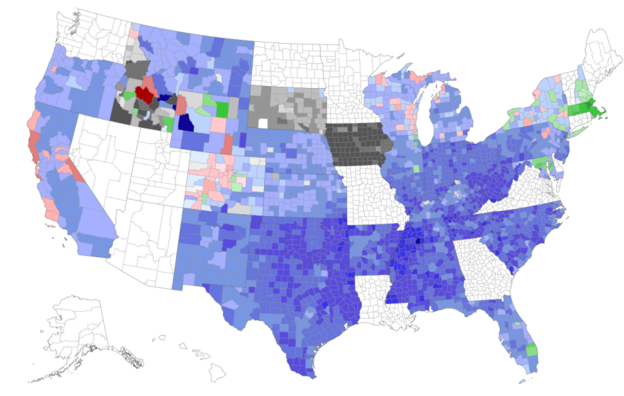 Results by county

Convention tallies[edit]
For President:[30]
- Bill Clinton - 3,372 (80.27%)
- Jerry Brown - 596 (14.19%)
- Paul Tsongas - 209 (4.98%)
- Robert P. Casey - 10 (0.24%)
- Patricia Schroeder - 8 (0.19%)
- Larry Agran - 3 (0.07%)
- Ron Daniels - 1 (0.02%)
- Al Gore - 1 (0.02%)
- Joe Simonetta 1 (0.02%)
Vice presidential nomination[edit]
Clinton selected Tennessee Senator and 1988 candidate Al Gore to be his running-mate. Among others confirmed possible V.P. nominees, who were finalists of Clinton's selection were:
- Jay Rockefeller, U.S. senator from West Virginia
- Bob Graham, U.S. senator from Florida
- Lee H. Hamilton, U.S. representative from Indiana.[31]
- Tom Harkin, U.S. senator from Iowa
- Bob Kerrey, U.S. senator from Nebraska
- George Mitchell, U.S. Senate Majority Leader from Maine
- Paul Tsongas, former U.S. senator from Massachusetts
- Doug Wilder, Governor of Virginia
- Harris Wofford, U.S. senator from Pennsylvania
Clinton's list of finalists did not include Senator Bill Bradley of New Jersey and Governor of New York Mario Cuomo, who publicly disavowed interest in the vice presidency.[31]
Convention tally for vice president[edit]
- Al Gore - was nominated by acclamation on a voice vote.
In popular media[edit]
The story of the race was covered in the 1993 documentary film The War Room and fictionalized into the 1996 novel and 1998 film Primary Colors.
See also[edit]
Bibliography[edit]
- My Life by Bill Clinton, 2004, Vintage. ISBN 1-4000-3003-X
References[edit]
- ^ "Larry J. Sabato's Crystal Ball » The Modern History of the Democratic Presidential Primary, 1972–2008". www.centerforpolitics.org. Retrieved 23 March 2018.
- ^ "Maine caucus ends in dead heat between Tsongas, Brown". The Globe and Mail. 24 Feb 1992. p. 10.
- ^ Berkes, Richard (26 Feb 1992). "Kerrey Is South Dakota Victor". The New York Times. p. A1.
- ^ a b Edsall, Thomas (4 Mar 1992). "Brown Prevails In Colorado Test". The Washington Post. p. A1.
- ^ "Our Campaigns - AK US President - D Caucus Race - Apr 02, 1992".
- ^ "Our Campaigns - PR US President - D Primary Race - Apr 05, 1992".
- ^ "Our Campaigns - VA US President-D Caucus Race - Apr 11, 1992".
- ^ "Our Campaigns - PA US President - D Primary Race - Apr 28, 1992".
- ^ "Our Campaigns - IN US President - D Primary Race - May 05, 1992".
- ^ "Our Campaigns - NC US President - D Primary Race - May 05, 1992".
- ^ "Our Campaigns - DC US President - D Primary Race - May 05, 1992".
- ^ "Our Campaigns - NE US President - D Primary Race - May 12, 1992".
- ^ "Our Campaigns - WV US President - D Primary Race - May 12, 1992".
- ^ Kagay, Michael R. (May 22, 1991). "History Suggests Bush's Popularity will eventually ebb". The New York Times. Retrieved May 1, 2010.
- ^ Dickerson, John (2016). Whistlestop: My Favorite Stories from Presidential Campaign History. Grand Central Publishing. p. 68. ISBN 9781455540464.
- ^ Popkin, Samuel L. (2012). The Candidate: What it Takes to Win - and Hold - the White House. Oxford University Press. p. 20. ISBN 9780199939411.
the guy who loses to bush.
- ^ Saturday Night Live (November 2, 1991). Campaign '92: The Race to Avoid Being the Guy who Loses to Bush (NBC.com). Retrieved June 9, 2019.
- ^ "Al Gore's son busted for drugs in hybrid car". Reuters. July 5, 2007.
- ^ "Jackson decides not to run in '92". Google News Search Archive. Eugene, OR: Eugene Register-Guard. November 3, 1991. p. 3A. Retrieved 9 August 2020.
- ^ a b c d "US President - D Primaries Polling". OurCampaigns.com. 11 Dec 2010. Retrieved 29 Oct 2020.
- ^ a b Apple, R.W. (22 Feb 1992). "Tsongas Gains Substantially, Pulling Near Clinton in Poll". The New York Times. p. 1.
- ^ a b c "Latest poll shows Tsongas holding lead over Clinton". The Hartford Courant. 16 Feb 1992. p. A25.
- ^ "Declaration of Gennifer Flowers". The Washington Post. March 13, 1998. Retrieved March 20, 2008.
- ^ a b Walker, Jesse (2009-11-01) Five Faces of Jerry Brown Archived 2011-06-29 at the Wayback Machine, The American Conservative
- ^ Ifill, Gwen (1992-07-10). "Clinton Selects Senator Gore Of Tennessee As Running Mate". The New York Times. Retrieved 2008-03-27.
- ^ "U.S. Senate: Albert A. Gore, Jr., 45th Vice President (1993-2001)". www.senate.gov. Retrieved 23 March 2018.
- ^ The Atlanta Journal and The Atlanta Constitution May 19, 1992 Page: A/8
- ^ "The myth of Bob Casey's 1992 non-speech". Brendan Nyhan. 2008-08-07. Retrieved 2016-08-03.
- ^ "US President - D Primaries Race - Feb 01, 1992". Our Campaigns. Retrieved 2016-08-03.
- ^ "US President - D Convention Race - Jul 13, 1992". Our Campaigns. Retrieved 2016-08-03.
- ^ a b Ifill, Gwen (July 10, 1992). "THE 1992 CAMPAIGN: Democrats; CLINTON SELECTS SENATOR GORE OF TENNESSEE AS RUNNING MATE". The New York Times. Retrieved May 1, 2010.