


Hejaz railway
 | You can help expand this article with text translated from the corresponding article in Arabic. (June 2018) Click [show] for important translation instructions.
|
| Hejaz railway سكة حديد الحجاز (Arabic) حجاز دمیریولی (Ottoman Turkish) | |||
|---|---|---|---|
 Hejaz Railway Station in Medina | |||
| Overview | |||
| Other name(s) | Hedjaz railway | ||
| Native name | Arabic: سِكَّة حَدِيد الحِجَاز Ottoman Turkish: حجاز دمیریولی | ||
| Locale | Southern Syria, Jordan, northern Saudi Arabia | ||
| Termini | |||
| Service | |||
| Operator(s) | |||
| History | |||
| Opened | 1908 | ||
| Closed | 1920 | ||
| Technical | |||
| Track length | 1,320 km (820 mi) | ||
| Track gauge | 1,050 mm (3 ft 5+11⁄32 in) | ||
| Minimum radius | 100 m (328 ft) | ||
| Maximum incline | 1.8 ‰ (0.18 %) | ||
| |||


Hejaz Railway | |||||||||||||||||||||||||||||||||||||||||||||||||||||||||||||||||||||||||||||||||||||||||||||||||||||||||||||||||||||||||||||||||||||||||||||||||||||||||||||||||||||||||||||||||||||||||||||||||||||||||||||||||||||||||||||||||||||||||||||||||||||||||||||||||||||||||||||||||||||||||||||||||||||||||||||||||||||||||||||||||||||||||||||||||||||||||||||||||||||||||||||||||||||||||||||||||||||||||||||||||||||||||||||||||||||||||||||||||||||||||||||||||||||||||||||||||||||||||||||||||||||||||||||||||||||||||||||||||||||||||||||||||||||||||||||||||||||||||||||||||||||||||||||||||||||||||||||||||||||||||||||||||||||||||||||||||||||||||||||||||||||||||||||||||||||||||||||||||||||||||||||||||||||||||||||||||||||||||||||||||||||||||||||||||||||||||||||||||||||||||||||||||||||||||||||||||||||||||||||||||||||||||||||||||||||||||||||||||||||||||||||||||||||||||||||||||||||||||||||||||||||||||||||||||||||||||||||||||||||||||||||||||||||||||||||||||||||||||||||||||||||||||||||||||||||||||||||||||||||||
|---|---|---|---|---|---|---|---|---|---|---|---|---|---|---|---|---|---|---|---|---|---|---|---|---|---|---|---|---|---|---|---|---|---|---|---|---|---|---|---|---|---|---|---|---|---|---|---|---|---|---|---|---|---|---|---|---|---|---|---|---|---|---|---|---|---|---|---|---|---|---|---|---|---|---|---|---|---|---|---|---|---|---|---|---|---|---|---|---|---|---|---|---|---|---|---|---|---|---|---|---|---|---|---|---|---|---|---|---|---|---|---|---|---|---|---|---|---|---|---|---|---|---|---|---|---|---|---|---|---|---|---|---|---|---|---|---|---|---|---|---|---|---|---|---|---|---|---|---|---|---|---|---|---|---|---|---|---|---|---|---|---|---|---|---|---|---|---|---|---|---|---|---|---|---|---|---|---|---|---|---|---|---|---|---|---|---|---|---|---|---|---|---|---|---|---|---|---|---|---|---|---|---|---|---|---|---|---|---|---|---|---|---|---|---|---|---|---|---|---|---|---|---|---|---|---|---|---|---|---|---|---|---|---|---|---|---|---|---|---|---|---|---|---|---|---|---|---|---|---|---|---|---|---|---|---|---|---|---|---|---|---|---|---|---|---|---|---|---|---|---|---|---|---|---|---|---|---|---|---|---|---|---|---|---|---|---|---|---|---|---|---|---|---|---|---|---|---|---|---|---|---|---|---|---|---|---|---|---|---|---|---|---|---|---|---|---|---|---|---|---|---|---|---|---|---|---|---|---|---|---|---|---|---|---|---|---|---|---|---|---|---|---|---|---|---|---|---|---|---|---|---|---|---|---|---|---|---|---|---|---|---|---|---|---|---|---|---|---|---|---|---|---|---|---|---|---|---|---|---|---|---|---|---|---|---|---|---|---|---|---|---|---|---|---|---|---|---|---|---|---|---|---|---|---|---|---|---|---|---|---|---|---|---|---|---|---|---|---|---|---|---|---|---|---|---|---|---|---|---|---|---|---|---|---|---|---|---|---|---|---|---|---|---|---|---|---|---|---|---|---|---|---|---|---|---|---|---|---|---|---|---|---|---|---|---|---|---|---|---|---|---|---|---|---|---|---|---|---|---|---|---|---|---|---|---|---|---|---|---|---|---|---|---|---|---|---|---|---|---|---|---|---|---|---|---|---|---|---|---|---|---|---|---|---|---|---|---|---|---|---|---|---|---|---|---|---|---|---|---|---|---|---|---|---|---|---|---|---|---|---|---|---|---|---|---|---|---|---|---|---|---|---|---|---|---|---|---|---|---|---|---|---|---|---|---|---|---|---|---|---|---|---|---|---|---|---|---|---|---|---|---|---|---|---|---|---|---|---|---|---|---|---|---|---|---|---|---|---|---|---|---|---|---|---|---|---|---|---|---|---|---|---|---|---|---|---|---|---|---|---|---|---|---|---|---|---|---|---|---|---|---|---|---|---|---|---|---|---|---|---|---|---|---|---|---|---|---|---|---|---|---|---|---|---|---|---|---|---|---|---|---|---|---|---|---|---|---|---|---|---|---|---|---|---|---|---|---|---|---|---|---|---|---|---|---|---|---|---|---|---|---|---|---|---|---|---|---|---|---|---|---|---|---|---|---|---|---|---|---|---|---|---|---|---|---|---|---|---|---|---|---|---|---|---|---|---|---|---|---|---|---|---|---|---|---|---|---|---|---|---|---|---|---|---|---|---|---|---|---|---|---|---|---|---|---|---|---|---|---|---|---|---|---|---|---|---|---|---|---|---|---|---|---|---|---|---|---|---|---|---|---|---|---|---|---|---|---|---|---|---|---|---|---|---|---|---|---|---|---|---|---|---|---|---|---|---|---|---|---|---|---|---|---|---|---|---|---|---|---|---|---|---|---|---|---|---|---|---|---|---|---|---|---|---|---|---|---|---|---|---|---|---|---|---|---|---|---|---|---|---|---|---|---|---|---|---|---|---|---|---|---|---|---|---|---|---|---|---|---|---|---|---|---|---|---|---|---|---|---|---|---|---|---|---|---|---|---|---|---|---|---|---|---|---|---|---|---|---|---|---|---|---|---|---|---|---|---|---|---|---|---|---|---|---|---|---|---|---|---|---|---|---|---|---|---|---|---|---|---|---|---|---|---|---|---|---|---|---|---|---|---|---|---|---|---|---|---|---|---|---|---|---|---|---|---|---|---|---|---|---|---|---|---|---|---|---|---|---|---|---|---|---|---|---|---|---|---|---|---|---|---|---|---|---|---|---|---|---|---|---|---|---|---|---|---|---|---|---|---|
Main line
| |||||||||||||||||||||||||||||||||||||||||||||||||||||||||||||||||||||||||||||||||||||||||||||||||||||||||||||||||||||||||||||||||||||||||||||||||||||||||||||||||||||||||||||||||||||||||||||||||||||||||||||||||||||||||||||||||||||||||||||||||||||||||||||||||||||||||||||||||||||||||||||||||||||||||||||||||||||||||||||||||||||||||||||||||||||||||||||||||||||||||||||||||||||||||||||||||||||||||||||||||||||||||||||||||||||||||||||||||||||||||||||||||||||||||||||||||||||||||||||||||||||||||||||||||||||||||||||||||||||||||||||||||||||||||||||||||||||||||||||||||||||||||||||||||||||||||||||||||||||||||||||||||||||||||||||||||||||||||||||||||||||||||||||||||||||||||||||||||||||||||||||||||||||||||||||||||||||||||||||||||||||||||||||||||||||||||||||||||||||||||||||||||||||||||||||||||||||||||||||||||||||||||||||||||||||||||||||||||||||||||||||||||||||||||||||||||||||||||||||||||||||||||||||||||||||||||||||||||||||||||||||||||||||||||||||||||||||||||||||||||||||||||||||||||||||||||||||||||||||||
| |||||||||||||||||||||||||||||||||||||||||||||||||||||||||||||||||||||||||||||||||||||||||||||||||||||||||||||||||||||||||||||||||||||||||||||||||||||||||||||||||||||||||||||||||||||||||||||||||||||||||||||||||||||||||||||||||||||||||||||||||||||||||||||||||||||||||||||||||||||||||||||||||||||||||||||||||||||||||||||||||||||||||||||||||||||||||||||||||||||||||||||||||||||||||||||||||||||||||||||||||||||||||||||||||||||||||||||||||||||||||||||||||||||||||||||||||||||||||||||||||||||||||||||||||||||||||||||||||||||||||||||||||||||||||||||||||||||||||||||||||||||||||||||||||||||||||||||||||||||||||||||||||||||||||||||||||||||||||||||||||||||||||||||||||||||||||||||||||||||||||||||||||||||||||||||||||||||||||||||||||||||||||||||||||||||||||||||||||||||||||||||||||||||||||||||||||||||||||||||||||||||||||||||||||||||||||||||||||||||||||||||||||||||||||||||||||||||||||||||||||||||||||||||||||||||||||||||||||||||||||||||||||||||||||||||||||||||||||||||||||||||||||||||||||||||||||||||||||||||||


The Hejaz railway (also spelled Hedjaz or Hijaz; Arabic: سِكَّة حَدِيد الحِجَاز sikkat ḥadīd al-ḥijāz or Arabic: الخَط الحَدِيدِي الحِجَازِي, Ottoman Turkish: حجاز دمیریولی, Turkish: Hicaz Demiryolu) was a narrow-gauge railway (1,050 mm / 3 ft 5+11⁄32 in track gauge) that ran from Damascus to Medina, through the Hejaz region of modern day Saudi Arabia, with a branch line to Haifa on the Mediterranean Sea.
It was a part of the Ottoman railway network and the original goal was to extend the line from the Haydarpaşa Terminal in Kadıköy, Istanbul beyond Damascus to the Islamic holy city of Mecca. However, construction was interrupted due to the outbreak of World War I, and it reached only to Medina, 400 kilometres (250 mi) short of Mecca. The completed Damascus to Medina section was 1,300 kilometres (810 mi).
The main purpose of the railway was to establish a connection between Istanbul, the capital of the Ottoman Empire and the seat of the Islamic Caliphate, and Hejaz in Arabia, the site of the holiest shrines of Islam and Mecca, the destination of the Hajj annual pilgrimage. Other objectives were to improve the economic and political integration of the distant Arabian provinces into the Ottoman state, and to facilitate the transportation of military forces.
History[edit]


Construction[edit]
Project; survey[edit]
Railways were experiencing a building boom in the late 1860s, and the Hejaz region was one of the many areas up for speculation. The first such proposal involved a railway stretching from Damascus to the Red Sea. This plan was soon dashed however, as the Amir of Mecca raised objections regarding the sustainability of his own camel transportation project should the line be constructed.[1]
Ottoman involvement in the creation of a railway began with Colonel Ahmed Reshid Pasha, who, after surveying the region on an expedition to Yemen in 1871–1873, concluded that the only feasible means of transport for Ottoman soldiers traveling there was by rail. Other Ottoman officers, such as Osman Nuri Pasha, also offered up proposals for a railway in the Hejaz, arguing its necessity if security in the Arabian region were to be maintained.[2]
Funding and symbolism[edit]
Many around the world did not believe that the Ottoman Empire would be able to fund such a project: it was estimated the railway would cost around 4 million Turkish lira, a sizeable portion of the budget. The Ziraat Bankasi, a state bank which served agricultural interests in the Ottoman Empire, provided an initial loan of 100,000 lira in 1900. This initial loan allowed the project to commence later the same year. Abdulhamid II called on all Muslims in the world to make donations to the construction of the Hejaz Railway.[3] The project had taken on a new significance. Not only was the railway to be considered an important military feature for the region, it was also a religious symbol. Hajis, pilgrims on their way to the holy city of Mecca, often didn't reach their destination when travelling along the Hejaz route. Unable to contend with the tough, mountainous conditions, up to 20% of hajis died on the way.[2]
Abdulhamid was adamant that the railway stand as a symbol for Muslim power and solidarity: this rail line would make the religious pilgrimage easier not only for Ottomans, but all Muslims. As a result, no foreign investment in the project was to be accepted. The Donation Commission was established to organize the funds effectively, and medallions were given out to donors. Despite propaganda efforts such as railway greeting cards, only about 1 in 10 donations came from Muslims outside of the Ottoman Empire. One of these donors, however, was Muhammad Inshaullah, a wealthy Punjabi newspaper editor. He helped to establish the Hejaz Railway Central Committee.[2]
Resources; construction work[edit]
Access to resources was a significant stumbling block during construction of the Hejaz Railway. Water, fuel, and labor were particularly difficult to find in the more remote reaches of the Hejaz. In the uninhabited areas, camel transportation was employed not only for water, but also food and building materials. Fuel, mostly in the form of coal, was brought in from surrounding countries and stored in Haifa and Damascus. Labor was certainly the largest obstacle in the construction of the railway. In the more populated areas, much of the labor was fulfilled by local settlers as well as Muslims in the area, who were legally obliged to lend their hands to the construction. This labor was largely employed in the treacherous excavation efforts involved in railway construction. In the more remote areas the railway would be reaching, a more novel solution was put to use. Much of this work was completed by railway troops of soldiers, who in exchange for their railway work, were exempt from one third of their military service.[2]
As the rail line traversed treacherous terrain, many bridges and overpasses had to be built. Since access to concrete was limited, many of these overpasses were made of carved stone and stand to this day.
Arab opposition[edit]
The Emir Hussein bin Ali, Sharif of Mecca viewed the railway as a threat to Arab suzerainty, since it provided the Ottomans with easy access to their garrisons in Hejaz, Asir, and Yemen. From its outset, the railway was the target of attacks by local Arab tribes. These were never particularly successful, but neither were the Turks able to control areas more than a mile or so either side of the line. Due to the locals' habit of pulling up wooden sleepers to fuel their camp-fires, some sections of the track were laid on iron sleepers.

In September 1907, as crowds celebrated the rail reaching Al-'Ula station, a rebellion organized by the tribe of Harb threatened to halt progress. The rebels objected to the railway stretching all the way to Mecca; they feared they would lose their livelihood as camel transport was made obsolete.[4] It was later decided by Abdulhamid that the railway would only go so far as Medina.[2]
Completion (1908-13)[edit]
Under the supervision of chief engineer Mouktar Bey, the railway reached Medina on 1 September 1908, the anniversary of the Sultan's accession.[5] However, many compromises had to be made in order to finish by this date, with some sections of track being laid on temporary embankments across wadis. In 1913 the Hejaz Railway Station was opened in central Damascus as the starting point of the line.
World War I[edit]
To fuel locomotives operating on the railway during World War I, the German Army produced shale oil from the Yarmouk oil shale deposit.[6][7] The Turks constructed a military railway from the Hejaz line to Beersheba, opening on 30 October 1915.[8]
The Hejaz line was repeatedly attacked and damaged, particularly during the Arab Revolt, when Ottoman trains were ambushed by the guerrilla force led by T. E. Lawrence.
- On 26 March 1917, T. E. Lawrence (known as Lawrence of Arabia) led an attack on the Aba el Naam Station, taking 30 prisoners and inflicting 70 casualties on the garrison. He went on to say, "Traffic was held up for three days of repair and investigation. So we did not wholly fail."[9]
- In May 1917, British bombers dropped bombs on Al-'Ula Station. In July 1917, Stewart Newcombe, a British engineer and associate of Lawrence, conspired with forces from the Egyptian and Indian armies to sabotage the railway. The Al-Akhdhar station was attacked and 20 Turkish soldiers were captured.[10]
- In October 1917, the Ottoman stronghold of Tabuk fell to Arab rebels. The Abu-Anna’em station was also captured.
- In November 1917, Sharif Abdullah and the tribe of Harb attacked Al-Bwair station and destroyed two locomotives.
- In December 1917, a group of men led by Ibn Ghusiab derailed a train on the line south of Tabuk.[11]
With the Arab Revolt and the dissolution of the Ottoman Empire, it was unclear to whom the railway should belong. The area was divided between the British and the French, both eager to assume control. However, following years of neglected maintenance, many sections of track fell into disrepair; the railway was effectively abandoned by 1920. In 1924, when Ibn Saud took control of the peninsula, plans to revive the railway were no longer on the agenda.
World War II[edit]
In the second world war, the Samakh Line (from Haifa to Deraa at the Syrian border and to Damascus) was operated for the Allied forces by the New Zealand Railway Group 17th ROC, from Afula (with workshops at Deraa and Haifa). The locomotives were 1914 Borsig and 1917 Hartmann models from Germany. The line, which had been operated by the Vichy French, was in disrepair. Trains over the steep section between Samakh (now Ma'agan) and Derea were 230 tons maximum, with 1,000 tons moved in 24 hours. The group also ran 60 miles (95 km) of branch line, including Afula to Tulkarm.[12]
The 1960s[edit]
The railway south of the modern Jordanian–Saudi Arabian border remained closed after the fall of the Ottoman Empire in 1920. An attempt was made to rebuild it in the mid-1960s, but then abandoned due to the Six-Day War in 1967.[13]
Current status, development[edit]
Two connected sections of the main line are in service:
- from Amman in Jordan to Damascus in Syria, as the Hedjaz Jordan Railway,[14] and
- from phosphate mines near Ma'an to the Gulf of Aqaba, as the Chemin de Fer de Hedjaz Syrie,[dubious ] or the Aqaba Railway Corporation.[citation needed]
Israel Railways partially rebuilt the long-defunct Haifa extension, the Jezreel Valley railway, using standard gauge, with the possibility of someday extending it to Irbid in Jordan. The rebuilt line opened from Haifa to Beit She'an in October 2016.[citation needed]
Saudi Arabia completed the construction of the Medina-Mecca line (via Jeddah) with the Haramain high-speed railway in 2018.[citation needed]
Plans for the future[edit]
On 4 February 2009 the Turkish Transport Minister Binali Yıldırım said in Riyadh that Turkey planned to rebuild its section, and called on Saudi Arabia, Jordan and Syria to come together and complete the restoration.[15]
Also in 2009, Jordan's transport ministry proposed a 990-mile (1590-km) US$5 billion rail network, construction of which could begin in the first quarter of 2012. The planned network would provide freight rail links from Jordan to Syria, Saudi Arabia and Iraq. Passenger rail connections could be extended to Lebanon, Turkey and beyond. The government, which will fund part of the project, is inviting tenders from private firms to raise the rest of the project cost.[citation needed]
In November 2018, Middle East Monitor revealed Saudi-Israel's joint plans to revive the railway from Haifa to Riyadh.[16]
Preservation and tourist trains[edit]
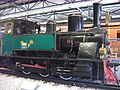
Railway mechanics have restored many of the original steam-powered locomotives: there are nine in working order in Syria and seven in Jordan.[when?]
Since the accession of King Abdullah II in 1999, relations between Jordan and Syria have improved, causing a revival of interest in the railway. The train runs from Qadam station in the outskirts of Damascus, not from the Hejaz Station, which closed in 2004 due to a major commercial development project.[citation needed] Trains run from Khadam station on demand (usually from German, British or Swiss groups). The northern part of the Zabadani track is no longer accessible.
Museums and sightseeing[edit]
In 2008, the "museum of the rolling stock of Al-Hejaz railway" opened in Damascus' Khadam[clarification needed] station after major renovations for an exhibition of the locomotives.[citation needed]
An exhibit on the railway's cultural heritage opened in 2019 at Darat al-Funun in Amman.[17]
As of 2006, there is a small railway museum at the station in Mada'in Saleh in Saudi Arabia[18] and a larger project in the "Hejaz Railway Museum" in Medina, which opened in 2006.[19] The Medina Terminus was restored in 2005 with railway tracks and locomotive shed.[citation needed]
Small non-operating sections of the railway track, buildings and rolling stock are still preserved as tourist attractions in Saudi Arabia. The old railway bridge over the Aqiq Valley at Medina though was demolished in 2005 due to damage from heavy rain the year before.[20]
Trains destroyed by local Arab, French, and British troops during WWI and the Arab Revolt of 1916–1918 can still be seen where they were attacked.[21]
Stations[edit]
Some of the stations were located near the traditional Hajj caravan stations, where the Ottomans had built fortified inns (see Ottoman Hajj route).
The Arabic word for station is "mahattat". The Ottoman- and interwar-period spelling tends to be simpler than the current official ones.
Pre-WWI, the Ottomans used French spelling.[22]
- Damascus Kanawat/Qanawat,[22][23] 1906 extension
- Damascus Kadem/Qadem[22][23] (Cadem Works)
- Kiswe[23] (Al-Kiswah)
- Dair Ali[23] (Deir Ali)
- Mismia[23]/ Al-Mismiya,[22] also Masjid/Masjed
- Jabab/Jebab[22][23] (Ghabaghib)
- Habab (1912)[22]/Khebab[23] (Khabab); in 2000, the station is listed, also at km 69.1, as/at As-Sanamain[22]
- Mehaye[23]/Mohadje[22] (Mahajjah/Muhajjah)
- Shakra[23] (Shaqra(h))
- Ezra[23] (Ezraa/Esra/Izra)
- Gazali[22] (Al-Ghazali, Khirbet Ghazaleh)
- Haifa-Daraa branch line (Jezreel Valley railway)
- Deraa[23] (Daraa)
- Kum Gharz/Koumgarze;[22] now Kawm Gharz (see "Mahattat Kawm Gharz" at MapCarta, 32°36′10″N 36°09′23″E / 32.60278°N 36.15639°E).
- branch line to Bosra
- Nessib[23] (Nasib)
- Syria-Jordan border
- Jaber[22] (Jabir as-Sirhan; see Jaber Border Crossing)
- Mafrak[22] (Mafraq).[23] Has a Hajj fort, Khan or Qal'at el-Mafraq.[24]
- Samra/[23]Semra/Sumra[22] (Khirbet as-Samra, 32°11′N 36°10′E / 32.183°N 36.167°E)
- Zerqa[23]/Zarqa.[22] Has a Hajj fort, Manzil az-Zarqa or Qasr Shabib.[24]
- Rusaifa (in 1930, 38)[22]
- Amman[23]
- Kassir[23] (Qasr; see Al-Qasr, Karak)
- Libban[23]/Lubin[22] (Al Lubban)
- Jiza[23]/Zizia[22] (Djizeh/Al-Jizah). Has a Hajj fort, Manzil or Qal'at Zizya[24]
- Deba'a[23]/Daba'a/Dab'ah[22]
- Khan Zebib[23]/Khan az Zabib[22] (Khan az-Zabib: station at 31°28′19″N 36°06′21″E / 31.47194°N 36.10583°E; Umayyad site see here).
- Sultani[23]/Suaka[22] (Suaq/Suaqa)
- Qatrana[23] (Qatraneh) triangle. Has a Hajj fort, Khan Qatrana/[24]Qasr al-Qatraneh.
- Menzil[23]/Manzil[22]
- Harbet-ul-Kreika (1912)[22]/Faraifra[23] (Farafra)
- Al Hasa[23] (al-Hasa/el-Hassa.)[22] The station stands 5 km southeast of the Ottoman Hajj fort of Khan al-Hasa (1760, 30°50′21″N 35°56′01″E / 30.83917°N 35.93361°E), along Wadi el-Hasa's upper course.[25]
- Jerouf[23] (Jurf ad-Darawish)[22]
- Aneiza/[22]Unaiza[23] (Uneiza/'Unayzah; in Husseiniyeh, Ma'an, Jordan). Has a Hajj fort, Khan al-'Unayzah/[24]Qal'at 'Unaiza.
- Vadi-Djerdoun (1912)[22]/Jerdun[23]
- Mahan (1912)[22]/Ma'an[23] (Old Station). Has a Hajj fort, Manzilt or Qal'at Ma'an.[24]
- Ghadir al Hajj[23] (Gadir al-Hajj)
- Abu Tarfa/[22]Abu Tarafa or Ghadr el Hadj,[22] only post-WWII
- Shidiyya/Shedia,[22] Bir Shedia[23]
- Fassu'a (station only appears on plan here above, in no other source). Has a Hajj fort, Manzilt or Qal'at Fassu'a,[24] which stands along the railway line.[26]
- Aqaba Shamia, name used by thehejazrailway.com[23] - probably same as Aqaba al-Hejaz[22]
- Hittiyya[22]
- Batn al Ghul[23] (Batn al-Ghul/Batn al-Gul)
- Wadi Rutum/[22]Wadi Rutm[23] (Wadi Rassim/[22]Wadi Rasem)
- Tel es Sham/Tel Shahem/[22]Tel Shahm[23] (Tel esh-Sham)
- Ramleh/[22]Ramle[23]
- Mudévéré/[22]Mudawwara.[23] Has a Hajj fort, Manzilt or Qal'at al-Mudawwara.[24]
- Jordan - Saudi Arabia border
- Halat Ammar[23]/Kalaat Amara/Haret Ammar[22]
- Zat-ul-Hadj (1912)/[22]Dhat al-Hajj. Has a Hajj fort.[23]
- Bir Hermas (1911)/[22]Bir Ibn Hermas[23]
- El-Hazim/Al-Hazm[23]
- Muhtatab (Al-Muhtatab)[23]/Makhtab[22]
- Tebouk (1912)/[22]Tabuk[23]
- Wadi Ithil (Wadi al-Athily)[23]
- Khashm Birk[23]/Sahr ul Ghul[22]
- Dar al-Hajj[23] (Dahr al-Hajj/Qareen al-Ghazal)
- Mustabgha[23] (Al-Mustabagha)
- Ashtar alimentation (1911)/Ashdar (1912)/[22]al-Akhdar[23] (Al-Ukhaydir). Has a Hajj fort, Qal'at al-Akhdar/el-Akhthar.
- Maqsadat ad Dunya[22]
- Khamis[23]/Khamees/[22]Khamisa
- Disa'ad[23] - Al-Assda (al-Khanzira)
- Muazzam[23]/Muazzem/Al-Mu'azzam
- Khashm Sana'a[23] (also Khism, Khashim Sanaa)[22]
- Al-Muteli' (km 883 according to route plan above, or km 878[22])
- Dar al-Hamra[23]
- Mutalli[23]/Matali (km 904)[22]
- Abu Taqa[23]
- El Muzhim[22]
- Mabrak al-Naga[23]/Mabrakat al-Naka[22]
- Médain Salih (1912)/[22]Mada'in Saleh/Meda'in Saleh (Al-Hijr/Hegra)[23]
- Wadi Hashish[23][22]
- El Oula (1912)/[22]Alula[23]/Al-'Ula
- Bedaï (2911)/[22]Bedaya[23]
- Mashad[23][22]
- Sahl Matran[23]/Sahel Mater[22]
- Zumurrud[23]/Zumrud/Zomorod[22]
- Bir Jadeed[23]/Bir el Djedid/[22]Bir Jadid
- Towaira[23]/Tuweiro[22]
- Wayban[23]
- Mudarraj (Madahni)[23]
- Hedié (1912)/[22]Hedia/Hadiyya (Hadiyyah, Al Madinah)[27]
- Jeda'a/Jada'a[28]
- Ebou Naam (1911)/[22]Abu Na'am/Abu al-Na'am[29]
- Istabl Antar[30]/Stabl Antar
- Buveiré (1911)/Buéiré (1912)/[22]Buwair[31]
- Bir Nassif[32]
- Buwat[33]
- Hafiré (1912)/[22]Hafira/al-Hafirah[34] Is on Hajj route.
- Bir Abu Jabir[22]
- Makhit[22]/Muhit[35]
- Biri Osman[22]/Bir Osman
- Medine (1912)/[22]Medina[36]
- Medina Citadel
Image gallery[edit]
-
 A coin commemorating the opening of the Ma'an Station of the Hejaz railway
 -
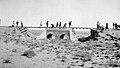 Repairing the railway near Ma'an 1918
 -
-
-
-
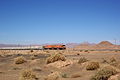
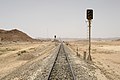 Old railway track to the north of Wadi Rum
 -
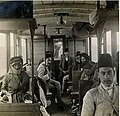 Inside a wagon of the Hejaz train
 -
 Steam excursion train at Kanawat station, Damascus, Syria, in 2000


See also[edit]

- Arab Mashreq International Railway, planned network in the eastern part of the Arab world
- Haramain high-speed railway (built 2009-2018) between Mecca and Medina
- Baghdad Railway (built 1903-1940), initially a German-Ottoman project
- Similar gauges
- Transport in Jordan
- Ottoman Palestine railways
- Eastern Railway, Ottoman WWI line, Tulkarm to Hadera and Tulkarm to Lydda; connected to Jezreel Valley, Jaffa–Jerusalem, and Beersheba lines
- Jaffa–Jerusalem railway (inaugurated 1892)
- Railway to Beersheba or the 'Egyptian Branch', Ottoman WWI line headed towards the Suez Canal; two lines: (Lidda–) Wadi Surar–Beit Hanoun, and Wadi Surar–Beersheba
- Mandate Palestine & Israel railways
- Palestine Railways, government-owned company and rail monopolist in Mandate Palestine (1920-1948)
- Rail transport in Israel
- Coastal railway line, Israel, main line in Mandate Palestine and Israel
- Israel Railways, the state-owned principal railway company in Israel
References[edit]
- ^ Yurtoglu, Nadir. "Türk Standartları Enstitüsünün (TSE) Kuruluşu Bağlamında Türkiye'de Standardizasyon Politikaları (1923-1960)" [Standardization Policies in Turkey Within the Context of the Foundation of Turkish Standards Institution (TSE) (1923-1960)]. History Studies (in Turkish). 10: 241–264. doi:10.9737/hist.2018.658.
- ^ a b c d e Özyüksel, Murat (2016). The Hejaz railway and the Ottoman Empire: Modernity, Industrialisation and Ottoman Decline. Middle Eastern Studies. doi:10.1080/00263206.2016.1209491. S2CID 151393075.
- ^ "Hijaz Railway". Archived from the original on 25 September 2019. Retrieved 23 December 2018.
- ^ Yurtoglu, Nadir. "Türk Standartları Enstitüsünün (TSE) Kuruluşu Bağlamında Türkiye'de Standardizasyon Politikaları (1923-1960)" [Standardization Policies in Turkey Within the Context of the Foundation of Turkish Standards Institution (TSE) (1923-1960)]. History Studies (in Turkish). 10. doi:10.9737/hist.2018.658.
- ^ Cole, Beverly (2011). Trains. Potsdam, Germany: H.F.Ullmann. p. 127. ISBN 978-3-8480-0516-1.
- ^ Alali, Jamal (7 November 2006). Jordan Oil Shale, Availability, Distribution, And Investment Opportunity (PDF). Amman, Jordan: International Oil Shale Conference. Archived from the original (PDF) on 27 May 2008. Retrieved 25 October 2008.
- ^ Hamarneh, Yousef; Alali, Jamal; Sawaged, Suzan (2006). Oil Shale Resources Development In Jordan (PDF) (Report). Amman: Natural Resources Authority of Jordan. Retrieved 25 October 2008.[permanent dead link]
- ^ Cotterell, Paul (1986). "Chapter 3". The Railways of Palestine and Israel. Abingdon, UK: Tourret Publishing. pp. 14–31. ISBN 0-905878-04-3.
- ^ Lawrence, T.E. (1935). Seven Pillars of Wisdom. Garden City: Doubleday, Doran & Company, Inc. pp. 198–203.
- ^ Yardley, Michael (2000). T. E. Lawrence: A Biography. Cooper Square Press. ISBN 9780815410546.
- ^ Centre, UNESCO World Heritage. "Hejaz Railway".
- ^ Judd, Brendon The Desert Railway: The New Zealand Railway Group in North Africa and the Middle East during the Second World War (2003, 2004 Auckland, Penguin) ISBN 0-14-301915-5
- ^ "Hejaz Railway Is Being Rebuilt To Take Moslems To Holy Cities". Reading Eagle. 12 December 1965.
- ^ "How to travel by train from London to Jordan - Damascus-Amman by train". www.seat61.com.
- ^ "Kingdom, Turkey decide to restore historic Hejaz railway". Ghazanfar Ali Khan for Arab News, Jeddah, 5 February 2009. Re-accessed 27 March 2024.
- ^ "Israel-Saudi preparing for railway link". Middle East Monitor. 19 June 2018. Retrieved 9 November 2018.
- ^ Bahaa Al Deen Al Nawas (25 June 2019). "Exhibition traces cultural heritage of Hijaz Railway". Jordan Times. Retrieved 15 September 2023.
- ^ "Move Under Way to Restore Madain Saleh Railway Station", Javid Hassan & P.K. Abdul Ghafour for the Arab News, 22 June 2006. Re-accessed 27 March 2024.
- ^ Article Hejaz Railway Museum Opened Archived 9 June 2009 at the Wayback Machine in the Arab News , 21 January 2006
- ^ "Madinah Municipality Razes Hijaz Railway Bridge". Yousif Muhammad for the Arab News, 31 August 2005. Re-accessed 27 March 2024. See here a picture Archived 1 July 2007 at the Wayback Machine of the damaged bridge and the Medina station before restoration among others.
- ^ James Nicholson. Route Guide: Saudia Arabia at thehejazrailway.com (see station by station). Accessed 27 March 2024.
- ^ a b c d e f g h i j k l m n o p q r s t u v w x y z aa ab ac ad ae af ag ah ai aj ak al am an ao ap aq ar as at au av aw ax ay az ba bb bc bd be bf bg bh bi bj bk bl bm bn bo bp Syria & Lebanon Railways: Passanger Stations & Stops, "6. Damas - Medine", p. 4/5, 11/2000. The Branch Line Society (BLS), Stoke Gifford, UK. Accessed 27 March 2024.
- ^ a b c d e f g h i j k l m n o p q r s t u v w x y z aa ab ac ad ae af ag ah ai aj ak al am an ao ap aq ar as at au av aw ax ay az ba bb bc bd be bf bg bh bi bj bk bl bm bn bo bp James Nicholson. Maps: Syria, Jordan, Saudia Arabia sections at thehejazrailway.com. Accessed 27 March 2024.
- ^ a b c d e f g h Al Shqour, Reem Samed (2019). "Ch. 6, Late Islamic Khans of Jordan: Ottoman Khans/Qila' ". The Aqaba Khans and the Origin of Khans in Jordan: An Archaeological Approach (PDF). Piscataway, NJ: Gorgias Press. ISBN 978-1-4632-0651-2. OCLC 1106116517. Retrieved 27 March 2024.
- ^ Qal'at Al-Hasa at Jordan's Hajj Ottoman forts. Accessed 1 Apr 2024.
- ^ Qal'at Fassu'a at Jordan’s Ottoman Hajj Forts. Accessed 28 March 2024.
- ^ James Nicholson. Hedia Station at thehejazrailway.com. Accessed 27 March 2024.
- ^ James Nicholson. Jeda'a Station at thehejazrailway.com. Accessed 27 March 2024.
- ^ James Nicholson. Abu Na'am Station at thehejazrailway.com. Accessed 27 March 2024.
- ^ James Nicholson. Istabl Antar Station at thehejazrailway.com. Accessed 27 March 2024.
- ^ James Nicholson. Buwair Station at thehejazrailway.com. Accessed 27 March 2024.
- ^ James Nicholson. Bir Nassif Station at thehejazrailway.com. Accessed 27 March 2024.
- ^ James Nicholson. Buwat Station at thehejazrailway.com. Accessed 27 March 2024.
- ^ James Nicholson. Hafira Station at thehejazrailway.com. Accessed 27 March 2024.
- ^ James Nicholson. Muhit Station at thehejazrailway.com. Accessed 27 March 2024.
- ^ James Nicholson. Medina Station at thehejazrailway.com. Accessed 27 March 2024.
Further reading[edit]
- Tourret, R. (1989). Hedjaz Railway. Tourret Publishing. ISBN 0-905878-05-1.
- Nicholson, James (2005). The Hejaz railway. Stacey International Publishers. ISBN 1-900988-81-X.
- Judd, Brendon The Desert Railway: The New Zealand Railway Group in North Africa and the Middle East during the Second World War (2003, 2004 Auckland, Penguin) ISBN 0-14-301915-5
- Özyüksel, Murat The Hejaz Railway and the Ottoman Empire: Modernity, Industrialisation and Ottoman Decline (Bloomsbury Publishing, 2014).
- Edward Mead, Earle (1923). Turkey, the great powers, and the Bagdad Railway: a study in imperialism. New York: Macmillan. Retrieved 13 November 2013.
External links[edit]
- Four podcasts about the Hejaz railway from BBC World service
- pictures and report of travelogue in the Saudi Section of Hejaz railway
- BBC: "A piece of railway history"
- BBC: "Pilgrim railway back on track"
- http://www.hejaz-railroad.info/Galerie.html
- Many pictures from the Hidjaz Railway stations from a 2008 trip across Syria
- Extensive website on the Hejaz railway
- Yarmuk River railway bridges, 1933 aerial photographs. Aerial Photographic Archive for Archaeology in the Middle East / National Archives, London.
- Hejaz railway overlay on Google Maps
| Lines |
| ||||||||
|---|---|---|---|---|---|---|---|---|---|
| Organizations | |||||||||
| Rolling stock |
| ||||||||

| International | |
|---|---|
| National | |
| Other | |
