


University of Geneva
Université de Genève | |
 | |
| Latin: Schola Genevensis | |
| Motto | Post tenebras lux (Latin) |
|---|---|
Motto in English | Light after darkness |
| Type | Public university |
| Established | 1559 |
| Rector | Yves Flückiger |
Administrative staff | approx. 6,500 |
| Students | 17,271 |
| Location | , |
| Campus | Urban |
| Language | French English |
| Affiliations | Coimbra Group LERU EUA IFPU |
| Website | www.unige.ch |
 | |
The University of Geneva (French: Université de Genève) is a public research university located in Geneva, Switzerland. It was founded in 1559 by French theologian John Calvin as a theological seminary.[1][2] It remained focused on theology until the 17th century, when it became a center for enlightenment scholarship. Today, it is the third largest university in Switzerland by number of students.[3]The University of Geneva is consistently ranked one of the top universities in the world.[4]
In 1873, it dropped its religious affiliations and became officially secular.[2] In 2009, the University of Geneva celebrated the 450th anniversary of its founding.[5] Almost 40% of the students come from foreign countries.
The university holds and actively pursues teaching, research, and community service as its primary objectives. UNIGE is a member of the League of European Research Universities (including academic institutions such as Amsterdam, Barcelona, Cambridge, Heidelberg, and Milan) the Coimbra Group and the European University Association.[6]
The university has a diverse student body, with students from over 150 countries. It is also home to numerous research centers and institutes, including the Geneva Centre for Security Policy, the Global Studies Institute, and the Institute of Global Health.
History[edit]
The university was founded in 1559 as the Academy of Geneva (Académie de Genève) by French theologian John Calvin, as a seminary administered by the Company of Pastors, to be the center of public education in Protestant Geneva.[7] With the goal of educating not only pastors but also magistrates for the republic, in 1565 the academy began the teaching of Law.[7]
During the French annexation of Geneva (1798–1813), the school was reorganized into a more universal format, with the introduction of degrees and its division in faculties.[7] This process of modernization continued into the period of national Restoration[7]
Location[edit]
The University of Geneva is located in several districts in the eastern part of the city and in the nearby city of Carouge (on the left bank of the Lake Léman and the Rhône), and the different buildings are sometimes very distant from each other (the Battelle buildings are for instance more than three kilometers away from the Bastions). The oldest building (1559) is the Collège Calvin, and is no longer a university building. Lectures are given in six different main locations, Les Bastions, Uni Dufour, Sciences I, II and III, Uni Mail and Uni Pignon, Centre Médical Universitaire (CMU), and Battelle;[8] as well as in other less important locations. [9]
Uni Bastions[edit]
Built between 1868 and 1871, Uni Bastions is the symbol of Geneva's academic life. It is located in the middle of a park and is host to the faculty of Protestant Theology and to the Faculty of Arts.[10]
Uni Dufour[edit]
.jpg)
Its architecture was inspired by Le Corbusier. It hosts the Rectorat and the administration of the university.[11]
Uni Mail[edit]

It is Switzerland's biggest building dedicated to social sciences. It currently hosts the Faculty of Law, of Economics and Management,[12] of Psychology and Education and the Faculty of Translation and Interpreting.[13]
Organisation[edit]
The University of Geneva is structured in various faculties and interfaculty centers which are representing teaching, research and service to society in the various disciplines.
Faculties[edit]
The university is composed of nine faculties:[14]
- Faculty of Sciences[15]
- Faculty of Medicine[16]
- Faculty of Humanities[17]
- Faculty Geneva School of Economics and Management (GSEM)[18]
- Faculty Geneva School of Social Sciences (G3S)[19]
- Faculty of Law (Geneva Law School)[20]
- Faculty of Theology[21]
- Faculty of Psychology and Education[22]
- Faculty of Translation and Interpreting[23]
Interfaculty centers[edit]
The university is composed of fourteen interfacultary centers. Amongst others:
- Institute for Reformation History (Reformation)
- Interfaculty Center for Informatics (computer science)
- Institute for Environmental Sciences (energy policy)
- The Global Studies Institute
- Interfaculty Center of Gerontology (gerontology)
- Swiss Center for Affective Sciences (affective science)
Associated institutions[edit]
The university has also several partnerships with the nearby institutions, where students at the university may take courses.
- Graduate Institute of International and Development Studies (IHEID)
- Bossey Ecumenical Institute of the World Council of Churches
- Wyss Center for Bio- and Neuro-engineering
- Swiss National Supercomputing Centre
- Art-Law Centre[24]
- Center for Biomedical Imaging(CIBM)
- University Centre of Legal Medicine (CURML)[25]
- The Institute for Work and Health (IST)
Finances[edit]
The University of Geneva had a budget of roughly 760 million CHF for the year 2016.[26] It mostly comes from the cantonal subventions, the other notable contributors being the federal state and the tuition fees.[27]
Libraries and press[edit]
Libraries[edit]
UNIGE's library facilities are spread across four sites.
- Uni Arve is host to seven libraries: Bibliothèque Ernst & Lucie Schmidheiny, Bibliothèque d'Anthropologie, Bibliothèque du Centre universitaire d'informatique, Bibliothèque Georges de Rham (Mathematics), Bibliothèque de l'Institut des Sciences de l'environnement (ISE), Bibliothèque de l'Observatoire (Astronomy) and the Bibliothèque des Sciences de la Terre et de l'environnement.[28]
- Uni Bastions hosts the language libraries, as well as the university's libraries focused on history and musicology.[29]
- Uni CMU is home to an extensive collection of medical issues. Besides, it is also hosts the Centre de documentation en santé (CDS) and the Bibliothèque de l'nstitut de la médecine et de la santé et de l'Institut d'éthique biomédicale (IHMS – IEB).[30]
- Uni Mail's collection is focused on the following themes: Economics and social sciences, Law, Psychology and Learning Sciences, Translation and Interpreting, European studies, French as a foreign language and Musicology. Besides, it also hosts UNIGE's multimedia library.[31]
Press[edit]
The journal de l'UNIGE is released biweekly. Its purpose is to ease communication inside the university, to inform the students about the research being carried at UNIGE, to convey new opinions and to inform students and teachers of upcoming university events via l'Agenda.[32]
Campus is released monthly with the objective to ease communication between the scientific community and the citizens and to be a "bridge between science and city".[33]
Academics[edit]
Admission and fees[edit]
To be enrolled in a bachelor programme, one must hold a Swiss maturity diploma or a secondary diploma considered by the University of Geneva to be equivalent.[34] If the degree was not pursued in French, applicants must pass an eliminatory French language test at the beginning of September, which consists of an oral and a written comprehension test and of a piece of argumentative writing.[35] Tuition fees are of CHF 500 per semester.
Academic year[edit]
UNIGE's academic year runs from mid-September to mid-June. It is divided in two semesters, each one being concluded by an examination session, held respectively at the beginning of January and at the beginning of June. An examination session is held at the end of August and beginning of September as a retake for students who failed their January or June examinations.[36]
During the three days before the start of the new academic year, the Journées d'accueil (Welcome Days) are organized by the university to introduce the new students to the city and the facilities, tips are also given on how to succeed at university. A second chapter including city tours, outdoor concerts and animations is also organized by the student association UniAccueil (AUA) to celebrate the new academic year.[37]
Teaching and degrees[edit]
Before 2005, the university applied various very different models, depending on Faculties, and sometimes even on Departments (or "Sections"). Some Faculties applied the French education model of granting academic degrees, with some minor differences: demi-licence (two years), trois-quarts de licence (three years), licence (four years), diplôme d'études approfondies and diplôme d'études superieures spécialisées (DEA/DESS) (one–two years), and doctorate (three–five years).
The university now follows the requirements of the Bologna process: bachelor's (three years), master's (one–two years), in some departments or sections Master of Advanced Studies (one–two years), doctorate (three–five years).[38]
UNIGE offers more than 240 types of diplomas: about 30 bachelor's degrees,[39] 70 masters and 78 doctorates. It also provides more than 200 programmes of continuing education in various sectors.[40]
International partnerships[edit]
Students at UNIGE have the possibility to study abroad for a semester or a year during their degree. Partner universities include Free University of Berlin, Harvard Law School, École Normale Supérieure, Trinity College Dublin, Erasmus University of Rotterdam, Université Libre de Bruxelles, King's College London, McGill University, HEC Montreal, University of Ottawa, University of Oxford, Uppsala University, Johns Hopkins University, University of Michigan, UCLA, University of Southampton, University of Sydney, University of Tokyo.[41]
Research[edit]
The key sectors of research at the University of Geneva are sciences (molecular biology, bio-informatics, etc.), elementary physics, astrophysics, economics, social sciences, psychology, chemistry, biochemistry and biophysics.
UNIGE is home to six national research centers: in genetics (Frontiers in Genetics), in material sciences (MaNEP), in study of emotions (Affective Sciences), in chemical biology (with EPFL), in study of mental illness (Synaptic, with EPFL and Unil), in study of life path (with Unil). UNIGE also carries research in international studies since the creation in 2013 of the Global Studies Institute, in finance with the Geneva Finance Research Institute,[42] and in environmental studies, with the creation in 2009 of the Institut des sciences de l'environnement.[43]
Famous discoveries have been made by researcher working at UNIGE including the discoveries of extrasolar planets by Michel Mayor, and of quantum teleportation by Nicolas Gisin.
Rankings[edit]
| University rankings | |
|---|---|
| Global – Overall | |
| ARWU World[44] | 49 (2023) |
| CWUR World[45] | 110 (2022–23) |
| QS World[46] | 125 (2023) |
| THE World[47] | 201–250 (2023) |
| USNWR Global[48] | 101 (2022) |
The University of Geneva is consistently ranked one of the top universities in the world.
Global rankings[edit]
In 2023, the University of Geneva was ranked 49rd overall in the world according to the Shanghai Ranking. It was ranked 125th overall according to the QS ranking and 183rd overall according to the THE ranking. In 2006, Newsweek ranked the university 32nd in the world.[49]
The QS World University Rankings[50] ranked the University of Geneva as follows:
| Year | In the World |
|---|---|
| 2016 | 89th |
| 2015 | 85th |
| 2012 | 74th |
| 2011 | 69th |
The Times Higher Education World University Rankings[51] ranked the University of Geneva as follows:
| Year | In the World |
|---|---|
| 2015–2016 | 131st |
| 2012–2013 | 133rd |
| 2011–2012 | 116th |
| 2010–2011 | 118th |
Subject rankings[edit]
In molecular biology, the impact of the research carried in Geneva was ranked 4th in Europe by Times Higher Education for the period 1999–2009, directly behind the University of Oxford.[52]
The QS 2013 subject ranking placed the University of Geneva at the 21st place in the field of Pharmacy and at the 49th place in Philosophy. In every subject, the university was ranked in the world's top 200.[53]
Other rankings[edit]
In the 2013 QS ranking, the university was ranked 24th in the world for most international faculty and 20th in the world for most international student body.[54] In 2023, it was ranked 26th best university overall in Europe.
Student body[edit]
In 2016, 16,530 students were studying at UNIGE, of whom 61% were female. 37% of the students were non-Swiss, originating from 151 countries. 4,449 teachers and collaborators, of whom 49% are female, are working for UNIGE.[55]
Student life[edit]
Sports[edit]
The Bureau des sports organizes all the sports related activity at UNIGE. Free sports lessons are given every day and it suffices to show one's student card to access. Other lessons organization with the university's partners demand a small fee.[56] UNIGE is home to the Geneva university championships in basketball, indoor football, rowing, badminton, outdoor football.[57] The university also sends teams to the Swiss university championship in badminton, indoor football, skiing, basketball, fencing, football, golf, ice-hockey, table tennis and volleyball.[58] UNIGE also provides special schedules for students wishing to pursue their high level sporting career and to study at the same time.[59]
Associations[edit]
Alumni UNIGE is the alumni association of the University of Geneva, it offers a network of several thousand people to its members, as well as other advantages, such as discount prizes, special events, access to the official networking platform.[60] Atout-lettres is the alumni association of the literature students of the university, founded in 1997. Its purpose is to prepare the professional insertion of the literature students, to establish links between literature student and the working world and to promote the formation given by the Faculté de Lettres.[61]
Alumni[edit]
Over the course of its history, a sizeable number of UNIGE alumni have become notable in their fields, both academic, and in the wider world.[62] Affiliates of the University of Geneva have won 10 Nobel prizes. Graduate alumni (Martin Hairer and Vaughan Jones) have won 2 Fields Medals.
The university has hosted several Nobel laureates as students, researchers and/or professors: Norman Angell (1872–1967), Nobel Peace Prize 1933; Karl Gunnar Myrdal (1898–1987) Nobel Prize in Economic Sciences 1974; Daniel Bovet (1907–1992), Nobel Prize in Medicine 1957; Niels Kaj Jerne (1911–1994), Nobel Prize in Medicine 1984; Maurice Allais (1911–2010), Nobel Prize in Economic Sciences 1988; Edmond H. Fischer (1920–2021), Nobel Prize in Medicine 1992; Martin Rodbell (1925–1998), Nobel Prize in Medicine 1994; Alan Jay Heeger (born 1936), Nobel Prize in Chemistry 2000; Werner Arber (born 1929), Nobel Prize in Medicine 1978; Kofi Annan (1938–2018), Nobel Peace Prize 2001; Michel Mayor (1942-- ) and Didier Queloz (1966-- ), Nobel Prize in Physics 2019 (jointly with James Peebles).
It has also hosted or graduated three Fields Medal laureates: Vaughan Jones (1952–2020), laureate in 1990, Stanislav Smirnov (born 1970), laureate in 2010 and Martin Hairer (born 1975), laureate in 2014.
- Selected Nobel laureate affiliates of UNIGE
-
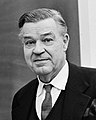 Karl Gunnar Myrdal, recipient of the 1974 Nobel Prize in Economic Sciences
 -
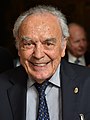 Werner Arber, recipient of the 1978 Nobel Prize in Physiology or Medicine
 -
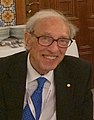 Edmond H. Fischer, recipient of the 1992 Nobel Prize in Physiology or Medicine
 -
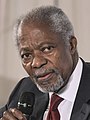 Kofi Annan, recipient of the 2001 Nobel Peace Prize
 -
 Didier Queloz, recipient of the 2019 Nobel Prize in Physics
.jpg)
.jpg)

.jpg)

Notable scholars[edit]
- Werner Arber (born 1929)
- Fawzia Al-Ashmawi (born 1940s)
- Jonathan Barnes (born 1942)
- Roland Barthes (1915–1980)
- Samuel Baud-Bovy (1906–1986)
- Theodore Beza (1519–1605)
- Yves Bonnefoy (1923–2016)
- Raymond Boudon (born 1934)
- Jacques Bouveresse (1940–2021)
- François Bovon (1938-2013)
- Michel Butor (1926–2016)
- John Calvin (1509–1564)
- Edouard Claparède (1873–1940)
- Raphael H. Cohen (born 1953)
- Georges Cottier (1922–2016)
- Gabriel Cramer (1704–1752)
- Victoria Curzon-Price (born 1942)
- Sheridan Delépine (1855–1921)
- Kuppamuthu Dharmalingam (born 1949)
- Jean-Pierre Eckmann (born 1944)
- Pascal Engel (born 1954)
- Georges Favon (1843–1902)
- Guglielmo Ferrero (1871–1942)
- Adolphe Ferrière (1879–1960)
- Øystein Fischer (1942–2013)
- Théodore Flournoy (1854–1920)
- Harry Gideonse (1901–1985), President of Brooklyn College, and Chancellor of the New School for Social Research
- Jeanne Hersch (1910–2000)
- Bärbel Inhelder (1913–1997)
- Albert Jacquard (1925–2013)
- Hans Kelsen (1881–1973)
- Stephan Klapproth (born 1958)
- Ulrich K. Laemmli (born 1940)
- Jan-Erik Lane (born 1946)
- Nadia Magnenat Thalmann (born 1946)
- Giorgio Malinverni (born 1941)
- Michel Mayor (born 1942)
- Hans Morgenthau (1904–1980)
- Kevin Mulligan (born 1951)
- Robert Mundell (1932–2021)
- Marguerite Narbel (1918–2010)[63]
- Joseph Nye (born 1937)
- Carlo Ossola (born 1946)
- Jean Piaget (1896–1980)
- Jean Pictet (1914–2002)
- Franciscus Portus (1511–1581)
- Albert de Pury (born 1940)
- William Rappard (1883–1958)
- André Rey (1906–1965)
- Gonzague de Reynold (1880–1970)
- Georges de Rham (1903–1990)
- Denis de Rougemont (1906–1985)
- Jean Rousset (1910–2002)
- Ferdinand de Saussure (1857–1913)
- Joseph Justus Scaliger (1540–1609)
- Klaus Scherer (born 1943)
- Klaus Schwab (born 1938)
- Jean de Serres (1540–1598)
- Stanislav Smirnov (born 1970)
- Jean Starobinski (1920–2019)
- Maurice Stroun (1926-2017)
- George Steiner (1929–2020)
- Ernst Stueckelberg (1905–1984)
- Carsten Peter Thiede (1952–2004)
- Chaim Weizmann (1874–1952)
- Éric Werner (born 1940)
- Zhang Weiwei (born 1958)
- Jean Ziegler (born 1934)
Notable alumni[edit]
- Henri of Luxembourg (HEI)
- Maria Teresa Mestre
- Astrid de Belgique (IUEE)
- Joséphine-Charlotte de Belgique
- Nora of Liechtenstein (HEI)
- Marie José Burki
- Elias Farah
- Emanuele Filiberto di Savoia
- Dario Item
- Bonaya Adhi Godana
- Hartley Shawcross, Baron Shawcross
- Sir Norman Angell
- Natalia Aszkenazy
- José Manuel Durão Barroso (IUEE)
- Ferdinand P. Beer
- Manolo Blahnik
- Nicolas Bouvier
- Micheline Calmy-Rey (HEI)
- Róbert Cey-Bert
- Marguerite Champendal
- Corinne Chaponnière
- Albert Cohen
- Hernando de Soto
- Ruth Dreifuss
- Jacques Dubochet
- Georges Favon
- Ian Fleming
- Paul Flowers
- Diane von Fürstenberg
- Claude Goretta
- Martin Hairer
- Jean Hoerni
- Afet İnan
- Sandra Kalniete (HEI)
- Sophie Kanza
- Lazare Kopelmanas
- Zygmunt Krasiński
- Dominique Lévy[64]
- Kaweh Mansouri
- Moshe Many
- Gilles Marchand
- Şükrü Saracoğlu
- Fátima Mereles
- Serge Moscovici
- Placide Nicod
- Claude Nicollier
- Jean Pictet
- Emma Pieczynska-Reichenbach
- Claude Piron
- Hans-Gert Pöttering
- Nasser Mohammed Al-Ahmed Al-Sabah
- Arnold Reymond
- Marco Solari
- Jürgen Wöhler
- Ehsan Naraghi
- Georg Seelig
- Sigmund Widmer
- Tariq Ramadan
- Hani Ramadan
- Elena Aprile
- Paul Dubrule
- Frank Martin
- Enrique Moles Ormella
- Riadh Sidaoui
- Alain Tanner
- Sophie Schwartz
- Alan E. Zimmer
- Mirjana Spoljaric Egger
In fiction[edit]
- James Bond briefly studied at the University of Geneva, as did his creator, Ian Fleming .[65]
See also[edit]
- List of early modern universities in Europe
- List of largest universities by enrollment in Switzerland
- International Academy of Sport Science and Technology (AISTS)
References[edit]
- ^ "About the University – Université de Genève". www.unige.ch. 28 July 2016. Retrieved 26 March 2021.
- ^ a b "Our Heritage – Faculté d'économie et de management – UNIGE". www.unige.ch. 27 April 2017. Retrieved 26 March 2021.
- ^ "University of Geneva (UNIGE)". Studying in Switzerland. 5 September 2006.
- ^ "Academic Ranking of World Universities 2022". Shanghai Ranking Consultancy. Retrieved 31 January 2024.
- ^ "University of Geneva honors LHC project leader at 450th anniversary ceremony". CERN. 5 June 2009.
- ^ "University in the Spotlight: University of Geneva". Globalinksabroad.
- ^ a b c d Marco Marcacci. "Université de Genève". Historical Dictionary of Switzerland (in French).
- ^ "L'Université de Genève a fêté ses 450 ans en 2009". Schenk Photos. Archived from the original on 24 September 2015. Retrieved 29 July 2014.
- ^ "Accueil". Bâtiments: plans d'accès. Université de Genève. Retrieved 14 January 2018.
- ^ "Accueil". Bâtiments: plans d'accès. Université de Genève. Retrieved 14 January 2018.
- ^ "Accueil". Bâtiments: plans d'accès. Université de Genève. Retrieved 14 January 2018.
- ^ "GSEM". Archived from the original on 17 July 2017. Retrieved 17 July 2017.
- ^ "Accueil". Bâtiments: plans d'accès. Université de Genève. Retrieved 14 January 2018.
- ^ "Facultés, école, UPER". Archives. Université de Genève. Archived from the original on 12 August 2014.
- ^ "Faculty of Science – Faculté des sciences – UNIGE". www.unige.ch. 12 August 2007. Retrieved 21 August 2023.
- ^ "University of Geneva – PhD School of Life Sciences | Welcome to the PhD School in Life Sciences at the Faculties of Medicine and Science". lifesciencesphd.unige.ch. Retrieved 21 August 2023.
- ^ "Welcome to the Faculty of Humanities!". www.unige.ch. 5 March 2014. Retrieved 21 August 2023.
- ^ "Geneva School of Economics and Management – Faculté d'économie et de management – UNIGE". www.unige.ch. 5 January 2017. Retrieved 21 August 2023.
- ^ "About us". www.unige.ch. 2 December 2009. Retrieved 21 August 2023.
- ^ "Welcome to the Faculty of Law". www.unige.ch. 19 February 2009. Retrieved 21 August 2023.
- ^ "Faculté de théologie – Faculté de théologie – UNIGE". www.unige.ch (in French). 1 February 2006. Retrieved 21 August 2023.
- ^ "FPSE – Faculté de Psychologie et des Sciences de l'Éducation – UNIGE". www.unige.ch (in French). 6 August 2015. Retrieved 21 August 2023.
- ^ "Faculty of Translation and Interpreting – University of Geneva". www.unige.ch. 29 April 2016. Retrieved 21 August 2023.
- ^ "Bienvenue". droit de l'art. Université de Genève. Retrieved 14 January 2018.
- ^ "Centre Universitaire Romand – CURML". Curml.ch. Retrieved 14 January 2018.
- ^ "Rapport financier et budget". L'Université se présente (in French). Université de Genève. 19 January 2017. Retrieved 15 June 2017.
- ^ "Budget 2013" (PDF). Unige.ch. Retrieved 14 January 2018.
- ^ "Site Uni Arve". Bibliothèque. Université de Genève. 17 April 2013. Retrieved 14 January 2018.
- ^ "Site Uni Bastions". Bibliothèque. Université de Genève. 17 April 2013. Retrieved 14 January 2018.
- ^ "Site Uni CMU". Bibliothèque. Université de Genève. 17 April 2013. Retrieved 14 January 2018.
- ^ "Site Uni Mail". Bibliothèque. Université de Genève. 17 April 2013. Retrieved 14 January 2018.
- ^ "Journal n°77". Le Journal. Université de Genève. 18 February 2013. Retrieved 14 January 2018.
- ^ "Campus n°100, édition spéciale". Unige.ch. 20 April 2007. Retrieved 14 January 2018.
- ^ "Accueil :: S'inscrire à l'UNIGE 2019–20" (PDF). Archived from the original (PDF) on 18 July 2013. Retrieved 11 August 2013.
- ^ "Examen de français". Division de la formation et des étudiants. Université de Genève. 3 August 2013. Archived from the original on 3 August 2013. Retrieved 14 January 2018.
- ^ "Studying/Doing research". International. Université de Genève. Archived from the original on 4 March 2013.
- ^ "Programme des Welcome Days 2013". Accueil et intégration. Université de Genève. 1 August 2013. Archived from the original on 1 August 2013. Retrieved 14 January 2018.
- ^ "Enseigner et Apprendre". Division de la formation et des étudiants. Université de Genève. 6 May 2015. Retrieved 14 January 2018.
- ^ "Fiches Bachelors". Futurs Étudiants. Université de Genève. Archived from the original on 3 March 2013.
- ^ "Centre pour la formation continue et à distance". Centre pour la formation continue et à distance. Université de Genève. 10 August 2015. Retrieved 14 January 2018.
- ^ "Archived copy". 129.194.40.25. Archived from the original on 11 January 2014. Retrieved 14 January 2022.
{{cite web}}: CS1 maint: archived copy as title (link) - ^ "Geneva Finance Research Institute". Faculté d'économie et de management. Université de Genève. Retrieved 14 January 2018.
- ^ "Thématiques de l'institut". Institut des Sciences de l'Environnement. Université de Genève. June 2015. Retrieved 20 July 2015.
- ^ "Academic Ranking of World Universities 2022". Shanghai Ranking Consultancy. Retrieved 25 October 2022.
- ^ "World University Rankings 2022–23". Center for World University Rankings. Retrieved 25 October 2022.
- ^ "QS World University Rankings 2023". Retrieved 25 October 2021.
- ^ "World University Rankings 2023". 4 October 2022. Retrieved 25 October 2022.
- ^ "U.S. News Education: Best Global Universities 2022". Retrieved 25 October 2022.
- ^ "Archived copy" (PDF). Archived from the original (PDF) on 29 October 2013. Retrieved 10 August 2013.
{{cite web}}: CS1 maint: archived copy as title (link) - ^ "QS World University Rankings 2010 Results". Topuniversities.com. Retrieved 14 January 2018.
- ^ "Times Higher Education World University Rankings". Timeshighereducation.co.uk. 13 April 2015. Retrieved 14 January 2018.
- ^ "Top European Institutions in Molecular Biology". Times Higher Education. 13 May 2010. Retrieved 20 July 2015.
- ^ "University of Geneva Rankings". Top Universities. Retrieved 20 July 2015.
- ^ "University of Geneva Rankings". Top Universities. Retrieved 20 July 2015.
- ^ "Publications". Unige.ch. 5 September 2006. Retrieved 14 January 2018.
- ^ "Calendrier & Horaires". Archived from the original on 28 December 2012. Retrieved 10 August 2013.
- ^ "Championnats". Archived from the original on 15 July 2013. Retrieved 10 August 2013.
- ^ "Championnats". Archived from the original on 25 June 2013. Retrieved 10 August 2013.
- ^ "Sport Etudes". Archived from the original on 17 July 2013. Retrieved 10 August 2013.
- ^ "Services & avantages – ALUMNI – UNIGE". Archived from the original on 11 August 2013. Retrieved 10 August 2013.
- ^ "Atouts Lettres – Présentation". Asso-etud.unige.ch. Archived from the original on 23 June 2008. Retrieved 20 July 2015.
- ^ For a summary description of all of the set of scholars and literati who intervened in teaching at the University of Geneva since its inception to the eve of the Industrial Revolution (1800), see Valentine Debois and David de la Croix, (2021), Scholars and Literati at the University of Geneva (1559–1800), Repertorium Eruditorum Totius Europae/RETE, 1:41–47.
- ^ Marion, Gilbert (7 July 2011). "Narbel, Marguerite". Historical Dictionary of Switzerland (in German). Translated by Alice Holenstein-Beereuter. Retrieved 20 January 2023.
- ^ "Dominique Levy". Dominique-levy.com. Archived from the original on 23 June 2013. Retrieved 8 May 2014.
- ^ * Pearson, John (2008). James Bond: The Authorised Biography. Random House. ISBN 978-0-09-950292-0., p. 299
External links[edit]


