


Soyuz-2
 A MetOp spacecraft ready for the launch atop a Soyuz-2.1a rocket. | |
| Function | Orbital launch vehicle |
|---|---|
| Manufacturer | TsSKB-Progress (Samara) and Chemical Automatics Design Bureau (Voronezh) [1] |
| Country of origin | Russia |
| Cost per launch | US$80 million (Arianespace) [5] US$35-48.5 million (Roscosmos) [2][3] |
| Size | |
| Height | 46.3 m (152 ft) [4] |
| Diameter | 2.95 m (9 ft 8 in) |
| Mass | 312,000 kg (688,000 lb) |
| Stages | 2 or 3 |
| Capacity | |
| Payload to LEO[a] | |
| Mass | 2.1a: 7,020 kg (15,480 lb) 2.1b: 8,200 kg (18,100 lb) [4] |
| Payload to SSO[b] | |
| Mass | ST-A: 4,230 kg (9,330 lb) ST-B: 4,900 kg (10,800 lb) [5] |
| Payload to GTO[c] | |
| Mass | ST-A: 2,810 kg (6,190 lb) ST-B: 3,250 kg (7,170 lb) [5] |
| Payload to TLI [d] | |
| Mass | ST-B: 2,350 kg (5,180 lb) [6] |
| Payload to GSO [e] | |
| Mass | ST-B: 1,360 kg (3,000 lb) [6] |
| Associated rockets | |
| Family | R-7 (Soyuz) |
| Launch history | |
| Status | Active |
| Launch sites | |
| Total launches | 175 (+1 suborbital) (2.1a: 74 (+1 suborbital), 2.1b: 89, 2.1v: 12) |
| Success(es) | 168 (+1 suborbital) (2.1a: 71 (+1 suborbital), 2.1b: 86, 2.1v: 11) |
| Failure(s) | 4 (2.1a: 2, 2.1b: 2, 2.1v: 0) |
| Partial failure(s) | 3 (2.1a: 1, 2.1b: 1, 2.1v: 1) |
| First flight |
|
| Last flight |
|
| Type of passengers/cargo | |
| Boosters – Blok-B, V, G, D [7] | |
| No. boosters | 4 |
| Height | 19.6 m (64 ft) |
| Diameter | 2.68 m (8 ft 10 in) |
| Empty mass | 3,784 kg (8,342 lb) |
| Gross mass | 44,413 kg (97,914 lb) |
| Propellant mass | 39,160 kg (86,330 lb) |
| Powered by | RD-107A |
| Maximum thrust | Sea level: 839.48 kN (188,720 lbf) Vacuum: 1,019.93 kN (229,290 lbf) |
| Specific impulse | Sea level: 263.3 s (2.582 km/s) Vacuum: 320.2 s (3.140 km/s) |
| Burn time | 118 seconds |
| Propellant | LOX / RP-1 |
| First stage – Blok-A [7] | |
| Height | 27.10 m (88.9 ft) |
| Diameter | 2.95 m (9 ft 8 in) |
| Empty mass | 6,545 kg (14,429 lb) |
| Gross mass | 99,765 kg (219,944 lb) |
| Propellant mass | 90,100 kg (198,600 lb) |
| Powered by | RD-108A |
| Maximum thrust | Sea level: 792.41 kN (178,140 lbf) Vacuum: 921.86 kN (207,240 lbf) |
| Specific impulse | Sea level: 257.7 s (2.527 km/s) Vacuum: 320.6 s (3.144 km/s) |
| Burn time | 286 seconds |
| Propellant | LOX / RP-1 |
| Second stage – Blok-I [7] | |
| Height | 6.70 m (22.0 ft) |
| Diameter | 2.66 m (8 ft 9 in) |
| Empty mass | 2,355 kg (5,192 lb) |
| Gross mass | 27,755 kg (61,189 lb) |
| Propellant mass | 25,400 kg (56,000 lb) |
| Powered by | 2.1a / STA: RD-0110 2.1b / STB: RD-0124 |
| Maximum thrust | RD-0110: 298 kN (67,000 lbf) RD-0124: 294.3 kN (66,200 lbf) |
| Specific impulse | RD-0110: 326 seconds RD-0124: 359 seconds |
| Burn time | 270 seconds |
| Propellant | LOX / RP-1 |
| Upper stage (optional) – Fregat / Fregat-M / Fregat-MT [8] | |
| Height | 1.5 m (4 ft 11 in) |
| Diameter | Fregat / Fregat-M: 3.35 m (11.0 ft) Fregat-MT: 3.80 m (12.5 ft) |
| Empty mass | Fregat: 930 kg (2,050 lb) Fregat-M: 980 kg (2,160 lb) Fregat-MT: 1,050 kg (2,310 lb) |
| Propellant mass | Fregat: 5,250 kg (11,570 lb) Fregat-M: 5,600 kg (12,300 lb) Fregat-MT: 7,100 kg (15,700 lb) |
| Powered by | S5.92 |
| Maximum thrust | 19.85 kN (4,460 lbf) |
| Specific impulse | 333.2 seconds |
| Burn time | 1100 seconds |
| Propellant | N2O4 / UDMH |
| Upper stage (optional) – Volga[9] | |
| Height | 1.025 m (3 ft 4.4 in) |
| Diameter | 3.2 m (10 ft) |
| Empty mass | 840 kg (1,850 lb) |
| Propellant mass | 300–900 kg (660–1,980 lb) |
| Powered by | 17D64[10] |
| Maximum thrust | 2.94 kN (660 lbf) |
| Specific impulse | 307 seconds |
| Propellant | N2O4 / UDMH |
Soyuz-2 (Russian: Союз-2, lit. 'Union-2c') (GRAU index 14A14) is a modernised version of the Soviet Soyuz rocket. In its basic form, it is a three-stage launch vehicle for placing payloads into low Earth orbit. Compared to the previous versions of the Soyuz, the first-stage boosters and two core stages feature uprated engines with improved injection systems. Digital flight control and telemetry systems allow the rocket to be launched from a fixed launch platform, whereas the launch platforms for earlier Soyuz rockets had to be rotated as the rocket could not perform a roll to change its heading in flight.
Soyuz-2 is often flown with an upper stage, which allows it to lift payloads into higher orbits, such as Molniya and geosynchronous orbits. The upper stage is equipped with independent flight control and telemetry systems from those used in the rest of the rocket. The NPO Lavochkin manufactured Fregat is the most commonly used upper stage.
Soyuz-2 rockets were first launched from Site 31 at the Baikonur Cosmodrome, and Site 43 at the Plesetsk Cosmodrome, launch facilities shared with earlier R-7 derived rockets including the Soyuz-U and Molniya. Commercial Soyuz-2 flights are contracted by Starsem and have launched from Site 31 at Baikonur Cosmodrome and Ensemble de Lancement Soyouz (ELS), which has been built at the Centre Spatial Guyanais (CSG) on the northern coast of South America. The Soyuz-2 version ST-B can deliver 3,250 kg (7,170 lb) to geostationary transfer orbit (GTO) from this equatorial site.[5] As of 2022 Soyuz-2 launches from CSG have been suspended.[11]
In 2016, the new Vostochny Cosmodrome started operating Soyuz-2 flights as well, from its first launch pad called Vostochny Cosmodrome Site 1S.
The Soyuz-2 has replaced the Molniya-M, Soyuz-U and Soyuz-FG since 2010, 2017 and 2019 respectively.[12][13][14] TsSKB-Progress halted production of Soyuz-U in April 2015; the final flight of a Soyuz-U rocket took place on 22 February 2017, carrying Progress MS-05 to the International Space Station (ISS).
Variants[edit]
The Soyuz-2 family includes 2.1a, 2.1b, and 2.1v. The first two variants are modifications to the Soyuz-U launcher. The latter is a "light" version without side boosters. When launched from the Centre Spatial Guyanais site, Soyuz-2 is always mated with the ST-type fairing; this version is called Soyuz-ST or Soyuz-STK, where additional "K" indicates special measures taken for preparing and launching the rocket in hot and humid conditions.
Soyuz-2.1a[edit]
The 2.1a version includes conversion from analog to digital flight control system, upgraded engines on the booster and a first stage with improved injection systems. The new digital flight control and telemetry systems allow the rocket to launch from a fixed rather than angled launch platform and adjust its heading in flight. A digital control system also enables the launch of larger commercial satellites with wider and longer payload fairings such as the ST-type fairing. These fairings introduce too much aerodynamic instability for the old analog system to handle. This stage continues to use the RD-0110 engine. The 2.1a/ST version is sometimes called Soyuz ST-A. The first launch, from Guiana, (17 December 2011 for Pléiades-HR 1A, SSOT, ELISA (4 satellites)) was a success.
Soyuz-2.1b[edit]
The 2.1b version adds an upgraded engine (RD-0124) which greatly increases the specific impulse of the upper stage (326 seconds to 359 seconds), and hence improves payload capability from 7 tonnes to 8.2 tonnes. First launch took place from Plesetsk Cosmodrome Site 43 on 26 July 2008 with a classified military payload.[15] The 2.1b/ST version is sometimes called Soyuz ST-B. The first launch, from Centre Spatial Guyanais, was a success (21 October 2011), for the first two Galileo IOV satellites.
Soyuz-2.1v[edit]
The first flight vehicle of the 2.1v version was finished in 2009. It is a "light" version of the Soyuz-2 without the side boosters (blocks B, V, G and D [clarification needed]). The Block A engine was replaced by the more powerful NK-33-1, which as of 2009[update], was to eventually be replaced with the RD-193.[needs update] The new launcher version was able to deliver up to 2.8 tonnes in low Earth orbit.[16]
Modifications for various launch sites[edit]
The Soyuz-2.1a/1b versions launched from the Vostochny Cosmodrome and the Centre Spatial Guyanais have a series of modifications over the stock units. Some of these might later be implemented on all the Soyuz-2, while some are particular requirements to the space port design.
Modifications for the Centre Spatial Guyanais (CSG) version includes:
- First use of a mobile service tower at the ELS that enabled vertical payload integration.[7]
- European supplied payload adapters.[7]
- European supplied KSE (French: Kit de Sauvegarde Européenne, lit. 'European Safeguard Kit'), a system to locate and transmit a flight termination signal.[7] It would activate the engine shutdown command and leave the vehicle in a ballistic trajectory.[17]
- Adaptation of the S-Band telemetry system on all stages from the 5 TM bands available at Baikonur, and Plesetsk to the 3 allowed at the CSG range.[7]
- Adaptation of the S-Band telemetry coding and frequency to the IRIG standard used at CSG.[7]
- Adaptation of the oxygen purge system for directing to the outside the mobile gantry.[7]
- Adaptation to the tropical CSG climate including the adaptation of the air conditioning system to local specifications and protective measures to avoid icing.[7] All holes and cavities were studied and certified to be adequately protected against intrusion of insects and rodents.[17]
- The four boosters and the core stage were upgraded with pyrotechnic devices to breach the fuel tanks to assure that they would sink in the ocean. The other stages were shown to lose structural integrity on impact and thus proven to sink.[17]
- At least initially, the boosters and core stage would use the pyrotechnically ignited 14D22 (RD-107A) and 14D23 (RD-108A) rather than the chemically ignited 14D22KhZ and 14D23KhZ used on the rest of the Soyuz-2.[17]
Modifications for the Vostochny Cosmodrome version includes:[18]
- New and upgraded computer, N.A.Semikhatov NPO Automatika's Malachite-7, with six times more performance, better obsolescence protection, reduced weight.[19][20][21]
- The new computer enabled a significant reduction on the cable network complexity thanks to multiplexing lines and using common buses.[18][21][22]
- New nickel-cadmium batteries that eliminate the need for a dedicated battery charging station.[19]
- The inclusion of on-board video system, that will enable real-time views of the launch.[19]
- Since the launch pad at Vostochny also has a mobile gantry for vertical payload integration, similar to the ELS at Guiana, it has the necessary piping to direct the oxygen purges outside the gantry.[18]
On 1 October 2015, it was announced that parts of the assembly complex for the Soyuz-2 at Vostochny Cosmodrome were designed for a different modification of the rocket and are too small, so that the planned first launch in December 2015 was under question.[23] The first launch occurred on 28 April 2016 at 02:01:21 UTC.[24]
-
 Soyuz-2.1b (2018)
 -
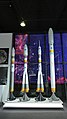 From left Soyuz-2.1v, Soyuz-2.1a, Soyuz-2.1b and Soyuz-5)


Notable missions[edit]
Suborbital test flight[edit]
On 8 November 2004, at 18:30 UTC, the first Soyuz-2 carrier rocket, in the Soyuz-2.1a configuration, was launched from the Plesetsk Cosmodrome in Russia. The rocket followed a sub-orbital trajectory, with the third stage and boilerplate payload re-entering over the Pacific Ocean.
Maiden launch[edit]
The first attempt at launching a Soyuz-2 to orbit, with the MetOp-A satellite, occurred on 17 July 2006. It was scrubbed two hours before the launch by an automatic sequence, after the onboard computer failed to check the launch azimuth. Fuelling of the rocket was underway at the time, and all launch complex equipment and on-board preliminary checks had proceeded without incident. The rocket was left fuelled on the launch pad, for the next attempt on 18 July 2006. Launch was eventually conducted on 19 October 2006.
First crewed mission[edit]
First crewed launch of Soyuz-2 took place at 9 April 2020, carrying Soyuz MS-16 to the ISS.
Naphthyl fuel[edit]
Following successful ground testing, a naphthyl fueled Soyuz-2.1b launch took place on 22 October 2022 at Vostochny. Naphthyl is an environmentally safe hydrocarbon fuel with fewer aromatic compounds than kerosene, that also slightly improves engine performance. There are only minor differences in thermal properties, viscosity, and surface tension, so this did not require significant engine changes.[25]
Launch statistics[edit]
Since 2006, Soyuz-2 rockets have accumulated a total of 175 launches, 168 of which were successful, yielding a 96% success rate.
Launch outcomes[edit]
- Failure
- Partial failure
- Success
- Scheduled
List of launches[edit]
| # | Launch date Time (UTC) |
Configuration | Spaceport | Result | Payload | Remarks |
|---|---|---|---|---|---|---|
| — | 8 November 2004 18:30 |
Soyuz-2.1a | Plesetsk, Site 43 |
Success | Zenit-8 (boilerplate) | Suborbital test flight |
| 1 | 19 October 2006 16:28 |
Soyuz-2.1a Fregat |
Baikonur Site 31 |
Success | MetOp-A | Weather satellite |
| 2 | 24 December 2006 08:34 |
Soyuz-2.1a Fregat |
Plesetsk Site 43 |
Success | Meridian 1 | Military communications satellite |
| 3 | 27 December 2006 14:28 |
Soyuz-2.1b Fregat |
Baikonur Site 31 |
Success | CoRoT | Astronomy satellite |
| 4 | 26 July 2008 18:31 |
Soyuz-2.1b | Plesetsk Site 43 |
Success[26] | Kosmos 2441 (Persona No.1) | Reconnaissance satellite |
| Launch was successful but satellite failed after a few months of operations due to an electrical fault. | ||||||
| 5 | 21 May 2009 21:53 |
Soyuz-2.1a Fregat |
Plesetsk Site 43 |
Failure [27] | Meridian 2 | Military communications satellite |
| Bulging of third-stage combustion chamber led to fuel leak and automatic deactivation; satellite in unusable orbit after failed correction attempt. | ||||||
| 6 | 17 September 2009 15:55 |
Soyuz-2.1b Fregat |
Baikonur Site 31 |
Success | Meteor-M No.1 |
Weather satellite + 6 piggyback satellites |
| 7 | 19 October 2010 17:11 |
Soyuz-2.1a Fregat-M |
Baikonur Site 31 |
Success | Globalstar-2 F1 (6 satellites) | Communications satellite |
| 8 | 2 November 2010 00:59 |
Soyuz-2.1a Fregat-M |
Plesetsk Site 43 |
Success | Meridian 3 | Military communications satellite |
| 9 | 26 February 2011 03:07 |
Soyuz-2.1b Fregat-M |
Plesetsk Site 43 |
Success | Kosmos 2471 (GLONASS-K 11L) | Navigation satellite |
| 10 | 4 May 2011 17:41 |
Soyuz-2.1a Fregat-M |
Plesetsk Site 43 |
Success | Meridian 4 | Military communications satellite |
| 11 | 13 July 2011 02:27 |
Soyuz-2.1a Fregat-M |
Baikonur Site 31 |
Success | Globalstar-2 F2 (6 satellites) | Communications satellite |
| 12 | 2 October 2011 20:15 |
Soyuz-2.1b Fregat-M |
Plesetsk Site 43 |
Success | Kosmos 2474 (GLONASS-M 742) | Navigation satellite |
| 13 | 21 October 2011 10:30 |
Soyuz ST-B Fregat-M |
Kourou ELS |
Success [28] | Galileo IOV-1/2 | Navigation satellite First launch from Kourou |
| 14 | 28 November 2011 08:25 |
Soyuz-2.1b Fregat-M |
Plesetsk Site 43 |
Success [29] | Kosmos 2478 (GLONASS-M 746) | Navigation satellite |
| 15 | 17 December 2011 02:03 |
Soyuz ST-A Fregat-M |
Kourou ELS |
Success [30] | Pléiades 1A SSOT ELISA 1/2/3/4 |
Remote sensing satellite Earth observation satellite for Chile Signals intelligence satellite |
| 16 | 23 December 2011 12:08 |
Soyuz-2.1b Fregat-M |
Plesetsk Site 43 |
Failure [31] | Meridian 5 | Military communications satellite |
| Anomaly led to premature third-stage engine deactivation followed by an explosion which caused it to veer off course; satellite not deployed. | ||||||
| 17 | 28 December 2011 17:09 |
Soyuz-2.1a Fregat-M |
Baikonur Site 31 |
Success [32] | Globalstar-2 F3 (6 satellites) | Communications satellite |
| 18 | 17 September 2012 16:28 |
Soyuz-2.1a Fregat |
Baikonur Site 31 |
Success | MetOp-B | Weather satellite |
| 19 | 12 October 2012 18:15 |
Soyuz ST-B Fregat-MT |
Kourou ELS |
Success [33] | Galileo IOV-3/4 | Navigation satellite |
| 20 | 14 November 2012 11:42 |
Soyuz-2.1a Fregat-M |
Plesetsk Site 43 |
Success | Meridian 6 | Military communications satellite |
| 21 | 2 December 2012 02:02 |
Soyuz ST-A Fregat |
Kourou ELS |
Success [34] | Pléiades 1B | Remote sensing satellite |
| 22 | 6 February 2013 16:04:24 |
Soyuz-2.1a Fregat-M |
Baikonur Site 31 |
Success | Globalstar-2 F4 (6 satellites) | Communications satellite |
| 23 | 19 April 2013 10:00:00 |
Soyuz-2.1a | Baikonur Site 31 |
Success | Bion-M No.1 |
Biological science satellite + 5 piggyback satellites |
| 24 | 26 April 2013 05:23:46 |
Soyuz-2.1b Fregat-M |
Plesetsk Site 43 |
Success [35] | Kosmos 2485 (GLONASS-M 747) | Navigation satellite |
| 25 | 7 June 2013 18:37:59 |
Soyuz-2.1b | Plesetsk Site 43 |
Success[36] | Kosmos 2486 (Persona No.2) | Reconnaissance satellite |
| 26 | 25 June 2013 17:28:48 |
Soyuz-2.1b | Baikonur Site 31 |
Success [37] | Resurs-P No.1 | Earth observation satellite |
| 27 | 25 June 2013 19:27:03 |
Soyuz ST-B Fregat-MT |
Kourou ELS |
Success [38] | O3b-1/2/3/4 | Communications satellites |
| 28 | 19 December 2013 09:12:19 |
Soyuz ST-B Fregat-MT |
Kourou ELS |
Success [39] | Gaia | Space telescope |
| 29 | 28 December 2013 12:30 |
Soyuz-2.1v Volga |
Plesetsk Site 43 |
Success [citation needed] | Aist 1, SKRL-756 #1/2 | Maiden flight of Soyuz-2.1v |
| 30 | 23 March 2014 22:54:03 |
Soyuz-2.1b Fregat-M |
Plesetsk Site 43 |
Success [40] | Kosmos 2494 (GLONASS-M 754) | Navigation satellite |
| 31 | 3 April 2014 21:02:26 |
Soyuz ST-A Fregat-M |
Kourou ELS |
Success [41] | Sentinel-1A | Earth observation satellite |
| 32 | 6 May 2014 13:49:35 |
Soyuz-2.1a | Plesetsk Site 43 |
Success [42] | Kosmos 2495 (Kobalt-M) | Reconnaissance satellite |
| 33 | 14 June 2014 17:16:48 |
Soyuz-2.1b Fregat-M |
Plesetsk Site 43 |
Success [43] | Kosmos 2500 (GLONASS-M 755) | Navigation satellite |
| 34 | 8 July 2014 15:58:28 |
Soyuz-2.1b Fregat-M |
Baikonur Site 31 |
Success [44] | Meteor-M No.2
|
Weather satellite + 6 piggyback satellites |
| 35 | 10 July 2014 18:55:56 |
Soyuz ST-B Fregat-MT |
Kourou ELS |
Success [45] | O3b-5/6/7/8 | Communications satellites |
| 36 | 18 July 2014 20:50:00 |
Soyuz-2.1a | Baikonur, Site 31 |
Success | Foton-M No.4 | Microgravity and biology research satellite |
| 37 | 22 August 2014 12:27:11 |
Soyuz ST-B Fregat-MT |
Kourou ELS |
Partial success [46] | Galileo FOC-1/2 | Navigation satellite |
| Fregat upper stage guidance problem left the satellites in an incorrect elliptical orbit. Traced to a flaw in the Fregat thermal design with a heat bridge from the coolant line to fuel line causing freezing of fuel line. | ||||||
| 38 | 29 October 2014 07:09:43 |
Soyuz-2.1a | Baikonur Site 31 |
Success | Progress M-25M | ISS cargo spacecraft. This was the first time Soyuz 2.1a rocket was used for an ISS mission launch. |
| 39 | 30 October 2014 01:42:52 |
Soyuz-2.1a Fregat-M |
Plesetsk Site 43 |
Success | Meridian 7 | Military communications satellite |
| 40 | 30 November 2014 21:52:26 |
Soyuz-2.1b Fregat-M |
Plesetsk Site 43 |
Success | Kosmos 2501 (GLONASS-K 12L) | Navigation satellite |
| 41 | 18 December 2014 18:37:00 |
Soyuz ST-B Fregat-MT |
Kourou ELS |
Success | O3b-9/10/11/12 | Communications satellite |
| Although the mission successfully placed the O3b constellation into the correct orbit, the telemetry system ceased to send telemetry data to ground controllers moments before third Fregat burn. Mission control afterwards directly relied to the satellites to confirm their condition and their position.[47] | ||||||
| 42 | 25 December 2014 03:01:13 |
Soyuz-2.1b | Plesetsk Site 43 |
Success | Kosmos 2502 (Lotos-S1 No.1) | ELINT |
| 43 | 26 December 2014 18:55:50 |
Soyuz-2.1b | Baikonur Site 31 |
Success | Resurs-P No.2 | Earth observation satellite |
| 44 | 27 February 2015 11:01:35 |
Soyuz-2.1a | Plesetsk Site 43 |
Success | Kosmos 2503 (Bars-M 1L) | Reconnaissance |
| 45 | 27 March 2015 21:46:18 |
Soyuz ST-B Fregat-MT |
Kourou ELS |
Success | Galileo FOC-3/4 | Navigation |
| 46 | 28 April 2015 07:09:50 |
Soyuz-2.1a | Baikonur Site 31 |
Failure | Progress M-27M | ISS logistics |
| Spacecraft lost communications and attitude control soon after separation after damaged by vibration issues during launch.[48] International Space Station docking attempt cancelled.[49] Mission declared a total loss.[50] | ||||||
| 47 | 5 June 2015 15:23:54 |
Soyuz-2.1a | Plesetsk Site 43 |
Success | Kosmos 2505 (Kobalt-M) | Reconnaissance |
| 48 | 23 June 2015 16:44:00 |
Soyuz-2.1b | Plesetsk Site 43 |
Success | Kosmos 2506 (Persona No.3) | Reconnaissance |
| 49 | 11 September 2015 02:08:10 |
Soyuz ST-B Fregat-MT |
Kourou ELS |
Success[51] | Galileo FOC-5/6 | Navigation |
| 50 | 17 November 2015 06:33:41 |
Soyuz-2.1b | Plesetsk Site 43 |
Success | Kosmos 2510 (EKS) |
Missile early warning |
| 51 | 5 December 2015 14:09:00 |
Soyuz-2.1v Volga |
Plesetsk Site 43 |
Partial success [52] | Kanopus-ST 1 (Kosmos 2511) KYuA 1 (Kosmos 2512) |
Earth observation Radar calibration |
| Soyuz-2.1v booster performed properly, however Kanopus-ST 1 satellite failed to detach from the satellite carrier atop the Volga upper stage. The KYuA-1 radar calibration sphere was mounted in the side of the satellite carrier and was able to successfully deploy. | ||||||
| 52 | 17 December 2015 11:51:56 |
Soyuz ST-B Fregat-MT |
Kourou ELS |
Success [53] | Galileo FOC-8/9 | Navigation |
| 53 | 21 December 2015 08:44:39 |
Soyuz-2.1a | Baikonur Site 31 |
Success | Progress MS-01 | ISS logistics |
| 54 | 7 February 2016 00:21:07 |
Soyuz-2.1b Fregat-M |
Plesetsk Site 43 |
Success | Kosmos 2514 (GLONASS-M 751) | Navigation |
| 55 | 13 March 2016 18:56:00 |
Soyuz-2.1b | Baikonur Site 31 |
Success | Resurs-P No.3 | Earth observation |
| 56 | 24 March 2016 09:42 |
Soyuz-2.1a | Plesetsk Site 43 |
Success | Kosmos 2515 (Bars-M 2L) | Reconnaissance |
| 57 | 31 March 2016 16:23:57 |
Soyuz-2.1a | Baikonur Site 31 |
Success | Progress MS-02 | ISS logistics |
| 58 | 25 April 2016 21:02:13 |
Soyuz ST-A Fregat-M |
Kourou ELS |
Success [54] | Sentinel-1B[55] MICROSCOPE[56] |
Earth observation Astrophysics research Technology |
| 59 | 28 April 2016 02:01:21 |
Soyuz-2.1a Volga |
Vostochny Site 1S |
Success [24] | Mikhailo Lomonosov [57]
|
Gamma-ray astronomy Technology demonstrations |
| 60 | 24 May 2016 08:48:43 |
Soyuz ST-B Fregat-MT |
Kourou ELS |
Success [59] | Galileo FOC-10/11 | Navigation |
| 61 | 29 May 2016 08:44:37 |
Soyuz-2.1b Fregat-M |
Plesetsk Site 43 |
Success [60] | Kosmos 2516 (GLONASS-M 760) | Navigation |
| Third stage shut down prematurely during the launch. Fregat upper stage detected the problem and compensated with an extended firing, delivering the satellite to the correct orbit.[61] | ||||||
| 62 | 28 January 2017 01:03:34 |
Soyuz ST-B Fregat-MT |
Kourou ELS |
Success [62] | Hispasat 36W-1 a.k.a. Hispasat AG1 Small GEO |
Communications |
| 63 | 18 May 2017 11:54:53 |
Soyuz ST-A Fregat-M |
Kourou ELS |
Success [63] | SES-15[64] | Communications |
| 64 | 25 May 2017 06:33 |
Soyuz-2.1b Fregat-M |
Plesetsk Site 43 |
Success [65] | EKS-2 | Missile early warning |
| 65 | 14 June 2017 09:20 |
Soyuz-2.1a | Baikonur Site 31 |
Success | Progress MS-06 | ISS logistics |
| 66 | 23 June 2017 18:04 |
Soyuz-2.1v Volga |
Plesetsk Site 43 |
Success [66] | Kosmos 2519 | Military satellite, possibly geodesy project Nivelir-ZU |
| 67 | 14 July 2017 06:36:49 |
Soyuz-2.1a Fregat-M |
Baikonur Site 31 |
Partial success | Kanopus-V-IK Many cubesats |
Earth observation Heliophysics |
| At least 9 of the 72 cubesats were reported to have failed, possibly due to an issue with the Fregat upper stage.[67] Glavkosmos, the cubesat launch provider, has later confirmed upper stage anomaly.[68] | ||||||
| 68 | 22 September 2017 00:02:32 |
Soyuz-2.1b Fregat-M |
Plesetsk Site 43 |
Success | Kosmos 2522 (GLONASS-M 752) | Navigation |
| 69 | 14 October 2017 08:46:53 |
Soyuz-2.1a | Baikonur Site 31 |
Success | Progress MS-07 | ISS logistics |
| 70 | 28 November 2017 05:41:46 |
Soyuz-2.1b Fregat-M |
Vostochny Site 1S[69] |
Failure [70] | Meteor-M No.2-1 Ionosfera Baumanets Several cubesats |
Weather Ionospheric research |
| The orbital insertion burn was conducted while upper stage was oriented in the wrong direction sending it back in to the atmosphere. Roscosmos investigation found 20 years earlier Baikonur co-ordinates had mistakenly been hardcoded in a Fregat subroutine, and the mistake only manifested itself for the first time due to launching from Vostochny. The Russian Government and independent experts however consider the conclusion as a way of escaping individual blame.[71] | ||||||
| 71 | 2 December 2017 10:43:26 |
Soyuz-2.1b | Plesetsk Site 43 |
Success [72] | Kosmos 2524 (Lotos S1 No.2) | ELINT |
| 72 | 1 February 2018 02:07:18 [73] |
Soyuz-2.1a Fregat-M |
Vostochny Site 1S[69] |
Success [74][75] | Kanopus-V No.3, No.4 Lemur-2 74, 75, 76, 77 S-Net 1, 2, 3, 4 D-Star One v.1.1 [76] |
Earth observation Technology demonstrations |
| 73 | 13 February 2018 08:13:33 |
Soyuz-2.1a | Baikonur Site 31 |
Success [77] | Progress MS-08 | ISS logistics |
| 74 | 9 March 2018 17:10:06 |
Soyuz ST-B Fregat-MT |
Kourou ELS |
Success | O3b-13/14/15/16 | Communications |
| 75 | 28 March 2018 17:38:42 |
Soyuz-2.1v | Plesetsk Site 43 |
Success [78] | Kosmos 2525 (EMKA) | Military satellite |
| 76 | 16 June 2018 21:30 |
Soyuz-2.1b Fregat-M |
Plesetsk Site 43 |
Success | Kosmos 2527 (GLONASS-M 756) | Navigation |
| 77 | 9 July 2018 21:51 |
Soyuz-2.1a | Baikonur Site 31 |
Success[79] | Progress MS-09 | ISS logistics |
| 78 | 25 October 2018 00:15 |
Soyuz-2.1b | Plesetsk Site 43 |
Success [80] | Kosmos 2528 (Lotos-S1 No.3) | ELINT |
| 79 | 3 November 2018 20:17 |
Soyuz-2.1b Fregat-M |
Plesetsk Site 43 |
Success[81] | Kosmos 2529 (GLONASS-M 757) | Navigation |
| 80 | 7 November 2018 00:47:27 |
Soyuz ST-B Fregat-M |
Kourou ELS |
Success | MetOp-C | Weather |
| 81 | 19 December 2018 13:37 |
Soyuz ST-A Fregat-M |
Kourou ELS |
Success [82] | CSO 1 | Reconnaissance for the French Armed Forces |
| 82 | 27 December 2018 02:07 |
Soyuz-2.1a Fregat-M |
Vostochny Site 1S |
Success [82] | Kanopus-V No.5 and Kanopus-V No.6 Dove Flock-w × 12 |
Earth observation satellites. |
| 83 | 21 February 2019 19:47 |
Soyuz-2.1b Fregat-M |
Baikonur Site 31 |
Success [83] | EgyptSat A | Earth observation |
| 84 | 27 February 2019 21:37 |
Soyuz ST-B Fregat-MT |
Kourou ELS |
Success [84] | OneWeb-1 (6 satellites) + mockups × 4 (pilot flight) [85] |
Communications |
| 85 | 4 April 2019 11:01 |
Soyuz-2.1a | Baikonur Site 31 |
Success [86] | Progress MS-11 | ISS logistics |
| 86 | 4 April 2019 17:03:37 |
Soyuz ST-B Fregat-MT |
ELS Kourou |
Success | O3b (x4) | Low Earth orbit communication satellites |
| 87 | 27 May 2019 09:23 |
Soyuz-2.1b Fregat-M |
Plesetsk Site 43 |
Success [87] | GLONASS-M 758 | Navigation. A lightning struck the rocket 14 seconds after start, without affecting its performance.[87] |
| 88 | 5 July 2019 05:41 |
Soyuz-2.1b Fregat-M |
Vostochny Site 1S |
Success [88] | Meteor-M No.2-2 Microsputnik | Weather |
| 89 | 10 July 2019 17:14 [89] |
Soyuz-2.1v Volga |
Plesetsk Site 43 |
Success | 14F150 No.2 / Nivelir-L [90] | Geodesy |
| Launch of four classified military satellites, designated Kosmos 2535–2538, speculated to be part of the Nivelir series of Russian surveillance satellites. | ||||||
| 90 | 30 July 2019 05:56 |
Soyuz-2.1a Fregat-M |
Plesetsk Site 43 |
Success[91] | Meridian 8 | Communications |
| 91 | 31 July 2019 12:10 |
Soyuz-2.1a | Baikonur Site 31 |
Success [92] | Progress MS-12 | ISS logistics |
| 92 | 22 August 2019 03:38 |
Soyuz-2.1a | Baikonur Site 31 |
Success [93] | Soyuz MS-14 (uncrewed flight test) | ISS crew transport |
| 93 | 26 September 2019 07:46 |
Soyuz-2.1b Fregat-M |
Plesetsk Site 43 |
Success [94] | Kosmos 2541 | Military reconnaissance |
| 94 | 25 November 2019 17:52 |
Soyuz-2.1v Volga |
Plesetsk Site 43/4 |
Success [95] | Kosmos 2542 | Satellite inspection [96] |
| 95 | 6 December 2019 09:34 |
Soyuz-2.1a | Baikonur Site 31/6 |
Success | Progress MS-13 / 74P | ISS logistics |
| 96 | 11 December 2019 | Soyuz-2.1b Fregat-M |
Plesetsk Site 43/4 |
Success | GLONASS-M 759 | Navigation |
| 97 | 18 December 2019 | Soyuz ST-A Fregat-MT |
Kourou ELS |
Success | CHEOPS COSMO-SkyMed (CSG 1) OPS-SAT |
Space telescope Earth observation (radar) Technical demonstration |
| 98 | 6 February 2020 21:42:41 |
Soyuz-2.1b Fregat-M |
Baikonur Site 31/6 |
Success | OneWeb-2 (34 satellites) (Baikonur flight 1)[85] |
Communications |
| 99 | 20 February 2020 08:24:54 |
Soyuz-2.1a Fregat-M |
Plesetsk Site 43/3 |
Success | Meridian M-9 (19L) | Military comsat[97] |
| 100 | 16 March 2020 18:28:00 |
Soyuz-2.1b Fregat-M |
Plesetsk Site 43/3 |
Success [70] | GLONASS-M No.760 (Kosmos 2545) |
Navigation |
| 101 | 21 March 2020 17:06:58 |
Soyuz-2.1b Fregat-M |
Baikonur Site 31/6 |
Success [70][98] | OneWeb-3 (34 satellites) (Baikonur flight 2) |
Communications |
| 102 | 9 April 2020 08:05:06 |
Soyuz-2.1a | Baikonur Site 31/6 |
Success[70] | Soyuz MS-16 | ISS crew transport |
| 103 | 25 April 2020 01:51:41 |
Soyuz-2.1a | Baikonur Site 31/6 |
Success [99] | Progress MS-14 | ISS logistics |
| 104 | 22 May 2020 06:45[100] |
Soyuz-2.1b Fregat-M |
Plesetsk Site 43 |
Success | EKS-4 (Tundra 14L)[101] | Early warning |
| 105 | 23 July 2020 14:26:22 |
Soyuz-2.1a | Baikonur Site 31/6 |
Success | Progress MS-15 | ISS logistics |
| 106 | 28 September 2020 11:20:00 |
Soyuz-2.1b Fregat-M |
Plesetsk Site 43/4 |
Success | Gonets-M (17/18/19) GEN-1 (Antilles and Amidala) (Canada), Lemur-2 (4) (United States), MeznSat (United Arab Emirates), SALSAT (Germany), NetSat-1 to 4 (Germany), ICEYE-X6 and X7 (Finland), LacunaSat-3 (Lithuania), Yarilo-1 and 2 (Russia), Norbi (Russia) and Dekart (Descartes) (Russia) [102] |
Communications |
| 107 | 14 October 2020 05:45:04 [103] |
Soyuz-2.1a | Baikonur Site 31/6 |
Success | Soyuz MS-17 | ISS crew transport |
| 108 | 25 October 2020 19:08:42 [104] |
Soyuz-2.1b Fregat-M |
Plesetsk Site 43/4 |
Success | Kosmos 2547 (GLONASS-K 15L) | Navigation |
| 109 | 2 December 2020 01:33:28 [105] |
Soyuz ST-A Fregat-M |
Kourou ELS |
Success | FalconEye 2 | Reconnaissance |
| 110 | 3 December 2020 01:14 [106] |
Soyuz-2.1b Fregat |
Plesetsk Site 43/3 |
Success | Gonets-M 20/21/22 ERA-1 (Kosmos-2548) (nanosatellite) |
Communication Technology - Russian Ministry of Defense |
| 111 | 18 December 2020 12:26:26 [107] |
Soyuz-2.1b Fregat |
Vostochny Site 1S |
Success | OneWeb-4 (36 satellites) (Vostochny flight 1) |
Communications |
| 112 | 20 December 2020 16:42:07 [108] |
Soyuz ST-A Fregat-M |
Kourou ELS |
Success | CSO-2 | Reconnaissance |
| 113 | 2 February 2021 20:45:28 [109] |
Soyuz-2.1b | Plesetsk Site 43/4 |
Success | Kosmos 2549 (Lotos-S1 No.4) | ELINT |
| 114 | 15 February 2021 04:45:05 [110] |
Soyuz-2.1a | Baikonur Site 31/6 |
Success | Progress MS-16 | ISS logistics |
| 115 | 28 February 2021 06:55:01 [111] |
Soyuz-2.1b Fregat-M |
Baikonur Site 31/6 |
Success | Arktika-M No.1 | Weather satellite |
| 116 | 22 March 2021 06:07:12 [112] |
Soyuz-2.1a Fregat-M |
Baikonur Site 31/6 |
Success | CAS500-1 A cluster of secondary commercial payloads (+37 satellites). |
Earth observation |
| 117 | 25 March 2021 02:47:33[113] |
Soyuz-2.1b Fregat |
Vostochny Site 1S |
Success | OneWeb-5 (36 satellites) (Vostochny flight 2) |
Communications |
| 118 | 9 April 2021 07:42:40[114] |
Soyuz-2.1a | Baikonur Site 31/6 |
Success | Soyuz MS-18 | ISS crew transport |
| 119 | 25 April 2021 22:14:08[115] |
Soyuz-2.1b Fregat |
Vostochny Site 1S |
Success | OneWeb-6 (36 satellites) (Vostochny flight 3) |
Communications |
| 120 | 28 May 2021 17:38:39[116] |
Soyuz-2.1b Fregat |
Vostochny Site 1S |
Success | OneWeb-7 (36 satellites) (Vostochny flight 4) |
Communications |
| 121 | 25 June 2021 19:50:00[117] |
Soyuz-2.1b | Plesetsk Site 43/4 |
Success | Kosmos 2550 (Pion-NKS No.1) | SIGINT |
| 122 | 29 June 2021 23:27:20[118] |
Soyuz-2.1a | Baikonur Site 31/6 |
Success | Progress MS-17 | ISS logistics |
| 123 | 1 July 2021 12:48:33[119] |
Soyuz-2.1b Fregat |
Vostochny Site 1S |
Success | OneWeb-8 (36 satellites) (Vostochny flight 5) |
Communications |
| 124 | 21 August 2021 22:13:40[120] |
Soyuz-2.1b Fregat |
Baikonur Site 31/6 |
Success | OneWeb-9 (34 satellites) (Baikonur flight 3) |
Communications |
| 125 | 9 September 2021 19:59:47[121] |
Soyuz-2.1v | Plesetsk Site 43/4 |
Success | Kosmos 2551 (EMKA No.2) | Reconnaissance |
| 126 | 14 September 2021 18:07:19[122] |
Soyuz-2.1b Fregat |
Baikonur Site 31/6 |
Success | OneWeb-10 (34 satellites) (Baikonur flight 4) |
Communications |
| 127 | 5 October 2021 08:55:02[123] |
Soyuz-2.1a | Baikonur Site 31/6 |
Success | Soyuz MS-19 | ISS crew transport |
| 128 | 14 October 2021 09:40:10[124] |
Soyuz-2.1b Fregat |
Vostochny Site 1S |
Success | OneWeb (36 satellites) (Vostochny flight 6) |
Communications |
| 129 | 28 October 2021 00:00:32[125] |
Soyuz-2.1a | Baikonur Site 31/6 |
Success | Progress MS-18 | ISS logistics |
| 130 | 24 November 2021 13:06:35[126] |
Soyuz-2.1b | Baikonur Site 31/6 |
Success | Prichal | ISS assembly |
| 131 | 25 November 2021 01:09:13[127] |
Soyuz-2.1b Fregat |
Plesetsk Site 43/4 |
Success | Kosmos 2552 (EKS-5, Tundra 15L) | Early warning |
| 132 | 5 December 2021 00:19:20[128] |
Soyuz ST-B Fregat-MT |
Kourou ELS |
Success | Galileo FOC FM23 Galileo FOC FM24 |
Navigation |
| 133 | 8 December 2021 07:38:15[129] |
Soyuz-2.1a | Baikonur Site 31/6 |
Success | Soyuz MS-20 | ISS crew transport and space tourism |
| 134 | 27 December 2021 13:10:37[130] |
Soyuz-2.1b Fregat |
Baikonur Site 31/6 |
Success | OneWeb (36 satellites) (Baikonur flight 5) |
Communications |
| 135 | 5 February 2022 07:00:00[131] |
Soyuz-2.1a Fregat |
Plesetsk Site 43/4 |
Success | Neitron No.1 | Reconnaissance |
| 136 | 10 February 2022 18:09:37[132] |
Soyuz-2.1a Fregat-MT |
Kourou ELS |
Success | OneWeb (34 satellites) (Kourou flight 2) |
Communications |
| 137 | 15 February 2022 04:25:39[133] |
Soyuz-2.1a | Baikonur Site 31/6 |
Success | Progress MS-19 | ISS logistics |
| 138 | 18 March 2022 15:55:18[134] |
Soyuz-2.1a | Baikonur Site 31/6 |
Success | Soyuz MS-21 | ISS crew transport |
| 139 | 22 March 2022 12:48:22[135] |
Soyuz-2.1a Fregat |
Plesetsk Site 43/4 |
Success | Meridian-M 10 (20L) | Military communications |
| 140 | 7 April 2022 11:20:18[136] |
Soyuz-2.1b | Plesetsk Site 43/3 |
Success | Kosmos 2554 (Lotos-S1 No.5) | ELINT |
| 141 | 19 May 2022 08:03:32[137] |
Soyuz-2.1a | Plesetsk Site 43/4 |
Success | Kosmos 2556 (Bars-M 3L) | Reconnaissance |
| 142 | 3 June 2022 09:32:16[138] |
Soyuz-2.1a | Baikonur Site 31/6 |
Success | Progress MS-20 | ISS logistics |
| 143 | 7 July 2022 09:18:06[139] |
Soyuz-2.1b Fregat |
Plesetsk Site 43/4 |
Success | Kosmos 2557 (GLONASS-K 16L) | Navigation |
| 144 | 1 August 2022 20:25:48[140] |
Soyuz-2.1v Volga |
Plesetsk Site 43/4 |
Success | Kosmos 2558 (Nivelir No.3) | Surveillance |
| 145 | 9 August 2022 05:52:38[141] |
Soyuz-2.1b Fregat |
Baikonur Site 31/6 |
Success | Khayyam 16 rideshare cubesats |
Earth observation |
| 146 | 21 September 2022 13:54:49[142] |
Soyuz-2.1a | Baikonur Site 31/6 |
Success | Soyuz MS-22 | ISS crew transport |
| 147 | 10 October 2022 02:52:32[143] |
Soyuz-2.1b Fregat |
Plesetsk Site 43/3 |
Success | Kosmos 2559 (GLONASS-K 17L) | Navigation |
| 148 | 21 October 2022 19:20:15[144] |
Soyuz-2.1v Volga |
Plesetsk Site 43/4 |
Success | Kosmos 2561 & Kosmos 2562 | Surveillance |
| 149 | 22 October 2022 19:57:09[145] |
Soyuz-2.1b Fregat |
Vostochny Site 1S |
Success | Gonets-M 23/24/25 (33L/34L/35L), Skif-D | Communications |
| 150 | 26 October 2022 00:20:09[146] |
Soyuz-2.1a | Baikonur Site 31/6 | Success | Progress MS-21 | ISS logistics |
| 151 | 2 November 2022 06:47:48[147] |
Soyuz-2.1b Fregat | Plesetsk Site 43/4 |
Success | Kosmos 2563 (EKS-6, Tundra 16L) | Early warning |
| 152 | 28 November 2022 15:13:50[148] |
Soyuz-2.1b Fregat |
Plesetsk Site 43/3 |
Success | Kosmos 2564 (GLONASS-M 761) | Navigation |
| 153 | 30 November 2022 21:10:25[149] |
Soyuz-2.1b | Plesetsk Site 43/4 |
Success | Kosmos 2565 (Lotos-S1 No.6) Kosmos 2566 |
ELINT |
| 154 | 9 February 2023 06:15:36[150] |
Soyuz-2.1a | Baikonur Site 31/6 |
Success | Progress MS-22 | ISS logistics |
| 155 | 24 February 2023 00:24:29[151] |
Soyuz-2.1a | Baikonur Site 31/6 |
Success | Soyuz MS-23 | ISS crew transport |
| 156 | 23 March 2023 06:40:11[152] |
Soyuz-2.1a | Plesetsk Site 43/3 |
Success | Kosmos 2567 (Bars-M 4L) | Reconnaissance |
| 157 | 29 March 2023 19:57:02[153] | Soyuz-2.1v | Plesetsk Site 43/4 |
Success | Kosmos 2568 (EO MKA No.4) | Reconnaissance |
| 158 | 24 May 2023 12:56:07[154] | Soyuz-2.1a | Baikonur Site 31/6 |
Success | Progress MS-23 | ISS logistics |
| 159 | 26 May 2023 21:14:51[155] | Soyuz-2.1a Fregat |
Vostochny Site 1S |
Success | Kondor-FKA No.1 | Reconnaissance |
| 160 | 27 June 2023 11:34:49[156] | Soyuz-2.1b Fregat |
Vostochny Site 1S |
Success | Meteor-M No.2-3 42 rideshare satellites |
Weather Various uses |
| 161 | 7 August 2023 13:19:25[157] | Soyuz-2.1b Fregat |
Plesetsk Site 43/3 |
Success | Kosmos 2569 (GLONASS-K2 13L) | Navigation |
| 162 | 10 August 2023 23:10:57[158] | Soyuz-2.1b Fregat |
Vostochny Site 1S |
Success | Luna 25 (Luna-Glob lander) | Lunar exploration |
| 163 | 23 August 2023 01:08:10[159] | Soyuz-2.1a | Baikonur Site 31/6 |
Success | Progress MS-24 | ISS logistics |
| 164 | 15 September 2023 15:44:35[160] | Soyuz-2.1a | Baikonur Site 31/6 |
Success | Soyuz MS-24 | ISS crew transport |
| 165 | 27 October 2023 06:04:43[161] | Soyuz-2.1b | Plesetsk Site 43/3 |
Success | Kosmos 2570 (Lotos-S1 No.7) Kosmos 2571 |
ELINT |
| 166 | 25 November 2023 20:58:06[162] | Soyuz-2.1b | Plesetsk Site 43/4 |
Success | Kosmos 2572 (Razdan 1) | Reconnaissance |
| 167 | 1 December 2023 09:25:11[163] | Soyuz-2.1a | Baikonur Site 31/6 |
Success | Progress MS-25 | ISS logistics |
| 168 | 16 December 2023 09:17:48[164] | Soyuz-2.1b Fregat-M |
Baikonur Site 31/6 |
Success | Arktika-M No.2 | Meteorology |
| 169 | 21 December 2023 08:48:39[165] | Soyuz-2.1b | Plesetsk Site 43/4 |
Success | Kosmos 2573 (Bars-M 5L) | Reconnaissance |
| 170 | 27 December 2023 07:03:44[166] | Soyuz-2.1v | Plesetsk Site 43/4 |
Success | Kosmos 2574 (Razbeg No.1) | Reconnaissance |
| 171 | 9 February 2024 07:03:44[167] | Soyuz-2.1v | Plesetsk Site 43/4 |
Success | Kosmos 2575 (Razbeg No.2) | Reconnaissance |
| 172 | 15 February 2024 03:25:05[168] | Soyuz-2.1a | Baikonur Site 31/6 |
Success | Progress MS-26 | ISS logistics |
| 173 | 29 February 2024 05:43:26[169] | Soyuz-2.1b Fregat |
Vostochny Site 1S |
Success | Meteor-M No.2-4 18 rideshare satellites |
Weather Various uses |
| 174 | 23 March 2024 12:36:10[170] | Soyuz-2.1a | Baikonur Site 31/6 |
Success | Soyuz MS-25 | ISS crew transport |
| 175 | 31 March 2024 09:36:45[171] | Soyuz-2.1b | Baikonur Site 31/6 |
Success | Resurs-P No.4 | Earth observation |
Planned launches[edit]
 |
See also[edit]

Notes[edit]
References[edit]
- ^ "АО "Конструкторское Бюро Химавтоматики"".
- ^ "Russian launch service provider reveals cost of Soyuz-2.1 rocket launch". Russian Aviation. Retrieved 24 May 2020.
- ^ "The Soyuz-2 rocket series". Russian Space Web. Retrieved 24 May 2020.
- ^ a b "SOYUZ-2 Launch Vehicle/Power Characteristics". Progress State Research and Production Rocket Space Center. Retrieved 20 August 2015.
- ^ a b c "SOYUZ-ST Launch Vehicle / Power Characteristics". Progress State Research and Production Rocket Space Center. Retrieved 20 August 2015.
- ^ a b "The Soyuz-2 rocket series". Russianspaceweb.
- ^ a b c d e f g h i j "Soyuz from the Guiana Space Centre – User's manual" (PDF). Arianespace. March 2012. Retrieved 16 December 2015.
- ^ Конструкция разгонного блока "Фрегат" (in Russian). NPO Lavochkin. Archived from the original on 26 December 2015. Retrieved 10 March 2016.
- ^ "Volga upper stage". russianspaceweb.com. Retrieved 10 March 2016.
- ^ "Soyuz 2-1 launches maiden mission from Vostochny | NASASpaceFlight.com". nasaspaceflight.com. 27 April 2016. Retrieved 1 May 2016.
- ^ Berger, Eric (26 February 2022). "Russia pulls out of European spaceport, abandoning a planned launch". Ars Technica. Retrieved 26 February 2022.
- ^ Zak, Anatoly (30 September 2010). "Last launch of the Molniya-M on 30 September 2010". RussianSpaceWeb.com.
- ^ Zak, Anatoly (1 June 2011). "Soyuz-2 to replace its predecessors". RussianSpaceWeb.com.
- ^ "Alexander Kirilin: "We are working on three rocket"". Volzkhskaya Kommuna. 1 June 2011.
- ^ Stephen Clark (26 July 2008). "Soyuz 2-1b rocket launches classified military payload". Spaceflight Now. Retrieved 27 August 2014.
- ^ "Rus/Souyz-2 launch vehicle (in Russian)".
- ^ a b c d Zak, Anatoly (23 August 2015). "Soyuz-2 launch vehicle (14A14)". RussianSpaceWeb. Retrieved 24 August 2015.
- ^ a b c В РКЦ «Прогресс» завершены испытания ракеты-носителя для первого запуска с «Восточного» [JSC SRC Progress completes testing on the launch vehicle for the first Vostochny launch] (in Russian). Progress State Research and Production Rocket Space Center. 20 August 2015. Retrieved 20 August 2015.
- ^ a b c Обновлённые «Союзы» для Восточного [Updated Soyuz for Vostochny] (in Russian). 4 November 2014. Retrieved 20 August 2015.
- ^ «Союз-2» приспособят к запуску с «Восточного» [Soyuz-2 to be adapted to Vostochny] (in Russian). lenta.ru. 7 January 2014. Retrieved 21 August 2015.
- ^ a b Системы управления ракет-носителей Союз-2, Союз-СТ, Союз-2-1В [Control systems of launch vehicles Soyuz-2, Soyuz-ST, Soyuz 2-1V] (in Russian). N.A.Semikhatov NPO Automatika. Retrieved 21 August 2015.
- ^ V. M. Antimirov; A. B. Umansky; L. N. Shalimov (2013). Бортовые цифровые вычислительные системы семейства «Малахит» для работы в экстремальных условиях [Onboard digital computer systems of the "Malachite" family for extreme conditions.]. Vestnik Samara State Aerospace University (in Russian) (4 (42) UDC 629.7.05:004.3): 1. Retrieved 21 August 2015.
- ^ Размещение ракеты-носителя «Союз-2» на космодроме „Восточный“ пока остается под вопросом [The placement of Soyuz-2 at Vostochny Cosmodrome remains under question] (in Russian). Radio Ekho Moskvy. 1 October 2015. Retrieved 5 October 2015.
- ^ a b Zak, Anatoly. "Soyuz historic first mission from Vostochny". Russian Space Web. Retrieved 27 April 2016.
- ^ Clark, Stephen (22 October 2022). "Soyuz rocket launches with demo satellite for Russian internet constellation". Spaceflight Now. Retrieved 23 October 2022.
- ^ "Soyuz 2-1b rocket launches classified military payload". Spaceflight Now. 26 July 2008.
- ^ Zak, Anatoly. "The Meridian satellite (14F112)". RussianSpaceWeb. Retrieved 3 May 2011.
- ^ Soyuz flight VS01 Lifts Off From French Guiana.
- ^ Glonass-M satellite launched into orbit. Archived 11 January 2012 at the Wayback Machine(in Russian)
- ^ Six defense satellites launched by Soyuz rocket
- ^ Russian satellite crashes into Siberia after launch
- ^ "Globalstar satellites "flawlessly" orbited by Soyuz". Spaceflight Now. Retrieved 28 December 2011.
- ^ Soyuz ST-B launches Galileo twins successfully to orbit.
- ^ "Soyuz VS-04 Pleiades 1B Launch Updates - SPACEFLIGHT101". Archived from the original on 12 February 2013. Retrieved 24 June 2013.
- ^ Third Soyuz launch in a week bolsters Glonass system
- ^ Graham, William (7 June 2013). "Russian spy satellite launched via Soyuz 2-1B". NASASpaceFlight.com. Retrieved 8 June 2013.
- ^ Graham, William (25 June 2013). "Soyuz 2-1B successfully launches with Resurs-P". NASASpaceFlight.com. Retrieved 25 June 2013.
- ^ "Arianespace launch VS05 > Soyuz ST-B – O3b: Mission accomplished!" (Press release). Arianespace. 25 June 2014. Retrieved 16 December 2015.
- ^ Soyuz ST-B successfully launches Gaia space observatory
- ^ Fresh Glonass navigation satellite launched by Russia
- ^ Graham, William; Bergin, Chris (3 April 2014). "Arianespace Soyuz ST-A launches Sentinel-1A mission". Retrieved 6 April 2014.
- ^ Soyuz-2-1A launches Kobalt-M reconnaissance satellite
- ^ Fresh Glonass navigation satellite launched by Russia
- ^ Lift-off for British demo satellites
- ^ "Arianespace advances O3b Networks' revolutionary vision with another Soyuz launch success". Arianespace. 10 July 2014. Retrieved 16 December 2015.
- ^ "Inquiry into Galileo launch anomaly to focus on Fregat".
- ^ de Selding, Peter (15 January 2015). "Soyuz Glitches Shake EC's Confidence in Vehicle". SpaceNews.com. Retrieved 6 December 2017.
- ^ "РОСКОСМОС: "ПРОГРЕСС М-27М" – ОПРЕДЕЛЕНА ПРИЧИНА АВАРИИ (ROSCOSMOS: "Progress M-27M" – cause of accident determined)" (in Russian). Roscosmos. 1 June 2015. Archived from the original on 11 June 2015. Retrieved 1 June 2015.
- ^ "Progress M-27M". www.russianspaceweb.com. Retrieved 27 June 2021.
- ^ "Russian spacecraft Progress M-27M 'out of control'". bbc.com. British Broadcasting Company. 29 April 2015. Retrieved 30 April 2015.
- ^ "Arianespace's latest Galileo mission a success: With Soyuz launch of two satellites, Arianespace has now deployed one-third of the constellation" (Press release). Arianespace. 11 September 2015. Retrieved 16 December 2015.
- ^ "Russian Soyuz-2.1v launch a partial failure". 7 December 2015.
- ^ Zak, Anatoly (17 December 2015). "Soyuz completes its eighth mission with Galileo satellites". RussianSpaceWeb. Retrieved 17 December 2015.
- ^ Clark, Stephen (25 April 2016). "Soyuz blasts off with environmental satellite, general relativity probe". Retrieved 26 April 2016.
- ^ Blau, Patrick (25 April 2016). "Sentinel-1 Spacecraft Overview". Retrieved 26 April 2016.
- ^ Blau, Patrick (25 April 2016). "MicroSCOPE". Retrieved 26 April 2016.
- ^ Blau, Patrick (25 April 2016). "Lomonosov Satellite (MVL-300)". Retrieved 7 May 2016.
- ^ Blau, Patrick (25 April 2016). "AIST-2D Satellite". Retrieved 7 May 2016.
- ^ Zak, Anatoly (28 May 2016). "Soyuz completes its ninth Galileo mission". Retrieved 30 May 2016.
- ^ Bargin, Chris (29 May 2016). "Russia deploys another GLONASS-M spacecraft via Soyuz 2-1B launch". NASASpaceFlight.com. Retrieved 29 May 2016.
- ^ "Irregularity occurred as Soyuz upper stage was orbiting Glonass satellite". TASS. Retrieved 30 May 2016.
- ^ Clark, Stephen (28 January 2017). "Soyuz rocket supplies sendoff for multi-national telecom payload". Retrieved 29 January 2017.
- ^ "Flight VS17: With Soyuz, Arianespace successfully launches SES-15 – the first all-electric satellite for SES" (Press release). Arianespace. 18 May 2017. Retrieved 18 May 2017.
- ^ "Building on its 2016 successes, Arianespace looks to the future with confidence at the service of its customers" (Press release). Arianespace. 4 January 2017. Retrieved 8 January 2017.
- ^ "Soyuz rocket successfully delivers EKS-2 early-warning satellite to rare orbit". spaceflightinsider.com. 25 May 2016.
- ^ "Soyuz-2-1v launches a secret satellite". russianspaceweb.com. Retrieved 12 July 2017.
- ^ "Astro Digital announces first cubesats launched on Soyuz failed". 13 September 2017. Retrieved 14 September 2017.
- ^ "Glavcosmos confirmed launch anomaly". gazeta.ru. 12 March 2018. Retrieved 13 March 2018.
- ^ a b "Two launches from Russia's new Vostochny space center due this year". TASS. 12 April 2017. Retrieved 28 May 2017.
- ^ a b c d Pietrobon, Steven (2 January 2020). "Russian Launch Manifest". Retrieved 5 January 2020.
- ^ "Russian space agency blames satellite loss on programming error".
- ^ Graham, William (2 December 2017). "Russia launches Lotos mission via Soyuz 2-1B rocket". nasaspaceflight.com. NASASpaceFlight.com. Retrieved 4 December 2017.
- ^ Clark, Stephen (1 February 2018). "Soyuz rocket fires into space with 11 satellites". spaceflightnow.com. Spaceflight Now. Retrieved 1 February 2018.
- ^ РОСКОСМОС. КОСМИЧЕСКИЕ АППАРАТЫ "КАНОПУС-В" № 3 И № 4 ВЫВЕДЕНЫ НА РАСЧЕТНЫЕ ОРБИТЫ [ROSKOSMOS. SPACECRAFT "KANOPUS-B" No. 3 AND No. 4 ARE SEPARATED INTO INTENDED ORBIT] (in Russian). Roscosmos. 1 February 2018. Retrieved 1 February 2018.
- ^ РОСКОСМОС. АМЕРИКАНСКИЕ И ГЕРМАНСКИЕ МАЛЫЕ КОСМИЧЕСКИЕ АППАРАТЫ ВЫВЕДЕНЫ НА ОРБИТУ ЗЕМЛИ [ROSKOSMOS. AMERICAN AND GERMAN SMALL SPACECRAFT ARE RELEASED INTO EARTH ORBIT] (in Russian). Roscosmos. 1 February 2018. Retrieved 1 February 2018.
- ^ Krebs, Gunter. "Soyuz-2-1a Fregat-M". Gunter's Space Page. Archived from the original on 18 April 2015. Retrieved 1 February 2018.
- ^ Chris Gebhardt; William Graham; Chris Bergin (13 February 2018). "Soyuz 2-1A launches at the second attempt with Progress MS-08". NASASpaceFlight.com. Retrieved 13 February 2018.
- ^ Graham, William (29 March 2018). "Spectacular Soyuz 2-1v launch deploys Kosmos 2525". nasaspaceflight.com. NASASpaceFlight.com. Retrieved 30 March 2018.
- ^ Gebhardt, Chris (9 July 2018). "Progress MS-09 completes super fast 4-hour rendezvous with Space Station". nasaspaceflight.com. NASASpaceFlight.com. Retrieved 5 August 2018.
- ^ Graham, William (24 October 2018). "Russia returns Soyuz rocket to flight with Lotos-S1 mission". NASASpaceFlight.com. Retrieved 25 October 2018.
- ^ Graham, William (3 November 2018). "Soyuz 2-1b launches Uragan-M GLONASS satellite". NASASpaceFlight.com. Retrieved 6 November 2018.
- ^ a b "Arianespace Soyuz ST-A launches with CSO-1". NASASpaceFlight.com. 19 December 2018. Retrieved 20 December 2018.
- ^ "EgyptSat-A enters orbit after a close-call Soyuz launch". RussianSpaceWeb. Retrieved 4 March 2019.
- ^ Bergin, Chris (27 February 2019). "OneWeb kick starts massive constellation with Soyuz ST-B launch". nasaspaceflight.com. Retrieved 28 February 2019.
- ^ a b "Источник сообщил, когда состоится запуск спутников OneWeb на ракете "Союз"" [Source gives launch dates of OneWeb satellites on Soyuz rockets] (in Russian). RIA Novosti. 10 October 2018. Retrieved 25 October 2018.
- ^ "Progress cargo freighter docks with space station after fast-track rendezvous". Spaceflight Now. 4 April 2019.
- ^ a b Молния ударила в ракету "Союз" при старте с Плесецка, tass.ru, 27 May 2019
- ^ [1], 5 July 2019
- ^ Graham, William (10 July 2019). "Soyuz 2-1v conduts surprise military launch". NASASpaceFlight.com. Archived from the original on 11 July 2019. Retrieved 11 July 2019.
- ^ Zak, Anatoly (4 March 2017). "Spooky world of military satellites". RussianSpaceWeb. Archived from the original on 7 August 2012. Retrieved 11 July 2019.
- ^ [2], 30 July 2019
- ^ [3], 31 July 2019
- ^ [4], 22 August 2019
- ^ "Soyuz 2-1B launches latest Tundra satellite". www.nasaspaceflight.com. 26 September 2019. Retrieved 26 September 2019.
- ^ Graham, William; Bergin, Chris (25 November 2019). "Soyuz 2-1v lofts mystery military satellite". NASASpaceFlight.com. Retrieved 25 November 2019.
- ^ "Минобороны вывело на орбиту военный спутник-инспектор" [MoD deployed a military satellite inspector] (in Russian). RIA Novosti. 25 November 2019. Retrieved 25 November 2019.
- ^ https://www.nasaspaceflight.com/2020/02/soyuz-2-1a-launches-ninth-meridian-satellite/%7Cdate=20 February 2020
- ^ "На Байконур доставлена вторая партия спутников системы глобального интернета One Web".
- ^ Gebhardt, Chris (24 April 2020). "Soyuz "Victory Rocket" launches Progress MS-14, followed by docking to the ISS". NASASpaceFlight.com. Retrieved 28 April 2020.
- ^ "Систему предупреждения о ракетном нападении пополнит четвертый спутник" [Fourth satellite to join early warning missile defense system] (in Russian). RIA Novosti. 24 December 2019. Retrieved 1 January 2020.
- ^ Krebs, Gunter (26 September 2019). "Tundra (EKS, 14F142)". Gunter's Space Page. Retrieved 18 May 2020.
- ^ "Soyuz launches with 22 satellites". Spaceflight Now. 29 September 2020. Retrieved 1 October 2020.
- ^ "Soyuz MS-17 delivers fresh ISS crew". russianspaceweb.com. 15 October 2020.
- ^ "Russia launches Soyuz with next-generation navigation satellite". NASASpaceflight.com. 26 October 2020.
- ^ "Soyuz launches 2nd Falcon Eye satellite". Gunter's Space Page. 28 November 2019.
- ^ "Soyuz-2 rocket with Gonets satellite and Defense Ministry system launched in Russia". TASS. 3 December 2020.
- ^ "Flight ST29: Successful OneWeb constellation's satellites deployment with Arianespace's first mission from the Vostochny Cosmodrome". Arianespace. 18 December 2020.
- ^ "Soyuz orbits the French CSO-2 Earth observation satellite on Arianespace's 10th launch of 2020". Arianespace. 29 December 2020.
- ^ Gray, Tyler (2 February 2021). "Russia launches classified payload to start 2021 campaign". NASASpaceFlight.com. Retrieved 2 February 2021.
- ^ Kanayama, Lee; Navin, Joseph (14 February 2021). "Roscosmos launches Progress MS-16 resupply ship on 2 day flight to Station". NASASpaceFlight.com. Retrieved 14 February 2021.
- ^ "Russia launches Arctic weather satellite". Spaceflight Now. 28 February 2021. Retrieved 28 February 2021.
- ^ "Russia launches multi-satellite rideshare mission on commercial Soyuz flight". nasaspaceflight. 22 March 2021.
- ^ "Soyuz launches with 36 satellites for OneWeb's constellation". Spaceflight Now. 24 March 2021. Retrieved 25 March 2021.
- ^ Pearlman, Robert (9 April 2021). "Soyuz MS-18 crew launches to station 60 years after first human spaceflight". Space.com. Retrieved 9 April 2021.
- ^ "OneWeb Flight 6 launches aboard Soyuz-2.1b from Vostochny". nasaspaceflight.com. 25 April 2021. Retrieved 26 April 2021.
- ^ "Flight ST32: Arianespace successfully deploys OneWeb constellation satellites" (Press release). Arianespace. 19 May 2021. Retrieved 29 May 2021.
- ^ "Ракета-носитель "Союз-2" вывела на орбиту аппарат нового поколения в интересах Минобороны" [The Soyuz-2 launch vehicle launched a new generation vehicle into orbit in the interests of the Ministry of Defense] (in Russian). TASS. 25 June 2021. Retrieved 25 June 2021.
- ^ "Грузовой корабль "Прогресс МС-17" стартовал к МКС" [Progress MS-17 cargo vehicle launched to ISS] (Press release) (in Russian). Roscosmos. 30 June 2021. Retrieved 30 June 2021.
- ^ "Flight ST33: Arianespace successfully deploys 36 OneWeb constellation satellites" (Press release). Arianespace. 1 July 2021. Retrieved 1 July 2021.
- ^ "Arianespace Soyuz rocket launches 34 OneWeb internet satellites into space". space.com. 21 August 2021. Retrieved 22 August 2021.
- ^ "Ракета "Союз-2.1в" вывела на орбиту аппарат Минобороны" ["Soyuz-2.1v" rocket puts Ministry of Defence apparatus into orbit]. TASS (in Russian). 9 September 2021. Retrieved 9 September 2021.
- ^ Beil, Adrian (14 September 2021). "Soyuz mission launches 34 OneWeb satellites to orbit". NASASpaceFlight. Retrieved 14 September 2021.
- ^ Gebhardt, Chris (5 October 2021). "Soyuz MS-19 launches film crew to Station amid tightened Russian space reporting regulations". NASASpaceFlight.com. Retrieved 5 October 2021.
- ^ "With Flight ST36, Arianespace sets a new mark; more than half of the OneWeb constellation now successfully deployed". Arianespace (Press release). 14 October 2021. Retrieved 14 October 2021.
- ^ "'Perfect launch' of Soyuz rocket sends Russian Progress 79 cargo ship to space station". Space.com. 28 October 2021. Retrieved 28 October 2021.
- ^ ""Причал" летит к МКС" ["Prichal" flies to the ISS]. Roscosmos (Press release). 24 November 2021. Retrieved 24 November 2021.
- ^ Zak, Anatoly (25 November 2021). "Russia launches a missile-detection satellite". RussianSpaceWeb. Retrieved 25 November 2021.
- ^ Zak, Anatoly (4 December 2021). "Soyuz delivers a pair of Galileo satellites". RussianSpaceWeb. Retrieved 5 December 2021.
- ^ Neal, Mihir (7 December 2021). "Soyuz MS-20 space tourism flight launches". NASASpaceFlight.com. Retrieved 8 December 2021.
- ^ Navin, Joseph (26 December 2021). "Soyuz 2.1b launches with 36 OneWeb Satellites". NASASpaceFlight. Retrieved 27 December 2021.
- ^ Zak, Anatoly (5 February 2022). "Soyuz launches a secret cargo". RussianSpaceWeb. Retrieved 5 February 2022.
- ^ "Arianespace's thirteenth flight for OneWeb successfully deployed 34 additional satellites". Arianespace (Press release). 10 February 2022. Retrieved 11 February 2022.
- ^ CLark, Stephen (15 February 2022). "Russian cargo ship launches in pursuit of International Space Station". Spaceflight Now. Retrieved 15 February 2022.
- ^ Gebhardt, Chris (18 March 2022). "First all-Roscosmos cosmonaut mission arrives at station". NASASpaceFlight. Retrieved 19 March 2022.
- ^ Zak, Anatoly (22 March 2022). "Soyuz launches 10th Meridian satellite". RussianSpaceWeb. Retrieved 22 March 2022.
- ^ "Ракета "Союз" с военным спутником стартовала с космодрома Плесецк" [Soyuz rocket with military satellite launched from Plesetsk cosmodrome]. Ria Novosti (in Russian). 7 April 2022. Retrieved 7 April 2022.
- ^ Zak, Anatoly (19 May 2022). "Soyuz launches third Bars-M satellite". RussianSpaceWeb. Retrieved 19 May 2022.
- ^ Navin, Joseph (3 June 2022). "Progress MS-20 docks to the International Space Station". NASASpaceFlight. Retrieved 3 June 2022.
- ^ "Спутник "Глонасс-К" вывели на орбиту" [Glonass-K satellite launched into orbit]. RIA Novosti (in Russian). 7 July 2022. Retrieved 7 July 2022.
- ^ Zak, Anatoly (1 August 2022). "Soyuz-2-1v launches military satellite". RussianSpaceWeb. Retrieved 1 August 2022.
- ^ "Russia's Fregat booster delivers Iranian satellite into orbit — Roscosmos". TASS. 9 August 2022. Retrieved 9 August 2022.
- ^ Gebhardt, Chris (21 September 2022). "Soyuz MS-22 lofts two Russians and one American to ISS". NASASpaceFlight. Retrieved 21 September 2022.
- ^ Zak, Anatoly (10 October 2022). "Fifth GLONASS-K satellite lifts off". RussianSpaceWeb. Retrieved 10 October 2022.
- ^ Zak, Anatoly (21 October 2022). "Soyuz-2-1v launches a pair of classified payloads". RussianSpaceWeb. Retrieved 21 October 2022.
- ^ Zak, Anatoly (22 October 2022). "Soyuz launches Gonets trio, Skif-D proto-satellite". RussianSpaceWeb. Retrieved 22 October 2022.
- ^ Zak, Anatoly (25 October 2022). "Progress MS-21 to re-supply the ISS". RussianSpaceWeb. Retrieved 26 October 2022.
- ^ Zak, Anatoly (1 November 2022). "Soyuz launches a missile-detection satellite". RussianSpaceWeb. Retrieved 2 November 2022.
- ^ Zak, Anatoly (28 November 2022). "Soyuz-2 rocket launches the final GLONASS-M satellite". RussianSpaceWeb. Retrieved 28 November 2022.
- ^ Zak, Anatoly (1 December 2022). "Soyuz launches military payload". RussianSpaceWeb. Retrieved 1 December 2022.
- ^ Rosenstein, Sawyer (9 February 2023). "Progress MS-22 resupply ship launches to ISS". NASASpaceFlight. Retrieved 9 February 2023.
- ^ Zak, Anatoly (9 February 2023). "Progress MS-22 lifts off". RussianSpaceWeb. Retrieved 9 February 2023.
- ^ "Russia launches Soyuz-2.1a rocket with military satellite — top brass". TASS. 23 March 2023. Retrieved 23 March 2023.
- ^ Zak, Anatoly (29 March 2023). "Soyuz-2-1v rocket launches military payload". RussianSpaceWeb. Retrieved 29 March 2023.
- ^ Mooney, Justin (24 May 2023). "Russia launches Progress MS-23 resupply mission to space station". NASASpaceFlight. Retrieved 24 May 2023.
- ^ Zak, Anatoly (26 May 2023). "Roskosmos launches radar-observation satellite". RussianSpaceWeb. Retrieved 26 May 2023.
- ^ Zak, Anatoly (27 June 2023). "Soyuz launches a Meteor weather satellite and 42 hitchhikers". RussianSpaceWeb. Retrieved 28 June 2023.
- ^ Zak, Anatoly (7 August 2023). "Russia launches newly redesigned navigation satellite". RussianSpaceWeb. Retrieved 7 August 2023.
- ^ Zak, Anatoly (10 August 2023). "Luna-Glob mission lifts off". RussianSpaceWeb. Retrieved 10 August 2023.
- ^ Zak, Anatoly (23 August 2023). "Progress MS-24 to re-supply the ISS". RussianSpaceWeb. Retrieved 23 August 2023.
- ^ Zak, Anatoly (15 September 2023). "Soyuz MS-24 carries crew to ISS". RussianSpaceWeb. Retrieved 15 September 2023.
- ^ Zak, Anatoly (27 October 2023). "Soyuz launches military payload". RussianSpaceWeb. Retrieved 27 October 2023.
- ^ Anatoly Zak [@RussianSpaceWeb] (25 November 2023). "Russian military launches a #Soyuz rocket from Plesetsk with a classified payload at 23:58 Moscow Time (3:58 p.m. EST). Updates: https://russianspaceweb.com/index.html" (Tweet) – via Twitter.
- ^ Zak, Anatoly (1 December 2023). "Progress MS-25 launches to the ISS". RussianSpaceWeb. Retrieved 1 December 2023.
- ^ Zak, Anatoly (16 December 2023). "Second Arktika satellite lifts off". RussianSpaceWeb. Retrieved 16 December 2023.
- ^ Zak, Anatoly (21 December 2023). "Soyuz launches military payload". RussianSpaceWeb. Retrieved 21 December 2023.
- ^ Zak, Anatoly (31 December 2023). "Soyuz-2-1v launches classified payload". RussianSpaceWeb. Retrieved 3 January 2024.
- ^ Zak, Anatoly (9 February 2024). "Soyuz-2-1v launches classified payload". RussianSpaceWeb. Retrieved 9 February 2024.
- ^ Zak, Anatoly (15 February 2024). "Progress MS-26 to resupply the ISS". RussianSpaceWeb. Retrieved 15 February 2024.
- ^ Zak, Anatoly (29 February 2024). "Soyuz launches a weather satellite and 18 hitchhikers". RussianSpaceWeb. Retrieved 29 February 2024.
- ^ Zak, Anatoly (23 March 2024). "Soyuz MS-25 lifts off". RussianSpaceWeb. Retrieved 23 March 2024.
- ^ Zak, Anatoly (31 March 2024). "Soyuz launches Resurs-P4 imaging satellite". RussianSpaceWeb. Retrieved 31 March 2024.
- ^ "ЭКСКУРСИЯ НА КОСМОДРОМ ВОСТОЧНЫЙ" [EXCURSION TO THE VOSTOCHNY COSMODROME]. Tayga-Tour (in Russian). Retrieved 11 February 2024.
- ^ "Космодром Байконур" [Baikonur Cosmodrome]. Retrieved 7 January 2024.
- ^ a b c d ""Роскосмос" в 2023 г. планирует запустить 9 спутников дистанционного зондирования Земли" [Roscosmos plans to launch 9 Earth remote sensing satellites in 2023]. Interfax (in Russian). 14 November 2022. Retrieved 15 December 2022.
- ^ Zak, Anatoly. "Russian space program in 2024". RussianSpaceWeb. Retrieved 24 January 2024.
- ^ ""Бион-М" №2 планируют запустить 1 сентября" ["Bion-M" No. 2 is planned to be launched on September 1]. TASS (in Russian). 8 April 2024. Retrieved 18 April 2024.
- ^ "Next year's Russian manned missions to ISS due in March, September — source". TASS. 1 November 2023. Retrieved 4 November 2023.
- ^ a b "Спектрометр спутника "Метеор-МП" будет давать в два раза больше данных" [Meteor-MP satellite spectrometer will provide twice as much data]. RIA Novosti (in Russian). 19 July 2022. Retrieved 1 August 2022.
- ^ Hendrickx, Bart (19 December 2022). "The secret payloads of Russia's Glonass navigation satellites". The Space Review. Retrieved 20 December 2022.
The long-delayed flight of the first Glonass-K2 (serial number 13L) is now set for the first quarter of next year, with a second satellite (nr. 14L) expected to follow later in 2023.
- ^ "Еще один спутник связи "Меридиан-М" запустят до конца года" [Another communication satellite "Meridian-M" will be launched before the end of the year]. TASS (in Russian). 19 April 2022. Retrieved 20 April 2022.
- ^ "Спутник "Ресурс-П" №4 запустят летом 2023 года" [Satellite "Resurs-P" No. 4 will be launched in the summer of 2023]. TASS (in Russian). 30 January 2023. Retrieved 31 January 2023.
- ^ "В НПО машиностроения сообщили о продолжении разработки спутника "Кондор-ФКА-М"" [NPO Mashinostroeniya announced the continuation of the development of the "Kondor-FKA-M" satellite]. TASS (in Russian). 27 January 2023. Retrieved 30 January 2023.
- ^ Krebs, Gunter (14 January 2023). "Kondor-FKA-M 1". Gunter's Space Page. Retrieved 30 January 2023.
- ^ "Ученый сообщил об активном ходе работ по импортозамещению комплектующих "Луны-27"" [The scientist reported on the active progress of work on import substitution of Luna-27 components]. TASS (in Russian). 19 July 2023. Retrieved 27 July 2023.
External links[edit]

