


Portal:Literature

Introduction
Literature is any collection of written work, but it is also used more narrowly for writings specifically considered to be an art form, especially prose, fiction, drama, poetry, and including both print and digital writing. In recent centuries, the definition has expanded to include oral literature, also known as orature much of which has been transcribed. Literature is a method of recording, preserving, and transmitting knowledge and entertainment, and can also have a social, psychological, spiritual, or political role.
Literature, as an art form, can also include works in various non-fiction genres, such as biography, diaries, memoir, letters, and essays. Within its broad definition, literature includes non-fictional books, articles or other written information on a particular subject. (Full article...)
General images -
-
 Dresden Codex (page 49) (from History of books)
 -
 A mother reads to her children, depicted by Jessie Willcox Smith in a cover illustration of a volume of fairy tales written in the mid to late 19th century. (from Children's literature)
 -
 An early Mexican hornbook pictured in Tuer's History of the Horn-Book, 1896. (from Children's literature)
 -
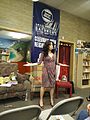 H. O. Tanager performs at a bookstore in Boise, Idaho. (from Performance poetry)
 -
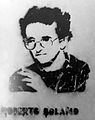 Roberto Bolaño is considered to have had the greatest United States impact of any post-Boom author (from Latin American literature)
 -
 The character which means "poetry", in the ancient Chinese Great Seal script style. The modern character is 詩/诗 (shī). (from History of poetry)
 -
 The former Canadian Parliamentary Poet Laureate George Elliott Clarke (2015) (from Canadian literature)
 -
 Hugo Ball performing at the Cabaret Voltaire (from Performance poetry)
 -
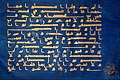 Page from the Blue Quran manuscript, ca. 9th or 10th century CE (from History of books)
 -
-
 The scene in Botticelli's Madonna of the Book (1480) reflects the presence of books in the houses of richer people in his time. (from History of books)
 -
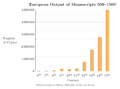 European output of manuscripts 500–1500 (from History of books)
 -
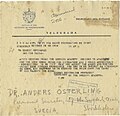 Hemingway's telegram in 1954 (the academy has alternately used for Literature and in Literature over the years, the latter becoming the norm today) (from Nobel Prize in Literature)
 -
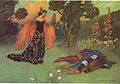
 Walter Crane's chromolithograph illustration for The Frog Prince, 1874. (from Children's literature)
 -
 Folio from a manuscript of the Shanamah (Book of Kings) (from History of books)
 -
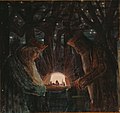 Kings' Fairy Tale, 1909, by Mikalojus Konstantinas Čiurlionis (from Fairy tale)
 -
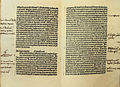 Handwritten notes by Christopher Columbus on a Latin edition of The Travels of Marco Polo (from Travel literature)
 -
 Gabriel García Márquez, one of the most renowned Latin American writers (from Latin American literature)
 -
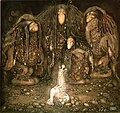 John Bauer's illustration of trolls and a princess from a collection of Swedish fairy tales (from Fairy tale)
 -
 12-metre-high (40 ft) stack of books sculpture at the Berlin Walk of Ideas, commemorating the invention of modern book printing (from History of books)
 -
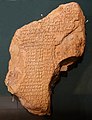 A Sumerian clay tablet, currently housed in the Oriental Institute at the University of Chicago, inscribed with the text of the poem Inanna and Ebih by the priestess Enheduanna, the first author whose name is known
 -
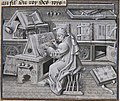 An author portrait of Jean Miélot writing his compilation of the Miracles of Our Lady, one of his many popular works. (from History of books)
 -
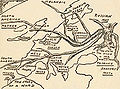 The Story of Mankind (1921) by Hendrik van Loon, 1st Newbery Award winner (from Children's literature)
 -
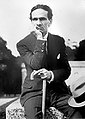 Peruvian poet César Vallejo, considered by Thomas Merton "the greatest universal poet since Dante" (from Latin American literature)
 -
 The Violet Fairy Book (1906)
 -
-
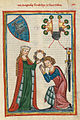 The Codex Manesse, a German book from the Middle Ages (from History of books)
 -
 Newbery's A Little Pretty Pocket-Book, originally published in 1744 (from Children's literature)
 -
 Number of children's books titles published by the trade sector in 2020 (from Children's literature)
 -
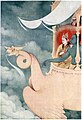 A Tagore illustration of a Hindu myth (from Children's literature)
 -
 Folio from the Shah Jahan Album, c. 1620, depicting the Mughal Emperor Shah Jahan (from History of books)
 -
 The European fairy tale Little Red Riding Hood and the Wolf in a painting by Carl Larsson in 1881. (from Fairy tale)
 -
 A poet with a few enraptured fans (from Performance poetry)
 -
-
 1900 edition of the controversial The Story of Little Black Sambo (from Children's literature)
 -
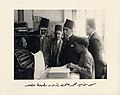 Photograph of a printing press in Egypt, c. 1922 (from History of books)
 -
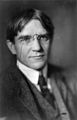 Charles G. D. Roberts was a poet that belonged to an informal group known as the Confederation Poets. (from Canadian literature)
 -
 The first page of Beowulf (from Medieval literature)
 -
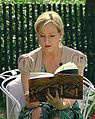 J. K. Rowling reads from her novel Harry Potter and the Philosopher's Stone (from Children's literature)
 -
 Willy Wonka (from Roald Dahl's Charlie and the Chocolate Factory), and the Mad Hatter (from Lewis Carroll's Alice's Adventures in Wonderland) in London (from Children's literature)
 -
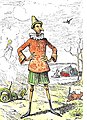 The Adventures of Pinocchio (1883) is a canonical piece of children's literature and one of the best-selling books ever published. (from Children's literature)
 -
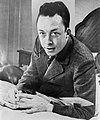 French author Albert Camus was the first African-born writer to receive the award. (from Nobel Prize in Literature)
 -
 Sculpture of Alfonso Reyes writer of influential pieces of Mexican surrealism. (from Latin American literature)
 -
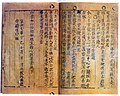 Jikji, Selected Teachings of Buddhist Sages and Seon Masters, the earliest known book printed with movable metal type, 1377. Bibliothèque Nationale de France, Paris. (from History of books)
 -
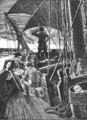 Illustration from Robert Louis Stevenson's 1883 pirate adventure Treasure Island (from Children's literature)
 -
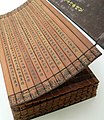 A Chinese bamboo book (from History of books)
 -
 Pages from the 1819 edition of Kinder- und Haus-Märchen by the Brothers Grimm (from Children's literature)
 -
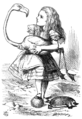 Illustration from Alice's Adventures in Wonderland, 1865 (from Children's literature)
 -
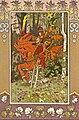 Ivan Bilibin (1876-1942)'s illustration of the Russian fairy tale about Vasilisa the Beautiful (from Fairy tale)
 -
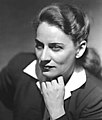 Gabrielle Roy was a notable French Canadian author. (from Canadian literature)
 -

-
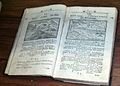 A late 18th-century reprint of Orbis Pictus by Comenius, the first children's picture book. (from Children's literature)
 -
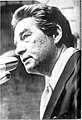 Octavio Paz helped to define modern poetry and the Mexican personality. (from Latin American literature)
 -
Estimated medieval output of manuscripts in terms of copies (from Medieval literature)
-
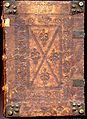 A 15th-century Incunable. Notice the blind-tooled cover, corner bosses, and clasps. (from History of books)
 -
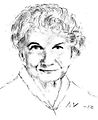 Short story writer Alice Munro won the Nobel Prize in Literature in 2013. (from Canadian literature)
 -
-
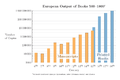 European output of books 500–1800 (from History of books)
 -
 Father Frost acts as a donor in the Russian fairy tale Father Frost, testing the heroine before bestowing riches upon her (from Fairy tale)
 -
 Page from a Jain manuscript depicting the birth of Mahavira, c. 1400 (from History of books)
 -
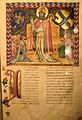 Statuta Mutine Reformata, 1420–1485; parchment codex bound in wood and leather with brass plaques worked the corners and in the center, with clasps. (from Medieval literature)
 -
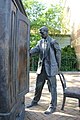 Statue of C. S. Lewis in front of the wardrobe from his Narnia book The Lion, the Witch and the Wardrobe (from Children's literature)
 -
 In 1901, French poet and essayist Sully Prudhomme (1839–1907) was the first person to be awarded the Nobel Prize in Literature, "in special recognition of his poetic composition, which gives evidence of lofty idealism, artistic perfection, and a rare combination of the qualities of both heart and intellect." (from Nobel Prize in Literature)
 -
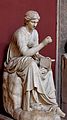
-
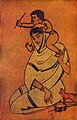 The Crescent Moon by Rabindranath Tagore illus. by Nandalal Bose, Macmillan 1913 (from Children's literature)
 -
 Natias Neutert performing Diogenes Synopsis as at Künstlerhaus Bethanien Berlin, 1986 (from Performance poetry)
 -
 Goethe's Italian Journey between September 1786 and May 1788 (from Travel literature)
 -
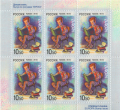 Postal stamp of Russia celebrating children's books. (from Children's literature)
 -
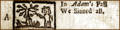 The New England Primer (from Children's literature)
 -
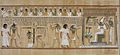 The Book of the Dead of Hunefer, c. 1275 BCE, ink and pigments on papyrus, in the British Museum (London) (from History of books)
 -
 Woman holding wax tablets in the form of the codex. Wall painting from Pompeii, before 79 CE. (from History of books)
 -
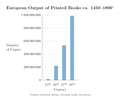 European output of printed books c. 1450–1800 (from History of books)
 -
 Cutlery for children. Detail showing fairy-tale scenes: Snow White, Little Red Riding Hood, Hansel and Gretel. (from Fairy tale)
 -
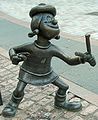 Statue of Minnie the Minx, a character from The Beano. Launched in 1938, the comic is known for its anarchic humour, with Dennis the Menace appearing on the cover. (from Children's literature)

.jpg)


.jpg)


_-_Google_Art_Project.jpg)


_-_1909.jpg)


_(14751020284).jpg)


.jpg)


 Selected work


Shakespeare based Hamlet on the legend of Amleth, preserved by 13th-century chronicler Saxo Grammaticus in his Gesta Danorum as subsequently retold by 16th-century scholar François de Belleforest. He may also have drawn on or perhaps written an earlier (hypothetical) Elizabethan play known today as the Ur-Hamlet.
Hamlet is Shakespeare's longest play and among the most powerful and influential tragedies in English literature, with a story capable of "seemingly endless retelling and adaptation by others." The play was one of Shakespeare's most popular works during his lifetime and still ranks among his most-performed, topping the Royal Shakespeare Company's performance list since 1879. It has been described as "the world's most filmed story after Cinderella".
Selected biographies -
-

Mário Raul de Morais Andrade (October 9, 1893 – February 25, 1945) was a Brazilian poet, novelist, musicologist, art historian and critic, and photographer. He wrote one of the first and most influential collections of modern Brazilian poetry, Paulicéia Desvairada (Hallucinated City), published in 1922. He has had considerable influence on modern Brazilian literature, and as a scholar and essayist—he was a pioneer of the field of ethnomusicology—his influence has reached far beyond Brazil.
Andrade was a central figure in the avant-garde movement of São Paulo for twenty years. Trained as a musician and best known as a poet and novelist, Andrade was personally involved in virtually every discipline that was connected with São Paulo modernism. His photography and essays on a wide variety of subjects, from history to literature and music, were widely published. He was the driving force behind the Modern Art Week, the 1922 event that reshaped both literature and the visual arts in Brazil, and a member of the avant-garde "Group of Five". The ideas behind the Week were further explored in the preface to his poetry collection Pauliceia Desvairada, and in the poems themselves. (Full article...) -
Natalie Clifford Barney (October 31, 1876 – February 2, 1972) was an American writer who hosted a literary salon at her home in Paris that brought together French and international writers. She influenced other authors through her salon and also with her poetry, plays, and epigrams, often thematically tied to her lesbianism and feminism.
Barney was born into a wealthy family. She was partly educated in France, and expressed a desire from a young age to live openly as a lesbian. She moved to France with her first romantic partner, Eva Palmer. Inspired by the work of Sappho, Barney began publishing love poems to women under her own name as early as 1900. Writing in both French and English, she supported feminism and pacifism. She opposed monogamy and had many overlapping long and short-term relationships, including on-and-off romances with poet Renée Vivien and courtesan Liane de Pougy and longer relationships with writer Élisabeth de Gramont and painter Romaine Brooks. (Full article...) -
Joanne Rowling CH OBE FRSL (/ˈroʊlɪŋ/ ROH-ling); born 31 July 1965), known by her pen name J. K. Rowling, is a British author and philanthropist. She wrote Harry Potter, a seven-volume fantasy series published from 1997 to 2007. The series has sold over 600 million copies, been translated into 84 languages, and spawned a global media franchise including films and video games. The Casual Vacancy (2012) was her first novel for adults. She writes Cormoran Strike, an ongoing crime fiction series, under the alias Robert Galbraith.
Born in Yate, Gloucestershire, Rowling was working as a researcher and bilingual secretary for Amnesty International in 1990 when she conceived the idea for the Harry Potter series. The seven-year period that followed saw the death of her mother, the birth of her first child, divorce from her first husband, and relative poverty until the first novel in the series, Harry Potter and the Philosopher's Stone, was published in 1997. Six sequels followed, concluding with Harry Potter and the Deathly Hallows (2007). By 2008, Forbes had named her the world's highest-paid author. (Full article...) -

Walpole c. 1920–1925
Sir Hugh Seymour Walpole, CBE (13 March 1884 – 1 June 1941) was an English novelist. He was the son of an Anglican clergyman, intended for a career in the church but drawn instead to writing. Among those who encouraged him were the authors Henry James and Arnold Bennett. His skill at scene-setting and vivid plots, as well as his high profile as a lecturer, brought him a large readership in the United Kingdom and North America. He was a best-selling author in the 1920s and 1930s but has been largely neglected since his death.
After his first novel, The Wooden Horse, in 1909, Walpole wrote prolifically, producing at least one book every year. He was a spontaneous story-teller, writing quickly to get all his ideas on paper, seldom revising. His first novel to achieve major success was his third, Mr Perrin and Mr Traill, a tragicomic story of a fatal clash between two schoolmasters. During the First World War he served in the Red Cross on the Russian-Austrian front, and worked in British propaganda in Petrograd and London. In the 1920s and 1930s Walpole was much in demand not only as a novelist but also as a lecturer on literature, making four exceptionally well-paid tours of North America. (Full article...) -
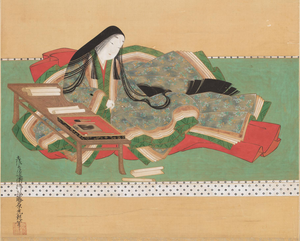
Depiction of Murasaki Shikibu by Tosa Mitsuoki
Murasaki Shikibu (紫式部, 'Lady Murasaki'; c. 973 – c. 1014 or 1025) was a Japanese novelist, poet and lady-in-waiting at the Imperial court in the Heian period. She is best known as the author of The Tale of Genji, widely considered to be one of the world's first novels, written in Japanese between about 1000 and 1012. Murasaki Shikibu is a descriptive name; her personal name is unknown, but she may have been Fujiwara no Kaoriko (藤原香子), who was mentioned in a 1007 court diary as an imperial lady-in-waiting.
Heian women were traditionally excluded from learning Chinese, the written language of government, but Murasaki, raised in her erudite father's household, showed a precocious aptitude for the Chinese classics and managed to acquire fluency. She married in her mid-to-late twenties and gave birth to a daughter, Daini no Sanmi. Her husband died after two years of marriage. It is uncertain when she began to write The Tale of Genji, but it was probably while she was married or shortly after she was widowed. In about 1005, she was invited to serve as a lady-in-waiting to Empress Shōshi at the Imperial court by Fujiwara no Michinaga, probably because of her reputation as a writer. She continued to write during her service, adding scenes from court life to her work. After five or six years, she left court and retired with Shōshi to the Lake Biwa region. Scholars differ on the year of her death; although most agree on 1014, others have suggested she was alive in 1025. (Full article...) -

William Shakespeare (c. 23 April 1564 – 23 April 1616) was an English playwright, poet, and actor. He is widely regarded as the greatest writer in the English language and the world's pre-eminent dramatist. He is often called England's national poet and the "Bard of Avon" (or simply "the Bard"). His extant works, including collaborations, consist of some 39 plays, 154 sonnets, three long narrative poems, and a few other verses, some of uncertain authorship. His plays have been translated into every major living language and are performed more often than those of any other playwright. Shakespeare remains arguably the most influential writer in the English language, and his works continue to be studied and reinterpreted.
Shakespeare was born and raised in Stratford-upon-Avon, Warwickshire. At the age of 18, he married Anne Hathaway, with whom he had three children: Susanna, and twins Hamnet and Judith. Sometime between 1585 and 1592, he began a successful career in London as an actor, writer, and part-owner ("sharer") of a playing company called the Lord Chamberlain's Men, later known as the King's Men after the ascension of King James VI of Scotland to the English throne. At age 49 (around 1613), he appears to have retired to Stratford, where he died three years later. Few records of Shakespeare's private life survive; this has stimulated considerable speculation about such matters as his physical appearance, his sexuality, his religious beliefs, and even certain fringe theories as to whether the works attributed to him were written by others. (Full article...) -
Ezra Morgan Meeker (December 29, 1830 – December 3, 1928) was an American pioneer who traveled the Oregon Trail by ox-drawn wagon as a young man, migrating from Iowa to the Pacific Coast. Later in life he worked to memorialize the Trail, repeatedly retracing the trip of his youth. Once known as the "Hop King of the World", he was the first mayor of Puyallup, Washington.
Meeker was born in Butler County, Ohio, to Jacob and Phoebe Meeker. His family relocated to Indiana when he was a boy. He married Eliza Jane Sumner in 1851; the following year the couple, with their newborn son and Ezra's brother, set out for the Oregon Territory, where land could be claimed and settled on. Although they endured hardships on the Trail in the journey of nearly six months, the entire party survived the trek. Meeker and his family briefly stayed near Portland, then journeyed north to live in the Puget Sound region. They settled at what is now Puyallup in 1862, where Meeker grew hops for use in brewing beer. By 1887, his business had made him wealthy, and his wife built a large mansion for the family. In 1891, an infestation of hop aphids destroyed his crops and took much of his fortune. He later tried his hand at a number of ventures, and made four largely unsuccessful trips to the Klondike, taking groceries and hoping to profit from the gold rush. (Full article...) -
Du Fu (Chinese: 杜甫; Wade–Giles: Tu Fu; 712–770) was a Chinese poet and politician during the Tang dynasty. Together with his elder contemporary and friend Li Bai, Du is often considered one of the greatest Chinese poets. His greatest ambition was to serve his country as a successful civil servant, but Du proved unable to make the necessary accommodations. His life, like all of China, was devastated by the An Lushan Rebellion of 755, and his last 15 years were a time of almost constant unrest.
Although initially he was little-known to other writers, his works came to be hugely influential in both Chinese and Japanese literary culture. Of his poetic writing, nearly fifteen hundred poems have been preserved over the ages. He has been called the "Poet-Historian" and the "Poet-Sage" by Chinese critics, while the range of his work has allowed him to be introduced to Western readers as "the Chinese Virgil, Horace, Ovid, Shakespeare, Milton, Burns, Wordsworth, Béranger, Hugo or Baudelaire". (Full article...) -

Pound photographed in 1913 by Alvin Langdon Coburn
Ezra Weston Loomis Pound (30 October 1885 – 1 November 1972) was an expatriate American poet and critic, a major figure in the early modernist poetry movement, and a collaborator in Fascist Italy and the Salò Republic during World War II. His works include Ripostes (1912), Hugh Selwyn Mauberley (1920), and his 800-page epic poem, The Cantos (c. 1917–1962).
Pound's contribution to poetry began in the early 20th century with his role in developing Imagism, a movement stressing precision and economy of language. Working in London as foreign editor of several American literary magazines, he helped discover and shape the work of contemporaries such as Robert Frost, T. S. Eliot, Ernest Hemingway, and James Joyce. He was responsible for the 1914 serialization of Joyce's A Portrait of the Artist as a Young Man, the 1915 publication of Eliot's "The Love Song of J. Alfred Prufrock", and the serialization from 1918 of Joyce's Ulysses. Hemingway wrote in 1932 that, for poets born in the late 19th or early 20th century, not to be influenced by Pound would be "like passing through a great blizzard and not feeling its cold." (Full article...) -
Chinua Achebe (/ˈtʃɪnwɑː əˈtʃɛbeɪ/ ⓘ; born Albert Chinụalụmọgụ Achebe;16 November 1930 – 21 March 2013) was a Nigerian novelist, poet, and critic who is regarded as a central figure of modern African literature. His first novel and magnum opus, Things Fall Apart (1958), occupies a pivotal place in African literature and remains the most widely studied, translated, and read African novel. Along with Things Fall Apart, his No Longer at Ease (1960) and Arrow of God (1964) complete the "African Trilogy". Later novels include A Man of the People (1966) and Anthills of the Savannah (1987). In the West, Achebe is often referred to as the "father of African literature", although he vigorously rejected the characterization.
Born in Ogidi, Colonial Nigeria, Achebe's childhood was influenced by both Igbo traditional culture and postcolonial Christianity. He excelled in school and attended what is now the University of Ibadan, where he became fiercely critical of how Western literature depicted Africa. Moving to Lagos after graduation, he worked for the Nigerian Broadcasting Service (NBS) and garnered international attention for his 1958 novel Things Fall Apart. In less than 10 years he would publish four further novels through the publisher Heinemann, with whom he began the Heinemann African Writers Series and galvanized the careers of African writers, such as Ngũgĩ wa Thiong'o and Flora Nwapa. (Full article...)


Selected excerpt
| “ | I was awakened the next morning by an eerie sense of something unreal and terrible. I fought to adjust myself, and rose on the bed to peer out. I could see nothing except a yellow mass of something plastered against the window, and I fell back on the bed. Strangely, at the same time, I had a curious sensation of being both awake and in full possession of my senses, and in the grip of some awful nightmare. I was vaguely aware of a noise outside, and finally identified it positively as Buck's raging voice. There was a heavy, nauseous scent in my nostrils, but finally I shook myself awake and leaped out of bed. Just at that moment the window shattered and the terrible, complete reality of what was outside burst upon me with all the sharpness of a stinging whip lash. | ” |
| — Jim Kjelgaard, "The Fangs of Tsan-Lo" | ||
More Did you know
- ... that Mei Ze's forgery of Kong Anguo's compilation of the Book of Documents was officially recognized as a Confucian classic for over 1000 years?
- ... that, although Ernest Hemingway wrote many words, he probably didn't write "For sale: baby shoes, never worn"?
- ... that Goodnight Mister Tom, which is an adaptation of the children's novel of the same name, won the Olivier Award for Best Entertainment at the 2013 Olivier Awards?
- ... that the 17th-century English poet Thomas Jordan wrote one poem that was widely anthologized in the 20th century, even though his poetry had been disdained by his contemporaries?
- ... that in his book In Secret Tibet, author Theodore Illion relates how he twice saw what he called "flying lamas" who could supposedly sit on an ear of barley without bending its stalk?
Selected illustration
-
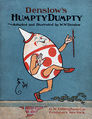 Restoration: JujutacularAn illustration of Humpty Dumpty by American artist William Wallace Denslow, depicting the title character from the nursery rhyme of the same name. He is typically portrayed as an egg, although the rhyme never explicitly states that he is, possibly because it may have been originally posed as a riddle. The earliest known version is in a manuscript addition to a copy of Mother Goose's Melody published in 1803.
 -
 Painting: John BauerA watercolor illustration by John Bauer (1882–1918) titled "Still, Tuvstarr sits and gazes down into the water", which accompanied Helge Kjellin's fairy tale "The Tale of the Moose Hop and the Little Princess Cotton Grass" in the 1913 edition of Among Gnomes and Trolls. In this scene, Tuvstarr looks for her lost heart in a tarn, symbolizing innocence lost.
Born and raised in Jönköping, Sweden, Bauer moved to Stockholm at age 16 to study at the Royal Swedish Academy of Fine Arts. He painted and illustrated in a romantic nationalistic style, in part influenced by the Italian Renaissance and Sami cultures. Most of his works are watercolors or prints in monochrome or muted colours; he also produced oil paintings and frescos. -
 Woodblock artist: Utagawa KuniyoshiThis woodblock print, titled Kinhyōshi yōrin, hero of the Suikoden, is one of a series created by the Japanese artist Utagawa Kuniyoshi between 1827 and 1830 illustrating the 108 Suikoden ("Water Margin"). The publication of the series catapulted Kuniyoshi to fame. The story of the Suikoden is an adaptation of the Chinese Shuǐhǔ Zhuàn; during the 1800s, the publication of this woodblock series and other translations of the novel created a Suikoden craze in Japan. Following the great commercial success of the Kuniyoshi series, other ukiyo-e artists were commissioned to produce prints of the Suikoden heroes, which began to be shown as Japanese heroes rather than the original Chinese personages. The hero portrayed in this print is Yang Lin.
 -
 Illustration: John BauerThe Princess and the Trolls, by John Bauer (1882–1918), was painted as an illustration for "The Changeling", a short story by Helena Nyblom. A watercolour held by the Nationalmuseum in Stockholm, it was first published in the 1913 edition of the anthology Among Gnomes and Trolls. It shows the princess Bianca Maria between two trolls in a forest. Bauer's illustrations of fairy tales and children's stories made him a household name in his native Sweden, and shaped perceptions of many fairy tale characters.
 -
 Engraving: Dalziel Brothers; Restoration: Adam CuerdenA scene from Sir Walter Scott's 1817 historical novel Rob Roy, which tells the story of Frank Osbaldistone, the son of an English merchant who travels to Scotland to collect a debt stolen from his father. On the way he encounters the larger-than-life title character of Robert Roy MacGregor. Though Rob Roy is not the lead character (in fact the narrative does not move to Scotland until halfway through the book) his personality and actions are key to the story's development. The novel is a brutally realistic depiction of the social conditions in Highland and Lowland Scotland in the early 18th century.
 -
 Engraver: J. Cooper; Restoration: Adam Cuerden"Le Noir Faineant in the Hermit's Cell", an illustration from an 1886 edition of Sir Walter Scott's 1819 novel Ivanhoe. Here, we see Le Noir Faineant, or the Black Knight (Richard the Lionheart in disguise) with Friar Tuck. Scott was an early pioneer in the development of the modern novel, and largely created the genre of historical fiction by weaving together legends and characters into his own creations. Ivanhoe, the story of one of the remaining Saxon noble families at a time when the English nobility was overwhelmingly Norman, was greatly influential on the modern view of the English folk hero Robin Hood, and has inspired many adaptations around the world in theatre, opera, film, and television.
 -
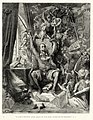 Restoration: Adam CuerdenAn engraving by Gustave Doré of a scene from Miguel de Cervantes's Don Quixote, the most influential work of literature from the Spanish Golden Age in the Spanish literary canon. The scene illustrated here occurs early in the novel, when Alonso Quixano (Quixote's real name) has become obsessed with books of chivalry, and believes their every word to be true, despite the fact that many of the events in them are clearly impossible. Don Quixote was published in two separate volumes, ten years apart. It is considered a founding work of modern Western literature, and it regularly appears high on lists of the greatest works of fiction ever published.
 -
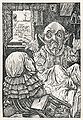 Illustration credit: Henry Holiday; restored by Adam CuerdenThe Hunting of the Snark is a nonsense poem written by English writer Lewis Carroll between 1874 and 1876. The plot follows a crew of ten trying to hunt the Snark, which may turn out to be a highly dangerous Boojum. This original illustration by Henry Holiday accompanies the verse:
'"`UNIQ--poem-0000001B-QINU`"' -
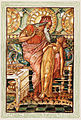 Artist: Walter Crane; Restoration: Lise BroerAn illustration from an 1893 version of A Wonder-Book for Girls and Boys by Nathaniel Hawthorne, which recounted the tale of King Midas. In Greek mythology, Midas was given ability to turn everything he touched into gold by the god Bacchus. However, he soon discovered that he was unable to even eat. Bacchus told him to wash in the river Pactolus, and the power flowed in the river, which was supposedly the reason for why the river was so rich in gold in later years. In Hawthorne's version, Midas' touch even turned his daughter to gold (pictured here).
 -
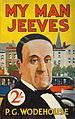 Illustration: Unknown; restoration: Adam CuerdenJeeves is a fictional character in a series of comedic short stories and novels by English author P. G. Wodehouse, in which he is depicted as the highly competent valet of a wealthy and idle young Londoner named Bertie Wooster. First appearing in the short story "Extricating Young Gussie" in 1915, Jeeves continued to feature in Wodehouse's work until his last completed novel, Aunts Aren't Gentlemen (1974). He also appeared in numerous films and television series, portrayed by such actors as Arthur Treacher, Michael Aldridge, and Dennis Price. The name and character of Jeeves have come to be identified with the quintessential valet or butler.
 -
 Artist: Charles Robert Leslie; Engraver: J. Cooper
Restoration: Adam CuerdenA scene from an 1886 edition of Sir Walter Scott's historical novel The Bride of Lammermoor, originally published in 1819. Although fictional, the story is based on an actual incident of the family of James Dalrymple: Dalrymple's daughter Janet was betrothed to one man in an arranged marriage, but in love with another. On her wedding night, Janet stabbed her husband. She was judged to be insane and died within a month. The book is part of Scott's Tales of My Landlord series and is the basis for Gaetano Donizetti's 1835 opera Lucia di Lammermoor. -
 Illustration: W. E. F. Britten; restoration: Adam Cuerden"The Sleeping Beauty" is a poem written by Alfred, Lord Tennyson, and published in 1830; it was later expanded and published in 1842 as "The Day-Dream". Based on the fairy tale Sleeping Beauty, the poem (as with many of Tennyson's adaptations of existing literary works) focuses on a single aspect of the story, the appearance of the eponymous character as she sleeps.
This illustration by W. E. F. Britten was published in 1901 to accompany a reprinting of "The Sleeping Beauty". It accompanies the poem's final lines: "She sleeps, nor dreams, but ever dwells / A perfect form in perfect rest." -
 Caterpillar, Alice's Adventures in WonderlandArtist: Sir John TennielSir John Tenniel's illustration of the Caterpillar for Lewis Carroll's classic children's book, Alice's Adventures in Wonderland. The illustration is noted for its ambiguous central figure, which can be viewed as having either a human male's face with pointed nose and protruding lower lip or as the head end of an actual caterpillar, with the right three "true" legs visible. The small symbol in the lower left is composed of Tenniel's initials, which was how he signed most of his work for the book. The partially obscured word in the lower left-center is the last name of Edward Dalziel, the engraver of the piece.
 -
 Engraving: John Masey Wright (artist) and John Rogers (engraver); restoration: Adam CuerdenA mid-19th century illustration for "Auld Lang Syne", a Scots poem written by Robert Burns in 1788 and set to a traditional melody. It is traditionally used in the English-speaking world to bid farewell to the old year at the stroke of midnight on New Year's Eve; this has led to the song being used to close other activities as well.
 -
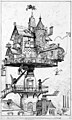 Artist: Albert RobidaA typical 20th-century aerial rotating house, as drawn by Albert Robida. The drawing shows a dwelling structure in the scientific romance style elevated above rooftops and designed to revolve and adjust in various directions. An occupant in the lower right points to an airship with a fish-shaped balloon in the sky, while a woman rides a bucket elevator on the left. Meanwhile, children fly a kite from the balcony as a dog watches from its rooftop doghouse.


_-_Crop.jpg)


Did you know (auto-generated) -

- ... that despite a career writing queer literature, Chen Xue's 2019 novel Fatherless City had a "putatively straight premise"?
- ... that Alexandre Dumas's travel book Le Corricolo, published in 1843, contains one of the earliest literary accounts of Neapolitan pizza?
- ... that Hammersmith by Gustav Holst was acclaimed by Frederick Fennell for having "some of the most treacherous stretches of music making" in band literature?
- ... that the 1985 manga series Tomoi contains the first depiction of HIV/AIDS in any literary medium in Japan?
- ... that medieval literature scholar Theodore Silverstein's unit in World War II took over the Eiffel Tower to intercept communications of German aircraft?
- ... that campaign literature in the 1894 Montana capital referendum accused Helena residents of copious Manhattan consumption?
Today in literature
- 1604 - Jean Mairet, French dramatist born
- 1760 - Johann Peter Hebel, German poet born
- 1843 - Benito Pérez Galdós, Spanish novelist born
- 1876 - Ivan Cankar, Slovenian writer born
- 1990 - Walker Percy, American author died
Topics
| Literature: | History of literature · History of the book · Literary criticism · Literary theory · Publishing |
| By genre: | Biography · Comedy · Drama · Epic · Erotic · Fable · Fantasy · Historical fiction · Horror · Mystery · Narrative nonfiction · Nonsense · Lyric · Mythopoeia · Poetry · Romance · Satire · Science fiction · Tragedy · Tragicomedy · more... |
| By region: | African literature · Asian · European · Latin American · North American · Oceanic |
| By era: | Ancient literature · Early medieval · Medieval · Renaissance · Early Modern · Modern |
| By century: | 10th century in literature · 11th · 12th · 13th · 14th · 15th · 16th · 17th · 18th · 19th · 20th · 21st |
| Recent: | 2018 in literature· 2017 · 2016 · 2015 · 2014 · 2013 · 2012 · 2011 · 2010 · 2009 · 2008 · 2007 · more... |
Categories

Related portals
| Concepts: | |
| Genres: | |
| Religions: |


Things you can do
Related WikiProjects
WikiProjects related to literature:
| Concepts: | Biographies · Books · Comics · Magazines · Manga · Novels · Poetry · Short stories · Translation studies |
| Genres: | Alternate history · Children's literature · Crime · Fantasy · Horror · Mythology · Romance · Science fiction |
| Authors: | Honoré de Balzac · Roald Dahl · William Shakespeare |
| Series: | Artemis Fowl · Chronicles of Narnia · Discworld · Harry Potter · His Dark Materials · Hitchhiker's Guide to the Galaxy · Inheritance Cycle · James Bond · King Arthur · Middle-earth · Percy Jackson · Redwall · A Series of Unfortunate Events · Shannara · Sherlock Holmes · A Song of Ice and Fire · Star Wars · Sword of Truth · Twilight · Warriors · Water Margin · Wizard of Oz |
| Regions: | Australian literature · Indian literature · Persian literature |
Associated Wikimedia
The following Wikimedia Foundation sister projects provide more on this subject:
-
 Commons
Free media repository -
 Wikibooks
Free textbooks and manuals -
 Wikidata
Free knowledge base -
 Wikinews
Free-content news -
 Wikiquote
Collection of quotations -
 Wikisource
Free-content library -
 Wikiversity
Free learning tools -
 Wiktionary
Dictionary and thesaurus


