


Shibuya Station
Shibuya Station 渋谷駅 | |||||
|---|---|---|---|---|---|
.jpg) The station's Hachiko exit in August 2015 | |||||
| Japanese name | |||||
| Shinjitai | 渋谷駅 | ||||
| Kyūjitai | 澁谷驛 | ||||
| Hiragana | しぶやえき | ||||
| General information | |||||
| Location | Shibuya, Tokyo Japan | ||||
| Coordinates | 35°39′31″N 139°42′05″E / 35.658514°N 139.70133°E | ||||
| Operated by | |||||
| Connections |  Bus terminal Bus terminal | ||||
| History | |||||
| Opened | 1 March 1885 | ||||
| |||||


Shibuya Station (渋谷駅, Shibuya-eki) is a major railway station in Shibuya, Tokyo, Japan, operated by East Japan Railway Company (JR East), Keio Corporation, Tokyu Corporation, and Tokyo Metro. It serves as a terminal for six railway lines, five of which are operated by Tokyo Metro and Tokyu Corporation.
The railway was recorded to cater an average of 2.4 million passengers on a weekday in 2004. It was considered as the fourth-busiest commuter rail station in Japan and the world (after Shinjuku, Ikebukuro, and Ōsaka / Umeda). It handles a large population of commuter traffic between the city center and suburbs to the south and west.[1]
Lines
[edit]JR East
[edit]- JA Saikyō Line / JS Shōnan–Shinjuku Line (Yamanote Freight Line) - also used by Narita Express trains
- JY Yamanote Line
Private railways
[edit] Keio Inokashira Line - terminus
- DT Den-en-toshi Line - through service with Tokyo Metro Hanzomon Line
- TY Tōyoko Line - through service with Tokyo Metro Fukutoshin Line
Subways
[edit]- G Ginza Line - terminus
- Z Hanzōmon Line - through service with Tokyu Den-en-toshi Line
- F Fukutoshin Line - through service with Tokyu Tōyoko Line
Note that while the Tokyo Metro Hanzōmon Line and Fukutoshin Line are directly connected to each other (and passengers can switch from one to another without passing through ticket gates), the Ginza Line station is a standalone terminal. Transfers to the Fukutoshin/Tōyoko Line are given 60 min to do so outside the fare control area, but those needing to transfer to Hanzōmon/Den-en-toshi Line should transfer at the Omotesando station instead.
Station layout
[edit]
In 2013 and 2014, Shibuya station underwent major renovations as a part of a long-term site redevelopment plan.[2] While all rail and subway lines continued to operate, some station exits and entrances were changed for improvement. As of March 2013, the east side of the main station was transformed due to the provision of through train services between the Tokyu Toyoko Line and the Tokyo Metro Fukutoshin Line. While much of the main station building, previously housing the Tokyu department store, had been closed and was set for demolition, the west building of the Tokyu department store continued to operate as before. The Shibuya Hikarie building, also owned by the Tokyu Group, opened in 2012 and contains department store retail, restaurants, and offices.[citation needed]
The Tokyo Metro Ginza Line, originally built and operated by a Tokyu keiretsu company, continues to use platforms on the third floor of the station building. The JR lines are on the second floor in a north-south orientation. The Tokyu Toyoko Line originally used parallel platforms on the second floor of the same building, but effective on 16 March 2013, the Toyoko Line moved underground to provide rail service with the Tokyo Metro Fukutoshin Line. The Tokyo Metro Hanzomon Line and Tokyu Den-en-Toshi Line share platforms underground in another part of the station. The Keio Inokashira Line uses platforms on the second floor of the Shibuya Mark City building to the west of the main station complex.[3]
The main JR/Tokyu/Tokyo Metro complex has six exits. The northwest Hachikō Exit (ハチ公口, Hachikō-guchi), named for the nearby statue of the dog Hachikō and located next to Shibuya's famous scramble crossing, is a particularly popular meeting spot. The Tamagawa Exit (玉川口, Tamagawa-guchi) on the west side leads to the Keiō Inokashira Line Shibuya Station platforms.[3]
On 17 November 2008, a mural by Tarō Okamoto, "The Myth of Tomorrow", depicting a human figure being hit by an atomic bomb, was unveiled in its new permanent location at the station, in the connecting passage to the Keio Inokashira Line entrance.[4]
JR East
[edit]SBYJY20JA10JS19 Shibuya Station 渋谷駅 | ||||||||||||||||||||||||||||||||||||||||||||||
|---|---|---|---|---|---|---|---|---|---|---|---|---|---|---|---|---|---|---|---|---|---|---|---|---|---|---|---|---|---|---|---|---|---|---|---|---|---|---|---|---|---|---|---|---|---|---|
 Yamanote Line platform, January 2023 | ||||||||||||||||||||||||||||||||||||||||||||||
| General information | ||||||||||||||||||||||||||||||||||||||||||||||
| Location | 1-1 Dogenzaka Itchōme, Shibuya, Tokyo Japan | |||||||||||||||||||||||||||||||||||||||||||||
| Operated by |  JR East JR East | |||||||||||||||||||||||||||||||||||||||||||||
| Line(s) |
| |||||||||||||||||||||||||||||||||||||||||||||
| Platforms | 2 Island platforms | |||||||||||||||||||||||||||||||||||||||||||||
| Tracks | 4 | |||||||||||||||||||||||||||||||||||||||||||||
| Construction | ||||||||||||||||||||||||||||||||||||||||||||||
| Structure type | Ground level | |||||||||||||||||||||||||||||||||||||||||||||
| Accessible | Yes | |||||||||||||||||||||||||||||||||||||||||||||
| History | ||||||||||||||||||||||||||||||||||||||||||||||
| Opened | 1885 | |||||||||||||||||||||||||||||||||||||||||||||
| Passengers | ||||||||||||||||||||||||||||||||||||||||||||||
| FY2013 | 378,539 daily | |||||||||||||||||||||||||||||||||||||||||||||
| ||||||||||||||||||||||||||||||||||||||||||||||
Platforms
[edit]There are two island platforms with a total of four tracks. One of the platforms serves the Yamanote Line and the other serves the Saikyō Line and Shōnan–Shinjuku Line.
The station was opened in 1885 with one island platform serving what is now the Yamanote Line. To alleviate congestion, a second side platform was opened to the west in July 1940 and the original platform was converted to a side platform. In March 1996, the first Saikyō Line platform was opened. It was located to the south of the Yamanote Line platforms, approximately 350 m (1,148 ft 4 in) away. This platform was relocated to its current location during 30-31 May 2020.[5][6] The original Yamanote Line platform was then widened during 23-24 October 2021.[7] It was widened further during 7-8 January 2023, when the west side platform was removed from service and both directions of the Yamanote Line were recombined into a single island platform.[8]
| 1 | JY Yamanote Line | for Shinjuku, and Ikebukuro |
| 2 | JY Yamanote Line | for Shinagawa and Tokyo |
| 3 | JA Saikyō Line | for Shinjuku, Ōmiya, and Kawagoe |
| JS Shōnan-Shinjuku Line | for Shinjuku and Ōmiya (via the JU Takasaki Line) for Kumagaya, Takasaki, Maebashi (via the JU Utsunomiya Line) for Oyama, Utsunomiya | |
| 4 | JA Saikyō Line | for Ōsaki R Rinkai Line for Shin-Kiba  Sotetsu Line for Hazawa yokohama-kokudai and Ebina Sotetsu Line for Hazawa yokohama-kokudai and Ebina
|
| JS Shōnan-Shinjuku Line | for Yokohama and Ōfuna (via the JT Tōkaidō Line) for Odawara (via the JO Yokosuka Line) for Zushi | |
| ■ Ltd. Express Narita Express | for Tokyo and Narita Airport |
Tokyo Metro/Tokyu
[edit]| Station layout | ||
|---|---|---|
| 3F Ginza Line platforms |
Platform 2 | →Ginza Line towards Asakusa (Omotesandō) → |
| Island platform, doors will open on the right | ||
| Platform 1 | →Ginza Line towards Asakusa (Omotesandō) → | |
| Ginza Line concourse | Ginza Line ticket barriers, ticket office Passageways to JR platforms | |
| 2F | Upper mezzanine | Ginza Line ticket barriers, ticket machines, station agent Passageways to JR and Keio Inokashira Line platforms |
| 1F | Street Level | Exit/Entrance Transfer between Ginza Line and Hanzomon Line/Fukutoshin Line/Tokyu stations |
| B1F | Transfer mezzanine | Staircases and elevators to lower mezzanine |
| B2F | Lower mezzanine | Hanzomon Line/Fukutoshin Line/Tokyu ticket barriers, ticket machines, station agent |
| B3F Hanzōmon Line Den-en-toshi Line platform |
Platform 2 | → Hanzōmon Line towards Oshiage (Omotesandō) → |
| Island platform, doors will open on the right | ||
| Platform 1 | ← Tōkyū Den-en-toshi Line towards Chūō-rinkan (Ikejiri-ōhashi) ← Hanzōmon Line termination track | |
| B4F | Transfer mezzanine | Transfer between Hanzōmon Line/Den-en-toshi Line and Fukutoshin Line/Tōyoko Line platforms |
| B5F Fukutoshin Line Tōyoko Line platforms |
Platform 6 | → Fukutoshin Line towards Wakōshi (Meiji-Jingūmae) → |
| Island platform, doors will open on the left/right | ||
| Platform 5 | → Fukutoshin Line towards Wakōshi (Meiji-Jingūmae) → | |
| Platform 4 | ← Tokyu Toyoko Line towards Yokohama (Daikan-yama) | |
| Island platform, doors will open on the left/right | ||
| Platform 3 | ← Tōkyū Tōyoko Line towards Yokohama (Daikan-yama) | |
Tokyu Den-en-toshi Line and Tokyo Metro Hanzomon Line
[edit]DT01 Z01 Shibuya Station 渋谷駅 | |||||||||||||||||||||||||||
|---|---|---|---|---|---|---|---|---|---|---|---|---|---|---|---|---|---|---|---|---|---|---|---|---|---|---|---|
| /Tokyo Metro station | |||||||||||||||||||||||||||
 Hanzomon Line-Den-en-Toshi Line Platforms | |||||||||||||||||||||||||||
| General information | |||||||||||||||||||||||||||
| Location | 2-1-1 Dogenzaka Nichōme, Shibuya, Tokyo Japan | ||||||||||||||||||||||||||
| Operated by |
| ||||||||||||||||||||||||||
| Line(s) | |||||||||||||||||||||||||||
| Platforms | 1 island platform | ||||||||||||||||||||||||||
| Tracks | 2 | ||||||||||||||||||||||||||
| Construction | |||||||||||||||||||||||||||
| Structure type | Underground | ||||||||||||||||||||||||||
| Other information | |||||||||||||||||||||||||||
| Station code | DT01, Z-01 | ||||||||||||||||||||||||||
| History | |||||||||||||||||||||||||||
| Opened | April 7, 1977 (DT Den-en-toshi Line) August 1, 1978 (Z Hanzōmon Line) | ||||||||||||||||||||||||||
| |||||||||||||||||||||||||||
Platforms
[edit]On the third basement (B3F) level, a single underground island platform serves two tracks.[9]
| 1 | DT Den-en-toshi Line | for Futako-tamagawa, Nagatsuta, and Chūō-rinkan |
| 2 | Z Hanzōmon Line | for Otemachi and Oshiage TS Tobu Skytree Line for Tōbu-Dōbutsu-Kōen TI Tobu Isesaki Line for Kuki TN Tobu Nikko Line for Minami-kurihashi |
Tokyu Toyoko Line and Tokyo Metro Fukutoshin Line
[edit]TY01 F16 Shibuya Station 渋谷駅 | |||||||||||||||||||||||||||||||||||||||||||||
|---|---|---|---|---|---|---|---|---|---|---|---|---|---|---|---|---|---|---|---|---|---|---|---|---|---|---|---|---|---|---|---|---|---|---|---|---|---|---|---|---|---|---|---|---|---|
| Tokyu Railway/Tokyo Metro station | |||||||||||||||||||||||||||||||||||||||||||||
 Platforms 4 and 5 in 2018 | |||||||||||||||||||||||||||||||||||||||||||||
| General information | |||||||||||||||||||||||||||||||||||||||||||||
| Location | 1-1 Dogenzaka Nichōme, Shibuya, Tokyo Japan | ||||||||||||||||||||||||||||||||||||||||||||
| Operated by |
| ||||||||||||||||||||||||||||||||||||||||||||
| Line(s) | |||||||||||||||||||||||||||||||||||||||||||||
| Platforms | 2 island platforms | ||||||||||||||||||||||||||||||||||||||||||||
| Tracks | 4 | ||||||||||||||||||||||||||||||||||||||||||||
| Construction | |||||||||||||||||||||||||||||||||||||||||||||
| Accessible | Yes | ||||||||||||||||||||||||||||||||||||||||||||
| Other information | |||||||||||||||||||||||||||||||||||||||||||||
| Station code | TY01, F-16 | ||||||||||||||||||||||||||||||||||||||||||||
| History | |||||||||||||||||||||||||||||||||||||||||||||
| Opened | 14 June 2008 | ||||||||||||||||||||||||||||||||||||||||||||
| |||||||||||||||||||||||||||||||||||||||||||||
Platforms
[edit]Two underground island platforms on the fifth basement (B5F) level serve four tracks.[10] Tokyu has been managing the station since the opening of the Fukutoshin Line in 2008, and the Toyoko Line uses platforms 3 and 4 since the start of through services with the two lines on 16 March 2013.
| 3-4 | TY Tōyoko Line |
|
| 5-6 | F Fukutoshin Line | for Shinjuku-sanchome, Ikebukuro, and Wakoshi
|


Tokyo Metro Ginza Line
[edit]G01 Shibuya Station 渋谷駅 | |||||||||||
|---|---|---|---|---|---|---|---|---|---|---|---|
| Tokyo Metro station | |||||||||||
 The new Ginza Line platforms that opened in January 2020 | |||||||||||
| General information | |||||||||||
| Location | 1-1 Dogenzaka Itchōme, Shibuya, Tokyo Japan | ||||||||||
| Operated by |  Tokyo Metro Tokyo Metro | ||||||||||
| Line(s) | G Ginza Line | ||||||||||
| Platforms | 1 island platform | ||||||||||
| Tracks | 2 | ||||||||||
| Connections | Bus terminal | ||||||||||
| Construction | |||||||||||
| Accessible | Yes | ||||||||||
| Other information | |||||||||||
| Station code | G-01 | ||||||||||
| History | |||||||||||
| Opened | December 20, 1938 | ||||||||||
| Rebuilt | 2018–2019 | ||||||||||
| Passengers | |||||||||||
| FY2013 | 212,136 daily | ||||||||||
| Services | |||||||||||
| |||||||||||
Platforms
[edit]As of January 2020, one island platform serves two tracks.[10] Until December 2019, two side platforms each served one track, with one platform for terminating services and one for services departing towards Asakusa.
Due to the distance between Ginza and Hanzomon Line platforms, the transfer announcements was announced at Omote-sando station instead.
| 1-2 | G Ginza Line | for Akasaka-mitsuke, Ginza, Ueno, and Asakusa |
-
 The Ginza Line platforms in 1977
 -
 The same platforms in 2010


Keio Inokashira Line
[edit]Shibuya Station 渋谷駅 | |||||||||||||||
|---|---|---|---|---|---|---|---|---|---|---|---|---|---|---|---|
| Keio station | |||||||||||||||
 The Keio Inokashira Line platforms in October 2020 | |||||||||||||||
| General information | |||||||||||||||
| Location | 4-1 Dogenzaka Itchōme, Shibuya, Tokyo Japan | ||||||||||||||
| Operated by |  Keio Corporation Keio Corporation | ||||||||||||||
| Line(s) |  Keio Inokashira Line Keio Inokashira Line | ||||||||||||||
| Tracks | 2 | ||||||||||||||
| Other information | |||||||||||||||
| Station code | IN01 | ||||||||||||||
| History | |||||||||||||||
| Opened | 1933 | ||||||||||||||
| Passengers | |||||||||||||||
| FY2013 | 730,849 daily | ||||||||||||||
| Services | |||||||||||||||
| |||||||||||||||

Platforms
[edit]The Keio station consists of two bay platforms serving two tracks.[11]
| 1, 2 | IN Keio Inokashira Line | for Shimo-Kitazawa, Meidaimae, Eifukuchō, and Kichijōji |
History
[edit]On 1 March 1885, Shibuya Station first opened as a stop on the Shinagawa Line, a predecessor of the present-day Yamanote Line.[citation needed] The station was later expanded to accommodate the Tamagawa Railway (1907; closed 1969), the Toyoko Line (1927), and the Teito Shibuya Line (1 August 1933; now the Inokashira Line).[12]
Between 1925 and 1935, the legendary Akita dog named Hachikō waited for his deceased owner, appearing at the station right when his train was due for nine years.[13]
In 1938, the station added platforms for the Tōkyō Rapid Railway, which began through service with the Ginza Line in 1939 and formally merged with it in 1941.[citation needed]
In 1946, the infamous Shibuya incident, a gang fight involving hundreds of people, occurred in front of the station.[14]
-
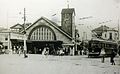 In the early 1920s
 -
 In 1951
 -
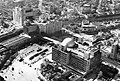 Circa 1960


More recently, the Den-en-toshi Line (1977), the Hanzōmon Line (1978), and the Fukutoshin Line (2008) began serving the station.[citation needed] Between December 2008 and March 2009, piezoelectric mats were installed at Shibuya Station as a small scale test.[15][16][17][18]
From 22 February 2013, station numbering was introduced on Keio lines, with Shibuya Station becoming "IN01".[19]
Station numbering was later introduced to the JR East platforms in 2016 with Shibuya being assigned station numbers JS19 for the Shonan-Shinjuku line, JA10 for the Saikyo line, and JY20 for the Yamanote Line. At the same time, JR East assigned its major transfer stations a 3-letter code; Shibuya was assigned the code "SBY".[20][21]
On 3 January 2020, the Ginza Line platforms were shifted about 50 meters (164 ft 1 in) east of the old platforms.
On 1 June 2020, the Saikyo Line platforms were shifted about 350 meters (1,148 ft 4 in) north of the old platforms, and now sits right next to the Yamanote Line platforms.
Major widening work took place on the Yamanote Line inner circle platform (Platform 2) on 23–24 October 2021.[22] As a result, Yamanote Line service was suspended between Ikebukuro and Osaki. To accommodate for delays, an additional special train service was run between Shinagawa and Shinjuku by way of the Yamanote Freight Line.
Effective the timetable revision on 18 March 2023, through services onto the Sagami Railway commenced courtesy of the Tokyu and Sotetsu Shin-yokohama Line.[23] Most southbound services routing through Hiyoshi on the Tokyu Shin-yokohama Line continue as far south as Shōnandai Station on the Sōtetsu Izumino Line.
Former Toyoko Line station
[edit]TY01 Shibuya Station 渋谷駅 | |||||||||||||||||||||||||||||||
|---|---|---|---|---|---|---|---|---|---|---|---|---|---|---|---|---|---|---|---|---|---|---|---|---|---|---|---|---|---|---|---|
| Tokyu station | |||||||||||||||||||||||||||||||
 Former Tokyu Toyoko Line platforms in February 2009 | |||||||||||||||||||||||||||||||
| General information | |||||||||||||||||||||||||||||||
| Location | 2-24-1 Shibuya, Shibuya, Tokyo Japan | ||||||||||||||||||||||||||||||
| Operated by | Tokyu Corporation | ||||||||||||||||||||||||||||||
| Line(s) | Tokyu Toyoko Line | ||||||||||||||||||||||||||||||
| Tracks | 4 | ||||||||||||||||||||||||||||||
| Other information | |||||||||||||||||||||||||||||||
| Station code | TY-01 | ||||||||||||||||||||||||||||||
| History | |||||||||||||||||||||||||||||||
| Opened | 1927 | ||||||||||||||||||||||||||||||
| Closed | 15 March 2013 | ||||||||||||||||||||||||||||||
| Former services | |||||||||||||||||||||||||||||||
| |||||||||||||||||||||||||||||||
The former above-ground Tokyu Toyoko Line terminal station platforms were taken out of use after the last train service on 15 March 2013. From the start of the revised timetable on 16 March 2013, Toyoko Line services used the underground platforms 3-4 shared with Tokyo Metro Fukutoshin Line services.
Platforms
[edit]The station had four 8-car long bay platforms numbered 1 to 4, serving four tracks.
| 1-4 | ■ Tokyu Toyoko Line | for Naka-Meguro, Jiyūgaoka, Yokohama, (Minatomirai Line) Motomachi-Chūkagai |
Future developments
[edit]JR East is in the process of rebuilding the station, with reconstruction work starting in earnest in fiscal year 2015.[5]
On the platform of the Toyoko Line, which was moved to the east side of the station, Tokyu Corporation constructed a 230-meter (754 ft 7 in) high, 47-story commercial building "Shibuya Scramble Square", which became the tallest building in Shibuya when it opened in November 2019. Several commercial buildings connected to the station will be constructed by 2027.[24]
Passenger statistics
[edit]In fiscal year 2013, the JR East station was used by 378,539 passengers daily (boarding passengers only), making it the fifth-busiest JR East station.[25] Over the same fiscal year, the Keio station was used by an average of 336,957 passengers daily (exiting and entering passengers), making it the busiest station on the Inokashira Line.[26] In fiscal 2013, the Tokyo Metro Ginza station was used by an average of 212,136 passengers daily and the Tokyo Metro Hanzōmon and Fukutoshin stations were used by an average of 731,184 passengers daily. Note that the latter statistics consider passengers who travel through Shibuya station on a through service as users of the station, even if they did not disembark at the station.[27] In fiscal 2013, the Tokyu Toyoko Line station was used by an average of 441,266 passengers daily and the Den-en-toshi Line station was used by an average of 665,645 passengers daily.[28] The daily passenger figures for each operator in previous years are as shown below.
| Fiscal year | JR East | Tokyu | Tokyo Metro | Keio | |
|---|---|---|---|---|---|
| Tōyoko Line | Den-en-toshi Line | ||||
| 1999 | 423,336[29] | 323,180[12] | |||
| 2000 | 428,165[30] | ||||
| 2005 | 423,884[31] | 412,237[32] | 631,481[32] | ||
| 2010 | 403,277[33] | 419,482[34] | 647,331[34] | 336,926[35] | |
| 2011 | 402,766[36] | 420,163[37] | 641,781[37] | 217,117[38] | 335,475[35] |
| 2012 | 412,009[39] | 435,994[40] | 656,867[40] | 226,644[41] | 344,972[26] |
| 2013 | 378,539[25] | 441,266[28] | 665,645[28] | 212,136[27] | 336,957[26] |
- Note that JR East figures are for boarding passengers only.
- Note that the Tokyo Metro figures are for the Ginza Line station only.
Found in online news in the middle of 2024, Shibuya is one of the 50 busiest train stations in the world with an average number of 3 million people using the station everyday, second to Shinjuku. [42][43]
Surrounding area
[edit]

Surrounding the station is the commercial center of Shibuya. The Tokyu Department Store is connected to the east gate of the station and several other department stores are within walking distance.
- Shibuya Ward Office
- NHK Broadcasting Center
- NHK Hall
- Shibuya Mark City
- Shibuya 109
- Shibuya Hikarie
- Yoyogi Park
- Miyashita Park
The Shibuya River flows directly under the station, to the east and parallel to the JR tracks. Unlike most other Japanese department stores, the east block of Tokyu Department Store closed in 2013, and due for demolition as a part of the Shibuya Station redevelopment plan, did not have basement retail space due to the river passing directly underneath. An escalator in the east block of the store was constructed over the river stops a few steps above floor level to make space for machinery underneath without the need for further excavation. Rivers are deemed public space under Japanese law, so building over one is normally illegal. It is not clear why this was allowed when the store buildings were first constructed in 1933.
Cultural References:
[edit]Various parts of the station also feature in the manga/anime television series Jujutsu Kaisen as the setting for what is dubbed the Shibuya Incident.
See also
[edit]
References
[edit]- ^ JR East 891,460 [1], Tokyu 414,833+680,395 "各駅乗降人員". Archived from the original on 2012-06-03. Retrieved 2012-10-04., Tokyo Metro Hanzomon Line 472,123+258,609 "東京メトロ|企業情報|データライブラリー". Archived from the original on 2008-06-22. Retrieved 2008-06-22., Keio 343,697 "京王グループ - Ir・企業情報 - 1日の駅別乗降人員". Archived from the original on 2008-03-03. Retrieved 2009-10-28. Totals 3,061,117 million
- ^ "Urban Planning Proposal for Areas Surrounding Shibuya Station" (PDF). Tokyu Corporation. 2013-03-28. Retrieved 2014-03-19.
- ^ a b 渋谷【全体図】 [Shibuya (full map)] (PDF) (in Japanese). Keiō Inokashira Line. Archived (PDF) from the original on November 27, 2021. Retrieved October 26, 2022.
- ^ "明日の神話 | 岡本太郎記念館" (in Japanese). Retrieved 2021-06-10.
- ^ a b Nagata, Kazuaki (17 April 2014). "Shibuya Station to be rebuilt". The Japan Times Online (in Japanese). Japan: The Japan Times Ltd. p. 2. Retrieved 17 April 2014.
- ^ "渋谷駅線路切換工事に伴う列車の運休および新しい埼京線ホームの供用開始について" (PDF) (in Japanese). 18 February 2020.
- ^ "渋谷駅 山手線内回り線路切換工事(ホーム拡幅)に伴う列車の運休について" (PDF) (in Japanese). 19 July 2021.
- ^ "渋谷駅 山手線外回り線路切換工事(内・外回り同一ホーム化)に伴う列車の運休について" (PDF) (in Japanese). 18 October 2022.
- ^ "Shibuya Station/G01/Z01/F16 | Route/Station Information | Tokyo Metro Line". www.tokyometro.jp. Retrieved 2021-06-10.
- ^ a b "Shibuya Station Station Map". Retrieved January 3, 2020.
- ^ Kawashima, Ryozo (April 2010). 日本の鉄道 中部ライン 全線・全駅・全配線 第1巻 東京駅―三鷹エリア [Railways of Japan - Chubu Line - Lines/Stations/Track plans - Vol 1 Tokyo Station - Mitaka Area] (in Japanese). Japan: Kodansha. p. 10. ISBN 978-4-06-270061-0.
- ^ a b Terada, Hirokazu (July 2002). データブック日本の私鉄 [Databook: Japan's Private Railways] (in Japanese). Japan: Neko Publishing. p. 205. ISBN 4-87366-874-3.
- ^ "Unbelievable Facts". May 2013. Retrieved 1 March 2014.
- ^ Nanao, Kazuaki (August 2011). 闇市の帝王 王長徳と封印された「戦後」 [King of the Black Market: Ong Iok-tek and the Sealed Postwar Period] (in Japanese). Soshisha. ISBN 978-4-7942-1844-5.
- ^ "Power-Generating Floors Offer New Source of Clean Energy". Trends in Japan. Web Japan. January 2010. Retrieved 2011-08-25.
- ^ Skjoldan, Lasse (2009-01-29). "Foot Powering Tokyo Train Station". News and Opinions. Celsias. Archived from the original on 2011-10-05. Retrieved 2011-08-25.
- ^ Fermoso, Jose (2008-12-17). "Power Generating Floor in Train Stations Light Up Holiday Displays". Wired – Gadget Lab. Condé Nast Digital. Retrieved 2011-08-26.
- ^ Keferl, Michael (2009-07-08). "Electricity-Generating Flooring Gets Tokyo Test". CScout. Archived from the original on 2011-06-30. Retrieved 2011-08-25.
- ^ 京王線・井の頭線全駅で「駅ナンバリング」を導入します。 [Station numbering to be introduced on Keio Line and Inokashira Line] (PDF). News release (in Japanese). Keio Corporation. 2013-01-18. Retrieved 2013-02-23.
- ^ "⾸都圏エリアへ 「駅ナンバリング」を導⼊します" [Introduce “station numbering” to the Tokyo metropolitan area] (PDF). jreast.co.jp (in Japanese). 6 April 2016. Archived from the original (PDF) on 7 December 2022. Retrieved 7 January 2023.
- ^ Kusamachi, Yoshikazu (7 April 2016). "JA・JK・JT・AKB…JR東日本、首都圏で駅ナンバリングなど導入へ" [JA, JK, JT, AKB … JR East to introduce station numbering in the Tokyo metropolitan area]. Response Automotive Media (in Japanese). Archived from the original on 6 August 2022. Retrieved 7 January 2023.
- ^ "渋谷駅 山手線内回り線路切換工事(ホーム拡幅)に伴う列車の運休について" [Shibuya Station: About the service suspension due to Yamanote Line inner loop line switching work (platform widening)] (PDF). jresast.co.jp (in Japanese). July 19, 2021. Archived (PDF) from the original on July 19, 2021. Retrieved October 25, 2021.
- ^ "~神奈川県央地域及び横浜市西部から東京・埼玉に至る広域的な鉄道ネットワークの形成~" [-Formation of a sporadic railway network from central Kanagawa Prefecture and western Yokohama to Tokyo and Saitama-] (PDF). tokyometro.jp (in Japanese). 27 January 2022. Archived from the original (PDF) on 27 January 2022. Retrieved 22 March 2023.
- ^ "Shibuya Scramble Square, towering over a transforming Tokyo district, set to open Nov. 1". The Japan Times. 24 October 2019. Retrieved 26 January 2021.
- ^ a b 各駅の乗車人員 (2013年度) [Station passenger figures (Fiscal 2013)] (in Japanese). Japan: East Japan Railway Company. Retrieved 31 August 2014.
- ^ a b c 1日の駅別乗降人員 [Average daily station usage figures] (in Japanese). Japan: Keio Corporation. 2013. Retrieved 31 August 2014.
- ^ a b 各駅の乗降人員ランキング [Station usage ranking] (in Japanese). Tokyo Metro. Retrieved 31 August 2014.
- ^ a b c 2013年度乗降人員 [2013 Station passenger figures] (in Japanese). Japan: Tokyū Corporation. 4 June 2014. Retrieved 2 September 2014.
- ^ 各駅の乗車人員 (1999年度) [Station passenger figures (Fiscal 1999)] (in Japanese). Japan: East Japan Railway Company. Retrieved 23 February 2013.
- ^ 各駅の乗車人員 (2000年度) [Station passenger figures (Fiscal 2000)] (in Japanese). Japan: East Japan Railway Company. Retrieved 23 February 2013.
- ^ 各駅の乗車人員 (2005年度) [Station passenger figures (Fiscal 2005)] (in Japanese). Japan: East Japan Railway Company. Retrieved 23 February 2013.
- ^ a b 2005年度乗降人員 [2005 Station passenger figures] (in Japanese). Japan: Tokyū Corporation. 19 May 2006. Retrieved 2 September 2014.
- ^ 各駅の乗車人員 (2010年度) [Station passenger figures (Fiscal 2010)] (in Japanese). Japan: East Japan Railway Company. Retrieved 23 February 2013.
- ^ a b 2010年度乗降人員 [2010 Station passenger figures] (in Japanese). Japan: Tokyū Corporation. 19 May 2011. Retrieved 2 September 2014.
- ^ a b 1日の駅別乗降人員 [Average daily station usage figures] (in Japanese). Japan: Keio Corporation. 2013. Retrieved 23 February 2013.
- ^ 各駅の乗車人員 (2011年度) [Station passenger figures (Fiscal 2011)] (in Japanese). Japan: East Japan Railway Company. Retrieved 2 July 2013.
- ^ a b 2011年度乗降人員 [2011 Station passenger figures] (in Japanese). Japan: Tokyū Corporation. 15 May 2012. Retrieved 2 September 2014.
- ^ 駅別乗降人員順位表(2011年度1日平均) [Station passenger figures (Fiscal 2011)] (in Japanese). Japan: Tokyo Metro. Retrieved 23 February 2013.
- ^ 各駅の乗車人員 (2012年度) [Station passenger figures (Fiscal 2012)] (in Japanese). Japan: East Japan Railway Company. Retrieved 31 August 2014.
- ^ a b 2012年度乗降人員 [2012 Station passenger figures] (in Japanese). Japan: Tokyū Corporation. 29 May 2013. Retrieved 2 September 2014.
- ^ 各駅の乗降人員ランキング (2012年) [Station usage ranking (2012)] (in Japanese). Tokyo Metro. Retrieved 31 August 2014.
- ^ "The Biggest and Busiest Train Stations In Japan". JRPass.com. Retrieved 2024-08-12.
- ^ "Japanese Train Stations - Japan By The Numbers". Samurai Tours. 2019-07-14. Retrieved 2024-08-12.
External links
[edit]
- Shibuya Station information (JR East) (in Japanese)
- Shibuya Station information (Tokyo Metro) (in Japanese)
- Shibuya Station information (Tokyu) (in Japanese)
- Shibuya Station information (Keio) (in Japanese)


_symbol.svg)
_symbol.svg)
_symbol.svg)
_symbol.svg)
_symbol.svg)


- Stations of Tokyu Corporation
- Tokyu Den-en-toshi Line
- Stations of Tokyo Metro
- Railway stations in Tokyo
- Keio Inokashira Line
- Stations of Keio Corporation
- Shōnan-Shinjuku Line
- Saikyō Line
- Yamanote Line
- Tokyu Toyoko Line
- Tokyo Metro Ginza Line
- Tokyo Metro Hanzomon Line
- Tokyo Metro Fukutoshin Line
- Stations of East Japan Railway Company
- Buildings and structures in Shibuya
- Railway stations in Japan opened in 1885
- Railway stations in Japan opened in 1933
- Railway stations in Japan opened in 1938
- Railway stations in Japan opened in 1977
- Railway stations in Japan opened in 2008
- Railway stations in Japan closed in 2013
- Hachikō