


Ford Field
 | |
.jpg) Ford Field's Brush Street atrium in 2015 | |
  Ford Field Location in Wayne County, Michigan  Ford Field Location in Michigan  Ford Field Location in the United States | |
| Address | 2000 Brush Street[1] |
|---|---|
| Location | Detroit, Michigan[1] |
| Coordinates | 42°20′24″N 83°2′44″W / 42.34000°N 83.04556°W |
| Public transit |   Grand Circus Park Grand Circus Park |
| Owner | Detroit/Wayne County Stadium Authority[2] |
| Operator | Detroit Lions[3] |
| Capacity | Football: 65,000 (expandable to 70,000) Basketball: 78,000 |
| Record attendance | WrestleMania 23: 80,103 (April 1, 2007)[4][5] |
| Surface | FieldTurf[6] |
| Construction | |
| Broke ground | November 16, 1999[1] |
| Opened | August 24, 2002[10] |
| Renovated | 2017[7] |
| Construction cost | US$500 million ($847 million in 2023 dollars[8]) |
| Architect | Rossetti Architects Hamilton Anderson Associates, Inc. Kaplan, McLaughlin, Diaz Architects[1] |
| Project manager | Hammes Company[9] |
| Structural engineer | Thornton Tomasetti[1] |
| Services engineer | SmithGroup[1] |
| General contractor | Hunt/Jenkins/White/Olson JV[1] |
| Tenants | |
| Detroit Lions (NFL) (2002–present) Little Caesars Pizza Bowl (NCAA) (2002–2013) GameAbove Sports Bowl (NCAA) (2014–present) MHSAA Football Finals (2005–present) MHSAA Wrestling Individual States (2017–present) Michigan Panthers (USFL, UFL) (2023–present) Philadelphia Stars (USFL) (2023) | |
| Website | |
| www | |

Ford Field is a domed American football stadium located in Downtown Detroit. It primarily serves as the home of the Detroit Lions of the National Football League (NFL), the Michigan Panthers of the United Football League (UFL), the Mid-American Conference championship game, and the annual GameAbove Sports Bowl college football bowl game, state championship football games for the MHSAA, the MHSAA State Wrestling Championships, and the MCBA Marching Band State Finals, among other events. The regular seating capacity is approximately 65,000, though it is expandable up to 70,000 for football and 80,000 for basketball.
The naming rights were purchased by the Ford Motor Company for $40 million over 20 years; the Ford family holds a controlling interest in the company, and they have controlled ownership of the Lions franchise since 1964.
History
[edit]Planning and construction
[edit]In 1975, the Lions moved to the Pontiac Silverdome after playing at Tiger Stadium from 1938 to 1939 and 1941 to 1974.[11][12] By the mid-1990s, they began exploring the possibility of returning to the city of Detroit in order to build a new stadium.[13] On August 20, 1996, the Lions announced their intention to build a new stadium in Downtown Detroit. On November 5, 1996, voters approved a referendum for the stadium.[1][13]
Groundbreaking for the stadium occurred on November 16, 1999, as part of a downtown revitalization plan for the city of Detroit, which included Comerica Park.[1][14]
Design
[edit]The stadium's design incorporates a former Hudson's warehouse, which was constructed in the 1920s.[15] The warehouse was converted to office space and currently has Campbell Ewald and Bodman as tenants.[16]
The presence of the warehouse allows for a seating arrangement that is unique among professional American football stadiums. The majority of suites are located in the warehouse along the stadium's southern sideline, as are the lounges that serve the premium club seats on that side of the field.[1][15] The bulk of the grandstand seats are located along the northern sideline and both end-lines, with gaps in the stadium's upper half at the southwest and southeast corners. The upper deck on the stadium's northern sideline also contains one level of suites and a smaller section of club seating. A similar design was implemented at the renovated Soldier Field, albeit with the use of a new structure (as opposed to an existing building) to house four levels of suites.[15]
Unlike most prior domed stadiums, Ford Field allows a large amount of natural light to reach the field, thanks to immense skylights and large glass windows at the open corners.[17] The windows along the ceiling are frosted to mimic the automotive factories that are prevalent in Metro Detroit. The south entrance provides the seating bowl and concourse with sunlight year-round and also offers fans a view of downtown Detroit.[13][18] To prevent the stadium from becoming an overly imposing presence in the Detroit skyline, the playing field is 45 feet (14 m) below street level, similar to the design at adjacent Comerica Park.[13][19]
Ford Field is one of the few venues in the NFL that has end zones in the east and the west. There is no NFL rule for field construction in roofed venues regarding sunlight distracting players on the field.[20] The east–west end zone design accommodated the Hudson warehouse location. The natural light is not a distraction to the players in a day game, because the light only reaches as far as the sidelines, leaving the field still properly lit with the combination of artificial stadium lighting and sunlight.
In 2017, Ford Field underwent its first major renovation. The $100 million renovation included new video boards, a new sound system, updated suites, and the renovation of multiple restaurants, clubs, and bars on the property.[7]
Major events
[edit]Football
[edit]Ford Field hosted Super Bowl XL on February 5, 2006, as the Pittsburgh Steelers defeated the Seattle Seahawks, 21–10 to win their fifth Super Bowl championship in front of 68,206 in attendance. It also marked the final game in the 13-year career for Steelers running back, and Detroit native, Jerome Bettis.[21][22]
The stadium was home to the Little Caesars Pizza Bowl sponsored by Detroit-based Little Caesars (previously known as the Motor City Bowl and jointly sponsored by the Big Three automakers headquartered in Detroit – Chrysler, Ford, and General Motors) from 2002 until 2013. It featured a top Mid-American Conference (MAC) team and a Big Ten Conference team.[23] The Little Caesars Pizza Bowl was replaced by the Quick Lane Bowl (later known as the GameAbove Sports Bowl), featuring teams from the Big Ten Conference and Atlantic Coast Conference (ACC), and backed by the Lions and Ford.[24] It has also hosted the annual MAC Football Championship Game since 2004.[25]
Ford Field has been the site of several neutral site regular season college football games, including Western Michigan vs. Illinois in 2008 and Michigan State vs. Florida Atlantic in 2010.[26][27] Central Michigan was set to play Western Michigan at Ford Field on October 17, 2020, before the football season for the conference were cancelled due to the COVID-19 pandemic.[28] Penn State and Michigan State played a neutral field regular season game on November 24, 2023, a Black Friday game televised by NBC in primetime.[29] Penn State won the game 42–0.[30]
On December 13, 2010, the Minnesota Vikings played a home game at Ford Field against the New York Giants after the Hubert H. Humphrey Metrodome's inflatable roof collapsed due to a rip in the roofing material caused by heavy snow accumulation.[31][32][33] The roof failure forced the already postponed game to be moved elsewhere, and after deliberations, the NFL chose Ford Field.[31] It was the first ever regular season Monday night game played at Ford Field, and one of the few instances where a team played an unofficial home game at another (rival) team's home field.[34] The Lions hosted their first ever Monday Night Football game in Ford Field on October 10, 2011, against the Chicago Bears.[35]
A Buffalo Bills home game against the New York Jets was played at Ford Field on November 24, 2014, after a major lake effect snowstorm hit western New York, causing the game to be moved from Ralph Wilson Stadium.[36] The Bills won the game 38–3.[37][38] A similar scenario also took place on November 20, 2022, when the Bills' home game against the Cleveland Browns was also moved to Ford Field.[39] The Bills won the game 31–23.[40]
On December 3, 2015, Ford Field was the site of the Miracle in Motown, where on the final play of regulation between the Lions and Green Bay Packers on Thursday Night Football, with no time remaining on the game clock and Detroit leading 23–21, Packers quarterback Aaron Rodgers threw a 61-yard (56 m) Hail Mary pass into the end zone that was caught by tight end Richard Rodgers II for the game-winning touchdown. The play resulted in a dramatic 27–23 come-from-behind victory for the Packers, who had trailed 20–0 in the second half. [41] According to Elias Sports Bureau, it is the longest game-winning, game-ending Hail Mary in NFL history.[42]
The Lions hosted their first playoff game at Ford Field against the Los Angeles Rams on January 14, 2024.[43] The Lions won the game 24–23.[44] The Lions hosted their second playoff game at Ford Field against the Tampa Bay Buccaneers on January 21, 2024. The Lions won the game 31–23.[45][46]
Basketball
[edit]
On December 13, 2003, Ford Field hosted the then largest crowd ever to attend a basketball game, as 78,129 people packed the stadium for the Basketbowl, where the Kentucky Wildcats defeated the Michigan State Spartans, 79–74.[47][48]
The University of Detroit Mercy and Ford Field hosted the 2008 NCAA basketball tournament regional semifinal and final games (March 28 and 30).[49] Ford Field was the site of the 2009 Final Four (April 4 and 6).[50] For the 2008 NCAA basketball tournament, the court was placed in the center of the football field rather than in an end of the stadium. This was the first time this configuration was used for NCAA Tournament play with the new 70,000-seat capacity rule in effect.[51] Ford Field will host the Final Four again in 2027 (April 3 and 5).[52]
College hockey
[edit]The 2010 Frozen Four was held on April 8 and 10 with Boston College defeating Wisconsin to win the championship. This has been the only time NCAA hockey has used a football stadium for the championship (inspired in part by their college basketball counterparts) and resulted in the largest attendance (37,592) at a Frozen Four event.[53]
High school competitions
[edit]Ford Field has hosted the MHSAA football state championships since 2005. It also hosted the MHSAA individual wrestling state finals in 2018.[54]
The stadium also hosts the MCBA finals, where Michigan high school marching bands compete to be the best in the state.[55]
Soccer
[edit]Ford Field hosted two group stage matches of the 2011 CONCACAF Gold Cup soccer tournament on June 7, 2011.[56] Panama played Guadeloupe in the first match, while the United States played Canada in the second match.[57][58] Ford Field Should Be Home To New Detroit FC In United National Soccer League Soon Their Tentant Will Be Ford Field
| Date | Winning Team | Result | Losing Team | Tournament | Spectators |
|---|---|---|---|---|---|
| December 17, 2008 |  United States women United States women |
1–0 |  China women China women |
Women's International Friendly | 11,933 |
| June 7, 2011 |  Panama Panama |
3–2 |  Guadeloupe Guadeloupe |
2011 CONCACAF Gold Cup Group C | 28,209 |
| United States |
2–0 |  Canada Canada
| |||
| December 8, 2012 | United States women |
2–0 | China women |
Women's International Friendly | 17,371 |
| September 17, 2015 | United States women |
5–0 |  Haiti women Haiti women |
Women's International Friendly | 34,538 |
In 2016, Dan Gilbert and Tom Gores announced a bid for a Major League Soccer expansion franchise, first looking at building a new open-air stadium in downtown Detroit, then focusing on playing at Ford Field, which would be retrofitted with a retractable roof. However, in 2018, Gilbert and Gores and the Ford family would "not move forward with this proposed retrofit, because the risks that would inhere to such an undertaking would substantially outweigh the rewards".[59]
Other competitions
[edit]The Professional Bull Riders brought their Built Ford Tough Series tour to Ford Field for the first time ever on March 10, 2012.[60] Ford Field is the second Detroit area venue the BFTS has visited; they had visited The Palace of Auburn Hills in 2001, 2006 and 2007.[61][62][63]
The United States Hot Rod Association (USHRA) holds multiple Monster Jam Monster Truck races at Ford Field. These races were previously held in the Pontiac Silverdome until it was closed. AMA Supercross Championship, also a Feld Entertainment competition, has competed at Ford Field from 2006 to 2008 and 2014 to 2017.
Other events
[edit]On April 1, 2007, Ford Field hosted WWE's WrestleMania 23.[5] This event set a Ford Field attendance record of 80,103.[4] It was the first WrestleMania held in the Detroit area since 93,173 fans set a world indoor attendance record at the Pontiac Silverdome for WrestleMania III in 1987.[64] WWE returned to the venue for SummerSlam on August 5, 2023.[65][66]
Ford Field hosted the Society for Academic Emergency Medicine (SAEM) Midwest Regional in 2007 and 2014.[67][68]
In 2015, Ford Field housed the large group gatherings of the ELCA Youth Gathering.[69]
On November 18, 2017, Ford Field hosted the Beatification Mass of Fr. Solanus Casey, a Capuchin Franciscan Friar who ministered at the nearby St. Bonaventure Monastery on Mt. Elliott. The near-capacity crowd was one of the largest Catholic masses in Detroit history.[70]
Ford Field hosted the FIRST Championship in 2018 and 2019 along with the nearby Cobo Center.[71][72][73] The 2020 event was cancelled due to the COVID-19 pandemic.[74]
Concerts
[edit]| Date | Artist(s) | Supporting act(s) | Tour | Attendance | Revenue | Note(s) | Ref(s) |
|---|---|---|---|---|---|---|---|
| October 12, 2002 | The Rolling Stones | No Doubt | Licks Tour | This was the first concert at the stadium. | [75] | ||
| July 12, 2003 | Eminem | 50 Cent Missy Elliott |
95,709 / 96,707 | $5,257,000 | [76][77] | ||
| July 13, 2003 | |||||||
| February 5, 2006 | The Rolling Stones | A Bigger Bang | 68,206 | This concert was a part of Super Bowl XL. | [78] | ||
| April 7–8, 2006 | Delirious? | Tim Hughes Reuben Morgan |
The Mission Bell Tour | The band used Paul Evans as a stand-in drummer instead of regular drummer Stew Smith who stayed at home to be with his family. | [79][80] | ||
| August 26, 2006 | Kenny Chesney | Dierks Bentley Carrie Underwood |
The Road & The Radio Tour | 44,836 / 44,836 | $3,408,357 | [81] | |
| August 18, 2007 | Brooks & Dunn | Flip Flop Summer 2007 Tour | 47,470 / 47,470 | $4,112,541 | [82][83] | ||
| August 2, 2008 | Keith Urban LeAnn Rimes Gary Allan Luke Bryan |
Poets & Pirates Tour | 46,871 / 48,194 | $3,931,995 | [84] | ||
| November 18, 2008 | Madonna | Sticky & Sweet Tour | 30,119 / 30,119 | $2,395,900 | [85] | ||
| August 22, 2009 | Kenny Chesney | Miranda Lambert Lady Antebellum Sugarland Montgomery Gentry |
Sun City Carnival Tour | 49,215 / 49,215 | $3,843,639 | [86] | |
| January 15, 2011 | Kid Rock | Ty Stone Jamey Johnson |
Born Free Tour | This concert was part of his 40th birthday party. Among the guests were Uncle Kracker, Peter Wolfe, Reverend Run, Sheryl Crow, Cindy Crawford, Jimmie Johnson, and Anita Baker. | [87][88][89] | ||
| June 11, 2011 | Taylor Swift | Needtobreathe Frankie Ballard Randy Montana |
Speak Now World Tour | 47,992 / 47,992 | $3,453,549 | [90][91] | |
| August 20, 2011 | Kenny Chesney Zac Brown Band |
Billy Currington Uncle Kracker |
Goin' Coastal Tour | 48,225 / 48,225 | $4,169,719 | [92] | |
| August 18, 2012 | Kenny Chesney Tim McGraw |
Jake Owen Grace Potter & The Nocturnals |
Brothers of the Sun Tour | 48,943 / 48,943 | $4,560,108 | [93] | |
| May 4, 2013 | Taylor Swift | Ed Sheeran Austin Mahone Brett Eldredge |
The Red Tour | 48,265 / 48,265 | $3,969,059 | [94][95][96] | |
| July 18, 2013 | Bon Jovi | The J. Geils Band | Because We Can | 43,142 / 43,142 | $2,638,975 | [97] | |
| August 6, 2013 | Justin Timberlake Jay-Z |
DJ Cassidy | Legend of the Summer Stadium Tour | 42,035 / 42,035 | $3,968,119 | [98][99] | |
| August 17, 2013 | Kenny Chesney Eric Church |
Eli Young Band Kacey Musgraves |
No Shoes Nation Tour | 45,839 / 45,839 | $3,733,711 | [100] | |
| August 16–17, 2014 | One Direction | 5 Seconds of Summer | Where We Are Tour | 92,428 / 92,428 | $8,304,416 | During the August 16 performance, the band performed a cover of "Teenage Dirtbag" by Wheatus. | [101][102] |
| May 30, 2015 | Taylor Swift | Vance Joy Shawn Mendes |
The 1989 World Tour | 50,703 / 50,703 | $5,999,690 | Dan Reynolds of Imagine Dragons, Martha Hunt & Gigi Hadid were special guests. | [103][104][105] |
| August 22, 2015 | Kenny Chesney Eric Church |
Brantley Gilbert Chase Rice Old Dominion |
The Big Revival Tour | 49,285 / 49,285 | $4,903,524 | [106] | |
| August 29, 2015 | One Direction | Icona Pop | On The Road Again Tour | 42,767 / 42,767 | $2,700,684 | This concert took place on Liam Payne's 22nd birthday. | [107][108][109] |
| September 8, 2015 | AC/DC | Vintage Trouble | Rock Or Bust World Tour | 43,000 / 43,000 | [110][111] | ||
| October 30, 2015 | Luke Bryan | Florida Georgia Line Randy Houser Thomas Rhett Dustin Lynch |
Kick the Dust Up Tour | 44,004 / 44,004 | $3,760,515 | [112][113][114] | |
| June 14, 2016 | Beyoncé | DJ Khaled | The Formation World Tour | 41,524 / 41,524 | $5,471,395 | This concert was originally scheduled to take place on May 29, 2016, but was rescheduled due to "scheduling changes". During the show, she dedicated "Halo" to the victims affected by the Orlando nightclub shooting. | [115][116] |
| June 23, 2016 | Guns N' Roses | Alice in Chains | Not in This Lifetime... Tour | 44,439 / 44,439 | $4,776,766 | [117] | |
| August 13, 2016 | Kenny Chesney | Miranda Lambert Jake Owen Old Dominion |
Spread the Love Tour | 45,938 / 46,984 | $3,807,637 | ||
| October 29, 2016 | Luke Bryan | Little Big Town Dustin Lynch |
Kill the Lights Tour | 39,573 / 45,000 | $3,418,006 | [118] | |
| September 3, 2017 | U2 | Beck | The Joshua Tree Tour 2017 | 42,905 / 42,905 | $4,936,605 | Special appearance by Patti Smith at the end of the Joshua Tree portion of the set during "Mothers of the Disappeared." | [119][120] |
| August 4, 2018 | Kenny Chesney | Thomas Rhett Old Dominion Brandon Lay |
The Trip Around the Sun Tour | 48,826 / 48,826 | $4,968,563 | [121][122] | |
| August 13, 2018 | Beyoncé Jay-Z |
Chloe X Halle and DJ Khaled | On the Run II Tour | 43,699 / 43,699 | $5,310,376 | [123] | |
| August 28, 2018 | Taylor Swift | Camila Cabello Charli XCX |
Taylor Swift's Reputation Stadium Tour | 49,464 / 49,464 | $6,597,852 | [124] | |
| September 8, 2018 | Ed Sheeran | Snow Patrol Anne-Marie |
÷ Tour[a] | 47,804 / 47,804 | $4,481,290 | [126] | |
| October 26, 2018 | Luke Bryan | Sam Hunt Jon Pardi Morgan Wallen |
What Makes You Country Tour | [126] | |||
| October 25, 2019 | Luke Bryan | Cole Swindell Jon Langston DJ Rock |
Sunset Repeat Tour | [127] | |||
| February 22, 2020 | Garth Brooks | Chase Rice | The Garth Brooks Stadium Tour | 70,000 / 70,000 | $6,193,800 | [128] | |
| November 15, 2021 | The Rolling Stones | Ayron Jones | No Filter Tour | 40,250 / 40,250 | $8,289,779 | [129] | |
| July 27, 2022 | The Weeknd | Kaytranada Mike Dean |
After Hours til Dawn Stadium Tour | 45,609 / 45,609 | $4,985,501 | [130][131] | |
| August 20, 2022 | Kenny Chesney | Dan + Shay Old Dominion Carly Pearce |
Here and Now Tour | 49,725 / 49,725 | $5,622,738 | [132] | |
| April 22, 2023 | Luke Combs | Riley Green Lainey Wilson Flatland Cavalry Brent Cobb |
Luke Combs World Tour | 52,783 / 52,783 | [133] | ||
| June 9, 2023 | Taylor Swift | Girl in Red Gracie Abrams |
The Eras Tour | 118,661 / 118,661 | [134] | ||
| June 10, 2023 | Girl in Red OWENN | ||||||
| June 29, 2023 | Morgan Wallen | Bailey Zimmerman ERNEST HARDY |
One Night at a Time World Tour | [135] | |||
| June 30, 2023 | |||||||
| July 15, 2023 | Ed Sheeran | Khalid | +–=÷× Tour[b] | 70,372 / 70,372 | $7,126,417 | Eminem made a surprise appearance to perform "Lose Yourself" and "Stan". | [137] |
| July 26, 2023 | Beyoncé | Renaissance World Tour | 44,554 / 44,554 | $9,963,756 | Highest-grossing boxscore report in the stadium's history. | [138] | |
| November 10, 2023 | Metallica | Pantera Mammoth WVH |
M72 World Tour | [139] | |||
| November 12, 2023 | Five Finger Death Punch Ice Nine Kills | ||||||
| June 20, 2024 | Zach Bryan | Jason Isbell and The 400 Unit Levi Turner |
Quittin Time Tour | 46,510 / 46,510 | |||
| July 13, 2024 | George Strait | Chris Stapleton Little Big Town |
47,065 | ||||
| August 10, 2024 | Kenny Chesney Zac Brown Band |
Megan Moroney Uncle Kracker |
Sun Goes Down 2024 Tour | ||||
| March 29, 2025 | Billy Joel Stevie Nicks | Two Icons. One Night |
Photo gallery
[edit]-
 A wide angle view of Ford Field before a Detroit Lions game.
 -
 Ford Field allows natural light to penetrate through gray translucent roof panels.
 -
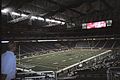 Before the 2006 MAC Championship game.
 -
 Ford Field playing surface.
 -
 2006 MAC Championship: Central Michigan vs. Ohio.
 -
 Aerial view of Ford Field.
 -
 Thousands wait to enter Ford Field for WrestleMania 23 on April 1, 2007.
 -
 An attendance record setting 80,103 fans at Ford Field for WrestleMania 23.
 -
 WrestleMania 23 stage at Ford Field.
 -
 Ford Field on Super Bowl XL Sunday, countdown to kickoff on Comerica Park's scoreboard.
 -
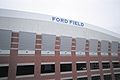
 Exterior in 2015.
 -
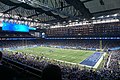 Before 2018 Minnesota Vikings vs. Detroit Lions game.


Notes
[edit]References
[edit]- ^ a b c d e f g h i j "About Ford Field". Ford Field. Archived from the original on October 10, 2023. Retrieved September 11, 2017.
- ^ Shea, Bill (August 19, 2012). "10 years later, innovative Ford Field still scores". Crain's Detroit Business. Archived from the original on November 8, 2019. Retrieved December 4, 2017.
- ^ "Detroit Lions Terms and Conditions". Detroit Lions. Archived from the original on December 30, 2018. Retrieved December 4, 2017.
- ^ a b Graham, Adam (April 2, 2007). "Motown mad for WrestleMania". The Detroit News. Archived from the original on January 21, 2013. Retrieved November 14, 2017.
- ^ a b Schiesel, Seth (April 4, 2007). "Flashy Wrestling Shows Grab the World by the Neck and Flex". The New York Times. Archived from the original on August 17, 2018. Retrieved November 14, 2017.
- ^ Booth, Dejanay (January 26, 2023). "Detroit Lions to install new artificial turf at Ford Field, Allen Park facility". CBS Detroit. Archived from the original on April 19, 2023. Retrieved January 30, 2023.
- ^ a b Monarrez, Carlos (July 19, 2017). "Ford Field's $100-million renovation includes massive video boards, drops playoff banners". Detroit Free Press. Archived from the original on November 11, 2017. Retrieved November 10, 2017.
- ^ 1634–1699: McCusker, J. J. (1997). How Much Is That in Real Money? A Historical Price Index for Use as a Deflator of Money Values in the Economy of the United States: Addenda et Corrigenda (PDF). American Antiquarian Society. 1700–1799: McCusker, J. J. (1992). How Much Is That in Real Money? A Historical Price Index for Use as a Deflator of Money Values in the Economy of the United States (PDF). American Antiquarian Society. 1800–present: Federal Reserve Bank of Minneapolis. "Consumer Price Index (estimate) 1800–". Retrieved February 29, 2024.
- ^ "Ford Field Facts & History". Detroit Lions. Archived from the original on September 5, 2015. Retrieved April 5, 2019.
- ^ "Lions have new home, same losing result". ESPN.com. August 24, 2002. Archived from the original on February 16, 2024. Retrieved February 16, 2024.
- ^ "Ballparks". MLB.com. Archived from the original on July 24, 2018. Retrieved December 22, 2017.
- ^ Dow, Bill (December 10, 2010). "The Detroit Lions' Last Game at Tiger Stadium". Vintage Detroit. Archived from the original on August 24, 2019. Retrieved August 8, 2020.
- ^ a b c d "Ford Field, Detroit Lions football stadium". Stadiums of Pro Football. Archived from the original on December 23, 2017. Retrieved December 22, 2017.
- ^ Christian, Nichole M. (April 11, 2000). "Detroit Sees Park as Star Player in Redevelopment". The New York Times. Archived from the original on October 7, 2017. Retrieved December 26, 2017.
- ^ a b c Muret, Don (August 6, 2012). "Ford Field one of NFL's most versatile stadiums". SportsBusiness Daily. Archived from the original on December 23, 2017. Retrieved December 22, 2017.
- ^ "Campbell Ewald to move headquarters to Hudson's warehouse at Ford Field". Friedman Real Estate. March 5, 2013. Archived from the original on August 3, 2021. Retrieved May 22, 2019.
- ^ "Ford Field | Detroit Historical Society". Detroit Historical Society. Archived from the original on December 23, 2017. Retrieved December 22, 2017.
- ^ "Ford Field". Ballparks.com. Archived from the original on December 24, 2017. Retrieved December 26, 2017.
- ^ Mulcahy, Marty (December 8, 2000). "Trades establish rushing game to build Ford Field by next year". Michigan Building Trades. Archived from the original on December 26, 2017. Retrieved December 26, 2017.
- ^ "Why do football fields run north to south?". Reference.com. IAC Publishing, LLC. August 4, 2015. Archived from the original on August 11, 2020. Retrieved January 2, 2017.
- ^ "Super Bowl XL Game Recap". NFL.com. February 6, 2006. Archived from the original on October 24, 2018. Retrieved August 8, 2020.
- ^ Garber, Greg (February 6, 2006). "Steelers get past Seahawks for fifth Super Bowl win in club history". ESPN.com. Archived from the original on October 11, 2017. Retrieved November 10, 2017.
- ^ Shea, Bill (August 19, 2014). "Pizza Bowl canceled as Lions back new Ford Field game". Crain's Detroit Business. Archived from the original on November 25, 2020. Retrieved November 10, 2017.
- ^ "Quick Lane Bowl Announced". Big Ten Conference. August 26, 2014. Archived from the original on November 29, 2014. Retrieved November 10, 2017.
- ^ Paul, Tony (August 19, 2014). "Ford Field construction boots MAC football media day". The Detroit News. Archived from the original on November 11, 2017. Retrieved November 10, 2017.
- ^ Osorio, Carlos (November 8, 2008). "WMU stuns Illini at Ford Field". MLive. Associated Press. Archived from the original on August 5, 2021. Retrieved November 10, 2017.
- ^ Johnson, Greg (September 11, 2010). "Spartans sloppy in defeat of Florida Atlantic at Ford Field; showdown with Notre Dame up next". MLive. Archived from the original on August 5, 2021. Retrieved November 10, 2017.
- ^ McCann, Aaron (August 8, 2020). "Mid-American Conference cancels football for fall 2020". MLive. Archived from the original on August 8, 2020. Retrieved August 8, 2020.
- ^ "Michigan State-Penn State Football Moves To Black Friday At Ford Field". Michigan State University Athletics. May 24, 2023. Archived from the original on May 24, 2023. Retrieved May 24, 2023.
- ^ Kenney, Madeline (November 24, 2023). "Michigan State (4-8) wraps up forgettable season with 42-0 loss vs. Penn State". The Detroit News. Archived from the original on November 25, 2023. Retrieved November 25, 2023.
- ^ a b Youngmisuk, Ohm (December 12, 2010). "Giants-Vikings game moved to Monday". ESPN.com. Archived from the original on November 11, 2017. Retrieved November 10, 2017.
- ^ "New York Giants at Minnesota Vikings - December 13th, 2010". Pro-Football-Reference.com. Archived from the original on November 11, 2017. Retrieved November 10, 2017.
- ^ "Brett Favre sits out as Vikings can't stop Giants in Detroit home game". ESPN.com. Associated Press. December 14, 2010. Archived from the original on November 11, 2017. Retrieved November 10, 2017.
- ^ Smith, Michael David (December 12, 2010). "Vikings "host" Giants at Ford Field". Pro Football Talk. Archived from the original on November 11, 2017. Retrieved November 10, 2017.
- ^ "Record Crowd and Big Plays Help Lions Improve to 5-0". The New York Times. Associated Press. October 10, 2011. Archived from the original on November 11, 2017. Retrieved November 10, 2017.
- ^ Higgins, Matt; Belson, Ken (November 21, 2014). "Amid Snowstorm, Bills Shrug, Bundle Up and Make Their Way to Detroit". The New York Times. Archived from the original on November 11, 2017. Retrieved November 10, 2017.
- ^ "New York Jets at Buffalo Bills - November 24th, 2014". Pro-Football-Reference.com. Archived from the original on November 11, 2017. Retrieved November 10, 2017.
- ^ "Bills blow out Jets after week marred by snow, relocated game". ESPN.com. Associated Press. November 25, 2014. Archived from the original on November 11, 2017. Retrieved November 10, 2017.
- ^ "Browns-Bills Week 11 game moved to Detroit's Ford Field due to snowstorm". NFL.com. November 17, 2022. Archived from the original on November 17, 2022. Retrieved November 17, 2022.
- ^ Bianchi, Nolan (November 20, 2022). "Bills overcome slow start, beat Browns at Ford Field in Detroit, 31-23". The Detroit News. Archived from the original on November 20, 2022. Retrieved November 20, 2022.
- ^ Rosenthal, Gregg (December 3, 2015). "Packers stun Lions on Aaron Rodgers' Hail Mary TD". NFL.com. Archived from the original on April 8, 2018. Retrieved April 8, 2018.
- ^ Demovsky, Rob (December 4, 2015). "Richard Rodgers, the perfect answer to Packers' Hail Mary prayer first". ESPN.com. ESPN. Retrieved December 4, 2015.
- ^ Rogers, Justin (January 7, 2024). "Sunday-night showdown: Lions to host Rams, Stafford in wild-card round of the playoffs". The Detroit News. Archived from the original on January 8, 2024. Retrieved January 7, 2024.
- ^ Birkett, Dave (January 14, 2024). "Detroit Lions beat L.A. Rams, 24-23, for first playoff win in 32 years". Detroit Free Press. Archived from the original on January 15, 2024. Retrieved January 15, 2024.
- ^ "Lions have 2 home playoff games for 1st time in a season, hosting Bucs in matchup of division champs". Associated Press. January 18, 2024. Archived from the original on January 26, 2024. Retrieved March 19, 2024.
- ^ Woodyard, Eric; Laine, Jenna (January 21, 2024). "Lions hold on vs. Bucs, advance to NFC Championship Game". ESPN.com. Archived from the original on January 26, 2024. Retrieved March 19, 2024.
- ^ "Michigan State To Play Kentucky In 'The BasketBowl' At Detroit's Ford Field". MSUSpartans.com. May 29, 2003. Archived from the original on November 11, 2017. Retrieved August 8, 2020.
- ^ "Kentucky never trails in 'BasketBowl'". ESPN.com. Associated Press. December 14, 2003. Archived from the original on April 20, 2022. Retrieved November 10, 2017.
- ^
- Charboneau, Matt (November 17, 2014). "New Wings arena to host NCAA Tournament games in 2018". The Detroit News. Archived from the original on November 11, 2017. Retrieved November 11, 2017.
- "Curry continues hot streak as Davidson bounces Wisconsin". CBS Sports. March 28, 2008. Archived from the original on November 12, 2017. Retrieved August 8, 2020.
- "Villanova vs. Kansas Box Score, March 28, 2008". Sports-Reference.com. Archived from the original on November 11, 2017. Retrieved November 11, 2017.
- "Kansas vs. Davidson Box Score, March 30, 2008". Sports-Reference.com. Archived from the original on November 12, 2017. Retrieved November 11, 2017.
- "Goliath slays Davidson, Curry as Kansas holds on". ESPN.com. Associated Press. March 30, 2008. Archived from the original on April 11, 2016. Retrieved November 11, 2017.
- ^
- Evans, Thayer (April 4, 2009). "Swarming Spartans Frustrate Thabeet". The New York Times. Archived from the original on November 12, 2017. Retrieved November 11, 2017.
- "Villanova vs. North Carolina Box Score, April 4, 2009". Sports-Reference.com. Archived from the original on December 23, 2014. Retrieved November 11, 2017.
- "North Carolina proves too much for Villanova in Final Four". ESPN.com. Associated Press. April 5, 2009. Archived from the original on April 17, 2016. Retrieved November 11, 2017.
- "North Carolina vs. Michigan State Box Score, April 6, 2009". Sports-Reference.com. Archived from the original on February 22, 2015. Retrieved November 11, 2017.
- "North Carolina coasts past Michigan St. to claim fifth national championship". ESPN.com. Associated Press. April 7, 2009. Archived from the original on November 19, 2020. Retrieved November 11, 2017.
- ^ Mandel, Stewart (March 28, 2008). "Mandel: The Ford Field Experiment". SI.com. Archived from the original on June 3, 2008. Retrieved November 10, 2017.
- ^ Crawford, Kirkland (November 22, 2022). "Final Four coming to back to Ford Field in Detroit in 2027". Detroit Free Press. Archived from the original on November 22, 2022. Retrieved November 22, 2022.
- ^ NCAA. "Attendance Records and Sites" (PDF). pages 46–47. Archived (PDF) from the original on March 12, 2012. Retrieved August 7, 2011.
- ^ "Detroit's Ford Field to host MHSAA individual wrestling state finals". Detroit Free Press. May 9, 2017. Archived from the original on November 12, 2017. Retrieved November 12, 2017.
- ^ "About MCBA". TheMCBA.org. Archived from the original on February 22, 2020. Retrieved August 8, 2020.
- ^ Palazzolo, Tavio (December 16, 2010). "2011 CONCACAF Gold Cup coming to Ford Field in Detroit". MLive. Archived from the original on August 5, 2021. Retrieved November 12, 2017.
- ^ "2011 Gold Cup: Panama hangs on to beat Guadeloupe 3-2 in Ford Field opener". MLive. Associated Press. June 7, 2011. Archived from the original on August 5, 2021. Retrieved November 12, 2017.
- ^ "U.S. Opens 2011 CONCACAF Gold Cup with Win against Canada". US Soccer. June 7, 2011. Archived from the original on July 15, 2018. Retrieved November 12, 2017.
- ^ Ellis, Vince (October 18, 2018). "Detroit MLS expansion group: Ford Field retractable roof is no-go". Detroit Free Press. Archived from the original on March 29, 2022. Retrieved March 29, 2022.
- ^ Broun, Sarah (November 9, 2011). "PBR announces 2012 Built Ford Tough Series schedule". Professional Bull Riders. Archived from the original on July 28, 2021. Retrieved August 8, 2020.
- ^ Wilkes, Neil (June 27, 2001). "TNN premieres new extreme sport". Digital Spy. Archived from the original on December 16, 2018. Retrieved November 13, 2017.
- ^ "Professional Bull Riders' Built Ford Tough Invitational Rides into Detroit!". Professional Bull Riders. April 10, 2006. Archived from the original on July 28, 2021. Retrieved November 13, 2017.
- ^ "THE PBR POWERS INTO MOTOR CITY". Professional Bull Riders. April 9, 2007. Archived from the original on July 28, 2021. Retrieved November 13, 2017.
- ^ Graham, Adam; Paul, Tony (March 29, 2017). "Larger than life: An oral history of WrestleMania III". The Detroit News. Archived from the original on November 15, 2017. Retrieved November 14, 2017.
- ^ Lambert, Jeremy (February 7, 2023). "WWE SumerSlam 2023 To Take Place On August 5 At Ford Field". Fightful. Archived from the original on February 7, 2023. Retrieved February 7, 2023.
- ^ Mahjouri, Shakiel (August 6, 2023). "2023 WWE SummerSlam results, recap, grades: Roman Reigns retains his title as Jimmy Uso turns on Jey Uso". CBS Sports. Archived from the original on November 11, 2023. Retrieved August 6, 2023.
- ^ "July-August 2007 by Society for Academic Emergency Medicine". Issuu. August 2, 2011. Archived from the original on April 15, 2022. Retrieved November 14, 2017.
- ^ "Detroit – Society for Academic Emergency Medicine" (PDF). Society for Academic Emergency Medicine. Archived (PDF) from the original on August 31, 2021. Retrieved November 14, 2017.
- ^ Donnelly, Francis X. (July 15, 2015). "Lutheran event brings 30K to city for Youth Gathering". The Detroit News. Archived from the original on November 15, 2017. Retrieved November 14, 2017.
- ^ Montemurri, Patricia; Warikoo, Niraj; Zaniewski, Ann; Dudar, Hasan (November 18, 2017). "Father Solanus Casey declared 'Blessed Solanus' at Detroit beatification". Detroit Free Press. Archived from the original on November 19, 2017. Retrieved November 20, 2017.
- ^ Shenouda, Stephanie (January 11, 2017). "International FIRST Robotics Competition Coming to Detroit's Cobo Center and Ford Field in April 2018". DBusiness. Archived from the original on May 27, 2022. Retrieved March 29, 2022.
- ^ Higgins, Lori (April 28, 2018). "Michigan teams dominate at FIRST robotics competition". Detroit Free Press. Archived from the original on October 13, 2019. Retrieved October 13, 2019.
- ^ Wisely, John (April 24, 2019). "FIRST Robotics championship invades Detroit". Detroit Free Press. Archived from the original on October 13, 2019. Retrieved October 13, 2019.
- ^ "2020 Event Information - FIRST Championship - Detroit - FIRST Robotics Competition (Cancelled)". firstinspires.org. Archived from the original on October 14, 2019. Retrieved April 24, 2018.
- ^ Manzullo, Brian (January 19, 2017). "Here's who performed the first concert at each Detroit sports venue". Detroit Free Press. Archived from the original on October 13, 2017. Retrieved November 14, 2017.
- ^ "Eminem Said to Plan One U.S. Show in 2003". Midland Daily News. February 7, 2003. Archived from the original on December 15, 2017. Retrieved December 14, 2017.
- ^ Reid, Shaheem (July 14, 2003). "Eminem Gets Some Hometown Love, 50 Cent Makes Em Fans Believers At Rare Show". MTV.com. Archived from the original on December 15, 2017. Retrieved December 14, 2017.
- ^ "Stones angry at 'ridiculous' cuts". BBC. February 8, 2006. Archived from the original on December 9, 2011. Retrieved July 15, 2010.
- ^ "Tours – The Mission Bell US Tour". Delirious.org.uk. Archived from the original on December 15, 2017. Retrieved December 14, 2017.
- ^ "Tour Dates Archive - 2006 Tour Dates". Delirious.org.uk. Archived from the original on February 11, 2017. Retrieved December 14, 2017.
- ^ Vrazel, Jarrod (March 20, 2006). "Kenny Chesney : The Road & The Radio Tour". ACountry. Archived from the original on December 16, 2017. Retrieved December 15, 2017.
- ^ "Kenny Chesney Sets Stadium Tour With Brooks & Dunn". CMT.com. January 11, 2007. Archived from the original on December 16, 2017. Retrieved December 15, 2017.
- ^ Tucker, Ken (January 21, 2007). "Chesney taking summer tour to football stadiums". Reuters. Archived from the original on December 16, 2017. Retrieved December 15, 2017.
- ^ "Kenny Chesney Goes NFL In A BIG Way; Ford Field among 13 stadiums to host 2008 Poets & Pirates Tour". Detroit Lions. January 22, 2008. Archived from the original on December 16, 2017. Retrieved August 8, 2020.
- ^ Sexton, Paul (May 8, 2008). "Madonna Announces 'Sticky and Sweet' Tour". Billboard. Archived from the original on March 29, 2013. Retrieved August 8, 2020.
- ^ Vrazel, Jarrod (March 11, 2009). "Kenny Chesney : Sun City Carnival Tour". ACountry. Archived from the original on December 16, 2017. Retrieved December 15, 2017.
- ^ Kaufman, Gil (November 16, 2010). "Kid Rock Announces Born Free Tour". MTV.com. Archived from the original on December 9, 2017. Retrieved December 8, 2017.
- ^ Sinkevics, John (January 13, 2011). "Ty Stone to open Kid Rock's Ford Field show on Saturday; Jamey Johnson joins tour in Saginaw". MLive. Archived from the original on August 5, 2021. Retrieved December 8, 2017.
- ^ Cook, Khalida (January 16, 2011). "With video: Kid Rock's 40th birthday bash in Detroit includes surprise guests Sheryl Crow, Martina McBride, J. Geils Band singer and more". MLive. Archived from the original on August 5, 2021. Retrieved December 8, 2017.
- ^ "Taylor Swift Announces Speak Now World Tour 2011". Detroit Lions. November 23, 2010. Archived from the original on November 15, 2017. Retrieved August 8, 2020.
- ^ Graff, Gary (June 10, 2011). "In Concert: Taylor Swift loves a BIG show". The Oakland Press. Archived from the original on November 15, 2017. Retrieved August 8, 2020.
- ^ "DLI Entertainment presents Kenny Chesney at Ford Field". Detroit Lions. November 4, 2010. Archived from the original on November 15, 2017. Retrieved August 8, 2020.
- ^ Waddell, Ray (November 14, 2011). "Kenny Chesney & Tim McGraw Reunite for Stadium Tour". Billboard. Archived from the original on April 23, 2018. Retrieved November 14, 2017.
- ^ "Ford Field will host Taylor Swift's Red Tour in 2013". Detroit Lions. October 27, 2012. Archived from the original on November 15, 2017. Retrieved August 8, 2020.
- ^ Block, Dustin (May 4, 2013). "Taylor Swift, Ed Sheeran and Austin Mahone bring 'Red' hot tour to Detroit". MLive. Archived from the original on August 5, 2021. Retrieved November 15, 2017.
- ^ "Brett Eldredge Talks About His Experience On Taylor Swift's RED Tour". Country Music Rocks. June 3, 2013. Archived from the original on November 15, 2017. Retrieved November 15, 2017.
- ^ "Bon Jovi Because We Can tour announces the J. Geils Band will perform at Detroit show". Detroit Lions. April 23, 2013. Archived from the original on June 22, 2017. Retrieved November 14, 2017.
- ^ McGovern, Kyle (February 22, 2013). "Justin Timberlake and Jay-Z Confirm 'Legends of the Summer' Stadium Tour". Spin. Archived from the original on November 17, 2017. Retrieved November 14, 2017.
- ^ Bliss, Karen (July 18, 2013). "Jay Z & Justin Timberlake In Playful Mood As 'Legends of the Summer' Tour Kicks Off in Toronto". Billboard. Archived from the original on August 9, 2017. Retrieved November 14, 2017.
- ^ Gonzalez, John (November 8, 2012). "Kenny Chesney will return to Ford Field on 'No Shoes Nation' tour". MLive. Archived from the original on August 5, 2021. Retrieved December 15, 2017.
- ^ Lacy, Eric (January 27, 2014). "One Direction books Detroit's Ford Field for second 'Where We Are Tour' show; first one sold out". MLive. Archived from the original on August 5, 2021. Retrieved November 16, 2017.
- ^ Wangberg, David (August 17, 2014). "One Direction Sings 'Teenage Dirtbag' Live, Fans Demand Studio Version". Inquisitr. Archived from the original on November 17, 2017. Retrieved November 16, 2017.
- ^ "Billboard Boxscore 0️⃣ Current Scores". Billboard. June 10, 2015. Archived from the original on May 29, 2015.
- ^ Graff, Gary (May 31, 2015). "Taylor Swift Brings Dan Reynolds of Imagine Dragons Out for 'Radioactive' in Detroit". Billboard. Archived from the original on September 18, 2020. Retrieved June 5, 2015.
- ^ Heller, Corinne (May 31, 2015). "Taylor Swift Brings 'Bad Blood' Co-Stars Gigi Hadid & Martha Hunt Onstage at Concert—See Their Fierce Looks!". E!. Archived from the original on June 13, 2015. Retrieved June 13, 2015.
- ^ Shelburne, Craig (November 10, 2014). "Kenny Chesney, Eric Church Confirm Stadium Dates". CMT. Archived from the original on November 17, 2017. Retrieved November 16, 2017.
- ^ Cage, Joe (October 23, 2014). "One Direction announce U.S. 2015 'On The Road Again Tour' dates". AXS.com. Archived from the original on December 9, 2017. Retrieved December 8, 2017.
- ^ Pankey, William (June 1, 2015). "Icona Pop to open for One Direction on North American leg of tour". AXS.com. Archived from the original on December 9, 2017. Retrieved December 8, 2017.
- ^ Graham, Adam (August 30, 2015). "Birthday bash overtakes One Direction's Ford Field concert". The Detroit News. Archived from the original on December 9, 2017. Retrieved December 8, 2017.
- ^ Ferro, Michael (February 11, 2015). "AC/DC to rock Ford Field for their first ever stadium concert in Detroit". AXS.com. Archived from the original on November 15, 2017. Retrieved November 14, 2017.
- ^ Graff, Gary (September 9, 2015). "Review: Familiarty breeds contentment for AC/DC fans at Ford Field". The Oakland Press. Archived from the original on September 11, 2015. Retrieved July 3, 2024.
- ^ Dukes, Billy (January 21, 2015). "Luke Bryan Announces Kick the Dust Up Tour Dates, Calls in Big Help". Taste of Country. Archived from the original on April 13, 2018. Retrieved December 9, 2017.
- ^ Shelburne, Craig (January 21, 2015). "Luke Bryan Reveals Kick the Dust Up Tour". CMT.com. Archived from the original on December 10, 2017. Retrieved December 9, 2017.
- ^ Graham, Adam (October 31, 2015). "Luke Bryan kicks the dust up at raucous Ford Field show". The Detroit News. Archived from the original on June 8, 2019. Retrieved December 9, 2017.
- ^ McCollum, Brian (February 12, 2016). "Beyoncé show at Ford Field bumped to June 14". Detroit Free Press. Archived from the original on February 13, 2016. Retrieved February 13, 2016.
- ^ Graff, Gary (June 15, 2016). "Beyoncé Dedicates 'Halo' to Victims of Orlando Shooting". Billboard. Archived from the original on June 16, 2016. Retrieved June 16, 2016.
- ^ "Guns N' Roses Detroit: What happened at their first reunion tour concert". MLive. June 24, 2016. Archived from the original on February 7, 2020. Retrieved December 9, 2017.
- ^ McCollum, Brian (January 13, 2016). "Luke Bryan returning to Ford Field for Oct. 29 show". Detroit Free Press. Archived from the original on July 13, 2016. Retrieved December 12, 2017.
- ^ Graham, Adam (June 6, 2017). "U2 bringing Joshua Tree Tour to Ford Field in September". The Detroit News. Archived from the original on November 15, 2017. Retrieved November 14, 2017.
- ^ Graff, Gary (September 4, 2017). "U2 Welcomes Patti Smith on Stage, Praises Detroit as 'Joshua Tree' Tour Returns to U.S." Billboard. Archived from the original on November 8, 2017. Retrieved November 14, 2017.
- ^ Bonaguro, Alison (October 18, 2017). "Kenny Chesney Plots Trip Around the Sun Tour". CMT.com. Archived from the original on December 13, 2017. Retrieved December 12, 2017.
- ^ McCollum, Brian (August 5, 2018). "Kenny Chesney parties with 49,000 as he notches 10th Ford Field show". Detroit Free Press. Archived from the original on December 2, 2020. Retrieved August 8, 2018.
- ^ McCollum, Brian (March 12, 2018). "Beyoncé, Jay-Z concert to hit Detroit's Ford Field for On The Run II tour". Detroit Free Press. Archived from the original on June 13, 2018. Retrieved March 21, 2018.
- ^ "Taylor Swift's 'Reputation' tour headed to Detroit's Ford Field". Detroit Free Press. November 13, 2017. Archived from the original on November 13, 2017. Retrieved November 14, 2017.
- ^ Beech, Mark (August 27, 2019). "Ed Sheeran's Record-Breaking Divide Tour Totals $775.6 Million, Beating U2, Guns N' Roses". Forbes. Archived from the original on November 23, 2023. Retrieved October 20, 2023.
- ^ a b Pevos, Edward (February 6, 2018). "Ed Sheeran returning to Michigan to play stadium show at Ford Field". MLive. Archived from the original on August 5, 2021. Retrieved February 7, 2018.
- ^ McCollum, Brian (May 10, 2019). "Luke Bryan keeps his Detroit party tradition rolling with another Ford Field show". Detroit Free Press. Archived from the original on May 11, 2019. Retrieved May 15, 2019.
- ^ Hightower, Brendel (November 13, 2019). "Garth Brooks Stadium Tour is coming to Ford Field". Detroit Free Press. Archived from the original on December 17, 2019. Retrieved February 24, 2020.
- ^ Graham, Adam (November 15, 2021). "The Rolling Stones honor Detroit with spirited show at Ford Field". The Detroit News. Archived from the original on November 18, 2022. Retrieved November 17, 2022.
- ^ "Tour". The Weeknd's Official Website. Archived from the original on January 28, 2020. Retrieved February 21, 2020.
- ^ "The Weeknd Announces Lineup of Openers to Replace Doja Cat on Stadium Tour". Complex. Archived from the original on June 30, 2022. Retrieved June 30, 2022.
- ^ Graham, Adam (November 1, 2021). "After two postponements, Kenny Chesney announces Ford Field return". The Detroit News. Archived from the original on July 24, 2023. Retrieved July 24, 2023.
- ^ McCollum, Brian (September 8, 2022). "Luke Combs to play Ford Field in April as part of country star's 2023 world tour". Detroit Free Press. Archived from the original on December 7, 2022. Retrieved December 6, 2022.
- ^ Pevos, Edward (November 11, 2022). "One Michigan stadium isn't enough: Taylor Swift adds second Ford Field concert". MLive. Archived from the original on November 18, 2022. Retrieved November 17, 2022.
- ^ Pevos, Edward (June 30, 2023). "What attending our first Morgan Wallen concert was like, a huge Ford Field stadium show". MLive. Archived from the original on November 23, 2023. Retrieved November 23, 2023.
- ^ York, Alan (September 17, 2021). "Ed Sheeran Announces The Mathematics Tour Of UK, Europe For 2022". Dig!. Archived from the original on June 23, 2022. Retrieved October 20, 2023.
- ^ Graham, Adam (July 15, 2023). "Eminem joins Ed Sheeran on stage at Ford Field concert, crowd loses itself". The Detroit News. Archived from the original on July 24, 2023. Retrieved July 24, 2023.
- ^ "Year-End Top 300 Concert Grosses" (PDF). Pollstar. 2023. Archived (PDF) from the original on February 26, 2024. Retrieved February 26, 2024.
- ^ Graham, Adam (November 13, 2023). "Metallica rides the lightning at Ford Field, finishes two-nighter with hits, favorites". The Detroit News. Archived from the original on November 23, 2023. Retrieved November 23, 2023.
Further reading
[edit]- Fisher, Dale (2003). Building Michigan: A Tribute to Michigan's Construction Industry. Grass Lake, Michigan: Eyry of the Eagle Publishing. ISBN 1-891143-24-7.
External links
[edit]
| Events and tenants | ||
|---|---|---|
| Preceded by | Home of Detroit Lions 2002 – present |
Succeeded by current
|
| Preceded by | Host of Little Caesars Pizza Bowl 2002 – 2013 |
Succeeded by Discontinued
|
| Preceded by | Host of the Super Bowl 2006 (XL) |
Succeeded by |
| Preceded by | Host of WrestleMania 2007 (23) |
Succeeded by |
| Preceded by | Home of the Minnesota Vikings Temporary 2010 |
Succeeded by |
| Preceded by | Home of the Buffalo Bills Temporary 2014 |
Succeeded by Ralph Wilson Stadium
|
| Preceded by | NCAA Men's Division I Basketball Tournament Finals venue 2009 2027 |
Succeeded by |
| Preceded by | Host of the Frozen Four 2010 |
Succeeded by |
| Preceded by | Headquarters of Bodman PLC 2006 – present |
Succeeded by current
|
.svg) | ||

| Divisions/ marques |
|  | ||||
|---|---|---|---|---|---|---|
| Subsidiaries |
| |||||
| Joint ventures and shareholdings |
| |||||
| Facilities and products | ||||||
| People |
| |||||
| Racing teams | ||||||
| Related topics | ||||||


- 2002 establishments in Michigan
- American football venues in Michigan
- Basketball venues in Michigan
- College basketball venues in the United States
- College ice hockey venues in the United States
- CONCACAF Gold Cup stadiums
- Covered stadiums in the United States
- Detroit Lions stadiums
- Downtown Detroit
- Ford Motor Company
- Ice hockey venues in Detroit
- Indoor soccer venues in Michigan
- Michigan Panthers stadiums
- National Football League venues
- NCAA bowl game venues
- NCAA Division I men's basketball tournament Final Four venues
- Rugby union stadiums in the United States
- Sports venues completed in 2002
- Sports venues in Detroit