


Tuscaloosa, Alabama
Tuscaloosa, Alabama | |
|---|---|
 View of Downtown Tuscaloosa from the amphitheater | |
 Flag  Seal  Logo | |
| Nickname(s): Druid City, T-Town, City of Champions | |
| Motto: "Together we can build a bridge to the future." | |
 Location of Tuscaloosa in Tuscaloosa County, Alabama | |
| Coordinates: 33°12′35″N 87°34′09″W / 33.20972°N 87.56917°W | |
| Country | United States |
| State | Alabama |
| County | Tuscaloosa |
| Incorporated | December 13, 1819[1][2] |
| Government | |
| • Type | Mayor-Council |
| • Mayor | Walt Maddox (D) |
| • Council President | Cynthia Almond |
| Area | |
| • City | 72.22 sq mi (187.05 km2) |
| • Land | 62.15 sq mi (160.97 km2) |
| • Water | 10.07 sq mi (26.08 km2) |
| Elevation | 221 ft (69 m) |
| Population | |
| • City | 99,600 |
| • Estimate (2022)[6] | 110,602 |
| • Rank | US: 280th AL: 5th |
| • Density | 1,787/sq mi (689.9/km2) |
| • Urban | 156,450 (US: 229th) |
| • Urban density | 1,774.6/sq mi (685.2/km2) |
| • Metro | 277,494 (US: 181st) |
| • Metro density | 79.4/sq mi (30.67/km2) |
| Time zone | UTC–6 (Central (CST)) |
| • Summer (DST) | UTC–5 (CDT) |
| ZIP Codes | 35401, 35402, 35403, 35404, 35405, 35406, 35407, 35486, 35487 |
| Area code(s) | 205 and 659 |
| FIPS code | 01-77256 |
| GNIS feature ID | 0153742[4] |
| Website | tuscaloosa.com |
Tuscaloosa (/ˌtʌskəˈluːsə/ TUS-kə-LOO-sə) is a city in and the county seat of Tuscaloosa County in west-central Alabama, United States,[7] on the Black Warrior River where the Gulf Coastal and Piedmont plains meet. Alabama's fifth-most populous city, the population was 99,600 at the 2020 census,[5] and was estimated to be 110,602 in 2022.[6] It was known as Tuskaloosa until the early 20th century.[8] It is also known as "the Druid City" because of the numerous water oaks planted in its downtown streets since the 1840s.[9]
Incorporated on December 13, 1819, it was named after Tuskaloosa, the chief of a band of Muskogean-speaking people defeated by the forces of Spanish explorer Hernando de Soto in 1540 in the Battle of Mabila, in what is now central Alabama.[10] It served as Alabama's capital city from 1826 to 1846, where in 1846 it was moved to its present location in Montgomery.
Tuscaloosa is the regional center of industry, commerce, healthcare and education for the area of west-central Alabama known as West Alabama. It is the principal city of the Tuscaloosa Metropolitan Statistical Area, which includes Tuscaloosa, Hale and Pickens counties.
It is the home of the University of Alabama, Stillman College and Shelton State Community College. While it attracted international attention when Mercedes-Benz announced on September 30, 1993 that it would build its first North American automotive assembly plant in Tuscaloosa County,[11] the University of Alabama remains the city's dominant economic and cultural engine, making it a college town. City leaders adopted the moniker "The City of Champions" after the Alabama Crimson Tide football team won the College Football National Championship in their 2009, 2011, 2012, 2015, 2017 and 2020 seasons.
In 2008, Tuscaloosa hosted the USA Olympic Triathlon trials for the Beijing Games.[12]
History[edit]
Reportedly the name Tuscaloosa is a compound Choctaw Indian word; "tusko" meaning "warrior" and "loosa" meaning "black". The Black Warrior River flows through the north portion of the city. In 1809 Creek chief Occechemolta established a settlement at the falls of the River. (US-T125/Alabama: A Guide to the Deep South/p 244). County seat of Tuscaloosa County 1818 to 1822 and 1826 to the present. State capital from 1826 to 1846.[4]
Native American[edit]
In 1828, Andrew Jackson was elected president of the United States. He had gained popularity when he defeated the Creek at the Battle of Horseshoe Bend in 1814, following victories in the War of 1812. He long proposed Indian removal to an Indian Territory to be established west of the Mississippi, to make land available in the Southeast for European-American settlement.[13] Jackson abandoned the policy of his predecessors of treating different Indian groups as separate nations.[13] Instead, he aggressively pursued plans to move all Indian tribes living east of the Mississippi River.[13]
Following Congressional passage of the Indian Removal Act, in 1832 the Creek National Council signed the Treaty of Cusseta, ceding their remaining lands east of the Mississippi to the U.S., and accepting relocation to the Indian Territory. They had already been under pressure from new settlers encroaching on their territory. Most Muscogee-speaking peoples were removed to Indian Territory during the Trail of Tears in 1834, although some remained behind. Some Muscogee in Alabama live near Poarch Creek Reservation in Atmore (northeast of Mobile).
Statehood and origin of name[edit]

The pace of white settlement in the Southeast increased greatly after the War of 1812 and the Treaty of Fort Jackson and the subsequent availability of land previously settled by Native Americans.[14] A small assortment of log cabins soon arose near the large Creek village at the fall line of the river, which the new settlers named in honor of the sixteenth-century Chief Tuskaloosa of a Muskogean-speaking tribe—combining the Choctaw words "tushka" or "tashka" ("warrior") and "lusa" ("black").[15][16]
In 1817, Alabama became a territory. On December 13, 1819, the territorial legislature incorporated the town of Tuskaloosa,[2] one day before Congress admitted Alabama to the Union as a U.S. state.

From 1826 to 1846, Tuskaloosa was the capital of Alabama.[17][18] The State House was built at the corner of 6th Street and 28th Avenue (now the site of Capitol Park).[18] In 1831, the University of Alabama was established and the town's population and economy grew rapidly, but the relocation of the capital to Montgomery caused a severe decline. The state legislature established Alabama State Hospital for the Insane (now Bryce Hospital) in Tuskaloosa in the 1850s, which helped restore the city's fortunes.
Civil War[edit]
During the Civil War following Alabama's secession from the Union, several thousand men from Tuscaloosa fought in the Confederate armies. During the last weeks of the War, the campus of the university was burned in a battle.[19] The larger town was also damaged in the battle, and its White population suffered economically. Its Black population was emancipated from slavery.
In the 1890s the construction of a system of locks and dams on the Black Warrior River by the U.S. Army Corps of Engineers improved navigation to such an extent that Tuscaloosa was effectively connected to the Gulf Coast seaport of Mobile. This stimulated the economy and trade, and mining and metallurgical industries were developed in the region. By the onset of the 20th century, the growth of the University of Alabama and the mental health-care facilities in the city, along with a strong national economy, fueled a steady growth in Tuscaloosa which continued unabated for 100 years.
Civil rights movement[edit]
In the post World War II era, African Americans increased their activism to ensure their constitutional civil rights and challenged southern segregation in numerous ways. In 1952, Autherine Lucy was admitted to the university as a graduate student, but her admission was rescinded when authorities discovered she was not white. After three years of legal wrangling, Thurgood Marshall and the NAACP got a court order preventing the university from banning Lucy and another student based on race. The following year, Lucy enrolled as a graduate student in Library Science on February 3, 1956, becoming the first African American admitted to a white public school or university in the state.[20][21] During her first day of class on February 6, students and others rioted on the campus, where a mob of more than a thousand white men pelted the car in which she was taken to her classes. Death threats were made against her and the university president's home was stoned.[22] The riots were the most violent involving a pro-segregation demonstration since the landmark Brown v. Board of Education Supreme Court decision. After the riots, the university suspended Lucy from school stating her own safety was a concern; it later expelled her on a technicality. She was active in civil rights for a time, but withdrew later that year. After her expulsion was annulled by the university in 1988, Lucy re-enrolled and completed her M.S. in education and graduated together with her daughter in 1992.[23]

On June 11, 1963, George Wallace, governor of Alabama, stood in front of the Foster Auditorium entrance at The University of Alabama in what became known as the Stand in the Schoolhouse Door in an attempt to stop desegregation of that institution by the enrollment of two African-American students, Vivian Malone and James Hood.[24] He had created a challenge to federal orders, when confronted by US Deputy Attorney General Nicholas Katzenbach and federal marshals sent in by Attorney General Robert F. Kennedy, Wallace stepped aside. President John F. Kennedy had supported integration of the University of Alabama as well.[25][26]
On June 9, 1964, in an event that later became known as Bloody Tuesday, a group of peaceful African-American Civil rights marchers were beaten, arrested and tear gassed by police in Tuscaloosa while walking from the First African Baptist Church to the County Courthouse to protest against the segregated restrooms and drinking fountains of this public facility.[27] Thirty-three people were sent to the hospital for treatment of injuries, and 94 were arrested. The events were not witnessed by outside journalists and had little influence outside the local community. A year later, the Bloody Sunday events in Selma of a voting rights march attracted national and international coverage and attention.[28]
James Hood dropped out of the University of Alabama after two months. He later returned, and in 1997, received his Ph.D. in interdisciplinary studies.[29] Malone persisted in her studies at the time and became the first African American to graduate from the university.[30] In 2000, the university granted her an honorary doctorate of humane letters. Later in his life, Wallace apologized for his opposition at that time to racial integration.[31]
In 2010, the university formally honored Lucy, Hood and Malone by renaming the plaza in front of Foster Auditorium as Malone-Hood Plaza and erecting the Autherine Lucy Clock Tower in the plaza.[32]
2011 tornado[edit]
On April 27, 2011, Tuscaloosa was hit by a 1.5 mi (2.4 km) wide EF4 tornado that resulted in 64 deaths, more than 1500 injuries, and massive devastation. Most of the deaths, 44, were in Tuscaloosa alone, with the rest being in Birmingham and surrounding suburbs.[33][34][35] The tornado's top winds were estimated by the US National Weather Service at 190 mph (310 km/h).[33][36][37] Officials at DCH Regional Medical alone reported treating more than 1,000 injured people in the tornado aftermath.[38] Officials reported dozens of unaccompanied minors being admitted for treatment at the hospital, raising questions about the possible loss of their parents. Several were taken to pediatric trauma wards, indicating serious injuries.[38] Referring to the extent and severity of the damage, Mayor Walter Maddox stated that "we have neighborhoods that have been basically removed from the map."[39] The same tornado later went on to cause major damage in the Birmingham area.[35] In all, the cost of damage from the tornado amounted to $2.45 billion, making it, at the time, the costliest tornado in U.S. history, though it would be surpassed less than a month later by the devastating Joplin, Missouri tornado of May 22.[40]
The tornado was part of the 2011 Super Outbreak that affected large parts of the eastern United States and was the largest tornado outbreak ever recorded.[41][42] In total, 324 people were killed by tornadoes during the outbreak, including 238 in Alabama alone.[43] The tornadoes and other severe weather combined for over $10 billion in damage throughout the affected states, with more than 20% of the damage cost resulting from the tornado that struck Tuscaloosa.[44]

In the immediate aftermath of the tornado, thousands of rescue workers dug through the wreckage looking for survivors and recovering bodies. More than 450 persons were originally listed as missing in the post-disaster chaos, leading to fears that the death toll could climb rapidly and skepticism about the relatively low fatality figures in relation to the high number of casualties. Rumors abounded that refrigerated trucks were being brought to store unidentified remains, and that countless bodies were beneath area waters. But the fatality figure did not increase (and was later reduced). Most persons listed as missing were later found to have survived.[45] During this period, The Tuscaloosa News posted an on-line people finder to aid people to find each other, as well as determine who was still missing.[46]
Two days after the storm, U.S. President Barack Obama and Alabama Governor Robert Bentley and their spouses, Michelle Obama and Diane Bentley, respectively, accompanied Mayor Maddox on a tour of the damage and the recovery efforts, along with FEMA Administrator Craig Fugate and several Congressional dignitaries. Remarking about the scale and severity of the damage, Obama said, "I've never seen devastation like this, it's heartbreaking", after touring the damaged areas.[47] Obama pledged the full resources of the federal government toward aiding the recovery efforts.[48] Bentley—himself a Tuscaloosa native—pledged additional national guard troops.
Tuscaloosa Mayor Walt Maddox announced that he was requesting 500 additional National Guard troops and calling for more volunteer aid workers and cadaver teams for the recovery of bodies, in order to prevent the spread of disease.[45]
The New York Yankees organization contributed $500,000 to the American Red Cross and Salvation Army to aid in recovery efforts, and the Atlanta Braves organization donated $100,000.[49][50] Actor Charlie Sheen visited the city to pay his respects on May 2 and donated supplies for relief efforts, along with several other actors, musicians and athletes.[51]
Due to the disaster, on August 6, 2011, the University of Alabama held a delayed graduation ceremony for the class of 2011. It awarded posthumous degrees to six students who died in the tornado.[52] The cable channel ESPN filmed a tribute in memory of the devastation.[53]
Bicentennial[edit]
The city of Tuscaloosa celebrated its 200th birthday on December 13, 2019 with city officials holding various dedications and commemorative events throughout the city, including the displaying of a "bicentennial quilt" and a fireworks display following the 44th Annual West Alabama Christmas Parade, which was dedicated to the city's birthday. The University of Alabama gave two sculptures to the city, one of a 30 foot-tall, 9,500-pound statue of the Roman goddess Minerva—designed by local artist Caleb O'Connor—at Manderson Landing park along the Black Warrior River, and a sculpture known as The Walkway. According to the Tuscaloosa200.com website, the Walkway is a "replica of the route of the Black Warrior River from Demopolis to Tuscaloosa, it traces milestones in our city's existence and survival, but its twists and turns, ebbs and flows have mirrored our city's past." It was created by sculptor and architect Craig R. Wedderspoon.[54][55]
A hermetically sealed time capsule was buried under a large boulder near the boat house near Manderson Landing; the time capsule is intended to capture "What was life like in Tuscaloosa during the year 2019?" and is set to be opened on December 13, 2069, the city's 250th birthday.[55]
Geography[edit]

According to the United States Census Bureau, the city has a total area of 72.22 square miles (187.0 km2), of which 62.15 square miles (161.0 km2) is land and 10.07 square miles (26.1 km2), is water as of 2023.[3] Most water within the city limits is in Lake Tuscaloosa, which is entirely in the city limits, and the Black Warrior River.
This city is located at 33°12′35″N 87°34′09″W / 33.20972°N 87.56917°W (33.2098407, -87.5691735),[56] approximately 60 miles (97 km) southwest of Birmingham. It lies on the fall line of the Black Warrior River, approximately 193 miles (311 km) upriver from the river's confluence with the Tombigbee River at Demopolis. Because of its location on the boundary between the Appalachian Highland and the Gulf Coastal Plain, the geography of the area around Tuscaloosa is diverse, varying from heavily forested hills to the northeast to a low-lying, marshy plain to the southwest.
Cityscape[edit]
Major areas of Tuscaloosa city proper include:
- West Tuscaloosa
- Central/Midtown Tuscaloosa
- Downtown Tuscaloosa
- The University of Alabama main campus
- Alberta City
- North River
- Hillcrest
Climate[edit]

Typical of the Deep South, Tuscaloosa experiences a humid subtropical climate (Köppen Cfa). The Gulf of Mexico heavily influences the climate by supplying the region with warm, moist air. During the fall, winter, and spring seasons, the interaction of this warm, moist air with cooler, drier air from the North along fronts creates precipitation. These fronts usually move from west to east as they track along the jet stream. Notable exceptions occur during hurricane season, where storms may move from due south to due north or even from east to west during land-falling hurricanes. The interaction between low- and high-pressure air masses is most pronounced during the severe weather seasons in the spring and fall. During the summer, the jet stream flows well to the north of the southeastern U.S., and most precipitation is consequently convectional, i.e., caused by the warm surface heating the air above.
Severe thunderstorms can bring damaging winds, large hail, and occasionally tornadoes. An F4 tornado struck Tuscaloosa County in December 2000, killing eleven people. Tuscaloosa was struck by an F2 tornado in January 1997, which resulted in the death of one person. In April 2011, two tornadoes in a span of twelve days hit the city, the first being an EF3 on April 15, and the second and more devastating being an EF4 on April 27, when more than 50 deaths resulted. The city suffered considerable infrastructure damage.[57]
Winter lasts from mid-December to late-February; the daily average temperature in January is 44.7 °F (7.1 °C). On average, the low temperature falls to the freezing mark or below on 46 days a year, and to or below 20 °F (−7 °C) on 4.4 days.[58] While rain is abundant (January and February are on average the wettest months), measurable snowfall is rare, with most years receiving none and the average seasonal snowfall amounting to 0.7 inches (1.8 cm).[58] Spring usually lasts from late-February to mid-May, becoming drier as the season progresses. Summers last from mid-May to mid-September, and the July daily average temperature is 81.7 °F (27.6 °C). There are 71–72 days of 90 °F (32 °C)+ highs annually and 3.5 days of 100 °F (38 °C)+ highs.[58] The latter part of summer tends to be drier. Autumn, which spans from mid-September to early December, tends to be similar to spring in terms of temperature and precipitation.[59] Due to its relative distance from the Gulf moderation, the annual temperature range averages 84 °F (47 °C) between a summer high of 100 °F (38 °C) and a winter low of 16 °F (−9 °C).[60] The 1991–2020 normals had the warmest summer night averaging 77 °F (25 °C) and the coldest winter day at 35 °F (2 °C).[60] Ice days are very infrequent, but tend to occur a few times per decade.
The highest recorded temperature at the Tuscaloosa Regional Airport was 107 °F (42 °C) on July 29, 1952 and August 10, 2007, and the lowest recorded temperature was −1 °F (−18 °C) on January 21, 1985.[61]
| Climate data for Tuscaloosa, Alabama (Tuscaloosa Regional Airport), 1991–2020 normals, extremes 1948–present | |||||||||||||
|---|---|---|---|---|---|---|---|---|---|---|---|---|---|
| Month | Jan | Feb | Mar | Apr | May | Jun | Jul | Aug | Sep | Oct | Nov | Dec | Year |
| Record high °F (°C) | 82 (28) |
86 (30) |
88 (31) |
94 (34) |
98 (37) |
105 (41) |
107 (42) |
107 (42) |
104 (40) |
101 (38) |
89 (32) |
82 (28) |
107 (42) |
| Mean maximum °F (°C) | 74 (23) |
78 (26) |
84 (29) |
87 (31) |
93 (34) |
97 (36) |
99 (37) |
99 (37) |
96 (36) |
90 (32) |
81 (27) |
75 (24) |
100 (38) |
| Mean daily maximum °F (°C) | 55.7 (13.2) |
60.2 (15.7) |
68.3 (20.2) |
75.5 (24.2) |
83.0 (28.3) |
89.2 (31.8) |
91.6 (33.1) |
91.2 (32.9) |
87.0 (30.6) |
76.9 (24.9) |
65.6 (18.7) |
57.9 (14.4) |
75.2 (24.0) |
| Daily mean °F (°C) | 45.7 (7.6) |
49.6 (9.8) |
56.9 (13.8) |
63.8 (17.7) |
72.2 (22.3) |
79.1 (26.2) |
81.9 (27.7) |
81.5 (27.5) |
76.3 (24.6) |
65.2 (18.4) |
54.2 (12.3) |
48.0 (8.9) |
64.5 (18.1) |
| Mean daily minimum °F (°C) | 35.7 (2.1) |
38.9 (3.8) |
45.5 (7.5) |
52.0 (11.1) |
61.3 (16.3) |
69.0 (20.6) |
72.3 (22.4) |
71.7 (22.1) |
65.6 (18.7) |
53.4 (11.9) |
42.8 (6.0) |
38.2 (3.4) |
53.9 (12.2) |
| Mean minimum °F (°C) | 18 (−8) |
23 (−5) |
28 (−2) |
37 (3) |
47 (8) |
60 (16) |
66 (19) |
65 (18) |
54 (12) |
38 (3) |
28 (−2) |
23 (−5) |
16 (−9) |
| Record low °F (°C) | −1 (−18) |
5 (−15) |
12 (−11) |
29 (−2) |
36 (2) |
45 (7) |
54 (12) |
53 (12) |
37 (3) |
23 (−5) |
10 (−12) |
2 (−17) |
−1 (−18) |
| Average precipitation inches (mm) | 4.97 (126) |
5.37 (136) |
4.82 (122) |
5.00 (127) |
3.64 (92) |
4.67 (119) |
4.17 (106) |
4.36 (111) |
3.40 (86) |
3.54 (90) |
4.52 (115) |
5.06 (129) |
53.52 (1,359) |
| Average precipitation days (≥ 0.01 in) | 10.3 | 10.8 | 10.8 | 8.9 | 9.4 | 9.9 | 11.1 | 10.7 | 7.6 | 8.7 | 8.8 | 10.7 | 117.7 |
| Source: NOAA[58][62] | |||||||||||||
Demographics[edit]
| Census | Pop. | Note | %± |
|---|---|---|---|
| 1840 | 1,949 | — | |
| 1850 | 3,500 | 79.6% | |
| 1860 | 3,989 | 14.0% | |
| 1870 | 1,689 | −57.7% | |
| 1880 | 2,418 | 43.2% | |
| 1890 | 4,215 | 74.3% | |
| 1900 | 5,094 | 20.9% | |
| 1910 | 8,407 | 65.0% | |
| 1920 | 11,996 | 42.7% | |
| 1930 | 20,659 | 72.2% | |
| 1940 | 27,493 | 33.1% | |
| 1950 | 46,396 | 68.8% | |
| 1960 | 63,370 | 36.6% | |
| 1970 | 65,773 | 3.8% | |
| 1980 | 75,211 | 14.3% | |
| 1990 | 77,759 | 3.4% | |
| 2000 | 77,906 | 0.2% | |
| 2010 | 90,468 | 16.1% | |
| 2020 | 99,600 | 10.1% | |
| 2022 (est.) | 110,602 | [6] | 11.0% |
| U.S. Decennial Census[63] 2020 Census[5] | |||

2020 census[edit]
| Race / Ethnicity (NH = Non-Hispanic) | Pop 2000[64] | Pop 2010[65] | Pop 2020[66] | % 2000 | % 2010 | 2020 |
|---|---|---|---|---|---|---|
| White alone (NH) | 41,667 | 47,574 | 47,663 | 53.48% | 52.59% | 47.85% |
| Black or African American alone (NH) | 33,164 | 37,417 | 40,867 | 42.57% | 41.36% | 41.03% |
| Native American or Alaska Native alone (NH) | 119 | 190 | 147 | 0.15% | 0.21% | 0.15% |
| Asian alone (NH) | 1,159 | 1,659 | 2,352 | 1.49% | 1.83% | 2.36% |
| Pacific Islander alone (NH) | 15 | 19 | 47 | 0.02% | 0.02% | 0.05% |
| Other race alone (NH) | 60 | 74 | 454 | 0.08% | 0.08% | 0.46% |
| Mixed race or Multiracial (NH) | 630 | 830 | 2,632 | 0.81% | 0.92% | 2.64% |
| Hispanic or Latino (any race) | 1,092 | 2,705 | 5,438 | 1.40% | 2.99% | 5.46% |
| Total | 77,906 | 90,468 | 99,600 | 100.00% | 100.00% | 100.00% |
As of the 2020 census, there were 99,600 people, 40,817 households, and 19,203 families residing in the city.[67] The population density was 1,609.1 inhabitants per square mile (621.3/km2) There were 47,465 housing units. The racial makeup of the city was 47.85% White, 41.03% Black or African American, 0.15% Native American, 2.36% Asian, 0.05% Pacific Islander, and 2.64% from two or more races. Hispanic or Latino people of any race were 5.46% of the population.
2010 census[edit]
As of the 2010 census, there were 90,468 people, 36,185 households, and 17,592 families residing in the city. The population density was 1,502.8 inhabitants per square mile (580.2/km2). There were 40,842 housing units at an average density of 678.4 per square mile (261.9/km2). The racial makeup of the city was 53.8% White, 41.5% Black or African American, 0.2% Native American, 1.8% Asian, 0.0% Pacific Islander, 1.5% from other races, and 1.1% from two or more races. 3.0% of the population were Hispanic or Latino of any race.
There were 36,185 households, out of which 20.5% had children under the age of 18 living with them, 28.5% were married couples living together, 16.2% had a female householder with no husband present, and 51.4% were non-families. 35.4% of all households were made up of individuals, and 7.8% had someone living alone who was 65 years of age or older. The average household size was 2.23 and the average family size was 2.95.
In the city, 17.4% of the population was under the age of 18, 31.9% was from 18 to 24, 22.0% from 25 to 44, 19.0% from 45 to 64, and 9.8% was 65 years of age or older. The median age was 25.4 years. For every 100 females, there were 92.7 males. For every 100 females age 18 and over, there were 94.6 males.
The median income for a household in the city was $31,874, and the median income for a family was $49,588. Males had a median income of $36,231 versus $30,552 for females. The per capita income for the city was $21,042. About 17.0% of families and 29.8% of the population were below the poverty line, including 32.5% of those under age 18 and 12.4% of those age 65 or over.
2000 census[edit]
As of the 2000 census, there were 77,906 people, 31,381 households, and 16,945 families residing in the city. The population density was 1,385.2 inhabitants per square mile (534.8/km2). There were 34,857 housing units at an average density of 619.8 per square mile (239.3/km2). The racial makeup of the city was 54.09% White, 42.73% Black or African American, 0.16% Native American, 1.49% Asian, 0.02% Pacific Islander, 0.63% from other races, and 0.87% from two or more races. 1.40% of the population were Hispanic or Latino of any race.
There were 31,381 households, out of which 23.9% had children under the age of 18 living with them, 35.0% were married couples living together, 15.7% had a female householder with no husband present, and 46.0% were non-families. 35.2% of all households were made up of individuals, and 9.3% had someone living alone who was 65 years of age or older. The average household size was 2.22 and the average family size was 2.93.
In the city, 19.8% of the population was under the age of 18, 24.5% was from 18 to 24, 25.4% from 25 to 44, 18.5% from 45 to 64, and 11.8% was 65 years of age or older. The median age was 28 years. For every 100 females, there were 90.8 males. For every 100 females age 18 and over, there were 87.9 males.
The median income for a household in the city was $27,731, and the median income for a family was $41,753. Males had a median income of $31,614 versus $24,507 for females. The per capita income for the city was $19,129. About 14.2% of families and 23.6% of the population were below the poverty line, including 25.3% of those under age 18 and 13.4% of those age 65 or over.
Religion[edit]

The city of Tuscaloosa is home to many places of worship to which people from the surrounding area of West Alabama may come; the predominant denomination is Southern Baptist. Holy Spirit Roman Catholic Church is one of three Catholic churches. First Presbyterian Church is the place of worship for many American and German residents in Tuscaloosa. There are also Presbyterian Church in America congregations in the city. First Baptist Church, Calvary Baptist Church, Alberta Baptist Church, Emmanuel Baptist Church, and First African Baptist Church are five of the many Baptist churches in Tuscaloosa. Holy Cross Lutheran Church is a church reflecting on the Evangelical Lutheran community of Tuscaloosa. There is the Unitarian Universalist Congregation of Tuscaloosa. The University Church of Christ has both a campus ministry and a prison ministry.[68] St. Gregory the Theologian Eastern Orthodox Church is the only Orthodox church in West Alabama. Its congregation is made up of Russians, Greeks, Romanians, Arabs, Eastern Europeans, and converts to Eastern Christianity. Some of the oldest churches in Tuscaloosa are St. John's Roman Catholic Church (founded c. 1845), Christ Episcopal Church (c. 1828), and First Baptist Church (c. 1818).
Tuscaloosa is also home to many non-Christians as well. A Jewish community worships at the Chabad of Tuscaloosa as well as at Temple Emanu-El and the Hillel B'nai B'rith Center, both located on the University of Alabama campus. The Hindu Mandir Temple and Cultural Center is also found in Tuscaloosa. Muslims comprise a small percentage of the population and worship at an Islamic center located near the university campus. There is also a Kingdom Hall of Jehovah's Witnesses.
Economy[edit]

Although higher education is the bedrock of Tuscaloosa's economy, it has diverse sectors of manufacturing and service. 25% of the labor force in the Tuscaloosa Metropolitan Statistical Area is employed by the federal, state and local governments; 16.7% in manufacturing; 16.4% in retail trade and transportation; 11.6% in finance, information, and private enterprise; 10.3% in mining and construction; and 9.2% in hospitality. Education and healthcare account for 7.2% of the area's workforce, with the remainder employed in other services.[69][70]
The city's industrial and manufacturing base includes BFGoodrich Tire Manufacturing, GAF Materials Corporation, Hunt Refining Company, JVC America, Nucor Steel and Phifer Wire.
A significant contributor to the city's economy is the Mercedes-Benz U.S. International assembly plant near Vance in Tuscaloosa County, 20 miles (32 km) east of downtown Tuscaloosa, which employs approximately 4,400 (as of 2020). It opened in 1995 and began assembling the R-Class Grand Sport Tourer in 2005. From 2006–2015 it produced the GL-Class vehicles; and since 1998 and 2015 respectively, has produced the GLS-Class and GLE-CLASS. Plants that supply components to Mercedes-Benz are also in the area.
The Westervelt Company, a land resources and wildlife management company, has its headquarters in Tuscaloosa. Originally the Gulf State Paper Corporation, founded in 1927, it sold its pulp and paperboard operations to the Rock-Tenn Company of Norcross, Georgia in 2005 and was restructured to form Westervelt.
Healthcare and education are cornerstones of Tuscaloosa's service sector, which includes the University of Alabama, DCH Regional Medical Center, Bryce Hospital, the William D. Partlow Developmental Center, and the Tuscaloosa United States Department of Veterans Affairs Medical Center.
Arts and culture[edit]
Libraries and museums[edit]

The Tuscaloosa Public Library is a joint city-county agency with nearly 200,000 items and approximately 47,000 registered patrons (28% of the county's population).[citation needed] There are currently three branches: the Main branch, on Jack Warner Parkway; the Weaver-Bolden branch, in western Tuscaloosa; and the Brown branch in suburban Taylorville.
The University of Alabama, Stillman College and Shelton State Community College also have libraries open to the public for non-circulation use.

Museums in Tuscaloosa are located all over town, but are primarily concentrated in the downtown area or on the campus of UA. Museums that are downtown include CHOM: the Children's Hands-On Museum of Tuscaloosa and the Murphy African-American Museum. The Alabama Museum of Natural History and the Paul W. Bryant Museum are located on the UA campus. Additional museums and galleries are found across the river in Northport. The Jones Archaeological Museum is located 15 miles (24 km) south of Tuscaloosa at the Moundville Archaeological Park in Moundville.
Performing arts[edit]


Tuscaloosa is home to several performing arts organizations. Though some are affiliated with UA or Shelton State, several are independent organizations, including the Tuscaloosa Community Theater and Shakespeare troupe The Rude Mechanicals. These various organizations cooperate and coordinate their operations through the Arts and Humanities Council of Tuscaloosa County.[71] The Arts Council also operates the Bama Theatre.
The Bama Theatre is a 1,094-seat proscenium theatre located in downtown Tuscaloosa and is operated by The Arts and Humanities Council.[72] The Bama Theatre was built between 1937 and 1938 under the New Deal-era Public Works Administration as a movie palace. At the time of its construction in 1938, it was the only air-conditioned building in Tuscaloosa. The theatre was renovated as a performing arts center in 1976 and housed the Tuscaloosa Symphony Orchestra and Theatre Tuscaloosa troupe until those groups moved into their own facilities.
Today, the Bama Theatre is the residence of the Tuscaloosa Children's Theatre Company and the Tuscaloosa Community Dancers.[73] Additionally, it hosts the Arts Council's Bama Art House movie series.[74] The Bama Theatre hosts a Jewish Film Festival in the spring, as well as several traveling film festivals. Additionally, the Bama Theatre has recently been serving as a concert venue, hosting recent performances by Joan Baez, Aimee Mann, the Drive-By Truckers, Umphrey's Mcgee, Ryan Adams, Chuck Leavell and many other performing artists.
The Frank Moody Music Building on the UA campus holds a 1000-seat Concert Hall and a 140-seat Recital Hall. The Concert Hall features a three-story-tall, 5,000-pipe Holtkamp organ and frequently hosts concerts and other musical events. The Recital Hall features a Schlicker organ that was crafted in Buffalo, New York. The Tuscaloosa Symphony Orchestra, in its 35th year, is based at the Moody Music Building and is conducted by Adam Flatt.
Also on the UA campus, Rowand-Johnson Hall holds the Marian Gallaway Theatre, a 305-seat proscenium theater, the Allen Bales 170-seat thrust theatre, and the 600-seat Morgan Auditorium. These facilities primarily host university-sponsored performing arts shows, such as Dance Alabama and the university's theater productions.
The Sandra Hall-Ray Fine Arts Centre on the Shelton State campus holds the Bean-Brown Theatre, a 450-seat proscenium theater, and the 100-seat Alabama Power Foundation Recital Hall.
Tuscaloosa is also home to the Alabama Choir School.[75]

Coleman Coliseum is a 15,383-seat multipurpose arena that serves as the city of Tuscaloosa's municipal civic center. Because the City of Tuscaloosa does not have a civic center, the demand for events grew rapidly and the coliseum doubled its capacity in the 1970s. In the 1990s, marquee concerts and events that the arena had seen in the previous two decades grew scarce as the facility became more outdated and mostly devoted to Crimson Tide athletic events. In the hope that the university could pull more events at the facility, the coliseum underwent a significant renovation in 2005, costing over $24 million.
The coliseum has hosted a diversity of events including commencement exercises, a visit by President Ronald Reagan, alumni gatherings, student convocations, concerts, operas, ballets, appearances by political figures, WCW Saturday Night, etc. Travis Tritt filmed his "Bible Belt" country music video there. Some of the stars who have performed on its stages include The Rolling Stones, Elvis Presley, Elton John, Grateful Dead, Tom Petty, Led Zeppelin, Ray Charles, Jimi Hendrix, Bob Dylan, Alan Jackson, Reba McEntire, Jay Leno, Hank Williams, Jr., Daughtry, and B.o.B.

In December 2010, construction on the Tuscaloosa Amphitheater officially wrapped up with the dedication ceremony taking place days after. The 7,470 capacity Tuscaloosa Amphitheater is blocks away from the downtown district and sits at the end of the Riverwalk on the banks of the Black Warrior River. Since its dedication ceremony in March 2011, a variety of performers have played there including John Legend, The Lumineers, Flo Rida, Nelly, TLC, ZZ Top, ODESZA, Mary J. Blige, Kenny Chesney, Widespread Panic, Steely Dan, Jeff Dunham, Jill Scott, and Fun. The amphitheater has held events such as the Blues and Brews Music Festival and a pro boxing match.
Festivals and events[edit]
Before each football game is a massive gathering at the UA Quad, where people gather starting on Friday for tailgating and the University of Alabama holds pep rallies on the Gorgas library steps. The Quad has hosted ESPN's College Gameday several times and also is a place to meet Alabama football legends on game day and perform the "Elephant Stomp" (a pre-game parade) to Bryant–Denny Stadium with the Alabama mascot "Big Al" and the Million Dollar Band.
On the first Thursday of each month, the Tuscaloosa art galleries open their doors for "Art and Soul"—highlighting local artists. There is a shuttle service that runs between this event and Northport's "Art Night".
The City of Tuscaloosa holds parades annually for holidays such as New Year's Day, Martin Luther King Jr. Day, St. Patrick's Day, Memorial Day, Independence Day, Labor Day, Veterans Day, and Christmas Day. Holy Spirit Roman Catholic Church also hosts an annual religious procession/parade for Our Lady of Guadalupe on the Virgin of Guadalupe feast day in December, which reflects on both the catholic and Hispanic community.
Other annual city festivals worth noting are:
- Weindorf Festival – The Weindorf Festival is a cultural German festival in which native Tuscaloosans and German immigrants celebrate Tuscaloosa's bond with Germany through the nearby Mercedes-Benz Automobile Plant and Tuscaloosa's sister City of Schorndorf. The celebration includes German alcoholic beverages, singing, dancing, and other Germanic arts.
- Sakura Festival – The Sakura festival celebrates the symbolic moment when a cherry blossom petal detaches itself to float earthward, which reminds one of the paradoxically fleeting, yet enduring, nature of life. Every March Tuscaloosa celebrates its ties with Japan and its Sister City of Narashino City. This festival features a Haiku Contest.
- Kentuck Festival of Arts – This annual event takes place during the third week in October near the banks of the Black Warrior River in Historic Downtown Northport. This nationally recognized event brings in visitors and artists from all over the United States. As several hundred talented artists bring their creations, several thousand visitors come to pay tribute to their skills. Those crowds come not only for the art, but also for the artistry of the days of old. Several artisans provide live demonstrations of blacksmithing, furniture making, quilting, and potting. There are music acts performing on stages and many varied foods available.
- Moundville Native American Festival – This annual festival takes place at the Moundville Archaeological Park. Native American performing artists, craftspeople, and musicians entertain and educate visitors about the rich culture and heritage that makes Southeastern Indians unique. Visitors can look forward to learning about the society and culture that existed there 800 years ago.
- Dickens Downtown – An annual Victorian holiday celebration known as Dickens Downtown takes place on the first Tuesday night in December in Downtown Northport. Dickens is a community supported gathering to celebrate the true spirit of Christmas involving Theatre Tuscaloosa performing scenes from "A Christmas Carol", local choirs, the 5th Alabama Regimental Band, a real English Town Crier, father Christmas, and business and neighborhood open houses. As the area comes alive with characters and props straight from 'A Christmas Carol', local shops offer hot cocoa and cookies.[76]
- Druid City Arts Festival - Since 2010, the DCAF has been held at Government Plaza downtown in the first week of April every year. The annual open-air festival is free for anyone to attend and hosts vendors from around the state of Alabama and the country that display art, amateur and professional alike, that is available for purchase in tents scattered throughout the plaza. Attendees can travel from tent to tent admiring and buying available pieces, food, and other trinkets from vendors. There's a dedicated Kids Zone where sidewalk chalking takes place, and there's usually free musical performances held under the pavilion in the center of the plaza. The festival celebrated its 10th anniversary on April 5 and 6, 2019; it was also the festival's first two-day event, which is usually held for just one day a year.[77][78]
Points of interest[edit]
Notable points of interest in the city of Tuscaloosa include:


- Alabama Museum of Natural History
- Alabama Stage and Screen Hall of Fame
- Bama Theatre
- Battle-Friedman House
- Bryant–Denny Stadium
- Bryce Hospital
- Christ Episcopal Church
- Denny Chimes
- Downtown Tuscaloosa Historic District
- Dr. John R. Drish House
- Dreamland Bar-B-Que
- Gorgas House
- Hugh R. Thomas Bridge
- Jemison-Van de Graaff Mansion
- Moundville Archaeological Park
- Ol' Colony Golf Complex
- Paul Bryant Bridge
- Paul W. Bryant Museum
- Queen City Pool and Pool House
- Tuscaloosa Amphitheater
- University of Alabama Arboretum
- Westervelt Warner Museum of American Art
- Woolsey Finnell Bridge
Sports[edit]

Tuscaloosa is known for its collegiate athletics—particularly the University of Alabama Crimson Tide football team. The University of Alabama also currently fields championship-caliber teams in baseball, golf, women's gymnastics, and softball. These teams play in athletics facilities on the university campus, including Bryant–Denny Stadium (capacity of 102,000+), Coleman Coliseum (formerly Memorial Coliseum), Sewell-Thomas Stadium, Rhoads Stadium, Foster Auditorium and the Ol' Colony Golf Complex.
Stillman College fields teams in football, men's and women's basketball, baseball and softball, among other sports, although the school discontinued the football program after completing the 2015 season. In the past decade, Stillman has gone through a series of renovations, including a new football stadium, Stillman Stadium.
Previous professional teams calling Tuscaloosa home included the World Basketball Association's Druid City Dragons in 2006, and Tuscaloosa Warriors football team in 1963, with both folding after one season.
In 2008, Tuscaloosa hosted the USA Olympic Triathlon trials for the Beijing Games.[12]
World renowned putter company T.P. Mills Co. was founded and is located in Tuscaloosa.
Tuscaloosa is also the birthplace and home of Deontay Wilder. He is a professional boxer that held the WBC Heavyweight Title from 2015 to 2020, making 10 successful title defenses. He is still active and boasts a record of 43 wins, 3 losses, and 1 draw with 42 wins coming by way of KO.
Parks and recreation[edit]

Tuscaloosa County Parks and Recreation Authority, known by the acronym PARA, is a county agency that receives a large amount of its funding from the city, and operates several parks and activity centers within the city. PARA is known for its participation in work therapy programs with the local United States Department of Veterans Affairs. Additional public recreational sites are owned and maintained by the University of Alabama and federal agencies such as Corps of Engineers.
The University of Alabama Arboretum is located on 60 acres (243,000 m2) of land at the intersection of Veterans Memorial Parkway and Pelham Loop Road, adjacent to the VA Hospital. The arboretum's primary emphasis is on Alabama's native flora and fauna. It includes 2.5 miles (4.0 km) of walking trails through native piney woods and oak-hickory climax forest, a wildflower garden containing more than 250 species, ornamental plants, an experimental garden, a bog garden, an open-air pavilion, and a children's garden. Two greenhouses contain collections of orchids, cacti, and tropical plants.
Capitol Park, Tuscaloosa at 6th Street and 28th Avenue is home to the ruins of the former state capitol building or State House from 1826 to 1845.[79] It was later used by the Alabama Central Female College and burned down in 1923.
Other parks in Tuscaloosa include Veterans Memorial Park, Tuscaloosa River Walk, the Park at Manderson Landing, J. Oviatt Bowers Park, Snow Hinton Park, Monnish Park, Annette N. Shelby Park, Kaulton Park, Palmore Park, and many others.
Government[edit]
| District | Representative | Serving Since |
|---|---|---|
| 1 | Phyllis W. Odom | 2015 |
| 2 | Raeven Howard | 2020 |
| 3 | Cynthia Lee Almond | 2005 |
| 4 | Lee Busby | 2019 |
| 5 | Kip Tyner | 1997 |
| 6 | Edwin Pugh | 2013 |
| 7 | Sonya McKinstry | 2013 |
Tuscaloosa has a strong-mayor variant mayor-council form of government, led by a mayor and a seven-member city council. The mayor and council members are elected concurrently for four-year terms. The mayor is elected by the city at-large while council members are elected to single-member districts. Neither the mayor nor the members of the city council is term-limited. All elected offices are nonpartisan. Elections take place in years following presidential election years, with run-off elections taking place six weeks later if necessary. Terms begin immediately after election. The most recent municipal elections were held in 2021.
The mayor is the chief executive and administrative officer of the city. His main duty is to oversee the day-to-day operation of city departments pursuant to executing policy enacted by the city council or, in the absence of any council policy, his own discretion. His other duties include preparing an operating budget each year for approval by the city council and acting as ambassador of the city. The mayor also presides over city council meetings but votes only in case of ties. The current Mayor of Tuscaloosa is Walter Maddox, who was elected to office in September 2005. Prior to Maddox, Alvin A. DuPont had served as mayor for 24 years.
Previous members of City Council include District 1 - Bobby E. Howard (2005), Burrell Odom (2013); District 2 - Harrison Taylor (1993); District 3 - the same; District 4 - Lee Garrison (1997), Matt Calderone (2013); District 5 - the same; District 6 - Bob Lundell (2005); District 7 - William Tinker, III (2005).
- William R. Bolling, 1828[80]
- John Owen, 1828
- Wm. R. Smith, 1837
- Robt. S. Inge, 1837
- D. Henry Robinson, 1842
- Robert Blair, 1844–1848, 1859–1861, 1872
- James L. Childress, 1849
- Joseph C. Guild, 1850–1854
- David Woodruff, 1855
- L. S. Skinner, 1856–1858
- Robert Lacey, 1862
- Jesse E. Adams, 1863
- Obediah Berry, 1864–1865, 1873, 1877–1878
- Joseph C. Guild, 1866
- S. B. Smith, 1867
- John S. Garvin, 1867
- Josiah J. Pegues, 1868
- T. F. Samuel, 1869–1871
- John J. Harris, 1874–1876
- William C. Jemison, 1879–1886
- ?
- John C. Pearson, circa 1931[81]
- ?
- Luther Davis, circa 1937[82]
- ?
- J. S. Robertson, circa 1952[82]
- J. Hal McCall, 1953–1956[82]
- George Van Tassel, 1956–1969[83]
- C. Snow Hinton, Jr., 1969–1976[84]
- Ernest W. "Rainy" Collins, 1976–1981[85]
- Alvin P. DuPont, 1981–2005[86]
- Walter Maddox, September 2005–present
The city council acts as the legislative body of the city. It is powered by state law to consider policy and enact law and to make appointments to city boards. The council also considers the budget proposed by the mayor for approval. The majority of work in the council is done by committee. These committees usually consist of three council members, one of whom will be chairman, and relevant non-voting city employees.
Tuscaloosa, as the largest county seat in western Alabama, serves a hub of state and federal government agencies. In addition to the customary offices associated with the county courthouse, namely two district court judges, six circuit court judges, the district attorney and the public defender, several Alabama state government agencies have regional offices in Tuscaloosa, such as the Alabama Department of Transportation and the Alabama State Troopers (the state police).
Tuscaloosa is in the federal jurisdiction of the United States District Court for the Northern District of Alabama. There is a courthouse in Tuscaloosa simply called the Federal Courthouse. Several federal agencies operate bureaus out of the courthouse.
Federally, Tuscaloosa is split between the 4th and 7th Congressional Districts, which are represented by Robert Aderholt (R) and Terri Sewell (D), respectively. In addition, Alabama's senior senator, Richard Shelby (R), is a resident of Tuscaloosa.
On the state level, the city is split among the 5th, 21st, and 24th Senate districts and 62nd, 63rd, and 70th House districts in the Alabama State Legislature.
In December 2009, construction on the new federal courthouse of Tuscaloosa began. The $67 million building was the centerpiece of a major downtown urban renewal project. According to information released by the General Services Administration, the building is 129,000 square feet (12,000 m2) with parking. It houses the U.S. District Court, U.S. Bankruptcy Court and Social Security Administration office.
The Northern District of Alabama has only one facility suitable for holding a major criminal trial in Huntsville. However, Huntsville lacks the facilities for safely moving criminal suspects in and out of the building safely. Tuscaloosa's new federal courthouse will anchor the federal structure for the whole Northern District of Alabama.[87]
-
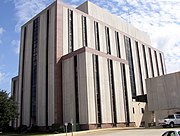 Tuscaloosa County courthouse
 -
 Tuscaloosa Federal Courthouse
 -
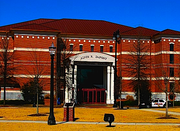 The Alvin P. DuPont Municipal Court building
 -
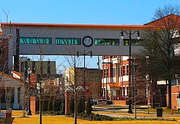 The Tuscaloosa Intermodal Facility


Education[edit]
Higher education[edit]

The University of Alabama is the largest university in the state of Alabama in terms of enrollment. Enrolling approximately 40,000 students[88] on a 1,970 acres (8.0 km2) campus, UA has been a part of Tuscaloosa's identity since it opened its doors in 1831. Stillman College, which opened in 1875, is a historically black liberal arts college enrolling approximately 1,200 students on a 105 acres (0.42 km2) campus. Additionally, Shelton State Community College, one of the largest community colleges in Alabama, is located in the city. The school enrolls around 4,000 students from all backgrounds and income levels.
Primary and secondary education[edit]
The Tuscaloosa City School System serves the city. It is overseen by the Tuscaloosa City Board of Education, which is composed of eight members elected by district and a chairman elected by a citywide vote. The Board appoints a Superintendent to manage the day-to-day operations of the system. Operating with a $100 million budget, the system enrolls approximately 10,300 students. The system consists of 24 schools: 13 elementary schools (12 zoned and 1 magnet), 6 middle schools (5 zoned and 1 magnet), 3 high schools (Paul W. Bryant High School, Central High School and Northridge High School), and 2 specialty schools (the Tuscaloosa Center for Technology, a vocational school, and Oak Hill School for special needs students). In 2002, the system spent $6,313 per pupil, the 19th highest amount of the 120 school systems in the state.[89]
The Tuscaloosa County School System serves the county excluding the city. It is overseen by the Tuscaloosa County Board of Education, which is composed of seven elected members. The Board appoints a Superintendent to lead the school system. The system enrolls approximately 18,000 students which are served utilizing a budget of approximately $180 million. The school system consists of 34 schools—6 high schools, 8 middle schools and 19 elementary schools. It also provides services for special needs students at Sprayberry Education Center. In 2013 the school system hired its first minority superintendent of Hispanic/Latin origin who is also only the second female.
Tuscaloosa is also served by several private schools, both secular and religious, including Tuscaloosa Academy, American Christian Academy, Holy Spirit Catholic School, North River Christian Academy, the Capitol School, and Tuscaloosa Christian School (in neighboring Cottondale).
From 1923 to 2011, the state-run William D. Partlow Developmental Center has served the intellectually disabled, offering these citizens a public education as well as seeing to their other needs.
Weekend education[edit]
Previously the Tuscaloosa Saturday School, a weekend Japanese educational program, provided Japanese language instruction for Japanese citizen children and other children in the area.[90]
Media[edit]

The Tuscaloosa News is the major daily newspaper serving the city. The Tuscaloosa News also publishes several websites and Tuscaloosa Magazine. The primary news website is tuscaloosanews.com.[91] Tidesports.com focuses on University of Alabama sports. The Tuscaloosa News offices were located west of downtown on a bluff overlooking the Black Warrior River. In October 2023, Mayor Walt Maddox announced that the former News office building is slated to be razed to make way for a new municipal recreation center.[92]
The Planet Weekly is the largest of the several alternative weekly newspapers published in the area. Additionally, each of the three colleges in the area are served by student-published periodicals, the largest being The Crimson White, the independent, student-run newspaper of the University of Alabama and one of several UA-affiliated student publications.
Kids Life Magazine is a free publication which focuses on family friendly events in the Tuscaloosa area.
Tuscaloosa is part of the Birmingham-Tuscaloosa-Anniston television market, which is the 40th largest in the nation.[93] All major networks have a presence in the market. WCFT 33 is the ABC affiliate, WIAT 42 is the CBS affiliate, WBRC 6 is the Fox affiliate, WVTM 13 is the NBC affiliate, WBIQ 10 is the PBS affiliate, WTTO 21 is the CW affiliate, WABM 68 is the MyNetworkTV affiliate and WVUA-CD 7 is the This TV affiliate. WVUA-CD is the only station that originates its broadcast in Tuscaloosa; it is owned by the University of Alabama and its studios are part of UA's Digital Media Center.
Tuscaloosa is the 234th largest radio market in the nation.[94] In January 2007, of the top-ten-rated radio stations, two were urban, three were country, two were contemporary, and one each was gospel, oldies, and talk radio.[95]
Tuscaloosa serves as home base to Alabama Public Radio, the state's largest public-radio network. APR's main studios are housed at the University of Alabama, and the flagship signal, WUAL-FM, originates from a transmitter south of town. WUAL serves Tuscaloosa, portions of the Birmingham metro area and several counties of west-central Alabama. The University of Alabama also houses WVUA-FM, a 24/7 college radio station run completely by students. Clear Channel Communications and Townsquare Media both own and operate a cluster of radio stations in Tuscaloosa, that form the majority of the market.
NOAA Weather Radio station KIH60 broadcasts weather and hazard information for Tuscaloosa and the surrounding vicinity.
Infrastructure[edit]

Health and medicine[edit]
DCH Regional Medical Center is the main medical facility in Tuscaloosa. Operated by the publicly controlled DCH Healthcare Authority, the 610-bed hospital opened in 1916 as the Druid City Infirmary.[96] The emergency department at DCH operates a trauma center (but it is not verified as one by the American College of Surgeons, however) that serves all of west central Alabama and is one of the busiest in the state.[97] The DCH Healthcare authority also operates Northport Medical Center in neighboring Northport.
Other major medical centers in Tuscaloosa include the 702-bed Veterans Affairs Medical Center-Tuscaloosa, the 422-bed Bryce Hospital, Mary S. Harper Geriatric Psychiatry Center, and Taylor Hardin Secure Medical Facility.
Transportation[edit]

Tuscaloosa is connected to other parts of the country via air, rail, road and sea. The city lies at the intersection of several highways, including three federal highways (US 11, US 43, and US 82), three Alabama state highways (SR 69, SR 215, and SR 216) and two duplexed (conjoined) Interstates (I-20/I-59). Interstate 359 spurs off from I-20/I-59 and heads northward, ending in downtown Tuscaloosa. SR 297 will be the future loop road around Tuscaloosa.
Tuscaloosa also contains one toll road on the Black Warrior Parkway (I-20/I-59), charging $1.25 for automobiles, and one toll bridge (Black Warrior Parkway bridge).
Rail[edit]
Amtrak provides passenger rail service to Tuscaloosa though the Crescent line, which connects the area to major cities along the east coast from New York City to New Orleans. Tuscaloosa station is situated at 2105 Greensboro Avenue, one mile (1.6 km) south of downtown. Norfolk Southern Railway and Alabama Southern Railroad provide freight services to the area. KCS previously provided service to the area before leasing its lines to Watco in July 2005.[98]
Bus[edit]
Greyhound Bus Lines provides passenger bus service to Tuscaloosa. The Tuscaloosa Transit Authority operates the Tuscaloosa Trolley System. The Tuscaloosa Trolley provides local public bus transportation with four fixed routes that operate Monday through Friday from 5:00 am to 6:00 pm. The trolley's paint job is an illusion; it is an El Dorado Transmark RE bus, painted to look like a trolley.[99]
Airport[edit]
The Tuscaloosa Regional Airport, on the north side of the Black Warrior River west of downtown Northport, is equipped with two lighted runways (6499' and 4001') and provides full facilities for the general aviation which the airport mainly serves. The airport also supports private jetcraft and commercial charter flights, but passengers of regularly scheduled commercial aircraft from Tuscaloosa embark at either the convenient and well equipped Birmingham-Shuttlesworth International Airport, located 53 miles (85 km) away on the east side of downtown Birmingham, or the much larger and busier Hartsfield–Jackson Atlanta International Airport, located 210 miles (340 km) away in Atlanta, Georgia.
Heliports include the Bryant Culberson Heliport and the Tuscaloosa Police Department Heliport.
Major highways[edit]
Tuscaloosa is served by many major highways, including I-20, I-59, and U.S. Route 82. I-20/59 run west to east through the southern part of the city, leading northeast 58 mi (93 km) to Birmingham and southwest 96 mi (154 km) to Meridian, Mississippi. US 82 runs northwest to southeast through the city, locally known as McFarland Boulevard, and leads southeast 103 mi (166 km) to Montgomery, Alabama and northwest 59 mi (95 km) to Columbus, Mississippi. Many other state and local highways run through the city as well, in addition to a tolled bypass on the western side of the city connecting those coming from the west on US 82 to I-20/59 without going through the main part of the city.
Port of Tuscaloosa[edit]
The Port of Tuscaloosa is a river port located in the City of Tuscaloosa and administered by the Alabama State Port Authority.

The Black Warrior River is bounded along nearly its entire course by a series of locks and dams. They form a chain of narrow reservoirs, providing aids to navigation and barge handling as well as hydroelectric power and drinking water. The Black Warrior River watershed is a vital river basin entirely contained within Alabama, America's leading state for freshwater biodiversity. Near Tuscaloosa, the river flows out of the rocky Cumberland Plateau and enters the sandy East Gulf Coastal Plain. Barge transportation in and out of the Port of Tuscaloosa and other commercial navigation make the Black Warrior a silent giant in the state of Alabama's economy. Although the Port of Tuscaloosa is a small one, it is one of the larger facilities on the Black Warrior River at waterway mile marker 338.5. There are no railway connections at this port as they primarily concentrate on the shipment of dry bulk commodities, including lignite, coal and coal coke. The federal government and the City of Tuscaloosa share the ownership of the Port of Tuscaloosa; the operation of the port is leased out to Powell Sales and has been run by them since 1997.
At waterway mile marker 343.2 on the opposite side of the river is a steel company with its own tracks at the rear of the plant connecting with the Kansas City Southern Railroad for barge shipments of iron and steel products such as ingots, bars, rods, steel slabs, plates and coils. Tuscaloosa Steel Corporation was one of the first U.S. steel companies to implement the Steckel Mill Technology.
The Port of Tuscaloosa grew out of the system of locks and dams on the Black Warrior River built by the U.S. Army Corps of Engineers in the 1890s. Its construction opened up an inexpensive transportation link to the Gulf seaport of Mobile, Alabama that stimulated the mining and metallurgical industries of the region that are still in operation.[100]
The Army Corps of Engineers has maintained a system of locks and dams along the Black Warrior River for over a century to allow navigability all the way up to Birmingham.[101] Barge traffic thus routinely runs through Tuscaloosa to the Alabama State Docks at Mobile, Alabama. Via the Tenn-Tom Waterway, the city is connected to the Ohio River valley and beyond.
Notable people[edit]
 | This article needs additional citations for verification. (May 2008) |
(B) denotes that the person was born there.
Arts and entertainment[edit]
- Paco Ahlgren, writer and financial journalist; author of Discipline
- Annie Greene Brown, born in Tuscaloosa, author of Fireside Battles
- Hannah Brown, born in Tuscaloosa, Miss Alabama USA 2018; contestant on The Bachelor; star of The Bachelorette
- Rick Bragg, Pulitzer Prize-winning author and former reporter for The New York Times; resides in Tuscaloosa
- Willie D. Burton, born in Tuscaloosa, sound technician in the film industry; Academy Award winner for Bird and Dreamgirls
- Frank Calloway, folk artist
- Thad Carhart, author of The Piano Shop on the Left Bank
- Tom Cherones, born in Tuscaloosa, University of Alabama alumnus; television producer and director known for Seinfeld, NewsRadio, and Desperate Housewives
- Chase Coleman, born in Tuscaloosa, actor known for his role in the HBO series Boardwalk Empire
- Mary Dees, raised in Tuscaloosa, film actress during the 1930s, including The Last Gangster and The Women; stand-in for Jean Harlow in Saratoga; appeared in Three Stooges shorts, Marx Brothers comedies, and on Broadway[102]
- Robert Gibson, one-half of the professional wrestling team The Rock 'n' Roll Express
- Frances Nimmo Greene, born in Tuscaloosa, educator, and author
- Vera Hall, folk singer inducted into the Alabama Women's Hall of Fame
- Charlie Hayward, born in Tuscaloosa, musician, and bass guitarist for the Charlie Daniels Band
- Watt Key, born in Tuscaloosa, fiction author best known for Alabama Moon
- Chuck Leavell, raised in Tuscaloosa, member of The Allman Brothers Band, and keyboardist for The Rolling Stones[103]
- William March, highly decorated member of the United States Marine Corps; writer of psychological fiction, including The Bad Seed; buried at Evergreen Cemetery in Tuscaloosa
- Debra Marshall, born in Tuscaloosa, professional wrestler with World Wrestling Entertainment
- Madeline Mitchell, Miss Tuscaloosa and Miss Alabama USA 2011; 2nd runner-up at the Miss USA pageant
- Tim Samaras, storm chaser known for starring in Storm Chasers
- Brandon Scott, born in Tuscaloosa, actor known for his roles in Grey's Anatomy, Wreck-It Ralph, and The Last of Us
- Johnny Shines, musician and member of the Blues Hall of Fame
- Dylan Riley Snyder, born in Tuscaloosa, actor known for his roles in Broadway's Tarzan, the comedy-drama film Life During Wartime, and TV sitcom Kickin' It
- Maria Brewster Brooks Stafford, educator
- Reed Timmer, storm chaser known for starring in Storm Chasers and Tornado Glory
- Dinah Washington, born in Tuscaloosa, blues, R&B, and jazz singer; member of Rock and Roll Hall of Fame
- Kellie Wells, University of Alabama professor and short story writer
Politics[edit]
- Robert J. Bentley, dermatologist and elected governor of Alabama in 2010
- Abdurrahim El-Keib, interim prime minister of Libya (2011–2012); lived in Tuscaloosa while a professor at University of Alabama
- Walter Flowers, reared in Tuscaloosa, United States Congressman, served on committee that voted for impeachment of President Richard Nixon
- Lewis McAllister, Tuscaloosa businessman and first Republican to serve in Mississippi House of Representatives since Reconstruction, 1962-1968
- Robert Morrow, chairman of Republican Party of Travis County, Texas, considered a conspiracy theorist, born in Tuscaloosa c. 1964
- Condoleezza Rice, lived in Tuscaloosa as a child while her father taught at Stillman College
- Richard C. Shelby, U.S. senator, chairman of the United States Senate Committee on Banking, Housing, and Urban Affairs and Chairman of the United States Senate Appropriations Subcommittee on Commerce, Justice, Science, and Related Agencies
- Margaret Tutwiler, former resident of Tuscaloosa, served in three presidential administrations, former ambassador to Kingdom of Morocco, under Secretary for Public Diplomacy and Public Affairs in State Department
- Lurleen Wallace, born in Tuscaloosa, former governor of Alabama
- Coleman Young, born in Tuscaloosa, served as mayor of Detroit from 1974 to 1993
Sports[edit]
- Tim Anderson, born in Tuscaloosa, Major League Baseball player for Chicago White Sox
- Javier Arenas, lives in Tuscaloosa, NFL cornerback and return specialist for Atlanta Falcons; cousin of Gilbert Arenas
- Ollie Brown, born in Tuscaloosa, Major League Baseball player[104]
- Bear Bryant, lived and died in Tuscaloosa, iconic Alabama coach in College Football Hall of Fame
- Keydren "Kee-Kee" Clark, born in Tuscaloosa, basketball player who averaged 25.9 points per game during NCAA career at Saint Peter's
- Sylvester Croom, born in Tuscaloosa, first African-American head football coach in Southeastern Conference
- Bennie Daniels, Major League Baseball player
- Otis Davis (born 1932), Olympic track and field athlete, gold medals in 400 metre dash and 4 × 400 metres relay at 1960 Summer Olympics, setting a world record in the former event(B)[105][106]
- Joe Dawson, born in Tuscaloosa, American-Israeli basketball player, 1992 Israeli Basketball Premier League MVP
- George Foster, born in Tuscaloosa, Major League Baseball player[104]
- Butch Hobson, born in Tuscaloosa, Major League Baseball player and manager[104]
- Rusty Jackson, born in Tuscaloosa, punter who played for NFL's Los Angeles Rams and Buffalo Bills
- Kirani James, lives in Tuscaloosa and won gold at London 2012 Summer Olympics in the 400m
- Rob Jones, born in Tuscaloosa, stock car racing driver
- Patton Kizzire, raised in Tuscaloosa, PGA Tour golfer, attended Tuscaloosa High School, and Northridge High School
- Frank Lary, attended University of Alabama, pitcher and 3-time All-Star in Major League Baseball
- Angel Martino, born in Tuscaloosa, Olympic swimmer
- Lee Maye, born in Tuscaloosa, Major League baseball player[104]
- Nate Miller, born in Tuscaloosa, pro football player
- Billy Neighbors, born in Tuscaloosa, football guard for University of Alabama and NFL's Washington Redskins and Boston Patriots; inducted in College Football Hall of Fame 2003
- Willie Nixon, lived in Tuscaloosa for unspecified period prior to career, Negro League baseball player[107]
- Andy Phillips, born in Tuscaloosa, former major league baseball player, and Alabama baseball assistant coach
- Dicky Pride, born in Tuscaloosa, PGA Tour golfer
- Chase Purdy, born in Tuscaloosa, NASCAR driver
- Tike Redman, born in Tuscaloosa, MLB player for Pittsburgh Pirates, New York Mets, and Baltimore Orioles
- David Robertson, raised in Tuscaloosa, attended Central and Bryant High School and University of Alabama, pitcher for New York Yankees
- Mason Rudolph, died in Tuscaloosa, PGA Tour golfer
- Joe Sewell, attended University of Alabama, MLB player in Baseball Hall of Fame
- John Stallworth, born in Tuscaloosa, played football for Pittsburgh Steelers, played in six AFC championships and went to four Super Bowls
- Frank Thomas, lived and died in Tuscaloosa, University of Alabama head football coach
- D. J. White, born in Tuscaloosa, basketball player for NBA's Charlotte Bobcats
- Deontay Wilder, born in Tuscaloosa, boxer, 2008 Olympic bronze medalist and Former WBC World Heavyweight Champion
Other[edit]
- Frank Duarte, laser physicist, taught at University of Alabama
- Sylvia Hitchcock, Miss Alabama USA 1967, Miss USA 1967 and Miss Universe 1967
- Robert Shelton, Imperial Wizard of United Klans of America
- Shannon Shorr, professional poker player
- James Spann, meteorologist
- Mary Tillotson, CNN journalist
- Michael Tuomey, first Alabama state geologist
- Robert J. Van de Graaff, designer of the Van de Graaff generator
- Taylor Demonbreun, World Record holder
- Jimmy Wales, Internet entrepreneur and a co-founder and promoter of Wikipedia
Sister cities[edit]
The Tuscaloosa Sister Cities Commission was formed in 1986. The city currently has sister city relationships with cities in three countries:[108][109]
 Narashino, Chiba, Japan
 Schorndorf, Baden-Württemberg, Germany
 Sunyani–Techiman, Ghana (Two cities partnered as one sister city)


Gallery[edit]
-

-
 Tuscaloosa River Walk park along the Black Warrior River
 -
 Building formerly housing Bryce Hospital and now owned by the University of Alabama
 -

-
 The abandoned McFarland Mall in 2014
 -
 The old AmSouth Bank building downtown
 -
 The Alston building downtown
 -
 The old Tuscaloosa Federal Courthouse building. It now hosts the central office of the Tuscaloosa County Board of Education.
 -
 Veterans Memorial Park
 -
 Kudzu downtown
 -
 Rare snowfall downtown
 -
 Rare snowfall at Government Plaza, downtown. The central gazebo was renamed to Bicentennial Square on December 13, 2018, Tuscaloosa's 199th birthday.
 -
 Northwood Lake in 2007
 -

-
 Mile marker 0 of Interstate 359 in 2003
 -
 A view of "The Strip" during the 2005 football season. The Strip is adjacent to the University of Alabama main campus and Bryant-Denny Stadium.


.jpg)


See also[edit]


- National Register of Historic Places listings in Tuscaloosa County, Alabama
- Properties on the Alabama Register of Landmarks and Heritage in Tuscaloosa County, Alabama
- West End Christian School hostage crisis (1988)
- USS Tuscaloosa, 2 ships
References[edit]
- ^ "Municipalities of Alabama Incorporation Dates" (PDF). Alabama League of Municipalities. Retrieved March 14, 2024.
- ^ a b A Digest of the Laws of the State of Alabama: Containing The Statutes and Resolutions in Force at the end of the General Assembly in January, 1823. Published by Ginn & Curtis, J. & J. Harper, Printers, New-York, 1828. Title 62. Chapter XXVI. Page 803-805. "An Act to Incorporate the Town of Tukaloosa (sic).—Passed December 13, 1818." (Internet Archive)
- ^ a b "2023 U.S. Gazetteer Files". United States Census Bureau. Retrieved March 14, 2024.
- ^ a b c U.S. Geological Survey Geographic Names Information System: Tuscaloosa, Alabama
- ^ a b c "Explore Census Data". United States Census Bureau. Retrieved March 14, 2024.
- ^ a b c "City and Town Population Totals: 2020–2022". United States Census Bureau. March 14, 2024. Retrieved March 14, 2024.
- ^ "Find a County". National Association of Counties. Archived from the original on May 31, 2011. Retrieved June 7, 2011.
- ^ Writer, Mark Hughes CobbStaff. "Many names associated with Tuscaloosa have a story". Tuscaloosa News.
- ^ Staff Writer. "TUSCALOOSA 200 MOMENT IN HISTORY: The City of Oaks and the Druid City". The Tuscaloosa News. Retrieved November 10, 2022.
- ^ Herbert J. "Jim" Lewis (April 27, 2011). "Tuscaloosa". Encyclopedia of Alabama. Retrieved May 13, 2016.
- ^ Taylor, Drew (September 30, 2018). "Mercedes decided 25 years ago to build in Alabama, fueling economy". Tuscaloosa News. Retrieved November 11, 2020.
- ^ a b "IFES 2012 Symposium Conference | the University of Alabama, Tuscaloosa Alabama | Tuscaloosa Area". Archived from the original on June 19, 2012. Retrieved May 13, 2012.
- ^ a b c Kane, Sharyn & Keeton, Richard. "Fort Benning – The Land and the People". SEAC. Retrieved August 7, 2010.
- ^ "Alabama's 200 years in 200 images: Creek War, Civil War, and the KKK". al. December 16, 2019. Retrieved March 5, 2021.
- ^ "History of Tuscaloosa". City of Tuscaloosa. Retrieved September 12, 2020.
- ^ Cobb, Mark Hughes (February 14, 2009). "Many names associated with Tuscaloosa have a story". Tuscaloosa News. Retrieved September 12, 2020.
- ^ "The Tuscaloosa State Capitol Building – Alabama Architecture". alarchitecture.ua.edu. Retrieved March 5, 2021.
- ^ a b Baggett, Will (September 27, 2016). "Strange Alabama: A trip to the past in Capitol Park". The Crimson White. Retrieved March 5, 2021.
- ^ ""Freedom and Fire!: A Civil War Story" – University of Alabama News | The University of Alabama". November 21, 2016. Retrieved March 5, 2021.
- ^ E. Culpepper Clark (1993). The Schoolhouse Door: Segregation's Last Stand at the University of Alabama. New York, Oxford: Oxford University Press. p. 55. ISBN 978-0-19-507417-8.
- ^ Roberts, Gene; Klibanoff, Hank (2006). The Race Beat: The Press, the Civil Rights Struggle, and the Awakening of a Nation. New York: Alfred A. Knopf. pp. 129–131. ISBN 0-679-40381-7.
- ^ Huges, Longston; Meltzer, Milton; Lincoln, C. Eric; Spencer, Jon Michael (1995). A Pictorial history of African Americans. crown Publishers, Inc. pp. 306–307.
- ^ "Expelled in 1956, Autherine Lucy Foster Receives Honorary Doctorate from University of Alabama". www.apr.org. Associated Press. May 6, 2019. Retrieved March 5, 2021.
- ^ "Wallace in the Schoolhouse Door". NPR.org. Retrieved March 5, 2021.
- ^ "Civil rights pioneer Vivian Jones dies". USA Today. October 13, 2005. Retrieved January 7, 2008.
- ^ "University of Alabama - 1963 Year In Review - Audio". UPI.com. September 13, 1998. Retrieved May 13, 2016.
- ^ Stevenson, Tommy (April 26, 2011). "Old files show city's role in civil rights era". Tuscaloosa News.
- ^ "'Bloody Tuesday': Tuscaloosa remembers civil rights marchers brutalized 50 years ago". AL.com. Associated Press. June 10, 2014.
- ^ Trounson, Rebecca (January 19, 2013). "James A. Hood dies at 70; fought segregation at University of Alabama". L.A. Times. Retrieved March 5, 2021.
- ^ Times, Birmingham (February 25, 2021). "Teaching About the Unsung Heroes of Black History". The Birmingham Times. Retrieved March 5, 2021.
- ^ Alabama, Associated Press in Birmingham (February 8, 2021). "George Wallace, segregationist Alabama governor, loses university honor". The Guardian. Retrieved March 5, 2021.
- ^ Peters, Anna Beth (February 18, 2019). "UA works to rectify racist history". The Crimson White. Retrieved March 5, 2021.
- ^ a b Morton, Jason. "Tuscaloosa County death toll from tornado increases to 43". TuscaloosaNews.com. Archived from the original on December 13, 2012. Retrieved May 13, 2016.
- ^ "Twister outbreak is 2nd deadliest in US history - Weather". NBC News. April 30, 2011. Retrieved May 13, 2016.
- ^ a b "Tuscaloosa-Birmingham EF-4 Tornado April 27, 2011". Srh.weather.gov. Archived from the original on 12 November 2013. Retrieved 25 May 2012.
- ^ Anderson, Lars (May 23, 2011). "Terror, Tragedy And Hope In Tuscaloosa". Sports Illustrated. Archived from the original on September 2, 2011. Retrieved June 9, 2011.
- ^ Don Kausler Jr. (April 28, 2011). "Tuscaloosa tornadoes: Death toll at 36, Mayor Walt Maddox says | AL.com". Blog.al.com. Retrieved May 13, 2016.
- ^ a b Gates, Verna (April 29, 2011). "Tornadoes inflict grim toll on Alabama children". Reuters. Archived from the original on September 24, 2015. Retrieved May 13, 2016.
- ^ "Twister debris searched; nearly 300 dead - Weather | NBC News". NBC News. April 29, 2011. Retrieved May 13, 2016.
- ^ "The 10 Costliest U.S. Tornadoes since 1950". Storm Prediction Center. Retrieved November 20, 2013.
- ^ "2011 Top Ten National Weather/Climate Events" (PDF). National Oceanic and Atmospheric Administration. Retrieved September 12, 2020.
- ^ "On This Day: 2011 Tornado Super Outbreak". National Centers for Environmental Information. April 25, 2017. Retrieved September 12, 2020.
- ^ "Annual Fatal Tornado Summaries". Storm Prediction Center. National Oceanic and Atmospheric Administration. Retrieved August 7, 2021.
- ^ "Billion-Dollar Weather and Climate Disasters: Events". National Centers for Environmental Information. 2020. Retrieved August 7, 2021.
- ^ a b Holland, Taylor (April 29, 2011) "Maddox Updates Residents" Archived May 2, 2011, at the Wayback Machine. The Crimson White. Retrieved April 29, 2011
- ^ "Help us locate loved ones". tuscaloosanews.com, April 29, 2011, Retrieved April 29, 2011
- ^ "Opinion: Obama on tornado devastation in the South: 'It's heartbreaking'". Los Angeles Times. April 29, 2011.
- ^ "President Obama promises aid, resources". TuscaloosaNews.com. April 29, 2011. Archived from the original on September 28, 2012. Retrieved May 13, 2016.
- ^ Goodbread, Chase (May 26, 2011). "Yankees pitcher, Tuscaloosa native lends hand to tornado relief". Tuscaloosa News. Retrieved December 6, 2022.
- ^ "Braves set July 30th as "Alabama Day" for tornado relief". WSFA 12. July 27, 2011. Retrieved December 6, 2022.
- ^ Morton, Jason (May 3, 2011). "Sheen makes 'recon' tour of city". The Tuscaloosa News. Retrieved May 3, 2011.
- ^ "Posthumous degrees given to Ala. students killed in tornadoes - US news - Life | NBC News". NBC News. August 6, 2011. Retrieved May 13, 2016.
- ^ "Toomer's For Tuscaloosa" Archived May 13, 2011, at the Wayback Machine, ESPN. May 8, 2011. Accessed June 8, 2011
- ^ "Tuscaloosa dedicates bicentennial statue". Tuscaloosa News. December 13, 2019. Archived from the original on December 13, 2019.
- ^ a b 200th Birthday Tuscaloosa200
- ^ "US Gazetteer files: 2010, 2000, and 1990". United States Census Bureau. February 12, 2011. Retrieved April 23, 2011.
- ^ Fox News Interview April 28, 2011
- ^ a b c d "Station: Tuscaloosa Muni AP, AL". U.S. Climate Normals 2020: U.S. Monthly Climate Normals (1991-2020). National Oceanic and Atmospheric Administration. Retrieved June 7, 2021.
- ^ "Tuscaloosa Area Climate". Archived from the original on September 5, 2006. Retrieved February 6, 2016.
- ^ a b "NOAA Forecast Office Birmingham, AL - Tuscaloosa". NOAA. Retrieved January 13, 2024.
- ^ "Yahoo! Weather - Tuscaloosa Records and Averages". Archived from the original on April 9, 2002. Retrieved February 6, 2016.
- ^ "NowData – NOAA Online Weather Data". National Oceanic and Atmospheric Administration. Retrieved June 7, 2021.
- ^ "Census of Population and Housing". United States Census Bureau. Retrieved June 4, 2015.
- ^ "P004: Hispanic or Latino, and Not Hispanic or Latino by Race – 2000: DEC Summary File 1 – Tuscaloosa city, Alabama". United States Census Bureau. Retrieved January 26, 2024.
- ^ "P2: Hispanic or Latino, and Not Hispanic or Latino by Race – 2010: DEC Redistricting Data (PL 94-171) – Tuscaloosa city, Alabama". United States Census Bureau. Retrieved January 26, 2024.
- ^ "P2: Hispanic or Latino, and Not Hispanic or Latino by Race – 2020: DEC Redistricting Data (PL 94-171) – Tuscaloosa city, Alabama". United States Census Bureau. Retrieved January 26, 2024.
- ^ "US Census Bureau, Table P16: Household Type". United States Census Bureau. Retrieved March 14, 2024.
- ^ Royster, Carl H. Churches of Christ in the United States. Nashville: 21st Century Christian. p. 98.
- ^ "Employment Statistics". Archived from the original on February 13, 2009. Retrieved February 6, 2016.
- ^ "Alabama Department of Industrial Relations". Archived from the original on December 8, 2005. Retrieved December 6, 2005.
- ^ "The Arts & Humanities Council of Tuscaloosa, Alabama". Archived from the original on May 1, 2011. Retrieved May 27, 2011.
- ^ "The Arts & Humanities Council of Tuscaloosa, Alabama". Tuscarts.org. Retrieved May 13, 2016.
- ^ "Tuscaloosa Children's Theatre - About Us". Archived from the original on September 27, 2009. Retrieved July 5, 2009.
- ^ "Bama Art House". The Bama Theatre. Retrieved May 13, 2016.
- ^ "Alabama Choir School". Alachoirschool.org. Retrieved May 13, 2016.
- ^ "Tuscaloosa Festivals". Tuscaloosabusiness.com. Archived from the original on May 14, 2016. Retrieved May 13, 2016.
- ^ "Druid City Arts Festival".
- ^ "Druid City Arts Festival attracts students, community". The Crimson White. April 8, 2019. Retrieved April 10, 2019.
- ^ "Alabama Capitals, Alabama Department of Archives and History". Archived from the original on April 16, 2019. Retrieved May 16, 2019.
- ^ Wood & Wood (1885), "Mayors of Tuscaloosa", Revised Code of Ordinances of the City of Tuscaloosa, Tuscaloosa, Ala., hdl:2027/uiuo.ark:/13960/t0gv0ks9f – via HathiTrust
- ^ Slowe, Betty (December 12, 2011). "Ex-mayor died 25 years ago this week". Tuscaloosa News. Retrieved March 3, 2021.
- ^ a b c Lawrence Kestenbaum (ed.). "Mayors of Tuscaloosa, Alabama". Political Graveyard. Retrieved April 18, 2017.
- ^ "George Van Tassel,1913-2007, mayor of Tuscaloosa from 1956 to 1969". Tuscaloosa Area Virtual Museum. Retrieved June 30, 2017.
- ^ "C. Snow Hinton, Jr., 1919-1976, mayor of Tuscaloosa from 1969 to 1976". Tuscaloosa Area Virtual Museum. Retrieved March 3, 2021.
- ^ "Ernest W. "Rainy" Collins, 1911-2004, mayor of Tuscaloosa from 1976 to 1981". Tuscaloosa Area Virtual Museum. Retrieved July 28, 2020.
- ^ "Former Tuscaloosa Mayor Al DuPont is running again", Tuscaloosa News, January 9, 2017
- ^ "Construction begins on new federal courthouse". TuscaloosaNews.com. Retrieved May 13, 2016.
- ^ "Annual Enrollment by Level and Year". oira.ua.edu.
- ^ About Us: Students Archived February 5, 2005, at the Wayback Machine. Tuscaloosa City School System. Accessed November 24, 2005.
- ^ "北米の補習授業校一覧" (). MEXT. January 2, 2003. Retrieved on April 6, 2015. "タスカルーサ TUSCALOOSA SATURDAY SCHOOL (連絡先) Box 870254, Tuscaloosa, AL 35487-0254, U.S.A. (学校所在地)7 Riverside Circle, Tuscaloosa, AL 35487, U.S.A."
- ^ "TuscaloosaNews.com: Latest Alabama news, sports, weather | The Tuscaloosa News | Tuscaloosa, AL". The Tuscaloosa News. Retrieved May 13, 2016.
- ^ "Former Tuscaloosa News building will be demolished". The Tuscaloosa News. October 9, 2023. Retrieved October 10, 2023.
- ^ "Nielsen Media Research Local Universe Estimates (US)" (PDF). Nielson Media Research. Archived from the original (PDF) on July 11, 2009. Retrieved October 2, 2009.
- ^ Arbitron Radio Market Rankings: Spring 2007 Arbitron. Accessed July 24, 2007.
- ^ Tuscaloosa, AL, Ratings Archived May 26, 2009, at the Wayback Machine. RadioandRecords.com Accessed July 24, 2007.
- ^ The Licensed Bed figures were taken from data from the Hospital Directory of the Alabama Hospital Association. The DCH Health System website lists the numbers of Licensed Beds at DCH Regional Medical Center to be 583.
- ^ Directory of Services: Trama Center Archived January 4, 2006, at the Wayback Machine. DCH Health System. Accessed November 26, 2005.
- ^ "Kansas City Southern Railway leases five of its branch lines". The Journal Record (Oklahoma City). 2005. Archived from the original on January 13, 2016.
- ^ "Tuscaloosa Transit Authority". Archived from the original on December 6, 2007. Retrieved February 4, 2008.
- ^ "Port of Tuscaloosa Accidents | Offshore Injury Attorney". Maritimelawyer-alabama.com. Archived from the original on July 14, 2011. Retrieved May 13, 2016.
- ^ "Black Warrior River Watershed Management Plan" (PDF). adem.state.al.us. Alabama Department of Environmental Management. Archived from the original (PDF) on April 12, 2019. Retrieved June 4, 2018.
- ^ "Actress who grew up in Tuscaloosa buried with her parents in Evergreen Cemetery". TuscaloosaNews.com. Retrieved May 13, 2016.
- ^ "Chuck Leavell". Chuck Leavell. Retrieved May 13, 2016.
- ^ a b c d Reichler, Joseph L., ed. (1979) [1969]. The Baseball Encyclopedia (4th ed.). New York: Macmillan Publishing. ISBN 0-02-578970-8.
- ^ Hague, Jim (May 14, 2006). "Truant officer was Olympic hero Emerson High has gold medalist in midst". The Hudson Reporter. Archived from the original on May 4, 2012. Retrieved March 18, 2012.
- ^ Pope, Gennarose (March 18, 2012). "A truant officer...and an Olympian Two-time gold medalist inspires students to achieve". The Hudson Reporter. Retrieved March 18, 2012.[permanent dead link]
- ^ News staff (April 21, 1940). "Black Barons to Play Baltimore Team Two Games at Rickwood". The Birmingham News. p. 29. Retrieved August 15, 2021.
- ^ "Tuscaloosa Sister Cities International". Tuscaloosa Sister Cities Commission. Retrieved August 3, 2018.
- ^ Foshee, Turney (August 26, 2011). "Sister Cities delegates gather in Tuscaloosa to mark friendship". Tuscaloosa News. Archived from the original on February 5, 2016. Retrieved August 3, 2018.
Bibliography[edit]
External links[edit]


Municipalities and communities of Tuscaloosa County, Alabama, United States | ||
|---|---|---|
| Cities | 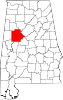 | |
| Towns | ||
| CDPs | ||
| Other unincorporated communities | ||
| Ghost town | ||
| Footnotes | ‡This populated place also has portions in an adjacent county or counties | |
| International | |
|---|---|
| National | |
| Geographic | |
| Other | |
