


Mithila (region)
Mithila | |
|---|---|
Cultural region | |
  | |
| Continent | Asia |
| Countries | India and Nepal |
| States or Provinces | Bihar and Jharkhand (India) and Madhesh Province, Koshi and Bagmati Province (Nepal) |
| Founded by | Videgha Mathava |
| Named for | King Mithi |
| Demonym(s) | Maithils Tirhutiya Mithilabasi |
| Regional Language(s) and/or dialect(s) | Maithili Bajjika Angika and several other dialects of Maithili |
Mithila (IAST: Mithilā), also known as Tirhut, Tirabhukti and Mithilanchal is a geographical and cultural region of the Indian subcontinent bounded by the Mahananda River in the east, the Ganges in the south, the Gandaki River in the west and by the foothills of the Himalayas in the north.[1][2] It comprises certain parts of Bihar and Jharkhand of India[3] and adjoining districts of the Koshi Province, Bagmati Pradesh and Madhesh Province of Nepal.[4][5] The native language in Mithila is Maithili, and its speakers are referred to as Maithils.[1]
The name Mithila is commonly used to refer to the Videha Kingdom, as well as to the modern-day territories that fall within the ancient boundaries of Videha.[5] Till the 20th century, Mithila was still ruled in part by the Raj Darbhanga.
History[edit]
Vedic period[edit]
Mithila first gained prominence after being settled by Indo-Aryan peoples who established the Videha kingdom.[6] During the Later Vedic period (c. 1100–500 BCE), Videha became one of the major political and cultural centers of Ancient India, along with Kuru and Panchala. The kings of the Videha Kingdom were called Janakas.[7] The Videha Kingdom was later incorporated into the Vajjika League, which had its capital in the city of Vaishali, which is also in Mithila.[8]
Medieval period[edit]

From the 11th century to the 20th century, Mithila was ruled by various indigenous dynasties. The first of these were the Karnats of Mithila, the Oiniwar Dynasty and the Khandwala Dynasty also known as Raj Darbhanga. The Malla dynasty and Licchavi dynasty of Nepal were also Maithil in origin. The rulers of the Oiniwar Dynasty and the Raj Darbhanga were Maithil Brahmins. It was during the reign of the Raj Darbhanga family that the capital of Mithila was shifted to Darbhanga.[10]
Tughlaq had attacked and taken control of Bihar, and from the end of the Tughlaq Dynasty until the establishment of the Mughal Empire in 1526, there was anarchy and chaos in the region. Akbar (reigned from 1556 to 1605) realised that taxes from Mithila could only be collected if there was a king who could ensure peace there. The Brahmins were dominant in the Mithila region and Mithila had Brahmin kings in the past.[citation needed]
Akbar summoned Rajpandit Chandrapati Thakur to Delhi and asked him to name one of his sons who could be made caretaker and tax collector for his lands in Mithila. Chandrapati Thakur named his middle son, Mahesh Thakur, and Akbar declared Mahesh Thakur as the caretaker of Mithila on the day of Ram Navami in 1557 AD.
Lakshmeshwar Singh (reigned from 1860 to 1898) was the eldest son of Maharaja Maheshwar Singh of Darbhanga. He, along with his younger brother, Rameshwar Singh received a western education from Government appointed tutors as well as a traditional Indian education from a Sanskrit Pandit. He spent approximately £300,000 on relief work during the Bihar famine of 1873–74. He constructed hundreds of miles of roads in various parts of the Raj, planting them with tens of thousands of trees for the comfort of travellers, as part of generating employment for people effected by famine. He constructed iron bridges over all the navigable rivers
He built, and entirely supported, a first-class Dispensary at Darbhanga, which cost £3400; a similar one at Kharakpur, which cost £3500; and largely contributed to many others.

He built an Anglo-vernacular school at a cost of £1490, which he maintained, as well as nearly 30 vernacular schools of different grades; and subsidised a much larger number of educational institutions. He was also one of the founders of Indian National Congress as well as one of the main financial contributors thereto. Maharaja Lakshmeshwar Singh is known for purchasing Lowhter Castle for the venue of the 1888 Allahabad Congress session when the British denied permission to use any public place. The British Governor[who?] commissioned Edward Onslow Ford to make a statue of Lakshmeshwar Singh. This is installed at Dalhousie Square in Kolkata.
On the occasion of the Jubilee of the reign of Queen Victoria, Lakshmeshwar Singh was declared as a Knight Commander of the Most Eminent Order of the Indian Empire, and was promoted to Knight Grand Commander in 1897. He was also a member of the Royal Commission on Opium of 1895, formed by British Government along with Haridas Viharidas Desai who was the Diwan of Junagadh. The Royal Opium Commission consisted of a 9-member team of which 7 were British and 2 were Indians and its chairman was Earl Brassey.
Geography[edit]


Mithila is a distinct geographical region with natural boundaries like rivers and hills. It is largely a flat and fertile alluvial plain criss-crossed by numerous rivers which originate from the Himalayas. Due to the flat plains and fertile land Mithila has a rich variety of biotic resources; however, because of frequent floods people could not take full advantage of these resources.[11]
Seven major rivers flow through Mithila: Gandak, Kosi, Mahananda, Bagmati, Kamala, Balan, and the Budhi Gandak.[12] They flow from the Himalayas in the north to the Ganges river in the south. These rivers regularly flood, depositing silt onto the farmlands and sometimes causing death or hardship.[citation needed]
Culture[edit]

Men and women in Mithila are very religious and dress for the festivals as well. The costumes of Mithila stem from the rich traditional culture of Mithila. Panjabi Kurta and Dhoti with a Mithila Painting bordered Maroon coloured Gamchha which is the Symbol of Passion, Love, Bravery and Courage are common clothing items for men. Men wear Gold ring in their nose which symbolizes prosperity, happiness and wealth inspired by Lord Vishnu. Also wear Balla on their wrist and Mithila Paag on their Head. In ancient times there was no colour option in Mithila, so the Maithil women wore white or yellow Saree with red Border but now they have a lot of variety and colour options and wear Laal-Paara (the traditional red-boarded white or yellow Saree)[13] on some special occasions, and also wear Shakha-Pola[14] with lahthi in their hand. In Mithila culture, this represents new beginnings, passion and prosperity. Red also represents the Hindu goddess Durga, a symbol of new beginnings and feminine power. During Chhaith, the women of Mithila wear pure cotton dhoti without stitching which reflects the pure, traditional Culture of Mithila. Usually crafted from pure cotton for daily use and from pure silk for more glamorous occasions, traditional attire for the women of Mithila includes Jamdani, Banarisi and Bhagalpuri and many more.
Jhijhiya and Dhuno-Naach are the Cultural Dance of Mithila. Jhijhiya is performed in Darbhanga, Muzaffarpur, Madhubani and their Neighbour Districts on the other hand Dhuno-Naach is performed in Begusarai, Khagaria, Katihar, Naugachia during Durga Puja and Kalipuja with Shankha-Dhaak Sound. Many festivals are celebrated throughout the year in Mithila. Chhaith, Durga Puja and Kali puja is celebrated as perhaps the most important of all the celebrations of Mithila.
Mithila Paag[edit]
The Paag is a headdress in the Mithila region of India and Nepal worn by Maithil people. It is a symbol of honour and respect and a significant part of Maithil culture.
The Paag dates back to pre-historic times when it was made of plant leaves. It exists today in a modified form. The Paag is wore by the whole Maithil community. The colour of the Paag also carries a lot of significance. The red Paag is worn by the bridegroom and by those who are undergoing the sacred thread rituals. Paag of mustard colour is donned by those attending wedding ceremonies and the elders wear a white Paag.
This Paag now features place in the popular Macmillan Dictionary. For now, Macmillan Dictionary explains Paag as “a kind of headwear worn by people in the Mithila belt of India.”[15]

On 10 February 2017, India Posts released a set of sixteen commemorative postage stamps on "Headgears of India". The Mithila Paag was featured on one of those postage stamps.
The Mithilalok Foundation was (in 2017) a social service organization whose flagship programme was Paag Bachau Abhiyan (Save the Paag Campaign). NOTE - it is not clear (as at April 2024) whether this campaign or the Foundation still exist.[16]
Languages and dialects[edit]
People of Mithila primarily speak in Maithili and its various dialects including its perceived dialects Bajjika[17] and Angika while also being well versed in other languages like English, Hindi and Nepali for official or administrative purposes.[citation needed]
This language is an Indo-Aryan language native to the Indian subcontinent, mainly spoken in India and Nepal and is one of the 22 recognised Indian languages. In Nepal, it is spoken in the eastern Terai and is the second most prevalent language of Nepal. Tirhuta is formerly the primary script for written Maithili. Less commonly, it was also written in the local variant of Kaithi. Today it is written in the Devanagari adopted script.
Maithil Cuisine[edit]


Maithil cuisine is a part of Indian cuisine and Nepalese cuisine. It is a culinary style which originated in Mithila. Some traditional Maithil dishes are:
- Dahi-Chura
- Vegetable of Arikanchan
- Ghooghni
- Traditional Pickles, made of fruits and vegetables which are generally mixed with ingredients like salt, spices, and vegetable oils and are set to mature in a moistureless medium.
- Tarua of Tilkor
- Bada
- Badee
- Yogurt
- Maachh
- Mutton
- Irhar
- Pudukiya (Purukiya) ( also known as Gujia) which is basically dumplings.
- Makhan Payas
- Anarasa
- Bagiya
Madhubani/Mithila Painting[edit]

Madhubani art or Mithila painting is practiced in the Mithila region of India and Nepal.
It was traditionally created by the women of different communities of the Mithila region. It is named after Madhubani district of Bihar, India which is where it originated.[18]

This painting as a form of wall art was practiced widely throughout the region; the more recent development of painting on paper and canvas originated among the villages around Madhubani, and it is these latter developments that may correctly be referred to as Madhubani art.[19]
Main festivals[edit]
- Chhaith: Prayers during Chhath puja are dedicated to the solar deity, Surya, to show gratitude and thankfulness
- Saama-Chakeba: includes folk theater and song, celebrates the love between brothers and sisters and is based on a legend recounted in the Puranas.
- Aghaniya Chhaith (Chhotka Pabni): Very popular with the name of "Chhotka-Pabni" and Dopaharka Aragh in Mithila.Celebrated in Aghan Shukla-paksha Shasthi tithi.
- Baisakkha Chhaith (Chhotka Pabni): This is celebrated in month of Baishakh Shukla-paksha Shasthi tithi and It is also called Chhotka-Pabni(Dopaharka Aragh) in Mithila.
- Chaurchan: Along with Lord Ganesha, Lord Vishnu, Goddess Parvati and the moon god is worshipped. The story of Chorchan Puja is also heard on this day after that arghya is offered to the moon god (Chandra Deva).[20][21]
- Jitiya: celebrated mainly in Indian states of Bihar, Jharkhand and Uttar Pradesh[22] and Nepal; mothers fast (without water) for wellbeing of their children.[23]
- Vivaha Panchami: Hindu festival celebrating the wedding of Rama and Sita. It is observed on the fifth day of the Shukla paksha or waxing phase of moon in the Agrahayana month (November – December) as per Maithili calendar and in the month of Margashirsha in the Hindu calendar.
- Sita Navami
- Ganga Dussehra: Ganga Dussehra, also known as Gangavataran, is a Hindu festival celebrated by Maithils in Mokshdhaam Simaria Dhaam (The Welcome Gate of Mithila). avatarana (descent) of the Ganges. It is believed by Hindus that the holy river Ganges descended from heaven to earth on this day.[24]
- Kalpwas: Celebrated in Every Kartik Month in Simaria Dhaam, Begushorai.
- Kojagiri (Lachhmi Puja): harvest festival marking the end of monsoon season
- Paata Puja (Durga Maay Aagmon)
- Khutti Puja (Ritual of Durga Puja)
- Mohalaya
- Durga Puja: a ten-day festival,[25][26] of which the last five are of the most significance.[27] is an important festival in the Shaktism tradition of Hinduism.[28][29][30] It marks the victory of goddess Durga in her battle against the shape-shifting asura, Mahishasura.[31][32][A] Thus, the festival epitomizes the victory of good over evil, though it is also in part a harvest festival celebrating the goddess as the motherly power behind all of life and creation.[34][35]
- Kali Puja: dedicated to the Hindu goddess Kali, celebrated on the new moon day Dipannita Amavasya of the Hindu month Kartik
- Saraswati Puja: marks the preparation for the arrival of spring. The festival is celebrated by people of Dharmic religions in the South Asian countries in different ways depending on the region. Vasant Panchami also marks the start of preparation for Holika and Holi, which take place forty days later.[36]
- Rama Navami: celebrates the descent of Vishnu as the Rama avatar, through his birth to King Dasharatha and Queen Kausalya in Ayodhya, Kosala.[37]
- Basanti Puja (Chaiti Durga Puja)
- Til Sakraait
- Aakhar Bochhor
- Pahun Shashthi
- Naag Panchami
- Barsaait
- Vishwakarma Puja
- Holi
People[edit]
Maithili language speakers are referred to as Maithils and they are an Indo-Aryan ethno-linguistic group. There are an estimated 75 million Maithils in India alone. The vast majority of them are Hindu.[38]
The people of Mithila can be split into various caste/clan affiliations such as Brahmins, Kayasthas, Kanu, Kewats, Bhumihars, Rajputs, Koeris, Baniyas, Kamatas, Ahirs, Kurmis, Dushads, Koeris, Kujras, Manush and many more.[39]
Notable people[edit]
The following are notable residents (past and present) of Mithila region.
-
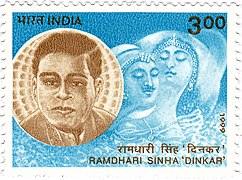 Ramdhari Singh Dinkar, Indian Hindi and Maithili language poet
 -

-
 Sriti Jha, Indian TV and film actress
 -
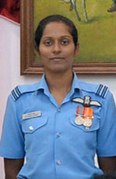 Bhawana Kanth, Indian female fighter pilots
 -
 Bimalendra Nidhi, Nepalese politician and Former Deputy PM of Nepal
 -
 Sharda Sinha, a Bhojpuri and Maithili Singer.


.jpg)

- Aeneas Lionel Acton Mackintosh, was a British Merchant Navy officer and Antarctic explorer, who commanded the Ross Sea party as part of Sir Ernest Shackleton's, 1914-17 Imperial Trans-Antarctic Expedition.
- Maghfoor Ahmad Ajazi, Indian Freedom fighter, political activist, social worker, poet and writer, born in Muzaffarpur[41][42]
- Bimalendra Nidhi, Member of Nepalese parliament, Vice president of ruling party Nepali Congress and former Deputy Prime Minister of Nepal.[43]
- Ramdhari Singh 'Dinkar' was an Indian Hindi poet, essayist, patriot and academic.[44]
- Bindheshwari Prasad Mandal was an Indian parliamentarian and social reformer who served as the chairman of the Second Backward Classes Commission (popularly known as the Mandal Commission).[45]
- C. K. Raut, formerly US-based computer scientist, author and political leader of Nepal.[46]
- C. K. Lal, Nepalese journalist and writer from Mahottari District of Nepal.[47]
- Phanishwar Nath 'Renu', influential writer of modern Hindi literature in the post-Premchand era.[48]
- Gopal Jee Thakur, Indian Politician and Member of Parliament from Darbhanga Lok Sabha Constituency.[49]
- Syed Shahnawaz Hussain, Indian politician, born in Supaul[50][51][52]
- Janaka, King of Mithila and Father in Law of King Rama
- Sita, Princess of Mithila Kingdom and wife of King Rama
- Bhagwat Jha Azad was the Chief Minister of Bihar and a member of Lok Sabha.[53]
- Maithili Thakur, Indian singer
- Ram Baran Yadav, First president of Nepal
- Ramdev Mahato, three time Member of Bihar Legislative Assembly from Madhubani Assembly constituency of Mithila region.
- Sharda Sinha, Indian folk singer
- Udit Narayan, Bollywood playback singer
- Kanhaiya Kumar, leader of Congress
- Narendra Jha, Bollywood actor
- Harisimhadeva, King of Mithila during the Karnat dynasty
- Sriti Jha, Indian television actress
- Kirti Azad, former Indian cricketer and politician
- Vidyapati, Maithili poet and a Sanskrit writer and a Polyglot
- Sanjay Mishra, Bollywood actor
- Bhawana Kanth, one of the first female fighter pilots of India
- Gangesha Upadhyaya, 12th-century Indian mathematician and philosopher
- Vikas Kumar Jha
- George Orwell, novelist and essayist, journalist and critic
- Rambriksh Benipuri, Indian freedom fighter, Socialist Leader, editor and Hindi writer
- Devaki Nandan Khatri, Indian writer
- Ganganath Jha, Indian scholar
- Ramjee Singh, former Member of Indian parliament and vice-chancellor of Jain Vishva Bharati University
- Acharya Ramlochan Saran, Hindi literature, grammarian and publisher
- Ramesh Chandra Jha, Indian poet, novelist and freedom fighter
- Acharya Rameshwar Jha, scholar
- Phanishwar Nath 'Renu', Indian author
- Ravindra Prabhat a Hindi novelist, journalist, poet, and short story writer
- Gajendra Thakur, Literary critic, historian, novelist, dramatist, poet, and a lexicographer
- Anerood Jugnauth, former President of Mauritius
- Parmanand Jha, first vice-president of Nepal
- Dhirendra Premarshi, presenter of Hello Mithila on Radio Kantipur
- Godawari Dutta, madhubani artist, social activist
- Tarkishore Prasad, Deputy Chief Minister of Bihar, born in Saharsa district[54]
- Ramnath Goenka, Indian journalist, born in Darbhanga[55]
- Ashish Jha, general internist physician and academic serving the White House Coronavirus Response Coordinator
- Vartika Jha (born 2000), Indian dancer, choreographer and actress
Demands for administrative units[edit]
Proposed Indian state[edit]
There is an ongoing movement in the Maithili speaking region of Bihar and Jharkhand for a separate Indian state of Mithila.[56]
Proposed Nepalese province[edit]
There was a movement in the Maithili speaking areas of Nepal for a separate province.[57] Province No. 2 was established under the 2015 Constitution, which transformed Nepal into a Federal Democratic Republic, with a total of 7 provinces. Province No. 2 has a substantial Maithili speaking population and consists most of the Maithili speaking areas of Nepal. It was demanded by some Mithila activists that Province No. 2 be named 'Mithila Province'.[58] On 23 December 2021, four different names for the Province No. 2 were presented by the various parties of the Provincial Assembly of Madhesh Province. The four names were ‘Madhesh Pradesh’, ‘Janaki Pradesh’, ‘Madhya Madhesh Pradesh’ and ‘Mithila Bhojpura’.[59]
Among the four names, Madhesh Pradesh (Madhesh Province) was chosen and finalized on 17 January 2022. The name was finalized with 80 percent majority in the Provincial Assembly. Janakpur was named as the capital of the province.[60]
See also[edit]


- Mithila (proposed Indian state)
- Mithila Painting
- Mithila Makhana
- Mithilā (ancient city)
- Jhijhiya
- Mithila Student Union
- Maithili duck
- King Mithi
Notes[edit]
- ^ In the Shakta tradition of Hinduism, many of the stories about obstacles and battles have been considered as metaphors for the divine and demonic within each human being, with liberation being the state of self-understanding whereby a virtuous nature & society emerging victorious over the vicious.[33]
References[edit]
- ^ a b Jha, M. (1997). "Hindu Kingdoms at contextual level". Anthropology of Ancient Hindu Kingdoms: A Study in Civilizational Perspective. New Delhi: M.D. Publications Pvt. Ltd. pp. 27–42. ISBN 9788175330344.
- ^ Mishra, V. (1979). Cultural Heritage of Mithila. Allahabad: Mithila Prakasana. p. 13.
- ^ Jha, Pankaj Kumar (2010). Sushasan Ke Aaine Mein Naya Bihar. Bihar (India): Prabhat Prakashan. ISBN 9789380186283.
- ^ Ishii, H. (1993). "Seasons, Rituals and Society: the culture and society of Mithila, the Parbate Hindus and the Newars as seen through a comparison of their annual rites". Senri Ethnological Studies 36: 35–84. Archived from the original on 23 August 2017.
- ^ a b Kumar, D. (2000). "Mithila after the Janakas". The Proceedings of the Indian History Congress. 60: 51–59.
- ^ Michael Witzel (1989), Tracing the Vedic dialects in Dialectes dans les litteratures Indo-Aryennes ed. Caillat, Paris, pages 13, 17 116–124, 141–143
- ^ Witzel, M. (1989). "Tracing the Vedic dialects". In Caillat, C. (ed.). Dialectes dans les litteratures Indo-Aryennes. Paris: Fondation Hugot. pp. 141–143.
- ^ Hemchandra, R. (1972). Political History of Ancient India. Calcutta: University of Calcutta.
- ^ ÇAĞMAN, FİLİZ; TANINDI, ZEREN (2011). "Selections from Jalayirid Books in the Libraries of Istanbul" (PDF). Muqarnas. 28: 230, 258 Fig.56. ISSN 0732-2992. JSTOR 23350289.
- ^ Jha, Makhan (1997). Anthropology of Ancient Hindu Kingdoms: A Study in Civilizational Perspective. M.D. Publications Pvt. pp. 55–56. ISBN 9788175330344.
- ^ Thakur, B.; Singh, D.P.; Jha, T. (2007). "The Folk Culture of Mithila". In Thakur, B.; Pomeroy, G.; Cusack, C.; Thakur, S.K. (eds.). City, Society, and Planning. Volume 2: Society. Concept Publishing Company. pp. 422–446. ISBN 9788180694608.[dead link]
- ^ "Rivers of Bihar | Bihar Articles". Bihar.ws. Archived from the original on 23 July 2012. Retrieved 4 May 2012.
- ^ Maithil women wore Red Boarded Yellow or White Saree during Jhijhiya Naach. Retrieved 27 March 2017.
- ^ "Mithila as well as Bengal wearing शाखा पोला" www.jhajistore.com". Retrieved 12 August 2019.
- ^ "Maithili 'paag' finds place in Macmillan Dictionary".
- ^ "Save the 'Paag' campaign kicks off on Feb 28 in Delhi". Timesofindia.indiatimes.com. Retrieved 2 September 2017.
- ^ Kashyap, Abhishek Kumar (1 May 2014). "The Bajjika language and speech community Abhishek Kumar Kashyap". International Journal of the Sociology of Language. 2014 (227): 209–224. doi:10.1515/ijsl-2014-0001. ISSN 1613-3668. S2CID 147345446.
- ^ Madhubani Painting. Abhinav Publications. 2003. p. 96. ISBN 9788170171560. Archived from the original on 28 October 2017. Retrieved 20 February 2017.
- ^ Carolyn Brown Heinz, 2006, "Documenting the Image in Mithila Art," Visual Anthropology Review, Vol. 22, Issue 2, pp. 5-33
- ^ "Chauth Chand 2022: आज मनाई जाएगी चौठ चन्द्र पूजा, चांद की इस तरह होती है पूजा". Prabhat Khabar (in Hindi). Retrieved 30 August 2022.
- ^ "Chaurchan Puja 2022 Wishes & Chauth Chandra Puja HD Images: Celebrate This Bihar Festival of the Moon on Ganesh Chaturthi Sharing Chaurchan Photos, Messages & Wallpapers | 🙏🏻 LatestLY". LatestLY. 30 August 2022. Retrieved 30 August 2022.
- ^ "Jivitputrika Vrat 2020: जीवित्पुत्रिका व्रती महिलाएं आज खोलेंगी व्रत, जानें पारण करने के लिए हर एक शुभ समय और विधि".
- ^ "Jivitputrika Vrat 2016 (Jitiya 2016) Date & Hindu Panchang - Indian Astrology". 18 July 2016. Archived from the original on 25 January 2017. Retrieved 4 September 2016.
- ^ Agnihotri, Sanjana (14 June 2016). "All you need to know about Ganga Dussehra". India Today. Retrieved 4 July 2016.
- ^ Doniger 1999, p. 306.
- ^ Lochtefeld 2002, p. 208.
- ^ Parmita Borah (2 October 2011). "Durga Puja - a Celebration of Female Supremacy". EF News International. Archived from the original on 25 April 2012. Retrieved 26 October 2011.
- ^ McDermott 2001, pp. 172–174.
- ^ Foulston & Abbott 2009, pp. 162–169.
- ^ Rodrigues 2003, pp. 7–8.
- ^ Daniélou 1991, p. 288.
- ^ McDaniel 2004, pp. 215–219.
- ^ McDaniel 2004, pp. 20–21, 217–219.
- ^ Kinsley 1988, pp. 111–112.
- ^ Donner 2016, p. 25.
- ^ Christian Roy (2005). Traditional Festivals: A Multicultural Encyclopedia. ABC-CLIO. pp. 192–193. ISBN 978-1-57607-089-5.
- ^ Hindus around the world celebrate Ram Navami today, DNA, 8 April 2014
- ^ James B. Minahan (30 August 2012). Ethnic Groups of South Asia and the Pacific: An Encyclopedia: An Encyclopedia. Abc-Clio. ISBN 9781598846607.
- ^ Makhan Jha (1997). Anthropology of Ancient Hindu Kingdoms: A Study in Civilizational Perspective. M.D. Publications Pvt. pp. 33–40. ISBN 9788175330344.
- ^ "Members : Lok Sabha". loksabha.nic.in. Retrieved 1 March 2023.
- ^ Ministry of Culture, Government of India. "Maghfoor Ahmad Ajazi". amritmahotsav.nic.in.
- ^ Sajjad, Mohammad (6 January 2013). "Maghfur Aijazi: A freedom-fighter and a builder of Indian democracy". TwoCircles.net. Retrieved 5 March 2015.
- ^ "Nidhi appointed NC Vice-Prez, Khadka Gen Secy". kathmandupost.com. Retrieved 15 January 2022.
- ^ "Ramdhari Singh Dinker - Hindi ke Chhayavadi Kavi". www.anubhuti-hindi.org. Retrieved 26 April 2020.
- ^ Nitish Kumar and the Rise of Bihar. Penguin Books India. 1 January 2011. ISBN 9780670084593.
- ^ "" मुख्य समाचार " :: नेपाल ::". Ekantipur.com. 24 May 2015. Archived from the original on 4 July 2015. Retrieved 28 May 2015.
- ^ Lal, C. K. "Art and identity". My Republica. Retrieved 12 October 2022.
- ^ "Seasons India :: Hindi Literature of India". www.seasonsindia.com. Retrieved 26 April 2020.
- ^ "Shri Gopal Jee Thakur| National Portal of India". www.india.gov.in. Retrieved 3 March 2023.
- ^ IANS (10 December 2013). "BJP's Shahnawaz Hussain on IM hit list". Business Standard India. Archived from the original on 26 October 2017. Retrieved 26 October 2017 – via Business Standard.
- ^ "BJP leader Shahnawaz Hussain's impersonator arrested". NDTV.com. Archived from the original on 19 December 2013. Retrieved 26 October 2017.
- ^ "PM's 'lack' of leadership has made UPA 'sinking ship': BJP". NewIndianExpress.com. Archived from the original on 4 March 2016. Retrieved 26 October 2017.
- ^ "8th Lok Sabha – Members Bioprofile – AZAD, SHRI BHAGWAT JHA". Archived from the original on 6 October 2011. Retrieved 6 August 2011.
- ^ "I want self-reliant Bihar; Sushil Modi is our guardian, says new deputy CM Tarkishore Prasad". 19 November 2020.
- ^ Reed, Stanley (1950). The Indian And Pakistan Year Book And Who's Who 1950. Bennett Coleman and Co. Ltd. p. 679. Retrieved 20 February 2018.
- ^ Kumāra, Braja Bihārī (1998). Small States Syndrome in India. Concept Publishing Company. p. 146. ISBN 9788170226918. Archived from the original on 17 February 2017. Retrieved 16 February 2017.
- ^ Burkert, C. (2012). "Defining Maithil Identity". In Gellner, D.; Pfaff-Czarnecka, J.; Whelpton, J. (eds.). Nationalism and Ethnicity in a Hindu Kingdom: The Politics and Culture of Contemporary Nepal. London, New York: Routledge. pp. 241–273. ISBN 9781136649561. Archived from the original on 20 August 2017.
- ^ "Samiti vows to protest for Mithila Province".
- ^ "Five names proposed for Province 2". Khabarhub. Retrieved 14 September 2022.
- ^ Pradhan, Shirish B. (18 January 2022). "Nepal's Province 2 renamed 'Madhes Pradesh'". ThePrint. Retrieved 14 September 2022.
Bibliography[edit]
- Tukol, T. K. (1980). Compendium of Jainism. Dharwad: University of Karnataka.
- Shah, Umakant Premanand (1987). Jaina-Rupa Mandana: Jaina Iconography:, Volume 1. India: Shakti Malik Abhinav Publications. ISBN 978-81-7017-208-6.
External links[edit]

| Authority control databases: National |
|---|
