


Solar power in India
 | This article has multiple issues. Please help improve it or discuss these issues on the talk page. (Learn how and when to remove these template messages)
|


India's solar power installed capacity was 81.813 GWAC as of 31 March 2024.[1]
During 2010–19, the foreign capital invested in India on Solar power projects was nearly US$20.7 billion.[2] In FY2023-24, India is planning to issue 40 GW tenders for solar and hybrid projects.[3] India has established nearly 42 solar parks to make land available to the promoters of solar plants.[4] Gujarat Hybrid Renewable Energy Park will generate 30 GWAC power from both solar panels and wind turbines. It will spread over an area of 72,600 hectares (726 km2) of waste land in Kutch district of Gujarat.[5][6]
The International Solar Alliance (ISA), proposed by India as a founder member, is headquartered in India. India has also put forward the concept of "One Sun One World One Grid" and "World Solar Bank" to harness abundant solar power on a global scale.[7][8]
History[edit]
The Government of India had an initial target of 20 GW capacity for 2022, which was achieved four years ahead of schedule.[9] In 2015 the target was raised to 100 GW of solar capacity (including 40 GW from rooftop solar) by 2022, targeting an investment of US$100 billion.[10][11] The target was widely missed by 40,000 MW shortfall due to poor performance in the rooftop sector.
Rooftop solar power accounts for 2.1 GW in 2018, of which 70% is industrial or commercial.[12] In addition to its large-scale grid-connected solar photovoltaic (PV) initiative, India is developing off-grid solar power for local energy needs.[13] Solar products have increasingly helped to meet rural needs; by the end of 2015 just under 10 lakh (1 million) solar lanterns were sold in the country, reducing the need for kerosene.[14] That year, 118,700 solar home lighting systems were installed and 46,655 solar street lighting installations were provided under a national programme;[14] just over 14 lakh (1.4 million) solar cookers were distributed in India.[14]
Solar potential[edit]

With about 300 clear and sunny days in a year, the calculated solar energy incidence on India's land area is about 5,000 lakh crore (5,000 trillion) kilowatt-hours (kWh) per year (or 5 EWh/yr).[15][16] The solar energy available in a single year exceeds the possible energy output of all of the fossil fuel energy reserves in India. The daily average solar-power-plant generation capacity in India is 0.30 kWh per m2 of used land area,[17] equivalent to 1,400–1,800 peak (rated) capacity operating hours in a year with available, commercially-proven technology.[18][19][20]


In June 2015, India began a ₹40 crore (US$5.0 million) project to measure solar radiation with a spatial resolution of 3 by 3 kilometres (1.9 mi × 1.9 mi). This solar-radiation measuring network provides the basis for the Indian solar-radiation atlas. 121 solar radiation resource assessment (SRRA) stations have been installed across India by the National Institute of Wind Energy, Ministry of New and Renewable Energy to create a database of solar-energy potential. Data is collected and reported to the Centre for Wind Energy Technology (C-WET). Among the parameters measured are Global Horizontal Irradiance (GHI), Direct Normal Irradiance (DNI) and Diffuse Horizontal Irradiance (DHI).[22][21][23]
Currently, 90% of India's solar photovoltaic (PV) capacity is concentrated in just nine states, raising concerns about the resilience of a future PV-dominated grid. Recent studies have shown that during cyclones, PV generation can plummet to near-zero levels. Given that a significant portion of India is prone to cyclones, dust storms, and monsoon rains, deploying PV plants in regions with uncorrelated irradiance profiles can significantly reduce the overall risk of low generation and variability of PV output. In essence, the concentration of PV capacity in a few regions poses an inherent risk to the future of a PV-dominated grid in India. Geographically diversifying PV sites in India yields multifaceted benefits beyond weather resilience. It can facilitate the strategic integration of regional irradiation patterns, resulting in a balanced year-round energy harvest. Moreover, expanding the geographical footprint extends the effective "daylight hours" for solar generation, bolstering grid reliability. Additionally, this approach mitigates peak production surges, easing grid management and potentially accommodating further PV capacity. Notably, it fosters synergy with existing hydropower infrastructure in the Northeast and leverages the exceptional solar potential of Ladakh, unlocking diverse renewable energy avenues. [24]
Installations by region[edit]
Summary[edit]
| Year | Cumulative Capacity (in MW) |
|---|---|
| 2010 | 161
|
| 2011 | 461
|
| 2012 | 1,205
|
| 2013 | 2,319
|
| 2014 | 2,632
|
| 2015 | 3,744
|
| 2016 | 6,763
|
| 2017 | 12,289
|
| 2018 | 21,651
|
| 2019 | 28,181
|
| 2020 | 34,627
|
| 2021 | 40,085
|
| 2022 | 56,951
|
| 2023 | 66,781
|
| 2024 | 81,813
|
| State | 31 Dec 2016[26] | 31 March 2017[27] | 31 March 2019[28] | 31 March 2021[29][30] | 31 March 2023[31] |
|---|---|---|---|---|---|
| Rajasthan | 1,317.64 | 1,812.93 | 3,226.79 | 5,732.58 | 17,055.70 |
| Gujarat | 1,158.5 | 1,249.37 | 2,440.13 | 4,430.82 | 9,254.57 |
| Madhya Pradesh | 840.35 | 857.04 | 1,840.16 | 2,463.22 | 2,802.14 |
| Maharashtra | 430.46 | 452.37 | 1,633.54 | 2,289.97 | 4,722.90 |
| Punjab | 545.43 | 793.95 | 905.62 | 959.50 | 1,167.26 |
| Uttar Pradesh | 239.26 | 336.73 | 960.10 | 1,712.50 | 2,515.22 |
| Uttarakhand | 45.10 | 233.49 | 306.75 | 368.41 | 575.53 |
| Haryana | 53.27 | 81.40 | 224.52 | 407.83 | 1,029.16 |
| Delhi | 38.78 | 40.27 | 126.89 | 192.97 | 218.26 |
| Jammu & Kashmir + Ladakh | 1 | 1.36 | 14.83 | 20.73 | 49.44 |
| Chandigarh | – | 17.32 | 34.71 | 45.16 | 58.69 |
| Himachal Pradesh | 0.33 | 0.73 | 22.68 | 42.73 | 87.49 |
| Chhattisgarh | – | 128.86 | 231.35 | 252.48 | 948.82 |
| Dadra and Nagar Haveli | – | 2.97 | 5.46 | 5.46 | 5.46 |
| Goa | – | 0.71 | 3.81 | 7.44 | 26.49 |
| Daman and Diu | – | 10.46 | 14.47 | 40.55 | 41.01 |
| Tamil Nadu | 1,590.97 | 1,691.83 | 2,575.22 | 4,475.21 | 6,736.43 |
| Andhra Pradesh | 979.65 | 1,867.23 | 3,085.68 | 4,203.00 | 4,534.19 |
| Telangana | 973.41 | 1,286.98 | 3,592.09 | 3,953.12 | 4,666.03 |
| Kerala | – | 88.20 | 161.057 | 257.00 | 761.44 |
| Karnataka | 327.53 | 1,027.84 | 6,095.56 | 7,355.17 | 8,241.41 |
| Puducherry | - | 0.08 | 3.14 | 9.33 | 35.53 |
| Bihar | 95.91 | 108.52 | 142.45 | 159.51 | 192.89 |
| Odisha | 77.64 | 79.42 | 394.73 | 401.72 | 453.17 |
| Jharkhand | 17.51 | 23.27 | 34.95 | 52.06 | 105.84 |
| West Bengal | 23.07 | 26.14 | 75.95 | 149.84 | 179.98 |
| Sikkim | 0.01 | 0.00 | 0.01 | 0.07 | 4.68 |
| Assam | 11.18 | 11.78 | 22.40 | 42.99 | 147.92 |
| Tripura | 5.02 | 5.09 | 5.09 | 9.41 | 17.60 |
| Arunachal Pradesh | 0.27 | 0.27 | 5.39 | 5.61 | 11.64 |
| Mizoram | 0.10 | 0.10 | 0.50 | 1.53 | 28.01 |
| Manipur | 0.01 | 0.03 | 3.44 | 6.36 | 12.28 |
| Meghalaya | 0.01 | 0.01 | 0.12 | 0.12 | 4.15 |
| Nagaland | 0.50 | 0.50 | 1.00 | 1.00 | 3.04 |
| Andaman and Nicobar | 5.10 | 6.56 | 11.73 | 29.22 | 29.91 |
| Lakshadweep | 0.75 | 0.75 | 0.75 | 0.75 | 3.27 |
| Others | 58.31 | 58.31 | 0.00 | 0.00 | 45.01 |
| Total India (MW) | 6,762.85 | 12,288.83 | 28,180.66 | 40,085.37 | 66,780.36[32] |
Andhra Pradesh[edit]
The installed photovoltaic capacity in Andhra Pradesh was 4257 MW as of 30 September 2022.[33] The state is planning to add 10,050 MW solar power capacity to provide power supply to the farming sector during the day time.[34][35] The state has also offered five Ultra Mega Solar Power Projects with a total capacity of 12,200 MW to developers under renewable power export policy outside the state.[36][37][38][39][40] Andhra Pradesh is endowed with abundant pumped hydroelectric energy storage to make available solar power[41] in to round the clock power supply for meeting its ultimate energy needs.[42][43][44] The state is planning to construct 33,000 MW pumped storage projects to mitigate the intermittency associated with renewable energy.[45]
In 2015, NTPC agreed with APTransCo to install the 250-MW NP Kunta Ultra Mega Solar Power Project near Kadiri in Anantapur district.[46][47] In October 2017, 1000 MW was commissioned at Kurnool Ultra Mega Solar Park which has become the world's largest solar power plant at that time.[48] In August 2018, Greater Visakhapatnam commissioned a 2 MW Mudasarlova Reservoir grid-connected floating solar project which is the largest operational floating solar PV project in India.[49] NTPC Simhadri has awarded BHEL to install a 25 MW floating solar PV plant on its water supply reservoir.[50] APGENCO commissioned 400 MW Ananthapuram – II solar park located at Talaricheruvu village near Tadipatri.[51]
Delhi[edit]
Delhi being the Capital and a city state in India, has limitation in installing ground based solar power plants. However it is leading in rooftop solar powered plants installations by adopting fully flexible net metering system.[52] The installed solar power capacity is 211 MW as on 30 June 2022. Delhi government has announced that the Rajghat thermal power plant will be officially shut at the 45 acre plant site and turned into a 5 MW solar power PV plant.
Gujarat[edit]
Gujarat is one of India's most solar-developed states, with its total installed solar power generation capacity reaching 7,806 MW as of 30 June 2022.[53] Gujarat has been a leader in solar-power generation in India due to its high solar-power potential, availability of vacant land, connectivity, transmission and distribution infrastructure and utilities. According to a report by the Low Emission Development Strategies Global Partnership (LEDS GP) report, these attributes are complemented by political will and investment.[full citation needed] The 2009 Solar Power of Gujarat policy framework, financing mechanism and incentives have contributed to a green investment climate in the state and the targets for grid-connected solar power.[54][55]
The state has commissioned Asia's largest solar park near the village of Charanka in Patan district, the Gujarat Solar Park-1.[56] The park is generating 345 MW by March 2016 of its 500 MW total planned capacity and has been cited as an innovative and environmentally-friendly project by the Confederation of Indian Industry.In December 2018,[57] 700 MW Solar PV plant at Raghanesda Solar Park is contracted at ₹2.89/unit levelised tariff.[58]
To make Gandhinagar a solar-power city, the state government has begun a rooftop solar-power generation scheme. Under the scheme, Gujarat plans to generate 5 MW of solar power by putting solar panels on about 50 state-government buildings and 500 private buildings.
It also plans to generate solar power by putting solar panels along the Narmada irrigation canals. As part of this scheme, the state has commissioned the 1 MW Canal Solar Power Project on a branch of the Narmada Canal near the village of Chandrasan in Mehsana district. The pilot project is expected to stop 90,000 litres (24,000 US gal; 20,000 imp gal) of water per year from evaporating from the Narmada River.
Haryana[edit]
State has set the 4.2 GW solar power (including 1.6 GW solar roof top) target by 2022 as it has high potential since it has at least 330 sunny days. Haryana is one of the fastest growing state in terms of solar energy with installed and commissioned capacity of 73.27 MW. Out of this, 57.88 MW was commissioned in FY 2016/17. Haryana solar power policy announced in 2016 offers 90% subsidy to farmers for the solar powered water pumps, which also offers subsidy for the solar street lighting, home lighting solutions, solar water heating schemes, solar cooker schemes. It is mandatory for new residential buildings larger than 500 square yards (420 m2) to install 3% to 5% solar capacity for no building plan sanctioning is required, and a loan of up to ₹10 lakh is made available to the residential property owners. Haryana provides 100% waiver of electricity taxes, cess, electricity duty, wheeling charges, cross subsidy charges, transmission and distribution charges, etc. for rooftop solar projects.
In December 2018, Haryana had installed solar capacity of 48.80 MW,[59] and in January 2019 Haryana floated tender for 300 MW grid-connected solar power,[60] and additional 16 MW tender for the canal top solar power.[61]
Karnataka[edit]
Karnataka is one of the highest solar power producing state in India with a total 7,597 MW installed capacity by the end of June 2022.[62] The installed capacity of Pavagada Solar Park is 2050 MW by the end of year 2019 which was the world biggest solar park at that time.[63]
Kerala[edit]
The installed capacity of solar plants in Kerala as on 31 March 2023 is 761 MW.[31] Kochi international airport is the first airport to run completely in solar energy. CIAL solar farm is responsible for it. There are plans to set up solar power plants in Idukki, Wayanad, Malappuram and Palakkad districts.
The first solar park in Kerala is located in Perla, Kasaragod Perla, Kasaragod. Floating Solar parks are being built and partly functional in Banasura Sagar, Idukki Dam and Vembanad Lake.
Ladakh[edit]
Ladakh, though a late entrant in solar power plants, is planning to install nearly 7,500 MW capacity in few years.[64]
Madhya Pradesh[edit]
Madhya Pradesh had a total photovoltaic capacity of 1,117 MW by the end of July 2017. The Welspun Solar MP project, the largest solar-power plant in the state, was built at a cost of ₹11 billion (US$140 million) on 305 ha (3.05 km2) of land and will supply power at ₹8.05 (10¢ US) per kWh. A 130 MW solar power plant project at Bhagwanpura, a village in Neemuch district, was launched by Prime Minister Narendra Modi. It is the largest solar producer, and Welspun Energy is one of the top three companies in India's renewable-energy sector.[65] A planned 750 MW solar-power plant in Rewa district, the Rewa Ultra Mega Solar plant, was completed and inaugurated on 10 July 2020.[66] Spread over 1,590 acres, it is Asia's largest solar power plant and was constructed at a cost of ₹4,500 crore.[67][68] Madhya Pradesh I is a power plant under construction near Surajpur Village in the Shajapur district of Madhya Pradesh with 200 MW. It is scheduled to be operational by fall 2023.[69]
Maharashtra[edit]

The 125-MW Sakri solar plant is the largest solar-power plant in Maharashtra. The Shri Saibaba Sansthan Trust has the world's largest solar steam system. It was constructed at the Shirdi shrine at an estimated cost of ₹13.3 million (US$170,000), ₹5,840,000 (US$73,000) which was paid as a subsidy by the renewable-energy ministry. The system is used to cook 50,000 meals per day for pilgrims visiting the shrine, resulting in annual savings of 100,000 kg of cooking gas, and was designed to generate steam for cooking even in the absence of electricity to run the circulating pump. The project to install and commission the system was completed in seven months, and the system has a design life of 25 years.[70] The Osmanabad region in Maharashtra has abundant sunlight, and is ranked the third-best region in India in solar insolation. A 10 MW solar power plant in Osmanabad was commissioned in 2013. According to reports published by the National Institute of Solar Energy (NISE), its aggregate solar power potential capacity is 64.32 GW.[71]
Rajasthan[edit]
Rajasthan is one of India's most solar-developed states, with its total photovoltaic capacity reaching 14,454 MW by end of June 2022. Rajasthan is also home to the world's largest Fresnel type 125 MW CSP plant at the Dhirubhai Ambani Solar Park.[72][73] Jodhpur district leads the state with installed capacity of over 1,500 MW, followed by Jaisalmer and Bikaner.
The Bhadla Solar Park, with total installed capacity of 2,245 MW, is the biggest plant in the world as of March 2020.
The only tower type solar thermal power plant (2.5 MW) in India is located in Bikaner district.
In March 2019, the lowest tariff in India is ₹2.48/kWh for installing the 750 MW solar power plants in the state.[74]
Rajasthan became the first state with 10GW of solar power capacity. It is targeting a capacity of 30 GW by Financial Year 2024-2025 and 75 GW by 2030.
Mizoram[edit]
The installed capacity of solar plants in Mizoram as on 31 March 2023 is 23 MW.[75] Vankal Solar Park is the largest solar park in Mizoram.[76]
Tamil Nadu[edit]
Tamil Nadu had the 5th highest operating solar-power capacity in India in May 2018. The total operating capacity in Tamil Nadu was 1.8 GW.[62] On 1 July 2017, the solar power tariff in Tamil Nadu has hit an all-time low of ₹3.47 per unit when bidding for 1500 MW capacity was held.[77][78]
The 648-MW Kamuthi Solar Power Project is the biggest operating project in the state. On 1 January 2018, NLC India Limited (NLCIL) commissioned a new 130 MW solar power project in Neyveli.[79]
As of 2021, total installed capacity stands at 4.3 GW, with plans for capacity to double by 2022.[80]
Telangana[edit]
Telangana ranks sixth when it comes to solar energy generation capacity in India. The state has a solar power generation capacity of 3,953 MW and plans to achieve a capacity of 5,000 MW by 2022. In 2019, NTPC Ramagundam had placed work order on Bharat Heavy Electricals Limited (BHEL) to install 100 MW floating solar PV plant on its water supply reservoir.[50] In July 2022, NTPC's 100 MW floating solar photovoltaic (PV) project becomes fully operational in Telangana and becomes India's largest floating solar plant equipped with cutting-edge technology and environmentally friendly features.[81][82]
Electricity generation[edit]
| Year | Solar power generation (TWh) |
|---|---|
| 2013–14 | 3.36
|
| 2014–15 | 4.60
|
| 2015–16 | 7.45
|
| 2016–17 | 12.09
|
| 2017–18 | 25.87
|
| 2018–19 | 39.27
|
| 2019–20 | 50.13
|
| 2020–21 | 60.40
|
| 2021–22 | 73.48
|
| 2022–23 | 102.01
|
Including both ground and roof-mounted plants, the country's installed solar power capacity was 66.78 GWAC as of 31 March 2023.[1] Solar electricity generation from April 2022 to March 2023 increased to 102.01 terawatt-hour (TWh) from 73.48 TWh in the same period a year ago.
| Month | Regional solar power generation (GWh)[85] | Total (GWh) | ||||
|---|---|---|---|---|---|---|
| North | West | South | East | North East | ||
| April 2022 | 3,208.06 | 1,632.07 | 3,376.37 | 92.37 | 15.04 | 8,323.92 |
| May 2022 | 3,558.22 | 1,744.64 | 3,402.17 | 99.98 | 22.55 | 8,827.56 |
| June 2022 | 3,447.78 | 1,538.53 | 3,177.10 | 78.58 | 17.92 | 8,259.91 |
| July 2022 | 3,000.77 | 1,178.11 | 2,699.70 | 74.34 | 12.98 | 6,965.89 |
| August 2022 | 3,136.11 | 1,216.88 | 2,972.50 | 75.70 | 27.07 | 7,428.25 |
| September 2022 | 3,662.69 | 1,390.23 | 3,052.64 | 76.37 | 25.79 | 8,207.73 |
| October 2022 | 3,835.41 | 1,657.49 | 3,123.65 | 88.36 | 21.92 | 8,726.83 |
| November 2022 | 3,389.91 | 1,577.53 | 2,898.03 | 89.57 | 21.85 | 7,976.88 |
| December 2022 | 3,436.29 | 1,564.96 | 3,098.10 | 85.72 | 22.44 | 8,207.51 |
| January 2023 | 3,539.94 | 1,831.84 | 3,806.66 | 87.91 | 23.66 | 9,290.01 |
| February 2023 | 3,733.67 | 1,977.84 | 3,726.01 | 98.09 | 19.80 | 9,555.41 |
| March 2023 | 4,172.76 | 1,930.04 | 4,018.53 | 97.45 | 25.5 | 10,244.34 |
| Total (GWh) | 42,121.59 | 19,240.16 | 39,351.45 | 1,044.45 | 256.58 | 102,014.24 |
Installations by application[edit]

| Application | 31 March 2024 |
|---|---|
| Ground mounted including floating and hybrid. | 66,980 |
| Grid connected rooftop | 11,870 |
| Off-grid | 2,960 |
| TOTAL | 81,810 |
The installed capacity is generally given in DC capacity at standard operating conditions.[87] The actual AC power peak output at high voltage from a solar plant is between 65 and 75% of the rated DC capacity, after accounting for temperature coefficient, derating of solar cells capacity with time, losses in the total system, elevation of the plant, location of the plant, actual solar irradiance, etc.[88] The AC peak power is also generally limited by the selected inverter's capacity for economic reasons.
As of September 2022, the rooftop solar power generation capacity is 8.3 GW.[89] Rooftop solar can be divided into residential solar, commercial and industrial solar roofs as well as a range of installations including agricultural buildings, community and cultural centers. 70 per cent of rooftop solar in 2018 was in the industrial and commercial sectors, with just 20 per cent as residential rooftop solar.[12] Rooftop solar as a proportion of total solar installations is much less than is typical in other leading solar countries but was forecast to grow to 40 GW by 2022 under national targets.[11] A rough calculation would imply that India had around just 430 MW of residential rooftop solar, whilst the UK with around half the overall solar capacity of India had over 2,500 MW of residential solar in 2018. The smallest segment was off-grid solar at 1467 MW which could help play a role in reaching villages and dwellings without access to the national grid.
The open-access solar installation capacity reached 7.0 GW capacity as of September 2022.[90]
Concentrated solar power[edit]
The installed capacity of commercial concentrated solar power plants (non-storage type) in India is 227.5 MW with 50 MW in Andhra Pradesh and 177.5 MW in Rajasthan.[91] The existing solar thermal power plants (non-storage type) in India, which are generating costly intermittent power on a daily basis, can be converted into storage type solar thermal plants to generate 3 to 4 times more base load power at cheaper cost and not depend on government subsidies.[92] Concentrated solar power plants with thermal storage are also emerging as cheaper (US 5¢/kWh) and cleaner Load following power plants than fossil fuel power plants.[93] In March 2024, SECI announced that a RfQ for 500 MW would be issued in the year 2024.[94]
Hybrid solar plants[edit]
Solar power, generated mainly during the daytime in the non-monsoon period, complements wind which generate power during the monsoon months in India.[95][96] Solar panels can be located in the space between the towers of wind power plants.[97] It also complements hydroelectricity, generated primarily during India's monsoon months. Solar-power plants can be installed near existing hydropower and pumped-storage hydroelectricity, using the existing power transmission infrastructure and storing the surplus secondary power generated by the solar PV plants.[98][99] Floating solar plants on the reservoirs of pumped-storage hydroelectric plants are complementary to each other.[100] Solar PV plants clubbed with pumped-storage hydroelectric plants are also under construction to supply peaking power.[101]
During the daytime, the additional auxiliary power consumption of a solar thermal storage power plant is nearly 10% of its rated capacity for the process of extracting solar energy in the form of thermal energy.[102] This auxiliary power requirement can be made available from cheaper solar PV plant by envisaging hybrid solar plant with a mix of solar thermal and solar PV plants at a site. Also to optimise the cost of power, generation can be from the cheaper solar PV plant (33% generation) during the daylight whereas the rest of the time in a day is from the solar thermal storage plant (67% generation from solar power tower and parabolic trough types) for meeting 24 hours baseload power.[103] When solar thermal storage plant is forced to idle due to lack of sunlight locally during cloudy days in monsoon season, it is also possible to consume (similar to a lesser efficient, huge capacity and low cost battery storage system) the cheap excess grid power when the grid frequency is above 50 hz for heating the hot molten salt to higher temperature for converting stored thermal energy in to electricity during the peak demand hours when the electricity sale price is profitable.[104][105][106]
Solar heating[edit]

Generating hot water or air or steam using concentrated solar reflectors, is increasing rapidly. Presently concentrated solar thermal installation base for heating applications is about 20 MWth in India and expected to grow rapidly.[107][108] Cogeneration of steam and power round the clock is also feasible with concentrated solar power CHP plants with thermal storage capacity.[citation needed]
Bengaluru has the largest deployment of roof-top solar water heaters in India, generating an energy equivalent of 200 MW.[109] It is India's first city to provide a rebate of ₹50 (63¢ US) on monthly electricity bills for residents using roof-top thermal systems,[110] which are now mandatory in all new structures. Pune has also made solar water heaters mandatory in new buildings.[111] Photovoltaic thermal (PVT) panels produce simultaneously the required warm water/air along with electricity under sunlight.[112]
Rural electrification[edit]
The lack of an electricity infrastructure is a hurdle to rural India's development. India's power grid is under-developed, with large groups of people still living off the grid.[113] In 2004, about 80,000 of the nation's villages still did not have electricity, 18,000 out of them could not be electrified by extending the conventional grid due to inconvenience. A target of electrifying 5,000 such villages was set for the 2002–2007 Five-Year Plan. By 2004 more than 2,700 villages and hamlets were electrified, primarily with solar photovoltaic systems.[15] The development of inexpensive solar technology is considered a potential alternative, providing an electricity infrastructure consisting of a network of local-grid clusters with distributed electricity generation.[114] It could bypass (or relieve) expensive, long-distance, centralised power-delivery systems, bringing inexpensive electricity to large groups of people.[115] In Rajasthan during Financial Year 2016–17, 91 villages have been electrified with a solar standalone system and over 6,200 households have received a 100W solar home-lighting system.[citation needed]
India has sold or distributed about 12 lakh (1.2 million) solar home-lighting systems and 32 lakh (3.2 million) solar lanterns, and has been ranked the top Asian market for solar off-grid products.[116][117]
Lamps and lighting[edit]
By 2012, a total of 4,600,000 solar lanterns and 861,654 solar-powered home lights were installed. Typically replacing kerosene lamps, they can be purchased for the cost of a few months' worth of kerosene with a small loan. The Ministry of New and Renewable Energy is offering a 30- to 40-percent subsidy of the cost of lanterns, home lights and small systems (up to 210 Wp).[118] 2 crore (20 million) solar lamps are expected by 2022.[119]
Agricultural support[edit]
Solar photovoltaic water-pumping systems are used for irrigation and drinking water.[120] Most pumps are fitted with a 200–3,000 W (0.27–4.02 hp) motor powered with a 1,800 Wp PV array which can deliver about 140,000 litres (37,000 US gal) of water per day from a total hydraulic head of 10 m (33 ft). By 31 October 2019 a total of 181,521 solar photovoltaic water pumping systems were installed and total solar photovoltaic water pumping systems would reach 35 lakh (3.5 million) by the year 2022 under PM Kusum Scheme.[121][122][123] During hot sunny daytime when the water needs are more for watering the fields, solar pumps performance can be improved by maintaining pumped water flowing/sliding over the solar panels to keep them cooler and clean.[124] Agro photovoltaics is the electricity generation without losing agriculture production by using the same land.[125][126] Solar driers are used to dry harvests for storage.[127] Low cost solar powered bicycles are also available to ply between fields and village for agricultural activity, etc.[128][129] On site/field, fertiliser is produced from air by solar power with no carbon emissions.[130]
Rainwater harvesting[edit]
In addition to solar energy, rainwater is a major renewable resource of any area. In India, large areas are being covered by solar PV panels every year. Solar panels can also be used for harvesting most of the rainwater falling on them. Drinking or breweries water quality, free from bacteria and suspended matter, can be generated by simple filtration and disinfection processes, as rainwater is very low in salinity.[131][132] Good quality water resources, closer to populated areas, are becoming a scarcity and increasingly costly for consumers. Exploitation of rainwater for value-added products like bottled drinking water makes solar PV power plants profitable even in high rainfall and cloudy areas by the increased income from drinking water generation.[133]
Refrigeration and air conditioning[edit]

Residential electricity consumers who are paying higher slab rates more than ₹5 (6.3¢ US) per unit, can form into local groups to install collectively rooftop off-grid solar power units (without much battery storage) and replace the costly power used from the grid with the solar power as and when produced.[134] Hence power draw from the grid which is an assured power supply without much power cuts nowadays, serves as a cheaper backup source when grid power consumption is limited to lower slab rate by using solar power during the day time. The maximum power generation of solar panels during the sunny daytime is complementary with the enhanced residential electricity consumption during the hot/summer days due to the higher use of cooling appliances such as fans, refrigerators, air conditioners, desert coolers, water heaters, etc.[135] It would discourage Discoms to extract higher electricity charges selectively from its consumers.[136] There is no need of any permission from Discoms similar to DG power sets installation. Cheaper discarded batteries of electric vehicle can also be used economically to store the excess solar power generated in the daylight.[137][138]
Maximum solar-electricity generation during the hot hours of the day can be used for meeting residential air-conditioning requirements regardless of other load requirements, such as refrigeration, lighting, cooking, and water pumping. Power generation of photovoltaic modules can be increased by 17 to 20 per cent by equipping them with a tracking system.[139][140]
In regions where peak electricity demand occurs in the evening, precooling of houses by increasing A/C settings in the afternoon as well as air conditioning systems combined with chilled water storage can increase the value of PV to the system and facilitate high shares of PV in total electricity generation.[141] Using both options to better match AC electricity demand with PV electricity supply could increase cost-optimal shares of PV in total electricity by up to 15 percentage points.[141]
Grid stabilisation[edit]
Solar power PV plants are capable to provide fast frequency response in ramping up falling grid frequency.[142] Solar-power plants equipped with battery storage systems where net energy metering is used can feed stored electricity into the power grid when its frequency is below the rated parameter (50 Hz) and draw excess power from the grid when its frequency is above the rated parameter.[143][144] Excursions above and below the rated grid frequency occur about 100 times daily.[145][146] The solar-plant owner would receive nearly double the price for electricity sent into the grid compared to that consumed from the grid if a frequency-based tariff is offered to rooftop solar plants or plants dedicated to a distribution substation.[147][148] A power-purchase agreement (PPA) is not needed for solar plants with a battery storage systems to serve ancillary-service operations and transmit generated electricity for captive consumption using an open-access facility.[149][150] Battery storage is popular in India, with more than 1 crore (10 million) households using battery backup during load shedding.[151] Battery storage systems are also used to improve the power factor.[152] Solar PV or wind paired with four-hour battery storage systems is already cost competitive, without subsidy and power purchase agreement by selling peak power in Indian Energy Exchange, as a source of dispatchable generation compared with new coal and new gas plants in India".[153][154] Battery energy storage system cost have come down drastically in India for a mega storage capacity of 500 MW with four hours daily power supply (two round trip cycles per day) at full capacity.[155][156]
India is experiencing morning peak power demand for nearly 6 months from November to April and the solar power generation from 6 am to 10 am is not adequate to meet morning peak demand as its availability peaks at midday time. However solar power panels can be oriented/fixed towards the south-eastern direction (nearly 10° towards the east from the south direction) to capture more sunlight for enhanced solar power generation during peak hours.[157] Higher solar tariffs during morning hours enable the solar power plants to cater the maximum peak demand of the national grid reducing the load on peaking hydropower or load-following power plants.[158][125]
Battery storage is also used economically to reduce daily/monthly peak power demand for minimising the monthly demand charges from the utility to the commercial and industrial establishments.[159] Using batteries to shift PV electricity from times with very high generation (noon) to times with low generation (evening, night, morning) can increase the cost-optimal share of PV in the future Indian power system substantially, from 40 to 50% without batteries to 60–90% with batteries.[160]
Challenges and opportunities[edit]
The land price is costly for acquisition in India.[161] Dedication of land for the installation of solar arrays must compete with other needs.[162] The amount of land required for utility-scale solar power plants is about 1 km2 (250 acres) for every 40–60 MW generated. One alternative is to use the water-surface area on canals, lakes, reservoirs, farm ponds and the sea for large solar-power plants.[163][164][165] Due to better cooling of the solar panels and the sun tracking system, the output of solar panels is enhanced substantially.[166][167] These water bodies can also provide water to clean the solar panels.[168] Floating solar plants installation cost has reduced steeply by 2018.[169] Solar panels can also be installed economically above the maximum water level on the shallow sea area supported on piles.[170] In January 2019, Indian Railways announced the plan to install 4 GW capacity along its tracks.[171][172] Highways and railways may also avoid the cost of land nearer to load centers, minimizing transmission-line costs by having solar plants about 10 meters above the roads or rail tracks.[173][174] Solar power generated by road areas may also be used for in-motion charging of electric vehicles, reducing fuel costs.[175] Highways would avoid damage from rain and summer heat, increasing comfort for commuters.[176][177][178] By using high efficiency monocrystalline silicon modules in an earth mount solar array, the cost of module supporting structures and the land requirement are reduced drastically without reduction in electricity generation.[179] Earth mounted solar arrays can withstand category 4 hurricane and designed for water submergence condition.[180][181] To reduce land footprint drastically where land cost is high, vertical installation of solar panels forming a solar tower is also feasible.[182] The installed length of transmission lines of 66 kV and above is 649,833 km (403,788 mi) with nearly 20 lakh (2 million) truss type transmission towers.[183] These transmission towers have nearly 50 GW solar PV potential (without any extra land footprint) @ 25 kW/tower if panels are installed on the south-facing facade at a safe distance from the conductors.[184] Using micro-inverters for each solar panel would minimise the effect of shading that is caused for some duration by the transmission tower.[185] Without the need to level the uneven land or maintaining the natural grading of a site, single axis trackers facilitate solar panels installation economically at optimum power generation.[186]
The architecture best suited to most of India would be a set of rooftop power-generation systems connected via a local grid.[187] Not only the rooftop area but also outer surface area of tall buildings can be used for solar PV power generation by installing PV modules in a vertical position in place of glass panels to cover facade area.[188] Such an infrastructure, which does not have the economy of scale of mass, utility-scale solar-panel deployment, needs a lower deployment price to attract individuals and family-sized households.[189] The cost of high efficiency and compact mono PERC modules and battery storage systems have reduced to make rooftop solar PV more economical and feasible in a microgrid.[190][138][191] It is possible to generate more solar power during sunrise and sunset hours by using motionless trackers attachment to solar PV modules.[192]
It is more economical to have multi-purpose floating solar PV power plants compared to single-purpose floating solar plants.[193] Three tier boat houses are constructed on pontoons with the top tier (inclined roof up to 35 degrees) fully covered by solar panels (1 MW/acre area), bottom area (below the pontoon) for cage fish culture and middle two tiers one each for poultry and mushroom/orchid cultivation. Pontoon can have a tilting arrangement (another 35 degrees) to have inclined floating by varying water content in the ballast tanks to track the sun's direction for optimum solar power generation. Water is oxygenated in a evaporative cooler and used in cage cultivation with the power generated by the solar panels. The cold air at wet-bulb temperature from the evaporative cooler is used for cooling the poultry and mushroom areas. These boathouses can move to safer water depths with the variation in the water level of the water body or for avoiding occasional high winds. The excess power generated during the daytime is stored in a battery system mounted on a separate pontoon which can be moved to shore for feeding power to the grid during nighttime.[194][195] Multipurpose solar plants can be installed at deeper (10 meters and more) water areas, unlike single-purpose floating solar PV plants.[196] With multipurpose PV solar plants, the floating solar power potential of India enhances many times by using much of the inland water bodies area.[197] Water is sprinkled over the solar panels to keep them cool and clean to optimise the power output. Rainwater harvesting can also be achieved by storing the water in collapsible bladders which can float on water for generating bottled drinking water.
Greenpeace[15][198][199] recommends that India adopt a policy of developing solar power as a dominant component of its renewable-energy mix since, being a densely-populated country[200] in the tropical belt,[201][202] the subcontinent has an ideal combination of high insolation[201] and a large potential consumer base.[203][204][205] In one scenario[199] India could make renewable resources the backbone of its economy by 2030, curtailing carbon emissions without compromising its economic-growth potential. A study suggested that 100 GW of solar power could be generated through a mix of utility-scale and rooftop solar, with the realisable potential for rooftop solar between 57 and 76 GW by 2024.[206]
After the subsidence of the Covid pandemic in 2022, the electricity demand has increased steeply and spot/day ahead power sale prices are at upper ceiling price of ₹12 (15¢ US) per kWh round the clock.[citation needed]
It is considered prudent to encourage solar-plant installations up to a threshold (such as 7,000 MW) by offering incentives.[207] Otherwise, substandard equipment with overrated nameplate capacity may tarnish the industry.[208][209] The power purchaser, transmission agency and financial institution should require capacity utilisation and long-term performance guarantees for the equipment backed by insurance coverage in the event that the original equipment manufacturer ceases to exist.[210][211][212] Alarmed by the low quality of equipment, India issued draft quality guide lines in May 2017 to be followed by the solar plant equipment suppliers conforming to Indian standards.[213][214][215] Secondary market for purchase of used solar panels is also available to replace the damaged solar panels which are out of production.[216]
Government support[edit]
The Indian government announced an allocation of ₹10 billion (US$130 million) for the National Solar Mission and a clean-energy fund for the 2010–11 fiscal year, an increase of ₹3.8 billion (US$48 million) from the previous budget. The budget encouraged private solar companies by reducing the import duty on solar panels by five per cent. This is expected to reduce the cost of a rooftop solar-panel installation by 15 to 20 per cent.
The Indian government is giving subsidies[217] for installing rooftop solar panels in an effort to increase the adoption of solar power in the country. Rooftop solar panels have numerous benefits, including the ability to generate electricity directly from the source, reducing dependence on fossil fuels, and lowering electricity bills for households and businesses. In addition, rooftop solar panels help to reduce carbon emissions, making them a key component in India's efforts to combat climate change. With the availability of government subsidies, more households and businesses can now afford to install rooftop solar panels, contributing to a more sustainable future for the country.
Solar PV tariff[edit]

The average bid in reverse auctions in April 2017 is ₹3.15 (3.9¢ US) per kWh, compared with ₹12.16 (15¢ US) per kWh in 2010, which is around 73% drop over the time window.[220][221][222] The current prices of solar PV electricity is around 18% lower than the average price of electricity generated by coal-fired plants.[223] By the end of 2018, competitive reverse auctions, falling panel and component prices, the introduction of solar parks, lower borrowing costs and large power companies have contributed to the fall in prices.[224] The cost of solar PV power in India, China, Brazil and 55 other emerging markets fell to about one-third of its 2010 price, making solar the cheapest form of renewable energy and cheaper than power generated from fossil fuels such as coal and gas.[225]
India has the lowest capital cost per MW globally of installing solar power plants.[226] However the global levelised cost of solar PV electricity fell to 1.04¢ US per kWh (₹0.77 per kWh) in April 2021, much cheaper than the lowest solar PV tariff in India.[227][228][229][230][231] The intermittent / non-dispatchable solar PV at the prevailing low tariffs clubbed with Pumped-heat electricity storage can offer cheapest dispatchable power round the clock on demand.
The Indian government has reduced the solar PV power purchase price from the maximum allowed ₹4.43 (5.5¢ US) per KWh to ₹4.00 (5.0¢ US) per KWh, reflecting the steep fall in cost of solar power-generation equipment.[232][233][234] The applicable tariff is offered after applying viability gap funding (VGF) or accelerated depreciation (AD) incentives.[235][236] In January 2019, the time period for commissioning the solar power plants is reduced to 18 months for units located outside the solar parks and 15 months for units located inside the solar parks from the date of power purchase agreement.[237]
Solar PV generation cost fell to ₹2.97 (3.7¢ US) per kWh for the 750 MW Rewa Ultra Mega Solar power project, India's lowest electricity-generation cost.[238][239] In first quarter of calendar year 2020, large scale ground mounted solar power installations cost fell to ₹3.5 crore/MW by 12% in a year.[240] Solar panel prices are lower than those of mirrors by unit area.[120][241]
In an auction of 250 MW capacity of the second phase in Bhadla solar park, South Africa's Phelan Energy Group and Avaada Power were awarded 50 MW and 100 MW of capacity respectively in May 2017 at ₹2.62 (3.3¢ US) per kilowatt hour.[242] The tariff is also lower than NTPC's average coal power tariff of ₹3.20 per kilowatt hour. SBG Cleantech, a consortium of SoftBank Group, Airtel and Foxconn, was awarded the remaining 100 MW capacity at a rate of ₹2.63 (3.3¢ US) per kWh.[243][244] Few days later in a second auction for another 500 MW at the same park, solar tariff has further fallen to ₹2.44 (3.1¢ US) per kilowatt hour which are the lowest tariffs for any solar power project in India.[245] These tariffs are lower than traded prices for day time in non-monsoon period in IEX and also for meeting peak loads on a daily basis by using cheaper solar PV power in pumped-storage hydroelectricity stations indicating there is no need of any power purchase agreements and any incentives for the solar PV power plants in India.[246][247][248] Solar PV power plant developers are forecasting that solar power tariff would drop to ₹1.5 (1.9¢ US) /unit in near future.[249][190]
The lowest solar tariff in May 2018 is Rs 2.71/kWh (without incentives) which is less than the tariff of Bhadla solar park (₹2.44 per kWh with VGF incentive) after the clarification that any additional taxes are pass through cost with hike in the tariff.[250][251] In early July 2018 bids, the lowest solar PV tariff has touched ₹2.44 (3.1¢ US) per kWh without viability gap funding incentive.[252][253] In June 2019, the lowest tariff is ₹2.50 (3.1¢ US)/kWh for feeding in to the high voltage interstate transmission system (ISTS).[254][255][256] In February 2019, the lowest solar power tariff is ₹1.24 (1.6¢ US) per kWh for 50 MW contracted capacity at Pavagada Solar Park.[257][258]
The tariff for rooftop installations is also falling with the recent offer of ₹3.64 (4.6¢ US) with 100% locally made components.[259] In August 2022, the installation cost of rooftop solar has reduced below 45,000 Rs/KW for capacity between 1 and 3 KW.[260]
In May 2020, the discovered first-year tariff is ₹2.90 (3.6¢ US) per kWh with ₹3.60 (4.5¢ US) per kWh levelised tariff for round-the-clock hybrid renewable power supply.[261] In November 2020, Solar PV power tariff has fallen to ₹2.00 (2.5¢ US) per kWh.[262][263]
In March 2021, the discovered levelised tariff was ₹2.20 (2.8¢ US) per kWh after the imposition of basic customs duty (BCD) on imported solar PV panels and cells.[264] The discovered tariff for floating solar power was ₹3.70 (4.6¢ US) per kWh in November 2022.[265]
In April 2023, the discovered minimum levelised tariff was ₹3.99 (5.0¢ US) per kWh for the round-the-clock hybrid solar power supply with or without storage.[266] In April 2023, the discovered minimum tariff for solar power was ₹2.55 (3.2¢ US) per kWh.[267] In 2023, the minimum levelised tariff (₹/kWh) was ₹2.51 (3.1¢ US).[268]
In December 2023, solar module prices in China fallen steeply below 0.15 US$/watt and solar cell prices below 0.055 US$/watt.[190] The cost of imported solar cells is only 1/6 of the total project cost. However, Indian made solar module prices are at least 50% more than the prices of modules made in China.[269]
Incentives[edit]
At the end of July 2015, the chief incentives were:
- Viability Gap Funding: Under the reverse bidding process, bidders who need least viability gap funding at the reference tariff (RS 4.93 per unit in 2016) is selected.[270] Funding was ₹1 Crore/MW for open projects on average in 2016.
- Depreciation: For profit-making enterprises installing rooftop solar systems, 40 per cent of the total investment could be claimed as depreciation in the first year (decreasing taxes).
- Liberal external commercial borrowing facility for the solar power plants.[271]
- To protect the local solar panel manufacturers, 25% safe guard duty is imposed for two years period from August 2018 on the imports from China & Malaysia who are suspected of dumping solar panels in to India.[272]
- Capital subsidies were applicable to rooftop solar-power plants up to a maximum of 500 kW. The 30 per cent subsidy was reduced to 15 per cent.
- Renewable Energy Certificates (RECs): Tradeable certificates providing financial incentives for every unit of green power generated.[273]
- Net metering incentives depend on whether a net meter is installed and the utility's incentive policy. If so, financial incentives are available for the power generated.[274]
- Assured Power Purchase Agreement (PPA): The power-distribution and -purchase companies owned by state and central governments guarantee the purchase of solar PV power when produced only during daylight. The PPAs offer fair market determined tariff for the solar power which is a secondary power or negative load and an intermittent energy source on a daily basis.
- Interstate transmission system (ISTS) charges and losses are not levied during the period of PPA for the projects commissioned before 31 March 2022.[275]
- Union government offers 70% and 30% subsidy for the hill states and other states respectively for the installation of rooftop solar units.[12] Additional incentives are offered to rooftop solar power plants from various state governments.[276][277]
- 100% foreign direct investment (FDI) is automatically permitted, subject to the provisions of The Electricity Act, 2003, to install solar power plants.[278]
Indian initiative of International solar alliance[edit]
In January 2016, Prime Minister Narendra Modi and French President François Hollande laid the foundation stone for the headquarters of the International Solar Alliance (ISA) in Gwal Pahari, Gurugram. The ISA will focus on promoting and developing solar energy and solar products for countries lying wholly or partially between the Tropic of Cancer and the Tropic of Capricorn. The alliance of over 120 countries was announced at the Paris COP21 climate summit.[279] One hope of the ISA is that wider deployment will reduce production and development costs, facilitating the increased deployment of solar technologies to poor and remote regions.[citation needed]
Solar-panel manufacturing in India[edit]
As of December 2023, manufacturing capacity of solar cells and solar modules in India was 6 GW and 37 GW respectively.[280] The production capacity is expected to be 25 GW for solar cells and 60 GW for solar modules by the end of 2025. India has similar advantages in total solar panels manufacturing process by importing solar ingots grade silica from USA similar to China as the industrial wages and electricity costs are cheaper than in China.[281] Nearly 80 per cent of solar-panel's weight is flat glass.[282] 100–150 tons of flat glass is used to manufacture a MW of solar panels. Low-iron flat or float glass is manufactured from soda ash and iron-free silica. Soda-ash manufacturing from common salt is an energy-intensive process unless it is extracted from soda lakes or glasswort cultivation in alkali soil. To increase installation of photovoltaic solar-power plants, the production of flat glass and its raw materials must expand commensurately to eliminate supply constraints or future imports.[283]
The Ministry of New and Renewable Energy (MNRE), India, has issued a memorandum to ensure the quality of solar cells and solar modules.[284][285] Compliance with the requisite specifications will grant manufacturers and their specific products an entry in the ALMM (Approved List of Models and Manufacturers.)[286][287][288] Indian manufacturers are gradually enhancing the production capacity of monocrystalline silicon PERC cells to supply better performing and enduring solar cells to local market.[191] India's solar panel sector is expected to be self-sufficient by 2026.[289]
For utility-scale solar projects, top solar module suppliers in 2016–17 were: Waaree Energies Ltd., Trina Solar, JA Solar, Canadian Solar, Risen, and Hanwha.[290]
Major photovoltaic power stations[edit]
Below is a list of solar power generation facilities with a capacity of at least 20 MW.[291]
| Plant | State | Coordinates | DC peak power (MW) | Commissioned | Notes | Ref |
|---|---|---|---|---|---|---|
| Bhadla Solar Park | Rajasthan | 27°32′22.81″N 71°54′54.91″E / 27.5396694°N 71.9152528°E | 2,245 | 2020 | World's biggest solar park in terms of generation and second largest in terms of area as of March 2020 | [292][293][294] |
| Pavagada Solar Park | Karnataka | 14°15′7″N 77°26′51″E / 14.25194°N 77.44750°E | 2,050 | 2019 | Second biggest solar park in the world and world's largest in terms of area as in March 2020 | [295] |
| Kurnool Ultra Mega Solar Park | Andhra Pradesh | 15°40′53″N 78°17′01″E / 15.681522°N 78.283749°E | 1,000 | 2017 | [296] | |
| NP Kunta | Andhra Pradesh | 14°01′N 78°26′E / 14.017°N 78.433°E | 978 | 2021 | In Nambulapulakunta Mandal. Total planned capacity 1500 MW | [297][298][299] |
| Rewa Ultra Mega Solar | Madhya Pradesh | 24°28′49″N 81°34′28″E / 24.48028°N 81.57444°E | 750 | 2018 | [300] | |
| Charanka Solar Park | Gujarat | 23°54′N 71°12′E / 23.900°N 71.200°E | 690 | 2012 | Situated at Charanka village in Patan district. Capacity expected to go up to 790 MW in 2019. | [301][302][303] |
| Kamuthi Solar Power Project | Tamil Nadu | 9°20′51″N 78°23′32″E / 9.347568°N 78.392162°E | 648 | 2017 | With a generating capacity of 648 MWp at a single location, it is the world's 12th largest solar park based on capacity. | |
| Gujarat solar park 1 | Gujarat | 23°54′N 71°12′E / 23.900°N 71.200°E | 221 | 2012 | [304] | |
| Ananthapuramu – II | Andhra Pradesh | 14°58′49″N 78°02′45″E / 14.98028°N 78.04583°E | 400 | 2019 | Located at Talaricheruvu village in Tadipatri mandal of Anantapur district. Planned capacity 500 MW | [305][306] |
| Galiveedu solar park | Andhra Pradesh | 14°6′21″N 78°27′57″E / 14.10583°N 78.46583°E | 400 | 2020 | Located at Marrikommadinne village in Galiveedu mandal of kadapa district. | [307] |
| Mandsaur Solar Farm | Madhya Pradesh | 24°5′17″N 75°47′59″E / 24.08806°N 75.79972°E | 250 | 2017 | [308] | |
| Kadapa Ultra Mega Solar Park | Andhra Pradesh | 14°54′59″N 78°17′31″E / 14.91639°N 78.29194°E | 250 | 2020 | Total planned capacity 1000 MW | [309][310] |
| Welspun Solar MP project | Madhya Pradesh | 151 | 2014 | [311] | ||
| ReNew Power, Nizamabad | Telangana | 143 | 2017 | [312] | ||
| Neyveli Solar Power Project | Tamil Nadu | 130 | 2018 | The project is spread over 4 locations within the town | [313] | |
| Sakri solar plant | Maharashtra | 125 | 2013 | |||
| NTPC solar plants NTPC Bhadla Solar Power Plant | 110 | 2015 | [314] | |||
| Maharashtra I | Maharashtra | 67 | 2017 | |||
| Green Energy Development Corporation (GEDCOL) | Odisha | 50 | 2014 | [315] | ||
| Tata Power Solar (TPS), Rajgarh | Madhya Pradesh | 50 | 2014 | [316] | ||
| Welspun Energy, Phalodhi | Rajasthan | 50 | 2013 | [317] | ||
| Jalaun Solar Power Project | Uttar Pradesh | 50 | 2016 | |||
| GEDCOL | Odisha | 48 | 2014 | [318] | ||
| CIAL Solar Power Project | Kerala | 40 | 2013 | Powering first fully solar powered airport in the world | [319] | |
| Karnataka I | Karnataka | 40 | 2018 | |||
| Bitta Solar Power Plant | Gujarat | 40 | 2012 | [320] | ||
| Dhirubhai Ambani Solar Park, Pokhran | Rajasthan | 40 | 2012 | [321] | ||
| Vikram Solar and IL&FS Energy Development Co Ltd | Madhya Pradesh | 40 | 2015 | [322] | ||
| Rajasthan Photovoltaic Plant | Rajasthan | 35 | 2013 | [323] | ||
| Welspun, Bathinda | Punjab | 34 | 2015 | [324] | ||
| Moser Baer, Patan district | Gujarat | 30 | 2011 | [325] | ||
| Lalitpur Solar Power Project | Uttar Pradesh | 30 | 2015 | [326] | ||
| Mithapur Solar Power Plant | Gujarat | 25 | 2012 | [327] | ||
| Vankal Solar Park | Mizoram | 20 | 2023 | [328] | ||
| GEDCOL | Odisha | 20 | 2014 | [329] |
-

-

-

-
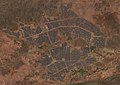 Kurnool Ultra Mega Solar Park, Andhra Pradesh 1,000 MW 15°40′53″N 78°17′01″E / 15.681522°N 78.283749°E
 -
 Kamuthi Solar Power Project, Tamil Nadu 648 MW 9°20′51″N 78°23′32″E / 9.347568°N 78.392162°E
 -
 Maharashtra I Solar Power Plant, Maharashtra 67 MW
 -
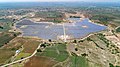 Telangana I Solar Power Plant, Telangana 12 MW
.jpg)


See also[edit]
References[edit]
- ^ a b "Physical Progress (Achievements)". Ministry of New & Renewable Energy. Retrieved 18 March 2023.
- ^ India Exim Bank (January 2022). "Indian Solar Sector – Fostering Growth and Sustainable Development (Refer to Table 13)". Retrieved 13 February 2022.
- ^ "Government to Bid Out 50 GW of Solar, Wind, and RTC Projects in FY24". Mercom India. Retrieved 25 April 2023.
- ^ "List of solar parks in India". mnre.gov.in (MS Word Document). Archived from the original on 11 December 2019. Retrieved 7 September 2019.
- ^ "Bigger than Singapore, Bahrain! World's biggest, hybrid renewable energy park in Gujarat to attract huge investment!". The Financial Express. 16 December 2020. Retrieved 19 December 2020.
- ^ "Gujarat to get India's largest renewable energy generation park". ETEnergyworld.com. 14 December 2020. Retrieved 22 December 2020.
- ^ Tayal, Manu (27 May 2020). "MNRE Invites Proposals to Develop Institutional Framework for 'One Sun One World One Grid' Implementation". Saur Energy. Retrieved 31 May 2020.
- ^ "India Set To Propose World Solar Bank & Mobilize $50 Billion In Solar Funding". Clean Technica. 26 July 2020. Retrieved 27 July 2020.
- ^ "India hits 20 GW solar capacity milestone". The Times of India. 31 January 2018. Retrieved 4 February 2018.
- ^ Das, Krishna N. (2 January 2015). "India's Modi raises solar investment target to $100 bln by 2022". Reuters. Retrieved 2 January 2015.
- ^ a b Kenning, Tom (2 July 2015). "India releases state targets for 40GW rooftop solar by 2022". PV Tech. Retrieved 29 July 2016.
- ^ a b c "Renewable energy in India: why rooftop remains the most untapped solar source". Down to Earth. 18 January 2019. Retrieved 18 January 2019.
- ^ "Solar water pumps can help India surpass 100 GW target: Report". The Economic Times. PTI. 31 July 2018. Retrieved 2 August 2017.
- ^ a b c "Ministry of New and Renewable Energy, Annual Report 2015-2016". Retrieved 21 April 2017.
- ^ a b c Muneer, T.; Asif, M.; Munawwar, S. (2005). "Sustainable production of solar electricity with particular reference to the Indian economy". Renewable and Sustainable Energy Reviews. 9 (5): 444. doi:10.1016/j.rser.2004.03.004. (publication archived in ScienceDirect, needs subscription or access via university)
- ^ "Solar". Ministry of New and Renewable Energy, Govt. of India. Archived from the original on 25 February 2014. Retrieved 21 February 2014.
- ^ "Welcome". Global solar atlas. Retrieved 4 February 2021.
- ^ "How to calculate the annual solar energy output of a photovoltaic system?". Photovoltaic-Software.com. Retrieved 30 June 2017.
- ^ "Mismatch Effects. Comprehensive technical data of PV modules". pveducation.org. Retrieved 21 February 2015.
- ^ Prasad, Nithin Thomas (22 May 2020). "Goodbye Polycrystalline Solar Modules, Hello Mono PERC, HJT, Bifacial". Mercom India. Retrieved 22 May 2020.
- ^ a b "List of SRRA Stations with Co-ordinates". National Institute of Wind Energy, Ministry of New and Renewable Energy, Government of India. Retrieved 20 June 2021.
- ^ Ananda, Jonathan (4 June 2015). "Solar Radiation Measuring Network, Atlas Out in the Open". The New Indian Express. Retrieved 20 June 2021.
- ^ "National Institute of Solar Energy". nise.res.in. Retrieved 20 June 2021.
- ^ Ghosh, Saikat; Roy, Jatindra Nath; Chakraborty, Chandan (2023). "Exploring the merits of geographical diversification of solar PV power plants for a resilient PV-dominated electricity grid in India". Clean Energy. 7 (4): 885–910. doi:10.1093/ce/zkad024.
- ^ "Installed Capacity of Various Renewable Modes of Energy". Ministry of New and Renewable Energy. 12 February 2019. Retrieved 26 June 2021.
- ^ Annual Report 2016-17 Ministry of New and Renewable Energy, Government of India. pg 58. Retrieved 28 June 2021. Archived on 21 April 2021.
- ^ Annual Report 2017-2018. Ministry of New and Renewable Energy, Government of India. pg 34. Retrieved 28 June 2021. Archived on 21 April 2021.
- ^ Annual Report 2019-2020. Ministry of New and Renewable Energy, Government of India. pg 19. Retrieved 28 June 2021. Archived on 21 April 2021.
- ^ "State-wise installed capacity of Grid Interactive Renewable Power as on 31.03.2021" (MS Excel Document). mnre.gov.in. Archived from the original on 13 May 2021. Retrieved 31 March 2021.
- ^ Solar Energy. Overview. Ministry of New and Renewable Energy, Government of India. Retrieved 28 June 2021. Archived on 4 June 2021. (NB: This site keeps updating.)
- ^ a b "State-wise installed capacity of Renewable Power as on 31.03.2023" (PDF).
- ^ includes roof mounted and off-the-grid installations.
- ^ "Status of Renewable Energy Power Projects Commissioned in AP State, NREDCAP" (PDF). New & Renewable Energy Development Corporation of Andhra Pradesh. Retrieved 7 October 2022.
- ^ P, Jayanth (11 May 2020). "10,050 MW mega solar power plants to come up in two phases in Andhra Pradesh". The New Indian Express. Retrieved 1 October 2020.
- ^ "Bid documents (6050 MW) submitted for judicial review (s.no. 6 to 15)". Judicial Preview, Government of Andhra Pradesh. Retrieved 2 October 2020.[permanent dead link]
- ^ "Kadiri ultra-mega solar park (4000 MW)" (PDF). New & Renewable Energy Development Corporation of Andhra Pradesh. Retrieved 2 October 2020.
- ^ "Obuladevucheruvu ultra-mega solar park (2400MW)" (PDF). New & Renewable Energy Development Corporation of Andhra Pradesh. Retrieved 2 October 2020.
- ^ "Ralla Anantapuram ultra-mega solar park (2400 MW)" (PDF). New & Renewable Energy Development Corporation of Andhra Pradesh. Retrieved 2 October 2020.
- ^ "Badvel ultra-mega solar park (1400MW)" (PDF). New & Renewable Energy Development Corporation of Andhra Pradesh. Retrieved 2 October 2020.
- ^ "Kalasapadu ultra-mega solar park (2000MW)" (PDF). New & Renewable Energy Development Corporation of Andhra Pradesh. Retrieved 2 October 2020.
- ^ "Solar Regulations in Andhra Pradesh, 2021". de.energy. Distributed Energy. Retrieved 5 August 2021.
- ^ Colthorpe, Andy (24 July 2018). "Andhra Pradesh gov't approves 2.75GW solar-wind-pumped hydro project by Greenko". energy-storage.news. Retrieved 20 November 2019.
- ^ "Interactive map showing the feasible locations of PSS projects in Andhra Pradesh state". Retrieved 19 November 2019.
- ^ Barnard, Michael (9 November 2019). "Elon Musk Should Build Pumped Hydro With Tesla Energy, The Boring Co., & Coal Miners". Clean Technica. Retrieved 17 May 2020.
- ^ ""Andhra's Rapid Industrialisation Only With Special Status": Jagan Reddy". NDTV. PTI. 20 February 2021. Retrieved 21 February 2021.
- ^ "Power generation begins at Kunta ultra mega solar project". Business Standard India. Press Trust of India. 10 May 2016. Retrieved 11 May 2016.
- ^ "NTPC signs PPA for phase 1 of 1,000 mw ultra solar project with AP discoms". Business Standard India. 24 April 2015. Retrieved 23 June 2014.
- ^ "The World's Largest Solar Park – Kurnool, India". NRDC (Natural Resources Defense Council). Retrieved 1 November 2017.
- ^ Kabeer, Nitin (24 December 2018). "Floating Solar Tender of 15 MW Announced by Greater Visakhapatnam Smart City". Mercom India. Retrieved 24 December 2018.
- ^ a b "BHEL bags Rs 100-cr EPC order from NTPC to set up solar power plant". Economic Times. PTI. 14 July 2019. Retrieved 15 July 2019.
- ^ "Solar plant commissioned". The Hindu. 20 February 2019. ISSN 0971-751X. Retrieved 18 June 2021.
- ^ Verma, Richi (18 December 2018). "Delhi: Multiple consumers can benefit from a single solar plant at one location". ETEnergyworld.com. Retrieved 18 December 2018.
- ^ Dave, Kapil; Damor, Kalpesh (7 July 2021). "Green leap: Gujarat set for 3-fold RE surge". The Times of India. Retrieved 21 September 2021.
- ^ "Pioneering and scaling up solar energy in India – webinar and related resources". The Low Emission Development Strategies Global Partnership. June 2016. Retrieved 20 June 2021.
- ^ "Gujarat government buys solar power at Rs 15 per unit from 38 firms". Energy Infra Post. 4 March 2017. Archived from the original on 21 April 2019. Retrieved 5 March 2017.
- ^ "Charanka Solar Park" (PDF). Ministry of New and Renewable Energy, Government of India. Archived (PDF) from the original on 17 May 2017. Retrieved 20 June 2021.
- ^ "India's first solar park at Charanka village in Gujarat". The Economic Times. Retrieved 12 May 2023.
- ^ Chandrasekaran, Kaavya (13 January 2019). "Foreign players sweep Gujarat solar auction". ETEnergyworld.com. Retrieved 22 December 2018.
- ^ Prateek, Saumy (21 December 2018). "DiSPA Asks Haryana to Remove Upper Cap of 500 MW for Open Access Solar Projects". Mercom India. Retrieved 20 June 2021.
- ^ Prateek, Saumy (4 January 2019). "Haryana Floats Tender for 300 MW of Solar Projects with a Tariff Ceiling of ₹3/kWh". Mercom India. Retrieved 20 June 2021.
- ^ Prateek, Saumy (10 January 2019). "Haryana Calls Developers to Set Up 16 MW of Canal Top Solar Projects". Mercom India. Retrieved 20 June 2021.
- ^ a b Rajeshwari, Ankita (17 May 2018). "India's Top 10 Solar States in Charts". Mercom India. Retrieved 20 June 2021.
- ^ Ranjan, Rakesh (27 December 2019). "World's Largest Solar Park at Karnataka's Pavagada is Now Fully Operational". Mercom India. Retrieved 20 June 2021.
- ^ Prabha Raghavan; Anil Sasi (12 September 2019). "Site decided, Govt clears mega solar project in Leh and Kargil". The Indian Express. Retrieved 20 June 2021.
- ^ "Solar Projects". Welspun Renewables. Archived from the original on 1 November 2015. Retrieved 26 October 2015.
- ^ "'Sure, pure and secure': PM Modi inaugurates Asia's largest solar plant in MP's Rewa". Hindustan Times. 10 July 2020. Retrieved 10 July 2020.
- ^ "PM Modi to inaugurate Asia's Second largest 750-MW Rewa solar plant tomorrow: All you need to know". The Times of India. 9 July 2020. Retrieved 10 July 2020.
- ^ "Electricity". District Rewa. Retrieved 10 July 2020.
- ^ Thomas Lloyd: Madhya Pradesh I in Shajapur District. Retrieved 21 September 2021.
- ^ Ray, Kalyan (31 July 2009). "Shirdi's solar cooker finds a place under sun". Deccan Herald. Retrieved 20 June 2021.
- ^ "Overview of Renewable Energy Plan and performance in Maharashtra". de.energy. Distributed Energy. Retrieved 5 August 2021.
- ^ Chandrasekaran, Kaavya (6 April 2017). "India's solar capacity to cross 20GW in next 15 months: Piyush Goyal". The Economic Times. Retrieved 6 April 2017.
- ^ "Reliance Power commissions world's largest Solar CSP project in Rajasthan". Estela Solar. 12 November 2014. Retrieved 14 March 2017.
- ^ Kabeer, Nitin (1 March 2019). "Lowest Quoted Tariff Dips to ₹2.48/kWh in SECI's 750 MW Solar Auction for Rajasthan". Mercom India. Retrieved 20 June 2021.
- ^ "Mizoram Welcomes Its First Solar Park With 20 MW Capacity". saurenergy.com. Retrieved 5 May 2023.
- ^ "Mizoram enters India's solar map, becomes first in Northeast to house largest solar park". indiatodayne. Retrieved 5 May 2023.
- ^ B., Sivakumar (1 July 2017). "Solar power tariff plunges to record low in Tamil Nadu". The Times of India. Retrieved 20 June 2021.
- ^ Chandrasekaran, Kaavya (3 July 2017). "NLC biggest winner in 1,500 Megawatt Tamil Nadu solar auction". ETEnergyworld.com. Retrieved 3 July 2017.
- ^ "130-MW solar power plant commissioned at Nevyeli". The Hindu. 2 January 2018. ISSN 0971-751X. Retrieved 20 June 2021.
- ^ Ranjan, Rakesh (2 March 2021). "Tamil Nadu Issues New Tariff Order, Plans to Double Its Solar Capacity by 2022". Mercom India. Retrieved 20 June 2021.
- ^ "100 MW NTPC floating solar plant at Ramagundam fully operational". The Hindu. 1 July 2022. ISSN 0971-751X. Retrieved 5 July 2022.
- ^ Pulloor, Narender (2 July 2022). "India's largest floating solar plant commissioned at NTPC Ramagundam". Deccan Chronicle. Retrieved 5 July 2022.
- ^ "Renewable power generation". Archived from the original on 21 April 2021. Retrieved 22 April 2021.
- ^ "Monthly Renewable Energy Generation Reports" (PDF). Retrieved 30 April 2023.
- ^ "Monthly Renewable Energy Generation Reports, CEA". Retrieved 30 April 2023.
- ^ "Physical Progress (Achievements) | Ministry of New and Renewable Energy | Government of India". mnre.gov.in.
- ^ "Standard Test Conditions of a Photovoltaic Module". Retrieved 1 March 2022.
- ^ "Snapshot of Global PV Markets 2022" (PDF). International Energy Agency Photovoltaic Power Systems Programme. Retrieved 6 September 2022.
- ^ "India Adds Over 1.2 GW of Rooftop Solar in 9M 2022". Retrieved 1 December 2022.
- ^ "India Adds Around 1.9 GW of Open Access Solar in 9M 2022, Installations Up by 96%". Retrieved 1 December 2022.
- ^ "DOE Energy storage database". Retrieved 21 August 2017.
- ^ "Concentrating Solar Power Isn't Viable Without Storage, Say Experts". November 2016. Retrieved 29 August 2017.
- ^ "Blue Book of China's Concentrating Solar Power Industry 2023" (PDF). Retrieved 6 March 2024.
- ^ "SECI to issue tender for 500-MW concentrated solar-thermal power project". 4 March 2024. Retrieved 7 March 2024.
- ^ Prateek, Saumy (27 May 2019). "Adani Quotes Lowest Tariff of ₹2.69/kWh in SECI's 1.2 GW Solar-Wind Hybrid Auction". Mercom India. Retrieved 26 June 2021.
- ^ Chandrasekaran, Kaavya (6 December 2018). "SB Energy and Adani Green win 840 MW at hybrid auction". ETEnergyworld.com. Retrieved 26 June 2021.
- ^ Singh, Sudheer (26 September 2017). "Siemens Gamesa bags Wind-Solar hybrid energy project in Karnataka". ETEnergyworld.com. Retrieved 26 June 2021.
- ^ Chandrasekaran, Kaavya (28 November 2018). "Shapoorji Pallonji bags country's first large-scale floating solar project". ETEnergyworld.com. Retrieved 26 June 2021.
- ^ Proctor, Darrell (1 September 2017). "Integrated Solar-Hydro Project Takes Float". Power. Retrieved 26 June 2021.
- ^ Barnard, Michael (26 December 2019). "Floating Solar On Pumped Hydro, Part 1: Evaporation Management Is A Bonus". Clean Technica. Retrieved 26 June 2021.
- ^ Saurabh (1 February 2020). "India Allocates 1.2 Gigawatts In World's Largest Renewable Energy Storage Tender". Clean Technica. Retrieved 26 June 2021.
- ^ Holmes à Court, Simon (21 August 2017). "Aurora: What you should know about Port Augusta's solar power-tower". Renew Economy. Retrieved 22 August 2017.
- ^ Kraemer, Susan (25 August 2015). "Cheap Baseload Solar At Copiapó Gets OK In Chile". Clean Technica. Retrieved 1 September 2017.
- ^ "Controllable solar power – competitively priced for the first time in North Africa". German Aerospace Center. 5 June 2019. Retrieved 7 June 2019.
- ^ Lewis, Dyani (5 April 2017). "Salt, silicon or graphite: energy storage goes beyond lithium ion batteries". The Guardian. Retrieved 1 September 2017.
- ^ "Commercializing Standalone Thermal Energy Storage". Renewable Energy World. 1 August 2016. Retrieved 1 September 2017.
- ^ Ramesh, M. (12 March 2018). "The sleeping giant is waking up". The Hindu @businessline. Retrieved 18 July 2021.
- ^ Nair, Geeta (13 June 2018). "Solar thermal industry seeks govt attention". The Financial Express. Retrieved 14 June 2018.
- ^ Pantulu, C Chitti (28 November 2009). "Solar Water Heater". Daily News and Analysis. Retrieved 27 November 2010.
- ^ "Solar Water Heater Rebate". The Hindu. 26 November 2009. Archived from the original on 30 November 2009. Retrieved 25 April 2012.
- ^ Das, Dipannita (29 November 2009). "More homes opt for solar energy". The Times of India. Retrieved 27 November 2010.
- ^ "PVT panels". ETEnergyworld.com. 26 October 2018. Retrieved 26 October 2018.
- ^ Ramanunni, Jalaja (16 April 2017). "DC solar products are lighting up rural India: What's driving the increased demand?". Firstpost. Retrieved 28 June 2021.
- ^ Roul, Avilash (15 May 2007). "India's Solar Power: Greening India's Future Energy Demand". Ecoworld.com. Archived from the original on 20 April 2012. Retrieved 28 February 2012.
- ^ Upadhyay, Anand (27 July 2020). "Can India Provide Free Solar-Powered Irrigation To All Its Farmers?". Clean Technica. Retrieved 28 July 2020.
- ^ Upadhyay, Anindya (3 January 2015). "China's cheap solar panels cause dark spots in Indian market". The Economic Times. Retrieved 3 January 2015.
- ^ "The Orissa Renewable Energy Development Agency (OREDA) was constituted as a State Nodal agency in the 1984". Oredaorissa.com. Archived from the original on 12 August 2010. Retrieved 27 November 2010.
- ^ "Government offer 30 per cent subsidy for solar lanterns and home lights". ElectronicsB2B. 27 August 2012. Retrieved 28 June 2021.
- ^ Action Plan to Increase Renewable Energy
- ^ a b "Indian Module Makers Beat Chinese Prices In 300 Megawatt Tender". Clean Technica. 23 October 2017. Retrieved 23 October 2017.
- ^ "Solar Irrigation in India" (PDF). Retrieved 11 December 2021.
- ^ Prasad, Nithin Thomas (6 January 2020). "Over 181,000 Solar Water Pumps Installed in India". Mercom India. Retrieved 28 June 2021.
- ^ "Budget 2020: Govt expands PM KUSUM scheme for solar pumps, targets to cover 20 lakh farmers". Economic Times. PTI. 1 February 2020. Retrieved 28 June 2021.
- ^ "How hot do solar panels get? Effect of temperature on solar performance". Energy Sage. 15 June 2017. Retrieved 1 August 2018.
- ^ a b "Agrivoltaics in India: Fertile Ground?" (PDF). Retrieved 11 December 2021.
- ^ "Driving synergy in energy and agriculture through Agro-Photovoltaics". ETEnergyworld.com. 31 May 2020. Retrieved 28 June 2021.
- ^ "Solar chilli drier". 1 September 2005.
{{cite journal}}: Cite journal requires|journal=(help) - ^ "Meet this engineering student from Pune who has built a solar powered bicycle". India Today. 26 December 2017. Retrieved 28 June 2021.
- ^ "IIT-K scientists design mobile pesticide sprayer that runs on solar energy". Down to Earth. 9 February 2021. Retrieved 28 June 2021.
- ^ "Pulling fertilizer out of thin air with solar power". Retrieved 19 January 2022.
- ^ Dvorak, Paul (20 October 2017). "Rain fed solar-powered water purification systems". Wind Power Engineering and Development. Retrieved 21 October 2017.
- ^ Pham, Diane (29 November 2017). "New rooftop solar hydropanels harvest drinking water and energy at the same time". inhabitat.com. Retrieved 28 June 2021.
- ^ Hanley, Steve (4 December 2017). "Inverted Umbrella Brings Clean Water & Clean Power To India". Clean Technica. Retrieved 5 December 2017.
- ^ "Indian Residential Rooftops: A Vast Trove of Solar Energy Potential" (PDF). Retrieved 8 October 2022.
- ^ "Using electric water heaters to store renewable energy could do the work of 2 million home batteries - and save us billions". The Economic Times. Retrieved 5 June 2023.
- ^ Sengupta, Debjoy (19 October 2016). "Rs 3 per KWh – lowest tariff for third-party rooftop solar power installations". The Economic Times. Retrieved 19 October 2016.
- ^ Zipp, Kathie (20 February 2017). "Giving electric vehicle batteries a second life in solar projects". Solar Power World. Retrieved 28 February 2017.
- ^ a b Rapier, Robert (17 October 2019). "The Death Of The World's Most Popular Battery". OilPrice.com. Retrieved 28 October 2019.
- ^ Ramesh, M. (17 January 2018). "Moving with the sun". The Hindu @businessline. Retrieved 28 June 2021.
- ^ "Bifacial Plus Tracking Boosts Solar Energy Yield by 27 Percent". Green Tech Media. 18 April 2018. Retrieved 19 April 2018.
- ^ a b Ershad, Ahmad Murtaza; Pietzcker, Robert; Ueckerdt, Falko; Luderer, Gunnar (January 2020). "Managing Power Demand from Air Conditioning Benefits Solar PV in India Scenarios for 2040". Energies. 13 (9): 2223. doi:10.3390/en13092223.
- ^ "Inertia and the Power Grid: A Guide Without the Spin" (PDF). NREL. Retrieved 25 March 2023.
- ^ "Next-generation solar power: unique design and energy storage for grid stability". solar.huawei.com. pv magazine. 14 July 2021. Retrieved 18 July 2021.
- ^ St. John, Jeff (20 April 2016). "AES Energy Storage and Panasonic Target India for Grid Batteries". Greentech Media. Retrieved 16 April 2016.
- ^ "Frequency Profile, NLDC, GoI". Retrieved 6 August 2015.[permanent dead link]
- ^ Saurabh (25 February 2016). "India Plans 750 MW Solar Power Park With 100 MW Storage Capacity". Clean Technica. Retrieved 1 March 2016.
- ^ "Real Time DSM tariff". indiapowertrading.info. Archived from the original on 21 January 2020. Retrieved 6 August 2015.
- ^ "Deviation Settlement Mechanism and related matters, CERC, GoI" (PDF). Central Electricity Regulatory Commission. 6 January 2014. Retrieved 6 August 2015.
- ^ "Rays Future Energy executes 60 MW of capacity under open access". Economic Times. PTI. 20 December 2017. Retrieved 20 December 2017.
- ^ Lambert, Fred (28 June 2017). "Audi claims to be buying batteries at ~$114/kWh for its upcoming electric cars, says CTO". electrek.co. Retrieved 18 July 2021.
- ^ "Global Solar Storage Market: A Review Of 2015". Solar Quarter. 6 April 2016. Archived from the original on 16 April 2016.
- ^ "Storing The Sun's Energy Just Got A Whole Lot Cheaper". ThinkProgress. Retrieved 23 May 2016.
- ^ Moore, Peter (28 June 2019). "Los Angeles seeks record sub-two cent solar power price". FocusTechnica. pv magazine USA. Retrieved 29 June 2019.
- ^ "Solar and wind now the cheapest power source says Bloomberg NEF". Power Engineering International (PEi). 19 November 2018. Retrieved 19 November 2018.
- ^ "JSW Renew Energy Wins SECI Tender for 1 GWh Battery Energy Storage Systems". Retrieved 27 August 2022.
- ^ "JSW emerges lowest bidder for pilot battery storage mega tender". Retrieved 27 August 2022.
- ^ "Should your PV systems face west with California's Net Billing Tariff (NEM 3.0) rules?". Retrieved 15 May 2023.
- ^ "The effect of orientation on solar output". Retrieved 11 December 2021.
- ^ Weaver, John Fitzgerald (30 June 2017). "Energy storage already cost-competitive in commercial sector". electrek.co. Retrieved 30 June 2017.
- ^ Ershad, Ahmad Murtaza; Ueckerdt, Falko; Pietzcker, Robert C.; Giannousakis, Anastasis; Luderer, Gunnar (1 August 2021). "A further decline in battery storage costs can pave the way for a solar PV-dominated Indian power system". Renewable and Sustainable Energy Transition. 1: 100006. doi:10.1016/j.rset.2021.100006. ISSN 2667-095X. S2CID 239674354.
- ^ "Maha: Govt plans to generate 7,000 MW solar power for farmers by 2026". 29 April 2023. Retrieved 24 April 2023.
- ^ "Land-Use competitiveness of photovoltaic and concentrated solar power technologies near the Tropic of Cancer". September 2022. Retrieved 29 November 2022.
- ^ Rathi, Sunil (31 October 2018). "Floating solar energy transforming India into a greener nation". ETEnergyworld.com. Retrieved 31 October 2018.
- ^ Zipp, Kathie (15 February 2017). "Solar floats in the sunshine state". Solar Power World. Retrieved 1 March 2017.
- ^ "Green Power Island: A blue battery for green energy". Gottlieb Paludan Architects. 2009. Retrieved 13 July 2015.
- ^ "BOOST Consortium Deploys Offshore Solar Demonstrator in Spain". 3 January 2024. Retrieved 27 February 2024.
- ^ Boffey, Daniel (21 April 2019). "Dutch engineers build world's biggest sun-seeking solar farm". The Guardian. Retrieved 23 June 2021.
- ^ "NTPC installs Robotic Dry Cleaning System for Solar PV Plant at NTPC Dadri". Energy Infra Post. 23 February 2017. Archived from the original on 30 June 2018. Retrieved 25 February 2017.
- ^ Koundal, Aarushi (19 February 2020). "India achieves lowest cost of floating solar power globally". ETEnergyworld.com. Retrieved 23 June 2021.
- ^ "Is China ready to put solar panels out at sea?". 2024. Retrieved 25 April 2024.
- ^ Anupam Chatterjee; Saurabh Kumar (19 January 2019). "Indian Railways to invest Rs 18,000 crore on solar power units along tracks". The Financial Express. Retrieved 19 January 2019.
- ^ "BHEL commissions world's first solar PV plant for rail traction system". ETEnergyworld.com. 9 July 2020. Retrieved 9 July 2020.
- ^ Baba Tamim (18 March 2023). "World's first solar panel 'carpet' on railway tracks may generate electricity". Interesting Engineering. Retrieved 19 March 2023.
- ^ Peake, Eleanor (6 December 2017). "Some of the UK's trains could be running on solar power by 2020". Wired UK. Retrieved 6 December 2017.
- ^ "Review of Recent Advances in Dynamic and Omnidirectional Wireless Power Transfer" (PDF). Archived from the original (PDF) on 19 September 2016. Retrieved 7 July 2016.
- ^ Chadha, Mridul (2 April 2013). "Indian Scientists Propose Solar Roofs For Roads". Clean Technica. Retrieved 17 November 2015.
- ^ Young, Matthew (16 November 2015). "World's First Solar Road Exceeds Expectations". Retrieved 17 November 2015.
- ^ Jain, Lalit (1 March 2016). "Greenhouse solar can plug the massive need for land to promote renewable energy". ETEnergyworld.com. Retrieved 27 February 2016.
- ^ "4 California solar projects built flat on the ground". Retrieved 7 August 2022.
- ^ "Rackless, earth-mounted solar provider earns funding". Retrieved 7 August 2022.
- ^ "This Texas solar farm's panels will sit flat on the ground". Retrieved 7 January 2023.
- ^ "Solar tower of power shows benefits of vertical installations". Retrieved 5 March 2023.
- ^ "Growth of Electricity Sector in India from 1947–2020" (PDF). Central Electricity Authority. October 2020. Retrieved 14 March 2023.
- ^ Dioari Ulrich Combari; Emmanuel Wendsongré Ramde; Idrissa Sourabie; Martial Zoungrana; Issa Zerbo; Dieudonné Joseph Bathiebo (November 2018). "Performance Investigation of a Silicon Photovoltaic Module under the Influence of a Magnetic Field". Advances in Condensed Matter Physics. 2018 6096901: 1–8. doi:10.1155/2018/6096901.
- ^ "Which Solar Panels Work Best In Shade?". Retrieved 5 April 2023.
- ^ "Single-axis trackers upgrade to handle uneven land sites". Retrieved 11 April 2024.
- ^ Deaton, Jeremy (27 May 2017). "In Brooklyn, you can now sell solar power to your neighbors". Salon. Retrieved 27 May 2017.
- ^ Upadhyay, Anand (11 July 2020). "India's Largest Building Integrated Vertical Solar System & The Road Ahead". Clean Technica. Retrieved 12 July 2020.
- ^ "Power Cost Savings Cover EMIs for Rooftop Solar: Tata Power Executive". Retrieved 16 December 2022.
- ^ a b c d "Spot prices of solar modules and battery packs". Retrieved 13 July 2023.
- ^ a b Prateek, Saumy (29 November 2018). "Is the Indian Solar Market Ready to Make the Transition to Mono PERC Modules?". Mercom India. Retrieved 20 June 2021.
- ^ "Motionless tracker technology that can revolutionise solar industry". Retrieved 5 October 2023.
- ^ "Kerala: Houseboats To Use Solar Power". Retrieved 2 March 2022.
- ^ "Japan's floating solar farm will store energy and drones will ship it back to shore". Retrieved 16 December 2022.
- ^ "Floating offshore solar power - Seavolt". Retrieved 4 March 2023.
- ^ "Solar Powered Pontoon Boats Guide". Retrieved 2 March 2022.
- ^ "Small City Sets Example For Floating Solar, Empowered By NREL Data Set". Retrieved 2 March 2022.
- ^ Press release – 13 April 2007 (13 April 2007). "Energy (R)evolution: A sustainable Energy Outlook for India". Greenpeace. Archived from the original on 27 August 2007. Retrieved 27 November 2010.
{{cite web}}: CS1 maint: numeric names: authors list (link) - ^ a b Press release – 9 April 2007 (9 April 2007). "Greenpeace announces comprehensive energy strategy for India to tackle Climate Change without compromising economic development". Greenpeace. Archived from the original on 27 August 2007. Retrieved 27 November 2010.
{{cite web}}: CS1 maint: numeric names: authors list (link) - ^ "NASA population density map". Visibleearth.nasa.gov. Archived from the original on 8 June 2011. Retrieved 27 November 2010.
- ^ a b "Energy-Atlas Solar radiation". Archived from the original on 10 April 2011. Retrieved 27 November 2010.
- ^ "Regional and World Energy-Maps of Solar radiation". Meteonorm.com. Archived from the original on 8 May 2010. Retrieved 27 November 2010.
- ^ "Solar LEDs Brighten Rural India's Future". Treehugger.com. Retrieved 27 November 2010.
- ^ Dutt, Ram (5 September 2004). "Solar plan for Indian computers". BBC News. Retrieved 27 November 2010.
- ^ "Barefoot solar engineers". Worldchanging.com. 22 February 1999. Retrieved 27 November 2010.
- ^ Bridge to India (September 2014). "Beehives or elephants? How should India drive its solar transformation" (PDF). Bridge to India. Archived from the original (PDF) on 27 November 2014. Retrieved 17 August 2015.
- ^ "Will try to achieve pledged renewable energy targets in less than four and half years: Piyush Goyal". The Economic Times. 6 November 2015. Retrieved 9 November 2015.
- ^ Asthana, Shishir (24 November 2015). "How solar energy is changing the power sector's dynamics". Business Standard India. Retrieved 25 November 2015.
- ^ Chandrasekaran, Kaavya (25 July 2016). "National lab policy for renewable energy soon". The Economic Times. Retrieved 25 July 2016.
- ^ Prasad, Rachita (28 November 2015). "shadows of thermal power gloom loom over solar industry". The Economic Times. Retrieved 28 November 2015.
- ^ "Solar Energy Isn't Always as Green as You Think". 13 November 2014. Retrieved 5 November 2015.
- ^ "Degradation and Failure Modes". Retrieved 5 November 2015.
- ^ "India's booming solar sector has one major flaw: poor quality". 2 August 2018. Retrieved 2 August 2018.
- ^ "Draft quality control guidelines" (PDF). Retrieved 23 May 2017.
- ^ "Chinese solar panels to face quality control barrier". Retrieved 23 May 2017.
- ^ "Remarketed solar panels are retaining resale value, EnergyBin report finds". Retrieved 3 March 2024.
- ^ "What is the solar rooftop subsidy scheme/yojana?". The Times of India. 20 July 2022. ISSN 0971-8257. Retrieved 12 May 2023.
- ^ "Solar Prices Nosedive After China Pullback Floods Global Market". Retrieved 21 June 2018.
- ^ "Solar Costs Are Hitting Jaw-Dropping Lows in Every Region of the World". Retrieved 28 June 2017.
- ^ Mondal, Debapriya (12 April 2017). "Solar power tariff hits a new low at Rs 3.15 levelised rate". ETEnergyworld. Retrieved 20 June 2021.
- ^ "Solar tariffs in India have fallen by 73 percent since 2010". ET Energyworld.com. 24 March 2017. Retrieved 20 June 2021.
- ^ Sharma, Shailaja (24 March 2017). "Solar tariffs in India have fallen by 73% since 2010: Mercom Capital". mint. Retrieved 20 June 2021.
- ^ McGrath, Matt (1 June 2017). "Five effects of a US pull-out from Paris climate deal". BBC. Retrieved 1 June 2017.
- ^ Pratheeksha (8 January 2019). "Updated – How Low Did It Go: 5 Lowest Solar Tariffs Quoted in 2018". Mercom India. Retrieved 20 June 2021.
- ^ Hincks, Joseph (16 December 2016). "This Just Became the World's Cheapest Form of Electricity Out of Nowhere". Fortune. Retrieved 5 February 2017.
- ^ Singh, Sudheer (30 May 2019). "India becomes lowest-cost producer of solar power". ETEnergyworld.com. Retrieved 20 June 2021.
- ^ "Saudi solar plant locks in new record low price for power: 1.04c/kWh". 13 April 2021. Retrieved 13 April 2021.
- ^ "India Unable to Compete With Record Low Solar Tariffs in Gulf Region" (PDF). Retrieved 28 August 2020.
- ^ "'Historic' result as Portugal claims record-low prices in 700MW solar auction". 26 August 2020. Retrieved 27 August 2020.
- ^ "Abu Dhabi announces world's lowest tariff for solar power". 29 April 2020. Retrieved 29 April 2020.
- ^ "Ultra-low solar bid of $0.01997/kWh in the US – not quite so sunny". 5 August 2019. Retrieved 5 August 2019.
- ^ "Solar power tariff dips to all-time low of Rs 4 per unit". 8 November 2016. Retrieved 10 November 2016.
- ^ "SECI lowers the solar tariff to INR 4.43 per unit fixed for upcoming biddings". Retrieved 25 December 2015.
- ^ "CERC capital cost move suggests solar tariff to fall further in FY17". 25 December 2015. Archived from the original on 25 December 2015. Retrieved 25 December 2015.
- ^ "Grid Connected SPV with VGF under JNNSM" (PDF). Retrieved 25 December 2015.
- ^ Chandrasekaran, Kaavya (6 May 2016). "Solar auction companies seeking lowest state support to win". The Economic Times. Retrieved 10 May 2016.
- ^ "MNRE Amends Bidding Guidelines for Solar Projects; Reduces Commissioning Time Frame". Retrieved 11 January 2017.
- ^ Singh, Sarita (10 February 2017). "Solar tariffs fall to Rs. 2.97 per unit". The Economic Times. Retrieved 11 February 2017.
- ^ "For Rewa project, we're not interested in profits: Manu Srivastava". 13 February 2017. Retrieved 14 February 2017.
- ^ "Average Large-Scale Solar System Cost Declined by 12%, Rooftop by 9% YoY in Q1 2020". 2 June 2020. Retrieved 3 June 2020.
- ^ "Solar tariffs crash to below Rs. 3 in Madhya Pradesh auctions". 10 February 2017. Retrieved 10 February 2017.
- ^ "Solar power tariffs fall to new low of Rs2.62 per unit". Mint. 10 May 2017. Retrieved 11 May 2017.
- ^ Kumar, V Rishi (10 May 2017). "Solar power tariff bid hits new low of Rs 2.62 per unit in Bhadla park in Rajasthan". Business Line. Retrieved 11 May 2017.
- ^ "Solar power tariff drops to all-time low of Rs 2.62 per unit". The Indian Express. 10 May 2017. Retrieved 11 May 2017.
- ^ Chandrasekaran, Kaavya (13 May 2017). "Solar power tariffs drops historic low at Rs2.44 per unit". The Economic Times. Retrieved 21 May 2017.
- ^ Rajeshwari, Ankita (18 April 2018). "Downing Commissions 20 MW of Open Access Solar Projects in Telangana and Andhra Pradesh". Mercom India. Retrieved 18 July 2021.
- ^ Singh, Sarita C (18 January 2018). "Renewable power companies compete with thermal plants in spot market". ETEnergyworld.com. Retrieved 18 July 2021.
- ^ "IEX Area prices". Indian Energy Exchange. Retrieved 3 April 2018.
- ^ "Developers expects solar power tariff to drop to Rs 1.5/unit". The Financial Express. PTI. 4 June 2017. Retrieved 18 July 2021.
- ^ Prateek, Saumy (15 May 2018). "L1 Tariff of ₹2.71/kWh Quoted in MSEDCL's 1 GW Solar Auction". Mercom India. Retrieved 18 July 2021.
- ^ Saluja, Nishtha (4 April 2018). "Govt amends solar bidding norms, developers can now pass on duty hike". ETEnergyworld.com. Retrieved 4 April 2018.
- ^ Chandrasekaran, Kaavya (3 July 2018). "Solar tariffs once again hit all-time low of Rs 2.44 a unit at SECI auction". The Economic Times. Retrieved 4 July 2018.
- ^ Prateek, Saumy (13 July 2018). "Solar Tariffs in India Remain Steady at ₹2.44/kWh in SECI's 3 GW Auction". Mercom India. Retrieved 18 July 2021.
- ^ Prateek, Saumy (19 June 2019). "SECI's 750 MW Solar Auction for Rajasthan Sees Lowest Tariff of ₹2.50/kWh". Mercom India. Retrieved 18 July 2021.
- ^ Prateek, Saumy (12 June 2019). "Lowest Bid of ₹2.54/kWh Against Ceiling Tariff of ₹2.65/kWh Wins SECI's 1.2 GW Solar Tender". Mercom India. Retrieved 18 July 2021.
- ^ Kabeer, Nitin (25 February 2019). "Lowest Tariff of ₹2.55/kWh Wins SECI's 1.2 GW ISTS Solar Auction". Mercom India. Retrieved 18 July 2021.
- ^ Kabeer, Nitin (21 February 2019). "50 MW of Solar Projects to be Developed in Pavagada Solar Park at a Tariff of ₹1.24/kWh". Mercom India. Retrieved 18 July 2021.
- ^ Rajeshwari, Ankita (17 May 2018). "India's Top 10 Solar States in Charts". Mercom India. Retrieved 18 July 2021.
- ^ Kabeer, Nitin (24 July 2018). "CleanMax Quotes L1 Tariff of ₹3.64/kWh for NREDCAP's Rooftop Solar Tender". Mercom India. Retrieved 18 July 2021.
- ^ "A 1 kW Residential Rooftop Solar System in Jaipur to Cost ₹43,500". Mercom India.
- ^ Dutta, Sanjay (9 May 2020). "India wins deal for 24X7 supply of green power". ETEnergyworld.com. Retrieved 9 May 2020.
- ^ Jyoti Gulia; Vibhuti Garg (December 2020). "Why India's Solar Power Tariffs Reached an Historic Low: New Record of Rs2 Per kWh" (PDF). Institute for Energy Economics and Financial Analysis. Retrieved 1 December 2020.
- ^ Bhaskar, Utpal (28 November 2020). "India's solar power tariffs to fall further: Raj Kumar Singh". livemint.com. Retrieved 19 December 2020.
- ^ Ranjan, Rakesh (22 March 2021). "First Auction After BCD: GUVNL's 500 MW Solar Auction Gets Lowest Tariff of ₹2.20/kWh". Mercom India. Retrieved 18 July 2021.
- ^ "NTPC, SJVN, Hinduja Win RUMSL's Phase II 300 MW Floating Solar Auction at ₹3.69–3.70/kWh". 11 November 2022. Retrieved 13 November 2022.
- ^ "Sprng, NTPC, Ayana, O2 Win Railway's 1 GW Solar-Wind Hybrid Auction". Mercom India. Retrieved 8 April 2023.
- ^ "ENGIE, ReNew, NTPC Win Government's 1,250 MW Solar Auction". Retrieved 8 April 2023.
- ^ "Five Lowest Winning Bids in Solar Auctions in India during 2023". Retrieved 29 December 2023.
- ^ "Swelect, Grew, Renew win SECI's auction to supply 400 MW solar modules". Retrieved 24 April 2024.
- ^ Jai, Shreya (20 January 2016). "Cabinet clears viability gap funding for 5,000 Mw solar power projects". Business Standard India. Retrieved 17 June 2018.
- ^ Bajaj, Shaurya (25 November 2019). "RBI Relaxes External Commercial Borrowing Norms to Benefit Solar & Wind Companies". Mercom India. Retrieved 18 July 2021.
- ^ Chandrasekaran, Kaavya (31 July 2018). "India imposes safeguard duty on solar cells imports for two years". ETEnergyworld.com. Retrieved 31 July 2018.
- ^ "Report On Development of Conceptual Framework For Renewable Energy Certificate Mechanism for India" (PDF). Archived from the original (PDF) on 6 November 2011. Retrieved 26 October 2011.
- ^ Narasimhan Santhanam (29 July 2015) Government Incentives for Rooftop Solar Installation in India. Archived 28 August 2015 at the Wayback Machine Solar Mango. Retrieved 18 July 2021.
- ^ Prateek, Saumy (16 February 2018). "Ministry of Power Waives ISTS Charges for Wind and Solar Projects Commissioned up to 2022". Mercom India. Retrieved 18 July 2021.
- ^ Kabeer, Nitin (29 August 2018). "Madhya Pradesh's 35 MW Solar Rooftop Tender Sets Historic Lowest Tariff of ₹1.58/kWh". Mercom India. Retrieved 18 July 2021.
- ^ Prateek, Saumy (17 January 2019). "Delhi's IPGCL Attracts Lowest Tariffs for RESCO Bids in Residential Rooftop Solar". Mercom India. Retrieved 18 July 2021.
- ^ Daizy Chawla; Jatin Kapoor (16 April 2021). "Foreign Direct Investment in India's solar power sector – A perspective". Retrieved 16 April 2021.
- ^ Neslen, Arthur (4 December 2015). "India Unveils Global Solar Alliance of 120 Countries at Paris Climate Summit". AlterNet. Retrieved 6 August 2016.
- ^ "India emerges as key player in solar trade amidst Xinjiang forced labor sanction". 6 February 2024. Retrieved 6 February 2024.
- ^ "Why Are China's Solar Panels So Cheap?". Retrieved 14 February 2024.
- ^ Keith Burrows; Vasilis Fthenakis. "Glass Needs for a Growing Photovoltaics Industry" (PDF). Center for Life Cycle Analysis, Columbia University. Retrieved 29 July 2015.
- ^ Sharath Rao; Rajendra Kharul; Bhupesh Verma; Suhas Tendulkar; Ritesh Jain; Varun Jyothiprakash; Chandan Kumar; Gaurav Jain; Salil Joglekar (2015). "Addressing the Challenges of RE Manufacturing in India" (PDF). CSTEP. Centre for Study of Science, Technology and Policy, World Institute for Sustainable Energy. Archived (PDF) from the original on 2 July 2018. Retrieved 29 July 2017.
- ^ Thomas, Tanya (24 November 2019). "The setting sun on India's solar dreams". mint. Retrieved 20 June 2021.
- ^ Prateek, Saumy (29 July 2019). "Lack of Insurance for Solar Modules Holding Back India-Made Modules". Mercom India. Retrieved 30 July 2019.
- ^ "BIS Notification for Modules" (PDF). Ministry of New and Renewable Energy, Government of India. Archived (PDF) from the original on 1 June 2019. Retrieved 20 June 2021.
- ^ Prateek, Saumy (4 December 2018). "MNRE Asks Lenders to Insist on BIS Certification of Solar Modules Rather than Tier-1 List". Mercom India. Retrieved 20 June 2021.
- ^ Saluja, Nishtha (5 December 2018). "MNRE tells lenders to favour BIS-compliant solar projects". The Economic Times. Retrieved 20 June 2021.
- ^ "India's Photovoltaic Manufacturing Capacity Set to surge" (PDF). 4 March 2023. Retrieved 4 March 2023.
- ^ "India Solar Map – September 2017" (PDF). Bridge to India. Archived (PDF) from the original on 22 September 2018. Retrieved 30 September 2017.
- ^ "Plant wise details of Renewable Energy Installed Capacity" (PDF). Archived from the original (PDF) on 25 March 2020. Retrieved 21 March 2020.
- ^ Singh, Harsha Kumari (21 May 2017). "Country's Biggest Solar Park In Rajasthan, At The Heart Of India's Clean Energy Push". NDTV. Archived from the original on 12 February 2018. Retrieved 6 June 2017.
- ^ Solar plants of 620 MW get operational at Bhadla park Archived 3 November 2018 at the Wayback Machine, The Times of India, 2 October 2018
- ^ "Azure Power commissions 150 Mw solar project in Rajasthan". ETEnergyworld.com. 29 April 2019. Archived from the original on 2 May 2019. Retrieved 29 April 2019.
- ^ "World's largest solar park in Karnataka is now fully operational". cnbctv18.com. 27 January 2020. Retrieved 12 June 2020.
- ^ Anjali Jaiswal; Laasya Bhagavatula (31 October 2017). "The World's Largest Solar Park – Kurnool, India". Natural Resources Defense Council. Archived from the original on 7 November 2017. Retrieved 1 November 2017.
- ^ NTPC commissioned 50 MW of NP Kunta Ultra Mega Solar Power Project Stage-I in Anantapuramu Archived 4 March 2017 at the Wayback Machine, India Infoline News Service, 1 August 2016
- ^ Kabeer, Nitin (17 May 2018). "Solar Projects Totaling 127 MW Commissioned This Week". Mercom India. Archived from the original on 24 May 2018. Retrieved 23 May 2018.
- ^ "Tata Power commissions 100 MW solar power capacity in AP". Business Standard. Press Trust of India. 2 July 2018. Archived from the original on 2 July 2018. Retrieved 3 July 2018.
- ^ 750MW Madhya Pradesh solar plant starts operations, to serve Delhi Metro Archived 13 July 2018 at the Wayback Machine, IANS, The New Indian Express, 6 July 2018
- ^ "GIPCL commissions 75 MW solar power project in Gujarat". Asian Age. Press Trust of India. 7 June 2019. Archived from the original on 7 June 2019. Retrieved 7 June 2019.
- ^ India Pushes Ultra-Mega Scheme To Scale Solar PV Archived 26 January 2019 at the Wayback Machine, Forbes, William Pentland, 9 September 2014
- ^ "Gujarat riding on the suns chariot". The Times of India. 2 December 2018. Archived from the original on 15 April 2014. Retrieved 25 January 2019.
- ^ "Gujarat flips switch on Asia's largest solar field, leading India's renewable energy ambitions". The Washington Post. New Delhi, India. 19 April 2012.[dead link]
- ^ "Solar plant commissioned". The Hindu. 19 February 2019. Archived from the original on 20 February 2019. Retrieved 20 February 2019.
- ^ "Ananthapuramu -II ultra mega solar park 500 MW – Land details". Archived from the original on 20 February 2019. Retrieved 20 February 2019.
- ^ "SECI Refuses to Lower Tariffs for Andhra Solar Projects". Retrieved 17 February 2020.
- ^ "NTPC's Rs 1,500 crore solar power plant inaugurated by MP Chief Minister". Archived from the original on 12 July 2018. Retrieved 12 July 2018.
- ^ "ENGIE fully commissions 250 MW Kadapa solar project in Andhra Pradesh". Retrieved 17 February 2020.
- ^ "List of projects that are part of Kadapa Mega Solar Park". Retrieved 18 February 2020.
- ^ "Neemuch Solar Plant inaugurated by Narendra Modi and MP CM Shivraj Singh Chauhan". Archived from the original on 7 September 2014. Retrieved 7 September 2014.
- ^ "Telangana gets largest solar farm in Nizamabad district – Times of India". The Times of India. 16 April 2017.
- ^ "130-MW solar power plant commissioned at Nevyeli". The Hindu. Cuddalore. 2 January 2018.
- ^ "NTPC solar power plants performance". ETEnergyworld.com. 1 April 2016. Retrieved 30 April 2016.
- ^ "Green Energy Corp to set up 50 mw Solar Power Plant". Odisha Sun Times. Bhubaneswar, India. 5 December 2013.
- ^ "NTPC's 50 MW solar power plant in Madhya Pradesh commissioned". The Economic Times. Retrieved 12 September 2014.
- ^ "Welspun Energy commissions largest solar project". The Economic Times. Jaipur, India. 12 March 2013.
- ^ "Odisha to float tenders soon for 48 MW solar power". Business Standard. Bhubaneswar, India. 30 December 2011.
- ^ "How is the world's first solar powered airport faring?". BBC News. 9 October 2015. Retrieved 14 August 2016.
- ^ "Adani Group commissions largest solar power project". The Economic Times. New Delhi, India. 5 January 2012.
- ^ "Reliance Power to Buy First Solar Panels for U.S.-Backed Project". India: Bloomberg L.P. 5 September 2011.
- ^ "Solar in India: Vikram Solar commissions 40 MW PV plant in Madhya Pradesh". Solar Server. India. 11 May 2015. Archived from the original on 10 May 2017. Retrieved 24 November 2022.
- ^ "Azure commissions 35 MW solar power plant in Rajasthan". mint. 15 February 2013. Retrieved 18 July 2021.
- ^ PTI (23 January 2018). "Welspun Renewables commissions 34 MW solar project in Punjab". The Hindu @businessline. Retrieved 18 July 2021.
- ^ "Moser Baer commissions 30-MW solar farm in Gujarat". The Hindu. PTI. 12 October 2011. ISSN 0971-751X. Retrieved 18 July 2021.
- ^ "Akhilesh launches 30MW solar plants in Lalitpur". The Times of India. 8 May 2015. Retrieved 18 July 2021.
- ^ "Tata Power commissions 25MW solar project in Gujarat". Archived from the original on 18 February 2012. Retrieved 19 February 2012.
- ^ "20 MW Vankal Solar Park inaugurated in Mizoram, first in northeast India". cnbctv18. 26 April 2023. Retrieved 5 May 2023.
- ^ "GEDCOL seeks land transfer for 20 Mw solar plant". Business Standard. Bhubaneswar, India. 1 April 2014. Retrieved 18 July 2021.
External links[edit]

- Solar Performance Tracker. Center for Strategic and International Studies
- Annual Report 2015-16. MNRE
- Annual Report 2018-19. MNRE. Archived on 21 April 2021.
- Annual Report 2020-2021. MNRE. Archived on 21 April 2021.
| Power plants |
|  | ||||||
|---|---|---|---|---|---|---|---|---|
| Policies/programmes | ||||||||
| Agencies | ||||||||
| Companies | ||||||||


 Energy ministries and departments of India Energy ministries and departments of India | |||||||||||
|---|---|---|---|---|---|---|---|---|---|---|---|
| Power |
|  | |||||||||
| New and Renewable Energy | |||||||||||
| Ministry of Coal | |||||||||||
| Petroleum and Natural Gas |
| ||||||||||
| Department of Atomic Energy | |||||||||||
| Africa | |||||
|---|---|---|---|---|---|
| Asia | |||||
| Europe |
| ||||
| North America | |||||
| Oceania | |||||
| South America | |||||


