


Syktyvkar
Syktyvkar
Сыктывкар | |
|---|---|
| Other transcription(s) | |
| • Komi | Сыктывкар |
 .jpg)      .jpg) .jpg)   From up to the left: Syktyvkar station platform, Stefanovskaya square, Derbenev Trading House, Residential building in Zavodskaya street, Agrobiostation of the Komi State Pedagogical Institute, Library building, Botanical Garden of Syktyvkar State University, Fire station, Saint Stephen of Perm Orthodox cathedral, Monument to I.A. Kuratov, the founder of Komi literature: Lomonosov Square, Ust-Sysolsky Theological School | |
.svg) Flag _(2008).svg) Coat of arms | |
Location of Syktyvkar  | |
  Syktyvkar Location of Syktyvkar .svg) Syktyvkar Syktyvkar (European Russia)  Syktyvkar Syktyvkar (Europe) | |
| Coordinates: 61°40′N 50°49′E / 61.667°N 50.817°E | |
| Country | Russia |
| Federal subject | Komi Republic[1] |
| Founded | 1586 |
| City status since | 1780 |
| Government | |
| • City district chairman | Vladimir Goldin |
| Area | |
| • Total | 152 km2 (59 sq mi) |
| Elevation | 172 m (564 ft) |
| Population | |
| • Total | 235,006 |
| • Estimate (2018)[4] | 245,083 (+4.3%) |
| • Rank | 81st in 2010 |
| • Density | 1,500/km2 (4,000/sq mi) |
| • Subordinated to | city of republic significance of Syktyvkar[1] |
| • Capital of | Komi Republic[1] |
| • Capital of | city of republic significance of Syktyvkar[1] |
| • Urban okrug | Syktyvkar Urban Okrug[5] |
| • Capital of | Syktyvkar Urban Okrug[5] |
| Time zone | UTC+3 (MSK  [6]) [6]) |
| Postal code(s)[7] | 167000, 167002, 167004, 167005, 167009, 167011, 167014, 167018, 167023, 167026, 167031 |
| Dialing code(s) | +7 8212 |
| OKTMO ID | 87701000001 |
| Website | www |
Syktyvkar (/sɪktɪfˈkɑːr/,[8] Russian: Сыктывка́р, IPA: [sɨktɨfˈkar]; Komi: Сыктывкар) is the capital city of the Komi Republic in Russia, as well as its largest city. It is also the administrative center of the Syktyvkar Urban Okrug. Until 1930, it was known as Ust-Sysolsk, after the Sysola River.
| Year | Pop. | ±% |
|---|---|---|
| 1897 | 4,464 | — |
| 1926 | 5,068 | +13.5% |
| 1939 | 25,281 | +398.8% |
| 1959 | 64,461 | +155.0% |
| 1970 | 125,088 | +94.1% |
| 1979 | 170,980 | +36.7% |
| 1989 | 232,117 | +35.8% |
| 2002 | 230,011 | −0.9% |
| 2010 | 235,006 | +2.2% |
| 2021 | 220,580 | −6.1% |
| Source: Census data | ||
Etymology[edit]
The city's name comes from Syktyv, the Komi name for the Sysola River, and kar, meaning "city" in the Komi Language.[citation needed]
Geography[edit]
Syktyvkar is located on the Sysola River, which is the origin of its former name Ust-Sysolsk. The city is located close to where the Sysola joins the larger Vychegda River, which is itself a branch of the Northern Dvina.[citation needed]
History[edit]
 | This section needs additional citations for verification. (August 2022) |
.jpg)
It is believed that the city was founded in 1586 as a settlement Ust-Sysola.[9]
It was granted city status by Catherine the Great in 1780, and in 1992, it became the capital of the Komi Republic.[10] It has remained the capital since then, although a large influx of ethnic Russians in the 20th century has actually left the Komi a minority there.
The majority of the population were merchants and peasants. The main occupations of the inhabitants were agriculture, cattle-breeding, hunting, fishing, and trade.
By the beginning of the 20th century, the population had grown to 6,000 people. The Tsarist government made the Komi region a place of political exile.
In 1921, Ust-Sysolsk was given the status of administrative center of the newly formed Komi-Zyryan Autonomous Oblast. It was renamed as Syktyvkar, which is Komi for "a town on the Sysola" in 1930, to mark the 150th anniversary of its receipt of city privileges. In 1936, Syktyvkar became the capital of the Komi ASSR.
Administrative and municipal status[edit]
Syktyvkar is the capital of the republic.[1] Within the framework of administrative divisions, it is, together with three urban-type settlements (Krasnozatonsky, Sedkyrkeshch, and Verkhnyaya Maksakovka) and three rural localities, incorporated as the city of republic significance of Syktyvkar—an administrative unit with the status equal to that of the districts.[1] As a municipal division, the city of republic significance of Syktyvkar is incorporated as Syktyvkar Urban Okrug.[5]
Economy[edit]
The Sysola, the Vychegda, and the Northern Dvina are navigable and are a major transport route of forestry products from Syktyvkar. Lumber and woodcrafts are the city's largest industries.[citation needed]
Previously Komiinteravia had its head office in Syktyvkar.[11]
Transportation[edit]
The city is served by Syktyvkar Airport and Syktyvkar Southwest airfield. The city has a railway station as well. Syktyvkar is the end point of route R176 (Vyatka Highway).
Culture and education[edit]
| This section needs additional citations for verification. (August 2022) |
.jpg)
Syktyvkar is the center of the cultural life in the republic.
The oldest museum of the Republic of Komi, the National Museum, was founded in 1911. Nowadays, the National Museum is the Literature Memorial Museum of Ivan Kuratov and the museum of Viktor Savin.
The National Gallery was founded in Syktyvkar in 1943. It welcomes exhibitions from different museums of the country. The Theater of Opera and Ballet began its history in 1958.
The National Library numbers 2.5 million volumes, including books in the Russian language, foreign languages and in the Komi language.
Syktyvkar State University was founded in 1972 and has over 3,500 full-time students and 250 faculty members.[12]
The city's folk ensemble "Asya Kya" has been representing Komi Republic on national and international festivals.[13]
One of the oldest Russian progressive rock bands The Gourishankar was founded in Syktyvkar in 2001.
Sports[edit]
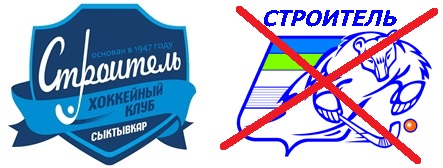
Stroitel[14] which has played many seasons in the highest division of Russian bandy, nowadays called the Russian Bandy Super League, has then played several seasons in the second division, called Russian Bandy Supreme League. At the final tournament of the 2016–17 season, with two Super League tickets held in Syktyvkar, Stroitel won[15] and was thus eligible for promotion. After discussions whether or not to accept,[16] the answer was a yes and the team will play Super League bandy again in the season of 2017–18.[17] Its home venue is Respublikanskiy Stadion.[18] In the 2016/17 season, the club adopted a new logotype instead of an old one which had a white bear playing bandy.[19]
There is also a youth team called KDYuSSh-1.[20]
Events[edit]
- In January 2017 the Bandy Y-19 World Championship was organized in Syktyvkar.[21]
- Syktyvkar was to host the 2021 Bandy World Championship,[22] for which an indoor arena was to be erected.[23] However, the tournament was repeatedly postponed due to the COVID-19 pandemic, and ultimately pulled from Syktyvkar altogether as a consequence of the 2022 Russian invasion of Ukraine.[24]
Climate[edit]
Syktyvkar experiences a subarctic climate (Köppen climate classification Dfc) with long, cold winters and short, warm summers. Compared with areas at a similar latitude in Siberia, winters are less extreme, but still much longer than summer and bitterly cold by European standards.
| Climate data for Syktyvkar (1991–2020 normals, extremes 1888–present) | |||||||||||||
|---|---|---|---|---|---|---|---|---|---|---|---|---|---|
| Month | Jan | Feb | Mar | Apr | May | Jun | Jul | Aug | Sep | Oct | Nov | Dec | Year |
| Record high °C (°F) | 3.8 (38.8) |
5.3 (41.5) |
13.2 (55.8) |
26.7 (80.1) |
31.8 (89.2) |
35.3 (95.5) |
34.5 (94.1) |
34.6 (94.3) |
27.5 (81.5) |
20.4 (68.7) |
10.6 (51.1) |
5.2 (41.4) |
35.3 (95.5) |
| Mean daily maximum °C (°F) | −10.2 (13.6) |
−8.1 (17.4) |
−0.6 (30.9) |
7.2 (45.0) |
15.3 (59.5) |
20.5 (68.9) |
23.3 (73.9) |
19.0 (66.2) |
12.9 (55.2) |
4.5 (40.1) |
−3.6 (25.5) |
−7.9 (17.8) |
6.0 (42.8) |
| Daily mean °C (°F) | −13.4 (7.9) |
−11.8 (10.8) |
−5.1 (22.8) |
2.1 (35.8) |
9.1 (48.4) |
14.6 (58.3) |
17.6 (63.7) |
14.0 (57.2) |
8.6 (47.5) |
1.9 (35.4) |
−5.9 (21.4) |
−10.7 (12.7) |
1.8 (35.2) |
| Mean daily minimum °C (°F) | −16.8 (1.8) |
−15.3 (4.5) |
−9.3 (15.3) |
−2.3 (27.9) |
3.8 (38.8) |
9.3 (48.7) |
12.2 (54.0) |
9.6 (49.3) |
5.2 (41.4) |
−0.3 (31.5) |
−8.3 (17.1) |
−13.7 (7.3) |
−2.2 (28.0) |
| Record low °C (°F) | −46.6 (−51.9) |
−45.4 (−49.7) |
−38.8 (−37.8) |
−27.3 (−17.1) |
−15.0 (5.0) |
−5.0 (23.0) |
−0.3 (31.5) |
−2.1 (28.2) |
−8.6 (16.5) |
−29.6 (−21.3) |
−43.5 (−46.3) |
−46.0 (−50.8) |
−46.6 (−51.9) |
| Average precipitation mm (inches) | 45 (1.8) |
36 (1.4) |
36 (1.4) |
37 (1.5) |
52 (2.0) |
71 (2.8) |
72 (2.8) |
80 (3.1) |
62 (2.4) |
61 (2.4) |
52 (2.0) |
49 (1.9) |
653 (25.7) |
| Average extreme snow depth cm (inches) | 54 (21) |
67 (26) |
71 (28) |
32 (13) |
1 (0.4) |
0 (0) |
0 (0) |
0 (0) |
0 (0) |
2 (0.8) |
15 (5.9) |
33 (13) |
71 (28) |
| Average rainy days | 4 | 3 | 5 | 13 | 19 | 19 | 19 | 21 | 23 | 19 | 8 | 6 | 159 |
| Average snowy days | 28 | 26 | 23 | 14 | 6 | 1 | 0 | 0.1 | 3 | 16 | 26 | 28 | 171 |
| Average relative humidity (%) | 83 | 81 | 75 | 67 | 64 | 68 | 73 | 79 | 84 | 86 | 86 | 84 | 78 |
| Mean monthly sunshine hours | 19.6 | 61.8 | 116.5 | 180.2 | 248.1 | 267.2 | 295.4 | 191.2 | 105.0 | 39.9 | 18.3 | 6.5 | 1,549.7 |
| Source 1: Погода и Климат[25] | |||||||||||||
| Source 2: NOAA[26] | |||||||||||||
Twin towns – sister cities[edit]
Syktyvkar is twinned with:[27]


References[edit]
Notes[edit]
- ^ a b c d e f g Law #16-RZ
- ^ Сайт администрации МО ГО 'Сыктывкар' — Краткая справка Archived 2013-12-24 at the Wayback Machine
- ^ Russian Federal State Statistics Service (2011). Всероссийская перепись населения 2010 года. Том 1 [2010 All-Russian Population Census, vol. 1]. Всероссийская перепись населения 2010 года [2010 All-Russia Population Census] (in Russian). Federal State Statistics Service.
- ^ "26. Численность постоянного населения Российской Федерации по муниципальным образованиям на 1 января 2018 года". Federal State Statistics Service. Retrieved January 23, 2019.
- ^ a b c Law #11-RZ
- ^ "Об исчислении времени". Официальный интернет-портал правовой информации (in Russian). June 3, 2011. Retrieved January 19, 2019.
- ^ Почта России. Информационно-вычислительный центр ОАСУ РПО. (Russian Post). Поиск объектов почтовой связи (Postal Objects Search) (in Russian)
- ^ "Dictionary.com". Archived from the original on April 16, 2018. Retrieved April 15, 2018.
- ^ "Syktyvkar - Russian cities (Russian)". City of Russia - National selection. Archived from the original on December 3, 2019. Retrieved March 10, 2020.
- ^ "History in dates - old Syktyvkar (Russian)". Old Syktyvkar. Archived from the original on January 8, 2020. Retrieved March 10, 2020.
- ^ "Directory: World Airlines. Flight International. 23–29 March 2004. 95 Archived November 3, 2012, at the Wayback Machine. "Sovetskaya Street 69, Skytyvkar, Komi Zone ATD, Russia"
- ^ "UNIVERSITY OF SYKTYVKAR". Valdosta State University. Archived from the original on June 2, 2010. Retrieved September 10, 2009.
- ^ "Восемь Международных фольклорных фестивалей посетил ансамбль "Асъя кыа" за лето". Комиинформ (in Russian). September 29, 2008. Archived from the original on April 20, 2021. Retrieved March 10, 2020.
- ^ "rusbandy.ru". Archived from the original on February 20, 2022. Retrieved February 20, 2022.
- ^ "rusbandy.ru". Archived from the original on February 20, 2022. Retrieved March 6, 2017.
- ^ "rusbandy.ru". Archived from the original on February 20, 2022. Retrieved March 6, 2017.
- ^ http://www.rusbandy.ru/season/313/ Archived September 23, 2017, at the Wayback Machine The 2017-18 Super League at rusbandy.ru
- ^ "The stadium at rusbandy.ru". Archived from the original on September 13, 2011. Retrieved December 11, 2011.
- ^ "Image of the new and the old logo at rusbandy.ru". Archived from the original on November 25, 2015. Retrieved November 24, 2015.
- ^ "rusbandy.ru". Archived from the original on November 25, 2015. Retrieved November 2, 2015.
- ^ "Championship homepage". Archived from the original on February 2, 2017. Retrieved January 30, 2017.
- ^ "Google Translate". Archived from the original on April 24, 2020. Retrieved February 20, 2022.
- ^ "Google Translate". Archived from the original on April 24, 2020. Retrieved February 20, 2022.
- ^ "Herrarnas bandy-VM i Ryssland ställs in - ryssarna stängs av från mästerskap i Sverige". March 2022.
- ^ "Climate Syktyvkar". Pogoda.ru.net. Archived from the original on April 20, 2021. Retrieved November 15, 2021.
- ^ "World Meteorological Organization Climate Normals for 1991-2020". NOAA. Archived from the original on November 16, 2021. Retrieved November 15, 2021.
- ^ "Сыктывкар и его побратимы: что известно о сотрудничестве между городами". komionline.ru (in Russian). Komi Online. May 22, 2019. Archived from the original on November 6, 2019. Retrieved February 4, 2020.

Sources[edit]
- Государственный Совет Республики Коми. Закон №13-РЗ от 6 марта 2006 г. «Об административно-территориальном устройстве Республики Коми», в ред. Закона №171-РЗ от 26 декабря 2014 г. «Об упразднении населённого пункта Верхняя Седка, расположенного на территории Прилузского района Республики Коми, и внесении в связи с этим изменений в некоторые Законы Республики Коми». Вступил в силу со дня официального опубликования. Опубликован: "Республика", №44, 16 марта 2006 г. (State Council of the Komi Republic. Law #13-RZ of March 6, 2006 On the Administrative-Territorial Structure of the Komi Republic, as amended by the Law #171-RZ of December 26, 2014 On Abolishing the Inhabited Locality of Verkhnyaya Sedka Located on the Territory of Priluzsky District of the Komi Republic, and on Amending Various Laws of the Komi Republic Accordingly. Effective as of the official publication date.).
- Государственный Совет Республики Коми. Закон №11-РЗ от 5 марта 2005 г. «О территориальной организации местного самоуправления в Республике Коми», в ред. Закона №171-РЗ от 26 декабря 2014 г. «Об упразднении населённого пункта Верхняя Седка, расположенного на территории Прилузского района Республики Коми, и внесении в связи с этим изменений в некоторые Законы Республики Коми». Вступил в силу 1 апреля 2005 г.. Опубликован: "Республика", №44–45, 17 марта 2005 г. (State Council of the Komi Republic. Law #11-RZ of March 5, 2005 On the Territorial Organization of the Local Self-Government in the Komi Republic, as amended by the Law #171-RZ of December 26, 2014 On Abolishing the Inhabited Locality of Verkhnyaya Sedka Located on the Territory of Priluzsky District of the Komi Republic, and on Amending Various Laws of the Komi Republic Accordingly. Effective as of April 1, 2005.).
External links[edit]
- Official website of Syktyvkar (in Russian)
- All news of Syktyvkar and Republic of Komi (in Russian)
- Syktyvkar. History (in Russian)
- About Syktyvkar: Churches, History & Photogallery (in Russian)
 | Administrative districts |  | |
|---|---|---|---|
| Cities and towns | |||
| Urban-type settlements | |||
| International | |
|---|---|
| National | |
| Geographic | |
| Other | |