


Portal:Film

The Film Portal

 A film – also called a movie, motion picture, moving picture, picture, photoplay or (slang) flick – is a work of visual art that simulates experiences and otherwise communicates ideas, stories, perceptions, feelings, beauty, or atmosphere through the use of moving images. These images are generally accompanied by sound and, more rarely, other sensory stimulations. The word "cinema", short for cinematography, is often used to refer to filmmaking and the film industry, and the art form that is the result of it. (Full article...)
Featured articles -
 Featured articles are displayed here, which represent some of the best content on English Wikipedia.
Grease 2 is a 1982 American musical romantic comedy film and the sequel to the 1978 film Grease, adapted from the 1971 musical of the same name by Jim Jacobs and Warren Casey. Originally titled More Grease, the film was produced by Allan Carr and Robert Stigwood, and directed and choreographed by Patricia Birch, who choreographed the original stage production and prior film. The plot returns to Rydell High School two years after the original film's graduation, with a largely new cast, led by Maxwell Caulfield and Michelle Pfeiffer in her first starring role.
The film was released in United States theaters on June 11, 1982, and grossed $15 million against a production budget of $11 million, a far cry from its predecessor's $132 million domestic box office. Despite breakthrough roles for Pfeiffer, Adrian Zmed, and Christopher McDonald, the film received mostly negative reviews from critics. Despite this, Grease 2 maintains a devoted fan base decades after its release. (Portal:Film/Featured content)
General images -
-
 Animated GIF of Prof. Stampfer's Stroboscopische Scheibe No. X (Trentsensky & Vieweg 1833) (from History of film technology)
 -

-
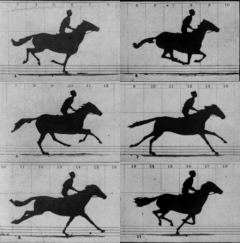 GIF animation from retouched pictures of The Horse in Motion by Eadweard Muybridge (1879). (from History of film technology)
 -
 Film still from Dickson Greeting (from History of film technology)
 -

-
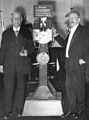 Max Skladanowsky (right) in 1934 with his brother Eugen and the Bioscop (from History of film technology)
 -
 Eadweard Muybridge's The Horse in Motion cabinet cards utilized the technique of chronophotography to study motion. (from History of film)
 -
 The Babelsberg Studio near Berlin was the first large-scale film studio in the world (founded 1912) and the forerunner to Hollywood. It still produces global blockbusters every year. (from History of film)
 -
 A.E. Smith filming The Bargain Fiend in the Vitagraph Studios in 1907. Arc floodlights hang overhead. (from History of film)
 -
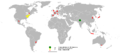 Cinema admissions in 1995 (from History of film)
 -
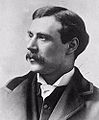 William Friese-Greene (from Film industry)
 -
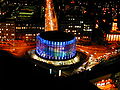 London IMAX has the largest cinema screen in Britain with a total screen size of 520 m2. (from Film industry)
 -
 Akira Kurosawa, Japanese film director (from History of film)
 -
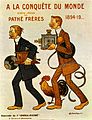 The Pathé Brothers, by Adrien Barrère.(from Film industry)
 -
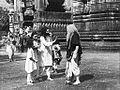
 A scene from Raja Harishchandra (1913) – credited as the first full-length Indian motion picture. (from Film industry)
 -
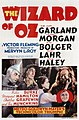 The Wizard of Oz (from History of film)
 -
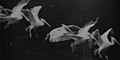 Flying pelican captured by Marey around 1882. He created a method of recording several phases of movement superimposed into one photograph (from History of film technology)
 -
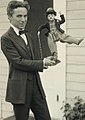 Charlie Chaplin (from History of film)
 -
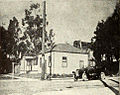 Nestor studio, 1911 (from Film industry)
 -
The Babelsberg Studio near Berlin was the first large-scale film studio in the world (founded 1912) and the forerunner to Hollywood. It still produces global blockbusters every year. (from Film industry)
-
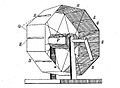 Czermak's 1855 Stereophoroskop (from History of film technology)
 -
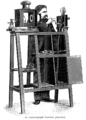 The Cinématographe Lumière in projection mode (from History of film technology)
 -
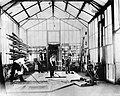 Georges Méliès (left) painting a backdrop in his studio (from History of film)
 -
 Don Juan is the first feature-length film to use the Vitaphone sound-on-disc sound system with a synchronized musical score and sound effects, though it has no spoken dialogue. (from History of film)
 -

-
 Discounted DVD home video film releases sold in the Netherlands (from Film industry)
 -
 Cinématographe Lumière at the Institut Lumière, France (from History of film technology)
 -
 An electrotachyscope(from History of film technology)
American Scientific, 16/11/1889, p. 303 -
 Edward Raymond Turner's three-color projector, 1902 (from History of film technology)
 -
 Publicity still for the Egyptian film Yahya el hub (1938) (from Film industry)
 -
![Image 31Louis Poyet [fr]'s engraving of the mechanism of the "fusil photographique" as published in La Nature (april 1882) (from History of film technology)](//upload.wikimedia.org/wikipedia/commons/thumb/f/f0/Fusil_photographique_Marey2.png/120px-Fusil_photographique_Marey2.png) Louis Poyet's engraving of the mechanism of the "fusil photographique" as published in La Nature (april 1882) (from History of film technology)
Louis Poyet's engraving of the mechanism of the "fusil photographique" as published in La Nature (april 1882) (from History of film technology) -
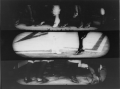 Complex vignette shot in die Austernprinzessin (The Oyster Princess) (from History of film)
 -
 The Hollywood Sign (from Film industry)
 -
 Frame from a c.1912 Chronochrome film (from History of film technology)
 -
 Bahiga Hafez (1901–1983) Egyptian filmmaker and actress in 1920s and 1930s (from Film industry)
 -
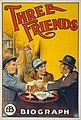 Poster for a Biograph Studios release from 1913 (from Film industry)
 -
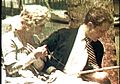 A surviving two-color-component image from the first Technicolor feature film, The Gulf Between (1917) (from History of film technology)
 -
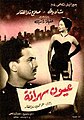 Poster for the 1956 Egyptian film Wakeful Eyes starring Salah Zulfikar and Shadia (from History of film)
 -
 A production scene from the 1950 Hollywood film Julius Caesar starring Charlton Heston (from History of film)
 -
 A frame from the Lumière brothers staged comedy film, L'Arroseur Arrosé (1895) (from History of film)
 -

-
 The first two shots of As Seen Through a Telescope (1900), with the telescope POV simulated by the circular mask (from History of film)
 -
 Mona Zaki, Egyptian film star (from Film industry)
 -
 Off Plus Camera Film Festival in Kraków, 2012, with Andrzej Seweryn, Daniel Olbrychski, and Wojciech Pszoniak on stage. (from Film industry)
 -
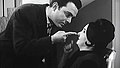 Publicity still for the Egyptian film My Wife, the Director General (1966) (from Film industry)
 -
 The Jazz Singer (1927), was the first full-length film with synchronized sound. (from History of film technology)
 -
-
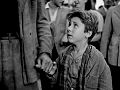 Italian neorealist movie Bicycle Thieves (1948) by Vittorio De Sica, considered part of the canon of classic cinema (from History of film)


_(crop).jpg)


.jpg)

![Image 31Louis Poyet [fr]'s engraving of the mechanism of the "fusil photographique" as published in La Nature (april 1882) (from History of film technology)](/wiki/File:Fusil_photographique_Marey2.png)

.jpg)


Selected image

Ernest Borgnine is an American actor of television and the big screen. His career has spanned nearly six decades. He was an unconventional lead in many films of the 1950s, including his Academy Award-winning turn in the 1955 film Marty.
Did you know...
- ... that Fred Rogers created and hosted a television documentary series titled Old Friends ... New Friends due to his concern that older generations were getting more isolated from younger generations?
- ... that a men's soccer team hired Jenna Winebrenner to analyze game film and practice with the squad?
- ... that Japanese actor Kouhei Higuchi prepared for his role on the television drama adaptation of My Personal Weatherman by learning from a weather forecaster?
- ... that former Burmese actress Honey Nway Oo turned rebel and took up arms against the military junta following the 2021 Myanmar coup d'état?
- ... that Bella Ramsey struggled to hold a real rifle while filming the eighth episode of The Last of Us?
Selected biography -
.jpg)
Aaron Benjamin Sorkin (born June 9, 1961) is an American playwright, screenwriter, and film director. Born in New York City, he developed a passion for writing at an early age. As a writer for stage, television, and film, Sorkin is recognized for his trademark fast-paced dialogue and extended monologues, complemented by frequent use of the storytelling technique called the "walk and talk". Sorkin has earned numerous accolades including an Academy Award, a BAFTA Award, five Primetime Emmy Awards, and three Golden Globes.
Sorkin rose to prominence as a writer-creator and showrunner of the television series Sports Night (1998–2000), The West Wing (1999–2006), Studio 60 on the Sunset Strip (2006–07), and The Newsroom (2012–14). He is also known for his work on Broadway including the plays A Few Good Men (1989), The Farnsworth Invention (2007), To Kill a Mockingbird (2018), and the revival of Lerner and Loewe's musical Camelot (2023). (Full article...)Featured lists -
Per a review process, Featured lists are considered to be the best list articles on English Wikipedia.-
 The 85th Academy Awards ceremony, presented by the Academy of Motion Picture Arts and Sciences (AMPAS), honored the best films of 2012 and took place on February 24, 2013, at the Dolby Theatre in Hollywood, Los Angeles beginning at 5:30 p.m. Pacific Time Zone (PST) / 8:30 p.m. Eastern Time Zone (EST). The ceremony was the first in the Academy's 85-year history to adopt the phrase "The Oscars" as the ceremony's official name during the broadcast and marketing. During the ceremony, the Academy of Motion Picture Arts and Sciences presented Academy Awards (commonly referred to as Oscars) in 24 categories. The ceremony was televised in the United States by ABC, and produced by Craig Zadan and Neil Meron and directed by Don Mischer. Actor Seth MacFarlane hosted the show for the first time.
In related events, the Academy held its 4th annual Governors Awards ceremony at the Grand Ballroom of the Hollywood and Highland Center on December 1, 2012. On February 9, 2013, in a ceremony at The Beverly Hills Hotel in Beverly Hills, California, the Academy Awards for Technical Achievement were presented by hosts Chris Pine and Zoe Saldana. (Full article...) -
Selma is a 2014 historical drama film directed by Ava DuVernay, and produced by Dede Gardner, Jeremy Kleiner, Christian Colson, and Oprah Winfrey. The screenplay was written by Paul Webb. The film follows the events leading up to and during the Selma to Montgomery marches, and the resulting establishment of the Voting Rights Act of 1965 which prohibited racial discrimination in voting in the United States. The film stars David Oyelowo as civil rights activist Martin Luther King Jr., Tom Wilkinson as President Lyndon B. Johnson, and Tim Roth as Governor of Alabama George Wallace. Carmen Ejogo, Dylan Baker, Wendell Pierce, Common, and Winfrey feature in supporting roles.
Selma premiered at the AFI Fest on November 11, 2014 in Los Angeles. Paramount Pictures initially provided the film a limited release on December 25 before a wide release at over 2,100 theaters on January 9, 2015. Selma grossed a worldwide total of over $66 million on a production budget of $20 million. Rotten Tomatoes, a review aggregator, surveyed 301 reviews and judged 99 percent to be positive. The film garnered awards and nominations in a variety of categories with particular praise for its direction, Oyelowo's portrayal of King, and the song "Glory" by John Legend, and Common. At the 87th Academy Awards, Selma won for Best Original Song for "Glory" and also received a nomination for Best Picture—the first film directed by a black female director to achieve this feat. The film received four nominations at the 72nd Golden Globe Awards, winning the Best Original Song award for "Glory". DuVernay's nomination for Best Director was the first for a black female director. (Full article...) -
Velaiilla Pattadhari (transl. Unemployed graduate) is a 2014 Indian Tamil-language comedy drama film written and filmed by Velraj while also making his directorial debut. The film featured Dhanush, who produced the film under his production company Wunderbar Films, and Amala Paul in the lead roles. Saranya Ponvannan, Samuthirakani, Vivek, Surbhi and Amitash Pradhan played supporting roles. The film's story focuses on Raghuvaran (Dhanush), a civil engineering graduate who is unemployed for four years, and his search for a job. As soon as he finds employment, he faces competition from Arun Subramaniam (Amitash), the head of a rival engineering company, for a government project contract. The rest of the film shows how Raghuvaran overcomes the obstacles set by Arun. The soundtrack and score were composed by Anirudh Ravichander while the editing was handled by M. V. Rajesh Kumar.
Produced on a budget of ₹80 million, Velaiilla Pattadhari was released on 18 July 2014 and received positive reviews. It was commercially successful, grossing ₹530 million worldwide. The film won 19 awards from 31 nominations; its direction, performances of the cast members and music have received the most attention from award groups. (Full article...) -
The GLAAD Media Award for Outstanding Documentary is an annual award that honors documentaries for excellence in the treatment of LGBT (lesbian, gay, bisexual, and transgender) individuals, history, and themes. It is one of several categories of the annual GLAAD Media Awards, which are presented by GLAAD—an American non-governmental media monitoring organization—at ceremonies held primarily in New York City and Los Angeles between March and May.
The award is one of the few to date back to the 1st GLAAD Media Awards in 1990, where it was given to Common Threads: Stories from the Quilt. While no documentary was recognized in 1991 or 1993, the award has been present at every ceremony since the 5th GLAAD Media Awards in 1994. It has been jointly awarded on three occasions, having been given to two documentaries in 1995 and 2014, and three in 1996, when Ballot Measure 9, The Celluloid Closet, and The Question of Equality were all recognized. (Full article...) -
My Week with Marilyn is a 2011 British drama film directed by Simon Curtis and written by Adrian Hodges. The screenplay was adapted from two diary accounts by Colin Clark, which document his time on the set of the 1957 film The Prince and the Showgirl and the time he spent with Marilyn Monroe. Michelle Williams and Eddie Redmayne star as Monroe and Clark, respectively. My Week with Marilyn had its world premiere at the 49th New York Film Festival on 9 October 2011. The film then played at several film festivals including Mill Valley, Chicago and Philadelphia, Rome and Dubai. My Week with Marilyn was released on 23 November 2011 in the United States and two days later in the United Kingdom. As of May 2012, the film has earned over £20 million in its total worldwide gross at the box office.
The film has gathered various awards and nominations following its release, with most nominations recognising the film itself and the cast's acting performances, particularly those of Michelle Williams and Kenneth Branagh (who plays Laurence Olivier). Both actors received nominations at the 84th Academy Awards for Best Actress and Best Supporting Actor, respectively. The actors also received nominations from the Alliance of Women Film Journalists, while the film was nominated for Best Picture at the African-American Film Critics Association. My Week with Marilyn received four nominations from the Broadcast Film Critics Association, with two nominations coming in the Best Costume Design and Best Makeup categories. The British Academy Film Awards handed the film seven nominations, including Best British Film, Best Actress for Williams, Best Actress in a Supporting Role for Judi Dench, Best Costume Design and Best Makeup and Hair. The cast received the Capri Ensemble Cast Award from the Capri, Hollywood International Film Festival in January 2012. (Full article...) -

M. G. Ramachandran in Mohini (1948)
M. G. Ramachandran (17 January 1917 – 24 December 1987), popularly known by his initials "MGR", was an Indian actor, director and producer who had an extensive career primarily in Tamil language films. After starring in numerous commercially successful films from the 1950s to the early 1970s, he has continued to hold a matinée idol status in Tamil Nadu. Ramachandran made his debut in Ellis R. Dungan's 1936 film Sathi Leelavathi, where he played a police inspector. He followed it with a string of minor appearances and supporting roles in many films, notably Ashok Kumar (1941), where he played the general of emperor Ashoka's army, and as a captain in Dungan's Meera (1945).
Ramachandran's breakthrough came with his first lead role in A. S. A. Sami's swashbuckler film Rajakumari (1947) where he played a villager who marries a princess. Based on the Arabian Nights, Rajakumari was a commercially successful venture. He established himself as an action hero akin to Errol Flynn and Douglas Fairbanks in Tamil cinema with Manthiri Kumari (1950) and Marmayogi (1951). Both films had political undertones which earned Ramachandran a Robin Hood persona of being a champion for the downtrodden. His performance as the caring brother Rajendran who tries to keep his family together in En Thangai (1952) earned him critical acclaim. In 1953, he made his debut in Malayalam films opposite B. S. Saroja in Genova. Ramachandran continued to play roles which enabled him to adopt his ideas of fighting injustice meted out to the poor such as an outlaw in Malaikkallan (1954), and Nadodi Mannan (1958). In the latter, he featured in dual roles, as a king and a commoner, for the first time in his career. Both Malaikkallan and Nadodi Mannan were commercially successful, becoming the highest-grossing films of their respective release years. In addition to social dramas, Ramachandran received positive feedback and commercial success for swashbuckler films such as Alibabavum 40 Thirudargalum (1956), the first South Indian full-length colour film, Madurai Veeran (1956), Chakravarthi Thirumagal and Mahadevi (both released in 1957). (Full article...) -
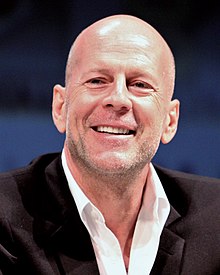
Willis at the 2010 San Diego Comic-Con for The Expendables
American actor Bruce Willis began his career in 1980 with an uncredited role in The First Deadly Sin. After guest-starring in a 1984 episode of Miami Vice, he appeared in the first episode of the 1985 revival of The Twilight Zone. Willis achieved fame starring in the ABC comedy-drama series Moonlighting (1985–1989), for which he received three Golden Globe nominations for Best Actor – Television Series Musical or Comedy and two Primetime Emmy Award nominations for Outstanding Lead Actor in a Drama Series. In 1988, he starred as John McClane in Die Hard (1988), a film that spawned four sequels that earned him international recognition as an action hero.
In the following years, Willis lent his voice for the video game Apocalypse (1998), the comedy film Look Who's Talking (1989), and its sequel Look Who's Talking Too (1990). In 1991, he conceived the story for Hudson Hawk, starred as Bo Weinberg in Billy Bathgate, and appeared in The Last Boy Scout alongside Damon Wayans, which earned a cult following and a nomination for the MTV Movie Award for Best On-Screen Duo. Willis's additional credits include Pulp Fiction (1994), 12 Monkeys (1995), Last Man Standing (1996), The Fifth Element (1997), and Armageddon (1998). In 1999, he starred as Dr. Malcolm Crowe in the critically acclaimed The Sixth Sense (1999), which earned six Academy Award nominations. His guest appearance on Friends in 2000 earned his third Emmy nomination, this time for Outstanding Guest Actor in a Comedy Series. After appearing in Sin City (2005) and voicing the lead character in the animated film Over the Hedge (2006), he starred in Red and made a cameo appearance in The Expendables (both 2010). (Full article...) -
Titanic is a 1997 American epic romance and disaster film directed, written, co-produced, and co-edited by James Cameron. Incorporating both historical and fictionalized aspects, it is based on accounts of the sinking of the Titanic, and stars Leonardo DiCaprio and Kate Winslet as members of different social classes who fall in love aboard the ship during its ill-fated maiden voyage.
Titanic grossed a worldwide total of over $2.2 billion on a production budget of $200 million, being the first and second film to reach the mark of one and two billion dollars, respectively. It became the highest-grossing film of all time in 1998, and remained so for twelve years, until Avatar (2009), also written and directed by Cameron, surpassed it in 2010. On review aggregator website Rotten Tomatoes, the film has an approval rating of 87% based on 237 reviews, with an average rating of 8/10. The site's critical consensus reads, "A mostly unqualified triumph for James Cameron, who offers a dizzying blend of spectacular visuals and old-fashioned melodrama." Metacritic, which assigned a weighted average rating of 75 out of 100, reports the film has "generally favorable reviews" based on the reviews of 35 critics. Audiences polled by CinemaScore gave the film an average grade of "A+" on an A+ to F scale. In 2017, on its 20th anniversary, the film was selected for preservation in the United States National Film Registry by the Library of Congress as being "culturally, historically, or aesthetically significant". (Full article...) -

Shahid Kapoor and Priyanka Chopra received several nominations for their respective performances in Kaminey.
Kaminey (English: Rascal) is a 2009 Indian action thriller film directed by Vishal Bhardwaj and produced by Ronnie Screwvala. Shahid Kapoor, Priyanka Chopra, and Amol Gupte star in the lead roles. The film's screenplay was written by Bhardwaj, Abhishek Chaubey, Sabrina Dhawan, and Supratik Sen. Bhardwaj also composed the soundtrack of the film, with lyrics written by Gulzar. Kaminey was edited by A. Sreekar Prasad, and Meghna Manchanda Sen, and the cinematography was provided by Tassaduq Hussain. Set against the backdrop of the Mumbai underworld, the film focuses on the rivalry between identical twin brothers both played by Kapoor, one with a lisp and the other with a stutter, over the course of a single day.
Made on a budget of ₹350 million (US$4.4 million), Kaminey released on 14 August 2009 to critical acclaim and was a commercial success, grossing over ₹710 million (US$8.9 million). The film's soundtrack was also a critical and commercial success, with the song "Dhan Te Nan" topping the charts. Over the years, Kaminey achieved cult status. The film garnered awards and nominations in several categories, with praise for its direction, performance of the cast, screenplay, musical score, cinematography, editing and sound design. (Full article...) -
The Grammy Award for Best Music Film is an accolade presented at the Grammy Awards, a ceremony that was established in 1958 and originally named the Gramophone Awards, to performers, directors, and producers of quality videos or musical programs. (Full article...)

.jpg)


News

- September 2: Tributes paid to recently deceased US actor Chadwick Boseman
- October 7: Mockumentary Mister America has world premiere
- May 16: Actor Doris Day dies at 97
- January 22: Former U.S. intelligence agent Tony Mendez, architect of 'Argo' rescue, dies at 78
- Upcoming events
WikiProjects

Selected quote

Main topics
| Filmmaking |
|---|
|
| Glossary |
- Terms - Animation • Beta movement • Camera • Cult film • Digital cinema • Documentary film • Dubbing • Experimental film • Fan film • Film crew • Film criticism • Film festival • Film frame • Film genre • Film journals and magazines • Film industry • Film manifesto • Film stock • Film theory • Filmmaking • History of film • Independent film • Lost film • Movie star • Narrative film • Open content film • Persistence of vision • Photographic film • Propaganda • Recording medium • Special effect • Subtitles • Sound stage • Web film • World cinema
- Lists - List of basic film topics • List of film topics • List of films • List of film festivals • List of film formats • List of film series • List of film techniques • List of highest-grossing films • List of longest films by running time • List of songs based on a film or book • Lists of film source material • List of open content films
Featured content


.jpg)


.jpg)

,_p3.jpg)

_-_Lygia_Bound_to_the_Wild_Bull.jpg)
.jpg)
,_p6.jpg)

_-_Restoration.jpg)

.jpg)


Subcategories

Subportals

.svg)

Related portals


.svg)


Things you can do

- Add
{{portal|Film}}to the See also section of film-related articles. - Tag the talk pages of film related articles with the {{WikiProject Film}} banner.
- Explore the list of English language films without an article
- Check tasks and announcements at WPFILM Announcements.
- Collaborate with other participants at Wikipedia:WikiProject Film.
- Join one of the task forces at Wikipedia:WikiProject Film/Sidebar.
Associated Wikimedia
The following Wikimedia Foundation sister projects provide more on this subject:
-
 Commons
Free media repository -
 Wikibooks
Free textbooks and manuals -
 Wikidata
Free knowledge base -
 Wikinews
Free-content news -
 Wikiquote
Collection of quotations -
 Wikisource
Free-content library -
 Wikiversity
Free learning tools -
 Wiktionary
Dictionary and thesaurus


