Madrid–Barajas Airport
Adolfo Suárez Madrid–Barajas Airport[1] Aeropuerto Adolfo Suárez Madrid–Barajas | |||||||||||||||||||||||
|---|---|---|---|---|---|---|---|---|---|---|---|---|---|---|---|---|---|---|---|---|---|---|---|
 | |||||||||||||||||||||||
 | |||||||||||||||||||||||
| Summary | |||||||||||||||||||||||
| Airport type | Public | ||||||||||||||||||||||
| Owner/Operator | Aena | ||||||||||||||||||||||
| Serves | Madrid metropolitan area | ||||||||||||||||||||||
| Location | Barajas, Madrid, Spain | ||||||||||||||||||||||
| Opened | 22 April 1931 | ||||||||||||||||||||||
| Hub for | |||||||||||||||||||||||
| Operating base for | |||||||||||||||||||||||
| Elevation AMSL | 609 m / 1,998 ft | ||||||||||||||||||||||
| Coordinates | 40°28′20″N 003°33′39″W / 40.47222°N 3.56083°W | ||||||||||||||||||||||
| Website | www | ||||||||||||||||||||||
| Maps | |||||||||||||||||||||||
 Airport Map | |||||||||||||||||||||||
  MAD/LEMD Location within Madrid  MAD/LEMD MAD/LEMD (Community of Madrid)  MAD/LEMD MAD/LEMD (Spain)  MAD/LEMD MAD/LEMD (Europe) | |||||||||||||||||||||||
| Runways | |||||||||||||||||||||||
| |||||||||||||||||||||||
| Statistics (2023) | |||||||||||||||||||||||
| |||||||||||||||||||||||
Adolfo Suárez Madrid–Barajas Airport (IATA: MAD, ICAO: LEMD) is the main international airport serving Madrid, the capital city of Spain. At 3,050 ha (7,500 acres; 30.5 km2) in area, it is the second-largest airport in Europe by physical size behind Paris Charles de Gaulle Airport.[5][6] In 2019, 61.8 million passengers travelled through Madrid–Barajas, making it the country's busiest airport as well as Europe's fifth-busiest.
The airport opened in 1931 and has grown to be one of Europe's most important aviation centres. Within the city limits of Madrid, it is 9 km (6 mi) from the city's financial district and 13 km (8 mi) northeast of the Puerta del Sol or Plaza Mayor de Madrid, Madrid's historic centre. The airport name derives from the adjacent district of Barajas, which has its own metro station on the same rail line serving the airport. Barajas serves as the gateway to the Iberian peninsula from the rest of Europe and the world and is a key link between Europe and Latin America. Following the death of the first Spanish Prime Minister after Franco's dictatorship, Adolfo Suárez, in 2014, the Spanish Ministry of Public Works and Transport announced[7] that the airport was to be renamed Aeropuerto Adolfo Suárez, Madrid–Barajas. The airport is the primary hub and maintenance base for Iberia and Air Europa. Consequently, Iberia is responsible for more than 40% of Barajas's traffic. The airport has five passenger terminals: T1, T2, T3, T4 and T4S.
History
[edit] | This section appears to be slanted towards recent events. (May 2023) |
Early years
[edit]The airport was constructed in 1927, opening to domestic and international air traffic on 22 April 1931, although regular commercial operations began two years later. A small terminal was constructed with a capacity for 30,000 passengers a year, in addition to several hangars and the building of the Avión Club. The first regular flight was established by Lineas Aéreas Postales Españolas (LAPE) with its route to Barcelona. In the 1930s, flights started to serve some European and African destinations, the first international flights from the airport.
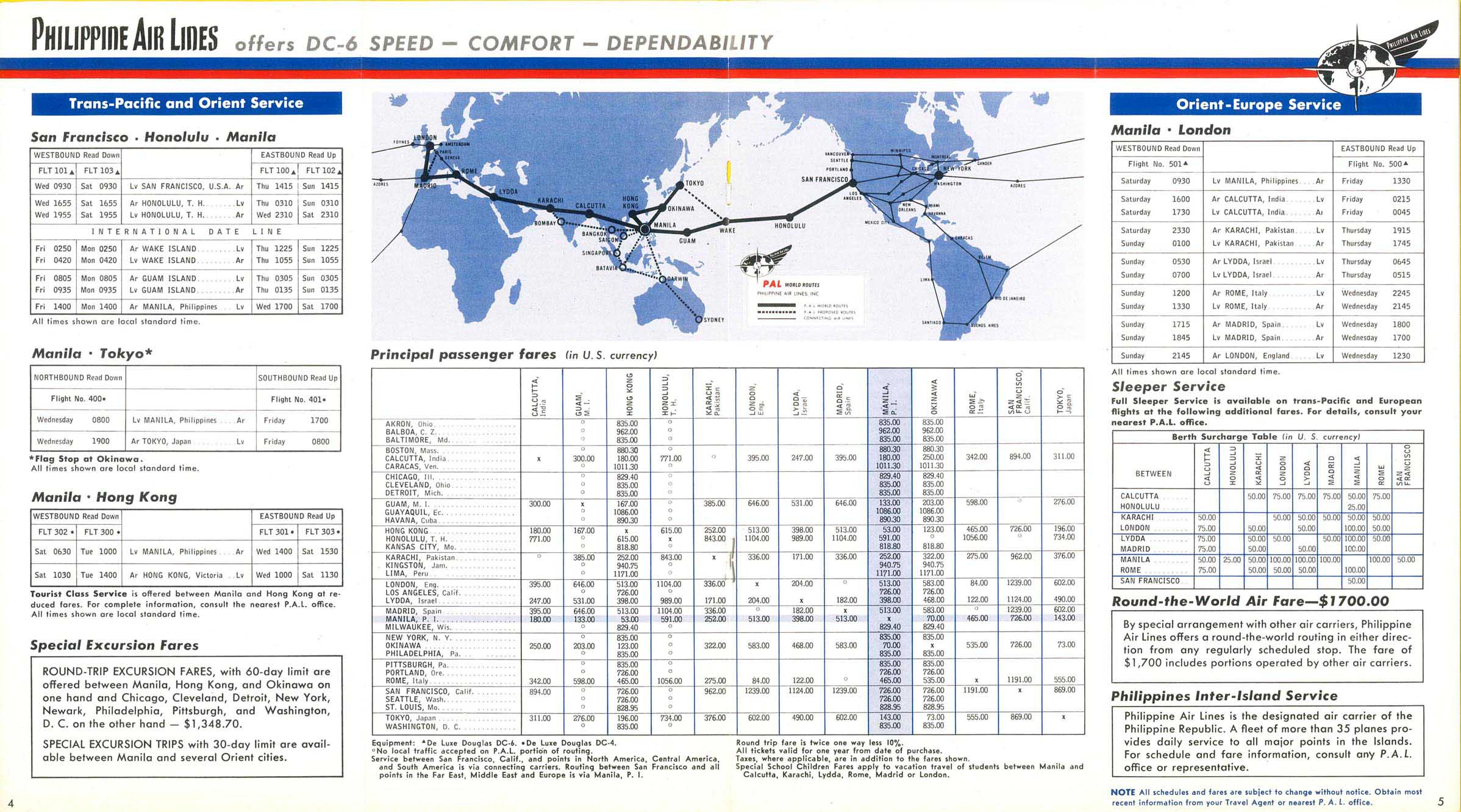
Originally, the flight field was a large circle bordered in white with the name of Madrid in its interior, unpaved, consisting of land covered with natural grass. It was not until the 1940s that the flight field was paved and new runways were designed. The first runway which started operation in 1944 was 1,400 metres long and 45 metres wide.[8] By the end of the decade the airport had three runways, none of which exist today. In the late 1940s, scheduled flights to Latin America and the Philippines[9] started.
In the 1950s, the airport supported over half a million passengers, increasing to five runways and scheduled flights to New York City began. The National Terminal, currently T2, began construction in 1954 and opened later that year. In the Plan of Airports of 1957, Barajas Airport is classified as a first-class international airport. By the 1970s, large jets were landing at Barajas, and the growth of traffic mainly as a result of tourism exceeded forecasts. At the beginning of the decade, the airport reached the 1.2 million passengers, double that envisaged in the Plan of Airports of 1957.
In the 1970s, with the boom in tourism and the arrival of the Boeing 747, the airport reached 4 million passengers and began the construction of the international terminal (current T1). In 1974, Iberia, L.A.E. introduced the shuttle service between Madrid and Barcelona, a service with multiple daily frequencies and available without prior reservation.
The 1982 FIFA World Cup brought significant expansion and modernisation of the airport's two existing terminals.[8]
In the 1990s, the airport expanded further. In 1994, the first cargo terminal was constructed and the control tower was renovated. In 1997, it opened the North Dock, which is used as an exclusive terminal for Iberia's Schengen flights. In 1998, it inaugurated a new control tower, 71 m tall and then in 1999 the new South Dock opened, which implies an expansion of the international terminal. During this time, the distribution of the terminals changed: The south dock and most of the International Terminal were now called T1, the rest of the International Terminal and Domestic Terminal were now called T2 and the north dock was called T3.
In November 1998, the new runway 18R-36L started operations (replacing the previous 18–36), 4,400 m long, one of the largest in Europe under expansion plans called Major Barajas. In 2000, it began the construction of new terminals T4 and its satellite, T4S, designed by architects Antonio Lamela, Richard Rogers and Luis Vidal. Two parallel runways to the existing ones were also built.
Development since the 2000s
[edit]The new terminals and runways were completed in 2004, but were not in service until 5 February 2006.
Terminal 4, designed by Antonio Lamela, Richard Rogers and Luis Vidal, (winning team of the 2006 Stirling Prize) and TPS Engineers, (winning team of the 2006 IStructE Award for Commercial Structures)[10] was built by Ferrovial[11] and inaugurated on 5 February 2006. Terminal 4 is one of the world's largest airport terminals in terms of area, with 760,000 square meters (8,180,572 square feet) in separate landside and airside structures. It consists of a main building, T4 (470,000 m2) and a satellite building, T4S (290,000 m2), which are approximately 2 km apart. The new Terminal 4 is designed to give passengers a stress-free start to their journey. This is managed through careful use of illumination, with glass panes instead of walls and numerous skylights which allow natural light into the structure. With this new addition, Barajas is designed to handle 70 million passengers annually.
During the construction of Terminal 4, two more runways (15L/33R and 18L/36R) were constructed to aid in the flow of air traffic arriving and departing from Barajas. These runways were officially inaugurated on 5 February 2006 (together with the terminals), but had already been used on several occasions beforehand to test flight and air traffic manoeuvres. Thus, Barajas came to have four runways: two on a north–south axis and parallel to each other (separated by 1.3 km) and two on a northwest–southeast axis (and separated by 1.9 km). This allowed simultaneous takeoffs and landings into the airport, allowing 120 operations an hour (one takeoff or landing every 30 seconds).
Terminals 1, 2 and 3 are adjacent terminals that are home to SkyTeam and Star Alliance airlines. Terminal 4 is home to Iberia, its franchise Air Nostrum and all Oneworld partner airlines. Gate numbers are continuous in terminals 1, 2 and 3 (A1 to E89), but are separately numbered in terminal 4 (H, J, K and M, R, S, U in satellite building).
The Madrid–Barcelona air shuttle service, known as the "Puente Aéreo" (in Spanish), literally called "Air Bridge", used to be the busiest route between two EU airports[12] with 55 daily flights in 2012.[13] The schedule has been reduced since the February 2008 opening of the Madrid–Barcelona high-speed rail line which covers the distance in 2+1⁄2 hours. Subsequently, the route has been overtaken by London-Dublin and Paris-Toulouse.
On the morning of 30 December 2006, an explosion took place in the carpark building module D attached to Terminal 4. Authorities received a bomb threat at approximately 8:15 local time (7:15 GMT), with the caller stating that a car bomb carried with 800 kg of explosive would explode at 9:00 local time (8:00 GMT).[14] After receiving the warning, police were able to evacuate part of the airport.[15] Later, an anonymous caller stated that ETA claims responsibility for the bombing.[16] As a result of the explosion, two Ecuadorians who were sleeping in their cars died. The whole module D of the car park was levelled creating around 40,000 tonnes of debris. It took workers six days to recover the body of the second victim from the rubble.
In 2007, the airport processed more than 52 million passengers. Barajas was voted "Best Airport" in the 2008 Condé Nast Traveller Reader Awards.[17]
In December 2010, the Spanish government announced plans to tender Madrid–Barajas airport to companies in the private sector for a period of up to 40 years.[18]
On 27 January 2012, Spanair suspended all flights affecting Madrid–Barajas as well as other domestic and international connections.[19] On 20 September 2012, both runways 15/33 were renamed as 14R/32L (the longest) and 14L/32R (the shortest).
On 1 August 2015, the first scheduled Airbus A380 flight landed in Madrid-Barajas in a daily service to Dubai by Emirates.
Following the death of former Spanish Prime Minister, Adolfo Suárez, in 2014, the Spanish Ministry of Public Works and Transport announced[7] that the airport would be renamed Aeropuerto Adolfo Suárez, Madrid–Barajas. This renaming seeks recognition for Suárez's role as the first Prime Minister of Spain after the restoration of democracy and his key participation in the transition to democracy after the dictatorship of Francisco Franco.
In late 2018 and early 2019, Iberia renovated its two lounges in Terminal 4, the Dali and Velazquez lounges.
In December 2019, the airport's operator Aena announced plans to significantly expand and renovate the existing installations, increasing their yearly capacity from 70 to 80 million passengers and bridging the architectural gap between the original Terminals 1, 2 and 3 and the newer Terminal 4. The project has a budget of 750 million Euro and is set to be executed in the period from 2022 to 2026.[20]
Airlines and destinations
[edit]Passenger
[edit]The following airlines serve regular scheduled flights to and from Madrid:[21]
Cargo
[edit]Traffic and statistics
[edit]_(4684560779).jpg)


_(4685194730).jpg)


b.jpg)
Passenger numbers
[edit] | Graphs are unavailable due to technical issues. There is more info on Phabricator and on MediaWiki.org. |
| Passengers | Aircraft Movements | Cargo (tonnes) | |
|---|---|---|---|
| 2001 | 34,050,215 | 375,558 | 295,944 |
| 2002 | 33,915,302 | 368,029 | 295,711 |
| 2003 | 35,855,861 | 383,804 | 307,026 |
| 2004 | 38,718,614 | 401,503 | 341,177 |
| 2005 | 42,146,784 | 415,704 | 333,138 |
| 2006 | 45,799,983 | 434,959 | 325,702 |
| 2007 | 52,110,787 | 483,292 | 325,201 |
| 2008 | 50,846,494 | 469,746 | 329,187 |
| 2009 | 48,437,147 | 435,187 | 302,863 |
| 2010 | 49,863,504 | 433,683 | 373,380 |
| 2011 | 49,671,270 | 429,390 | 394,154 |
| 2012 | 45,195,014 | 373,185 | 359,362 |
| 2013 | 39,735,618 | 333,056 | 346,602 |
| 2014 | 41,833,374 | 342,601 | 366,645 |
| 2015 | 46,828,279 | 366,605 | 381,069 |
| 2016 | 50,420,583 | 378,150 | 415,774 |
| 2017 | 53,402,506 | 387,566 | 470,795 |
| 2018 | 57,891,340 | 409,832 | 518,858 |
| 2019 | 61,734,037 | 426,376 | 558,567 |
| 2020 | 17,112,389 | 165,740 | 401,133 |
| 2021 | 24,135,220 | 217,537 | 523,395 |
| 2022 | 50,633,652 | 351,906 | 566,372 |
| 2023 | 60,220,984 | 389,179 | 643,534 |
| Source: Aena Statistics[3] | |||
Busiest routes
[edit]| Rank | Destination | Passengers | Change 2021 / 22 |
|---|---|---|---|
| 1 |  Lisbon Lisbon
|
1,538,930 |  168% 168%
|
| 2 |  Paris-Orly Paris-Orly
|
1,372,064 | 93%
|
| 3 |  Rome-Fiumicino Rome-Fiumicino
|
1,291,377 | 182%
|
| 4 |  London-Heathrow London-Heathrow
|
1,184,916 | 178%
|
| 5 |  Bogotá Bogotá
|
1,095,936 | 165%
|
| 6 |  Amsterdam Amsterdam
|
980,722 | 113%
|
| 7 |  Mexico-Benito Juárez Mexico-Benito Juárez
|
907,328 | 78%
|
| 8 |  Brussels Brussels
|
887,208 | 116%
|
| 9 | Paris-Charles de Gaulle
|
871,273 | 146%
|
| 10 |  Frankfurt Frankfurt
|
794,852 | 92%
|
| 11 | Munich
|
782,962 | 145%
|
| 12 | Porto
|
779,479 | 236%
|
| 13 |  Buenos Aires-Ezeiza Buenos Aires-Ezeiza
|
760,528 | 207%
|
| 14 |  New York-JFK New York-JFK
|
748,423 | 184%
|
| 15 | Miami
|
689,639 | 153%
|
| 16 |  Lima Lima
|
689,453 | 144%
|
| 17 | London-Gatwick
|
636,045 | 341%
|
| 18 |  São Paulo-Guarulhos São Paulo-Guarulhos
|
628,327 | 156%
|
| 19 |  Zurich Zurich
|
584,046 | 77%
|
| 20 | Geneva
|
524,183 | 94%
|
| Source: Estadísticas de tráfico aereo[101] | |||
| Rank | Destination | Passengers | Change 2021 / 22 |
|---|---|---|---|
| 1 |  Palma de Mallorca Palma de Mallorca
|
1,880,865 | 64%
|
| 2 |  Barcelona Barcelona
|
1,716,423 | 69%
|
| 3 |  Gran Canaria Gran Canaria
|
1,434,501 | 53%
|
| 4 | Tenerife-North
|
1,294,010 | 47%
|
| 5 | Ibiza
|
919,939 | 50%
|
| 6 |  Bilbao Bilbao
|
647,371 | 82%
|
| 7 | Lanzarote
|
578,269 | 57%
|
| 8 |  Vigo Vigo
|
563,810 | 64%
|
| 9 | A Coruña
|
538,795 | 66%
|
| 10 |  Málaga Málaga
|
530,005 | 129%
|
| 11 | Santiago de Compostela
|
499,071 | 70%
|
| 12 | Seville
|
392,613 | 97%
|
| 13 | Fuerteventura
|
391,094 | 44%
|
| 14 | Tenerife-South
|
373,582 | 62%
|
| 15 | Menorca
|
363,442 | 14%
|
| 16 |  Asturias Asturias
|
327,047 | 72%
|
| 17 |  Valencia Valencia
|
308,797 | 65%
|
| 18 | Alicante
|
280,304 | 94%
|
| 19 | San Sebastián
|
198,741 | 131%
|
| 20 |  Santander Santander
|
192,147 | 99%
|
| Source: Estadísticas de tráfico aereo[101] | |||
Medical care
[edit]The airport is attached to the Ramón y Cajal University Hospital in Madrid as a referral hospital for medical and surgical emergencies requiring hospital care.[102][103]
In addition, the airport itself has medical rooms and medical personnel attached to the Airport Medical Service to cover transit passengers who need medical attention.[104] It also has 75 Cardiac Rescue Points equipped with defibrillators in the event of cardiorespiratory arrest.[104]
Ground transport
[edit]Taxi
[edit]All terminals have clearly signed taxi ranks outside the arrivals area. Official taxis are white with a red stripe and have the Madrid City Council coat-of-arms on their doors.
Rail
[edit]The Madrid Metro Line connects the airport with city centre station Nuevos Ministerios in Madrid's financial district. The Barajas Line 8 provides a fast route from the underground stations at Terminal 2 (access to T1 and T3) and Terminal 4 into central Madrid. The metro also provides links to stations on the Spanish railway network.
In October 2006, a bid was launched for the construction of a Cercanías link between Chamartín Station and Terminal 4. Now finished, this single Cercanías Line (C-1) links Madrid Barajas Terminal 4, with Chamartín Station and Atocha AVE high-speed train stations.[105] In June 2011 a decision was made to equip this link with dual gauge which will allow AVE high-speed trains to reach the airport station.[106]
The Nuevos Ministerios metro station opened a satellite check-in center in 2002[107] right by the AZCA business area in central Madrid; the satellite check-in center was permanently closed in 2006 due to security concerns.[108]
Metropolitan Bus
[edit]EMT (Madrid Municipal Transport Company) runs regular public bus services between the airport and Madrid (Avenida de América station): bus 200 runs as a complete line – dropping passengers at departures of terminals 1, 2 and 4 before collecting passengers in the reverse order at arrivals. The EMT public night bus service N4 (nicknamed "Buho", Owl) also services from Madrid downtown (Plaza Cibeles) to Barajas (Plaza de los Hermanos Falcó y Alvarez de Toledo, 400m from the airport through a passageway above the highway). EMT also have an express bus linking Barajas airport to Renfe's Atocha Station, the main rail station in Madrid, during day and Plaza Cibeles during night. Unlike the two services mentioned above, this line runs 24 hours of the day during all the days of the year.[109]
CRTM (Consorcio Regional de Transportes de Madrid) runs four bus services between the airport and nearby cities in the metropolitan area:
- 822: T1 – Coslada – San Fernando de Henares
- 824: T2 – Torrejón de Ardoz – Alcalá de Henares
- 827: Canillejas – T4 – Alcobendas – Universidad Autónoma de Madrid – Tres Cantos
- 828: Canillejas – T4 – Alcobendas – Universidad Autónoma de Madrid
Long distance coaches
[edit]From terminals T1 and T4 the bus company Avanzabus operates routes to Ávila, Castellón, Salamanca, Valencia and Zamora. From terminal T4 the Alsa bus company runs services to the cities of Zaragoza, Barcelona, Valladolid, León, Murcia, Alicante, Gijón, Oviedo, Lugo, Coruña, Santiago de Compostela, Burgos, Vitoria, San Sebastián, Santander, Bilbao, Logroño and Pamplona. From terminal T1 the Socibus company runs services to the major cities in Andalusia: Huelva, Córdoba, Cadiz, Jerez and Seville.
Airport People Mover
[edit]| Madrid Barajas Airport People Mover | |
|---|---|
 | |
| Overview | |
| Status | Operational |
| Locale | Adolfo Suárez Madrid–Barajas Airport |
| Termini |
|
| Stations | 2 |
| Service | |
| Type | People mover |
| Services | 1 |
| Operator(s) | Bombardier Transportation |
| Rolling stock | 19 Bombardier Innovia APM 100 vehicles |
| Daily ridership | 27.400 (2012) |
| History | |
| Opened | 4 February 2006 |
| Technical | |
| Line length | 2.7 km (1.7 miles)[110] |
| Number of tracks | 2 |
| Character | Underground |
| Electrification | Two centre rails |
| Operating speed | 37 mph (60 km/h) |
In early 2006, the first driverless transit system in Spain and the longest airport people mover system in Europe began transporting passengers between the new terminal (T4) and a new satellite terminal (T4S).[111] Deploying the CITYFLO 550 automatic train control technology, the system is the only mode of transportation for passengers between the two terminals, which are spaced two kilometres apart.[112] Bombardier became the only contractor for the completely underground shuttle system, including the construction of the civil works, operation and maintenance of the system.
The route is 2 kilometres (1.2 mi) in length and can carry up to 13,000 passengers per hour.[113]
Airport parking
[edit]Long- and short-term car parking is provided at the airport with seven public parking areas. P1 is an outdoor car park located in front of the terminal building; P2 is an indoor car park with direct access to terminals T2 and T3. A Parking 'Express' facility, available for short periods only, is located at Terminal 2 and dedicated long-term parking is also available with 1,655 spaces; a free shuttle operates between the long-stay car park and all terminals. There are also VIP car parks.
Incidents and accidents
[edit]- On 4 January 1951, a Lockheed Model 18 Lodestar of Ejército del Aire crashed when an engine failed after takeoff. It was on a delivery flight to the Spanish Air Force. Both occupants were killed.[114]
- On 30 September 1972, a Douglas C-47B EC-AQE of Spantax crashed on takeoff. The aircraft was being used for training duties and the student pilot over-rotated and stalled. One of the six people on board was killed.[115]
- On 9 May 1976, a Boeing 747 of the Imperial Iranian Air Force was struck by lightning while on approach. This caused the left wing's fuel tank to explode and the wing itself to separate, resulting in the aircraft to crash and killing all 17 passengers and crew.[116]
- On 27 November 1983, Avianca Flight 011 crashed while attempting to land. Flight 011 struck a series of hills, causing the plane's right wing to break off. The 747 then cartwheeled, shattering into five pieces before coming to rest upside-down. Only 11 of the 169 passengers survived – there were no survivors among the 23 crew.[117]
- On 7 December 1983, an Iberia 727 operating as Iberia Flight 350[118] collided during takeoff with Aviaco Flight 134, a DC-9[119] The Aviaco DC-9 had accidentally entered the runway as the Iberia flight was taking off.[120] Ninety-three people were killed, including 51 from the Iberia 727 and 42 from the Aviaco DC-9.
- On 15 July 2006, the winglet of a Thai Airways International Boeing 747–400 HS-TGY operating flight TG943 from Madrid Barajas Airport in Spain to Rome Leonardo da Vinci-Fiumicino Airport cut off the tail of an Air France ERJ-145 while taxiing to the runway for take-off. No injuries were reported.[121]
- On 20 August 2008, Spanair Flight 5022 which was travelling to Gran Canaria, veered off to the right and into the ground while climbing immediately after lifting off from runway 36L at 14:45 local time. The McDonnell Douglas MD-82 with registration "EC-HFP", was carrying 172 people, including 162 passengers.[122] In the accident, 154 people were killed, two were seriously injured and 12 were slightly injured. Prime Minister Zapatero ordered three days of national mourning.[123]
Notes
[edit]References
[edit]- ^ "El aeropuerto de Madrid se llama desde hoy Adolfo Suárez" [From today the Madrid airport will be named as Adolfo Suárez]. El Mundo (in Spanish). 24 March 2014.
- ^ a b "Madrid airport – Economic and social impact". Ecquants. Archived from the original on 22 February 2014. Retrieved 7 September 2013.
- ^ a b "Estadísticas de tráfico aereo". Aena. 2022.
- ^ "Air Navigation". Aena. Retrieved 29 June 2017.
- ^ "The Largest Airports in the World I: Europe". City Lines. Retrieved 20 April 2016.
- ^ "Top 10 Biggest and Largest Airports in the World 2015". abcnewspoint.com. Archived from the original on 13 April 2016. Retrieved 20 April 2016.
- ^ a b "El aeropuerto de Madrid- Barajas pasará a denominarse Adolfo Suárez, Madrid- Barajas" [The Madrid-Barajas airport will be renamed Adolfo Suárez, Madrid-Barajas] (Press release). Ministerio de Fomento de España. 24 March 2014. Archived from the original on 24 March 2014. Retrieved 24 March 2014.
- ^ a b "History". Aena. Retrieved 30 June 2017.
- ^ "International Timetable 1949". Airline Timetable Images. Retrieved 23 November 2021.
- ^ TPS expertise recognised at Madrid Terminal 4 Archived 16 February 2012 at the Wayback Machine
- ^ "History". Ferrovial.com. Retrieved 30 June 2017.
- ^ "10 busiest airport pairs per number of daily flights". Eurocontrol. 15 November 2012.
- ^ "OAG reveals latest industry intelligence on the busiest routes" (Press release). OAG. 21 September 2007. Archived from the original on 26 October 2007.
- ^ "Two Believed Dead in Madrid Airport Bombing". The New York Times. Reuters. 1 January 2007. Retrieved 30 June 2017.
- ^ "Madrid bomb shatters ETA cease-fire". Reuters. 31 December 2006. Retrieved 31 December 2006.
- ^ "Eta claims Madrid airport attack". BBC News. 9 January 2007. Retrieved 30 June 2017.
- ^ "Readers' Travel Awards 2009". Condé Nast Traveller. Archived from the original on 15 August 2017. Retrieved 30 June 2017.
- ^ Otero, Lara (2 December 2010). "El Gobierno cambia de modelo y privatiza la gestión de aeropuertos" [Government changes its plan and privatizes airport management]. El País. Retrieved 29 June 2017.
- ^ Minder, Raphael; Clark, Nicola (30 January 2012). "Spain Threatens Fine After Airline's Quick Close". The New York Times. Retrieved 30 June 2017.
- ^ Noceda, Miguel Ángel (27 December 2019). "Aena prevé invertir 750 millones para unir las terminales 1, 2 y 3 de Barajas". El País (in Spanish). ISSN 1134-6582. Retrieved 27 December 2019.
- ^ aena.es – Airport destinations Retrieved 3 July 2021,
- ^ "Air Arabia Maroc Launches Tetouan – Europe Service in NS24". Aeroroutes. Retrieved 15 January 2024.
- ^ "AIR CAIRO ADDS SHARM EL SHEIKH – MADRID CHARTERS IN NW23". aeroroutes.com. 18 October 2023.
- ^ "Air Canada Plans Montreal – Madrid June 2024 Launch". Aeroroutes. Retrieved 26 June 2023.
- ^ "Air China will start direct Beijing-Havana flights in May". Prensa Latina. 12 April 2024. Retrieved 13 April 2024.
- ^ "Air China Resumes Sao Paulo Service from April 2024". AeroRoutes. 18 March 2024. Retrieved 18 March 2024.
- ^ https://www.aeroroutes.com/eng/240812-uxns257m8 [bare URL]
- ^ https://www.aeroroutes.com/eng/240812-uxns257m8 [bare URL]
- ^ https://www.aeroroutes.com/eng/240812-uxns257m8 [bare URL]
- ^ https://www.aeroroutes.com/eng/240812-uxns257m8 [bare URL]
- ^ https://www.aeroroutes.com/eng/240812-uxns257m8 [bare URL]
- ^ https://www.aeroroutes.com/eng/240724-uxns24jfk [bare URL]
- ^ https://www.aeroroutes.com/eng/240812-uxns257m8 [bare URL]
- ^ https://www.aeroroutes.com/eng/240812-uxns257m8 [bare URL]
- ^ "Air Europa Adds Seasonal Santiago Dominican Republic Service in NS24". Aeroroutes. Retrieved 12 February 2024.
- ^ "אייר אירופה דוחה שוב את חזרתה לישראל". פספורטניוז (in Hebrew). 13 January 2024. Retrieved 16 January 2024.
- ^ https://www.aeroroutes.com/eng/240812-uxns257m8 [bare URL]
- ^ "Air Europa Returns to Venice this Summer".
- ^ https://www.aeroroutes.com/eng/240812-uxns257m8 [bare URL]
- ^ https://www.aeroroutes.com/eng/240229-juns24freq
- ^ "American Airlines Is Adding 5 New Routes to Europe — See Where". Travel+Leisure. 5 September 2024. Retrieved 5 September 2024.
- ^ https://www.aeroroutes.com/eng/240821-avnw24mad [bare URL]
- ^ https://www.aeroroutes.com/eng/240821-avnw24mad [bare URL]
- ^ https://www.aeroroutes.com/eng/240821-avnw24mad [bare URL]
- ^ "Avianca el Salvador starts flights between San Salvador and Madrid". aviacionline. 23 June 2023. Retrieved 5 July 2023.
- ^ "Beijing Capital Resumes Madrid Service From July 2023". Aeroroutes. Retrieved 19 June 2023.
- ^ "Binter Launches Madrid Service From Feb 2024". Aeroroutes. Retrieved 31 October 2023.
- ^ "China Eastern Adds Wenzhou – Madrid Service From late-Nov 2023". Aeroroutes. Retrieved 16 October 2023.
- ^ a b Liu, Jim (9 August 2024). "CSA Czech Airlines Ends OK-Coded Flight Numbers Service From late-Oct 2024". AeroRoutes. Retrieved 9 August 2024.
- ^ "Dan Air: 13 rute de la Bacău cu debut în noiembrie și decembrie 2023". November 2023.
- ^ "EasyJet ouvre de nouvelles lignes depuis l'aéroport de Nice". 11 June 2024.
- ^ https://www.aeroroutes.com/eng/230322-ly777
- ^ "Ethiopian Airlines Resumes Madrid Service From Dec 2023". Aeroroutes. Retrieved 11 August 2023.
- ^ "Rută nouă: Brașov - Madrid cu Fly Lili din decembrie 2024".
- ^ "Iberia Doubles Boston Service in Feb/Mar 2025".
- ^ "Iberia inaugura su nueva ruta a Doha (Qatar) que supondrá un impacto económico para Madrid de 55 millones". 11 December 2023.
- ^ "Iberia Resumes Tokyo Service From late-Oct 2024". Aeroroutes. Retrieved 19 December 2023.
- ^ "Iberia NS25 Washington Dulles Preliminary Schedule Filing – 23JUL24".
- ^ a b c "Iberia Resumes 3 European Routes in 3Q24". AeroRoutes.
- ^ "Iberia Resumes Regular Cairo Service From Oct 2023". Aeroroutes. Retrieved 11 August 2023.
- ^ "Iberia Adds Seasonal Rovaniemi Service in NW23". AeroRoutes.
- ^ a b "Tromso y Salzburgo, los dos nuevos destinos de Iberia". 8 April 2024.
- ^ "Tirana, nuevo destino de Iberia". Iberia. 4 October 2023.
- ^ Klieger, Iris Lifshitz (16 February 2024). "Low-cost airline Iberia Express returns to Israel". Ynetnews. Retrieved 20 February 2024.
- ^ "Iberojet Increases Madrid – Bangkok Service from April 2025".
- ^ a b "IBEROJET ADDS ORLANDO / SANTA CLARA IN NS24". AeroRoutes. 6 December 2023. Retrieved 6 December 2023.
- ^ a b "Spanish airline Iberojet to introduce charter flights to Tashkent and Urgench". Daryo.uz. Retrieved 28 August 2024.
- ^ https://www.aeroroutes.com/eng/240801-klnw2432q [bare URL]
- ^ "New airline replacing Air Malta to fly on March 31, 2024". 2 October 2023.
- ^ "Korean Air NW24 Europe Service Changes – 25JUL24".
- ^ "LASER Airlines launches flights Caracas and Madrid". Aviacionaldia.com. 3 June 2024. Retrieved 6 June 2024.
- ^ "LATAM Schedules Bogota – Madrid July 2024 Launch". Aeroroutes. Retrieved 11 December 2023.
- ^ "THAI Expands Lufthansa European Codeshare Service from late-July 2024".
- ^ "Ryanair NS23 Network Additions Summary – 26MAR23". Aeroroutes.
- ^ "Ryanair Moves Additional Routes to Ryanair UK in NS23". Aeroroutes.
- ^ "Ryanair NS23 Porto Frequency Variations – 19FEB23". Aeroroutes.
- ^ https://www.aeroroutes.com/eng/231218-frrkns24ma
- ^ https://www.aeroroutes.com/eng/230918-frnw23
- ^ "Ryanair NS24 Network Additions Summary – 14JUL24".
- ^ "Ryanair".
- ^ a b c d e "Ryanair NW23 Network Changes – 17SEP23".
- ^ "SAS NS25 COPENHAGEN NETWORK EXPANSION". AeroRoutes. 18 September 2025.
- ^ "SunExpress NS24 Network Expansion – 24SEP23".
- ^ "TAAG Angola Intends to Resume Madrid Service in NW24". 10 May 2024.
- ^ "Flights for 50 euros between Corvera Airport and Barcelona and Madrid launched by Volotea airlines".
- ^ "Volotea NW24 Network Additions – 11AUG24".
- ^ "Volotea NS24 Network Expansion Summary – 04FEB24".
- ^ "Wizz Air mută temporar zboruri de la Otopeni la Băneasa din iulie 2024". 20 June 2024.
- ^ "WORLD2FLY SCHEDULES MADRID – CALI DEC 2024 LAUNCH". Aeroroutes. Retrieved 3 July 2024.
- ^ a b "World2Fly airline launches flights from Spain to Uzbekistan". UzDaily.uz (in Russian). 21 May 2024. Retrieved 22 May 2024.
- ^ "Air Canada Cargo expands domestic and transatlantic freighter network". 31 March 2022.
- ^ "New air freight route links east China, Spain – Xinhua | English.news.cn".
- ^ cygnusair.com – Our destinations retrieved 18 July 2020
- ^ skycargo.com – Air retrieved 18 July 2020
- ^ airlineroutemaps.com – FedEx retrieved 14 August 2022
- ^ "Lufthansa Cargo Adds Morocco A321 Freighter Service From July 2023". AeroRoutes. 15 June 2023. Retrieved 16 June 2023.
- ^ Brett, Damian (10 June 2024). "My Freighter and Air Europa expand cargo networks with new tie-up". Air Cargo News. Retrieved 16 June 2024.
- ^ "Qatar Airways Cargo". Retrieved 18 July 2020.
- ^ swiftair.com – Cargo retrieved 18 July 2020
- ^ UBM (UK) Ltd. (2018). "Turkish Cargo adds 7 destinations in Jan 2018". Retrieved 6 April 2018.
- ^ a b "Inicio". www.aena.es. Retrieved 9 April 2023.
- ^ Escandón, Pelayo (23 October 2017). "40 años del 'Piramidón'". El País (in Spanish). ISSN 1134-6582. Retrieved 16 August 2019.
- ^ "El Hospital Ramón y Cajal referente con el protocolo de manejo de portadores de drogas". madrid.org.
- ^ a b "Medical care – Aeropuerto Madrid-Barajas – Aena.es". aena.es. Retrieved 16 August 2019.
- ^ "Fomento" (PDF). Archived from the original (PDF) on 26 June 2008.
- ^ "Dual gauge to enable high speed to Madrid Airport". Railway Gazette International. 8 June 2011.
- ^ "Inaugurado el intercambiador de Nuevos Ministerios en Madrid con servicio directo de metro al aeropuerto" [Nuevos Ministerios transfer station opens in Madrid with direct metro service to the airport]. Vía Libre (in Spanish). No. 454. June 2002. Archived from the original on 27 September 2007.
- ^ "Las aerolíneas descartan retomar la facturación en Nuevos Ministerios" [Airlines refuse to resume funding for Nuevos Ministerios]. ABC. Andén 2. 24 July 2007. [permanent dead link]
- ^ "Línea Exprés Aeropuerto" [Airport Express Line]. Municipal Transport of Madrid. 8 November 2010. Archived from the original on 8 November 2010. Retrieved 29 June 2017.
- ^ "Bombardier Closes Sale of its Transportation business to Alstom". Bombardier. 21 June 2023.
- ^ "En funcionamiento el primer sistema automático de transporte en un aeropuerto español". Vía Libre (in Spanish). 20 June 2006. Retrieved 3 January 2022.
- ^ "Bombardier to Run INNOVIA System at Madrid-Barajas Airport for 10 More Years" (Press release). Aviation.ca. 20 December 2012.
- ^ "Airport Management – Automated People Mover (APM)". AENA. Retrieved 22 February 2021.
- ^ Accident description for EC-ADZ at the Aviation Safety Network. Retrieved on 23 August 2021.
- ^ "EC-AQE Accident description". Aviation Safety Network. Retrieved 7 September 2010.
- ^ "Special Investigation Report – Wing Failure of Boeing 747–131, Near Madrid, Spain, May 9, 1976" (PDF) (Press release). Washington D.C.: National Transportation Safety Board. 6 October 1978. Retrieved 5 February 2023.
- ^ ASN Aircraft accident Boeing 747-283B HK-2910 Madrid–Barajas Airport (MAD). Aviation-safety.net. Retrieved on 2 May 2011.
- ^ Accident Database: Accident Synopsis 12071983[usurped]. Airdisaster.com (7 December 1983). Retrieved on 2 May 2011.
- ^ Accident Database: Accident Synopsis 12071983[usurped]. Airdisaster.com (7 December 1983). Retrieved on 2 May 2011.
- ^ Accident Photo: Iberia 350[usurped]. AirDisaster.Com (7 December 1983). Retrieved on 2 May 2011.
- ^ "THAI clarifies incident concerning flight TG 943 routed Madrid – Rome". Travel Tips Asia. 18 July 2006. Retrieved 29 June 2017.
- ^ "Press conference, 21 August 2008" (Press release). 21 August 2008. Archived from the original on 8 April 2009.
- ^ Durán, Luis F.; Blasco, Pedro (26 August 2008). "La tragedia aérea de Barajas se salda con 153 muertos y 19 heridos, varios de ellos graves" [The air tragedy of Barajas leaves 153 dead and 19 wounded, several seriously]. El Mundo (in Spanish). Retrieved 29 June 2017.
 This article incorporates public domain material from the Air Force Historical Research Agency
External links
[edit] Media related to Madrid-Barajas Airport at Wikimedia Commons
 Madrid–Barajas Airport travel guide from Wikivoyage
- Official website


| International | |
|---|---|
| National | |
| Geographic | |