


Timeline of Philippine history

 | This article has multiple issues. Please help improve it or discuss these issues on the talk page. (Learn how and when to remove these template messages)
|


This is a timeline of Philippine history, comprising important legal and territorial changes and political events in the Philippines and its predecessor states. To read about the background to these events, see history of the Philippines.
Prehistoric
| Year (BCE) |
Date | Event | Source |
|---|---|---|---|
| 500,000 | The early humans in the Cagayan cave. | ||
| 400,000 | People belonging to the species Homo Erectus set foot on the Philippines. | ||
| 250,000 | Human habitation is said to be began. | [1] [clarification needed] | |
| 55,000 | The first Homo sapiens in the Philippines. | [citation needed] | |
| 50,000 | Early humans made stone tools in the Tabon Cave in Palawan. | ||
| 8,000 | The ancestors in the other caves: Batangas, Bulacan and Rizal. |
||
| The other caves of Palawan: Guri and Duyong cave where the Homo sapiens lived. | |||
| 40,000 | Negritos start to settle. | [1] [clarification needed] | |
| 35,000 | At the old Kapampangan region was ten times larger than the present borders shown on the map, years ago, a series of the ancient Mount Pinatubo eruptions dumped lava, ashes, tephra and lahar into the sea, forming the present landmass of the region. | ||
| 20,000 | Tabon Man made stone tools in the Tabon Cave. | ||
| 4,500–300 | Multiple Austronesian migrations from Taiwan. | [2][3] | |
| A jade culture is said to have existed as evidenced by tens of thousands of exquisitely crafted jade artifacts found at a site in Batangas province. | [2][3] | ||
| c. 4000 | Earliest evidence of rice growing, domesticating chickens and pigs. | ||
| 3,000 | Presumed date of the Angono Petroglyphs. | ||
| c.2000 | The Igorots built forts made of stone walls that averaged several meters in width and about two to three times the width in height around | [4][5] |
-
 The Tabon Cave Complex.
 -
 The Negritos.
 -

-

-
 Animal hunting.
 -
 The Angono Petroglyphs.


11th centuries BCE
| Year (BCE) |
Date | Event | Source |
|---|---|---|---|
| c.1000 BCE. | The Late Neolithic period in the Philippines, Evidence shows by a Yawning Jarlet on the Burial site in Leta-leta caves in Palawan by Robert Fox which had later become National treasure in the Philippines. | ||
| Mining in the Philippines began around 1000 BCE. The early Filipinos worked various mines of gold, silver, copper and iron. Jewels, gold ingots, chains, calombigas and earrings were handed down from antiquity and inherited from their ancestors. Gold dagger handles, gold dishes, tooth plating, and huge gold ornaments were also used. | [6] |
9th–10th centuries BCE
| Year (BCE) |
Date | Event | Source |
|---|---|---|---|
| 900 BCE | The beginning of Iron Age finds in Philippines also point to the existence of trade between Tamil Nadu and the Philippine Islands during the ninth and tenth centuries B.C. |
1st century BCE
| Year (BCE) |
Date | Event | Source |
|---|---|---|---|
| 890–710 BCE | The Sa Huyun culture, Evidence can be found in Manunggul Jar which is a secondary burial jar excavated from a Neolithic burial site in Manunggul cave of Tabon Caves at Lipuun Point. The depiction of sea-waves on the lid places this Manunggul jar in the Sa Huỳnh culture pottery tradition. These are people that migrated in an East to West migration from the Borneo-Palawan area to Southern Vietnam. | ||
| 600 BCE | The people of Palawan, Cordillera an Batanes become an ancient goldsmith's. An ancient goldsmith shop had discovered that made the 20-centuries-old lingling-o, or omega-shaped gold ornaments in Batanes. | ||
| c. 400 BCE | larger villages came about- usually based near water, which made traveling and trading easier. The resulting ease of contact between communities meant that they began to share similar cultural traits, something which had not previously been possible when the communities consisted only of small kinship groups. | ||
| 300-200 | The start of the Carabao or Water buffaloes domestication and husbandry. | ||
| 100 BCE | Pomponius Mela, Marinos of and the Periplus of the Erythraean Sea mentioned this island in 100 BCE, and it is basically the equivalent to the Indian Suvarnadvipa, the "Island of Gold." Josephus calls it in Latin Aurea, and equates the island with biblical Ophir, from where the ships of Tyre and Solomon brought back gold and other trade items. |
-

-
 Carabao domestication
.JPG)

2nd–3rd century
| Year | Date | Event | Source |
|---|---|---|---|
| c.200 AD | The Maitum Jars are anthropomorphic jars that were depicting a Child/ Human beings (head is the lead of the jar with ears and the body was the jar itself with hands and feet as the handle) with perforations in red and black colors, had been used as a secondary burial jars in Ayub cave, Pinol, Maitum Sarangani province, each of the jars had a "facial expression". Another example of funeral pottery in the Philippines. | ||
| Since at least the 3rd century, the indigenous peoples were in contact with other Southeast Asian and East Asian nations.Fragmented ethnic groups established numerous city-states formed by the assimilation of several small political units known as barangay each headed by a Datu or headman (still in use among non-Hispanic Filipino ethnic groups) and answerable to a king, titled Lakan and Rajah. | |||
| Marks the end of the Sa Huyun Culture, The People are merged into different Chiefdoms, Kingdoms and Thalassocracies, But the remnants of Sa Huyun has still practiced by the natives of Masbate the artifacts can be found in Kalanay Cave proof that the ancient Masbatenios still practiced the Sa Huyun culture until 1500 AD. | |||
| 220–263 AD. | The period of Three Kingdoms in China. The "Little, dark people" living in Anwei province in South China were driven South by Han people. Some settled in Thailand, others went farther south to Indonesia, Sumatra, Borneo. They were known as Aetas from whom Palawan's Batak tribe descended. |
-
 Deer hunting natives.
 -
 The Maitum Jars.
 -

-
 the Timawas (A free men) or a Middle class peoples.

.jpg)


4th century onwards
| Year | Date | Event | Source |
|---|---|---|---|
| 400 | The development of inter-island and international trade, became more culturally homogeneous. | ||
| The Thalassocracies Converted to Hinduism and Buddhism and adopted the Hindu-Buddhist culture and religion flourished among the noblemen in this era. |
-
 The Greater India.
 -
 The spread of Hinduism.


7th century
| Year | Date | Event | Source |
|---|---|---|---|
| Numerous prosperous centers of trade had emerged, including the Tondo, Kingdom of Namayan which flourished alongside Manila Bay, Cebu, Iloilo, and Butuan |
8th century
| Year | Date | Event | Source |
|---|---|---|---|
| 700 | The Birth of Kawi script, this Abugida are become widely used in the Maritime Southeast Asia, the word Kawi or Kawikaan means "Poetry" in Sanskrit. |
-
 the Kawi script.

10th century
| Year | Date | Event | Source |
|---|---|---|---|
| 900 | April 21 | End of prehistory. Laguna Copperplate Inscription, the earliest known Philippine document, is written in the Manila area in Kawi script. Rise of Indianized Kingdom of Tondo around Manila Bay. |
|
| 971–982 | The earliest date suggested for direct Chinese contact with the Philippines was 982. At the time, merchants from "Ma-i" (now thought to be either Bay, Laguna on the shores of Laguna de Bay, or a site on the island of Mindoro | [7][8] | |
| 1000 | Buddhism and Hinduism along with the Animism become the religion of the most of Philippine archipelago by the influence of its neighbors. | ||
| c.1025 AD | Around the feet of Mt. Kamhatik near Mulanay town in Quezon Province once stood a 280-hectare ancient village where the archeologists found a 1000-year-old limestone coffins on a jungle-covered mountain top from 2011 to 2012 proof of the advance burial rituals of the early Filipinos. | [9][10] |
-
 Expansion of Buddhism, originated from India in the 6th century BCE to the rest of Asia until present.
 -
 The Laguna Copperplate Inscription (LCI).
 -
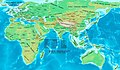 The world in 900 CE and the location of Tondo.


11th century
| Year | Date | Event | Source |
|---|---|---|---|
| 1000 | People from Central Vietnam called Orang Dampuan established trade zones in Sulu | ||
| The construction of Idjangs in Batanes Islands (mountain fortress-cities) built by Ivatans. | |||
| 1001 | March 17 | Song Shih document records tributary delegation from the Indic Rajahnate of Butuan. |
12th century
| Year | Date | Event | Source |
|---|---|---|---|
| 1007 | The Malay immigrants arrived In Palawan, most of their settlements were ruled by Malay chieftains. | ||
| c.1155 | At the time, the trade in large native Ruson-tsukuri (literally Luzon made in Japanese: 呂宋製 or 呂宋つくり) clay jars used for storing green tea and rice wine with Japan flourished in the 12th century, and local Tagalog, Kapampangan and Pangasinense potters had marked each jar with Baybayin letters denoting the particular urn used and the kiln the jars were manufactured in. | ||
| 1174–1175 | Raiders coming from Visayas conducted a series of raids on Formosa (Modern day Taiwan), which was part of Song Dynasty China. | ||
| c. 1180 | Before the establishment of the Sultanate of Sulu, The Indianized chiefdom of Lupah Sug (which is the present day Jolo, Sulu) was flourishing. Dwelling of the Buranun peoples under the rule of Rajah Sipad the Older. |
-
 The Ruson-tsukuri (literally Luzon made in Japanese:呂宋製 or 呂宋つくり) clay jars used for storing green tea and rice wine.
 -


13th century
| Year | Date | Event | Source |
|---|---|---|---|
| 1200 | The Indonesians of the Majapahit in the 13th century went to Palawan, they brought with them Buddhism and preached to the natives, natives converted their faith from Animism and become Buddhists. | ||
| The process of Kabayan mummification had begun in Ibaloi Benguet which is also called Fire mummies. | |||
| 1240 | Tuan Masha'ika, an Arab, travels and introduces Islam to Sulu. | ||
| The Buddhist Ma-i was flourishing in the island of Mindoro, became a Tributary state to Song Dynasty in the leadership of Gat Sa Lihan as their Huang (king). Zhao Rugua, a superintendent of maritime trade in Fukien province wrote the book entitled Zhu Fan Zhi ("Account of the Various Barbarians") in which he described trade with a country called Ma-i in the island of Mindoro in Luzon,(pronounced "Ma-yi") which was a prehispanic Philippine state. |
-
 Chinese porcelain-ware, Kangxi era (1662–1722), Qing Dynasty. Ancient Chinese porcelain excavated in Mindoro, Philippines; proves the existence of trade between the island and Imperial China. This consequently validates Chinese historical records of the area.
 -
 A native warrior from Luzon.


14th century
| Year | Date | Event | Source |
|---|---|---|---|
| 1300 | The adoption of Baybayin, a Brahmic script. | ||
| c.1305 | The Residents of Mandaluyong have always been known for their industry. Men did the laundry to the amusement of non-residents until shortly after the war, while the women ironed the clothes. | ||
| 1369 | The Suluans attacked Majapahit and its province Po-ni (Brunei), looting it of treasure and gold. A fleet from Majapahit succeeded in driving away the Sulus, but Po-ni was left weaker after the attack. | ||
| 1380 | Sheikh Karim-ul Makhdum arrives in Jolo and builds a Mosque. | [11] | |
| 1390 | Baguinda Ali arrives in Buansa, Sulu and the people named him Rajah. | [11] |
-
 The Baybayin.
 -


.JPG)
15th century
| Year | Date | Event | Source |
|---|---|---|---|
| 1400 | The Rajahnate of Cebu was founded after the rebellion of Sri Lumay against the Maharajah of Chola Dynasty had succeeded. | ||
| 1405 | The Yongle Emperor instituted a Chinese envoy on Luzon during Zheng He's voyages and appointed Ko Ch'a-lao to that position in 1405. China also had vassals among the leaders in the archipelago. China attained ascendancy in trade with the area in Yongle's reign. | ||
| 1411 | Paduka Pahala reigned as the King of Lupah Sug in Sulu. He and his family and 300 other people of noble descent sailed to China, he was to pay tribute to the Yongle Chinese emperor, Zhu Di, who was of the Ming Dynasty. While he was welcomed by the emperor upon his arrival in China, he nevertheless contracted a mysterious disease on his way home and died at Dezhou, a town in Shandong province in China. | ||
| 1411 | December 11 | The Yongle Emperor holds a banquet in honor of Pangasinan and its Huang Liyu. | |
| 1457 | Sultanate of Sulu founded by Sayyid Abubakar Abirin. | [12] | |
| 1458–1459 | October 1547 – February 1549 | The Lucoes, or warriors from Luzon send soldiers to the Burmese Siamese wars and faced the White elephants of the Royal Burmese Army, at the same time also aiding the Burmese King for the conquest of the Siamese capital, Ayuthaya. | |
| c.1470 | Namayan instated Lakan Tagkan as its sovereign. The vast Kingdom comprised what are now Quiapo, San Miguel, Santa Mesa, Paco, Pandacan, Malate, Santa Ana in Manila, Mandaluyong, San Juan, Makati, Pasay, Pateros, and portions of Pasig. |
-
 Flag of the Sultanate of Sulu

16th century
1500s
| Year | Date | Event | Source |
|---|---|---|---|
| 1500 | In the Battle of Manila the Tondo Dynasty was defeated by the Bruneian Empire. And the Kingdom of Maynila was established under the Bolkiah dynasty under Rajah Sulayman. | ||
| The eruption of Mount Pinatubo in recorded history, The Buag Eruptive Period, Its eruptions were roughly the same size as those of 1991. | |||
| Sultan Bolkiah of Bruneian Empire and its allies consisting of Maynila, Sultanate of Sulu and Maguindanao had failed to attack the Panay Island and waged a war against the Madja-as Confederation. |
1520s
| Year | Date | Event | Source |
|---|---|---|---|
| 1521 | March 16 | Discovery of the Philippines: Portuguese Ferdinand Magellan lands on Homonhon with three small ships, named the Concepcion, Trinidad and Victoria. Magellan calls the place the Archipelago de San Lazaro since March 16 is the feast day of Saint Lazarus. He also lands on Samar island. | [1][13][14][15][16] [17] |
| March 28 | Magellan reaches the Philippines | [14][15] | |
| March 29 | Blood compact between Magellan and Rajah Kulambo of Limasawa | [14][15] | |
| March 31 | The first mass on Philippine soil is celebrated. | [15][17][18] | |
| April 7 | Magellan lands on Cebu; meets Rajah Humabon of Cebu and enters into another Blood Compact. | [1][14][15] | |
| April 14 | The first Mass in Cebu province is celebrated, with about 500 natives, including Rajah Humabon and his wife, baptized into the Catholic Church. | [19] | |
| April 27 | Magellan is killed by Lapu-Lapu in the battle of Mactan; Spaniards defeated. | [14][15][19] | |
| 1525 | Spain sends an expedition under Juan Garcia Jofre de Loaysa to the Philippines. The Loaysa Expedition failed | [13][15] | |
| 1526 | Spain sends another expedition under Juan Cabot to the Philippines. The Cabot Expedition also failed | [15] | |
| 1527 | Spain sends a fourth expedition under Álvaro de Saavedra Cerón to the Philippines. | [15] | |
| 1529 | Saavedra's expedition returns to Spain without Saavedra who died on the way home. | [15] |
1530s
| Year | Date | Event | Source |
|---|---|---|---|
| 1536 | The Loaysa expedition returns to Spain. One of its survivors is Andres de Urdaneta, its chronicler. | [15] |
1540s
| Year | Date | Event | Source |
|---|---|---|---|
| 1543 | Spain sends a fifth expedition under Ruy López de Villalobos to the Philippines. The Expedition succeeds. | [15] | |
| February 2 | Villalobos arrives in the Philippines and names the islands of Samar and Leyte as Las Islas Filipinas in honor of the crown prince of Spain, Philip of Asturias; he also becomes the first to explore Mindanao island, naming it "Cesarea Caroli." | [15][17] |
1560s
| Year | Date | Event | Source |
|---|---|---|---|
| 1565 | Arrival of the Augustinians | [13] | |
| February 13 | Miguel López de Legazpi arrives in the Philippines, landing in Cebu, with four ships and 380 men | [1][13][15][20] | |
| April 27 | Legazpi returns to Cebu; settlement established. | [clarification needed] | |
| May 8 | Legazpi established the first permanent Spanish settlement in the country | [15][20] | |
| June 4 | Legazpi, representing King Philip II of Spain, and Rajah Tupas of Cebu signed the Treaty of Cebu, effectively establishing Spanish suzerainty over Cebu. | ||
| Philippines was governed as a territory of the Viceroyalty of New Spain. | |||
| 1567 | Dagami Revolt (1567) | [21][22][23][24][25] | |
| 1568 | The Portuguese, under the command of General Gonzalo de Pereira, attack Cebu and blockade its port. | ||
| 1569 | Present-day Capiz Province becomes a Spanish settlement. | [26] | |
| Legazpi moves the seat of government from Cebu to Iloilo. | [13] | ||
| August 6 | King Philip II of Spain, through a royal decree, creates Cebu as the country's first Spanish province; he also appoints Miguel Lopez de Legazpi as governor and captain general of the territory. | [27] |
1570s
| Year | Date | Event | Source |
|---|---|---|---|
| 1570 | The Portuguese again attack the colony and are repulsed. | ||
| May | Legazpi sends an expedition under the leadership of Martin de Goiti to Manila. | [20] | |
| 1571 | January 1 | Legazpi establishes municipality of Cebu and names it "Villa del Santisimo Nombre de Jesus" (Town of the Most Holy Name of Jesus). | [17][28] |
| May 19 | The ruler of Manila, Rajah Suliman, wages war against the Spaniards | ||
| June 24 | Legazpi establishes the Spanish Colonial Government in Manila and proclaims it the capital of the colony | [13][20] | |
| December 11 | Provincehood of Pampanga, first province in Luzon to be inaugurated by the Spaniards. | [29] | |
| 1572 | August 20 | Legazpi dies and Guido de Lavezaris succeeds him as Governor-General (1572–1575) | [13][20][30] |
| 1574 | November 7 | Enslavement of Filipinos is prohibited by a royal cedula from the Spanish king, as a response to a protest against it a day earlier. | [29] |
| Chinese pirate Limahong, with his men, invades Luzon; proceeds later to Manila. | [13] | ||
| November 23 | The Chinese pirate captain Limahong attacks Manila but fails | [13][31] [verification needed] | |
| December 2 | Limahong again attacks Manila with 1500 soldiers but again fails to defeat the Spaniards | [13][31] [verification needed] | |
| December | Lakandula leads a short revolt against the Spanish. | [21][22][23][24][25] | |
| 1575 | Ciudad de Nueva Cáceres (later renamed as Naga City) established by Captain Pedro de Sanchez | ||
| Juan de Salcedo defeats Limahong and his men in Pangasinan, forcing them to flee into the mountains. | [13] | ||
| August 25 | Francisco de Sande appointed Governor-General (1575–1580) | [30] | |
| 1577 | Arrival of the Franciscans | [13] | |
| 1579 | Diocese of Manila established | [32][33] |
1580s
| Year | Date | Event | Source |
|---|---|---|---|
| 1580 | April | Gonzalo Ronquillo de Peñaloza appointed Governor-General (1580–1583) | [30] |
| April 5 | Establishment of Pangasinan as a provincial unit. | [26] | |
| King Philip II of Spain becomes King of Portugal, ending the Portuguese harassment of the Philippines | |||
| The Spaniards institute forced labor on all male natives aged 16 to 60. | |||
| 1581 | Arrival of the country's first bishop, Salazar. | [13] | |
| Arrival of the Jesuits | [13] | ||
| March | Arrival of the first Dominicans in the Philippines | [34][35] | |
| 1582 | Battles take place between Spanish forces and Japanese Ronin | ||
| 1583 | March 10 | Diego Ronquillo appointed Governor-General (1583–1584) | [30] |
| August | A great fire destroys Manila. | [36] | |
| 1584 | May 16 | Santiago de Vera appointed Governor-General (1584–1590) | [30] |
| 1585 | Pampangos Revolt (1585) | [21][22][23][24][25] | |
| 1586 | The construction of San Agustin Church in Intramuros. | ||
| 1587 | July 21 | Arrival of Miguel de Benavides with the second batch of Dominicans in the Philippines, and the establishment of the Province of the Most Holy Rosary of the Philippines | [35][37] |
| Conspiracy of the Maharlikas (1587–1588) | [21][22][23][24][25] | ||
| 1589 | Revolts Against the Tribute (1589) | [21][22][23][24][25] |
1590s
| Year | Date | Event | Source |
|---|---|---|---|
| 1590 | Missionaries from the Society of Jesus established the Colegio de Manila in Intramuros. | [4][38][39] | |
| June 1 | Gómez Pérez Dasmariñas appointed Governor-General (1590–1593) | [30] | |
| 1592 | Miguel de Benavides's Doctrina Christiana in Chinese published | ||
| 1593 | Doctrina Christiana in Spanish and Tagalog is published in the first printing press said to be established by Dominicans. | [40][41] | |
| October | Pedro de Rojas appointed Governor-General (1593) | [30] | |
| December 3 | Luis Pérez Dasmariñas appointed Governor-General (1593–1596) | [30] | |
| Dominicans pioneer printing in the Philippines by producing through the old technique of xylography. This technique produced the Doctrina Christiana en Lengua Española y Tagala and the Doctrina Christiana en Lengua y Letra China, the first books in the Philippines | [42][note 1] | ||
| 1594 | Convent of Santa Isabel founded | [13] | |
| 1595 | Diocese of Manila raised to an Archbishopric, with Bishop Ignacio Santibáñez its first archbishop | [32][33][43] | |
| Diocese of Nueva Segovia established, with Miguel de Benavides as its first bishop. | [32][33][43][44][45] | ||
| Diocese of Caceres established, with Luis Maldonado as its first bishop. | [32][33][43][46][47] | ||
| Diocese of Cebu established, with Pedro de Agurto as its first bishop. | [32][33][48][49][50][51][52][53][43] | ||
| Colegio de San Ildefonso founded in Cebu | [54][55] | ||
| 1596 | Magalat Revolt (1596) | [21][22][23][24][25] | |
| July 14 | Francisco de Tello de Guzmán appointed Governor-General (1596–1602) | [30] | |
| 1598 | Colegio de Santa Potenciana, the first school for girls in the Philippines, established | [38][56][57][58] | |
| 1600 | Pedro Bucaneg inscribes the oral epic Biag ni Lam-ang |
-
 Territorial extent of the Bruneian Empire.
 -

-
 The Battle of Mactan.
 -
 The San Agustin Church, the oldest catholic church in the Philippines.
 -
 The Doctrina Christiana was an early book of Roman Catholic Catechism, written in 1593 by Fray Juan de Plasencia, and is believed to be one of the earliest printed books in the Philippines.
.png)


.JPG)

17th century
1600s
| Year | Date | Event | Source |
|---|---|---|---|
| 1600 | The Dutch attacks the archipelago in a tactical offensive during the European war between Spain and the Netherlands | ||
| Bandala System is formed by the Spanish Colonial Government | |||
| The Galleon trade between Manila and Acapulco, Mexico begins. | |||
| 1601 | Igorot Revolt (1601). | [21][22][23][24][25] | |
| August 1 | Colegio de San Jose is established | [38][59][60][61] | |
| 1602 | Chinese revolt of 1602 | [21][22][23][24][25] | |
| Fray Blancas de San Jose, O.P. together with Tomas Pinpin succeeds in making typographic printing through movable type | [42] | ||
| May | Pedro Bravo de Acuña appointed Governor-General (1602–1606). | [30] | |
| 1605 | July 24 | Archbishop Miguel de Benavides bequeaths his library and a total amount of ₱1,500 for the establishment of a seminary college, the present-day University of Santo Tomas in Manila. | [62][63][note 2] |
| 1606 | Arrival of the Recollects | [13] | |
| June 24 | Cristóbal Téllez de Almanza appointed Governor-General (1606–1608) by the Audiencia Real. | [30] | |
| 1608 | June 15 | Rodrigo de Vivero y Velasco appointed Governor-General (1608–1609). | [30] |
| 1609 | April | Juan de Silva appointed Governor-General (1609–1616). | [30] |
| The Dominicans granted permission to open a seminary-college (the present-day University of Santo Tomas in Manila) by Philip III of Spain | [62] | ||
| Philip III issues a royal cedula requesting from Governor Juan de Silva and the Real Audiencia a report on the projected college (the present-day University of Santo Tomas in Manila). | [64] |
1610s
| Year | Date | Event | Source |
|---|---|---|---|
| 1611 | Philip III's permission to open the Dominican's seminary college (the present-day University of Santo Tomas) arrives in Manila | [62] | |
| April 28 | Act of Foundation for the establishment of the University of Santo Tomas, then known as the Colegio de Nuestra Señora del Santísimo Rosario (later renamed the Colegio de Santo Tomas), signed. The Document of Foundation was signed by Fr. Baltasar Fort, O.P., Provincial of the Dominican Province of the Holy Rosary, Fr. Francisco Minayo, O.P., Prior of the Santo Domingo Convent, and Fr. Bernardo de Santa Catalina, O.P., Commissary-General of the Holy Office of the Philippines. Notary Juan Illian witnessed the signing of the act of foundation. | [38][65][66][62] | |
| 1612 | Fr. Domingo Gonzalez, O.P. appointed to work on the completion of the organization of the Colegio de Nuestra Señora del Santísimo Rosario (presently the University of Santo Tomas in Manila) | [65] | |
| The Colegio de Nuestra Señora del Santísimo Rosario (presently the University of Santo Tomas in Manila) formally opens | [65] | ||
| 1616 | April 19 | Andrés Alcaraz appointed Governor-General (1616–1618) by the Audiencia Real. | [30] |
| June 29 | The Colegio de Nuestra Señora del Santísimo Rosario (presently the University of Santo Tomas in Manila) given authorization to confer academic degrees in Theology and Philosophy by the Holy See | [65] | |
| Governor Alonso Fajardo de Entenza recognizes the Colegio de Nuestra Señora del Santísimo Rosario (presently the University of Santo Tomas in Manila) | [65] | ||
| 1618 | July 3 | Alonso Fajardo de Entenza appointed Governor-General (1618–1624). | [30] |
| 1619 | University of Santo Tomas, then known as Colegio de Nuestra Señora del Santissimo Rosario, recognized by the Holy See. | [65][66] |
1620s
| Year | Date | Event | Source |
|---|---|---|---|
| 1620 | Colegio de San Juan de Letran established as the Colegio de Huerfanos de San Pedro y San Pablo. | [38][67][68][69] | |
| 1621 | The Colegio de Manila raised to the status of a university and renamed as the Universidad de San Ignacio by Pope Gregory XV. | [4][38] | |
| Tamblot Revolt (1621–1622) | [21][22][23][24][25] | ||
| Bankaw Revolt (1621–1622) | [21][22][23][24][25] | ||
| 1624 | July | Jeronimo de Silva appointed Governor-General (1624–1625) by the Audiencia Real. | [30] |
| July | Fernando de Silva appointed Governor-General (1624–1626). | [30] | |
| The Faculties of Philosophy and Theology implemented by the royal order of Philip IV of Spain | [64] | ||
| 1625 | Isneg Revolt (1625–1627) | [21][22][23][24][25] | |
| Tomas Pinpin's printing press settles at the Colegio | [42] | ||
| 1626 | June 29 | Juan Niño de Tabora appointed Governor-General (1626–1632). | [30] |
| 1627 | University of Santo Tomas, then Colegio de Santo Tomas, authorized to confer degrees by Pope Urban VIII. | [65][66] |
1630s
| Year | Date | Event | Source |
|---|---|---|---|
| 1632 | July 22 | Lorenzo de Olaza appointed Governor-General (1632–1633) by the Audiencia Real. | [30] |
| Colegio de Santa Isabel established | [38][70][71] | ||
| 1633 | August 29 | Juan Cerezo de Salamanca appointed Governor-General (1632–1635). | [30] |
| 1635 | June 25 | Sebastián Hurtado de Corcuera appointed Governor-General (1635–1644). | [30] |
| 1637 | Sucesos Felices is published by Tomas Pinpin; first newsletter in the country. | [40] | |
| 1639 | Cagayan Revolt (1639) | [21][22][23][24][25] |
1640s
1650s
| Year | Date | Event | Source |
|---|---|---|---|
| 1653 | July 25 | Sabiniano Manrique de Lara appointed Governor-General (1653–1663). | [30] |
1660s
| Year | Date | Event | Source |
|---|---|---|---|
| 1660 | Zambal Revolt (1660) | [21][22][23][24][25] | |
| October 7 | Maniago Revolt (1660) | [21][22][23][24][25] [31] | |
| December 15 | Malong Revolt (1660–1661) | [21][22][23][24][25] [28] | |
| 1661 | Ilocano Revolt (1661) | [21][22][23][24][25] | |
| 1662 | Chinese revolt of 1662 | [21][22][23][24][25] | |
| 1663 | September 8 | Diego de Salcedo appointed Governor-General (1663–1668). | [30] |
| Tapar Revolt (1663) | [21][22][23][24][25] | ||
| 1668 | September 28 | Juan Manuel de la Peña Bonifaz appointed Governor-General (1668–1669). | [30] |
| 1669 | September 24 | Manuel de León appointed Governor-General (1669–1677). | [30] |
1670s
| Year | Date | Event | Source |
|---|---|---|---|
| 1677 | September 21 | Francisco Coloma appointed Governor-General (1677) by the Audiencia Real. | [30] |
| Francisco Sotomayor y Mansilla appointed Governor-General (1677–1678) by the Audiencia Real. | [30] | ||
| 1678 | September 28 | Juan de Vargas y Hurtado appointed Governor-General (1678–1684). | [30] |
1680s
| Year | Date | Event | Source |
|---|---|---|---|
| 1680 | May 12 | University of Santo Tomas placed under Royal Patronage by King Charles II of Spain. | [65][66] |
| 1681 | Sambal Revolt (1681–1683) | [21][22][23][24][25] | |
| 1684 | August 24 | Gabriel de Curuzealegui y Arriola appointed Governor-General (1684–1689). | [30] |
| 1686 | The construction of Paoay Church in Ilocos Norte. | ||
| Tingco plot (1686) | |||
| 1689 | April | Alonso de Avila Fuertes appointed Governor-General (1689–1690) by the Audiencia Real | [30] |
1690s
| Year | Date | Event | Source |
|---|---|---|---|
| 1690 | July 25 | Fausto Cruzat y Gongora appointed Governor-General (1690–1701). | [30] |
-
 The UST, The oldest university in Asia.
 -
 The Paoay Church in Ilocos Norte.


18th century
1700s
| Year | Date | Event | Source |
|---|---|---|---|
| 1701 | December 8 | Domingo Zabálburu de Echevarri appointed Governor-General (1701–1709). | [30] |
| 1704 | North Borneo is ceded by the sultan of Brunei to the sultan of Sulu. | [26] | |
| 1709 | August 25 | Martín de Urzua y Arismendi appointed Governor-General (1709–1715). | [30] |
1710s
| Year | Date | Event | Source |
|---|---|---|---|
| 1715 | February 4 | Jose Torralba appointed Governor-General (1715–1717) by the Audiencia Real. | [30] |
| 1717 | August 9 | Fernando Manuel de Bustillo Bustamante y Rueda appointed Governor-General (1717–1719). | [30] |
| 1718 | Rivera Revolt (1718) | [21][22][23][24][25] | |
| 1719 | October 11 | Archbishop Francisco de la Cuesta of Manila becomes acting Governor-General (1719–1721). | [30] |
1720s
| Year | Date | Event | Source |
|---|---|---|---|
| Caragay Revolt (1719) | [21][22][23][24][25] | ||
| 1721 | August 6 | Toribio José Cosio y Campo appointed Governor-General (1721–1729). | [30] |
| 1722 | Colegio de San Jose conferred with the title Royal. | ||
| 1729 | August 14 | Fernándo Valdés y Tamon appointed Governor-General (1729–1739). | [30] |
1730s
| Year | Date | Event | Source |
|---|---|---|---|
| 1734 | September 2 | The Faculties of Civil Law and Canon Law of the University of Santo Tomas established by virtue of a royal cedula of Charles II of Spain | [34][64] |
| 1739 | July | Gaspar de la Torre appointed Governor-General (1739–1745). | [30] |
1740s
| Year | Date | Event | Source |
|---|---|---|---|
| 1744 | Dagohoy Rebellion (1744–1829), the longest in country's history, wherein Bohol is proclaimed independent from the Spanish. | [27] | |
| 1745 | September 21 | Archbishop Juan Arrechederra of Manila becomes acting Governor-General (1745–1750). | [30] |
| Agrarian Revolt (1745–1746) | [21][22][23][24][25] |
1750s
| Year | Date | Event | Source |
|---|---|---|---|
| 1750 | July 20 | Jose Francisco de Obando y Solis appointed Governor-General (1750–1754). | [30] |
| 1754 | May 15 | Mt Taal emits magma and destroys the towns of Lipa, Sala, Tanauan and Talisay. | |
| July 26 | Pedro Manuel de Arandia Santisteban appointed Governor-General (1754–1759). | [30] | |
| 1759 | June | Miguel Lino de Ezpeleta appointed Governor-General (1759–1761). | [30] |
1760s
| Year | Date | Event | Source |
|---|---|---|---|
| 1761 | July | Archbishop Manuel Rojo del Rio y Vieyra of Manila appointed Governor-General (1761–1762). | [30] |
| 1762 | Palaris Revolt (1762–1765) | ||
| Camarines Revolt (1762–1764) | |||
| Cebu Revolt (1762–1764) | |||
| British forces looted and plundered many of Manila establishments through the so-called Rape of Manila. | |||
| Rector Fr. Domingo Collantes of the University of Santo Tomas organizes four companies of university students to help in the defense of the city against the British Invasion of Manila | [64] | ||
| September 22 | British fleet entered seizes Manila Bay as part of the Seven Years' War | ||
| October 5 | Manila fell under the British rule; start of the British occupation. | [1][13] [verification needed] | |
| October 6 | Simón de Anda y Salazar appointed Governor-General (1762-17614) by the Real Audiencia. Provisional Government established in Bacolor, Pampanga with de Anda as dictator. | [30] | |
| October 8 | Gov. Gen. de Anda moves the seat of the Spanish government to Bacolor, Pampanga, becoming the temporary capital of the Philippines (1762–1764). | [28] | |
| November 2 | The British East India Company commissioned The Rt Hon. Dawsonne Drake became the first British governor-general of the Philippines until 1764. | [30] | |
| November 14 | Silang Revolt (1762–63) | [28] | |
| 1763 | Dabo and Marayac Revolt (1763) | ||
| Isabela Revolt (1763). | |||
| February 10 | Treaty of Paris implicitly returns Manila to Spain. | ||
| May 28 | Death of Diego Silang | [28] [verification needed] | |
| September | Execution of Gabriela Silang, the only Filipina to have led a revolt | [28] | |
| 1764 | March 17 | Simón de Anda y Salazar hands over the control of the colonial government to Francisco Javier de la Torre, newly appointed Governor-General (1764–1765) | [30] |
| June 11 | The last of the British ships that sailed to Manila leaves the Philippines for India, ending the British occupation. | [13] [verification needed] | |
| 1765 | February 10 | Royal Fiscal of Manila Don Francisco Léandro de Viana writes the famous letter to King Charles III of Spain, later called as "Viana Memorial of 1765". The document advised the king to abandon the colony due to the economic and social devastation created by the Seven Years' War. The suggestion was not heeded. | |
| July 6 | José Antonio Raón y Gutiérrez appointed Governor-General (1765–1770) | [30] | |
| Governor Raon orders the minting of parallelogramic-shaped coins called barrillas, the first coined minted in the Philippines. | [30] | ||
| 1768 | 17 May | Royal decree banishing the Society of Jesus from Spain and the Spanish dominions reaches Manila | [74] |
| 1769 | July 23 | The Society of Jesus in the Philippines is expelled by Raón after receiving a dated later from Charles III's chief minister Don Pedro Pablo Abarca de Bolea on March 1, 1767. The Jesuit's Properties are confiscated by the Spanish Colonial Government | |
| The closure of the Jesuit Universidad de San Ignacio leaves the University of Santo Tomas as the only institution of higher learning in the colony. | [75][76] |
1770s
| Year | Date | Event | Source |
|---|---|---|---|
| 1770 | July | Simón de Anda y Salazar appointed Governor-General (1770–1776) | [30] |
| 1771 | Moro pirates traveled all over the country and raids many fishing villages in Manila Bay, Mariveles, Parañaque, Pasay and Malate. | ||
| 1773 | July 21 | Clement XIV suppresses the Society of Jesus in his papal brief Dominus ac Redemptor | [77] |
| 1774 | November 9 | Parishes secularized by order of King Charles III of Spain. | |
| 1776 | October 30 | Pedro de Sarrio appointed Governor-General (1776–1778) | [30] |
| 1778 | July | José Basco y Vargas appointed Governor-General (1778–1787) | [30] |
1780s
| Year | Date | Event | Source |
|---|---|---|---|
| 1780 | Real Sociedad Economica de los Amigos del Pais de Filipinas (Royal Economic Society of Friends of the Philippines) introduced in the Philippines to offer local and foreign scholarships and professorships to Filipinos, and financed trips of scientists from Spain to the Philippines | ||
| 1781 | Charles III of Spain authorizes the University of Santo Tomas to prepare its own statutes, independent of those of the University of Mexico | [64][note 3] | |
| 1783 | Bishop Mateo Joaquin de Arevalo of Cebu establishes the Colegio-Seminario de San Carlos (later renamed as the University of San Carlos) from the old building of the defunct Colegio de San Ildefonso, which was closed down in 1769 after the suppression of the Jesuits. | ||
| June 26 | An island group, which would be named Batanes, is annexed to the Philippines by the Spanish and is founded as a province called Provincia de la Concepcion. | [26] | |
| 1785 | Lagutao Revolt (1785). | ||
| May 20 | University of Santo Tomas granted Royal Title by King Charles III of Spain. | [65][66][78][79] | |
| 1787 | September 22 | Pedro de Sarrio appointed Governor-General (1787–1788) | [30] |
| 1788 | Ilocos Norte Revolt (1788). | ||
| April 2 | Birth of the greatest Tagalog poet from Bulacan Francisco "Balagtas" Baltazar. | ||
| July 1 | Félix Berenguer de Marquina appointed Governor-General (1788–1793) | [30] |
1790s
| Year | Date | Event | Source |
|---|---|---|---|
| 1793 | September 1 | Rafael María de Aguilar y Ponce de León appointed Governor-General (1793–1806) | [30] |
-
 Francisco Baltazar, A Poet and the author of the novel Florante at Laura.
 -
 the IHS logo Society of Jesus .


19th century
1800s
| Year | Date | Event | Source |
|---|---|---|---|
| 1805 | Nueva Vizcaya Revolt (1805) | ||
| 1806 | August 7 | Mariano Fernández de Folgueras appointed Governor-General (1806–1810) | [30] |
| 1807 | September 16 | Ambaristo Revolt (1807) | [80] |
| 1808 | May | French Emperor Napoleon Bonaparte installs his brother Joseph Bonaparte as King of Spain. | |
| 1809 | January 22 | King Joseph Bonaparte gives Filipinos Spanish Citizenship and grants the colony representation in the Spanish Cortes |
1810s
| Year | Date | Event | Source |
|---|---|---|---|
| 1810 | March 4 | Manuel Gonzalez de Aguilar appointed Governor-General (1806–1813) | [30] |
| 1811 | Del Superior Govierno is established in Manila by Gov. Gen. Fernandez de Folgueras; the country's first newspaper lasted six months. | [40][81] | |
| 1812 | March 19 | The Spanish Cortes promulgates the Cadiz Constitution | |
| September 24 | The first Philippine delegates to the Spanish Cortes, Pedro Perez de Tagle and Jose Manuel Coretto take their oath of office in Madrid, Spain. | ||
| 1813 | March 17 | The Cadiz Constitution implemented in Manila. | |
| September 4 | José Gardoqui Jaraveitia appointed Governor-General (1806–1816) | [30] | |
| October 16 | Napoleon is defeated in the Battle of the Nations near Leipzig | ||
| October | British General Duke of Wellington drives the Napoleonic forces out of Spain | ||
| 1814 | Ferdinand VII proclaimed as King of Spain; Conservatives return to the Spanish Cortes | ||
| February 1 | Mt. Mayon erupts, affecting Albay and leaving 1,200 dead. | [82] | |
| 1815 | June 18 | Napoleon is defeated in Waterloo | |
| October 15 | Napoleon is exiled in St. Helena's Island | ||
| 1816 | Cadiz Constitution is rejected by the conservative government and Filipino representation in the Spanish Cortes is abolished | ||
| December 10 | Mariano Fernández de Folgueras appointed Governor-General (1816–1822) | [30] | |
| 1818 | February 2 | A royal decree divides old Ilocos province into Ilocos Norte and Ilocos Sur. | [17][83] |
1820s
| Year | Date | Event | Source |
|---|---|---|---|
| 1822 | October 30 | Juan Antonio Martinez appointed Governor-General (1822–1825) | [30] |
| 1825 | October 14 | Mariano Ricafort Palacín y Abarca appointed Governor-General (1825–1830) | [30] |
| 1828 | Earthquake strikes Manila destroying many of its buildings | ||
| 1829 | August 31 | Dagohoy Revolt in Bohol ended. | [27] |
1830s
| Year | Date | Event | Source |
|---|---|---|---|
| 1830 | December 23 | Pascual Enrile y Alcedo appointed Governor-General (1830–1835) | [30] |
| Manila is opened to the world market | |||
| 1835 | March 1 | Gabriel de Torres appointed Governor-General (1835) | [30] |
| April 23 | Joaquín de Crámer appointed Governor-General (1835) | [30] | |
| September 9 | Pedro Antonio Salazar Castillo y Varona appointed Governor-General (1835) | [30] | |
| Chamber of Commerce is formed | |||
| 1837 | August 27 | Andrés García Camba appointed Governor-General (1837–1838) | [30] |
| Manila is made an open port. | |||
| 1838 | December 29 | Luis Lardizábal appointed Governor-General (1838–1841) | [30] |
| Florante at Laura is published. |
1840s
| Year | Date | Event | Source |
|---|---|---|---|
| 1841 | February 14 | Marcelino de Oraá Lecumberri appointed Governor-General (1841–1843) | [30] |
| August 11 | Samar province (later Western Samar) is declared independent, separating from the provinces of Leyte and Cebu, through a decree issued by Queen Isabela III of Spain. | [80] | |
| November 4 | Apolinario Dela Cruz better known as Hermano Pule was executed. | ||
| 1843 | June 17 | Francisco de Paula Alcalá de la Torre appointed Governor-General (1843–1844) | [30] |
| 1844 | July 16 | Narciso Clavería y Zaldúa appointed Governor-General (1844–1849) | [30] |
| 1846 | December 1 | La Esperanza is established by Miguel Sanchez; the country's first daily newspaper lasted three years. | [40][81] |
| 1848 | Diario de Manila, best edited newspaper, is published (1848–1899). | [40][81] | |
| 1849 | December 26 | Antonio María Blanco appointed Governor-General (1849–1850) | [30] |
1850s
| Year | Date | Event | Source |
|---|---|---|---|
| 1850 | July 29 | Antonio de Urbistondo y Eguía appointed Governor-General (1850–1853) | [30] |
| 1852 | December 4 | Glowing avalanche from Mt Hibok-Hibok. | |
| 1853 | December 20 | Ramón Montero y Blandino appointed Governor-General (1853–1854) | [30] |
| 1854 | February 2 | Manuel Pavía y Lacy appointed Governor-General (1854) | [30] |
| October 28 | Ramón Montero y Blandino appointed Governor-General (1854) | [30] | |
| November 20 | Manuel Crespo y Cebrían appointed Governor-General (1854) | [30] | |
| 1856 | December 5 | Ramón Montero y Blandino appointed Governor-General (1856–1857) | [30] |
| 1857 | January 12 | Fernándo Norzagaray y Escudero appointed Governor-General (1857–1860) | [30] |
| 1859 | Jesuits return to the Philippines | ||
| Jesuits takes over the Escuela Municipal and establishes the Ateneo Municipal |
1860s
1870s
| Year | Date | Event | Source |
|---|---|---|---|
| 1871 | The Gabinete de Fisica of the University of Santo Tomas established as the first Museum in the Philippines. | [65][66] | |
| The Faculty of Medicine and Pharmacy of the University of Santo Tomas is established as the first school of Medicine and Pharmacy in the Philippines. | [65][66] | ||
| April 4 | Rafael de Izquierdo y Gutíerrez appointed Governor-General (1871–1873) | [30] | |
| 1872 | January 20 | About 200 Filipinos stage a mutiny in Cavite. | [13][85] |
| February 17 | Priests Mariano Gomez, José Apolonio Burgos, and Jacinto Zamora (together known as Gomburza) are implicated in the Cavite Mutiny and executed. | [13] [verification needed] | |
| 1873 | January 8 | Manuel MacCrohon appointed Governor-General (1873) | [30] |
| January 24 | Juan Alaminos y Vivar appointed Governor-General (1873–1874) | [30] | |
| 1874 | March 17 | Manuel Blanco Valderrama appointed acting Governor-General (1874) | [30] |
| June 18 | José Malcampo y Monje appointed Governor-General (1874–1877) | [30] | |
| 1875 | The Colegio de San Jose incorporated into the Faculty of Medicine and Pharmacy of the University of Santo Tomas. | [65][66][86][74] | |
| September 18 | Colegio de Santa Isabel (now a university) is established in present-day Camarines Sur province as the country's first normal school for girls. | [80] [clarification needed] | |
| 1877 | Spanish colonial government conducts the first official national census in the country. | [27] | |
| February 28 | Domingo Moriones y Murillo appointed Governor-General (1877–1880) | [30] | |
| 1878 | Sabah is leased by the Sultan of Sulu to the British North Borneo Company. | [26] |
1880s
| Year | Date | Event | Source |
|---|---|---|---|
| 1880 | March 20 | Rafael Rodríguez Arias appointed Governor-General (1880) | [30] |
| April 15 | Fernando Primo de Rivera, 1st Marquis of Estella appointed Governor-General (1880–1883)(1st Term) | [30] | |
| Manila is connected through telegraphic cable with Europe by Eastern Telecom. | |||
| July 18 | Two shocks of an earthquake create destruction from Manila to Santa Cruz, Luguna. Tremors continue until Aug 6 | ||
| 1882 | March 3 | Jose Rizal leaves for Spain to continue his medical studies | |
| June 2 | Jose Rizal begins writing the Noli Me Tangere | ||
| 1883 | March 10 | Emilio Molíns becomes acting Governor-General (1883). (First Term) | [30] |
| April 7 | Joaquín Jovellar appointed Governor-General (1883–1885) | [30] | |
| 1884 | Required forced labor of 40 days a year is reduced to 15 days by the Spanish Colonial Government. | ||
| June 21 | Rizal finishes his medical studies in Spain | ||
| 1885 | April 1 | Emilio Molíns becomes acting Governor-General (1885). (First Term) | [30] |
| April 4 | Emilio Terrero y Perinat appointed Governor-General (1885–1888) | [30] | |
| 1886 | February 26 | Establishment of the Audiencia Territorial de Cebu. | [17] |
| May 10 | Felix Manalo, founder of Iglesia ni Cristo is born. | ||
| 1887 | May 29 | Noli Me Tangere published. | |
| October | Rizal starts writing the El Filibusterismo | ||
| The Manila School of Agriculture is established. | |||
| 1888 | March 1 | A massive anti-friar demonstration took place in Manila (led by Doroteo Cortés, José A. Ramos, and Marcelo H. del Pilar) | [87] |
| March 10 | Antonio Molto and Federico Lobaton became acting Governor-General (1888) | [30] | |
| Valeriano Wéyler appointed Governor-General (1888–1891) | [30] | ||
| December 10 | La Solidaridad established | ||
| December 12 | A petition, seeking permission for a night school, is submitted by 21 young women of Malolos, Bulacan, to the Governor-General. | [29] | |
| 1889 | La Solidaridad is first published in Spain as the Propaganda Movement's organ. | [40][81] | |
| El Ilocano is established; country's first local newspaper (1889–1896). | [40][81] [clarification needed] |
1890s
| Year | Date | Event | Source |
|---|---|---|---|
| 1891 | March 28 | Rizal finishes writing El Filibusterismo in Biarritz, France | |
| El Filibusterismo published in Ghent, Belgium | |||
| Eulogio Despujol appointed Governor-General (1891–1893) | [30] | ||
| 1892 | Diariong Tagalog is published; first native daily paper, lasted at least three months. | [40] | |
| June 26 | Rizal arrives in the Philippines from Europe via Hong Kong | ||
| July 3 | Rizal forms the La Liga Filipina | ||
| July 7 | Rizal is arrested for establishing the La Liga Filipina | ||
| Andres Bonifacio secretly established the Katipunan. | |||
| Rizal is exiled to Dapitan | |||
| September 23 | Filipino painter Juan Luna shot dead his wife Paz Pardo De Tavera. | ||
| November 24 | Ferrocaril de Manila-Dagupan is opened, country's first railroad line with route of Manila–Dagupan, the forerunner of the Philippine National Railways. | [29] | |
| 1893 | El Hogar is established; country's first publication for and by women. | [40][81] | |
| March 10 | Federico Ochando becomes acting Governor-General (1893) | [30] | |
| Ramón Blanco appointed Governor-General (1893–1896) | [30] | ||
| 1894 | July 8 | Bonifacio forms the Katipunan | |
| October 17 | Sorsogon province was separated from Albay province. | [83] | |
| 1895 | First local (municipal) elections | ||
| April 12 | Recorded "earliest" day of celebration of independence, when Andres Bonifacio and other Katipuneros go to Pamitinan Cave in Montalban (now Rodriguez), Rizal to initiate new Katipunan members. | [88] | |
| 1896 | Republic of Kakarong de Sili is established in Pandi, Bulacan. | [31] | |
| July 1 | Rizal is recruited as a physician for the Spanish Army in Cuba by Governor Ramon Blanco | ||
| August 6 | Rizal returns to Manila from Cuba | ||
| August 19 | Katipunan is discovered by the Spanish authorities. Katipuneros flee to Balintawak | [36] | |
| August 23 | Revolution is proclaimed by Bonifacio at the Cry of Balintawak. Katipuneros tear up their cedulas | ||
| August 26 | Andres Bonifacio, Emilio Jacinto and other Katipuneros board Rizal's ship to Barcelona. They offer his rescue but Rizal refused | ||
| August 30 | Revolutionary Battle at San Juan del Monte. Governor Ramon Blanco proclaims a state of war in Manila, Laguna, Cavite, Batangas, Pampanga, Bulacan, Tarlac and Nueva Ecija. | ||
| Battle of San Juan del Monte took place. | |||
| September 2 | Rizal Boards the ship Isla de Panay for Barcelona | ||
| Gen. Mariano Llanera leads the Filipino revolutionaries in a three-day battle against the Spanish forces in San Isidro, Nueva Ecija. | [27] | ||
| September 4 | Four members of Katipunan involved in the Battle of San Juan del Monte, were executed on the Campo de Bagumbayan. | ||
| September 12 | Thirteen Filipinos were executed in Plaza de Armas in the town of Cavite. | [82] | |
| October 3 | Rizal arrives at Barcelona | ||
| October 4 | Rizal is imprisoned in Montjuich by order of Capt. Gen. Despujo | ||
| October 6 | Rizal returns to Manila as a prisoner | ||
| October 31 | A new group of the Katipunan is formed in Cavite headed by Emilio Aguinaldo | ||
| Emilio Aguinaldo issues his manifestos in Kawit, Cavite, declaring the aim of the revolution and announcing the formation of a central revolutionary committee for the municipal government. | [28] | ||
| November 11 | Filipino forces, under Emilio Aguinaldo, defeat the Spaniards in a battle in Kawit, Cavite. | [28][29] | |
| November 13 | Rizal arrives in Manila and is incarcerated in Fort Santiago | ||
| November 20 | Rizal is interrogated for charges against the Spanish Colonial Government | ||
| December 13 | Camilo Polavieja becomes acting Governor-General (1896–1897) | [30] | |
| December 30 | Rizal is executed at Bagumbayan. | [84][89] | |
| 1897 | January 1 | Some 3,000 Filipino fighters die in an attack by the Spanish soldiers against revolutionaries under Gen. Eusebio Roque in Pandi, Bulacan. | [31] |
| January 4 | Eleven of the 15 Filipinos of Bicol were executed at the Luneta in Manila | ||
| January 11 | Thirteen La Liga Filipina members are executed at Luneta, Manila. | [82] | |
| February 6 | Katipunan leader Roman Basa and eight members are executed in Bagumbayan. | [90] | |
| February 17 | Battle of Zapote Bridge | [90] | |
| March 22 | The Katipunan creates a revolutionary government and holds its election, during Tejeros Convention in Cavite, said to be the first election ever held in country's electoral history. Emilio Aguinaldo is elected as president. | [17][91] [verification needed] | |
| March 23 | Nineteen Filipinos of Kalibo, Aklan were executed | ||
| April 15 | José de Lachambre becomes acting Governor-General (1897) | [30] | |
| April 18 | Dissenters from the Tejeros Convention election results concluded the Naic Military Agreement | ||
| April 23 | Fernando Primo de Rivera appointed Governor-General (1897–1898) | [30] | |
| April 29 | Katipuneros arrest Andres Bonifacio and his brothers Procopio and Ciriaco on orders of Aguinaldo with sedition and treason before a military court of the Katipunan. | ||
| May 8 | The Katipunan convicts and sentences Bonifacio brothers to death | ||
| May 10 | Andres Bonifacio and his brothers are executed at Mt. Buntis, Maragondon, Cavite. | ||
| May 31 | Aguinaldo establishes a Philippine republican government in Biak-na-Bato, San Miguel, Bulacan. | ||
| August 10 | Aguinaldo begins negotiating with the Spaniards colonial government in Manila with Pedro Paterno as representative. | ||
| August 15 | A 7.9 intensity estimated earthquake hits Luzon's northwest coast | ||
| November 1 | Constitution of Biak-na-Bato is promulgated by the revolutionaries, including Aguinaldo. | [29] | |
| December 14 | Pact of Biak-na-Bato, between Filipinos (Aguinaldo) and Spaniards (Gov. Primo de Rivera), signed. | [13][26][29] | |
| December 27 | Aguinaldo is self-exiled to Hong Kong following the Pact of Biak-na-Bato | ||
| 1898 | The only issue of Katipunan#Kalayaan, the official organ of the Katipunan, is published. | [40] | |
| The American Soldier and The Soldier's Letter are published; first English language newspapers. | [40] | ||
| Official Gazette is established by the civil government. | [40] | ||
| February 8 | The Katipunan is revived by Emilio Jacinto and Feliciano Jocson | ||
| March 25 | A revolutionary government in Candon, Ilocos Sur is established by Don Isabelo Abaya as he starts Cry of Candon. | [17] | |
| April 3 | Pantaleon Villegas (Leon Kilat) leads a battle against Spanish forces in present-day Cebu City; said to be the start of the revolution in Cebu province. | [19] | |
| April 11 | Basilio Augustín appointed Governor-General (1898) | [30] | |
| April 14 | Local Katipunan members under Ildefonso Moreno conduct an uprising against Spanish colonizers in Daet town. | [26] | |
| April 17 | A provisional government is established by Gen. Francisco Macabulos, with its own constitution signed; lasts about a month. | [26] | |
| April 24 | Aguinaldo meets American Consul, Mr. Pratt, at Singapore. | [13] | |
| April 26 | Aguinaldo goes to Hong Kong. | [13] | |
| The US declares war on Spain. | |||
| May 1 | Commodore George Dewey attacks Manila | ||
| May 19 | Aguinaldo and his companions return to Cavite Province from exile in Hong Kong. | [19][26] [clarification needed] | |
| May 24 | Aguinaldo proclaims a dictatorial government and issues two decrees which show his trust and reliance in US protection | ||
| May 28 | Filipino revolutionaries defeat the Spanish forces in a battle in Alapan, Imus, Cavite, with the first unfurling of the Philippine flag. | [26] | |
| June 12 | Philippine Independence from Spain is declared by Filipino revolutionaries, led by Pres. Aguinaldo, in Kawit, Cavite. | [1][91] | |
| June 23 | Aguinaldo changes the dictatorial government to revolutionary government. | ||
| June 27 | Over 50 Spanish soldiers begin to hide themselves at a church in Baler town, in what would be their last stand in the country against the revolutionaries. | [19] | |
| July 15 | Aguinaldo creates a cabinet | ||
| The Malolos Congress in established | |||
| July 17 | US reinforcements and troops arrive in the Philippines. | ||
| July 22 | Pangasinan Province is liberated from the Spanish. | [27] | |
| July 24 | Fermín Jáudenes becomes acting Governor-General (1898) | [30] | |
| August 13 | Francisco Rizzo becomes acting Governor-General (1898) | [30] | |
| Wesley Merritt appointed Military Governor (1898) | [30] | ||
| August 14 | The Spanish surrender to the U.S., which took Manila. | [13] | |
| August 22 | Revolutionary government headquarters is transferred from Bacoor, Cavite to Malolos, Bulacan through a decree issued by Pres. Aguinaldo. | [80] | |
| August 29 | Elwell S. Otis appointed Military Governor (1898–1900) | [30] | |
| September | Diego de los Ríos becomes acting Governor-General (1898) | [30] | |
| September 15 | Delegates of what would be known as the Malolos Congress convene at Barasoain Church in Malolos, Bulacan to draft a Constitution for the country. | [27] | |
| September 29 | The Malolos Congress meets and elects its officers; ratifies the Declaration of Independence proclaimed on June. | [80] | |
| El Horado de la Revolucion, the official publication of the Malolos Congress, publishes its first issue. | [80] | ||
| October 11 | The Manila Times is founded by Thomas Cowan and publishes its first issue; the country's oldest running broadsheet; its first incarnation lasted 32 years. | [16][40][92] | |
| October 15 | The American is published by Franklyn Brooks; second English language daily paper. | [40] | |
| October 19 | Universidad Literaria de Filipinas is established in Malolos, Bulacan through a presidential decree. | [29] | |
| October 24 | Enrique Mendiola founds a college school for boys, the Burgos Institute, in Malolos, Bulacan. | [29] | |
| October 25 | Establishment of Academia Militar, country's first military training school that lasted for less than a year. | [29] | |
| November 5 | A revolutionary movement under Gen. Aniceto Lacson and Gen. Juan Araneta proclaims the Republic of Negros in Bago town. | [28][29] | |
| November 7 | Revolutionary forces promulgates a constitution for the Republic of Negros and declare Gen. Lacson as president. | [28] | |
| November 17 | Provisional revolutionary government of the Visayas is organized in Santa Barbara town upon liberation of the majority of Iloilo province, with Roque Lopez elected president; Cry of Santa Barbara occurs. | [31] | |
| November 22 | Town of San Jose in Antique is captured from Spanish forces by revolutionaries under Leandro Fullon, who established a provincial government. | [31] | |
| November 29 | Malolos Congress approves its draft Constitution. | [27][31] | |
| December 10 | Spain and the U.S. sign the Treaty of Paris. Article III provides for the cession of the Philippines to the U.S. by Spain and the payment of 20 million dollars to Spain by the US. | [16] [verification needed] | |
| December 21 | US President McKinley issues the Benevolent Assimilation Proclamation | ||
| December 23 | Pres. Aguinaldo signs the Malolos Constitution. | [27][29][31] | |
| December 24 | Gov. Gen. de los Rios surrenders the town of Iloilo to revolutionary forces under Gen. Martin Delgado. | [28] | |
| 1899 | January 20 | U.S. Pres. McKinley appoints the first Philippine Commission, known as the Schurman Commission | [13] [verification needed] |
| January 21 | The Malolos Constitution is promulgated by Aguinaldo. | [17][27][31] | |
| January 23 | The Malolos Republic (First Republic) government, Asia's first republic, is inaugurated at Barasoain Church in Malolos, Bulacan; Emilio Aguinaldo takes his oath of office as the first president of the Philippines. | [1][17][85] | |
| February 4 | Hostilities break out between the Filipino and U.S. forces. | [13][85] | |
| February 6 | The US Senate ratifies the Treaty of Paris with Spain | ||
| March 3 | La Justicia, Cebu province's first Filipino-owned newspaper, publishes its first issue. | [17] | |
| March 4 | The Schurman Commission arrives in Manila | ||
| April 23 | Filipino forces under Gen. Gregorio del Pilar defeated the Americans in an encounter in Quingua (now Plaridel), Bulacan. | [19] | |
| May 6 | Aguinaldo creates a new cabinet | ||
| The country's first municipal election is held in Baliuag, Bulacan. | [19] | ||
| May 12 | Filipino troops, led by Emilio Aguinaldo, recapture the Calumpit and Baliwag towns from the Americans. | [19] | |
| May 18 | General Vicente Alvarez establishes the Republic of Zamboanga. | ||
| May 20 | Aguinaldo's moves face opposition from Apolinario Mabini and Antonio Luna | ||
| June 2 | Siege of Baler ends after 11 months, with 35 surviving Spanish soldiers surrendered. | [19] | |
| June 5 | Antonio Luna killed | ||
| October 11 | Pres. Aguinaldo moves the seat of government from San Isidro, Nueva Ecija to Tarlac Province. | [31] | |
| December 2 | Gregorio Del Pilar killed in the Battle of Tirad Pass. | [29] [verification needed] | |
| December 4 | An American base is attacked by the Filipinos in Vigan, Ilocos Sur. | [29] |
-
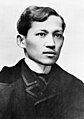 Dr. Jose Rizal.
 -
 Marcelo H. del Pilar, one of the leaders of the Propaganda Movement in Spain.
 -
 The single known extant photograph of Andres Bonifacio, the founder of Katipunan and leader of the Philippine Revolution.
 -
 General Emilio Aguinaldo, First president of the Philippines.
 -

-
 The Malolos Congress.
 -
 The Three Stars and a Sun design was formally unfurled during the Proclamation of Philippine Independence and the flag of the First Philippine Republic, on June 12, 1898, by President Aguinaldo.
 -
 Marching Filipino soldiers during the inauguration of the First Philippine Republic in Malolos on January 23, 1899.
 -
 The soldiers of Philippine Revolutionary Army.
 -
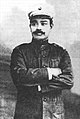 Antonio Luna, Regarded as one of the fiercest generals of his time, he succeeded Artemio Ricarte as Chief of Staff of the Armed Forces of the Philippines.
 -
 General Gregorio del Pilar and his troops in Pampanga, around 1898 (Philippine–American War).


.svg)


20th century
1900s
| Year | Date | Event | Source |
|---|---|---|---|
| 1900 | January 21 | The Schurman Commission returns to the U.S. | |
| February 2 | Manila Bulletin is founded as a shipping journal by Carson Taylor, an American, and publishes its first issue. | [16][40] [verification needed] | |
| March 16 | U.S. Pres. McKinley appoints the second Philippine Commission, known as the Taft Commission | [13] [verification needed] | |
| March | American forces capture Bohol. | ||
| April | Battle of Cagayan de Misamis | ||
| April | Siege of Catubig | ||
| May 5 | Arthur MacArthur, Jr appointed Military Governor (1900–1901) | [30] | |
| May | Battle of Agusan Hill | ||
| June | Battle of Makahambus Hill | ||
| June 3 | The Taft Commission arrives in Manila | ||
| July 31 | Filipino revolutionaries defeat American troops in a battle in Boac, Marinduque, said to be the first recorded armed encounter between two forces. | [80] | |
| August 20 | Pres. Aguinaldo orders the start of attack against American forces in northern Luzon. | [80] | |
| September | Battle of Pulang Lupa | ||
| September | Battle of Mabitac | ||
| December 23 | Partido Liberal established | ||
| 1901 | March 2 | The Army Appropriation Act, also known as the Spooner Amendment, is passed by the US Senate. | |
| March 23 | Pres. Aguinaldo is captured by US authorities in Palanan town. | [1][13][85] [verification needed] | |
| April 1 | Aguinaldo takes an oath of allegiance to the US. | [1] [verification needed] | |
| April 15 | Gov. Taft inaugurates the provincial government of Capiz. (Phil. Commission Act No. 115) | [26] | |
| June 11 | Establishment of Rizal Province by the second Philippine Commission, upon unification of then provinces of Manila and Morong. (Act No. 137) | [26] | |
| June 17 | El Colegio de San Beda established | ||
| July 1 | End of insurrection declared | [13] | |
| July 4 | Adna Chaffee appointed as the last US Military Governor (1901–1902) | ||
| A civil government is established in the Philippines with William Howard Taft as the first Civil Governor (1901–1904) | |||
| July 18 | The US organizes the Philippine Constabulary | ||
| August 28 | Silliman Institute, later known as Silliman University, is established as the first American university in the Philippines. | [80] | |
| September | The first Filipino members of the second Philippine Commission are appointed | ||
| September 28 | Guerillas, headed by the Filipino Captain Eugenio Daza, attack the U.S. military barracks in Balangiga, Samar; Americans' "worst single defeat." | [27] [clarification needed] | |
| September 29 | Balangiga massacre occurs | [27] [clarification needed] | |
| October 20 | A U.S. Marine battalion arrives on Samar to conduct the March across Samar operation | ||
| October 29 | The President of the United States creates the position of provincial vice governor in the country, under the Spooner Amendment. | [29] | |
| November 4 | The Philippine Commission enacts the Sedition Act | ||
| December 14 | An earthquake estimated of magnitude 7.8 shakes Lucena City. | ||
| 1902 | January | The first labor union of The Country, Union de Litografose Impresores de Filipinas, is organized. | |
| January 21 | The Philippine Commission calls for the organization of Public Schools in the Philippines. | ||
| March 30 | The US Marines leave Balangiga | ||
| April 16 | General Miguel Malvar surrenders to the US forces | ||
| May | Governor Taft negotiates with Pope Leo XIII the sale of the friar lands in the Philippines | ||
| May 2 | Macario Sakay establishes a second Tagalog Republic. | ||
| June | Mindoro and Lubang islands are annexed to Marinduque province. | [31] | |
| July 1 | The Philippine Organic Act was enacted. | [13] | |
| Cooper Act is passed by the US Senate. Philippine Assembly is established | [13] | ||
| July 4 | Americans proclaim the end of the Philippine–American War, however fighting continues | ||
| August 3 | The Foundation of Iglesia Filipina Independiente separated from Roman Catholic Church was proclaimed by The Union Obrera Democratica with Gregorio Aglipay as The 1st Obispo Maximo | ||
| September 17 | Pope Leo XIII formally bestows a Pontifical title on the University of Santo Tomas | [65][66] | |
| November 10 | Marinduque province is annexed to Tayabas province (now Quezon). (Act No. 499) | [31] | |
| November 12 | Bandolerism Act passed by the Philippine Commission. All armed resistance against US rule are considered banditry | ||
| 1903 | Governor Taft enunciates the policy of The Philippines for the Filipinos | ||
| May 1 | Thousands of members of the Union Obrera Democratica Filipina, led by Dominador Gomez, stage a massive rally aiming for workers' rights as well as a public holiday for May 1. | [93] | |
| June 1 | Establishment of the Moro Province, consisting of the districts of Jolo, Lanao, Cotabato, Davao and Zamboanga. | [19] | |
| 1904 | February 1 | Luke Edward Wright appointed as Civil Governor (1904–1905) | |
| October 19 | The Manila Business School was founded and started its operation (later as the Philippine School of Commerce, 1908, then as the Philippine College of Commerce, 1952, and now the Polytechnic University of the Philippines). | ||
| November 16 | Iwahig Prison and Penal Farm is established in Palawan, country's oldest and largest open prison. | [28][29] | |
| 1905 | November 3 | Henry Clay Ide appointed as Civil Governor (1905–1906) | |
| 1906 | May 27 | Establishment of Culion Leper Colony in Culion Island in Palawan. | [19] |
| September 20 | James Francis Smith appointed as Civil Governor (1906–1909) | ||
| December 3 | St. Scholastica's College in Manila is established by the Missionary Benedictine Sisters of Tutzing. | [94] | |
| 1907 | June 3 | Centro Escolar University established as Centro Escolar de Señoritas. | |
| June 30 | First Congressional Elections held | ||
| September 13 | Macario Sakay is executed by hanging, ending his Tagalog Republic. | ||
| October 10 | Alaw (Act No. 1761) that restricts and regulates the use and sale of dangerous drugs is signed. | [29] | |
| October 16 | The First Philippine Assembly is inaugurated and convened. | [13] | |
| 1908 | June 18 | The University of the Philippines is established in Manila. | [29] [verification needed] |
| August 29 | Philippines Free Press is founded by Judge W.A. Kincaid and publishes its first issue in magazine format. | [40][95] [clarification needed] | |
| 1909 | March 6 | Present-day University of the Philippines Los Baños in Laguna is established, first autonomous UP campus. | [17] |
-
 Macario Sakay, the unofficial President of the Tagalog Republic.
 -


1910s
| Year | Date | Event | Source |
|---|---|---|---|
| 1911 | January 27 | Mt Taal erupts, and kills 1,334 people | |
| June 16 | De La Salle University-Manila is founded as De La Salle College by the Brothers of Christian Schools. | ||
| 1912 | A silent movie about Jose Rizal is the first Filipino movie introduced in the Philippines. | [40][96] [clarification needed] | |
| 1913 | June | Battle of Bud Bagsak | [97] |
| September 1 | Newton W. Gilbert appointed as acting Civil Governor (1913) | ||
| October 6 | Francis Burton Harrison appointed as Civil Governor (1913–1921) | ||
| 1914 | July 27 | Iglesia ni Cristo (largest independent church in Asia) is registered to the government. | |
| 1916 | October 16 | The Jones Act is passed establishing an all-Filipino legislature | |
| Manuel Quezon elected Senate President while Sergio Osmeña is elected as House Speaker of the House of Representatives of the Commonwealth of the Philippines | [98][99][100][101][102] [103][104][105] | ||
| 1917 | January 11 | The first cabinet of Filipinos under the US regime is organized. | |
| March 9 | Provincehood of Abra (Act No. 2683) | [85] | |
| March 10 | An Act Amending the Administrative Code (Act No. 2711) reorganizes the territories in the Philippines, consisting of:
|
[17][83][106] | |
| 1919 | September 19 | The silent film Dalagang Bukid by José Nepomuceno was released, the first film to be produced locally. | [96][107] [verification needed] |
1920s
| Year | Date | Event | Source |
|---|---|---|---|
| 1920 | Mountain Province is established by American colonial government. | [85] | |
| February 21 | Provincehood of Marinduque (Act No. 2880), separating from Tayabas. | [17][31] | |
| August | Philippines Herald is established by Manuel L. Quezon and former Manila Times journalists; first pro-Filipino nationalist newspaper. | [16][40] | |
| December 15 | Provincehood of Masbate (Act No. 2934), former sub-province independent from Sorsogon. | [28] | |
| 1921 | March 5 | Charles Yeater appointed as acting Civil Governor (1921) | |
| October 14 | Leonard Wood appointed as Civil Governor (1921–1927) | ||
| 1922 | Mrs. Redgrave pioneers the radio broadcasting from Nichols Field, only for a test broadcast. | [108] | |
| June | Henry Hermann, owner of an electrical supply company, begins operating three radio stations in Manila and Pasay, also for their test broadcasts. | [40][108][109][110] | |
| 1924 | October 4 | Radio Corporation of the Philippines (RCP) acquires radio station KZKZ, which begins its broadcast by Hermann earlier that year, replacing experimental stations; broadcast ceased in 1925 upon merger of Far Eastern Radio with RCP. | [40][108][109][110] |
| 1927 | August 7 | Eugene Allen Gilmore appointed as acting Civil Governor (1927) | |
| December 27 | Henry L. Stimson appointed as Civil Governor (1927–1929) | ||
| 1929 | RCP operates its first radio station outside Manila, also first provincial station in the country, with KZRC (Radio Cebu) in Cebu, experimental station originally a relay station of KZRM in Manila. | [40][108][109][110][111] | |
| February 23 | Eugene Allen Gilmore appointed as acting Civil Governor (1929) | ||
| July 8 | Dwight F. Davis appointed as Civil Governor (1929–1932) | ||
| November 2 | Old Misamis is divided into the new provinces of Misamis Occidental and Misamis Oriental. (Act No. 3537; amended by Act No. 3777 on November 28, 1930). | [29][31] [clarification needed] |
1930s
| Year | Date | Event | Source |
|---|---|---|---|
| 1930 | November 7 | Partido Komunista ng Pilipinas (PKP, Communist Party of the Philippines) is formally established by Crisanto Evangelista at Tondo, Manila. | [31][112] |
| 1932 | January 9 | George C. Butte appointed as acting Civil Governor (1932) | |
| January 21 | Davao Prison and Penal Farm in present-day Davao del Norte is established (Act No. 3732); country's first penal settlement. | [17] | |
| February 29 | Theodore Roosevelt Jr. appointed as Civil Governor (1932–1933) | ||
| October 26 | The Communist Party of the Philippines is declared illegal by the Supreme Court | ||
| 1933 | July 15 | Frank Murphy appointed as the last Civil Governor of the Philippines (1933–1935) | |
| October 29 | Partido Sakdal formed. | [93] | |
| December 7 | Governor-General Frank Murphy granted the Right of Suffrage to the Filipino women. | ||
| 1934 | March 24 | The Tydings-McDuffie Law, known as the Philippine Independence Law, is approved by U.S. President Roosevelt. | [1][113] |
| May 7 | A pearl, which would be one of the world's largest, is found in Palawan. | [26] | |
| July 10 | 202 delegates are elected to the Constitutional Convention in accordance with the Tydings-McDuffie Act | ||
| July 30 | The Philippine Constitutional Convention is inaugurated | ||
| November 3 | Bannawag, Ilocos region's weekly vernacular magazine, established. | [28] | |
| 1935 | February 8 | The Constitutional Convention creates a new constitution | |
| February 15 | The Philippine Constitution is signed | ||
| May 2 | Sakdalista uprising against the Philippine Constabulary fails with at least 60 members dead. | [93] | |
| May 14 | The Philippine electorate ratifies the Constitution in a referendum | ||
| September 17 | Manuel Quezon elected president in the first Philippine Presidential elections | [1][98][99][100][101] [102] | |
| November 15 | The Philippine Commonwealth is inaugurated | ||
| The Office of Civil Governor is abolished | |||
| December 21 | The National Defense Act of 1935 that created the Armed Forces of the Philippines was signed. | ||
| 1936 | March 25 | President Manuel L. Quezon issued Executive Order No. 23 which provided for the technical description and specifications of the Philippine national flag. | [98][99][100][101][102] |
| October 31 | The Boy Scouts of the Philippines was established. | ||
| 1937 | February 3–7 | The 33rd International Eucharistic Congress was held in Rizal Park, Manila; first in Asia. | [85] [verification needed] |
| November 9 | The Institute of National Language recommends Tagalog as the basis of the country's national language. | [29] | |
| 1939 | July 15 | KZRH, established by H. E. Heacock Company under Samuel Caches, goes on air; country's oldest existing radio station, renamed PIAM during the Japanese era and now DZRH. | [40][109][110][111][114] |
1940s
| Year | Date | Event | Source |
|---|---|---|---|
| 1941 | January 1 | Provincehood of Romblon (Commonwealth Act No. 38) | [17] |
| March 15 | Philippine Airlines starts operations with its maiden flight between Makati and Baguio cities. | [17] | |
| November 11 | Manuel Quezon re-elected as President | [98][99][100][101][102] | |
| December 8 | Start of the Japanese invasion of the Philippines following Pearl Harbor attack. | [1][115][116] | |
| December 10 | Japanese planes attack Sangley Point in Cavite. | [31] | |
| December 17 | Wenceslao Vinzons organizes a citizen's army to fight Japanese forces in Camarines Norte. | [31] | |
| December 20 | President Quezon, his family and the war cabinet move to Corregidor Island | [98][99][100][101][102] | |
| December 26 | General MacArthur declares Manila an open city | [117][118][119][120][121] | |
| December 28 | Filipino and US armies retreat to Bataan | ||
| December 30 | Pres. Quezon and Vice Pres. Osmeña take their oath of office for their second term in Corregidor Island, Cavite. | [28][98][99][100][101] [102] | |
| 1942 | January 2 | Japanese troops enters Manila | |
| January 3 | Masaharu Homma appointed as Japanese Military Governor (1942) | ||
| General Masaharu Homma declares the end of American Rule in the Philippines | |||
| Martial Law declared | |||
| January 13 | All forms of opposition against the Japanese forces declared subject to death penalty | ||
| January 23 | An executive committee, composed of Filipinos, is formed by General Homma as a conduit of the military administration's policies and requirements. | ||
| February 17 | The Japanese Military Government issues an order adopting the Japanese educational system in The Country | ||
| February 20 | President Quezon and the war cabinet leave for the US | [98][99][100][101][102] | |
| March 11 | General MacArthur leaves for Australia to take command of the South Western Pacific Area | [117][118][119][120][121] | |
| March 13 | The Commonwealth government is moved to the US | ||
| March 25 | Hukbong Bayan Laban sa Hapon (Hukbalahap, People's Anti-Japanese Army) is organized in Cabiao, Nueva Ecija. | [85] [clarification needed] | |
| April | A pro-US resistance movement is organized, mainly to provide data to the US on enemy positions | ||
| April 9 | Battle of Bataan: Bataan, under US commander Gen. Edward King, is the last province that surrenders to the Japanese armies. | [19][122] | |
| May 6 | Corregidor Island falls to Japanese forces. | [19][29] | |
| June 8 | Shizuichi Tanaka appointed as Japanese Military Governor (1942–1943) | ||
| June 14 | The Commonwealth of the Philippines becomes a member of the United Nations | ||
| December 30 | The Kalibapi is organized by the Japanese | ||
| 1943 | May 28 | Shigenori Kuroda appointed as Japanese Military Governor (1943–1942) | |
| June 20 | Japanese Premier Hideki Tojo nominates an all Filipino 20 member Preparatory Commission for Philippine Independence | ||
| September 4 | The Philippine Preparatory Commission for Independence drafts a new Constitution which provides for a unicameral national assembly | ||
| September 20 | The 108 delegates to the National Assembly are chosen by the members of the Preparatory Commission for Philippine Independence. | ||
| September | Jose P. Laurel elected President of the Philippines by the National Assembly | [123][124][125] | |
| October 14 | The puppet government is inaugurated. Laurel takes his oath of office | [123][124][125] | |
| November | The Philippine economy collapses, the shortage of rice becomes serious. | ||
| November 10 | U.S. Congress approves a resolution allowing Pres. Quezon to serve beyond the designated period, nine days after his term expires. | [82] | |
| 1944 | May | The puppet government inaugurates the Green Revolution Movement. | |
| August 1 | Death of Pres. Quezon; Vice Pres. Sergio Osmena then assumes the Office of the President of the Commonwealth of the Philippines. | [82][98][99][100][101] [102][103][104][105] | |
| September 21 | US forces raids Manila | ||
| September 26 | Tomoyuki Yamashita appointed as Japanese Military Governor (1944–1945) | ||
| October 20 | Gen. MacArthur lands in Palo, Leyte, accompanied by Pres. Osmeña and U.S. troops. | [29][103][104][105][117] [118][119][120][121] | |
| October 23 | Gen. Douglas MacArthur reestablishes the Commonwealth government of the Philippines in Tacloban, Leyte, with Sergio Osmeña as its president. | [28] | |
| October 24 | Battle of Leyte Gulf: Battle of Sibuyan Sea | [28][85] | |
| December 8 | Pro-Japanese Philippine generals Pio Duran and Benigno Ramos organize the Makapilis | ||
| 1945 | January 9 | U.S. troops led by Gen. MacArthur land on the shores of Pangasinan via Lingayen Gulf in an attempt to liberate the country from the Japanese. | [1][17][85] |
| January 30 | Raid at Cabanatuan: 121 American soldiers and 800 Filipino guerrillas free 813 American Prisoners of war from the Japanese-held camp in the city of Cabanatuan in the Philippines. | ||
| January–February | Battle of Bataan (1945) | ||
| February–April | Battle of Baguio | ||
| February | Raid at Los Baños | ||
| February 4 | US troops enter Manila | ||
| February 22 | Hukbalahap troop leaders arrested by the US forces | ||
| February 24 | The Battle of Manila ends. The Japanese surrender to the combined US and Filipino troops | ||
| February 27 | MacArthur hands over Malacanang Palace to Osmena. | [103][104][105][117][118] [119][120][121] | |
| March–April | Battle for Cebu City | ||
| March–July | Battle of the Visayas | ||
| March | Corregidor Island is reoccupied by the Americans. | [29] | |
| March 3 | Battle of Manila (1945): The US and Filipino troops recaptured Manila. | ||
| March 18 | Town of Panay in Capiz and the province of Romblon are liberated from the Japanese forces. | [17] | |
| March 19 | Filipino and American forces defeat the Japanese in a battle occurred in Bacsil Ridge in San Fernando, La Union. | [85] | |
| March 22 | The families of pro-Japanese President Laurel and Speaker Aquino leave the country for Japan to seek refuge | [123][124][125] | |
| March 24 | Town of San Fernando in La Union is liberated from the Japanese forces. | [85] | |
| April 22 | Palawan is liberated from Japanese invaders. | [19] | |
| April 27 | Baguio is liberated from Japanese forces. | [26] | |
| May 10–13 | Filipino and U.S. forces defeat the Japanese in a battle occurred in Balete Pass (now Dalton Pass) in Santa Fe, Nueva Vizcaya. | [26] | |
| June 5 | The Congress elected in 1941 convenes for the first time | ||
| June 14 | Filipino soldiers, with the Americans, defeat the Japanese under Gen. Tomoyuki Yamashita in a battle in Tagudin, Ilocos Sur; considered as their greatest victory in World War II. | [19] | |
| July 5 | General MacArthur announces the liberation of the Philippines | [117][118][119][120][121] | |
| August 15 | The Empire of Japan accepts defeat | ||
| August 17 | Pres. Laurel issues an Executive Proclamation putting an end to the Second Philippine Republic, thus ending to his term as President of the Philippines. | [123][124][125] | |
| September 2 | The final official Japanese Instrument of Surrender is accepted by the Supreme Allied Commander, General Douglas MacArthur, and Fleet Admiral Chester W. Nimitz for the United States, and delegates from Australia, New Zealand, the United Kingdom, The Netherlands, China, and others from a Japanese delegation led by Mamoru Shigemitsu, on board the American battleship USS Missouri in Tokyo Bay. | [1][117][118][119][120] [121] | |
| Japanese general Tomoyuki Yamashita surrenders to Filipino and American forces at Kiangan, Ifugao. | |||
| September 12 | Jose P. Laurel is arrested by the US army | [123][124][125] | |
| September 26 | Provincehood of Catanduanes (Commonwealth Act No. 687), former sub-province independent from Albay. | [31][80] [clarification needed] | |
| October 24 | The United Nations is founded by ratification of its Charter, by 29 nations. | ||
| December | Manuel Roxas separates from the Nacionalista Party of Sergio Osmena Sr and joins the Liberal Party | [103][104][105] | |
| 1946 | February 23 | Tomoyuki Yamashita is executed by hanging at Los Baños, Laguna prison camp for the war crimes. | |
| April 23 | Manuel Roxas wins in the last Presidential Election under the Commonwealth | ||
| April | U.S. Pres. Harry Truman signs into law the Philippine Trade Act (Bell Trade Act) of 1946, continuing free trade relations between the U.S. and the Philippines, and imposing tariffs; Tydings Rehabilitation Act passed. | ||
| June 13 | Bolinao Electronics Corporation (BEC) is established by James Lindenberg; later Alto Broadcasting System (ABS) and the forerunner of ABS–CBN. | [126][127] | |
| July | Hukbong Mapaglaya ng Bayan (HMB) is organized in Candaba, Pampanga. | ||
| July | Congress votes to accept the Bell Trade Act. | ||
| July 4 | The United States recognizes the Independence of the Republic of the Philippines. | [16][128] | |
| Manuel Roxas becomes the first president of the Third Republic. | [1] | ||
| September | Congress passes an amendment that revises Constitution, allowing the Americans parity rights. | ||
| September 30 | The Amended Tenancy Act is promulgated. | ||
| 1947 | January | Rehabilitation Finance Corporation (RFC), later Development Bank of the Philippines, begins its operations. | |
| January 28 | President Roxas issues an amnesty proclamation to collaborators | ||
| March | An amendment in the 1935 Constitution granting parity rights to the Americans is ratified in a plebiscite. | ||
| March | The Military Assistance Act is signed by U.S. Ambassador Paul McNutt and Pres. Roxas. | ||
| March 6 | HUKBALAHAP declared illegal | ||
| March 14 | The Treaty of General Relations between Philippines and United States, the Military Bases Agreement, is signed; would be effective until 1991. | [91] [verification needed] | |
| September 8 | The Philippine representative to the Far Eastern Commission, Carlos P. Romulo, signs the Japanese Peace Treaty | ||
| October 12 | Corregidor Island in Cavite is turned over to the Philippines. | [29] | |
| October 16 | Turtle Islands, now in Tawi-Tawi, is placed under country's jurisdiction. | [29] | |
| November | First post-war elections held for local officials and senators. | ||
| 1948 | January | Pres. Roxas issues a general pardon for all those with collaboration cases and pending cases in the People's Court. | |
| March | Hukbong Mapagpalaya ng Bayan and Pambansang Kaisahan ng mga Magbubukid (PKM) are declared illegal organizations by Pres. Roxas. | ||
| April 15 | Death of Pres. Roxas; Vice Pres. Elpidio Quirino assumes the Office of President. | [82] | |
| June | Pres. Quirino issues an amnesty proclamation given to the surrendered members of Hukbalahap and PKM. | ||
| July | Newly formed Quezon City is declared capital of the Philippines by Pres. Quirino. (Republic Act No. 333) | ||
| August | Huk leaders under Luis Taruc go underground to continue the resistance against the government following failed truce negotiations. | ||
| October 1 | Pres. Quirino releases the result of the country's first official postwar census, taken and compiled by the Bureau of the Census and Statistics, showing the population after its independence from the U.S. at 19.2 million. | [27] | |
| November | PKP renews armed struggle following failed truce negotiations with the government. | ||
| December | Quirino administration imposes import control, a law that would be effective on the first day of 1949. | ||
| 1949 | January | Establishment and inauguration of Central Bank of the Philippines. | |
| April 28 | Former First Lady Aurora Aragon–Quezon (widow of Pres. Manuel Quezon), with her eldest daughter, and Quezon City Mayor Ponciano Bernardo, are among those killed in an ambush allegedly by the Hukbalahap in Bongabon, Nueva Ecija. | [98][99][100][101][102] | |
| November | Pres. Quirino reelected. | ||
| November | A month-long rebellion occurred in Batangas. |
-
 Manuel L. Quezon was the First President of Commonwealth of the Philippines, the father of Philippine Language.
 -

-


1950s
| Year | Date | Event | Source |
|---|---|---|---|
| 1950 | February | UST pioneers the television broadcast, only for experimental purposes. | [40][126][129] |
| June | The Philippines joins the Korean War, sending over 7,000 troops under the United Nations command. | ||
| June 15 | Old Mindoro is divided into the new provinces of Mindoro Occidental and Mindoro Oriental. (Republic Act No. 505) | [83][19] | |
| October | Twenty-three high-ranking PKP and Huk Politburo members are captured in a series of raids led by Secy. Magsaysay in Manila. | ||
| October | Pres. Quirino suspends the privilege of writ of habeas corpus regarding detention of suspected communists. | ||
| 1951 | March 6 | Fort Santiago was declared a National Shrine. | |
| May | Suspected PKP members are penalized by the Court of First Instance, with six given death sentences and nine given life sentences. | ||
| July–September | Armed Forces of the Philippines launches offensives against Huks in Laguna and Pampanga. | ||
| August | National Movement for Free Elections (NAMFREL) is established | ||
| August 30 | The Mutual Defense Treaty between Philippines and United States was signed. | ||
| October 8 | Nicasio "Asiong" Salonga, branded as Tondo's public enemy No. 1 and the kingpin of Manila, was shot and killed by Ernesto Reyes, a henchman of his rival and also notorious gang leader Carlos "Totoy Golem" Capistrano. | [130] | |
| 1952 | April–May | Armed Forces launches Operation Four Roses in Nueva Ecija in the search for Huk strongholds in Sierra Madre mountains. | |
| June 6 | Old Zamboanga is divided into the new provinces of Zamboanga del Norte and Zamboanga del Sur. (Republic Act No. 711) | [83][19] | |
| 1953 | June | Magna Carta for Labor is signed into law. (Republic Act No. 875) | |
| October 23 | DZAQ-TV Channel 3, now Channel 2, of ABS, then owned by Presidential brother Antonio Quirino, airs its country's first official television broadcast from Manila. | [40][108][126][127][129] [131][132][133][134] | |
| November 10 | Ramon Magsaysay is elected President of the Republic of the Philippines | [1] [verification needed] | |
| 1954 | Social Security Act is passed in Congress. | ||
| May | Huk Supremo Luis Taruc surrenders to Pres. Magsaysay, prompting an end of the eight-year Huk rebellion. | ||
| May 22 | Cityhood of Trece Martires, Cavite (Republic Act No. 981) | [19] | |
| July 21 | The Southeast Asia Collective Defense Treaty is signed in Manila, creating the South East Asian Treaty Organization (SEATO) | ||
| August | Agricultural Tenancy Act of 1954 passed. | ||
| September | Southeast Asian Treaty Organization (SEATO) is established in Manila, with the Philippines as one of its eight members. | ||
| December 15 | Laurel-Langley Agreement: An agreement between the Philippines and the U.S., regarding provisions of the Philippine Trade Act of 1946, is signed by Sen. Jose P. Laurel and Secy. James M. Langley. | [123][124][125] | |
| 1955 | September | Laurel-Langley Agreement is ratified by the U.S. and Philippine governments, to be effective on the first day of 1956. | |
| 1956 | April 25 | Provincehood of Aklan (Republic Act No. 1414), separating from Capiz. | [83][19] |
| May | Rizal Bill is passed into law amid opposition from Catholic Church. | ||
| 1957 | February 24 | ABS is acquired by Eugenio Lopez Sr. of CBN, of which they later merged into ABS–CBN with two television stations later being operated. | [40][126][129][133][134] |
| March 17 | Death of Pres. Magsaysay, one among the 25 killed in a plane crash in Cebu; Vice-Pres. Carlos P. Garcia assumes the presidency. | [1][82][135] | |
| June | Anti-Subversion Act passed. (Republic Act No. 1700) | ||
| July | U.S. Congress ratifies a law (Republic Act No. 85-81) granting the Philippines possession of the documents regarding the revolution. | ||
| November 14 | Carlos P. Garcia elected President of the Republic of the Philippines | [1] [verification needed] | |
| 1958 | March 22 | Xavier University-Ateneo de Cagayan is elevated by the Department of Education to university rank, becoming the Mindanao's first private and Catholic university. | [17] |
| August 28 | "Filipino First" policy is officially promulgated by the National Economic Council (Resolution No. 204). | ||
| 1959 | May 22 | Old Lanao is divided into the new provinces of Lanao del Norte and Lanao del Sur. (Republic Act No. 2228); inaugurated, July 4. | [26][83] |
| RA 2227 created the province of Southern Leyte, separating from Leyte. | [83] | ||
| July 18 | 10th World Scout Jamboree is held at Mt. Makiling in Los Baños, Laguna. | [80] | |
| September–October | An agreement between Foreign Affairs Secy. Felixberto Serrano and Amb. Charles Bohlen is signed, following series of conferences, in which duration of lease of the American military bases is reduced from 99 to 25 years. | ||
| October | U.S. authorities turns over Olongapo City to the Philippine government. |
-
 Ramon Magsaysay, the Man of Mass.

1960s
| Year | Date | Event | Source |
|---|---|---|---|
| 1960 | International Rice Research Institute is established in Los Baños, Laguna. | ||
| March | Archbishop Rufino Santos is the first Filipino to achieve the rank of Cardinal. | ||
| June 19 | Republic Act No. 2786 divided old Surigao into the new provinces of Surigao del Norte and Surigao del Sur. | [27][83] [verification needed] | |
| 1961 | January 18 | Baguio experiences cold at 6.3-degree Celsius, the country's lowest temperature ever recorded. | |
| November 7 | Diosdado Macapagal elected President of the Republic of the Philippines. | [1] [verification needed] | |
| 1962 | January | Philippine Constabulary Rangers conduct a siege of the Central Bank building to oust its governor, Dominador Aytona, due to "midnight appointments" of his own. | |
| January | Pres. Macapagal lifts exchange and import controls in his campaign for free enterprise. | ||
| May 12 | Commemoration of Independence Day is officially changed by Pres. Macapagal, from July 4 to June 12 (Proclamation No. 28); to be first celebrated on that day of that same year. | [19] | |
| June 22 | Pres. Macapagal's government, with the United Kingdom, files a communication regarding country's claim of North Borneo (Sabah), now in Malaysia. | [26] | |
| September | Electrification Administration Act (Republic Act No. 2717) is implemented through an executive order issued by Pres. Macapagal. | ||
| 1963 | July 28 | Twenty-four members of the Philippine contingent for the 11th World Scout Jamboree in Greece are among the 60 deaths in a plane crash into the Indian Ocean. | [82][136] |
| July | Pres. Macapagal, Sukarno (Indonesia), and Tungku Abdul Rahman (Federation of Malaya) sign the Manila Accord, an agreement for Maphilindo. | ||
| August 8 | Agricultural Land Reform Code (Republic Act No. 3844) is signed into law by Pres. Macapagal. | ||
| 1964 | May | Partido Komunista ng Pilipinas secretary-general Jesus Lava is captured in Sampaloc, Manila. | |
| August | Congress ratifies an executive order issued by Pres. Macapagal that changes the date of celebration of the nation's Independence Day, by virtue of Republic Act No. 4166. | ||
| August 14 | Miss Philippines Gemma Cruz was crowned Miss International 1964, the first Filipino to win the title. | ||
| November | Kabataang Makabayan (KM) is formed by Jose Maria Sison, with himself elected as its chairman. | ||
| 1965 | June 19 | Republic Act No. 4221 divided old Samar into the new provinces of Western Samar, Northern Samar, and Eastern Samar. | [83] |
| September | Taal Volcano in Batangas erupts, killing around 2,000 and damaging villages. | ||
| November 9 | Ferdinand Marcos elected President of the Republic of the Philippines. | [1][137] [verification needed] | |
| 1966 | Asian Development Bank establishes its new headquarters in Manila. | ||
| February | Philippine-American Assembly is held in Davao. | ||
| June 18 | Old Mountain Province is divided into the new provinces of Benguet, Mountain Province, Kalinga-Apayao and Ifugao. (Republic Act No. 4695) | [83][19] | |
| Republic Act No. 4669 created the province of Camiguin, separating from Misamis Oriental. | [83] | ||
| Republic Act No. 4849 created the province of South Cotabato, separating from Empire Province of Cotabato. | [83][138] | ||
| July | Pres. Marcos signs the controversial Vietnam Aid Law. | ||
| July | The mayor of Candaba, Pampanga, also the president of the Anti-Huk Mayors League in the province, is killed in an ambush, an incident which was attributed to the Huks. | ||
| August | Congress approves the appropriation for the Philippine Civil Action Group (Philcag) to be sent to Vietnam. | ||
| September | The first batch of the battalion of the Philcag leaves the Philippines for South Vietnam. | ||
| September | An agreement is signed by U.S. Secretary of State Dean Rusk and Foreign Affairs Secy. Narciso Ramos, reducing the lease of military bases from 99 to 25 years, thus to expire in 1991. | ||
| October | Marcos administration hosts the Manila Summit with 6 countries. | ||
| 1967 | January | Two buses carrying pilgrims collide and fall off a ravine south of Manila, killing more than 115 in what would be the country's worst road accident. | [139] |
| February | Movement for the Advancement of Nationalism (MAN) is formed by nationalists from various sectors. | ||
| May 8 | Old Davao is divided into the new provinces of Davao del Norte, Davao del Sur, and Davao Oriental. (Republic Act No. 4867) | [83][19] | |
| May 21 | A demonstration conducted by Lapiang Malaya, a peasant religious sect, ends in a violent dispersal attempt by the Philippine Constabulary in Pasay, killing 33. | [93][140] | |
| June 17 | Republic Act No. 4979 divided old Agusan into the new provinces of Agusan del Norte and Agusan del Sur. | [83] | |
| August 8 | Association of Southeast Asian Nations (ASEAN) is formed in Bangkok, Thailand, with the Philippines as one of the five founding members. | ||
| 1968 | First provincial television stations are established in Cebu, Bacolod, and Dagupan, all operated by ABS–CBN. | [40][131] | |
| March 18 | Jabidah massacre: A group of trainees of a Muslim special forces unit, part of a controversial operation, are allegedly killed in Corregidor. | [140] | |
| August 2 | 1968 Casiguran earthquake and the collapse of Ruby Tower | ||
| September | Pres. Marcos signs into law a bill defining country's territorial waters in compliance with the United Nations and claiming Sabah as part of the country's territory, amidst protest from the Malaysians. | ||
| September | Pres. Marcos pardons 166 prisoners, including former Huk leader Luis Taruc. | ||
| December 26 | Communist Party of the Philippines (CPP; then called CPP–Marxist–Leninist-Mao Tse-tung Thought or CPP–MLMTT) is reestablished by Jose Maria Sison and his colleagues in Pangasinan. | [31][112][137] | |
| 1969 | March 29 | New People's Army (NPA) is formally organized in Tarlac by Bernabe Buscayno (Kumander Dante) of PKP as the military arm of the CPP, upon merger with Jose Maria Sison's army. | [17][31][112][137] |
| May 11 | Tuguegarao City, Cagayan experienced heat at 42.2 degrees Celsius, the country's highest temperature ever recorded. | ||
| July 19 | Miss Philippines Gloria Diaz was crowned Miss Universe 1969. | ||
| November 11 | Marcos re-elected President of the Republic of the Philippines (second term). | [1][137] [verification needed] |
1970s
| Year | Date | Event | Source |
|---|---|---|---|
| 1970 | Typhoon Patsy (Yoling) is the most devastating typhoon to hit the country at that time. | [88] | |
| January 26–March | First Quarter Storm
|
[93][137][140] | |
| April | Major rallies and riots held, protesting oil prices and fare costs. | ||
| June 27 | Pres. Marcos publicly endorses the Barrio Self-Defense Units, later Civilian Home Defense Forces. | [140] | |
| November 17 | Elections for 315 members of a Constitutional Convention held. | ||
| November 27 | Pope Paul VI makes his first papal visit in the Philippines, but survived an assassination attempt by Benjamín Mendoza y Amor Flores at Manila International Airport. | ||
| December 29 | Members of the New People's Army, led by Lt. Victor Corpuz, raid the armory of the Philippine Military Academy. | [141] | |
| 1971 | Moro National Liberation Front is established by Nur Misuari. | ||
| February | Diliman commune | [93] | |
| June | Manili massacre | ||
| June 1 | The Constitutional Convention assembles to rewrite the 1935 Constitution. The Convention elects former Pres. Carlos Garcia as its head. | [137] [verification needed] | |
| June 14 | Death of Carlos Garcia, former Philippine President; another former Pres. Diosdado Macapagal succeeds as the president of the Constitutional Convention. | [88] | |
| August 21 | Plaza Miranda is bombed during the Liberal Party's election campaign, seriously injuring some opposition personalities. | [36][93][137][142] | |
| August 22 | Pres. Marcos suspends the Writ of Habeas Corpus following the Plaza Miranda bombing. | [36] | |
| September | U.S. operations in Sangley Point Naval Base terminated. | ||
| September 10 | Provincehood of Quirino (Republic Act No. 6394), former sub-province independent from Nueva Vizcaya. | [83][80] | |
| September 17 | Provincehood of Siquijor (Republic Act No. 6398), former sub-province independent from Negros Oriental. | [83][80] | |
| October 10 | Leonardo "Nardong Putik" Manecio, one of the most notorious gangsters and dubbed as Cavite's public enemy No. 1 was killed in Imus in a highway shootout with NBI agents. | [130] | |
| November | Philippine Senate election, 1971 | ||
| 1972 | Suspicious bombing incidents increase all over the country. The MNLF launches its campaign for the independence of the Muslim provinces. | ||
| Parliamentary form of government is approved by the Constitutional Convention. | [137] | ||
| January | Pres. Marcos restores the Writ of Habeas Corpus | ||
| June | Daily Express is established; Martial Law era newspaper later sequestered by Aquino government. | [40] | |
| August | Quasha decision: Supreme Court decides on American ownership rights. | ||
| September 13 | Sen. Ninoy Aquino exposes Oplan Sagittarius, a top-secret plan to place the capital under military control. | [93][137][143] | |
| September 21 | Pres. Marcos signs the Martial Law edict (Proclamation No. 1081) to be imposed nationwide; at that time not publicly announced. | [93][126][140][142][143] [144] | |
| September 22 | Defense Minister Juan Ponce Enrile survives a staged assassination attempt. | [93][137][143] | |
| Pres. Marcos announces that he had placed the entire country under martial law, with the earlier "ambush" as a pretext. | [93][137][143] | ||
| Media establishments and wire agencies are ordered to be closed. | [40][93][126][144] | ||
| Sen. Aquino arrested. | [93][137][143] | ||
| September 23 | The implementation of martial law is officially announced. | [1][93][143] | |
| Public utilities as well as media outlets, except some including newspaper Daily Express and television and radio stations of Kanlaon Broadcasting System, are shut down and seized by the government. | [40][93][126][143] | ||
| Media and opposition figures, including three other Senators, are arrested. | [40][93][137][143][144] | ||
| September 26 | The whole country is proclaimed a land reform area and an Agrarian Reform Program is decreed. | ||
| The first major armed defiance of martial law takes place in Lanao del Sur | |||
| October | Land reform program issued (Presidential Decree 27) | ||
| October 22 | The battle between the MNLF and the government troops ends with the latter regaining control of the city. | ||
| November 29 | The Constitutional Convention passes the new Constitution of the Philippines. | ||
| December | First Lady Imelda Marcos survives an assassination attempt. | ||
| 1973 | Misuari leaves The Country for Libya to solicit armed support from Muslim countries for the war in Mindanao. | ||
| January 10–15 | A plebiscite referendum is held among the citizens' assemblies to ratify the new Constitution, which would become effective. | [93][137][141] | |
| January 15 | Chinese drug lord Lim Seng is executed by firing squad in public in Fort Bonifacio for drug trafficking. | [141] | |
| January 17 | Pres. Marcos declares the approval of the 1973 Constitution, orders Congress padlocked. | [1][93][141] | |
| March 1 | Philippine News Agency established | [16] | |
| March 31 | Supreme Court upholds the validity of the 1973 Constitution. | [93][137] | |
| April | The National Democratic Front (NDF), the united front organization of the Communist Party of the Philippines, is formally organized. | ||
| May | Masagana 99 program launched | ||
| July 2 | San Juanico Bridge, connecting Samar and Leyte islands, is inaugurated. | [80] | |
| July 21 | Miss Philippines Margarita Moran was crowned Miss Universe 1973. | ||
| July 27 | Marcos' term as president extended by virtue of a referendum, which was later proven as a hoax | ||
| September 27 | Provincehood of Tawi-Tawi (Presidential Decree No. 302), separating from Sulu. | [27][83] | |
| November 22 | Old Cotabato is divided into the new provinces of North Cotabato (later renamed Cotabato, 1984), Maguindanao, and Sultan Kudarat. (PD 341) | [28][29][83] | |
| December 27 | Provincehood of Basilan (PD 356) | [29][83] | |
| 1974 | February | Jolo is occupied and burned by Muslim forces. | |
| February 27 | Presidential appointments to local elective positions declared legal by virtue of another referendum | ||
| March 11 | Japanese Lt. Hiroo Onoda formally surrenders in a ceremony held in Malacañang Palace after staying for years in the Lubang Island. | [141] | |
| June | First Filipino All-Muslim Congress held in Marawi City. | ||
| July | Parity rights amendment as stated in 1955 Laurel–Langley Trade Act expired. | ||
| July 21 | Miss Universe 1974, its 23rd pageant, was held in Manila. | [126] [verification needed] | |
| September | Jose Diokno is ordered by Pres. Marcos to be released. | ||
| September | Barangay status is reorganized and Sep 21 is declared Barangay Day (Presidential Decree 557). | ||
| September 17 | Supreme Court upholds the declaration of martial law and dismisses petitions regarding habeas corpus. | [93] | |
| October | Secretary-general of the old communist party Felicisimo Macapagal signs a memorandum of cooperation with the President's efforts. | ||
| December 24 | A classified wire revealing the so-called Rolex 12 is submitted by the American Embassy in Manila to the Secretary of State in Washington, D.C. | [140] | |
| 1975 | February | Primitivo Mijares defects from the government. | |
| February | Third referendum, asking for continuation of exercising the Presidential powers, held. | ||
| April 4 | Ninoy Aquino starts his hunger strike for his refusal to recognize military court's jurisdiction on charges against him. | [94][141] | |
| April 9 | Philippine Basketball Association founded | [141] | |
| June | Diplomatic relations with People's Republic of China formalized. | ||
| June | Primitivo Mijares testifies in the U.S. Congress on the alleged corruption and abuses of the government. | ||
| October 2 | Thrilla in Manila | [126][141] [verification needed] | |
| November 1 | Pres. Marcos issues Presidential Decree No. 824, establishing Metro Manila and creating the Metropolitan Manila Commission (MMC). | [26] [verification needed] | |
| 1976 | January 4 | New people's Army Spokesman Satur Ocampo arrested | |
| August 17 | An earthquake of 7.8 magnitude and a following tsunami (flood wave) hit Mindanao, killing an estimated 8,000 people on and off the coast. | [36] | |
| August 26 | Kumander Dante of the New People's Army arrested | [137] [verification needed] | |
| October 16 | Martial Law allowed to extend by virtue of a plebiscite | [93] | |
| December 23 | Tripoli Agreement is signed between the Philippine Government and the secessionist group Moro National Liberation Front (MNLF) in Tripoli, Libya. | [31][91] | |
| 1977 | January 20 | The Armed Forces of the Philippines enters into a ceasefire agreement with the MNLF. | |
| March 4 | President Marcos issues a decree creating the autonomous Bangsamoro Islamic Government | ||
| August | Pres. Marcos announces amnesty for persons found guilty of subversion. | ||
| August 22 | Imposition of curfew hours lifted | [93] | |
| September 2 | Archimedes Trajano found dead, murdered | [140][141] | |
| October | Eugenio Lopez Jr. and Sergio Osmeña III escaped from detention in Fort Bonifacio and flee to the United States. | ||
| November 10 | CPP head Jose Maria Sison arrested | [93][137] [verification needed] | |
| November 25 | The military court finds Ninoy Aquino, Bernabe Buscayno and Victor Corpuz guilty of their charges and sentences them to death by firing squad; but sentence never imposed. | [94][137][141] | |
| December 16 | A referendum is held, the result of which again empowers the President to continue in office, and to become Prime Minister as well. | ||
| 1978 | April 7 | Members of the Interim Batasang Pambansa are elected. | [1][93][137] |
| June | Inauguration of Interim Batasang Pambansa with Pres. Marcos as its Prime Minister. | ||
| October 5 | Jesus is Lord Church led by Eddie Villanueva, a former activist and professor was established. | ||
| 1979 | January | U.S. military bases agreement amended. | |
| April 10 | President Ferdinand Marcos issues Presidential Decree No. 1616 creating the Intramuros Administration | [145] | |
| May | Regional assembly elections held in Mindanao. | ||
| May–June | United Nations Conference on Trade and Development is held in the Philippine International Convention Center. | ||
| July 30 | Eat Bulaga!, the longest running noon-time variety show in the Philippines, premiered on RPN. It was also aired on ABS-CBN from 1989 to 1995 and on GMA Network since 1995. | ||
| August 13 | Aurora province was established by Batas Pambansa Blg. 7. | ||
| October 31 | Project Gintong Alay, a national sports program was commenced. | ||
| November | Construction of a nuclear-power plant in Bataan is ordered to be stopped. | ||
| December | Ninoy Aquino is released from detention for the first time after given a furlough. | [137] |
1980s
| Year | Date | Event | Source |
|---|---|---|---|
| 1980 | The Philippines' first local elections under the martial law era is held amid wide boycotts. | [1][137] | |
| April 22 | MV Don Juan and oil tanker MT Tacloban City collide in Tablas Strait off Mindoro, killing 176. | [91][146] | |
| May | Kilusang Mayo Uno (KMU) organized | ||
| May | Pres. Marcos allows Ninoy Aquino to flee to the U.S. for his medical treatment. | [137] | |
| 1981 | January 17 | Martial law lifted (Proclamation 2045) | [1][93][137][142] |
| February 17–21 | Pope John Paul II visited the Philippines for his first papal visit. | [1][93][126] [verification needed] | |
| April 7 | Executive Committee is created by a constitutional amendment as ratified in a plebiscite. | [93] | |
| June 16 | 1981 Philippine general election and referendum (Ferdinand Marcos re-elected to a third term). | [1][93][137][142] [verification needed] | |
| June 30 | Inauguration of Pres. Marcos; Finance Minister Cesar Virata is elected Prime Minister by the Batasang Pambansa | ||
| November 17 | Accident during the construction of the Manila Film Center, 169 were killed. | ||
| 1982 | Reform the Armed Forces Movement (RAM) formed | [137] | |
| January | International Film Festival is held in the Manila Film Center. | ||
| April | United Nationalist Democratic Opposition formed. | ||
| May | Barangay elections held for the first time. | ||
| December | Newspapers We Forum and Malaya are shut down by the President for engaging in "black propaganda." | ||
| 1983 | August 21 | Sen. Benigno Aquino Jr. is assassinated at then Manila International Airport. | [1][16][36][40][93] [126][137][140][142][144] [147][148] |
| August 31 | Approximately seven million people attends funeral procession of Ninoy Aquino which turned into a rally, the longest and largest in history. | [93][137] | |
| November 21 | Martyrdom of Good Shepherd Sisters | [140] | |
| 1984 | January 27 | Executive Committee is abolished and the Office of the Vice President is restored through a constitutional amendment as ratified in a plebiscite. | [93] |
| February | "Tarlac to Tarmac" march is staged by opposition and coalition groups. | ||
| May 14 | 1984 Philippine parliamentary election | [1][137][147] | |
| July | National Assembly covenes; Prime Minister Virata reconfirmed; Nicanor Yniguez elected Speaker. | ||
| August 19 | El Shaddai DWXI Prayer Partners Foundation International, Inc. led by Bro. Mike Z. Velarde, a geological engineer and movie producer was established. | ||
| September 1 | Typhoon Nitang struck the Philippines. It killed 1,492 people and 1,856 more were injured. Roughly 1.6 million people were affected in the country. | ||
| November 14 | Mayor Cesar Climaco assassinated | [140] | |
| December 1 | Manila LRT Line 1 opened as the Southeast Asia's first rail line. | ||
| 1985 | |||
| July | Pres. Marcos transfers the control of the Integrated National Police from Defense Ministry to the presidential control. | [137] | |
| August | Opposition Parliament members file impeachment charges against Pres. Marcos. | [137][147] | |
| September 20 | A massacre in Escalante, Negros Occidental kills at least 20 people. | [140][149] | |
| October 18 | Typhoon Dot (Saling) landfalls on the country, leaves at least 101 people dead. | [149] | |
| October 21 | Marchers joining the five-day Lakbayan rally are shot by the police at Taft Avenue before reaching Liwasang Bonifacio, leaving a number of deaths. | [140] | |
| October 28 | Congressional and U.S. intelligence sources report that Pres. Marcos was diagnosed with a fatal illness. | [93] | |
| November 3 | Pres. Marcos announces in a television interview that he would set a snap elections. | [1][93][142][147][150] | |
| December 2 | AFP Chief of Staff Gen. Fabian Ver and 26 others accused of conspiracy in the assassination of Ninoy Aquino are acquitted by Sandiganbayan. | [1][93][137][147][150] | |
| 1986 | February 7 | 1986 Philippine presidential election | [1][93][137][142][144] [147][148][150] |
| February 9 | Thirty-five COMELEC computer workers led by Linda Kapunan walk out at PICC, protesting alleged cheating of election results. | [93][137][140][147][150] | |
| February 11 | Opposition Antique former Gov. Evelio Javier is assassinated during the canvassing of election results. | [137][147] | |
| February 15 | Batasang Pambansa declares Marcos and Arturo Tolentino as re-elected President and elected vice-president, respectively. Twenty-six Assembly members walk out before the proclamation. | [93][137][142][150] | |
| February 16 | Marcos' opponent Corazon Aquino, widow of Benigno Aquino Jr., is proclaimed President in Tagumpay ng Bayan rally in Rizal Park and calls for a civil disobedience campaign as a protest. | [93][137][150] | |
| February 22–25 | EDSA I Revolution ousts Pres. Marcos; Corazon Cojuangco–Aquino becomes President.
|
[1][82][88][91][93] [126][137][140][142][144] [147][148][150][151][152] | |
| February 26 | From Clark Air Base, Marcoses finally leave the country aboard U.S. planes to Guam and to Hawaii. | [88][137] | |
| February 28 | Presidential Commission on Good Government is formed by Pres. Aquino. | [verification needed] | |
| March 5 | CPP founder Jose Maria Sison and NPA founder Dante Buscayno are freed by Pres. Cojuangco–Aquino. | [17] | |
| March 25 | Pres. Aquino declares a revolutionary government, abolishes Interim Batasang Pambansa and the 1973 Constitution and adopts Freedom Constitution (Proclamation No. 3). | [150] | |
| July 6 | Former Vice Pres. Arturo Tolentino, with groups of armed military officers and Marcos loyalists, occupies the Manila Hotel and declares himself as "acting" President; they are forced to surrender after the failure of the coup that lasted until the 8th. | [91][153] | |
| July 22 | DZMM of ABS–CBN is established as the first post-revolution AM radio station. | [154] | |
| DWKO established as the first post-revolution FM radio station. | |||
| September 13 | The Mt. Data Peace Accord is signed in Mt. Data in Bauko, Mountain Province, between the Philippine Government and the separatist Cordillera Bodong Administration–Cordillera People's Liberation Army, involving cessation of hostilities that led to a creation of an administrative region. | [27] [verification needed] | |
| November 22 | A coup attempt called "God Save the Queen" is reportedly discovered by the government. | [150][153] | |
| 1987 | January 22 | Mendiola massacre: Thirteen from the farmers are killed in clashes with the forces of policemen and soldiers at Mendiola Bridge in Manila during their protest rally. | [91][150] |
| January 27–29 | Pro-Marcos rebel soldiers, led by Col. Oscar Canlas, seize GMA Network compound, for almost 3 days, and military bases in Sangley Point, Cavite and in Pasay wherein an assault with government military forces results in the death of a mutineer and 16 injuries. | [91][150][153] | |
| February 2 | The 1987 constitution, drafted by the Constitutional Commission, is ratified in a plebiscite. | [150][155] | |
| February 11 | A new constitution is declared ratified, replacing the "freedom constitution." | [1] | |
| April 18 | A raid is staged by 56 rebel soldiers on Fort Bonifacio; a rebel soldier dies. | [88][150][153] | |
| May 11 | 1987 Philippine legislative election; the first free elections held in almost two decades and under the new constitution. | [1][150] | |
| July | A plot to take over MIA is discovered; four military officers are arrested. | [150][153] | |
| July 15 | The Cordillera Administrative Region (CAR) is created through Executive Order No. 220 signed by Pres. Cojuangco–Aquino, consisting of, from Region 1, the provinces of Abra, Benguet and Mountain Province, and Baguio, and from Region 2, the provinces of Kalinga-Apayao and Ifugao. | [85][27] | |
| August 28–29 | A coup attempt, said to be the bloodiest of the attempts against Pres. Aquino, is launched by rebel soldiers of RAM, led by Col. Gregorio Honasan, with assaults on Malacañang Palace, Camp Aguinaldo, Villamor Air Base, various television stations, and military camps in Pampanga and Cebu resulting in 53 fatalities and over 200 injuries; prevented on the 29th as Honasan evades arrest. | [1][36][88][91][142] [150][153] | |
| October 18 | Canonization of San Lorenzo Ruiz, the first Filipino saint | [88] | |
| November 25 | Super Typhoon Sisang slammed into Luzon, killing 1,063 people. | ||
| December 20 | Interisland passenger ferry MV Doña Paz, said to be overloaded, and oil tanker MT Vector collide and sink at Tablas Strait between Marinduque and Oriental Mindoro provinces and Tablas Island; death toll later estimated to be 4,386; the deadliest maritime disaster in peacetime world history. | [1][82][88][91][146] [156][157][158][159] | |
| 1988 | January 18 | Local elections are held under the new constitution. | [1] |
| April 2 | Military reports that Col. Honasan, who led the August 1987 coup attempt, escapes from his prison ship in Manila Bay. | [88] | |
| June 10 | Pres. Cojuangco–Aquino signs the Comprehensive Agrarian Reform Program (CARP) into law (Republic Act No. 6657), providing land reform for farmers; to be effective within 10 years; later extended. | [91][19] | |
| October | Former Pres. Marcos and his wife are charged in the United States regarding illegal money transfer. | [1] | |
| October 17 | Interior Bases Agreement was signed by the Philippines and United States. | ||
| October 23–24 | Typhoon Unsang struck into Luzon. | ||
| October 24 | Interisland ferry MV Doña Marilyn sinks off Leyte during a typhoon, killing 389. | [91][146][156][157] | |
| 1989 | January 5 | Camp Cawa-Cawa in Zamboanga City is seized by some soldiers following the hostage crisis wherein seven people were taken hostage by Rizal Alih and killed in an air strike. | [88][91] |
| April 21 | U.S. Army Col. James Rowe is assassinated by the Communists; incident prompts the issue of removal of the U.S. military bases from the country. | [1] | |
| August 1 | Pres. Cojuangco–Aquino signs Republic Act No. 6734 (the Organic Act), a law creating the Autonomous Region in Muslim Mindanao, giving limited autonomy to the Muslim provinces. | [1][80] | |
| August 13–15 | Davao hostage crisis: Felipe Pugoy and Mohammad Nasser Samparini, perpetrators of an earlier hostage-taking incident in Davao Penal Colony on April, lead the prisoners who take five people hostage in Davao Metrodiscom; ending in gunfights with the authorities resulting in the death of the hostages as well as some hostage takers. | [91] | |
| September 28 | Death of Ferdinand Marcos, former Philippine President | [1][88][93] | |
| October 1–13 | Typhoons Angela (Rubing), Dan (Saling), and Elsie (Tasing) impact the country in two weeks.
|
[88] | |
| November 19 | A plebiscite is held in ARMM, resulting in the ratification of RA 6734 that established the region, with the inclusion of the provinces of Lanao del Sur (except Marawi City), Maguindanao, Sulu and Tawi-Tawi. | [29][80] | |
| December 1–9 | A coup attempt is launched by RAM under Col. Honasan and Marcos loyalists under retired Gen. Jose Ma. Zumel, with Malacañang bombarded on the 1st and several military bases seized; rebels surrender on the 9th; the most serious attempt against Pres. Aquino with 99 casualties. | [1][88][142][150][153] |
-
 Ferdinand Marcos: The tenth President of the Philippines, The longest-term held in office.
 -
 Corazon Aquino: The 11th President of the Philippines, The First-women held in office.
.jpg)

1990s
| Year | Date | Event | Source |
|---|---|---|---|
| 1990 | Autonomous Region in Muslim Mindanao is officially created. | [1] | |
| March 4 | Hotel Delfino in Tuguegarao, Cagayan is seized by suspended Gov. Rodolfo Aguinaldo and his armed men of 200, followed by a gunfight intending to kill them, with a checkpoint shootout, where 14 found dead and 10 injured. | [88] | |
| June | U.S. Peace Corps removed 261 volunteers from the country amid Communist threats. | [1] | |
| July 16 | Luzon earthquake: An earthquake with a surface wave magnitude of 7.8, whose epicenter was recorded in Nueva Ecija, hits Northern and Central Luzon, affecting Cabanatuan, Dagupan, and Baguio cities, and parts of Nueva Ecija and Pangasinan provinces, causing a death toll of an estimated 1,621 and estimated damages worth ₱15 billion; produces a 125-km long ground rupture stretching from the municipalities of Dingalan to Cuyapo; strongest and costliest in the island since 1970. | [1][88][91][142][160] | |
| September | Sixteen military members are convicted and sentenced to life imprisonment regarding the 1983 assassination of Sen. Aquino. | [1] | |
| October 4–6 | A raid is staged by mutinying soldiers on an army base in Mindanao on the dawn of 4th; Brig. Gen. Danilo Lim and 21 others capitulate to the government on the 6th. | [88] | |
| Col. Alexander Noble stages a coup in Mindanao and seizes two military garrisons in Cagayan de Oro and Butuan cities. | [153] [verification needed] | ||
| November 12 | Typhoon Mike (Ruping) hits Visayas, affecting Cebu City, Bacolod, and other key cities. | [1][142] [verification needed] | |
| 1991 | January 29 | Merger of the Philippine Constabulary with the Integrated National Police to form the Philippine National Police. | |
| June 12–15 | Pinatubo eruption: Series of major eruptions from the dormant Mount Pinatubo, the most explosive occurred on the 15th, and worsened by Typhoon Yunya (Diding) causing massive lahar flows, affecting densely populated areas of Zambales, Tarlac and Pampanga; killing 847 people; total damages at least ₱12 billion; the second largest volcanic eruption of the 20th century. | [1][88][91][142][160] | |
| September 16 | Senate votes, 12–11, to reject a Treaty of Friendship, Peace and Cooperation between the U.S. and Philippines, an agreement for renewal of American military bases in the Philippines in exchange for aid, forcing them to leave the country. | [27][28][91][142][150] | |
| October 10 | The Local Government Code is signed into law. | [29] | |
| November | Former First Lady Imelda Marcos returns to the country to face charges against her. | [1] | |
| U.S. closes and surrenders Clark Air Base. | [91][150] | ||
| November 4–5 | Tropical Storm Uring lashes into Eastern Visayas, leaving 8,000 people dead as a result of widespread flooding in the coastal city of Ormoc, Leyte. | ||
| Terrorist group Abu Sayyaf is founded by Abdurajak Janjalani, separated from the Moro National Liberation Front (MNLF) in which he was a former member. | [1][91] | ||
| 1992 | January | Former First Lady Marcos is arrested and later released on charges regarding her accounts in Switzerland. | [1] |
| March 16 | Provincehood of Sarangani (Republic Act No. 7228), separating from South Cotabato. | [85] | |
| May 11 | 1992 Philippine general election, the first under the 1987 Constitution (Fidel V. Ramos and Joseph E. Estrada are elected president and vice president, respectively.) | [1][88][142] | |
| Biliran province was established through RA 7160. | |||
| May 22 | Guimaras province was established through RA 7160. | ||
| September 30 | U.S. forces leave Subic Bay Naval Base upon its turn over to the Philippines. | [1][142] | |
| November 24 | Subic Bay Naval Base closes as it is turned over to the local government, with a last batch of American soldiers finally leaving Naval Air Station Cubi Point and returning to the U.S., ending its military presence in the country. | [28][91][142][161] | |
| Pres. Ramos signs the Anti-Subversion Act of 1992. | [1] | ||
| 1993 | July 2 | A floating pagoda sinks in the annual Bocaue River Festival in Bocaue, Bulacan, 279 devotees drown. | [88][156] |
| September | Marcos funeral: Remains of former Pres. Marcos return in the country upon permission from the government; are interred later in his hometown of Batac. | [1][91] | |
| September 24 | Former First Lady Imelda Marcos is found by Sandiganbayan guilty of corruption and sentenced to 18–24 years in prison. | [1][88][162] | |
| December | Numerous bomb attacks in Davao City, targeting a church and two mosques, kill at least two and injure 150. | [91] | |
| Pres. Ramos signs Republic Act 7659 reinstating capital punishment for selected crimes, which is banned in the 1987 Constitution. | [1][91] | ||
| 1994 | January | The government and the Moro National Liberation Front sign a ceasefire agreement, aiming to end guerrilla war. | [1] |
| March 29 | The Philippines first makes its connection to the Internet, with Philippine Network Foundation connects to the United States' Sprint via a 64 kbit/s link. | [40][88] | |
| June | A5-day conference on East Timor held in Manila ends with an agreement to form a coalition for then Indonesian territory. | [1] | |
| July | Abu Sayyaf group massacres 15 Christian civilians in Basilan and holds 19 others hostage; most of the captives are freed later following a rescue mission, while Lamitan parish priest Fr. Cirilo Nacorda is freed on August after being turned over by the group to the Moro National Liberation Front (MNLF). | [91] | |
| October | Series of terror attacks of the MILF in parts of North Cotabato result in the death of 50 people from both the rebel and government sides and displace thousands from four municipalities. | [91] | |
| November 15 | Mindoro earthquake | ||
| December 2 | Singaporean freighter Kota Suria and ferry MV Cebu City collides in Manila Bay, killing about 140. | [146][156][157] | |
| December 11 | Abomb explodes on board a Philippine Airlines plane during a test run as part of the Bojinka plot, a planned attack for the assassination of Pope John Paul II during his 1995 visit, killing a passenger. | [88][163][164][165] | |
| Abu Sayyaf launches a series of bombings in Zamboanga City, killing 71. | [91] | ||
| 1995 | January | Bojinka plot is discovered following a chemical fire in an apartment in Manila. | [1][88][165][166] |
| January 10–15 | Pope John Paul II visits the Philippines and presides over the country's first World Youth Day in Manila. | [1][88] [clarification needed] | |
| February | Philippine Navy sights ships and structures being built, all by the Chinese, in Mischief Reef (Panganiban Reef) in the South China Sea off Palawan; causing Manila to file legal diplomatic actions against Beijing over continuous occupation of the Kalayaan Island Group, and further resistance between the Philippines and China. | [1][91] | |
| February 14 | Old Kalinga-Apayao is divided into separate provinces of Kalinga and Apayao. (Republic Act No. 7878) | [19][85] | |
| April 3 | Abu Sayyaf rebels raid Ipil town, wherein they burn the town center and kill 53 people. | [1][91] [verification needed] [clarification needed] | |
| April 30 | President Ramos inaugurated the opening of Subic International Airport (formerly a United States military base). This indicates growth after the removal of military bases in the country. | ||
| May 17 | Kuratong Baleleng case | ||
| October 31 | Super Typhoon Rosing | ||
| November 27 | The construction of the Skyway project was initiated, the biggest infrastructure project in the country that was intended to ease the flow of traffic in Metro Manila. | ||
| 1996 | March 18 | Fire razes Ozone Disco Bar in Quezon City, killing more than 158, including students. | [160][167] |
| March 24 | Marcopper mining disaster in Marinduque occurs; one of the largest mining disasters in history. | [88][167] | |
| September 2 | The Final Peace Agreement between the Philippine Government and the Moro National Liberation Front (MNLF), led by Nur Misuari, is signed at the Malacañan Palace; implementing the 1976 Tripoli Agreement. | [1][91][167] | |
| November 24–25 | 8th Asia-Pacific Economic Cooperation (APEC) Summit was held in Subic. | [167] [verification needed] | |
| 1997 | July | Asian financial crisis hits the country; causes decreasing economic growth in the Philippines. | [1][88][91] |
| October 29 | Pres. Ramos signs Indigenous Peoples' Rights Act (Republic Act No. 8371), with the creation of National Commission on Indigenous Peoples (NCIP). | [29][31] | |
| 1998 | January 30 | Provincehood of Compostela Valley (Republic Act No. 8470), separating from Davao del Norte. | [85] |
| February 2 | A Cebu Pacific plane hits Mt. Sumagaya in Claveria, Misamis Oriental, killing 104 on board. | [135][136][168] | |
| May 11 | 1998 Philippine general election (Joseph Estrada is elected) | [169][170][171] | |
| June 12 | Celebrations for Centennial of Philippine Independence begins, with 2-day activities held. | [88][91] | |
| June–September | Dry spell felt in 16 regions amid country's four-year growth, with ₱9 billion worth of agricultural damages. | [88] | |
| September 18 | Passenger ferry Princess of the Orient sinks off Fortune Island during a typhoon, killing 150. | [146][156][157] | |
| Abu Sayyaf founder Abdurajak Janjalani dies in a police encounter. | [91] | ||
| 1999 | February 5 | Rape convict Leo Echegaray is executed by lethal injection at the New Bilibid Prison in Muntinlupa; the first Filipino to be meted the death penalty since its reinstatement in 1993; yet the country's first public execution since 1976, and also of that method. | [1][82][88][89][91] |
| May | New Visiting Forces Agreement (VFA) with the United States is ratified by the Senate, returning American military presence in the country. | [1][91] | |
| August 3 | About 60 people died and 378 houses buried when a massive landslide, caused by Typhoon Olga (Ising), occurs in Cherry Hills subdivision in Antipolo, Rizal. | [88] |
-
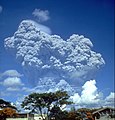 The eruption column of Mount Pinatubo on June 12, 1991, three days before the climactic eruption.

21st century
2000s
| Year | Date | Event | Source |
|---|---|---|---|
| 2000 | March 15 | Pres. Estrada's government declares an "all-out-war" against the Moro Islamic Liberation Front (MILF). | [91] [verification needed] |
| April 19 | An Air Philippines plane crashes in the hills of Island Garden City of Samal, Davao del Norte, killing all 131 on board; the worst aviation disaster in country's history. | [82][91][135][136][168] | |
| April 12 | Cargo vessel Annahada sinks off Jolo Island, killing 159. | [146][156][157] | |
| April 23 | Twenty-one foreigners are abducted by Abu Sayyaf extremists from Sipadan Island, Malaysia and are later brought to Jolo Island; hostage crisis lasts five months. | [91][169] | |
| May | A computer virus is released by a student, damaging around 45 million computers worldwide. | [91] | |
| May 25 | A Philippine Airlines plane is hijacked by an armed man, who later died in a failed jump attempt. | [172] | |
| July 9 | Fall of Camp Abubakar: Camp Abubakar in Maguindanao is captured by the Armed Forces of the Philippines (AFP) from the Moro Islamic Liberation Front (MILF), as part of a campaign against Moro insurgency in Mindanao. | [91][169] | |
| July 10 | More than 200 people are killed in a trash slide in Payatas, Quezon City. | [91] [verification needed] | |
| November 13 | Pres. Estrada is the first incumbent president to be impeached by House of Representatives on accusations regarding jueteng money; | [1][88][91][169][170] [173] | |
| December 7 | The Senate formally initiates the impeachment trial against Pres. Estrada presided by Chief Justice Hilario Davide Jr. | [173][174][175] | |
| December 30 | Rizal Day bombings: Series of terrorist bombings occur in Metro Manila, with 22 fatalities and more than 120 injuries. | [88][91][174] | |
| 2001 | January 16–20 | EDSA II Revolution ousts Pres. Estrada; Vice-Pres. Gloria Macapagal Arroyo becomes the 14th president of the Philippines.
|
[1][26][88][91][93] [160][170][171][173][174] [175][176] |
| March | Moro Islamic Liberation Front declares ceasefire with the government. | [1] | |
| April 25 | Former Pres. Estrada, charged with plunder while in office, and his son Jinggoy are arrested following an arrest warrant issued by Sandiganbayan with their co-accused. | [1][93][173][176] | |
| April 30 – May 1 | EDSA III: Supporters of former Pres. Estrada stage protest following his arrest, ending in a violent dispersal and riots on the 1st, killing four. | [91][93][173][176] | |
| May 27 | Dos Palmas Resort kidnappings: Twenty hotel staff and guests, mostly tourists, are seized by the Islamist terrorist group Abu Sayyaf members from the Dos Palmas Resort in Honda Bay, Palawan; hostage crisis lasts for more than 12 months. | [1][88][91][160] | |
| Lamitan Siege: Abu Sayyaf takes a church and a hospital in Lamitan, Basilan hostage, with captives brought from Palawan, wherein four of them are reportedly escaped, and 20 more people; terrorists escape military operation. | [91] | ||
| November | A rebellion in Sulu and Zamboanga City, staged by several MNLF commanders loyal to Nur Misuari, is suppressed by AFP. | [91] | |
| Another plebiscite is held in ARMM (by virtue of RA 9054) for its expansion, resulting in inclusion of Basilan province and Marawi City. | [80] | ||
| 2002 | February 26 | Former Pres. Estrada admits signing ₱500 million Jose Velarde bank account in Equitable-PCI Bank. | [88] |
| March 5 | Mindanao earthquake | ||
| June 7 | A rescue operation for the remaining Abu Sayyaf captives, held since 2001, is launched by the Special Forces of the Armed Forces of the Philippines (AFP) in an area in Zamboanga del Norte, with a gun battle resulting in the deaths of Martin Burnham and Ediborah Yap; only Gracia Burnham survived. | [1][91] | |
| June 21 | Death of Abu Sabaya, leader of Abu Sayyaf. | ||
| August | Abu Sayyaf kidnaps six Filipino members of a Christian group, two of them later beheaded. | [1] | |
| October | Series of bombings, allegedly by the Abu Sayyaf, take place in Manila and Zamboanga cities. | [1] | |
| 2003 | February 11 | Government soldiers' attempt to disband a terrorist kidnap group "Pentagon Gang" results in a 3-day encounter that killed about 135 MILF fighters in their base near Pikit town. | [1] |
| July 27 | Oakwood mutiny: Magdalo Group, led by Army Capt. Gerardo Gambala and LtSG. Antonio Trillanes IV, takes a mutiny at Oakwood Premier apartments in Makati. | [91][177] | |
| 2004 | February 27 | SuperFerry 14 is bombed by then Jemaah Islamiyah-linked Abu Sayyaf, then sinks near Manila Bay, killing 116; deadliest terrorist attack in Philippine history. | [91][146][156][157] |
| May 10 | 2004 Philippine general election (incumbent Pres. Gloria Macapagal Arroyo elected to a six-year term) | [1][88][91][177] | |
| November 16 | Hacienda Luisita massacre takes place, 14 people die in clashes with police. | [91] [verification needed] | |
| November 20 – December 2 | Cyclones Muifa (Unding), Merbok (Violeta), Winnie and Nanmadol (Yoyong) hit the country, affecting million people, causing massive fatalities and damages.
|
[178][177] | |
| 2005 | February 14 | Valentine's Day bombings: Three explosions occur in the cities of Makati, Davao, and General Santos, resulting to, in total, 8 deaths and at least 90 injuries; Abu Sayyaf claims responsibility for the attacks. | [88][177] |
| June 6 | Hello Garci scandal (Legitimacy of declared election winners questioned): Audio recordings, containing a conversation believed to be between Pres. Macapagal Arroyo and Election Commissioner Virgilio Garcillano, are released by media to the public, revealing the allegations of cheating in 2004 national elections. | [88][91][177] | |
| September 6 | Congress rejects impeachment complaints against Pres. Macapagal Arroyo in what would be the longest Lower House session in country's history. | [91] | |
| November | Reformed Value Added Tax Act (also called Expanded VAT) is implemented, after being delayed for months, as a solution to the government's fiscal crisis. | [177] | |
| 2006 | February 17 | A landslide from an entire mountainside occurs in Guinsaugon village in Southern Leyte, following continuous heavy rains and an earthquake, causing damages and 1,126 deaths. | [88][178][177] |
| February 24 | Pres. Macapagal Arroyo places the entire country under state of emergency (Proclamation 1017) in response to coup rumours. | [144][177] | |
| May 18 | Mountaineer Leo Oracion reached the summit of Mount Everest via the Nepalese side. | ||
| June 24 | Pres. Macapagal Arroyo signs Republic Act 9346 abolishing capital punishment in the country. | [91] [verification needed] | |
| August 11 | Vessel M/T Solar I sinks off the coast of Guimaras, resulting to an oil spill, causing widespread environmental damage. | [146][177] | |
| September 28 | Typhoon Xangsane (Milenyo) struck Luzon, killing at least 200 and causing agricultural damages. | [177] [verification needed] | |
| October 2 | Provincehood of Dinagat Islands (Republic Act No. 9355), separating from Surigao del Norte. | [28][26] | |
| November 25–30 | Typhoon Durian (Reming) kills at least 720 people, with damages at US$130 million; triggers a massive landslide from the Mayon volcano in Legazpi City on the 30th, causing additional 800–1,000 casualties. | [88][27][177][178] | |
| December 4 | Makati Regional Trial Court convicts American serviceman LCpl. Daniel Smith and acquits three co-accused for their involvement in the 2005 Subic rape case. | [91][177] | |
| Death of Khadaffy Janjalani, Abu Sayyaf leader. | [91] | ||
| 2007 | March | Rep. Satur Ocampo is arrested and charged with murder allegedly committed on a purge of suspected spies in the CPP–NPA occurred then, later released. | [177] |
| March | The Permanent Peoples' Tribunal in The Hague finds the Arroyo administration responsible for unsolved killings and disappearances in the country. | [177] | |
| April 20 | A contract is signed by the Philippine and Chinese governments for a proposed National Broadband Network, which was later found to be corrupted. | [160][177] | |
| July 11 | Fourteen Marine soldiers are found beheaded following an encounter between government forces and Islamic rebels Moro Islamic Liberation Front (MILF) and, allegedly, Abu Sayyaf, in Tipo-Tipo, Basilan. | [88][91][177] | |
| August 28 | Exiled Communist Party of the Philippines founding chairman Jose Maria Sison is arrested at Utrecht, Netherlands. | [88][177] | |
| September 12 | Sandiganbayan and the Office of the Ombudsman convicts former Pres. Estrada for plunder and sentences him to reclusion perpetua, but acquits him and his co-accused on other charges. | [88][91][170][171][176] [177] | |
| October 19 | An explosion at Glorietta mall in Makati kills 11 and injures at least 100. | [88][177] | |
| October 26 | Former Pres. Joseph Estrada is pardoned and freed from jail after his trial. | [88][170][177] | |
| November 29 | The Armed Forces lays siege to The Peninsula Manila following a mutiny staged by soldiers. | [88][177] | |
| December 6 | Fourteen Abu Sayyaf members are convicted by the Pasig Regional Trial Court regarding the 2001 kidnapping incident in Palawan. | [28] | |
| MNLF leader Nur Misuari is arrested in Malaysia following rebellion charges filed against him. | [91] | ||
| 2008 | February 8 | Jun Lozada testifies before the Philippine Senate in connection with the National Broadband Network contract deal. | [177] |
| March 6 | Several Congress members call for an investigation into a joint oil exploration agreement on 2004 between the Philippines, China, and Vietnam over the disputed Spratly Islands, claiming it unconstitutional. | [88] | |
| March 11 | Former First Lady Imelda Marcos is acquitted by a Manila trial court of 32 counts of illegal money transfers. | [88] | |
| March 17 | The United States Supreme Court hears oral arguments on a certiorari petition filed by the government, invoking sovereign immunity regarding the enforcement against former Pres. Marcos' estate. | [88] | |
| June 20–23 | Typhoon Fengshen (Frank) makes landfall in Samar on the 20th; devastates Central Visayas; kills at least 557 people and affects more than 99,600 families in some regions, with damages at ₱4.37 billion (US$101.2 million). | [91][178] | |
| June 21 | Passenger ferry MV Princess of the Stars capsizes and sinks off San Fernando, Romblon in Sibuyan Island during a typhoon, 814 of its total number of passengers and crew are either dead or missing. | [91][146][156][157][158] [177][178] | |
| August 25 | Peace talks between the government and the Moro Islamic Liberation Front collapse after the memorandum of Agreement on Ancestral Domain is declared by the Supreme Court unconstitutional. | [88][177] | |
| October | Euro Generals scandal | [177] | |
| CARPER (CARP Extension with Reforms) Act is passed, reforming CARP and extending it until 2014. | [91][19] | ||
| 2009 | January 15 | Three International Committee of the Red Cross volunteers are kidnapped by the rebel group Abu Sayyaf | [177] [verification needed] |
| March | Philippine Archipelagic Baselines Act (Republic Act 9522) is signed into law by Pres. Macapagal Arroyo, ensuring international recognition of the country's territorial boundaries. | [177] | |
| April 23 | Court of Appeals acquits LCpl. Daniel Smith in connection with Subic rape case, reversing the 2006 decision, ordering his release. | [91] | |
| September 26 | Typhoon Ketsana (Ondoy) is the most devastating typhoon to hit the country since Typhoon Patsy (Yoling), affecting Manila, with damages of $1.09 billion and 747 fatalities. | [88][160][177] | |
| October | Typhoon Parma (Pepeng) hits the country, affecting millions of people, causing $617 million in damages and 500 fatalities. | [177] | |
| November 23 | Maguindanao massacre: Fifty-eight people being part of a convoy, including clan members and 32 journalists, are killed and buried in a mass grave in Ampatuan town by an estimated 100 gunmen belonging to a victims' political rival; single deadliest attack against journalists in world history. | [28][88][91][177] | |
| December 4 | Pres. Macapagal Arroyo places Maguindanao under a state of martial law in connection with the murder incident; lifts it eight days later. | [29][88][91][177] | |
| MNLF leader Nur Misuari is acquitted in connection to the 2001 rebellion. | [91] |
-
 Joseph Estrada is the first president to be impeached by the House of Representatives
 -
 Gloria Macapagal Arroyo, the 14th President of the Philippines.
 -
 Location of Oakwood Premiere and the Manila Peninsula Hotel in Makati. These hotels had become the location of the Magdalo mutiny of 2003 and 2007, respectively
 -
 MV Princess of the Stars which had capsized on June 21, 2008, at the height of Typhoon Frank.


2010s
| Year | Date | Event | Source |
|---|---|---|---|
| 2010 | May 10 | The 2010 Philippine general elections, also the first national computerized election in the Philippine history, took place. (Benigno Aquino III is elected president) | [91] [verification needed] |
| August 23 | A hostage-taking incident at the Quirino Grandstand ends in a gunfight that killed a perpetrator and eight hostages. | [36][88] | |
| October 16–18 | Typhoon Juan, officially as Typhoon Megi, hits northeastern Luzon at Sierra Madre, creating widespread damage over Luzon. | ||
| 2011 | July 26 | Supreme Court declares creation of a Truth Commission (Executive Order No. 1) unconstitutional. | [91] |
| November 11 | Puerto Princesa Underground River is named as one of the world's New7Wonders of Nature. | [31] | |
| November 18 | Electoral sabotage charges are filed by Comelec against former Pres. Macapagal Arroyo, arrested on the same day, and the co-accused at the Pasay Regional Trial Court in connection to allegations of electoral fraud. | [91] | |
| December | Tropical Storm Washi (Sendong) causes flash floods, leaving 1,080 people dead and affecting Cagayan de Oro and Iligan cities. | [178] | |
| 2012 | February | An earthquake with 6.9 magnitude hits Visayas islands causing damages. | [179] |
| April | An attempt of the Philippine Navy to detain Chinese fishermen caught on the Scarborough Shoal is blocked by China, escalating a diplomatic standoff over the area. | [179] | |
| April 24 | Supreme Court votes to distribute Hacienda Luisita lands to its farmers. | [28] | |
| May 29 | Senators vote, 20–3, to convict Chief Justice Corona guilty in the second article of the impeachment case regarding alleged undisclosed wealth, removing him from office. | [91][179] | |
| September | Cybercrime Prevention Act (Republic Act 10175) is signed into law by Pres. Aquino. | [179] | |
| October 15 | The Framework Agreement on the Bangsamoro is signed by the Philippine Government and the Moro Islamic Liberation Front (MILF), aiming to end war in the southern Philippines and also for the creation of a new autonomous political entity, Bangsamoro, replacing the Autonomous Region in Muslim Mindanao. | [29][179] | |
| October 21 | Canonization of Pedro Calungsod as second Filipino saint | [179] [verification needed] | |
| December 3 | Typhoon Bopha (Pablo) makes landfall on Mindanao, affecting Compostela Valley and Davao Oriental, with more than 600 fatalities and damages estimated at more than US$1 billion. | [178][179] | |
| December 21 | Reproductive Health Bill (Republic Act 10354) is signed into law by Pres. Aquino. | [179] | |
| 2013 | May 15 | The Enhanced Basic Education Act of 2013, commonly known as K–12 program was signed. | |
| July 27 | The United Federated States of Bangsamoro Republik (UFSBR) declares its independence from the Philippines | ||
| August 16 | Passenger ship MV St. Thomas Aquinas and cargo ship Sulpicio Express Siete collide in Cebu Strait, killing 115. | [146][156][157] | |
| September | MNLF commander Ustadz Habier Malik launches an attack on Zamboanga City, leaving more than 200 people dead. | [91] | |
| September 28 | The UFSBR ceases to exists as it is defeated in the Zamboanga City crisis. | ||
| October 15 | A magnitude 7.2 earthquake, whose released energy is found equivalent to 32 Hiroshima bombs, strikes Bohol province, affecting Central Visayas, with 222 people died; the country's deadliest earthquake since 1990. | [31][178] | |
| October 28 | Davao Occidental was founded, separating from Davao del Sur; country's 81st province. | [citation needed] | |
| November 8 | Super Typhoon Haiyan (Yolanda) landfalls in Visayas and devastates the country, whose winds caused storm surges that severely flooded Eastern and Central Visayan coasts, with Samar (Guiuan town) and Leyte (Tacloban City) among the most affected; death toll of at least 6,300; majority of about 11 million people reportedly affected are left homeless; one of the strongest tropical cyclones to hit the country, and the deadliest typhoon on record. | [88][91] | |
| 2014 | March 27 | The Comprehensive Agreement on the Bangsamoro was signed. | |
| March 30 | Philippine government files a memorandum in the United Nations arbitration court regarding the shoals and reefs in the South China Sea. | [17] | |
| May 23 | The Philippines and Indonesia signed a maritime treaty that draws the boundary of the two countries' overlapping Exclusive Economic Zone in Mindanao and Celebes seas. | ||
| July 21 | Philippine Arena is inaugurated in Bocaue, Bulacan, the "largest mixed-use indoor theater." | [80] | |
| July 27 | Philippines marks a milestone in its population growth identifying the birth of a baby girl in a Manila hospital as the 100 millionth Filipino. | ||
| September 10 | President Aquino III lead the handover of the draft of the Bangsamoro Basic Law to the Senate and House leaders in a historical turnover ceremony at the Malacañang. | ||
| December 8 | Vigan City, Ilocos Sur is chosen as one of the world's New7Wonders Cities. | [29] | |
| Enhanced Defense Cooperation Agreement (EDCA) signed, maintaining rotational American military presence in the country. | [91] | ||
| 2015 | January 15–19 | Papal visit of Pope Francis in the Philippines, with a special Mass held at the Tacloban airport on the 17th. | [88][91][180] |
| January 25 | Mamasapano clash: An encounter between police commandos and the MILF occurs in a police operation in Mamasapano, Maguindanao, aiming to capture international terrorist Marwan; leading to, in total, 74 deaths including 44 PNP–SAF officers | [91][180] | |
| February 25 | The AFP declared its all-out offensive campaign against the MILF break away group, the Bangsamoro Islamic Freedom Fighters. | ||
| April 14 | Death of Ameril Umbra Kato, the founding leader of the Bangsamoro Islamic Freedom Fighters. | ||
| May 29 | Pres. Aquino signs Executive Order 183, creating the Negros Island Region. | [19] | |
| June 28 | Death of Kumander Parago, the top commander of the New People's Army. | ||
| October 18 | Typhoon Koppu (Lando) hits northern and central Luzon, creating widespread damage and floods over Luzon. | [91] [verification needed] | |
| December 1 | LCpl. Joseph Scott Pemberton is convicted by the court for the death of a transgender in 2014. | [180] | |
| December 21
(PHL) |
Pia Alonzo Wurtzbach is crowned Miss Universe 2015 in Las Vegas, Nevada; the country's first title after 42 years. | [88][91][180] | |
| 2016 | January | Supreme Court declares the EDCA as constitutional. | [91] |
| February 10 | The National Mapping and Resource Information Authority announces that it has documented more than 400 additional islands. | ||
| March 23 | Diwata-1 was launched to the International Space Station aboard the Cygnus spacecraft on a supply mission. | ||
| April 9 | Twenty-three soldiers and Abu Sayyaf bandits, including a Moroccan jihadist, are killed in a gunfight between government troops and a terrorist group in Tipo-Tipo, Basilan. | [91] | |
| May 9 | 2016 Philippine general election (Rodrigo Duterte is elected as the first President from Mindanao) | [88][91] | |
| July 1 | An intensified nationwide anti-drug campaign is launched by President Rodrigo Duterte. | [181][182] | |
| July 12 | The Permanent Court of Arbitration rules in favor of the Philippines against China over territorial disputes in the South China Sea. | [27] | |
| July 19 | The Supreme Court acquits former President Gloria Macapagal Arroyo of her plunder case regarding the alleged misuse of funds for the PCSO in an 11–4 ruling. | ||
| July 23 | President Duterte signs an executive order for the implementation of the Freedom of Information (FOI). | ||
| August 1 | Launch of the 911 emergency number and 8888 civil service complaint hotline | ||
| October 19 | Typhoon Haima (Lawin). Typhoon signal number 5 raised for the first time. | ||
| November 18 | The controversial burial of Ferdinand Marcos at the Libingan ng mga Bayani | ||
| 2017 | January 5 | Death of Mohammad Jaafar Maguid, the leader of Ansar Al-Khilafah Philippines. | |
| January 11 | Pres. Duterte signed an executive order mandating universal access to modern family planning tools. | ||
| February 5 | President Rodrigo Duterte designates the Communist Party of the Philippines-New Peoples Army (CPP-NPA) as a terrorist organization following attacks and kidnappings of soldiers by NPA members amid the imposed ceasefire between the government and the communist rebels. | [183] | |
| February 24 | Arrest of Leila de Lima for violations of Republic Act 9165, (Comprehensive Dangerous Drugs Act of 2002) related to her alleged involvement in the New Bilibid Prison drug trafficking scandal. | ||
| February 28 | Philippines' signing of the Paris Agreement on Climate Change. | ||
| May 16 | Pres. Rodrigo Duterte signed Executive Order No. 25, that renamed Benham Rise to Philippine Rise. | ||
| Pres. Rodrigo Duterte signed Executive Order No. 26, that ordered a nationwide smoking ban. | |||
| May 23 | Pres. Duterte declares a 60-day martial law in Mindanao (via Proclamation No. 216) following clashes between government forces and the Maute group in Marawi City. | [31][184][185] | |
| July 22 | Congress votes to extend martial law in Mindanao until the end of 2017 as siege in Marawi City continues. | [184] | |
| October 16 | Abu Sayyaf leader Isnilon Hapilon and Maute group leader Omar Maute are killed by government troops in an assault. | [31][184] | |
| October 17 | Pres. Duterte declares the liberation of Marawi City, with more than a thousand reportedly killed in the battle. | [31][184] | |
| 2018 | July 26 | The Bangsamoro Organic Law is signed into law by President Rodrigo Duterte, effectively abolishing the Autonomous Region in Muslim Mindanao and providing for the basic structure of government for the Bangsamoro Autonomous Region in Muslim Mindanao. | [186][187] |
-
 Benigno Aquino III, the 15th President of the Philippines.
 -
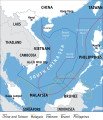
-
 Renato Corona is the first Chief Justice to be impeached by the House of Representatives.
 -
 The Zamboanga City Hall where the MNLF intended to hoist the Bangsamoro Republik flag in the height of Zamboanga City crisis.
 -
 Typhoon Haiyan also known as Yolanda was the strongest typhoon in the Philippines.
 -
 Diwata-1 also known as PHL-Microsat-1 is a Philippine microsatellite launched to the International Space Station (ISS) on March 23, 2016, and was deployed into orbit from the ISS on April 27, 2016. It is the first Philippine microsatellite and the first satellite built and designed by Filipinos.
 -
 Rodrigo Duterte, the 16th President of the Philippines.
 -
 The Permanent Court of Arbitration ruled in favor of the Philippines against China over territorial disputes in the South China Sea.
 -
 A building in Marawi is set ablaze by air strikes carried out by the Philippine Air Force.


.png)


2020s
| Year | Date | Event | Source |
|---|---|---|---|
| 2020 | March 16 | The island of Luzon placed under Enhanced Community Quarantine in response to the growing pandemic of coronavirus disease 2019 (COVID-19) in the country. | [188] |
| 2020 | July 3 | The Anti-Terrorism Act of 2020 is signed into law by President Rodrigo Duterte, giving more surveillance powers to government forces to curb terror threats and acts. | [189] |
| 2021 | June 23 | The Anti-Terrorism Council designates the National Democratic Front (NDF) as a terrorist organization, citing it as an "integral and inseparable part" of the CPP-NPA. | [190][191] |
| 2021 | July 26 | Hidilyn Diaz wins a gold medal at the Women's 55 kg event for weightlifting in Tokyo, Japan during the 2020 Tokyo Olympics. It is the Philippines' first Olympic gold medal. | [192] |
| 2022 | May 9 | The 2022 Philippine general election are held, marking the first majority win since the establishment of the Fifth Republic in 1987, the first presidential ticket to win together since 2004, and the return of the Marcos family to power since the People Power Revolution. (Bongbong Marcos is elected as President alongside his running mate, Sara Duterte, as Vice President) | [193][194] |
Notes
- ^ This technique produced the Doctrina Christiana en Lengua Española y Tagala and the Doctrina Christiana en Lengua y Letra China, the first books in the Philippines
- ^ The nucleus of ₱1,500 for the foundation of a seminary-college was increased to ₱7,140 by donations made by Pablo Rodríguez, Andrés Hermosa, and Juan Morales
- ^ Ever since its foundation in 1611, the University's constitution was based on that of the Real y Pontificia Universidad de Nueva España
See also
- Timeline of Manila
- Timeline of the Philippine Revolution
- Timeline of the Philippine–American War
- List of disasters in the Philippines
- List of presidents of the Philippines
References
- ^ a b c d e f g h i j k l m n o p q r s t u v w x y z aa ab ac ad ae af ag ah ai aj ak al am an ao ap aq ar as at au av aw ax ay az ba bb bc bd be bf bg bh bi bj bk bl bm bn bo bp bq br bs bt bu bv bw bx by bz ca cb "Philippines" – "History" Encyclopedia of the Nations. Retrieved April 6, 2018.
- ^ a b Scott, William (1984). Prehispanic Source Material. p. 17.
- ^ a b Bellwood, Peter (2011). Pathos of Origin. pp. 31–41.
- ^ a b c Geographical History Archived March 9, 2016, at the Wayback Machine Pamantasan ng Lungsod ng Maynila website May 1, 2012
- ^ Ancient and Pre-Spanish Era of the Philippines Archived December 10, 2015, at the Wayback MachineLive Cebu Accessed September 4, 2008.
- ^ Ancient Philippine Civilization. Accessed January 7, 2013.(archived from the original on December 1, 2007).
- ^ Philippines – "History" Encyclopedia Britannica
- ^ Go, Bon Juan (2005). "Ma'l in Chinese Records – Mindoro or Bai? An Examination of a Historical Puzzle". Philippine Studies. 53 (1). Quezon City: Ateneo de Manila University: 119–138. Archived from the original on October 21, 2013. Retrieved October 16, 2012.
- ^ Philippine Archeologists Unearthed Limestone Coffin Archived September 26, 2012, at the Wayback Machine Yahoo news Retrieved November 9, 2016
- ^ Tomb Raiders Spoil Philippine Archeological Find Bankokpost Retrieved November 9, 2016]
- ^ a b "Lupah Sug and the 14th Century World". Sulu Online Library. March 23, 2015. Archived from the original on April 5, 2018. Retrieved April 5, 2018.
- ^ Adib Majul, Cesar (1999). Muslims in the Philippines. University of the Philippines Press. ISBN 971-542-188-1.
- ^ a b c d e f g h i j k l m n o p q r s t u v w x y z aa ab ac ad ae af ag ah ai Finegan, P. (1911). "Philippine Islands" The Catholic Encyclopedia. New York: Robert Appleton Company. Retrieved April 6, 2018 from New Advent.
- ^ a b c d e How Did Ferdinand Magellan Discover the Philippines Archived November 9, 2016, at the Wayback Machine Interesting Facts About The Philippines Retrieved November 9, 2016
- ^ a b c d e f g h i j k l m n o Spanish Expeditions to the Philippines Archived November 16, 2016, at the Wayback Machine Philippine History Retrieved November 10, 2016
- ^ a b c d e f g h "Philippines" Archived April 23, 2018, at the Wayback Machine World Press Encyclopedia (2003). Encyclopedia.com.
- ^ a b c d e f g h i j k l m n o p q r s t u v w
"This Week's Milestones" Inquirer.net. Retrieved January 31, 2018.
(Articles published in the first quarter of 2017)
–From 01-01-2017 to 01-07-2017 Archived December 14, 2018, at the Wayback Machine
–From 01-08-2017 to 01-14-2017 Archived December 14, 2018, at the Wayback Machine
–From 01-15-2017 to 01-21-2017 Archived December 14, 2018, at the Wayback Machine
–From 01-22-2017 to 01-28-2017 Archived December 14, 2018, at the Wayback Machine
–From 01-29-2017 to 02-04-2017 Archived December 14, 2018, at the Wayback Machine
–From 02-05-2017 to 02-11-2017 Archived December 14, 2018, at the Wayback Machine
–From 02-12-2017 to 02-18-2017 Archived December 14, 2018, at the Wayback Machine
–From 02-19-2017 to 02-25-2017 Archived December 14, 2018, at the Wayback Machine
–From 02-26-2017 to 03-04-2017 Archived September 25, 2018, at the Wayback Machine
–From 03-05-2017 to 03-11-2017 Archived December 28, 2018, at the Wayback Machine
–From 03-12-2017 to 03-18-2017 Archived September 25, 2018, at the Wayback Machine
–From 03-19-2017 to 03-25-2017 Archived December 14, 2018, at the Wayback Machine
–From 03-26-2017 to 04-01-2017 Archived December 14, 2018, at the Wayback Machine - ^ Where was the first Mass in the Philippines held? Archived November 10, 2016, at the Wayback Machine The Manila Times Retrieved November 10, 2016
- ^ a b c d e f g h i j k l m n o p q r s t u v w x y z
"This Week's Milestones" Inquirer.net. Retrieved January 31, 2018.
(Articles published in the second quarter of 2017)
–From 04-02-2017 to 04-08-2017 Archived April 15, 2017, at the Wayback Machine
–From 04-09-2017 to 04-15-2017 Archived January 4, 2019, at the Wayback Machine
–From 04-16-2017 to 04-22-2017 Archived June 30, 2017, at the Wayback Machine
–From 04-23-2017 to 04-29-2017 Archived January 4, 2019, at the Wayback Machine
–From 04-30-2017 to 05-06-2017 Archived January 17, 2019, at the Wayback Machine
–From 05-07-2017 to 05-13-2017 Archived January 3, 2019, at the Wayback Machine
–From 05-14-2017 to 05-20-2017 Archived January 4, 2019, at the Wayback Machine
–From 05-21-2017 to 05-27-2017 Archived January 4, 2019, at the Wayback Machine
–From 05-28-2017 to 06-03-2017 Archived January 4, 2019, at the Wayback Machine
–From 06-04-2017 to 06-10-2017 Archived January 4, 2019, at the Wayback Machine
–From 06-11-2017 to 06-17-2017 Archived January 4, 2019, at the Wayback Machine
–From 06-18-2017 to 06-24-2017 Archived January 4, 2019, at the Wayback Machine
–From 06-25-2017 to 07-01-2017 Archived January 4, 2019, at the Wayback Machine - ^ a b c d e Miguel Lopez de Legazpi Archived November 9, 2016, at the Wayback Machine Encyclopædia Britannica Retrieved November 9, 2016
- ^ a b c d e f g h i j k l m n o p q r s t u v w x y z aa Central and Eastern Visayas Dagahi and Eugenio S. Daza, msc.edu.ph, archived from the original on July 22, 2012, retrieved July 4, 2008
- ^ a b c d e f g h i j k l m n o p q r s t u v w x y z aa Señor Enrique, Wish You Were Here, archived from the original on February 13, 2012, retrieved July 14, 2008
- ^ a b c d e f g h i j k l m n o p q r s t u v w x y z aa Philippine History Group of Los Angeles, Alfonso S. Quilala Jr., archived from the original on July 12, 2008, retrieved July 17, 2008
- ^ a b c d e f g h i j k l m n o p q r s t u v w x y z aa Electronic Kabalen, J. Reylan Bustos Viray – JOE MARK, archived from the original on August 16, 2018, retrieved July 17, 2008
- ^ a b c d e f g h i j k l m n o p q r s t u v w x y z aa Bartleby, The Philippines 1500–1800, archived from the original on June 26, 2008, retrieved July 4, 2008
- ^ a b c d e f g h i j k l m n o p q r s t
"This Week's Milestones" Inquirer.net. Retrieved January 15, 2019.
(Articles published in the second quarter of 2018)
–From 04-01-2018 to 04-07-2018 Archived January 15, 2019, at the Wayback Machine
–From 04-08-2018 to 04-14-2018 Archived January 21, 2019, at the Wayback Machine
–From 04-15-2018 to 04-21-2018 Archived January 21, 2019, at the Wayback Machine
–From 04-22-2018 to 04-28-2018 Archived January 21, 2019, at the Wayback Machine
–From 04-29-2018 to 05-05-2018 Archived January 21, 2019, at the Wayback Machine
–From 05-06-2018 to 05-12-2018 Archived January 21, 2019, at the Wayback Machine
–From 05-13-2018 to 05-19-2018 Archived January 21, 2019, at the Wayback Machine
–From 05-20-2018 to 05-26-2018 Archived January 21, 2019, at the Wayback Machine
–From 05-27-2018 to 06-02-2018 Archived January 21, 2019, at the Wayback Machine
–From 06-03-2018 to 06-09-2018 Archived January 21, 2019, at the Wayback Machine
–From 06-10-2018 to 06-16-2018 Archived January 21, 2019, at the Wayback Machine
–From 06-17-2018 to 06-23-2018 Archived January 21, 2019, at the Wayback Machine
–From 06-24-2018 to 06-30-2018 Archived January 21, 2019, at the Wayback Machine - ^ a b c d e f g h i j k l m n o p q r s t
"This Week's Milestones" Inquirer.net. Retrieved January 15, 2019.
(Articles published in the third quarter of 2018)
–From 07-01-2018 to 07-07-2018 Archived January 15, 2019, at the Wayback Machine
–From 07-08-2018 to 07-14-2018 Archived January 23, 2019, at the Wayback Machine
–From 07-15-2018 to 07-21-2018 Archived January 23, 2019, at the Wayback Machine
–From 07-22-2018 to 07-28-2018 Archived January 23, 2019, at the Wayback Machine
–From 07-29-2018 to 08-04-2018 Archived January 23, 2019, at the Wayback Machine
–From 08-05-2018 to 08-11-2018 Archived January 23, 2019, at the Wayback Machine
–From 08-12-2018 to 08-18-2018 Archived January 23, 2019, at the Wayback Machine
–From 08-19-2018 to 08-25-2018 Archived January 23, 2019, at the Wayback Machine
–From 08-26-2018 to 09-01-2018 Archived January 23, 2019, at the Wayback Machine
–From 09-02-2018 to 09-08-2018 Archived January 23, 2019, at the Wayback Machine
–From 09-09-2018 to 09-15-2018 Archived January 23, 2019, at the Wayback Machine
–From 09-16-2018 to 09-22-2018 Archived January 24, 2019, at the Wayback Machine
–From 09-23-2018 to 09-29-2018 Archived January 23, 2019, at the Wayback Machine
–From 09-30-2018 to 10-06-2018 Archived January 23, 2019, at the Wayback Machine - ^ a b c d e f g h i j k l m n o p q r s t u v w x y
"This Week's Milestones" Inquirer.net. Retrieved January 31, 2018.
(Articles published in the fourth quarter of 2017)
–From 10-01-2017 to 10-07-2017 Archived December 28, 2018, at the Wayback Machine
–From 10-08-2017 to 10-14-2017 Archived January 8, 2019, at the Wayback Machine
–From 10-15-2017 to 10-21-2017 Archived January 8, 2019, at the Wayback Machine
–From 10-22-2017 to 10-28-2017 Archived January 8, 2019, at the Wayback Machine
–From 10-29-2017 to 11-04-2017 Archived January 8, 2019, at the Wayback Machine
–From 11-05-2017 to 11-11-2017 Archived January 8, 2019, at the Wayback Machine
–From 11-12-2017 to 11-18-2017 Archived January 8, 2019, at the Wayback Machine
–From 11-19-2017 to 11-25-2017 Archived January 8, 2019, at the Wayback Machine
–From 11-26-2017 to 12-02-2017 Archived January 8, 2019, at the Wayback Machine
–From 12-03-2017 to 12-09-2017 Archived January 8, 2019, at the Wayback Machine
–From 12-10-2017 to 12-16-2017 Archived January 8, 2019, at the Wayback Machine
–From 12-17-2017 to 12-23-2017 Archived January 8, 2019, at the Wayback Machine
–From 12-24-2017 to 12-30-2017 Archived January 8, 2019, at the Wayback Machine
–From 12-31-2017 to 01-06-2018 Archived January 8, 2019, at the Wayback Machine - ^ a b c d e f g h i j k l m n o p q r s t u v w x y z aa ab ac ad ae af ag ah
"This Week's Milestones" Inquirer.net. Retrieved January 31, 2018.
(Articles published in the last quarter of 2016)
–From 10-09-2016 to 10-15-2016 Archived January 8, 2019, at the Wayback Machine (First article)
–From 10-16-2016 to 10-22-2016 Archived January 17, 2019, at the Wayback Machine
–From 10-23-2016 to 10-29-2016 Archived January 17, 2019, at the Wayback Machine
–From 10-30-2016 to 11-05-2016 Archived January 17, 2019, at the Wayback Machine
–From 11-06-2016 to 11-12-2016 Archived January 17, 2019, at the Wayback Machine
–From 11-13-2016 to 11-19-2016 Archived January 17, 2019, at the Wayback Machine
–From 11-20-2016 to 11-26-2016 Archived January 17, 2019, at the Wayback Machine
–From 11-27-2016 to 12-03-2016 Archived January 17, 2019, at the Wayback Machine
–From 12-04-2016 to 12-10-2016 Archived January 17, 2019, at the Wayback Machine
–From 12-11-2016 to 12-17-2016 Archived January 17, 2019, at the Wayback Machine
–From 12-18-2016 to 12-24-2016 Archived January 17, 2019, at the Wayback Machine
–From 12-25-2016 to 12-31-2016 Archived January 17, 2019, at the Wayback Machine - ^ a b c d e f g h i j k l m n o p q r s t u v w x y z aa ab ac ad ae af ag ah ai aj ak al am an ao ap aq ar as at au av aw ax ay az ba bb bc bd be bf bg bh bi bj bk bl bm bn bo bp bq br bs bt bu bv bw bx by bz ca cb cc cd ce cf cg ch ci cj ck cl cm cn co cp cq cr cs ct cu cv cw cx cy cz da db dc dd de df dg dh di dj dk dl dm dn do Governors of the Philippines Archived October 19, 2016, at the Wayback Machine Governors of the Philippines during the Spanish colonial period Retrieved November 9, 2016
- ^ a b c d e f g h i j k l m n o p q r s t u v w x y z aa ab
"This Week's Milestones" Inquirer.net. Retrieved January 15, 2019.
(Articles published in the fourth quarter of 2018)
–From 10-07-2018 to 10-13-2018 Archived January 15, 2019, at the Wayback Machine
–From 10-14-2018 to 10-20-2018 Archived January 28, 2019, at the Wayback Machine
–From 10-21-2018 to 10-27-2018 Archived January 28, 2019, at the Wayback Machine
–From 10-28-2018 to 11-03-2018 Archived January 28, 2019, at the Wayback Machine
–From 11-04-2018 to 11-10-2018 Archived January 28, 2019, at the Wayback Machine
–From 11-11-2018 to 11-17-2018 Archived January 28, 2019, at the Wayback Machine
–From 11-18-2018 to 11-24-2018 Archived January 28, 2019, at the Wayback Machine
–From 11-25-2018 to 12-01-2018 Archived January 28, 2019, at the Wayback Machine
–From 12-02-2018 to 12-08-2018 Archived January 28, 2019, at the Wayback Machine
–From 12-09-2018 to 12-15-2018 Archived January 28, 2019, at the Wayback Machine
–From 12-16-2018 to 12-22-2018 Archived January 28, 2019, at the Wayback Machine
–From 12-23-2018 to 12-29-2018 Archived January 28, 2019, at the Wayback Machine
–From 12-30-2018 to 01-05-2019 Archived January 28, 2019, at the Wayback Machine - ^ a b c d e History of the Archdiocese of Manila Archived September 29, 2014, at the Wayback Machine The Roman Catholic Archdiocese of Manila Retrieved November 10, 2016
- ^ a b c d e Dioceses in the Philippines Archived November 10, 2016, at the Wayback Machine Catholic-Hierarchy.org Retrieved November 10, 2016
- ^ a b Bazaco, Evergisto (1953). History of Education in the Philippines. University of Santo Tomas Press, Manila. p. 95. ISBN 978-971-506-439-2.
- ^ a b The Dominican Mission in the Philippines Archived July 19, 2012, at the Wayback Machine knapsack.weebly accessed May 16, 2012
- ^ a b c d e f g h Campiglio, Koko (August 10, 2015). "8 Unfortunate Events in Philippine History that Happened in August". 8list.ph. Archived from the original on March 10, 2018. Retrieved March 2, 2018.
- ^ Dominicans in the Philippines simbahan.net accessed May 16, 2012
- ^ a b c d e f g h i Ang edukasyon sa panahon ng mga Kastila Archived November 28, 2014, at the Wayback Machine "The Filipino Corner" Retrieved October 27, 2012
- ^ The First Hundred Years of the Ateneo de Manila Archived September 15, 2012, at the Wayback Machine Ateneo de Manila University website May 1, 2012
- ^ a b c d e f g h i j k l m n o p q r s t u v w x y z aa ab ac ad ae af ag "Timeline" Archived October 2, 2017, at the Wayback Machine AIJC. 2013. Retrieved April 4, 2018.
- ^ Totanes, Vernon (2008). "What was the first book printed in the Philippines?". Journal of Philippine Librarianship. Retrieved April 4, 2018.
- ^ a b c The University of Santo Tomas Publishing House kabayan central.com accessed May 18, 2012
- ^ a b c d "History – The Second Cathedral 1591–1600" Archived May 25, 2013, at the Wayback Machine. Manila Metropolitan Cathedral-Basilica Official Website. Retrieved on March 22, 2013.
- ^ "Metropolitan Archdiocese of Nueva Segovia" GCatholic.org. Gabriel Chow. Retrieved February 29, 2016
- ^ "Archdiocese of Nueva Segovia" Catholic-Hierarchy.org. David M. Cheney. Retrieved February 7, 2017
- ^ "Archdiocese of Cáceres (Nueva Cáceres)" Catholic-Hierarchy.org. David M. Cheney. Retrieved February 29, 2016
- ^ "Metropolitan Archdiocese of Cáceres" GCatholic.org. Gabriel Chow. Retrieved February 29, 2016
- ^ Gauchat, Patritius (Patrice) (1935). HIERARCHIA CATHOLICA MEDII ET RECENTIORIS AEVI Vol IV. Münster: Libraria Regensbergiana. p. 261. (in Latin)
- ^ "Bishop Pedro de Agurto, O.S.A."Catholic-Hierarchy.org. David M. Cheney. Retrieved June 11, 2017
- ^ "Archdiocese of Cebu"Catholic-Hierarchy.org. David M. Cheney. Retrieved June 11, 2017
- ^ "Metropolitan Archdiocese of Cebu" GCatholic.org. Gabriel Chow. Retrieved February 29, 2016
- ^ Philippine Star: "Fray Pedro de Agurto, OSA: The first Bishop of Cebu" By Fr. Ric Anthony Reyes, OSA (The Freeman) October 12, 2014
- ^ Augustinian Province of Sto. Niño de Cebu-Philippines: "Fray Pedro de Agurto, OSA, the first Bishop of Cebu" retrieved November 12, 2015
- ^ No Contest, UST is Oldest Archived November 11, 2013, at the Wayback Machine. Inquirer Website May 1, 2012.
- ^ UST is Oldest, Period. Varsitarian Website May 1, 2012.
- ^ Grant to the seminary of Santa Potenciana, 1617 Archived March 4, 2016, at the Wayback Machine. Retrieved May 30, 2012
- ^ Real Colegio de Santa Potenciana Archived August 24, 2011, at the Wayback Machine. Retrieved May 30, 2012
- ^ Perez Dasmarinas, Luis. Letters from Luis Perez Dasmarinas to Filipe II. In The Philippine Islands, 1493–1898. Ohio: A.H. Clark Company, 1903-9. Vol. 9
- ^ About USC: University of San Carlos Archived June 26, 2012, at the Wayback Machine University of San Carlos website Retrieved April 24, 2012
- ^ No contest: UST is oldest university Archived March 1, 2014, at the Wayback Machine Inquirer.net Retrieved May 30, 2012
- ^ UST is oldest, period Archived October 28, 2012, at the Wayback Machine Varsitarian website Retrieved May 30, 2012
- ^ a b c d e de Ramos, Norberto (2000). I Walked with Twelve UST Rectors. University of Santo Tomas Press, Manila.
- ^ a b c d e Legaspi, Leonardo. The University of Santo Tomas and the Spanish Kings. University of Santo Tomas Press, Manila.
- ^ a b c d e f g h i j k l m n o Lim-Pe, Josefina (1973). The University of Santo Tomas in the Twentieth Century. University of Santo Tomas Press, Manila. pp. 1–19.
- ^ a b c d e f g h i j k History of the University of Santo Tomas Archived December 22, 2009, at the Wayback Machine University of Santo Tomas website Retrieved May 30, 2012
- ^ History of Colegio de San Juan de Letran Archived May 17, 2014, at the Wayback Machine Colegio de San Juan de Letran website Retrieved May 30, 2012
- ^ Colegio de San Juan de Letran jobstreet.com Retrieved May 30, 2012
- ^ A Knight's Tale Archived September 8, 2008, at the Wayback Machine – The Lance, June 2005
- ^ Santa Isabel College Archived August 6, 2012, at the Wayback Machine Santa Isabel College website Retrieved May 28, 2012
- ^ Colegio de Santa Isabel Archived August 18, 2011, at the Wayback Machine Intramuros Wordpress.com Retrieved October 27, 2012
- ^ a b The first university The Philippine Star Retrieved May 28, 2012
- ^ "History of UST". UST. Archived from the original on February 27, 2012. Retrieved May 14, 2012.
- ^ a b Fr. Miguel A. Bernad, S.J.: "Colegio de San José (1601–2001): A Quick Survey of the Turbulent 400-year History of an Educational Institution" Archived March 22, 2014, at the Wayback Machine Monk's Hobbit May 1, 2012
- ^ The First Hundred Years Of the Ateneo de Manila. The First Hundred Years Of The Ateneo de Manila May 16, 2012.
- ^ Royal and Pontifical Archived July 28, 2013, at the Wayback Machine. Inquirer.net May 16, 2012.
- ^ "The Catholic Encyclopedia". "The Catholic Encyclopedia" May 16, 2012.
- ^ Garcia, F.C. (February 1, 2006). "Remembering our Rectors". The Varsitarian. 77 (9). Retrieved November 9, 2011.
- ^ Torres, J.V.Z. (2007). In Transition: The University of Santo Tomas During The American Colonial Period (1898–1935). UST Publishing House, Manila. ISBN 978-971-506-439-2.
- ^ a b c d e f g h i j k l m n o p q r s
"This Week's Milestones" Inquirer.net. Retrieved January 31, 2018.
(Articles published in the third quarter of 2017)
–From 07-02-2017 to 07-08-2017 Archived December 14, 2018, at the Wayback Machine
–From 07-09-2017 to 07-15-2017 Archived December 14, 2018, at the Wayback Machine
–From 07-16-2017 to 07-22-2017 Archived December 14, 2018, at the Wayback Machine
–From 07-23-2017 to 07-29-2017 Archived December 14, 2018, at the Wayback Machine
–From 07-30-2017 to 08-05-2017 Archived December 14, 2018, at the Wayback Machine
–From 08-06-2017 to 08-12-2017 Archived December 14, 2018, at the Wayback Machine
–From 08-13-2017 to 08-19-2017 Archived December 14, 2018, at the Wayback Machine
–From 08-20-2017 to 08-26-2017 Archived December 14, 2018, at the Wayback Machine
–From 08-27-2017 to 09-02-2017 Archived December 14, 2018, at the Wayback Machine
–From 09-03-2017 to 09-09-2017 Archived December 28, 2018, at the Wayback Machine
–From 09-10-2017 to 09-16-2017 Archived December 14, 2018, at the Wayback Machine
–From 09-17-2017 to 09-23-2017 Archived December 14, 2018, at the Wayback Machine
–From 09-24-2017 to 09-30-2017 Archived December 14, 2018, at the Wayback Machine - ^ a b c d e f Tuazon, Ramon (April 30, 2015). "The Print Media: A Tradition of Freedom". NCCA. Archived from the original on July 17, 2018. Retrieved March 3, 2018.
- ^ a b c d e f g h i j k l –Batongbakal, Luisito Jr. "10 Haunting Last Pictures Taken in Philippine History (Part 1)" Archived February 21, 2018, at the Wayback Machine. FilipiKnow. Retrieved February 6, 2016. –Batongbakal, Luisito Jr. "10 More Haunting Last Pictures Ever Taken in Philippine History (Part 2)" Archived March 1, 2018, at the Wayback Machine. FilipiKnow. Retrieved March 1, 2018.
- ^ a b c d e f g h i j k l m n o p q r s t "Origin of Names of Provinces in the Philippines". Chonzskyedia. January 19, 2014. Archived from the original on March 12, 2017. Retrieved March 10, 2017.
- ^ a b Montemayor, Teofilo (2004). "Jose Rizal: A Biographical Sketch". Jose Rizal Website. Archived from the original on July 21, 2011. Retrieved March 1, 2018.
- ^ a b c d e f g h i j k l m n o p
"This Week's Milestones" Inquirer.net. Retrieved January 15, 2019.
(Articles published in the first quarter of 2018)
–From 01-07-2018 to 01-13-2018 Archived January 15, 2019, at the Wayback Machine
–From 01-14-2018 to 01-20-2018 Archived January 19, 2019, at the Wayback Machine
–From 01-21-2018 to 01-27-2018 Archived January 19, 2019, at the Wayback Machine
–From 01-28-2018 to 02-03-2018 Archived January 19, 2019, at the Wayback Machine
–From 02-04-2018 to 02-10-2018 Archived January 19, 2019, at the Wayback Machine
–From 02-11-2018 to 02-17-2018 Archived January 19, 2019, at the Wayback Machine
–From 02-18-2018 to 02-24-2018 Archived January 19, 2019, at the Wayback Machine
–From 02-25-2018 to 03-03-2018 Archived January 19, 2019, at the Wayback Machine
–From 03-04-2018 to 03-10-2018 Archived January 19, 2019, at the Wayback Machine
–From 03-11-2018 to 03-17-2018 Archived January 19, 2019, at the Wayback Machine
–From 03-18-2018 to 03-24-2018 Archived January 19, 2019, at the Wayback Machine
–From 03-25-2018 to 03-31-2018 Archived January 19, 2019, at the Wayback Machine - ^ History of Colegio de San Jose / San Jose Seminary Archived October 25, 2013, at the Wayback Machine San Jose Seminary website Retrieved May 12, 2012
- ^ Reyno, Ma. Cielito G. (September 6, 2012). "The Petition of March 1888". nhcp.gov.ph. Archived from the original on August 1, 2021. Retrieved August 1, 2021.
- ^ a b c d e f g h i j k l m n o p q r s t u v w x y z aa ab ac ad ae af ag ah ai aj ak al am an ao ap aq ar as at au av aw ax ay az ba bb bc bd be bf bg "30 years of news reportage" Archived March 7, 2018, at the Wayback Machine "Manila Standard XXX" (supplement for the 30th anniversary issue). Manila Standard. Feb 10, 2017 issue Archived February 3, 2018, at the Wayback Machine (Vol. 30, No. 363). Retrieved February 1, 2018.
- ^ a b "A timeline of death penalty in the Philippines". The PCIJ Blog. April 18, 2006. Archived from the original on February 17, 2018. Retrieved March 1, 2018.
- ^ a b Reyno, Ma. Cielito (September 7, 2012). "Events of February 1897". NHCP. Archived from the original on August 16, 2018. Retrieved March 2, 2018.
- ^ a b c d e f g h i j k l m n o p q r s t u v w x y z aa ab ac ad ae af ag ah ai aj ak al am an ao ap aq ar as at au av aw ax ay az ba bb bc bd be bf bg bh bi bj bk bl bm bn bo bp bq br bs bt bu bv bw bx by bz ca cb cc cd
Series of "#Journeyto30" articles by Epi Fabonan III from Philstar.com:
–(1986) "The first headline" Archived September 23, 2018, at the Wayback Machine Jul 24, 2016.
–(1987) "Collision course" Archived June 12, 2018, at the Wayback Machine Jan 16, 2016.
–(1988) "Bullets for rice" Archived September 12, 2018, at the Wayback Machine February 4, 2016.
–(1989) "Hostage drama" Archived June 12, 2018, at the Wayback Machine Apr 23, 2016.
–(1990) "Earthquake!" Archived June 12, 2018, at the Wayback Machine Jul 17, 2016.
–(1991) "Nature's wrath" Jun 19, 2016.
–(1992) "Shoulder-to-shoulder with Uncle Sam" Archived June 12, 2018, at the Wayback Machine September 4, 2016.
–(1993) "Forgiving and forgetful" Archived September 18, 2018, at the Wayback Machine Feb 20, 2016.
–(1994) "Southern discomfort" Archived September 27, 2018, at the Wayback Machine May 14, 2016.
–(1995) "Reefs of mischief" Archived October 16, 2018, at the Wayback Machine May 4, 2016.
–(1996) "An elusive peace" Archived September 22, 2018, at the Wayback Machine June 2, 2016.
–(1997) "A pole vault into crisis" Archived June 12, 2018, at the Wayback Machine February 1, 2016.
–(1998) "A coming of age" Archived September 16, 2018, at the Wayback Machine December 6, 2016.
–(1999) "Crime and punishment" Archived June 12, 2018, at the Wayback Machine Apr 30, 2016.
–(2000) "The year of living dangerously" Archived June 12, 2018, at the Wayback Machine September 1, 2016.
–(2001) "Tyranny of the majority" Archived June 12, 2018, at the Wayback Machine Feb 27, 2016.
–(2002) "Confessions of a captive" Archived June 12, 2018, at the Wayback Machine March 7, 2016.
–(2003) "State of rebellion; state of cohesion" Archived June 12, 2018, at the Wayback Machine Jan 30, 2016.
–(2004) "Citizen Poe" Archived September 29, 2018, at the Wayback Machine December 3, 2016.
–(2005) "A phone call shocks a nation" Archived September 20, 2018, at the Wayback Machine July 5, 2016.
–(2006) "She who cried rape" Archived June 12, 2018, at the Wayback Machine May 22, 2016.
–(2007) "The bearers of the sword" Archived June 12, 2018, at the Wayback Machine Apr 16, 2016.
–(2008) "Between a storm and the deep blue sea" Archived October 1, 2018, at the Wayback Machine May 26, 2016.
–(2009) "License to kill" Archived June 12, 2018, at the Wayback Machine May 6, 2016.
–(2010) "The stories candidates tell" Archived June 12, 2018, at the Wayback Machine Feb 13, 2016.
–(2011) "Triple disaster" Archived June 12, 2018, at the Wayback Machine Mar 19, 2016.
–(2012) "The judge becomes the judged" Archived June 12, 2018, at the Wayback Machine May 29, 2016.
–(2013) "In the eye of the storm" Archived September 21, 2018, at the Wayback Machine October 7, 2016.
–(2014) "Notes on Binay" Archived June 12, 2018, at the Wayback Machine Mar 26, 2016.
–(2015) "Fallen" Archived September 30, 2018, at the Wayback Machine Jan 23, 2016.
Retrieved February 1, 2018. - ^
–"The Manila Times' 'Timeline'" Archived March 7, 2018, at the Wayback Machine. The Manila Times. October 11, 2014. Retrieved March 3, 2018.
–"The journey of The Manila Times" Archived March 7, 2018, at the Wayback Machine. The Manila Times. October 11, 2015. Retrieved March 3, 2018. - ^ a b c d e f g h i j k l m n o p q r s t u v w x y z aa ab ac ad ae af ag ah ai aj ak al am an ao ap aq
"30th Anniversary of the 1986 EDSA People Power Revolution" Archived April 8, 2018, at the Wayback Machine Official Gazette (Philippines). 2016. Retrieved March 16, 2018
–"EDSA 30: A history of the Philippine political protest" Archived April 3, 2018, at the Wayback Machine [with Appendix Archived April 3, 2018, at the Wayback Machine
Related features from the same website:
–"Martial Law" Archived April 11, 2018, at the Wayback Machine
–"Declaration of Martial Law" Archived July 8, 2017, at the Wayback Machine
–"Ninoy Aquino Day" Archived April 11, 2018, at the Wayback Machine
–"The Fall of the Dictatorship" Archived September 3, 2017, at the Wayback Machine
Related infographics from the same website:
–"EDSA30" Archived April 11, 2018, at the Wayback Machine
–"The day Marcos declared Martial Law" Archived April 11, 2018, at the Wayback Machine - ^ a b c "History Timeline". SSC. 2014. Archived from the original on March 14, 2018.
- ^ "The Free Press Story, August 30, 1958". The Philippines Free Press Online. August 30, 1958. Archived from the original on March 7, 2018. Retrieved March 3, 2018.
- ^ a b "History of Philippine Cinema". Philippine Journeys. Archived from the original on April 16, 2018. Retrieved April 4, 2018.
- ^ "Mindanao, Sulu and ARMM Unsung Heroes: Martyrs of the Battle of Bud Bagsak; Martyrs of the Battle of Bud Dajo". Archived from the original on July 18, 2013. Retrieved February 4, 2019.
- ^ a b c d e f g h i Manuel Quezon Archived November 10, 2016, at the Wayback Machine Encyclopædia Britannica Retrieved November 10, 2016
- ^ a b c d e f g h i Manuel Luis Quezon Archived November 10, 2016, at the Wayback Machine Encyclopaedia.com Retrieved November 10, 2016
- ^ a b c d e f g h i Manuel Quezon Archived November 10, 2016, at the Wayback Machine Asian History Retrieved November 10, 2016
- ^ a b c d e f g h i Manuel L. Quezon: A Life Led with Achievement (1988) Archived December 11, 2016, at the Wayback Machine Academia.edu Retrieved November 10, 2016
- ^ a b c d e f g h i Filipino Presidents – Biographies [dead link] Tagalog Lang Retrieved November 10, 2016
- ^ a b c d e Sergio Osmeña Archived August 2, 2017, at the Wayback Machine Encyclopædia Britannica Retrieved November 10, 2016
- ^ a b c d e Sergio Osmena Archived November 10, 2016, at the Wayback Machine Encyclopedia.org Retrieved November 10, 2016
- ^ a b c d e Sergio Osmena Archived November 10, 2016, at the Wayback Machine Office of the Vice President Retrieved November 10, 2016
- ^ "Act No. 2711" Archived April 3, 2018, at the Wayback Machine Official Gazette (Philippines). March 10, 1917. Retrieved March 26, 2018.
- ^ Bautista, Arsenio (April 15, 2015). "History of Philippine Cinema". NCCA. Archived from the original on July 17, 2018. Retrieved April 4, 2018.
- ^ a b c d e
–"Philippine Broadcast History" Archived June 25, 2018, at the Wayback Machine 2001. Retrieved April 3, 2018.
–"History of Philippine radio" Archived June 25, 2018, at the Wayback Machine Radio Online Now. July 25, 2011. Retrieved April 3, 2018. - ^ a b c d Lent, John. "Philippine Radio – History and Problems" Archived April 17, 2018, at the Wayback Machine Asian Studies. Retrieved April 3, 2018.
- ^ a b c d Tuazon, Ramon (April 30, 2015). "Radio as a Way of Life". NCCA. Archived from the original on July 21, 2018. Retrieved April 3, 2018.
- ^ a b Isorena-Arcega, Susan (July 15, 2014). "DZRH". Philippine Star via PressReader. Archived from the original on April 18, 2018. Retrieved April 3, 2018.
- ^ a b c "Communist Insurgency in the Philippines (Thesis)" (PDF). Archived (PDF) from the original on March 29, 2017.
- ^ "Anti-immigration in the United States: A-R" Archived February 4, 2019, at the Wayback Machine Kathleen R. Arnold
- ^
"Company Profile" Archived March 9, 2017, at the Wayback Machine MBC. Retrieved April 3, 2018.
–"A History of Leadership" Archived April 18, 2018, at the Wayback Machine MBC. Retrieved April 3, 2018.
VIDEO: "DZRH: KZRH Before, DZRH Today – A Story of Philippines' Oldest Radio Station" (YouTube) July 17, 2009. - ^ "World War II in the Philippines: A timeline". Los Angeles Times. December 2, 2012. Archived from the original on May 10, 2018.
- ^ "World War II and Japanese Occupation 1941 – 1945". Archived from the original on March 7, 2017.
- ^ a b c d e f The Japanese Attack on the Philippines Archived October 30, 2016, at the Wayback Machine Pacific War.org Retrieved November 10, 2016
- ^ a b c d e f Douglas MacArthur Archived September 23, 2016, at the Wayback Machine Encyclopædia Britannica Retrieved November 10, 2016
- ^ a b c d e f Douglas MacArthur Archived November 11, 2016, at the Wayback Machine Encyclopaedia of World Biography Retrieved November 10, 2016
- ^ a b c d e f A Brief Biography of Douglas MacArthur Archived March 19, 2017, at the Wayback Machine John Curtin.edu Retrieved November 10, 2016
- ^ a b c d e f Douglas MacArthur, 1880–1964: A Most Successful and Unusual Military Leader Manythings.org Retrieved November 10, 2016
- ^ "The Bataan Death March". United States Army. Archived from the original on March 31, 2013.
- ^ a b c d e f Jose P Laurel Archived November 10, 2016, at the Wayback Machine Encyclopædia Britannica Retrieved November 10, 2016
- ^ a b c d e f President Jose P Laurel History Archived October 13, 2016, at the Wayback Machine Jose P Laurel Foundation Retrieved November 10, 2016
- ^ a b c d e f Jose P. Laurel: A "Hero" or a "Traitor"? Archived November 11, 2016, at the Wayback Machine Our Happy School Retrieved November 10, 2016
- ^ a b c d e f g h i j k l
"What's the story, Pinoy TV?" Archived April 26, 2018, at the Wayback Machine Retrieved April 4, 2018.
VIDEOS: "The History of Philippine Television" Part 1 Archived January 28, 2019, at the Wayback Machine, Part 2 Archived January 20, 2019, at the Wayback Machine, and Part 3 Archived January 23, 2019, at the Wayback Machine. (YouTube) June 6, 2012. Originally from the aforementioned source. - ^ a b Chua, Xiao (October 12, 2013). "Ang unang TV broadcast sa Pilipinas". It's XiaoTime!. Archived from the original on August 16, 2018. Retrieved April 3, 2018.
- ^ "This Month in History: Philippine Independence Day" Smithsonian Institution Asian Pacific American Center. Archived from the original on June 21, 2011.
- ^ a b c "A Half-century of Philippine Television". Library Link. October 14, 2003. Archived from the original on August 16, 2018. Retrieved April 3, 2018.
- ^ a b "9 Extremely Notorious Pinoy Gangsters". Archived from the original on February 6, 2016. Retrieved February 6, 2016.
- ^ a b Tuazon, Ramon (April 30, 2015). "Philippine Television: That's Entertainment". NCCA. Archived from the original on August 16, 2018. Retrieved April 3, 2018.
- ^ "International TV Directory" TV Factbook. 1970. Retrieved April 4, 2018.
- ^ a b "Milestones of ABS-CBN". LopezLink. Archived from the original on March 30, 2018. Retrieved April 3, 2018.
- ^ a b Batongbakal, Luisito Jr. "Philippine History: 10 Fascinating Firsts and Milestones [President Elpidio Quirino]" FilipiKnow. Retrieved April 3, 2018. Archived April 14, 2018, at the Wayback Machine
- ^ a b c Montebon, Rodel (July 18, 2014). "10 Philippine Airplane Crashes That Marked Our History". tenminutes.ph. Archived from the original on February 20, 2018. Retrieved February 20, 2018.
- ^ a b c "Deadliest Airplane Disasters to Rock the Philippines". Pinoy Top Tens. August 20, 2015. Archived from the original on March 16, 2018. Retrieved February 20, 2018.
- ^ a b c d e f g h i j k l m n o p q r s t u v w x y z aa ab ac ad ae af ag ah ai aj ak al
Stuart-Santiago, Angela. "Chronology of a Revolution". EDSARevolution.com. Archived from the original on March 12, 2018. Retrieved March 16, 2018.
–"The Original People Power Revolution" Archived March 5, 2018, at the Wayback Machine StuartXchange.org. Some contents of the above source are adapted. - ^ "Republic Act No. 4849 – An Act Creating the Province of South Cotabato". Chan Robles Virtual Law Library. July 18, 1966. Archived from the original on March 4, 2016. Retrieved March 11, 2017.
- ^ "More than 115 die when buses hurtle into Manila Ravine". Ocala Star-Banner via Associated Press. January 6, 1967. Retrieved February 20, 2018.
- ^ a b c d e f g h i j k l m n "Historical Timeline". Bantayog ng mga Bayani. Archived from the original on March 14, 2018. Retrieved March 14, 2018.
- ^ a b c d e f g h i j Valflor, Marcus (2014). "10 Lesser-Known Photos from Martial Law Years That Will Blow You Away". FilipiKnow. Archived from the original on February 6, 2016. Retrieved February 6, 2016.
- ^ a b c d e f g h i j k l m n o p q r "History" Archived November 3, 2016, at the Wayback Machine "Philippines: A Country Study" Archived April 18, 2012, at the Wayback Machine Retrieved April 10, 2018.
- ^ a b c d e f g h "48 hours leading to the declaration of martial law by Ferdinand Marcos in September of 1972" Archived April 23, 2018, at the Wayback Machine The Kahimyang Project via Magdiwang Blogpost. February 21, 2012. Retrieved April 20, 2018.
- ^ a b c d e f g "Back to the Past: A timeline of press freedom". CMFR. September 1, 2007. Archived from the original on March 2, 2018. Retrieved March 2, 2018.
- ^ Presidential Decree No. 1616 Archived April 22, 2019, at the Wayback Machine Official Gazette of the Republic of the Philippines Retrieved November 9, 2016
- ^ a b c d e f g h i j
Citations regarding events on maritime accidents (since 1980):
–"LIST: Maritime disasters in the Philippines". ABS-CBN News. July 2, 2015. Archived from the original on February 20, 2018. Retrieved February 20, 2018.
–"Lookback: Sea tragedies in the Philippines". CNN Philippines. July 6, 2015. Archived from the original on February 22, 2018. Retrieved February 20, 2018.
–"Major marine mishaps in the Philippines". GMA News. June 23, 2008. Retrieved May 25, 2018. - ^ a b c d e f g h i "The 1986 People Power Revolution: A Timeline". Manila Bulletin via PressReader. February 25, 2016. Archived from the original on April 10, 2018. Retrieved March 16, 2018.
- ^ a b c "EDSA People Power Revolution". Philippine History. Archived from the original on March 8, 2018. Retrieved March 16, 2018.
- ^ a b "8 Incredible Rare Recordings in Philippine History [Bonus: Manila (1985)]". FilipiKnow. February 2, 2015. Archived from the original on February 3, 2018. Retrieved February 27, 2017.
- ^ a b c d e f g h i j k l m n o p q r s Teves, Maria Althea. "Timeline: Events in the life of Cory Aquino" Appeared both in ABS-CBN News (link Archived April 2, 2018, at the Wayback Machine, July 24, 2009) and Newsbreak (link Archived April 2, 2018, at the Wayback Machine, August 1, 2009). Retrieved April 1, 2018.
- ^
"Timeline: EDSA People Power Revolution". ABS-CBN News. February 22, 2017. Archived from the original on March 16, 2018. Retrieved March 16, 2018.
–"EDSA Evolution: Then and Now". ABS-CBN News. February 24, 2016. Archived from the original on August 16, 2018. Retrieved March 16, 2018. - ^
Citations covering the 4-day event:
–"#NeverForget EDSA: A Brief Timeline of the People Power Revolution". Esquire Magazine (Philippines). February 26, 2017. Archived from the original on March 16, 2018. Retrieved March 16, 2018.
–"EDSA Timeline". Inquirer.net. February 24, 2016. Archived from the original on March 16, 2018. Retrieved March 16, 2018.
–"People Power Revolution Timeline" Inquirer.net. Retrieved March 16, 2018: (a) "Day 1 (Feb. 22, 1986)" Archived June 12, 2018, at the Wayback Machine Feb 22, 2014. (b) "Day 2 (Feb. 23, 1986)" Archived April 27, 2018, at the Wayback Machine Feb 23, 2014. (c) "Day 3 (Feb. 24, 1986)" Archived April 27, 2018, at the Wayback Machine Feb 24, 2014. (d) "Day 4 (Feb. 25, 1986)" Archived April 27, 2018, at the Wayback Machine Feb 25, 2014.
–"1986 Revolution: Timeline". Mount Holyoke College. 2010. Archived from the original on July 21, 2017. Retrieved March 16, 2018.
VIDEO: "A timeline of the 1986 EDSA People Power Revolution" Archived April 28, 2018, at the Wayback Machine GMA News. February 24, 2017. - ^ a b c d e f g h
Citations regarding events on coup attempts (1986–1990):
–"Timeline: Coups against Cory". Philippine Daily Inquirer via PressReader. December 17, 2010. Archived from the original on April 2, 2018. Retrieved April 1, 2018.
–"Philippine Coup Attempts". The New York Times. December 1, 1989. Archived from the original on April 2, 2018. Retrieved April 1, 2018. - ^ "30 things you may not know about DZMM". ABS-CBN News. October 8, 2016. Archived from the original on April 18, 2018. Retrieved April 3, 2018.
- ^ "Constitutional history of the Philippines". ConstitutionNet. 2016. Archived from the original on March 2, 2018. Retrieved March 2, 2018.
- ^ a b c d e f g h i
Citations regarding events on maritime accidents (since 1987):
–"Some of the deadliest maritime disasters in the Philippines". GMA News via Associated Press. June 22, 2008. Archived from the original on February 20, 2018. Retrieved February 20, 2018.
–"History of ferry disasters in the Philippines". Philippine Daily Inquirer via Agence France-Presse. August 17, 2013. Archived from the original on February 20, 2018. Retrieved February 20, 2018.
–"Timeline: Deadliest ferry disasters in the Philippines". Reuters. June 23, 2008. Archived from the original on April 21, 2018. Retrieved March 15, 2018.
–"Casualty count in Philippine maritime disasters". ABS-CBN News. June 23, 2008. Archived from the original on October 7, 2023. Retrieved May 25, 2018. - ^ a b c d e f g h "Top 10 Deadliest Sea Disaster Philippines". Pinoy Top Tens. May 3, 2014. Archived from the original on March 7, 2018. Retrieved February 20, 2018.
- ^ a b Jansen, Bart (April 16, 2014). "10 worst ferry disasters worldwide". USA Today. Archived from the original on February 20, 2018. Retrieved February 20, 2018.
- ^ Jenkins, Beverly (May 7, 2012). "10 of the Worst Ship Disasters Ever". Oddee. Archived from the original on February 20, 2018. Retrieved February 20, 2018.
- ^ a b c d e f g "Supplements: Blast from the past: Most memorable headlines" Archived June 12, 2018, at the Wayback Machine The Philippine Star. July 28, 2011. Retrieved February 1, 2018.
- ^ "Lupah Sug and The 20th Century World". Sulu Online Library. March 23, 2015. Archived from the original on April 5, 2018.
- ^ "100 significant events in Philippine history". Archived from the original on January 28, 2016. Retrieved February 6, 2016.
- ^ "Philippine Air Lines plane crashes". AirSafe.com. Archived from the original on December 5, 2017. Retrieved February 20, 2018.
- ^ "37 Worst Plane Crashes & Airline Disasters: Aviation Leadership Failures". Miles Anthony Smith Blog. September 21, 2016. Archived from the original on February 20, 2018. Retrieved February 20, 2018.
- ^ a b "Timeline: Al Qaeda's Global Context". PBS. October 3, 2002. Archived from the original on April 2, 2018. Retrieved April 1, 2018.
- ^ "Khalid Sheikh Mohammed Fast Facts". CNN. December 15, 2017. Archived from the original on April 2, 2018. Retrieved April 1, 2018.
- ^ a b c d Punzalan, Ronnie (November 12, 2015). "Looking back: Biggest 1996 news events when PH first hosted APEC". Rappler. Archived from the original on May 2, 2018. Retrieved April 10, 2018.
- ^ a b Orosa, Rosalinda (July 25, 2014). "Philippines' worst commercial flight disasters". The Philippine Star. Retrieved February 20, 2018.[permanent dead link]
- ^ a b c d
"The presidency of Joseph Estrada (June 1998 – January 2001)" Archived April 11, 2018, at the Wayback Machine World History Archives, Hartford Web Publishing. Retrieved March 16, 2018.
–"Chronology of Estrada's tumultuous two years in office" Archived February 9, 2018, at the Wayback Machine Agence France-Presse. November 13, 2000. Retrieved March 16, 2018. - ^ a b c d e "Profile: Joseph Estrada". BBC News. October 26, 2007. Archived from the original on April 26, 2018. Retrieved March 16, 2018.
- ^ a b c "FACTBOX: Key facts on Philippines' former leader Estrada". Reuters. September 12, 2007. Archived from the original on April 27, 2018. Retrieved March 16, 2018.
- ^ Taylor, Oliver (August 17, 2017). "Top 10 Freak Airplane Incidents And Accidents". Listverse. Archived from the original on February 20, 2018. Retrieved February 20, 2018.
- ^ a b c d e "The Story of EDSA 2". Archived from the original on March 16, 2018. Retrieved March 16, 2018.
- ^ a b c "Timeline of the Estrada Crisis". Fox News via Associated Press. March 7, 2001. Archived from the original on April 27, 2018. Retrieved March 16, 2018.
- ^ a b "Fast Facts: Estrada Impeachment Trial". Inquirer.net. January 6, 2012. Archived from the original on April 27, 2018. Retrieved March 16, 2018.
- ^ a b c d "Timeline of former Philippine president Joseph Estrada's trial". Digital Journal via DPA. September 10, 2007. Archived from the original on April 27, 2018. Retrieved March 16, 2018.
- ^ a b c d e f g h i j k l m n o p q r s t u v w x y z aa ab ac ad ae
–"Top Philippines News Stories of 2003" Archived January 4, 2013, at the Wayback Machine
–"Top Philippines News Stories of 2004" Archived September 20, 2017, at the Wayback Machine
–"Top Philippines News Stories of 2005" Archived April 20, 2018, at the Wayback Machine
–"Top Philippines News Stories of 2006" Archived December 4, 2016, at the Wayback Machine
–"Top Philippines News Stories of 2007" Archived February 7, 2017, at the Wayback Machine
–"Top Philippines News Stories of 2008" Archived August 16, 2013, at the Wayback Machine
–"Top Philippine News Stories of 2009" Archived February 7, 2017, at the Wayback Machine
Retrieved April 10, 2017. - ^ a b c d e f g h "Philippines: A country prone to natural disasters". Deutsche Welle. November 11, 2013. Archived from the original on March 21, 2018. Retrieved March 15, 2018.
- ^ a b c d e f g h "Year-end Review 2012: Trending and Top Stories Philippines". The Summit Express. December 1, 2012. Archived from the original on May 4, 2018. Retrieved April 10, 2018.
- ^ a b c d Calayag, Keith (2016). "Top 10 Events That Shape 2015". SunStar Philippines. Archived from the original on May 3, 2018. Retrieved April 10, 2017.
- ^ Legaspi, Amita (July 4, 2016). "Communists answer Duterte's call to join fight vs. drugs". GMA News Online.
- ^ "PH needs more rehab centers as drug users surrender in droves". The Filipino Times. July 9, 2016. Archived from the original on June 22, 2022.
- ^ Tordecilla, Karmela (February 6, 2017). "Duterte: CPP-NPA-NDF a terrorist group". CNN Philippines. Archived from the original on February 6, 2017. Retrieved July 28, 2022.
- ^ a b c d
Citations regarding Battle of Marawi:
–"Timeline: The Battle for Marawi". ABS-CBN News. October 17, 2017. Archived from the original on May 24, 2018. Retrieved May 30, 2018.
–"Timeline: The Marawi crisis". CNN Philippines. October 28, 2017. Archived from the original on April 24, 2018. Retrieved May 30, 2018.
–Bueza, Michael (October 22, 2017). "Timeline: The 'liberation' of Marawi". Rappler. Archived from the original on August 16, 2018. Retrieved May 30, 2018.
–Dancel, Raul (October 16, 2017). "Timeline of crisis in Philippine southern city of Marawi". The Straits Times. Archived from the original on August 16, 2018. Retrieved May 30, 2018.
–Hincks, Joseph. "What the siege of a Philippine city reveals about ISIS' deadly new front in Asia". Time. Archived from the original on June 23, 2018. Retrieved May 30, 2018.
–"The Battle of Marawi" (PDF). Amnesty International. 2017. Archived (PDF) from the original on May 29, 2018. Retrieved May 30, 2018.
Graphic: "Timeline: Revisiting the 2017 Marawi City siege". GMA News. May 22, 2018. Archived from the original on May 24, 2018. Retrieved May 30, 2018.
Video: "Timeline: The Marawi conflict". ABS-CBN News (YouTube). October 17, 2017. Archived from the original on November 4, 2017. Retrieved May 30, 2018. - ^
Citations regarding the beginning of Battle of Marawi:
–Serrano, Jasrelle (May 25, 2017). "Days of Terror: A Timeline of What Happened in Marawi". Esquire Magazine (Philippines). Archived from the original on August 16, 2018. Retrieved May 30, 2018.
–Fonbuena, Carmela; Bueza, Michael (May 24, 2017). "Timeline: Marawi clashes prompt martial law in all of Mindanao". Rappler. Archived from the original on November 23, 2018. Retrieved November 14, 2018.
–"Timeline: Maute attack in Marawi City". ABS-CBN News. May 25, 2017. Archived from the original on November 29, 2018. Retrieved January 12, 2019.
Graphic: "The attack on Marawi City". GMA News. May 25, 2017. Archived from the original on August 16, 2018. Retrieved May 30, 2018.
Video: "Marawi Siege Timeline (Report from PTV News evening edition)". PTV (YouTube). May 26, 2017. Archived from the original on December 21, 2021. Retrieved November 14, 2018.
Other source:
–"Timeline | Gov't forces, Maute group clash in Marawi City". Archived from the original on August 16, 2018. Retrieved May 30, 2018. - ^ Romero, Alexis (July 26, 2018). "Duterte signs Bangsamoro Organic Law". The Philippine Star. Archived from the original on July 27, 2018.
- ^ Geducos, Argyll Cyrus (July 27, 2018). "Duterte signs Bangsamoro Law". Manila Bulletin. Archived from the original on July 27, 2018.
- ^ Santos, Ana (March 16, 2020). "Coronavirus: Philippines quarantines island of 57 million people". Al Jazeera. Retrieved March 9, 2024.
- ^ Gita-Carlos, Ruth Abbey (July 3, 2020). "Duterte signs anti-terror bill into law". Philippine News Agency. Archived from the original on July 4, 2020.
- ^ "Govt designates NDFP as 'terrorist' organization". CNN Philippines. July 19, 2021. Archived from the original on July 19, 2021.
- ^ Torres-Tupas, Tetch (July 19, 2021). "Gov't anti-terrorism body names NDF as 'terrorist group'". Philippine Daily Inquirer. Archived from the original on July 19, 2021.
- ^ "Weightlifter Hidilyn Diaz wins first-ever Olympic gold for Philippines". Olympics. Retrieved March 9, 2024.
- ^ Lema, Karen; Morales, Neil Jerome (May 10, 2022). "Marcos, son of strongman, triumphs in Philippines presidential election". Reuters. Retrieved July 17, 2022.
- ^ Cupin, Bea (May 9, 2022). "Sara Duterte, the incumbent president's heir, wins VP race". Rappler. Retrieved July 17, 2022.
Further reading
- Benjamin Vincent (1910), "Philippine Isles", Haydn's Dictionary of Dates (25th ed.), London: Ward, Lock & Co., hdl:2027/loc.ark:/13960/t89g6g776 – via Hathi Trust
- David Lea and Colette Milward, ed. (2001). "Philippines". Political Chronology of South East Asia and Oceania. Political Chronologies of the World. Europa Publications. pp. 157–175. ISBN 978-1-135-35659-0.
- Artemio R. Guillermo (2012). "Chronology". Historical Dictionary of the Philippines. Maryland, U.S.: Scarecrow Press. ISBN 978-0-8108-7246-2.
External links
- "Philippines Profile: Timeline (updated)". BBC News. November 4, 2011.
- "Philippines: Timeline". ABC News. January 6, 2006.
- "Timeline of Philippine History (updated)". Philippine History.
- "Philippines History Timeline Chronological Timetable of Events (Parts 1, 2 Archived March 2, 2018, at the Wayback Machine, 3 Archived March 2, 2018, at the Wayback Machine)" worldatlas.
- "Timeline Philippines". Timelines of History. Archived from the original on April 14, 2018. Retrieved April 14, 2018.
- "Important Dates in the Philippines". The Robinson Library. Archived from the original on November 14, 2016.
{{cite web}}: CS1 maint: unfit URL (link) - "Chronological Table". 1906.
- "Sultanate History Timeline (1450–1915) (Historical Timeline of the Royal Sultanate of Sulu Including Related Events of Neighboring Peoples)". Sulu Online Library. March 23, 2015.
- "Filipino History". On This Day.
- "Philippines Events in History". BrainyHistory.
- "Philippine History – The Philippine Centennial: Celebrating Historical Events". Filipino.biz.ph.
- Detailed timeline